



Press Release

Swiss Institute (SI) is pleased to present the first institutional exhibition of Indonesian artist Bagus Pandega. Pandega’s work ingeniously addresses the extraction of natural resources in Indonesia—from the 16th century spice trade in nutmeg and cloves, to the palm oil industry, to the contemporary global demand for nickel used in batteries for computers, phones, and electric vehicles. Adopting a do-it-yourself, hacker approach, Pandega constructs modular systems using readily available, everyday technologies, natural materials such as plants and rare earth minerals, and musical instruments. These responsive installations are programmed to trigger mechanical and chemical reactions that generate sound or movement, influenced by changes in hyperlocal conditions such as human presence in the space.

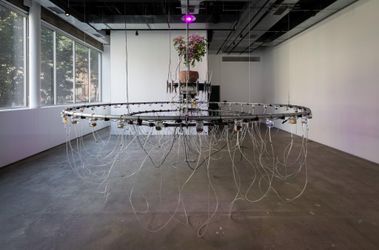
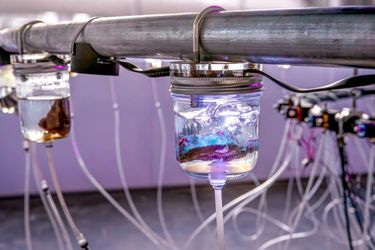
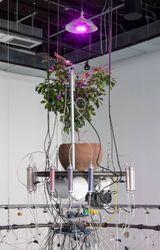
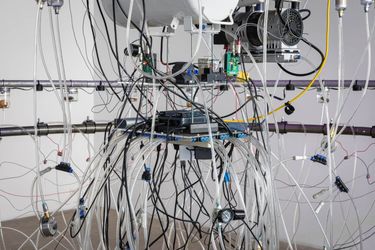
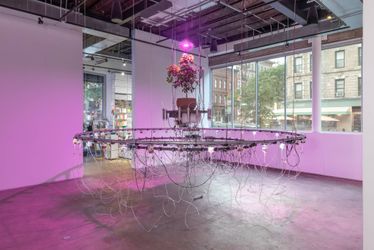
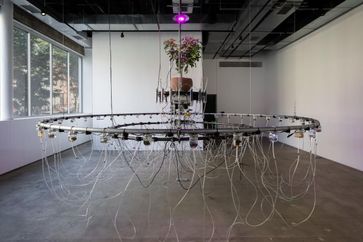
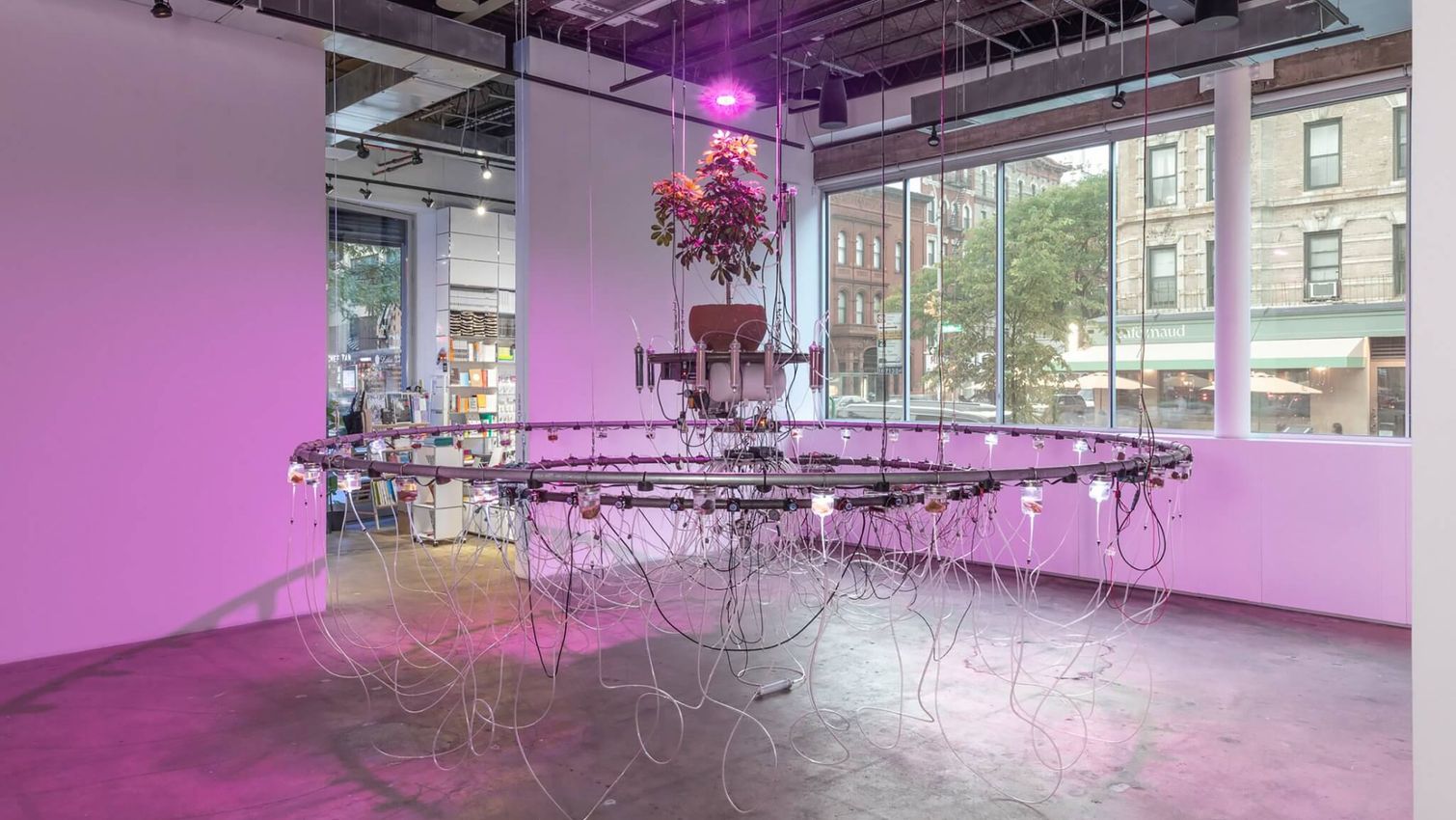
Upon entering the gallery, visitors encounter Hyperpnea Green (2024), a large-scale sculptural installation composed of concentric circles suspended from the ceiling. Positioned along the rings’ circumference are transparent containers housing minerals extracted in Indonesia, native plants commonly sold as houseplants in the US, lights, and a music box. These components are connected to an oxygen machine and a monitoring system that activates chains of biofeedback in reaction to signals set off by the metabolisms of both plants and humans. As viewers exhale carbon dioxide, the apparatus responds by pumping oxygen into the space. Hyperpnea is the medical term for rapid or deep breathing to meet increased oxygen demand. The installation highlights our dependency on the natural world, which we simultaneously deplete through unstable consumption, alongside illuminating the interdependence between organic and artificial systems.

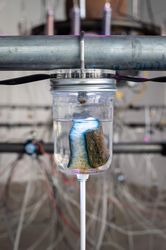
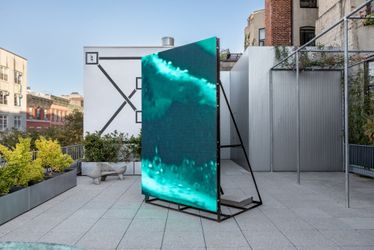
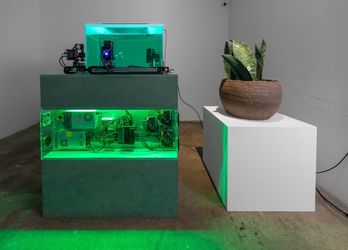
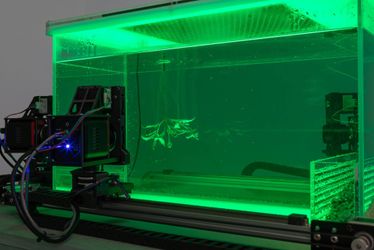
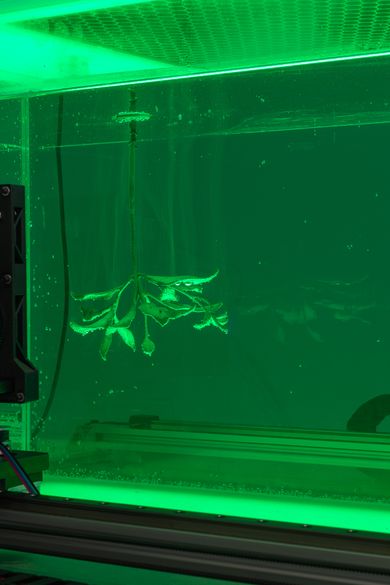
Presented nearby is the newly commissioned installation Anim Wraksa (2025), whose title is derived from Kawi, or Old Javanese, translating to “the spirit of the tree.” Inside an acrylic container filled with an electrolyte solution, a tree branch undergoes a continuous process of nickel plating. Indonesia is the world’s largest exporter of nickel, and its extraction has led to deforestation, water pollution, and soil toxicity – disrupting not only the environment but also social and spiritual relations. Throughout the duration of the show, the branch will continue to accumulate metal, transforming the object over time. A live transmission of the process is broadcast to a large LED wall on SI’s rooftop — which itself includes nickel — visible both from the terrace and the street level below. The image is massively enlarged and flipped upside down, reversing the upward flow of hydrogen gas bubbles released during the plating process so that they appear to fall like raindrops or tears.

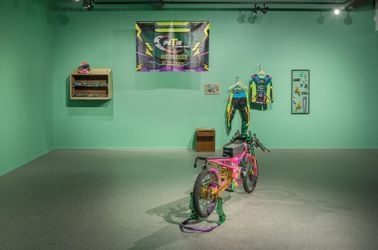
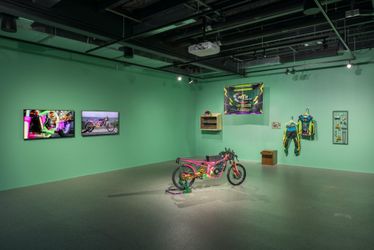
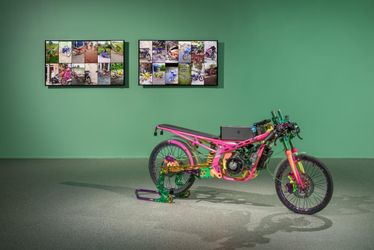
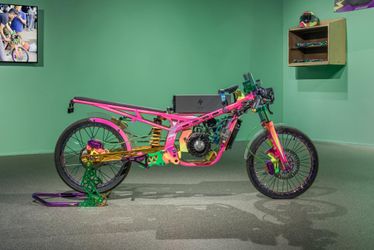
On the second floor is the new commission Putar Petir Racing Team (2025), both a sculpture and a fully operational electric battery-powered motorcycle that Pandega built from scratch. The bike is sprayed in gleaming shades of purple, pink, and gold, drawing inspiration from the local jamet aesthetic – a slang blend of “Javanese” and “metal” that refers to a metalhead-influenced street style associated with popular drag racing. Nearby, a video documents a drag race Pandega organized in Bandung, in which his EV motorcycle competed against regular gasoline-powered bikes. The sculpture and video are accompanied by a custom racing jersey and helmet from a fictitious team created by the artist, displayed on a wall painted in the green hue commonly found in modest homes in Indonesia.

Embedding viewers in feedback loops of electricity, breath, and movement, Pandega foregrounds relations shaped by cycles of life, extraction, and reciprocity. Guided by a DIY engineering ethos and a deep engagement with materials, his works convey a sense of both precariousness and vulnerability, experimentation and ingenuity.

_Daya Benda _is organized in collaboration with Kunsthalle Basel, where the artist’s exhibition Sumber Alam is on view concurrently. The titles reference two Indonesian idioms referring to natural resources, still life, and object power.

Read More
Spotlights
Pandega demonstrates how technology can be a principal strategy in saving rather than destroying our planet.
Read the Full Story

Installation Views

Object Power: Bagus Pandega Meshes Technology and Culture Spotlight Object Power: Bagus Pandega Meshes Technology and Culture New exhibition Daya Benda reveals the Indonesian artist’s commitment to using technology to empower, and even foster, the blossoming of nature. Read the story
About the Artist

Bagus A. Pandega is an Indonesian artist whose kinetic installations challenge conventional perceptions of sculpture by merging mechanical systems, sound, and light into immersive experiences that expose Indonesia’s complex relationship with extraction and natural resources.

View Artist Profile Bagus Pandega contemporary artist
About the Gallery

The Swiss Institute is an independent, non-profit contemporary art centre located at 38 St Marks Place in the vibrant East Village, Manhattan, New York City. The Institute’s commitment to accessibility and cultural exchange makes it a must-visit for art lovers and explorers interested in contemporary creativity and international perspectives.

View Gallery Profile
Address
38 St Marks Pl
New York
New York
United States
Opening Hours
Wednesday – Friday, 2 – 8pm
Saturday, 12 – 8pm
Sunday, 12 – 6pm
(1)
New York 38 St Marks Pl, New York
Swiss Institute
38 St Marks Pl, New York, New York, United States

Opening hours
Wednesday – Friday, 2 – 8pm
Saturday, 12 – 8pm
Sunday, 12 – 6pm
The art world in focus