The art world in focus
Subscribe to our newsletter for news and insights on artists, galleries and exhibitions.


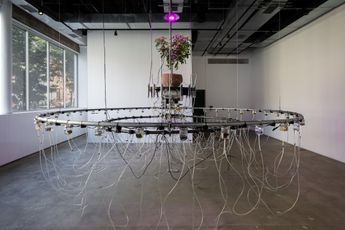
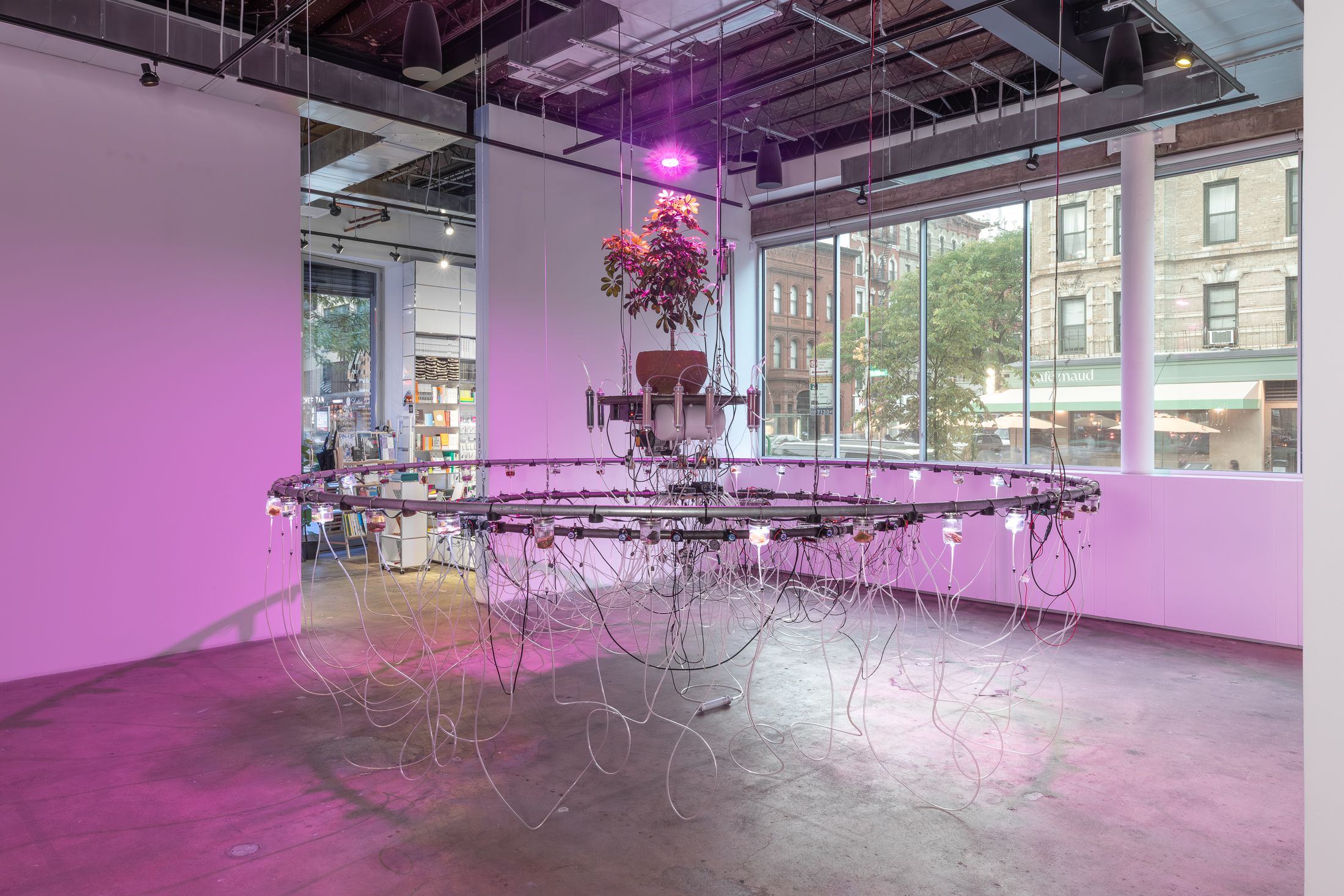
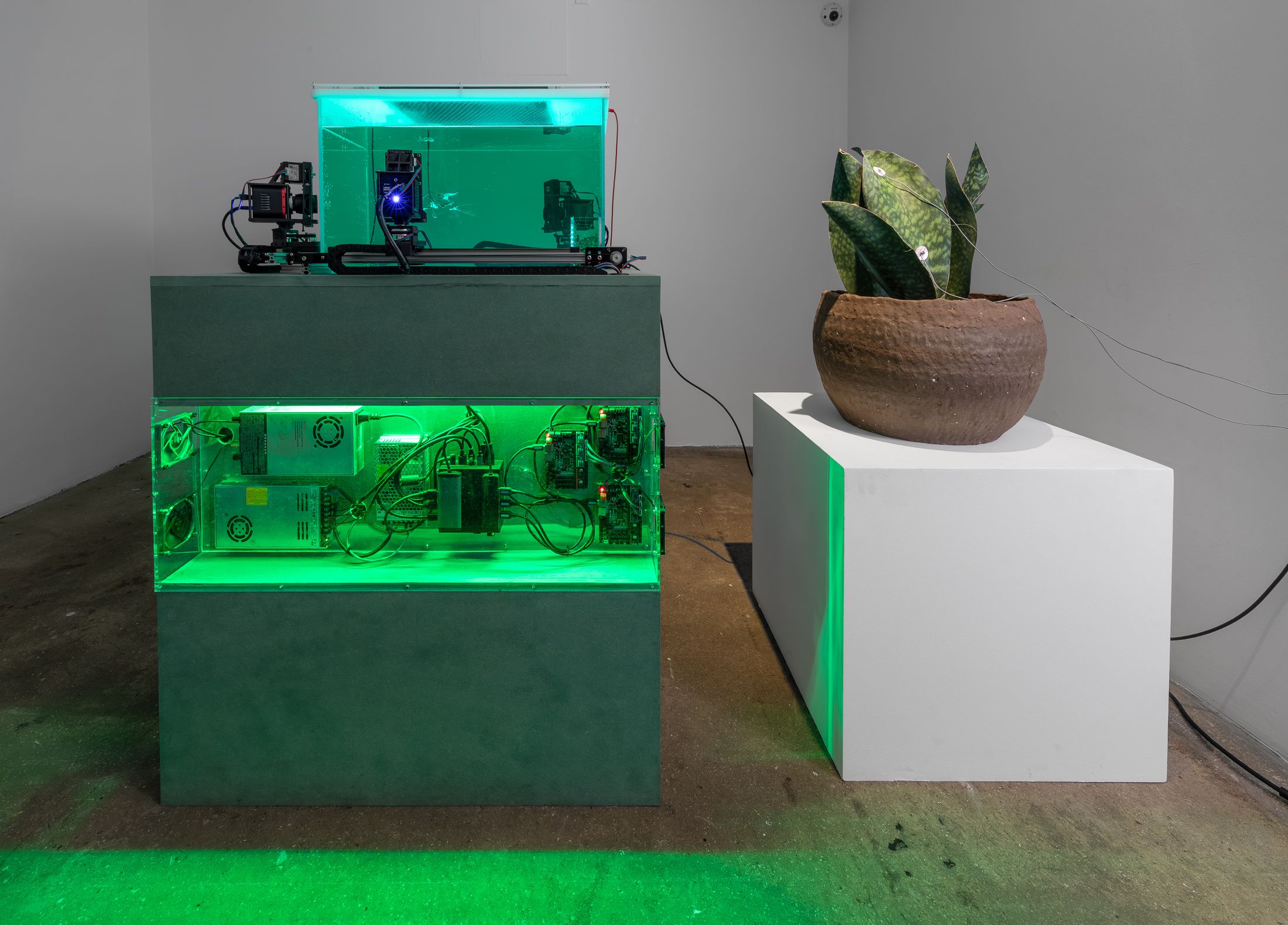
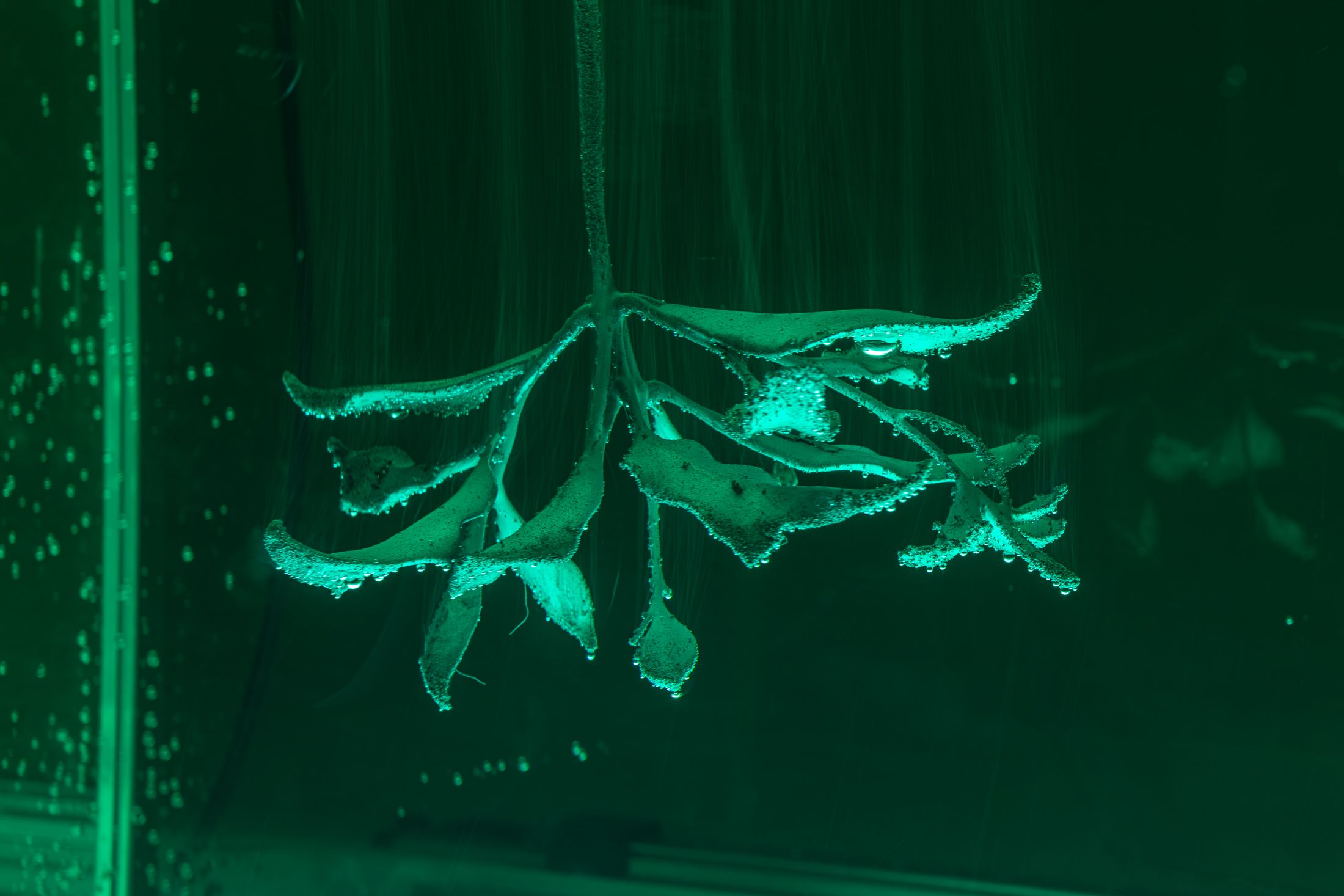
Three concentric metal pipes are suspended from the ceiling of the Swiss Institute in New York. Hyperpnea Green (2024), the largest installation in the show, is a marvel. Tubes on each pipe are connected to transparent containers, in which stone minerals extracted from both Indonesia and common household plants found in the U.S. are suspended in a clear liquid. Displayed high up in the centre of the installation is a large potted plant with a purple lamp above it.
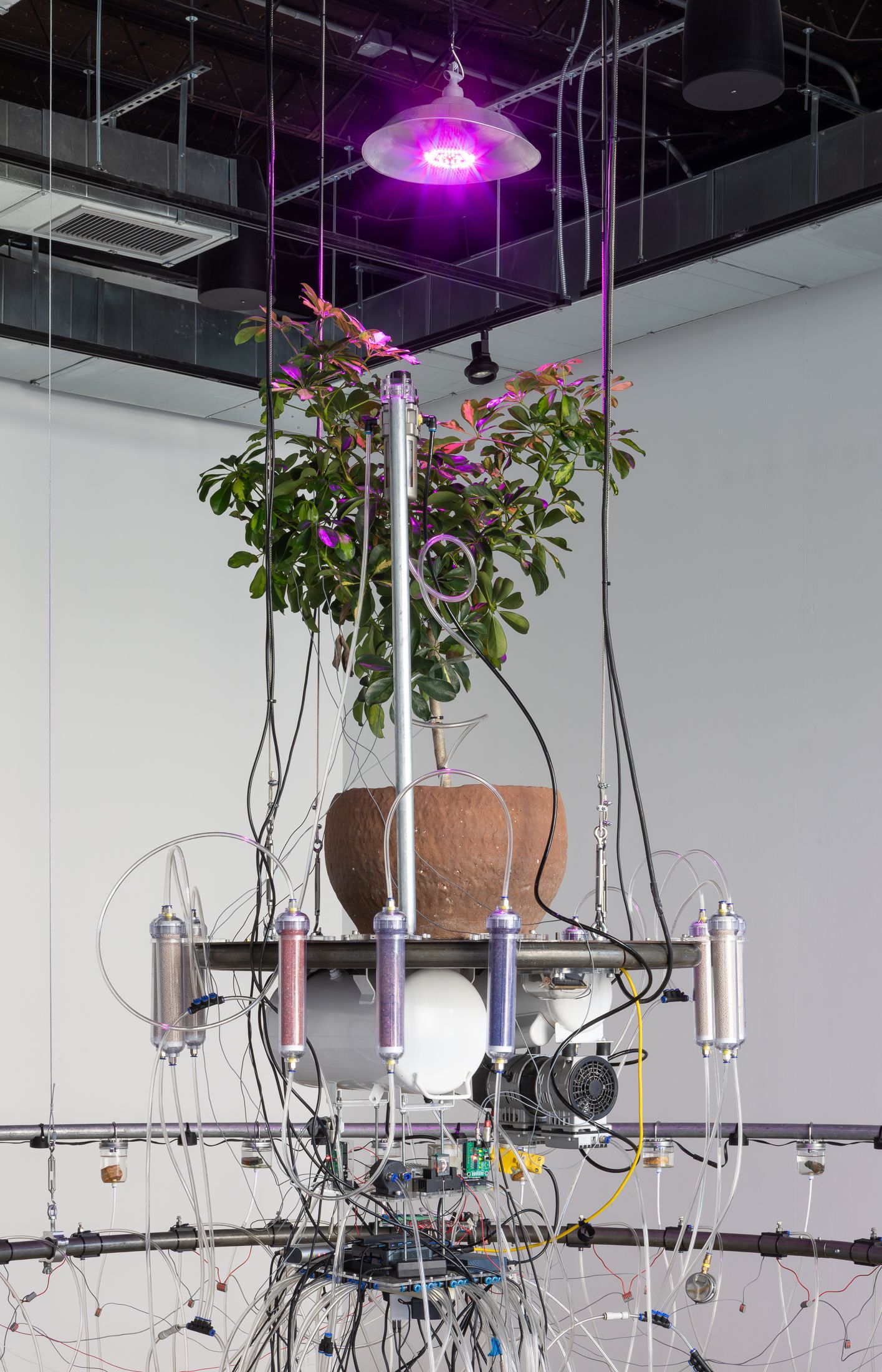
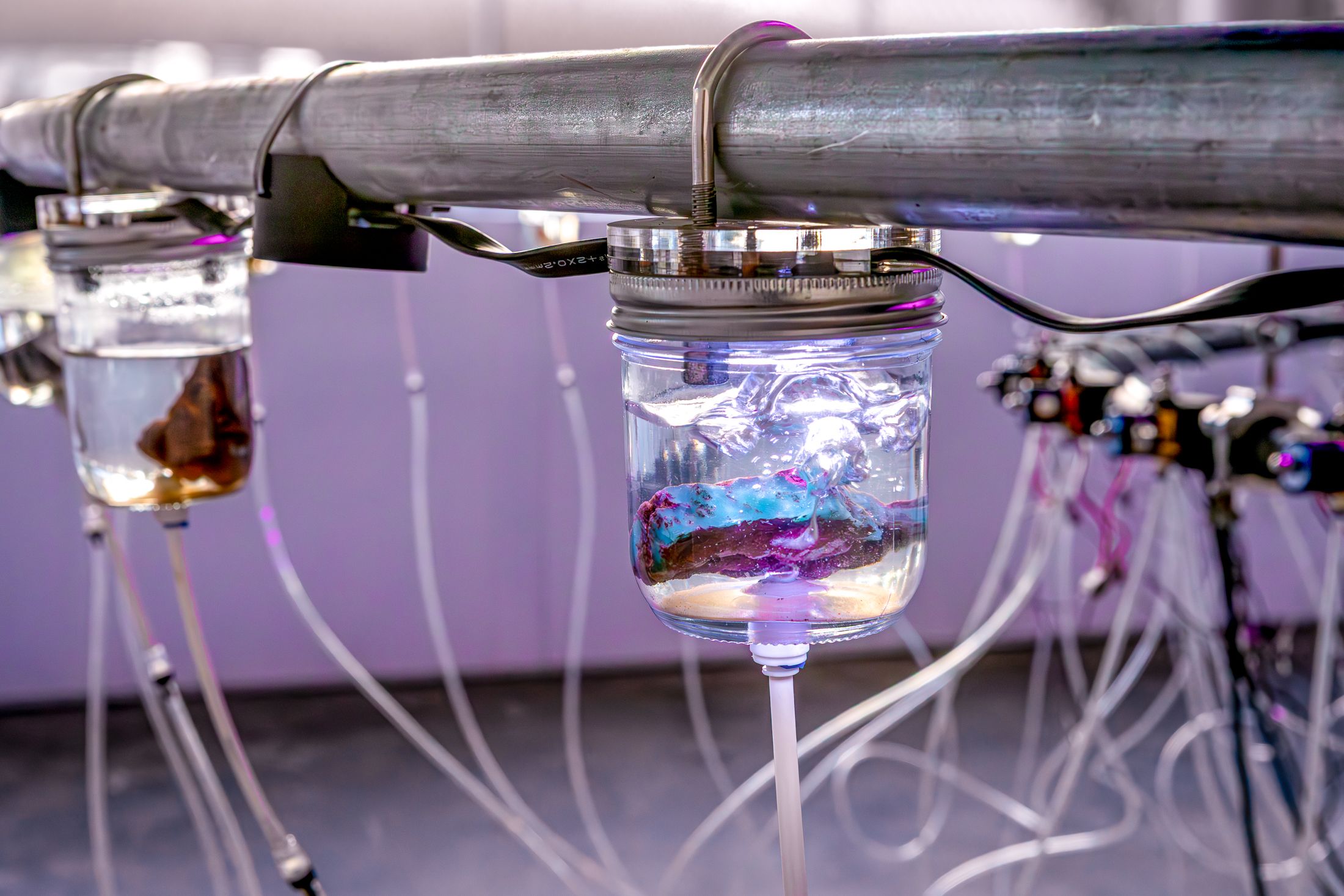
The artwork is alive: an oxygen machine and monitoring system manage and respond to signals from both the metabolism of the plants and the humans who have come to view them. As the system runs, tinny pop music and clicking sounds emanate from a music box, as though one were at work in a laboratory or a hospital ward. Bagus Pandega has mimicked how the natural world works: humans exhale carbon dioxide and plants ingest it, helping them grow. However, in his hyperpnea (a medical term for the way the human body increases its rate of breathing when it requires more oxygen) Pandega demonstrates how technology can be a principal strategy in saving rather than destroying our planet. In a video chat with me from his home in Bandung, Pandega reflects on the relationship between the two: ‘Can technology and nature coexist without the heavy-handedness of humans?’
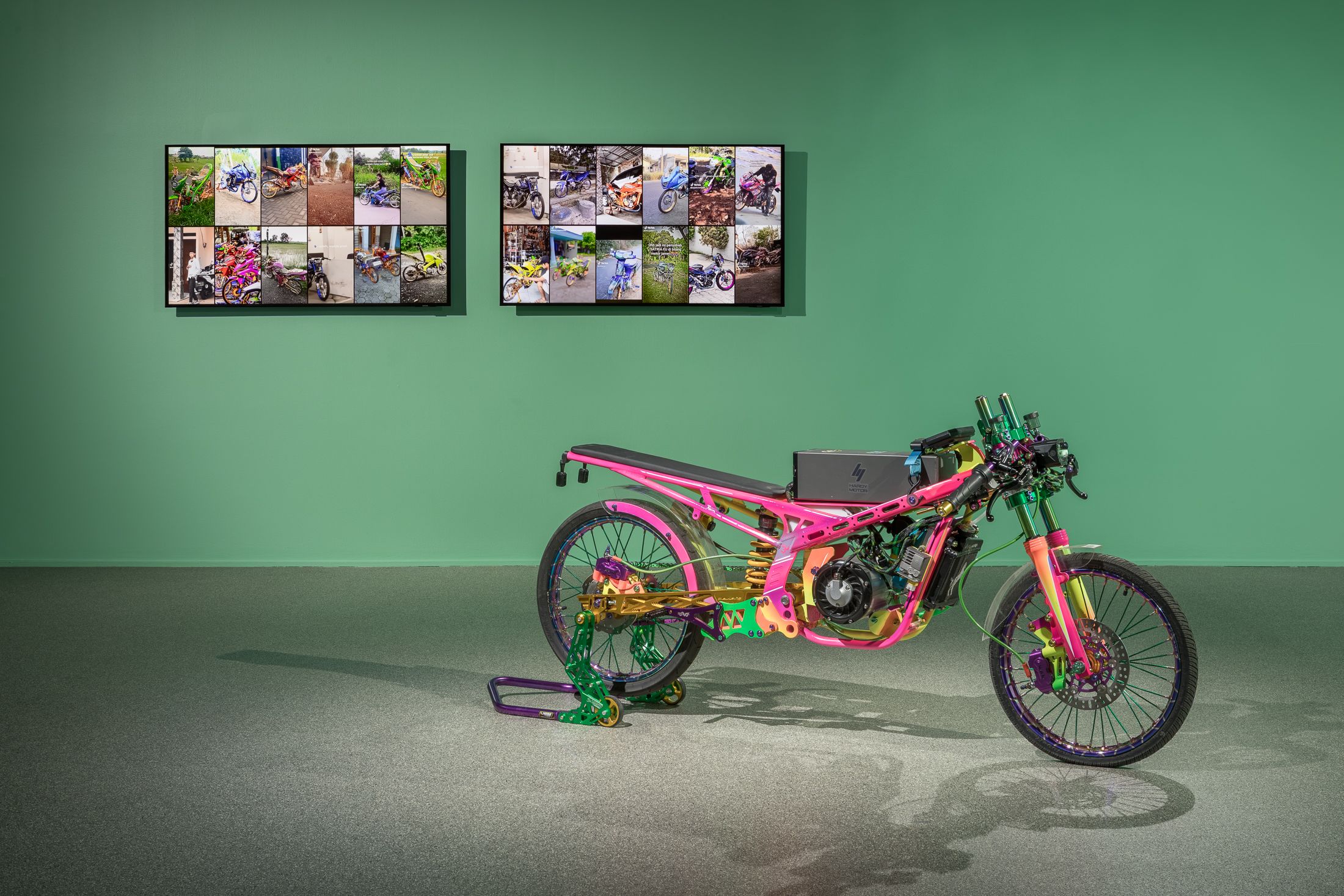
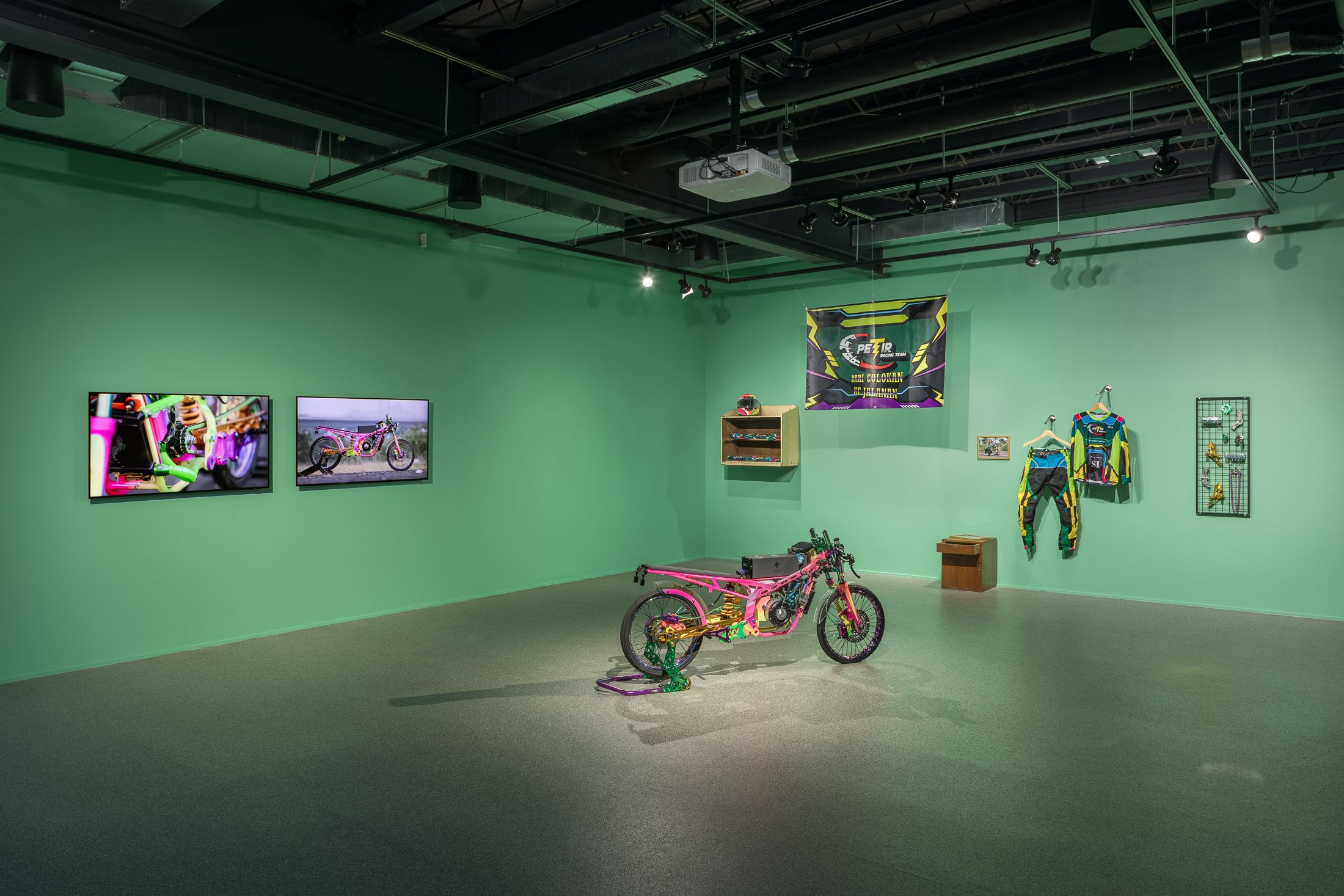
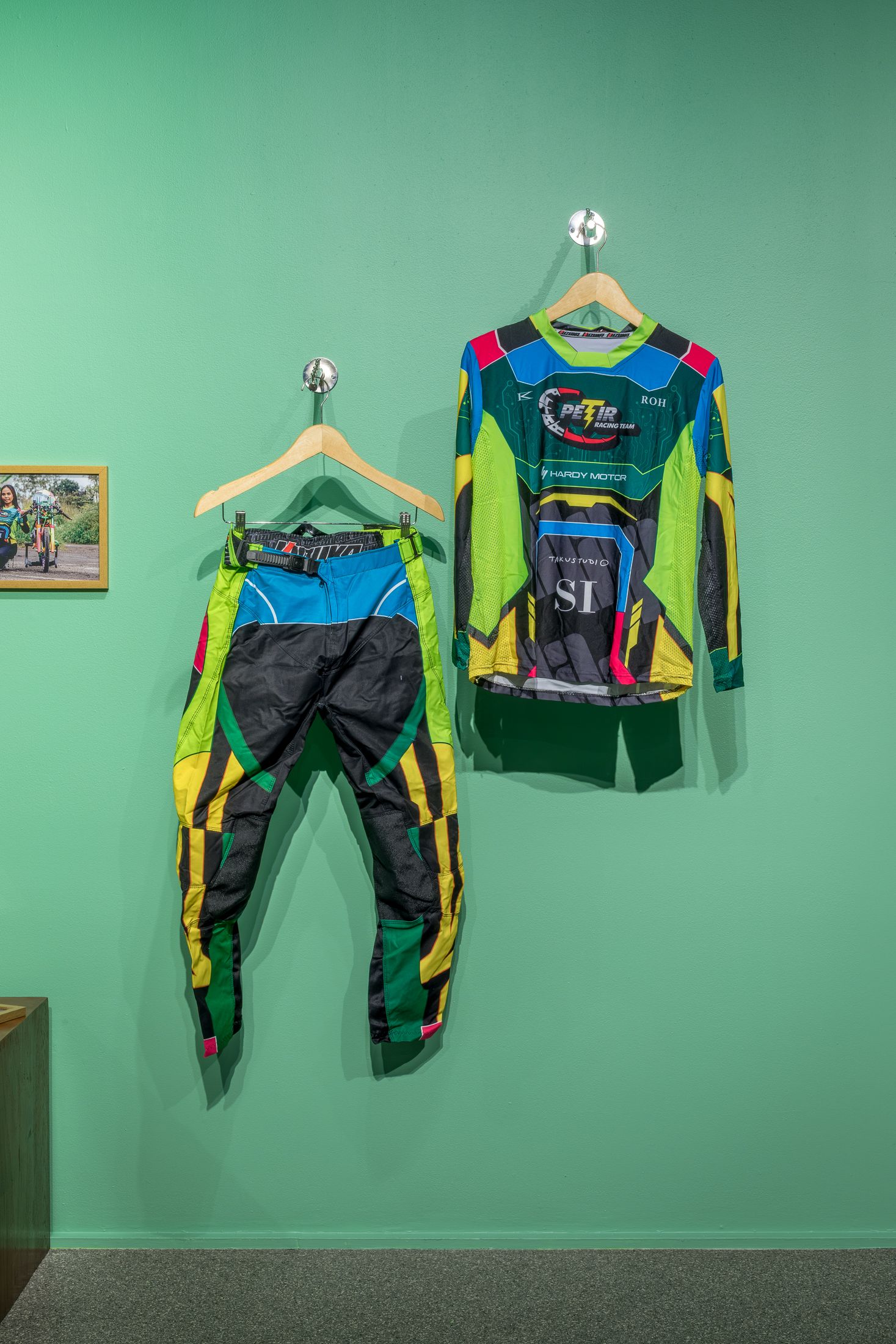
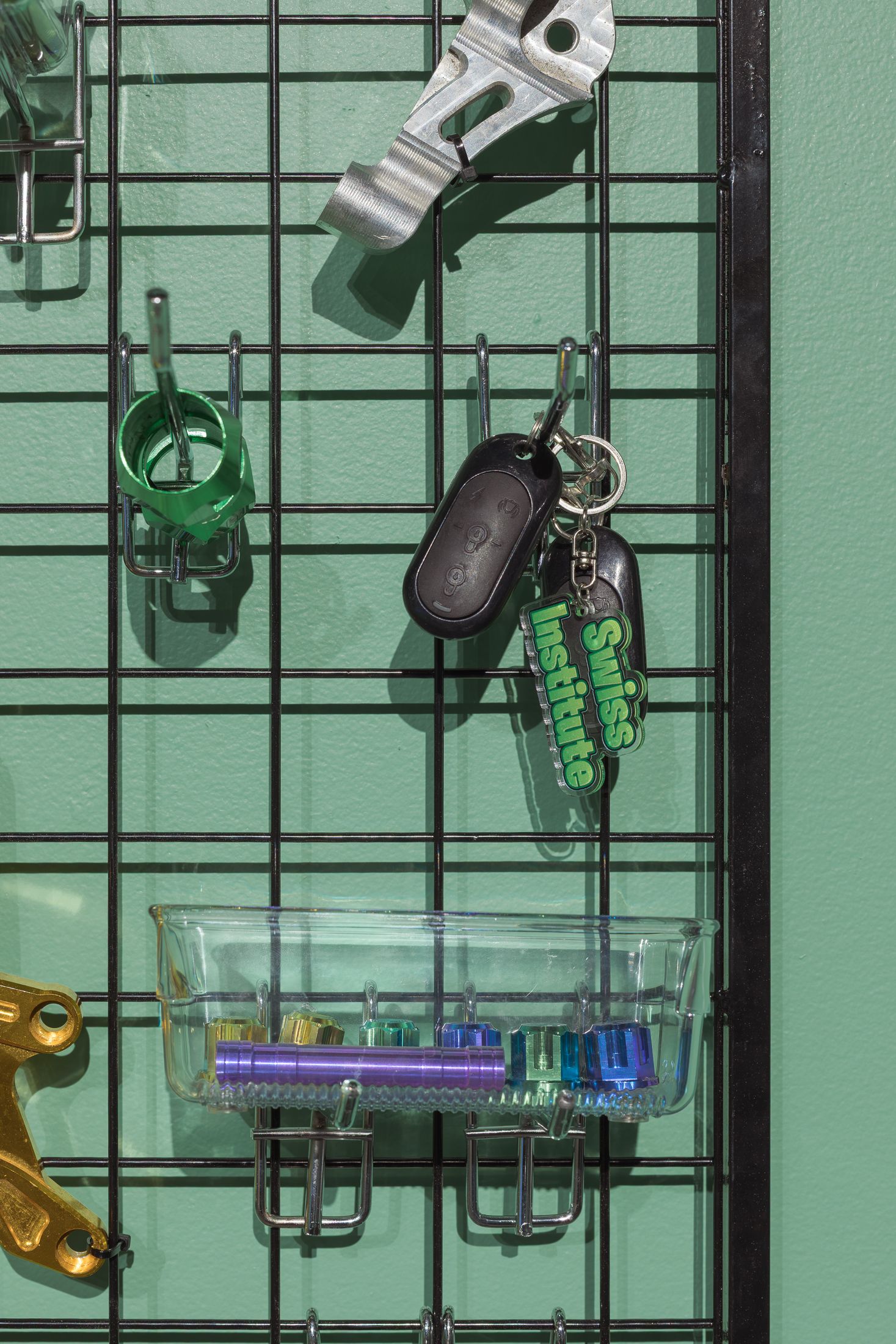
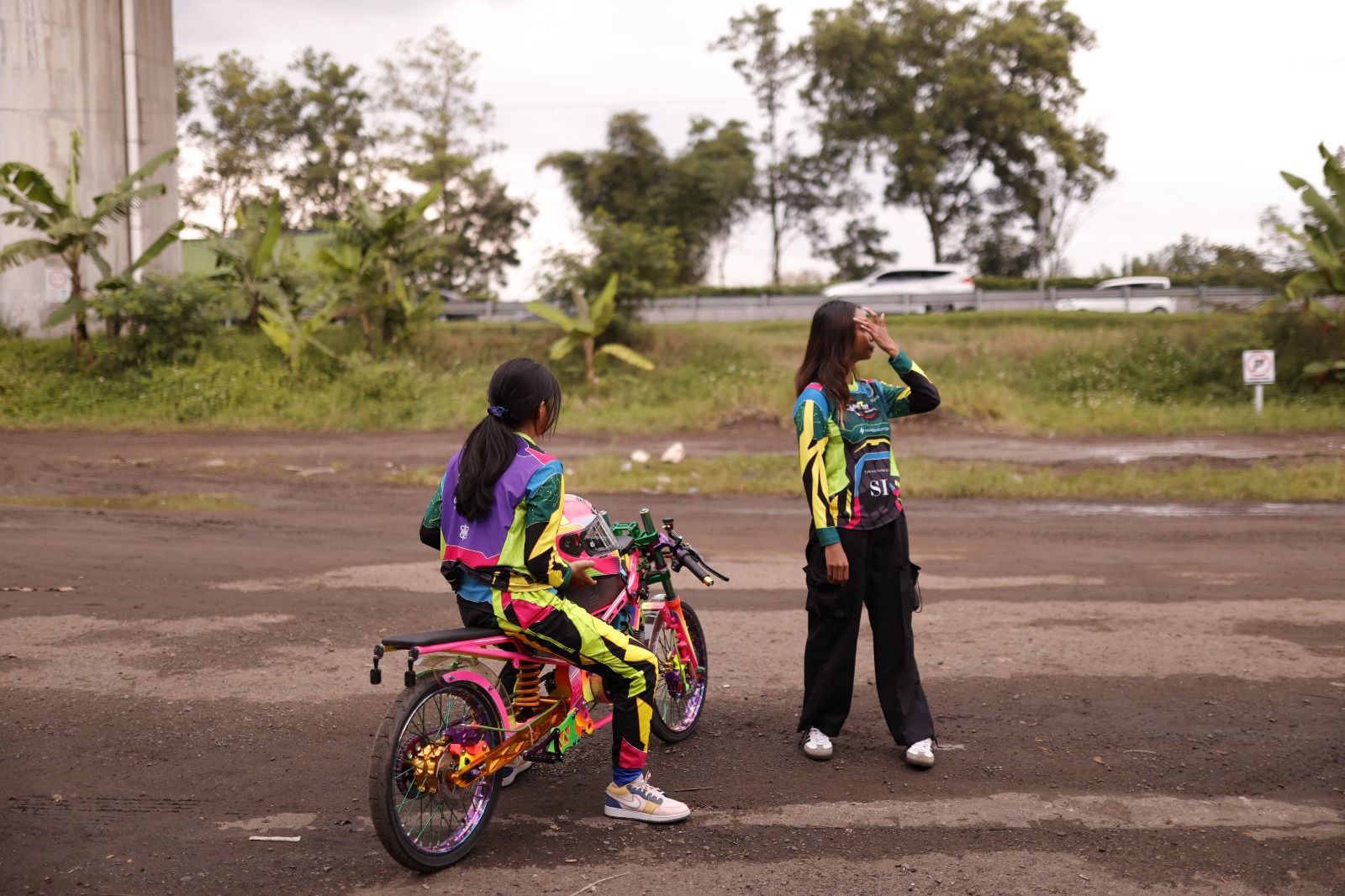
On the second floor of the exhibition is Putar Petir Racing Team (2025), an installation featuring a custom-built electric motorbike, made by the artist. With this bike, Pandega draws from the aesthetics of jamet, a word formed from ‘jawa’ and ‘metal’ that refers to Javanese fans of metalhead music. All the elements in Putar Petir embody the bright colours of jamet, mainly shiny reds, purples, greens, and gold. Although the word jamet has evolved to become sometimes derogatory, Pandega sets out to reclaim the aesthetics of this tradition in the same way he is reclaiming technology as a possible ally.
While jamet refers to a distinctly local subculture, the indiscriminate extraction of mineral resources required to build technology is a huge global issue. Indonesia is the world’s largest producer of nickel (often used in batteries), and is now a hotbed for electric vehicle companies extracting the mineral. ‘You can literally scrape nickel off the land,’ Pandega tells me. Last year, in Raja Ampat—an archipelago known for its rich marine life off the north west of Indonesia—the government was forced, after protests against environmental damage, to revoke four out of five mining permits.
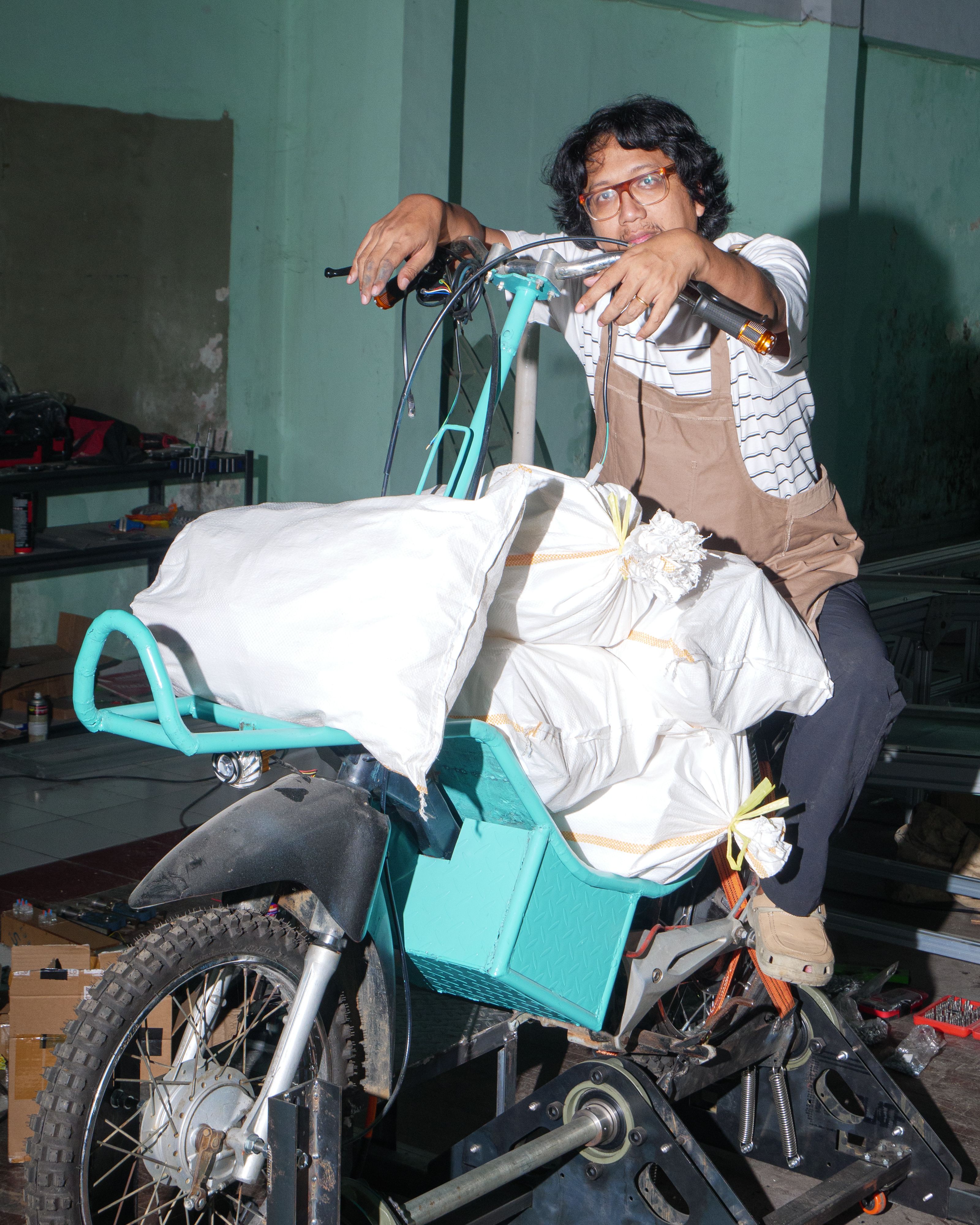
With this work, Pandega’s engagement with mineral extraction comes alive in a rather unexpected circle: although he has employed the same technology used by large companies in producing the battery that powers the bike, here he creates a work that explores how to use natural resources shrewdly, rather than exploitatively. Pandega’s view of extraction is, then, not one of outright rejection. ‘My father is a geologist and specialises in the study of stones and their compositions,’ he says. ‘Extraction for me is personal.’
In Pandega’s world, progress does not have to come at an impossible cost—it is a world where mineral resources are not the exclusive preserve of elite companies; a world where integrating technology into cultural spaces becomes the norm. Rather than kill the earth, technology gives it life. —[O]
A respected voice in contemporary art discourse.
Focusing on ambitious storytelling and insightful art-world commentary. Ocula Magazine publishes in-depth interviews, critical essays and timely analysis on the artists, exhibitions and ideas driving the global art world.
Learn more about Ocula Magazine
Showcasing the best of the art world.
Ocula partners with galleries from around the world to highlight their artists, artworks and exhibitions. Gallery membership is by application and invitation, with each member vetted by an independent panel.
Learn more about Ocula Membership
Specialises in the sale of major artworks.
Led by a team with deep ties to the world’s leading auction houses, galleries and collectors. Ocula’s advisory team offers bespoke services to high-net-worth clients from around the world who are looking to acquire the best of contemporary and modern art.
Learn more about our team and services