





The art world in focus
Subscribe to our newsletter for news and insights on artists, galleries and exhibitions.

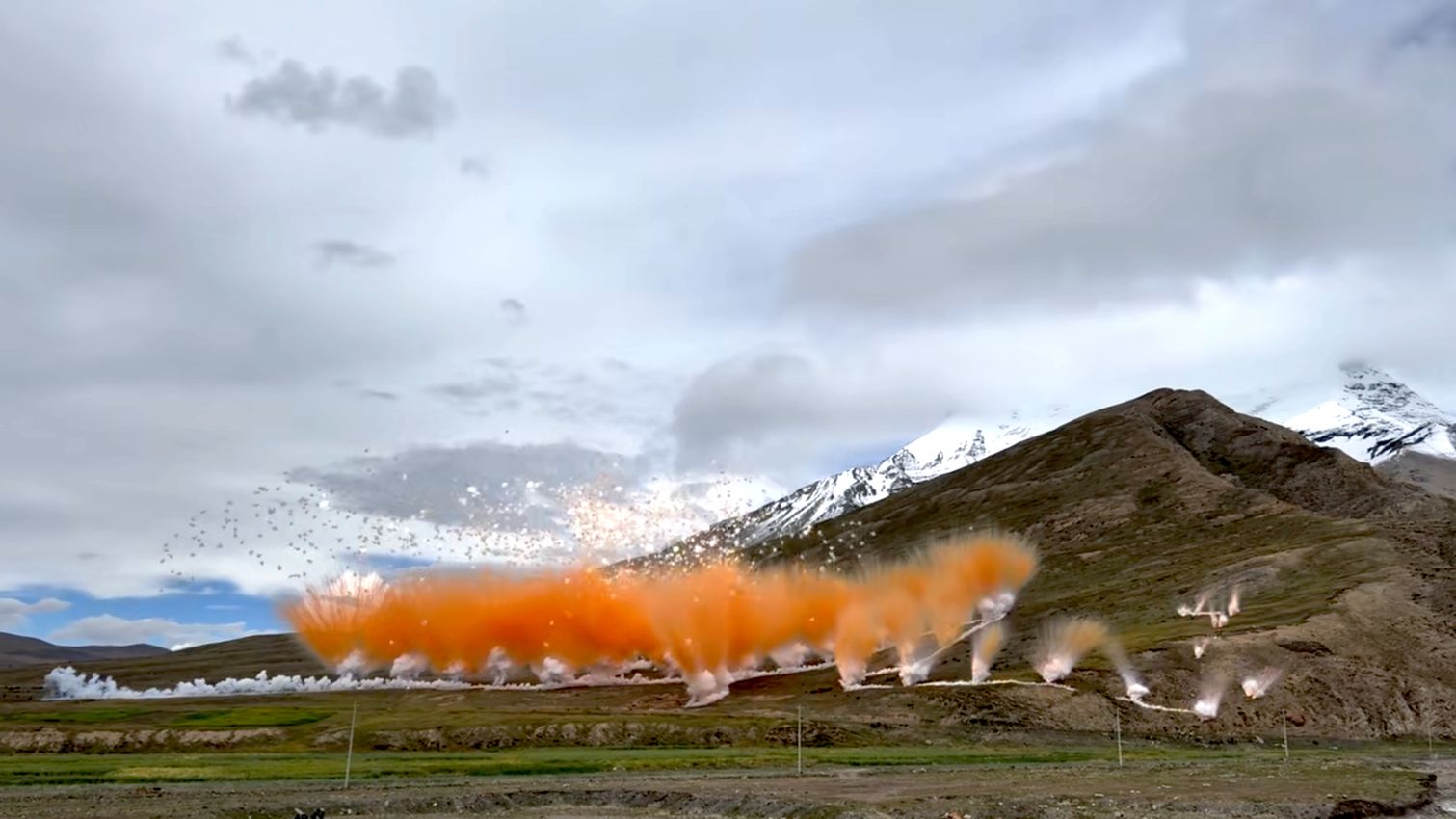
New York-based Chinese artist Cai Guo-Qiang has ignited controversy with his latest performance, The Ascending Dragon, staged at 4,500 metres in Shigatse, deep in the Tibetan Himalayas. Intended as a tribute to nature, the 52-second spectacle has instead sparked debate over environmental harm and cultural sensitivity.
The show featured four sequences—from base to summit, summit to creek, and beside a creek—using 1,050 fireworks mounted on steel rods or fired from boxes. Originally planned for Mount Fuji, the project was relocated to the ecologically fragile Himalayas after failing to secure permission in Japan.
Online criticism was swift. Observers questioned both the environmental risks of a large-scale pyrotechnic display and the cultural implications of performing it on Tibetan land. Tibetan writer Tsering Woeser condemned Cai’s actions as ‘cultural colonisation’, citing his renaming of Mount Chaqiong Gangri as ‘Hot Dragon’ and his false claim that the ‘dragon of colours represents Tibetan culture’—an outsider narrative masquerading as homage.
Authorities responded quickly. The Shigatse Communist Party Committee announced an investigation, underscoring the seriousness of the incident. Arc’teryx, the outdoor brand that sponsored the event and that has been under Chinese ownership since 2019, issued a public apology on Instagram. Cai also addressed the backlash, writing: ‘If any environmental impact is confirmed, we will spare no effort to implement remedial and restoration measures.’
The site, at 4,500 metres, is dominated by alpine meadows. While not formally protected, it sits just 30 metres from a water source and six kilometres from the nearest glacier. At this altitude, the lack of microbes means even biodegradable materials are unlikely to decompose, raising further ecological concerns. —[O]
A respected voice in contemporary art discourse.
Focusing on ambitious storytelling and insightful art-world commentary. Ocula Magazine publishes in-depth interviews, critical essays and timely analysis on the artists, exhibitions and ideas driving the global art world.
Learn more about Ocula Magazine
Showcasing the best of the art world.
Ocula partners with galleries from around the world to highlight their artists, artworks and exhibitions. Gallery membership is by application and invitation, with each member vetted by an independent panel.
Learn more about Ocula Membership
Specialises in the sale of major artworks.
Led by a team with deep ties to the world’s leading auction houses, galleries and collectors. Ocula’s advisory team offers bespoke services to high-net-worth clients from around the world who are looking to acquire the best of contemporary and modern art.
Learn more about our team and services
