






As the South African Pavilion Sits Empty, Gabrielle Goliath Continues a ‘Life-Work of Mourning’

The artist described the reading as “a gathering in the wake, an assembly of broken words”.
Gabrielle Goliath, the South African artist whose performance exploring femicide, rape culture and the killing of Palestinian civilians was abruptly pulled from South Africa’s Venice pavilion earlier this year, has today inaugurated her defiant, off-site Venice show with a moving public poetry reading on a crowded street.
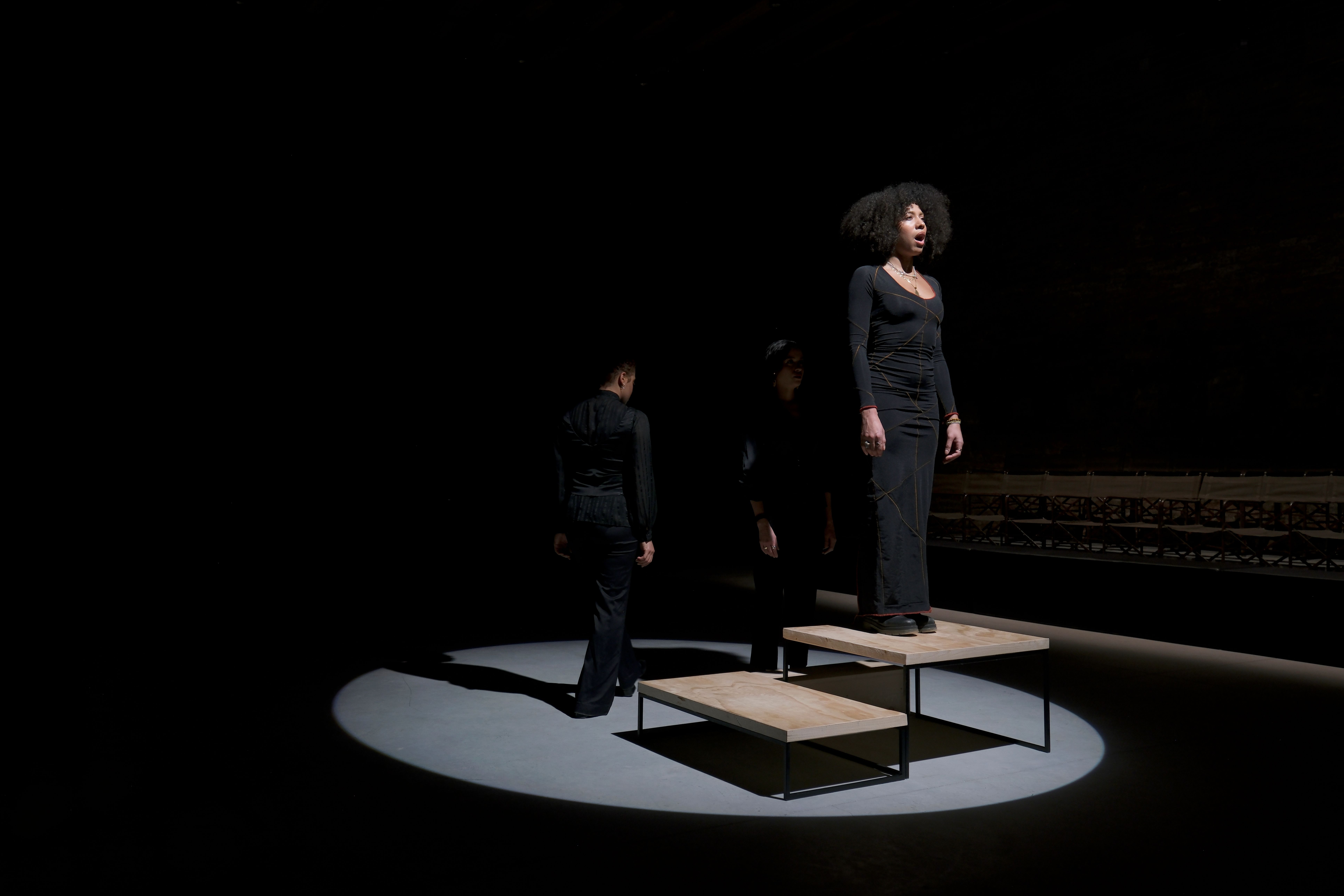
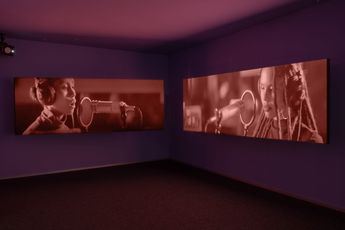
The work, Elegy, which began in 2015, is an ongoing series featuring seven singers who collectively enact a mourning ritual, sustaining a single tone over the course of an hour. Goliath’s invitation to present the performance at the biennale was rescinded by South Africa’s Department of Sport, Arts and Culture in January, after it was deemed to be “related to an ongoing international conflict that is widely polarising”.
Speaking today outside the 4th century church that hosts her exhibition, the artist described the reading as “a gathering in the wake, an assembly of broken words”. She continued: “These poems surface an entanglement of hurts, from femicide in South Africa, to genocide in Namibia, and now, still, in Gaza.
“And the note continues, echoing and travelling between sites of imperial rupture. Lebanon, Iran, Sudan, Yemen, DRC [Democratic Republic of Congo], Haiti, invoking in breath and broken words, the dissident presence of imperilled histories, lands, lives, loves.”
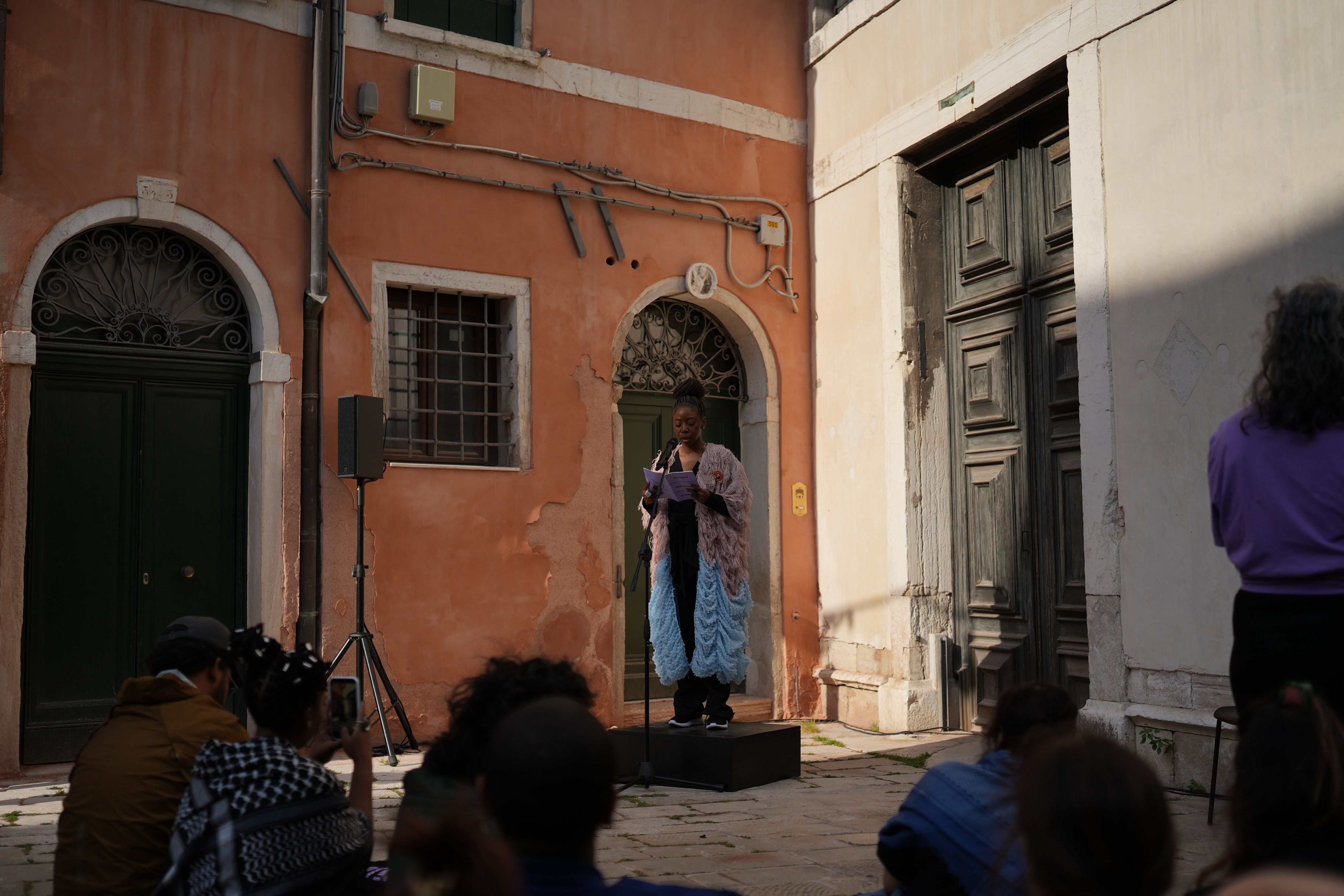
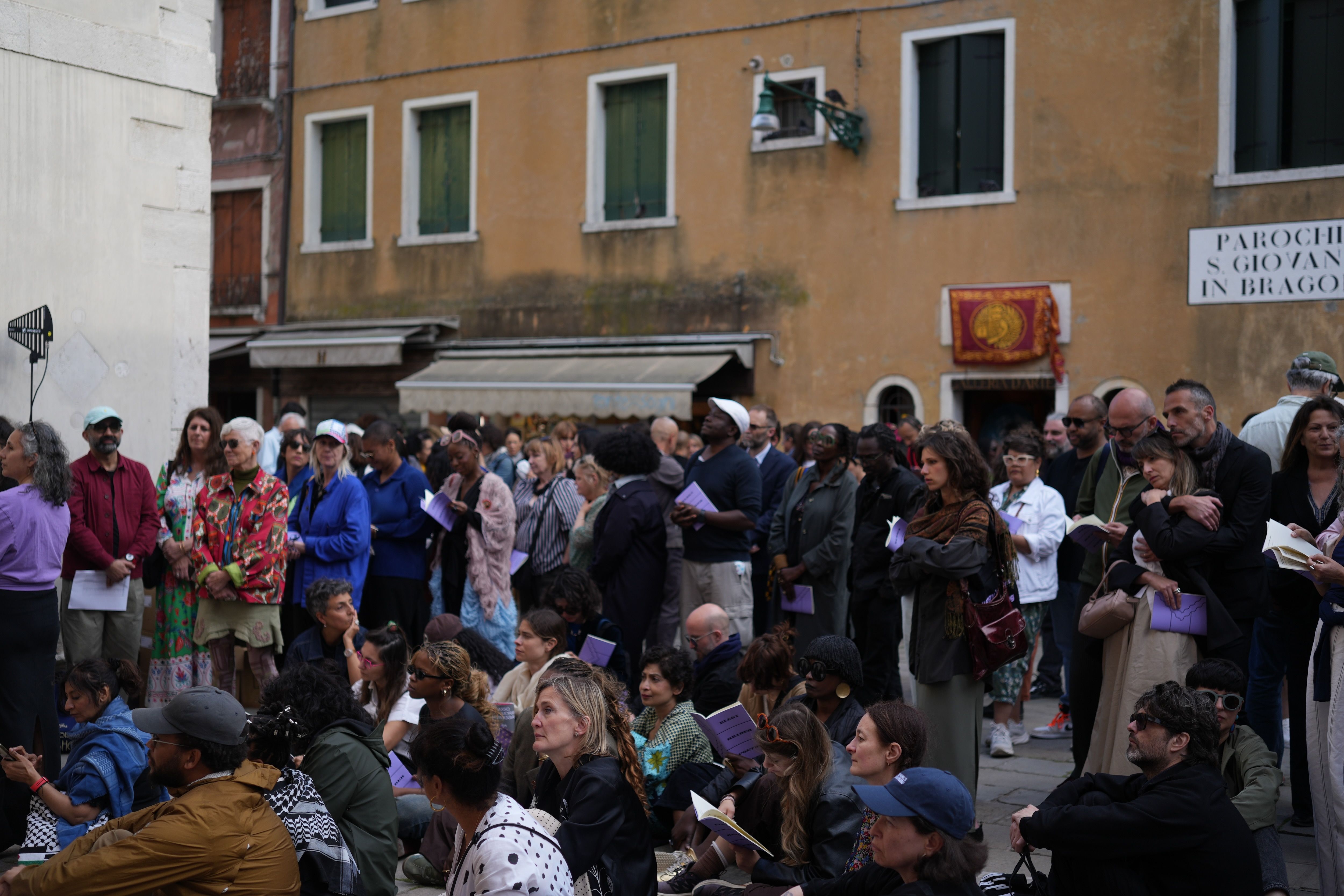
The artist then invited a series of speakers to recite poems from a book printed to accompany the exhibition, exploring histories of displacement, colonialism, and genocide. The event was intended to reflect the show’s theme of mourning, and to offer a space for the forging of connections.
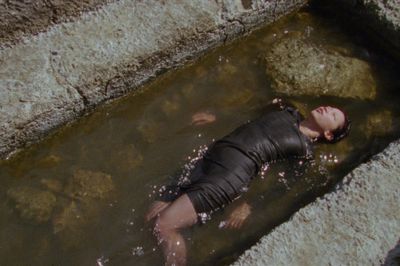
In its Venice iteration, Elegy features three new video and sound installations, lamenting the deaths of South African teenager Ipeleng Christine Moholane, who was murdered in 2015; Nama women killed during Germany’s colonisation of Namibia; and Palestinian poet Hiba Abu Nada, who was killed in Gaza during an Israeli airstrike in October 2023.
Discussing the performance, the artist said: “It is the work of invocation, of channeling absent presence within a crisis-norm of disregard. It is, I have said, and am still saying, a life-work of mourning.
“Asserting, faltering, asserting again, and in chorus, the lovability and grievability of Black, brown, indigenous, fem, queer and trans lives.”
Following the cancellation of her pavilion, in January, Goliath called publicly for her work to be reinstated. The following month the artist submitted an urgent application to South Africa’s high court in an unsuccessful attempt to have the decision overturned.
In March it was announced that the exhibition would instead run throughout the biennale, though outside of the official programme, before travelling to London in October. In a statement at the time, Goliath said: “Convened in this exhibition is a gathering space, a sacred chamber in which to sound a reparative work of loving and longing.
“We hold a note —a black femme chorus—and in the face of cancellation, threat, and incommensurable losses, dare to think and dream the world differently.”






A respected voice in contemporary art discourse.
Focusing on ambitious storytelling and insightful art-world commentary. Ocula Magazine publishes in-depth interviews, critical essays and timely analysis on the artists, exhibitions and ideas driving the global art world.
Learn more about Ocula Magazine
Showcasing the best of the art world.
Ocula partners with galleries from around the world to highlight their artists, artworks and exhibitions. Gallery membership is by application and invitation, with each member vetted by an independent panel.
Learn more about Ocula Membership
Specialises in the sale of major artworks.
Led by a team with deep ties to the world’s leading auction houses, galleries and collectors. Ocula’s advisory team offers bespoke services to high-net-worth clients from around the world who are looking to acquire the best of contemporary and modern art.
Learn more about our team and services