





Banned South African Pavilion Artist Defies Government With Venice Show

Gabrielle Goliath © Anthea Pokroy

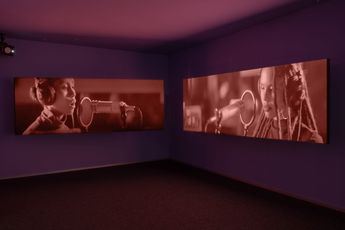
Gabrielle Goliath, whose performance exploring femicide, rape culture and the killing of Palestinian civilians was abruptly pulled from South Africa’s Venice pavilion in January, will present the work during the biennial’s 61st edition after all.
The artist will mount an independent exhibition of her long-term project Elegy at the Chiesa di Sant’Antonin in Castello, a venue close to but not part of the biennale, in the form of a multi-channel video installation.
In a statement, Goliath said: “Convened in this exhibition is a gathering space, a sacred chamber in which to sound a reparative work of loving and longing. We hold a note—a black femme chorus—and in the face of cancellation, threat, and incommensurable losses, dare to think and dream the world differently.”
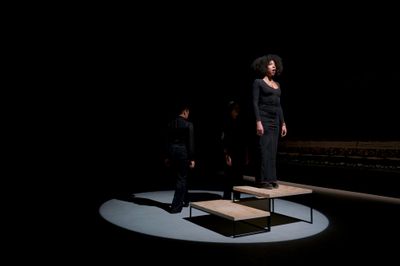
Elegy, which began in 2015, is an ongoing series featuring seven singers who collectively enact a mourning ritual, sustaining a single tone over the course of an hour.
Its Venice iteration, organised with curator Ingrid Masondo, would have featured three video and sound installations lamenting the deaths of South African teenager Ipeleng Christine Moholane, who was murdered in 2015; Nama women killed during Germany’s colonisation of Namibia; and Palestinian poet Hiba Abu Nada, who was killed in Gaza during an Israeli airstrike in October 2023.
In December last year, Gayton McKenzie, South Africa’s sport, arts and culture minister, said that Elegy was “known to be highly divisive in nature and is related to an ongoing international conflict that is widely polarising”.
The minister requested Goliath amend the section of the work relating to the Israel-Palestine conflict and, when the artist refused, her presentation was cancelled on 2 January. Her attempts to challenge this decision in South Africa’s High Court have since failed.
Arranged across eight funereal video screen monoliths, this independent presentation of Elegy will include all three elements previously slated to appear in the biennale. However, without the backing of the South African government, the installation has been made possible thanks to a network of collaborators and supporters.
These include Bertha foundation and the London-based Ibraaz, which champions voices from the global majority. In a statement, the organisation’s founder, Lina Lazaar, said: “Elegy is a work that holds memory, care and connection in the face of loss.
“Carrying it forward now feels both urgent and necessary, and aligns with Ibraaz’s mission to be a brave space that platforms art and ideas from the global majority.”
Following its run in Venice in May from 5 May–31 July, Elegy will travel to Ibraaz’s London space from October.




A respected voice in contemporary art discourse.
Focusing on ambitious storytelling and insightful art-world commentary. Ocula Magazine publishes in-depth interviews, critical essays and timely analysis on the artists, exhibitions and ideas driving the global art world.
Learn more about Ocula Magazine
Showcasing the best of the art world.
Ocula partners with galleries from around the world to highlight their artists, artworks and exhibitions. Gallery membership is by application and invitation, with each member vetted by an independent panel.
Learn more about Ocula Membership
Specialises in the sale of major artworks.
Led by a team with deep ties to the world’s leading auction houses, galleries and collectors. Ocula’s advisory team offers bespoke services to high-net-worth clients from around the world who are looking to acquire the best of contemporary and modern art.
Learn more about our team and services