






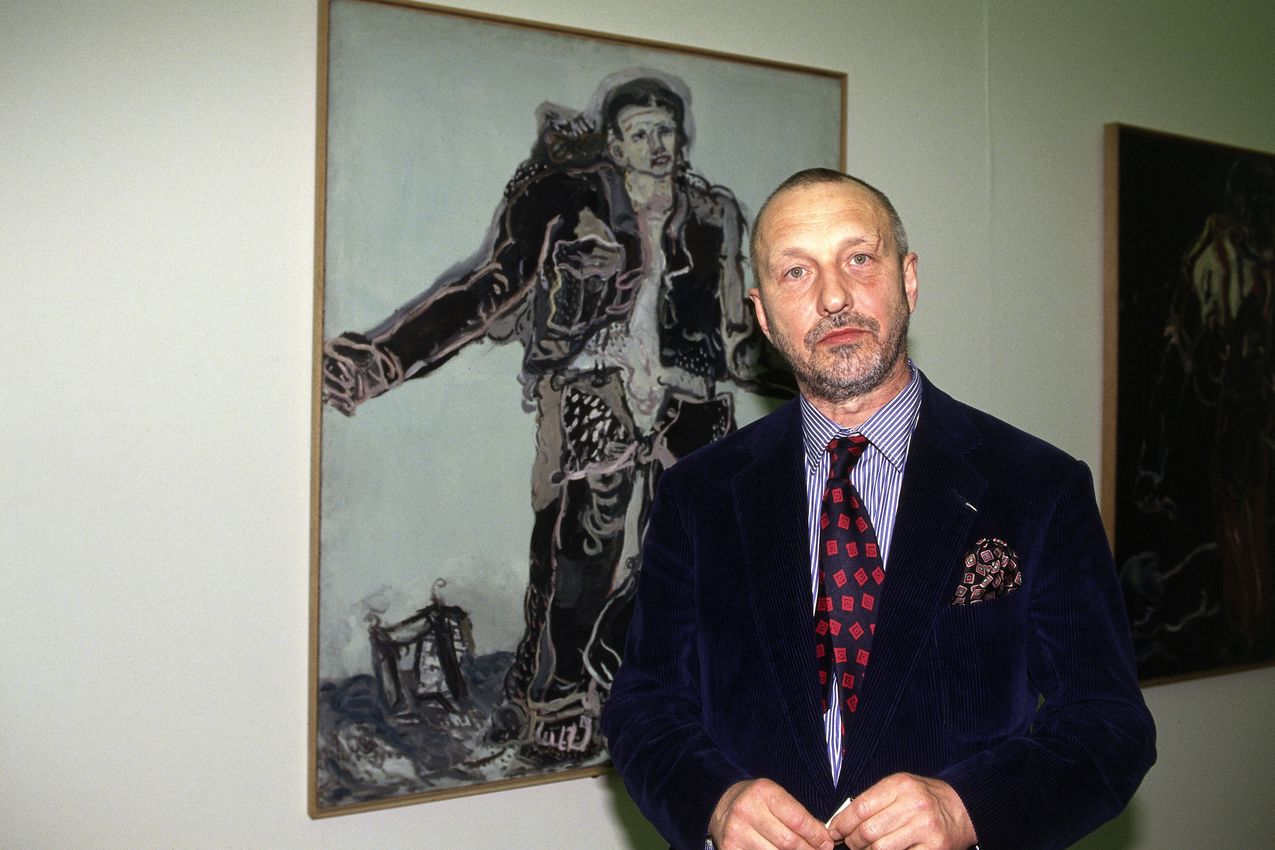
Georg Baselitz, Painter, Printmaker and Sculptor, Dies at 88
The German artist captured the raw, distorted forms of war in his paintings. Save to My Ocula

Georg Baselitz was born as Hans-Georg Kern in 1938, in Upper Lusatia, Germany, a region of Saxony that later became part of the German Democratic Republic. Baselitz was aged seven as the war came to an end, and the wrecked urban and political landscapes of the post-war order profoundly shaped his approach to art-making. “I was forced to question everything, to be ‘naive’,” he said. Indeed, he was expelled from the Academy of Fine and Applied Arts in East Berlin in 1957 for “political immaturity” – in other words, a failure to produce art that aligned with the ideals of the state.
In the 1960s, Baselitz began to gain recognition for his expressive, corporeal paintings that conveyed both the viscerality of the body and the central artifice of painting. In 1969, he started painting his subjects upside-down, to invert not only the traditional subject-positioning of the painterly perspective but also unsettle the very notion of the figurative. Drawing on a range of influences such as Soviet socialist realism, medieval carvings, Art Brut, Dada, Abstract Expressionism, Mannerist paintings, and African sculpture, Baselitz produced an artistic vernacular that communicated some of the geopolitical fragmentation of the post-war period, as well as the revolutionary opportunity it posed for representative art.
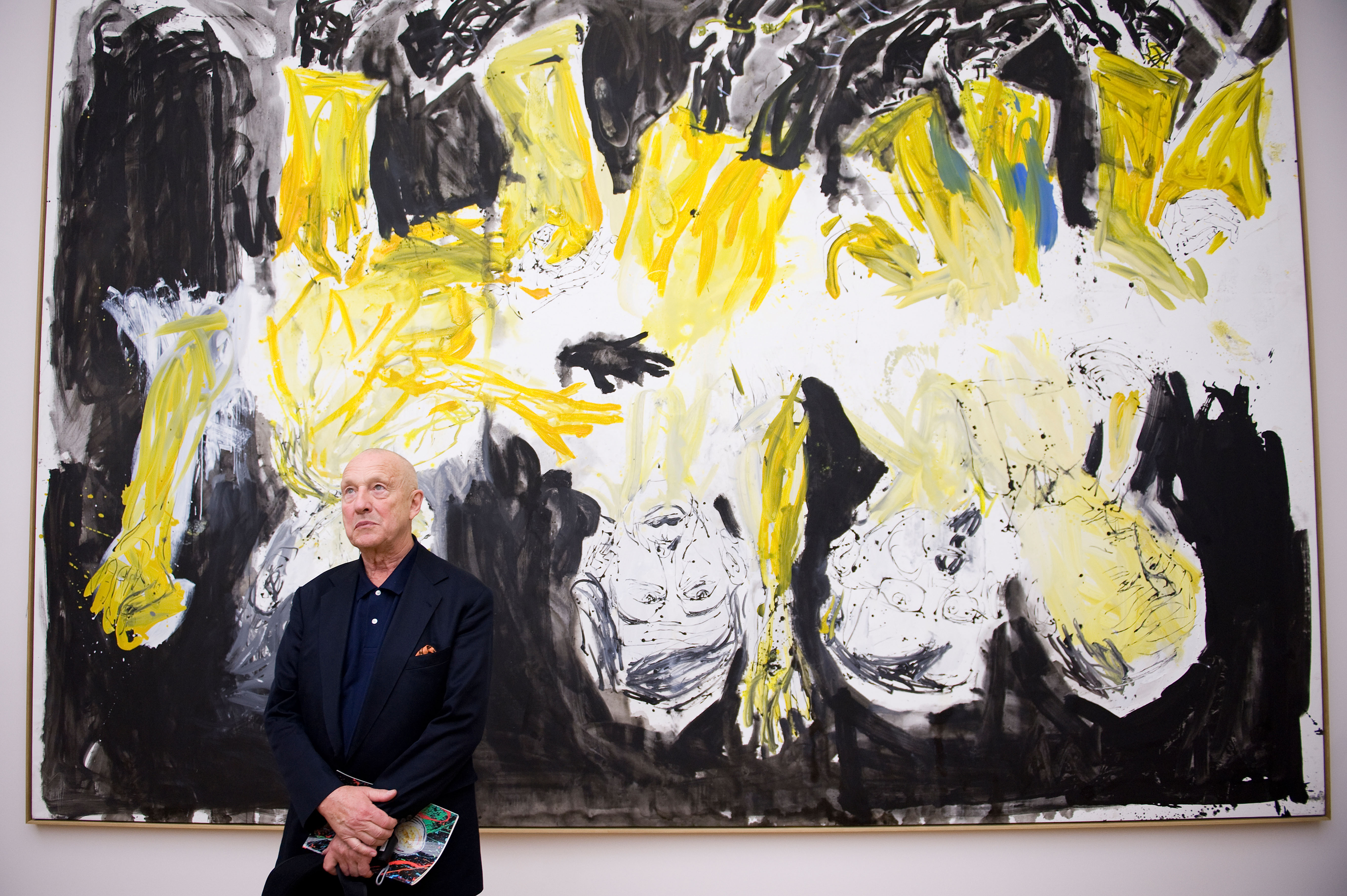
Last summer, Baselitz designed the marionettes and sets for a production of Igor Stravinsky’s L’Histoire du Soldat, a key work of musical modernism, in Salzburg. Baselitz’s puppets are simple figures, articulated from lengths of cardboard tube, but each has a flourish of colour as a head. Stravinsky wrote the musical just as World War I was about to end, living in exile by Lake Geneva. In this, he anticipated Baselitz, who would go on to produce extraordinarily expressive art out of the raw, distorted forms of war—turning the ruins of the past into the stuff of the eternal. His gallery, Thaddaeus Ropac, said in a statement that he died peacefully. —[O]
Main image: German artist Georg Baselitz. Photo: Interfoto.







A respected voice in contemporary art discourse.
Focusing on ambitious storytelling and insightful art-world commentary. Ocula Magazine publishes in-depth interviews, critical essays and timely analysis on the artists, exhibitions and ideas driving the global art world.
Learn more about Ocula Magazine
Showcasing the best of the art world.
Ocula partners with galleries from around the world to highlight their artists, artworks and exhibitions. Gallery membership is by application and invitation, with each member vetted by an independent panel.
Learn more about Ocula Membership
Specialises in the sale of major artworks.
Led by a team with deep ties to the world’s leading auction houses, galleries and collectors. Ocula’s advisory team offers bespoke services to high-net-worth clients from around the world who are looking to acquire the best of contemporary and modern art.
Learn more about our team and services