The art world in focus
Subscribe to our newsletter for news and insights on artists, galleries and exhibitions.

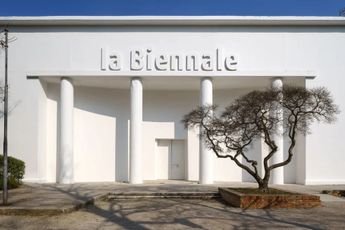
In 2024 Israel did move ahead with its pavilion, although its chosen artist, Ruth Patir, decided not to open her exhibition to the public. Marco Secchi / Alamy Live News.
Almost 200 artists, curators and art workers who are participating in this year’s Venice Biennale have signed an open letter demanding the exclusion of Israel from the edition, citing ongoing atrocities in Gaza and the West Bank.
According to the Art Not Genocide Alliance (ANGA), the anonymous campaign group behind the letter, the document was formally delivered to Pietrangelo Buttafuoco, president of the biennale’s board, yesterday.
The letter reads in part: “The Venice Biennale’s complicity with the attempted destruction of Palestinian life must end. No artist or cultural worker should be asked to share a platform with this genocidal state.
“…Genocide cannot be tolerated by an institution that aims to investigate and celebrate the human values embodied by art. Let your actions reflect this obvious truth.”
ANGA told Ocula that the biennale has not responded to the letter. The biennale did not respond to Ocula’s request for comment.
The names of 182 artists and curators representing the pavilions of more than 30 countries have been added to the letter, as have those of a further 80 artists and art workers participating across the biennale. Pavilion artists include Miet Warlop, Belgium; Dries Verhoeven, the Netherlands; Yto Barrada, France; Isabel Nolan, Ireland; Sara Flores, Perú and Oriol Vilanova, Spain.
Twenty-eight additional artists, art workers and curators have signed the letter anonymously, “in fear of possible physical, political or legal harms from signing publicly”.
Asked what signatories to the letter have told ANGA about their motivation, the organisation said: “The clearest message we have heard is that many participants do not want to share space with a state committing genocide.
“More broadly, artists, curators and art workers have expressed a growing refusal to be placed in a position of institutional complicity. What we are witnessing is not an isolated reaction, but a collective shift: a recognition that participation in major cultural events cannot be separated from the political conditions under which they take place.”
ANGA is made up of artists, curators, writers and cultural workers who have “come together to call for the exclusion of Israel at the Venice Biennale”, and has been active since 2024.
According to the group’s website, it maintains anonymity in order to protect its “most vulnerable and marginalised members” and to ensure its campaign “remains focused on protesting against the cultural normalisation of Israel rather than the identities of individuals”.
The group’s letter comes amid reports of continued Israeli strikes on Gaza and increasing pressure on the current ceasefire agreement, exacerbated by war across the Middle East. According to Gaza health officials, at least 40 people have been killed by Israeli fire since the United States and Israel launched joint attacks on Iran at the end of February.
According to Gaza’s health ministry, more than 72,000 people have been killed since 7 October 2023, when Hamas attacks saw almost 1,200 Israelis killed and more than 200 taken hostage.
ANGA also campaigned to block Israel from participating in the 2024 biennale, with an open letter signed by more than 20,000 artists and cultural workers, including Turner Prize winner Jesse Darling and photographer Nan Goldin.
While the country did move ahead with its pavilion, its chosen artist, Ruth Patir, decided not to open her exhibition to the public.
Writing on Instagram at the time, the artist said: “I firmly object to cultural boycott, but since I feel there are no right answer[s], and I can only do what I can with the space I have, I prefer to raise my voice with those I stand with in their scream, ceasefire now, bring the people back from captivity. We can’t take it anymore.”
This year Israel is due to present the exhibition Rose of Nothingness by sculptor Belu-Simion Fainaru. Fainaru did not respond to Ocula’s request for comment, but told Artnews in January: “Dialogue is the best way to express ourselves.”
The artist went on to say he is “totally against boycotts, and not just in Venice”, and described his installation as “a vision of hope and human feeling, the total opposite of boycott and exclusion, giving space to everybody”.
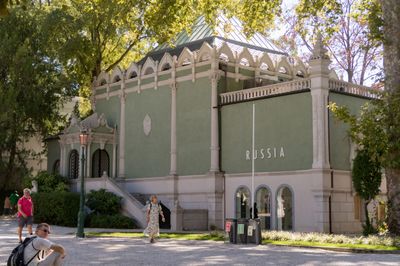
These latest calls come against a backdrop of mounting pressure on the biennale, following the announcement that Russia would participate in the 61st edition.
Amid this backlash, Italy’s minister of culture, Alessandro Giuli, last week called on the ministry’s representative on Venice Biennale’s board of directors to step down.
A Change.org petition titled Stop the Normalization of War Crimes Through Art, which called on Buttafuoco and the biennale’s board to reconsider Russia’s inclusion, had been signed almost 9,000 times at the time of writing.
An ANGA member said: “The criticism around Russia only reinforces what we have argued all along: the biennale is not a neutral platform.”
Referencing the biennale’s decision to condemn Russia’s full-scale invasion of Ukraine in 2022, they continued: “What the Russia controversy exposes is not neutrality, but a double standard. The biennale chooses to act politically in some cases while claiming procedural distance in others.
“…The issue, then, is not whether the biennale is political, but how and when it chooses to act.”
Earlier this month, in a statement issued alongside its announcement of all participating artists, the biennale said: “In response to the communications and requests for participation from countries, La Biennale di Venezia rejects any form of exclusion or censorship of culture and art.
“La Biennale, like the city of Venice, continues to be a place of dialogue, openness, and artistic freedom, encouraging connections between peoples and cultures, with enduring hope for the cessation of conflicts and suffering.”


A respected voice in contemporary art discourse.
Focusing on ambitious storytelling and insightful art-world commentary. Ocula Magazine publishes in-depth interviews, critical essays and timely analysis on the artists, exhibitions and ideas driving the global art world.
Learn more about Ocula Magazine
Showcasing the best of the art world.
Ocula partners with galleries from around the world to highlight their artists, artworks and exhibitions. Gallery membership is by application and invitation, with each member vetted by an independent panel.
Learn more about Ocula Membership
Specialises in the sale of major artworks.
Led by a team with deep ties to the world’s leading auction houses, galleries and collectors. Ocula’s advisory team offers bespoke services to high-net-worth clients from around the world who are looking to acquire the best of contemporary and modern art.
Learn more about our team and services