





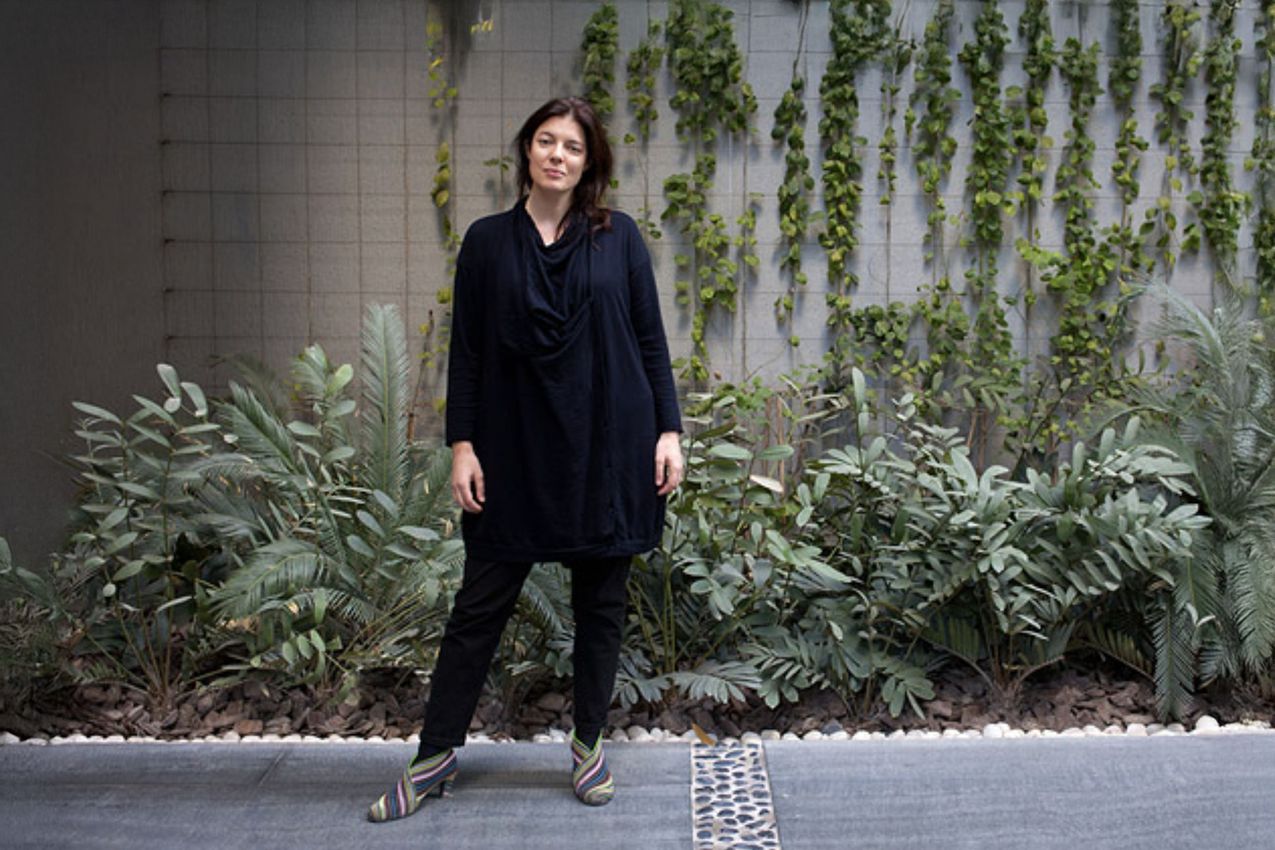
Antonia Carver
Contemporary art from the Middle East has undergone a great shift over the past decade, given the burst – and then rapid deepening – of international interest, and rise of art centres in the Gulf. Save to My OculaAntonia Carver became Fair Director of Art Dubai in August 2010. A long term advocate for contemporary Middle Eastern Art, she has written extensively on Middle Eastern art and film, as a correspondent for The Art Newspaper and Screen International, among other publications. Antonia joined the renowned Middle Eastern arts organisation, Bidoun, as an editor in 2004 and later became director of the projects division, co-curating educational workshops, film and video series, the touring Bidoun Library, artists’ commissions and talks, among other projects. Antonia is on the Arab film programming committee for the Dubai International Film Festival.
Now in its eighth year, Art Dubai has become the premier arts event in the region and a highlight of the international arts calendar. Ocula talks to Antonia about how she came to be involved with Art Dubai, what we can expect in the 2014 edition and her views on the future of contemporary Middle Eastern art.
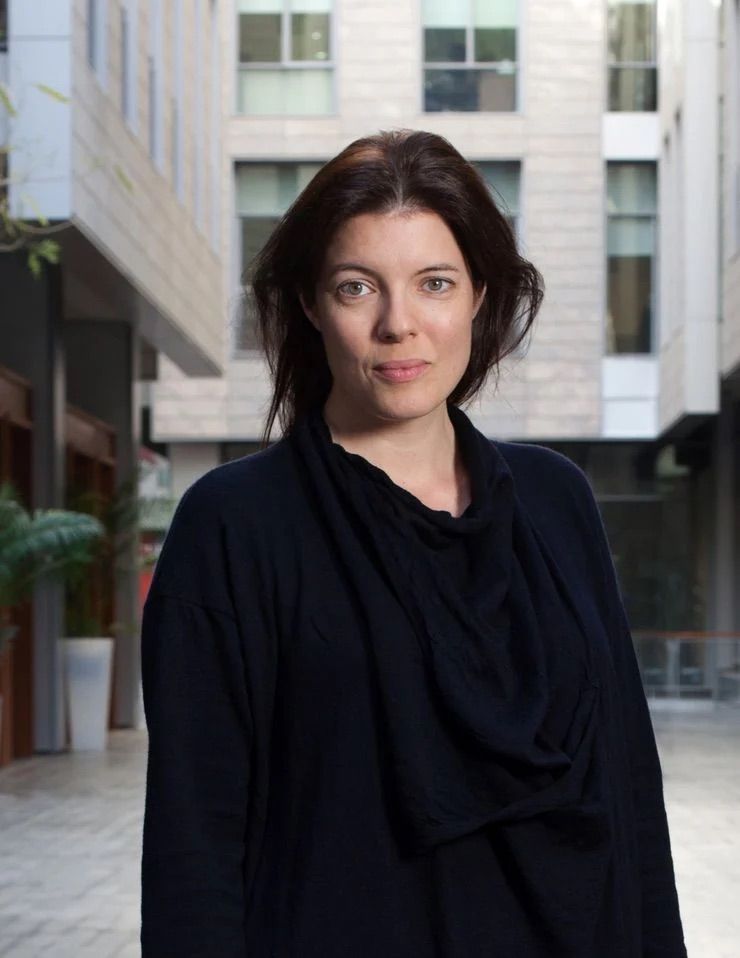
You have a long association with contemporary Middle Eastern art. Can you tell us about your background and how you came to be involved with Art Dubai?
I moved to the UAE in 2001 (although I’d done some work before that with artists and filmmakers in Iran and also South Asia), and started writing more about what was happening in the arts scenes of the Gulf and across the region. Bidoun started in 2003 and I joined as an editor and later as director of Bidoun Projects. When Art Dubai started in 2007, I was working as a reporter/critic/editor, and the fair also asked Bidoun to curate the projects – and over the years, I was involved on the periphery, as a curator of projects and also advising on the development and programming of the Forum. In 2010, the fair asked me to come in as director.
Art Dubai 2014 will be the biggest yet with more than 500 artists from more than 80 galleries from 35 countries. The fair’s roots are firmly grounded in the local UAE arts scene but equally it has a very diverse range of galleries attending. What is your vision with respect to continued growth of the fair?
Art Dubai has always been known as a “global fair” but over the past eight years, we’ve seen it really become the most diverse of fairs, with an outreach beyond the Middle East and South Asia, into Africa and East Asia, too. We tend to pair some of the world’s most influential galleries with upcoming artspaces, so presenting a particularly ‘fresh’ programme and exposing those artscenes that generally don’t get a look-in at fairs in Europe and the Americas. Some of the fair’s growth is predicated on the continued increase of interest in art from the Arab world, Iran and South Asia, given our role as a funnel to the international scene. But we’re reaching beyond this too – and the Marker section is key here, as each time as focus on a new region or geography, we intend to create a long-term conversation and ‘stickiness’ in future years. The UAE itself is home to 200 different nationalities; the city of Dubai is a major global trade and transport hub, and this has impacted and contributed to its growth as a cultural city, too. Each March, we see collectors and curators pouring in from around the world. We have 85 galleries coming in 2014 from 34 different countries, across 3 gallery programmes – Marker, Modern and Contemporary.
The growth of the Art Dubai reflects an equally rapid expansion of arts infrastructure in the region over the last decade. What do you see as the most significant changes locally and what do you predict for future of contemporary art in the Middle East?
Contemporary art from the Middle East has undergone a great shift over the past decade, given the burst – and then rapid deepening – of international interest, and rise of art centres in the Gulf. Over the past few years, we’ve seen a kind of ecology develop in the UAE – with the Biennial and Foundation in Sharjah; galleries, artists, independent not-for-profit spaces in Dubai; and the coming grand museums in Abu Dhabi. Dubai has grown from a handful of galleries to over 40; the fair has become the annual meeting point for all those interested in the region; and perhaps what’s most significant – the past 15 years of growth has produced an informed, enthusiastic, diverse, discursive public.
With the recent proliferation of art fairs around the world, what makes Art Dubai such a success?
Art Dubai was actually the first major international art fair in Asia when it opened in 2007 – and what’s happened since is indicative of the general economic/power shift towards “this part” of the world. We give a lot of thought to our position in the UAE, in the region, and in the world, and the way routes of trade and communication intersect through Dubai. We try to both investigate and represent the unique position. Geography is important, of course: Dubai’s position as a trade and transport hub serving Africa, the Arab world, Iran and South Asia has also impacted its role as a hub in the artworld.
This year’s Marker section focuses on Central Asia and the Caucasus, really adding to this sense of fair as a site of discovery. And this year, we match the geographical breadth of the fair with historical depth with a new section devoted to solo and two-person shows of work by twentieth-century masters from the Arab world, Iran, India and Pakistan. The fair is also different in the size of its not-for-profit programme of talks, commissions, residencies, and site-specific projects – perhaps the largest not-for-profit programme of any fair, worldwide. Our Saturday school, Campus Art Dubai, runs throughout the year and taps into the community of curators, critics, artists, and gallerists that has formed around the fair, and who help advise and critique the fair and our programmes.
Turning to the 2014 edition, can you tell us about what is planned for Marker, Art Dubai’s popular curated programme of galleries and artspaces?
This year Marker is curated by the artists ’Slavs and Tatars’ and takes Central Asia and the Caucasus as its focus. Celebrating the complexities of faith, identity and language in these regions, the programme includes five booth exhibitions, plus dynamic educational and research initiatives. We began this programme in 2011 and set out to engage year-on-year with 3 countries/areas, each of which has a particular relationship or relevance to the UAE and the Gulf: Indonesia (2012), West Africa (2013) and this year Central Asia and the Caucasus.
This is a part of the world with close ties to the Gulf, both historical and contemporary; the various arts scenes feature both state-run institutions and young start-up artspaces and galleries, and there is a wealth of compelling artists that deserve greater recognition. We’re working with artists as curators for the first time – Slavs and Tatars has a fascinating practice that is quite research and language-based and works well as a base for their engagement with other artists and artspaces. Caspian Art Foundation is helping to support a very dynamic education programme while One Star Books, the Paris-based artists’ publisher, is launching a series of artists’ books with artists from Central Asia and the Caucasus, recommended by ‘Slavs and Tatars’. This is the most ambitious Marker to date – it’s very exciting.
Art Dubai’s Global Art Forum is always much anticipated. Who are the curators in 2014 and what is the theme?
We have just recently announced the programme, directors and speakers of the 8th edition of the Global Art Forum. Titled Meanwhile...History, the 2014 Global Art Forum is an imagined timeline of turning points in history – significant decades, years, days, minutes or seconds that shifted an understanding of the world – some of which seem familiar, some of which are largely ignored or unknown, some of which are actually in the future.. Shumon Basar returns as Commissioner, and is joined by the curator-translator Omar Berrada and artist Ala Younis. The theme lends itself to a typically diverse line-up of thematic talks/presentations/panels, plus commissioned research and film projects – everything from 100 years of Documenta (featuring Okwui Enwezor, Catherine David and Adam Szymczyk) to the pearl industry crisis of the Gulf in the 1930s, to exploring the mid-1970s as a ‘moment’ of seismic change (with Marina Fokidis, Brett Steele, Tirdad Zolghadr and Oscar Guardiola-Rivera.
This year you will launch Modern – a new section of the fair devoted to modern art from the Middle East and South Asia. How did you formulate the idea for Modern what are your hopes for how it will function within the wider fair?
The launch of Art Dubai Modern is something we’ve been planning for a while and a really exciting new development in the fair. This year, Modern will include 11 galleries, each of which is presenting a solo or 2-person show by an influential modern master from the Middle East or South Asia. We worked with a brilliant group of historians and curators (Savita Apte, Catherine David, Kristine Khouri, Nada Shabout), and the galleries have really come up some fascinating shows. The idea was to connect today’s artists with the generation that inspired and influenced them, and so be able to trace threads of historical connectivity between art practices and places. Many international curators and collectors have first encountered the Middle East and South Asia through contemporary art – so we wanted to work back into the modern period to highlight the context of the work.
What are you most looking forward to at Art Dubai 2014?
Oh, it’s so hard to choose! It’s always exciting to see the booths that the galleries have planned for months to become a reality – and as much so the artists’ projects – we’re often with the artists step-by-step as they finalise their ideas, locations, and take up the challenge of producing new work in a very particular context and time period.
Aside from Art Dubai, what are the most anticipated events on your arts calendar this year?
It’s a bit far ahead but I’m looking forward to the Sharjah Biennial in 2015 – curated by Eungie Joo, and judging by the line-up for this year’s March Meeting, there are some compelling artists involved. The second Kochi Biennial opens in December this year, curated by artist Jitish Kallat. Kochi is a small city saturated in historical narratives, and the biennial last time more than matched the great food and spirit! —[O]
Art Dubai 2014, March 19-22, 2014 at Madinat Jumeirah, Dubai
Main image: Antonia Carver. Courtesy Art Dubai. Photo: Clint McClean.







A respected voice in contemporary art discourse.
Focusing on ambitious storytelling and insightful art-world commentary. Ocula Magazine publishes in-depth interviews, critical essays and timely analysis on the artists, exhibitions and ideas driving the global art world.
Learn more about Ocula Magazine
Showcasing the best of the art world.
Ocula partners with galleries from around the world to highlight their artists, artworks and exhibitions. Gallery membership is by application and invitation, with each member vetted by an independent panel.
Learn more about Ocula Membership
Specialises in the sale of major artworks.
Led by a team with deep ties to the world’s leading auction houses, galleries and collectors. Ocula’s advisory team offers bespoke services to high-net-worth clients from around the world who are looking to acquire the best of contemporary and modern art.
Learn more about our team and services