





The art world in focus
Subscribe to our newsletter for news and insights on artists, galleries and exhibitions.

Exhibition view: Precarious Joys, Toronto Biennial of Art, Collision Gallery (21 September–1 December 2024). Photo: Toni Hafkenscheid.
Co-curated by Dominique Fontaine and Miguel A. López, the Biennial (21 September–1 December 2024) features works and programming by more than 55 artists across 11 exhibition sites. The title is inspired by a long-running series by Chilean poet and artist Cecilia Vicuña, with whom López has frequently collaborated. In the mid-1960s, Vicuña began assembling manmade and natural debris into delicate, lyrical sculptures, which are often created outdoors and left exposed to the elements. Titled ‘Precarious Objects’ (1966–ongoing), the series symbolises cultural loss, survival, and resilience—themes that permeate this Biennial.
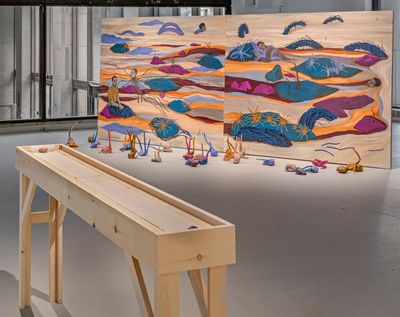
As a symbolic opener, several of Vicuña’s ‘Precarious Objects’ are installed near the entrance to one of the Biennial’s main venues at 32 Lisgar Street. Their poetic defiance sets the tone for the entire exhibition. The curatorial directives—‘Joy’, ‘Precarious’, ‘Home’, ‘Polyphony’, ‘Solace’, and ‘Coded’—allow for explorations of collective histories, queer and feminist perspectives, environmental justice, sovereignty, migration, spiritual wisdom, and resilience.
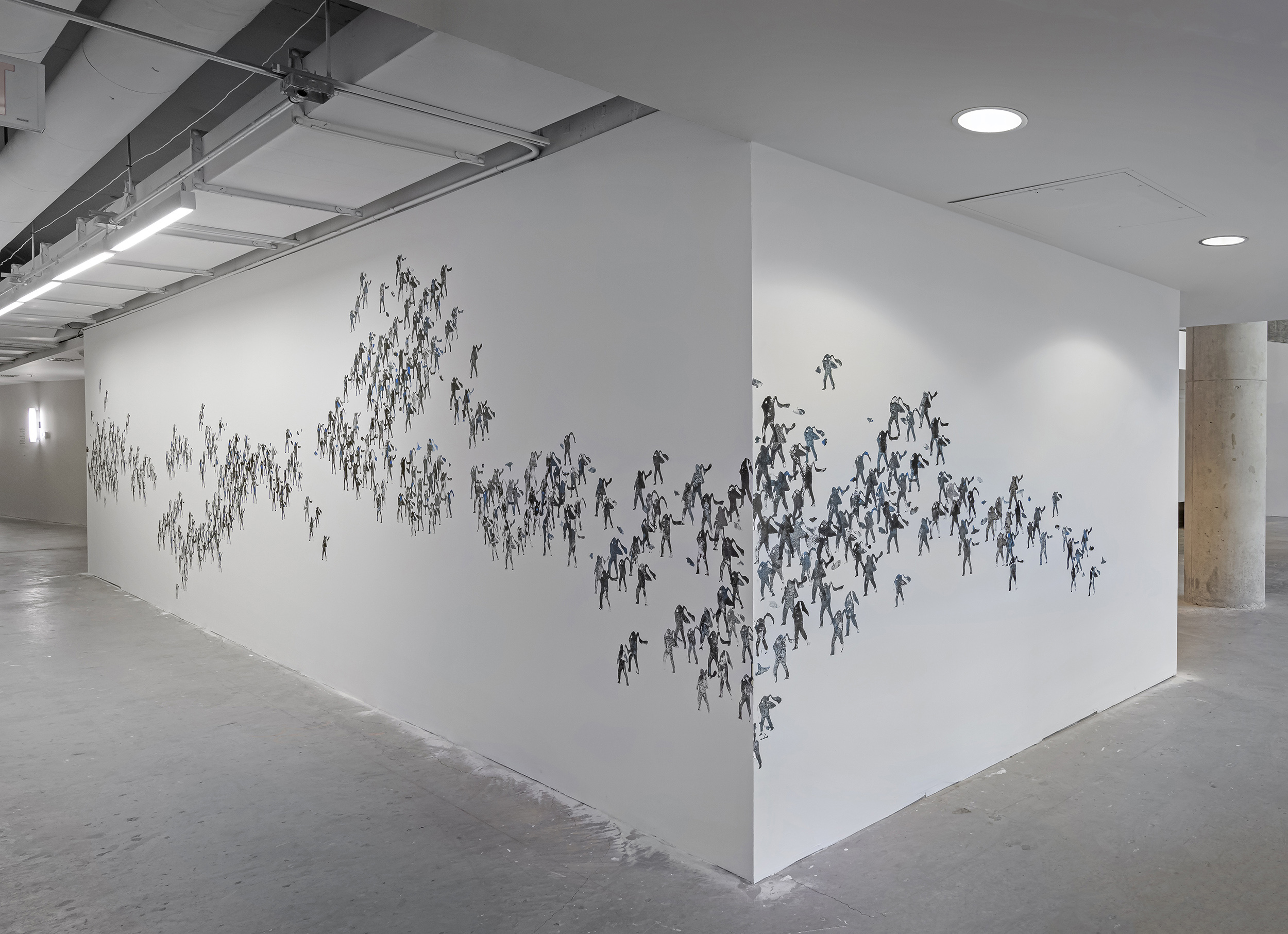
Resilience can be found just around the corner from Vicuña’s work in Leila Zelli’s Un chant peut traverser l’océan (A chant can cross the ocean) (2023–ongoing), which features hundreds of shapes stamped directly onto the wall, each representing an Iranian woman waving her hijab above her head—perhaps like a weapon. Echoing the outcry for women’s rights in Iran, Zelli captures another moment of defiance and liberation in her two-screen video installation Pourquoi devrais-je m’arrêter? (Why should I stop?) (2020–2021), which showcases Iranian women practising a traditional form of athletics despite being banned from the sport.
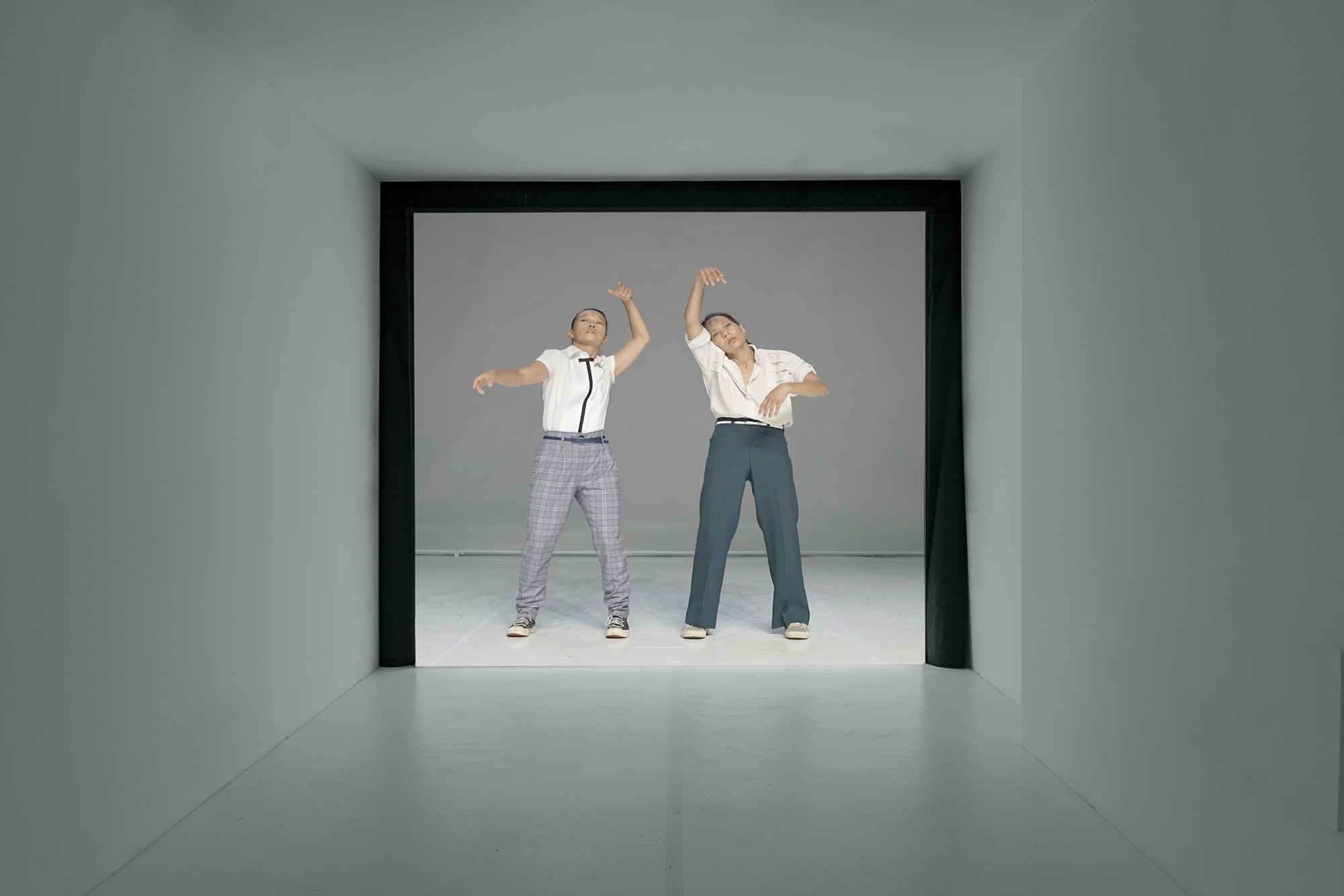
Embodied resistance emerges in Justine A. Chambers’ video installation One hundred more (2024), in which she and collaborator Laurie Young perform mesmerising, repetitive gestures to a percussive soundtrack—drawing inspiration from the Black Lives Matter movement and Erin Manning’s theory that small movements can disrupt established power dynamics.
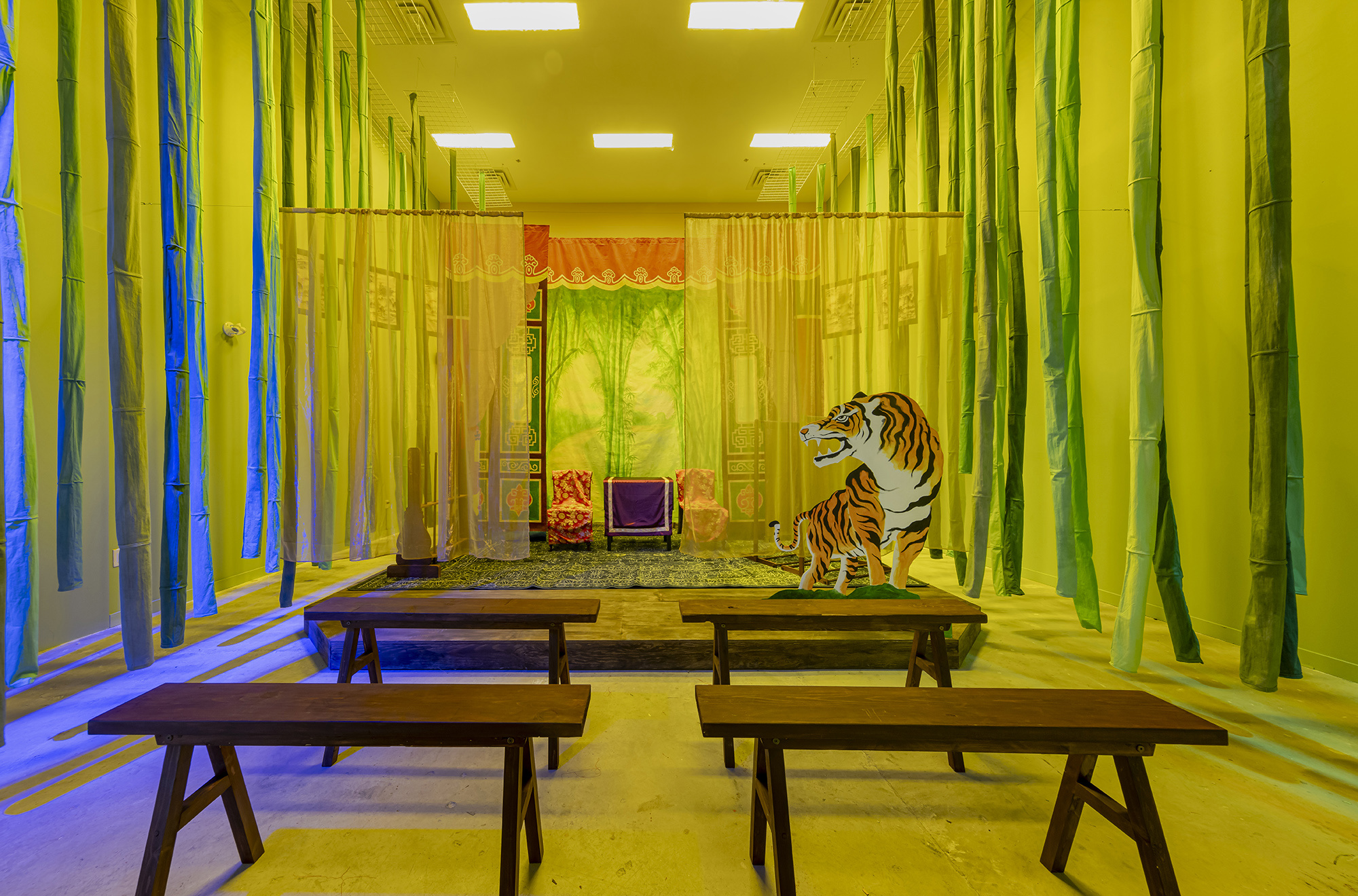
The rhythmic sounds of the video intertwine with the audio emanating from the next room, where Karen Tam’s immersive installation Scent of Thunderbolts (2024) explores diasporic memory through archival materials and reimagined elements of Cantonese opera. In the room’s centre, an elaborate stage—guarded by a painted tiger and surrounded by a forest of fabric bamboo—will be activated by performances and programming for the duration of the Biennial.
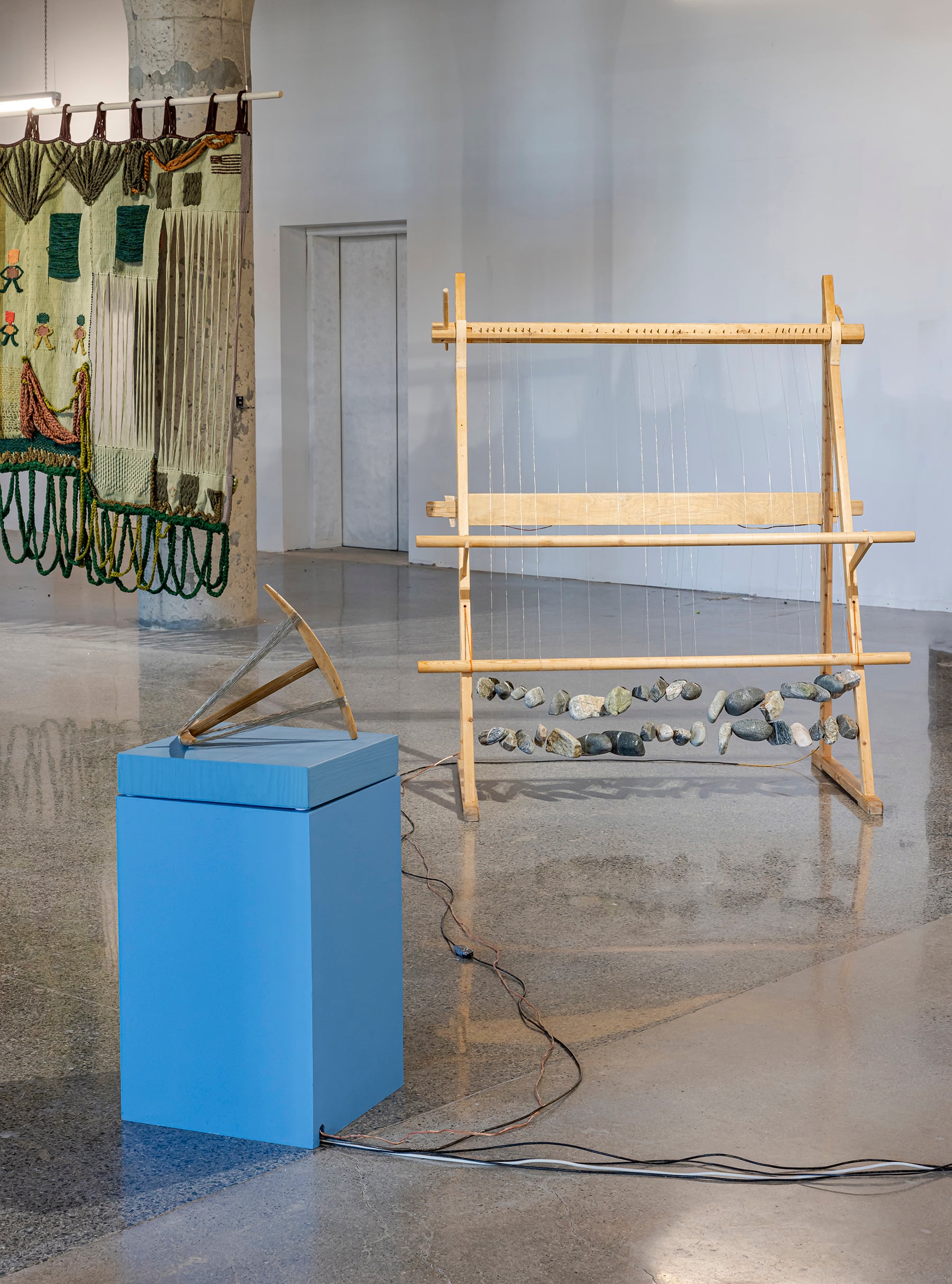
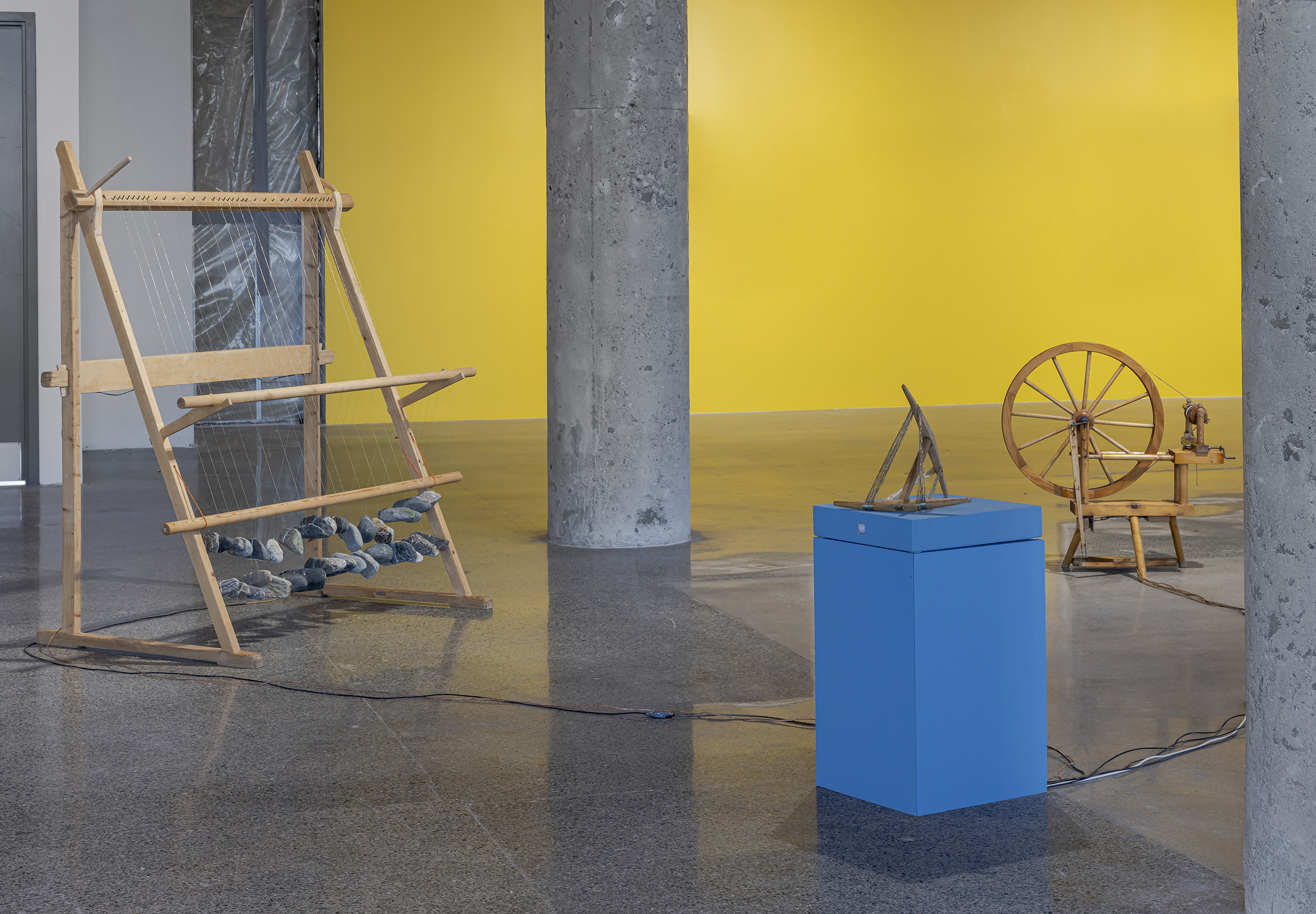
Music as a conduit for memory continues in Elina Waage Mikalsen’s delightful sound sculptures, on view in the Biennial’s second hub at The Auto Building on Sterling Road. In I Lay My Ear Against the Weave’s Ear (2019–ongoing), the artist transforms her grandmother’s weaving tools into musical instruments, wired to generate sounds when viewers bring their hands near their strings.
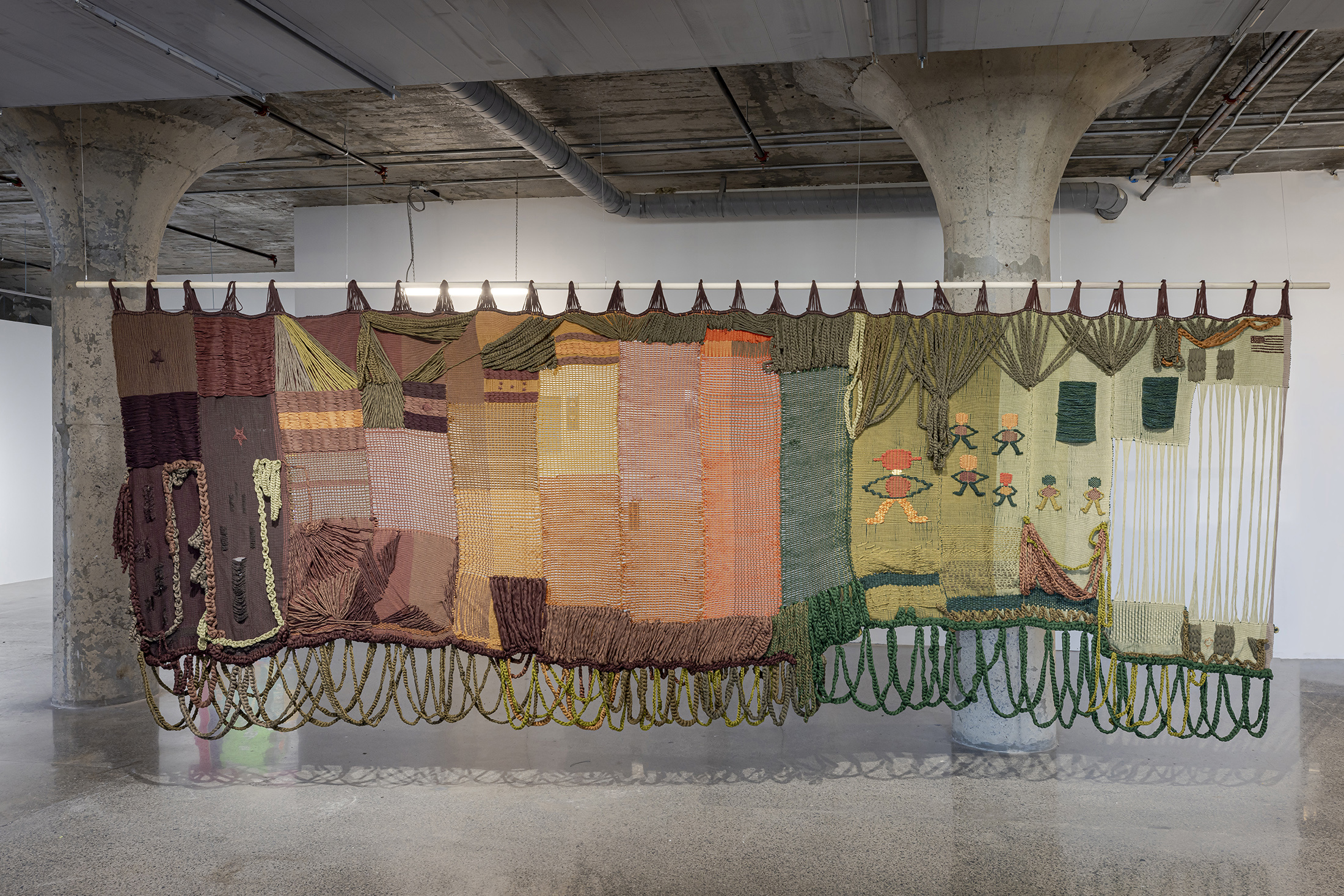
This connection between weaving and what the curators define as ‘spiritual listening’ extends to several other works in the space, including Guatemalan artist Angélica Serech’s large-scale textile El viaje de Yibo (Yibo’s Journey) (2024). Stretched across several metres in the centre of the room, the work uses multicoloured cotton threads and traditional weaving methods to evoke the emotional impact of forced Indigenous displacement.
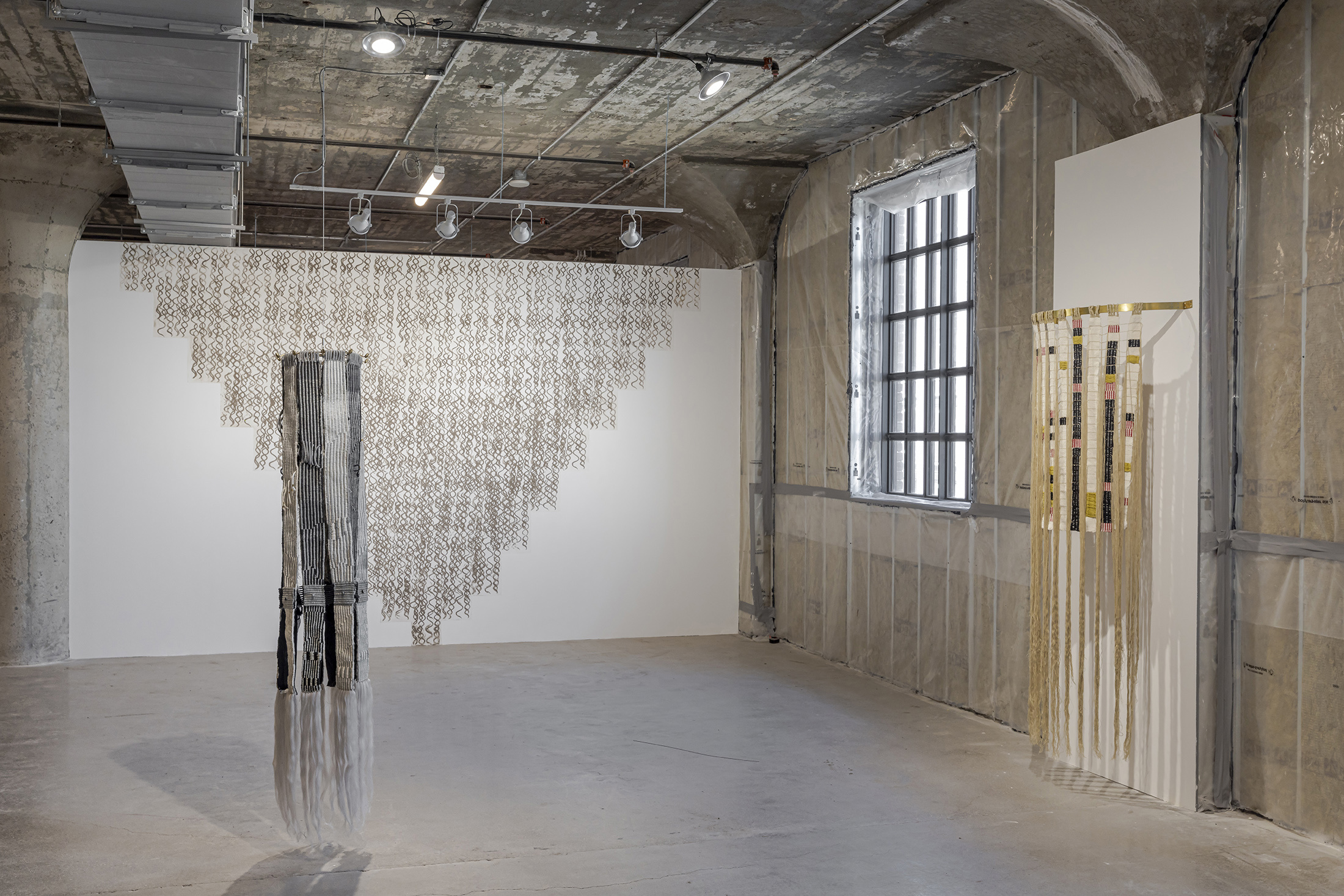
Against a nearby wall, Stina Baudin’s textile works intertwine ancestral knowledge with narratives of survival. In her hanging textile sculpture Data Studies: Caribbean-Canadian Geographies 86/96 (2022), what initially appear as abstract squares of colour visualise data on the migration paths of Black Canadians, transforming this information into a tactile expression of Canadian cultural memory and displacement.
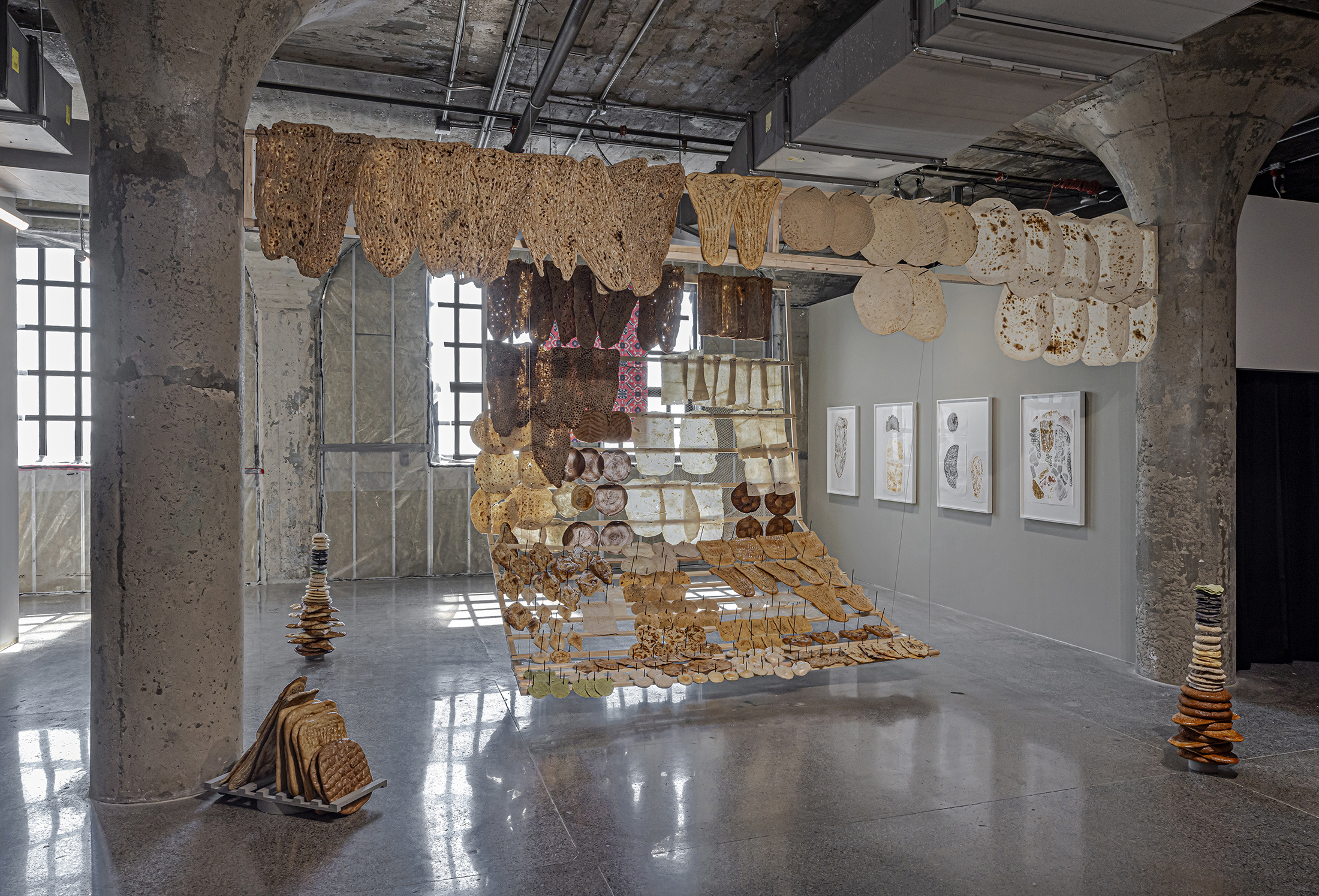
Canada’s multiculturalism is central to the vibrancy of this biennial; as one of the most diverse cities in the world, Toronto thrives on the contributions of its immigrant communities. One of the most evocative works to illustrate this is Sameer Farooq’s Flatbread Library (2024), a floor-to-ceiling sculpture that maps local histories through a collection of flatbreads from neighbourhood bakeries. As part of the Biennial’s public programming, visitors are invited to partake in this history by eating the archive—melding the act of consumption with cultural preservation and making the experience of eating itself a reflection on collective memory.
This fusion of art with lived experience mirrors the pulse of Toronto’s art scene this fall. The Biennial’s opening coincided with Gallery Weekend, and the energy in art venues across the city was palpable. While Toronto may not yet have the international reputation as an art ‘destination’ that other major cities enjoy, the abundance of talent and its welcoming atmosphere suggest that the city is on the cusp of greater recognition.
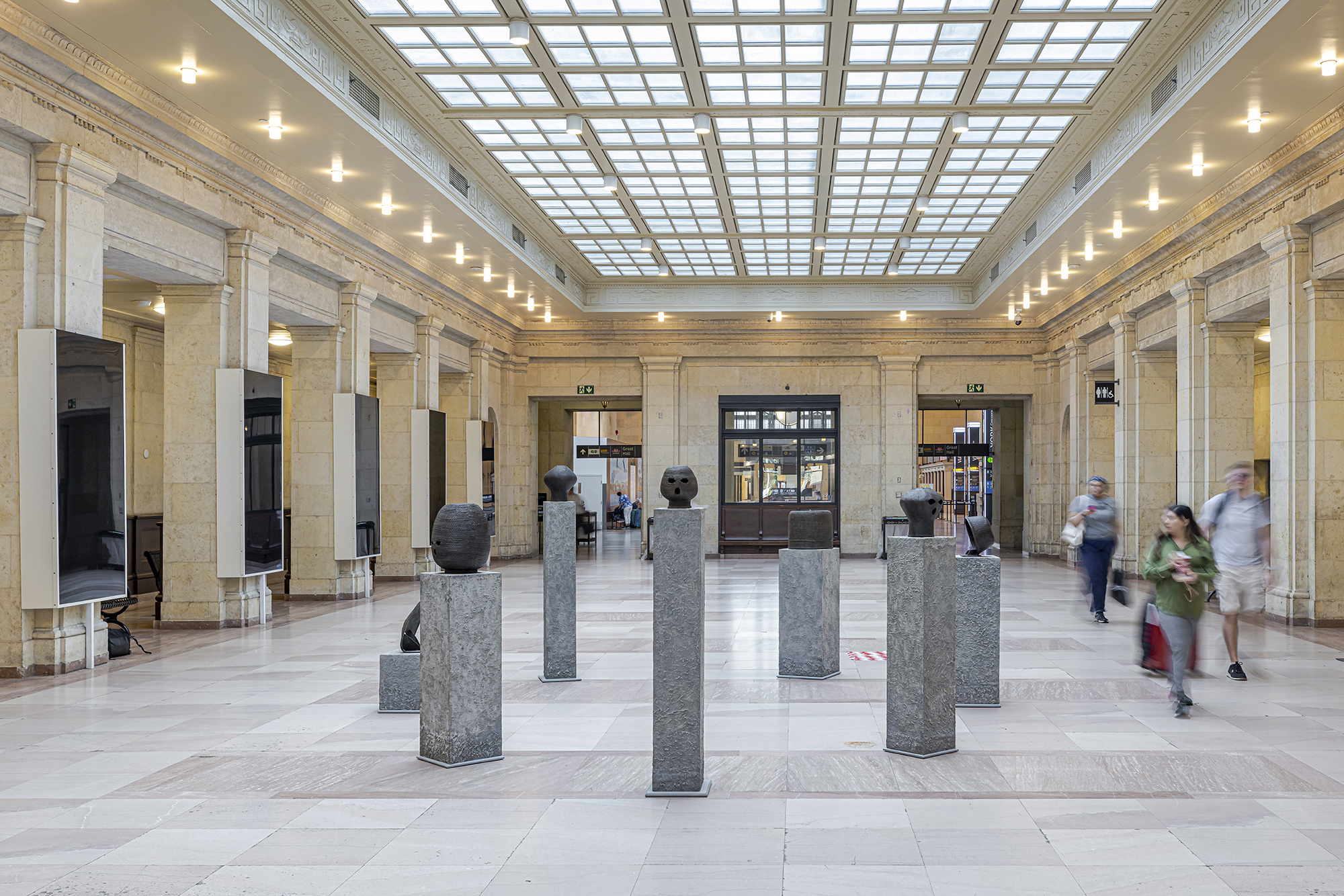
Engaging with the Biennial on its third iteration feels refreshing, as its sincerity and focus on accessibility stand out as its greatest strengths. This year’s centralised exhibition venues are a significant improvement on previous editions, when they were scattered across harder-to-reach suburban areas.
The Biennial also makes a concerted effort to engage diverse audiences through extensive free audio guides, talks, workshops, performances, and a marketing campaign aimed beyond the art world. While some biennials tend toward academic in-speak, this one uses language generously to draw in the wider public.
But what is most refreshing about this edition of the Biennial is its sincere recognition of how, through sensorially compelling works, artists can invite audiences into deeper narratives of resistance, resilience, and shared experience. Even in pressing times, when art can’t be anything but political, beauty is its most powerful hook—the bridge that entices audiences to lean in and listen more closely. The third Toronto Biennial reminds us that, even when there’s much to fear, we shouldn’t shy away from moments in which pleasure prevails. Joy is not meant to be a crumb; it’s a form of resistance. —[O]
A respected voice in contemporary art discourse.
Focusing on ambitious storytelling and insightful art-world commentary. Ocula Magazine publishes in-depth interviews, critical essays and timely analysis on the artists, exhibitions and ideas driving the global art world.
Learn more about Ocula Magazine
Showcasing the best of the art world.
Ocula partners with galleries from around the world to highlight their artists, artworks and exhibitions. Gallery membership is by application and invitation, with each member vetted by an independent panel.
Learn more about Ocula Membership
Specialises in the sale of major artworks.
Led by a team with deep ties to the world’s leading auction houses, galleries and collectors. Ocula’s advisory team offers bespoke services to high-net-worth clients from around the world who are looking to acquire the best of contemporary and modern art.
Learn more about our team and services
