





Chris Heaphy's Melting Juxtapositions

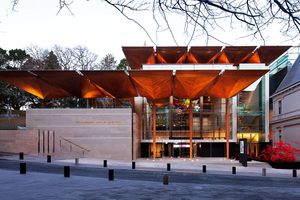
Exhibition view: Chris Heaphy, Everyday Life, Jonathan Smart Gallery, Christchurch (10 June–2 July 2022). Courtesy Jonathan Smart Gallery.

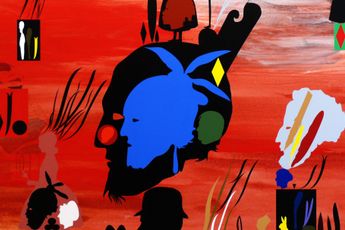
For over three decades, Chris Heaphy has used a smorgasbord of painting styles and references to consider the complexity of identity. Recent work by the Auckland-based artist continues this trajectory with sophisticated assurance. His paintings are on show with Gow Langsford at Aotearoa Art Fair in Auckland (2–5 March 2023), while in 2022 his work was the focus of two solo exhibitions: Everyday Life (10 June–2 July 2022) at Jonathan Smart Gallery, Christchurch, and This Is Not The Same As Other Days (8–31 October 2022) at Milford Galleries, Dunedin.
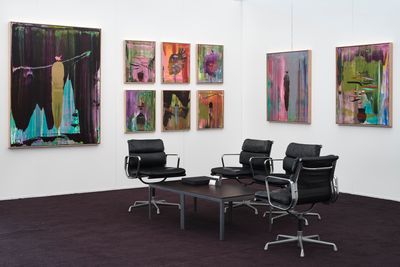
The 2022 exhibitions featured works built up in rich layers of acrylic, vigorously brushed and poured over Belgian linen, and punctuated by symbolic forms. The paintings shown at Aotearoa Art Fair continue this painterly approach, though in these most recent works the paint is applied with even greater intensity, at times threatening to engulf Heaphy’s trademark silhouettes.
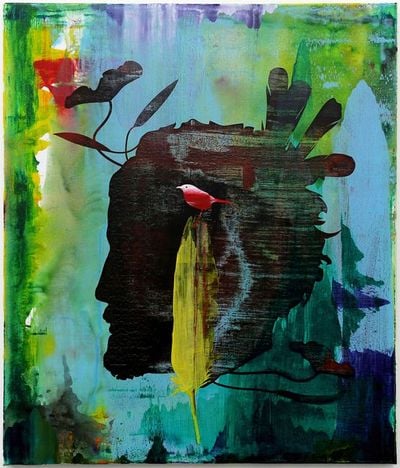
In their heightened painterliness, these recent bodies of work appear markedly different from earlier series: the hard-edged abstractions of the 1980s; the softly hued, symbolic ‘body-part’ works of the 1990s; and the kaleidoscopic compositions of the 2000s. Yet they remain part of a cohesive, evolving practice in which symbols and their ambiguous meanings are central.
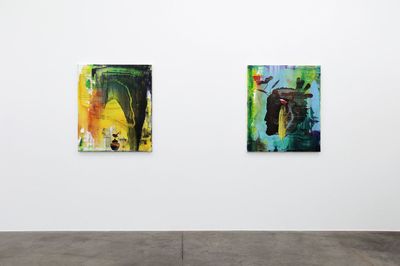

Influenced by Jacques Derrida’s analysis of the sign, and drawing on both his Māori (Kai Tahu/Ngāi Tahu) and European descent, Heaphy employs symbols from both cultures—as well as from broader histories and popular culture—to explore the instability of meaning.
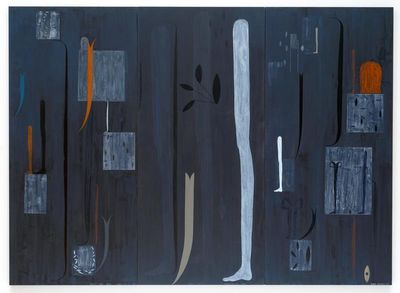
Walk This Way (1997), shown in Toi Tū Toi Ora: Contemporary Māori Art (2020–2021) at Auckland Art Gallery Toi o Tāmaki, is an early example of his use of repeated motifs. Forms suggesting prosthetics, walking sticks, crutches, plants, and Māori weapons recur across the composition. Heaphy has linked these symbols to the Māori prophet and faith healer Tahupōtiki Wiremu Rātana—a subject he has revisited throughout his career—while the repetition of shapes and the restrained palette of grey, white, and ochre also evoke the austerity of geometric abstraction.
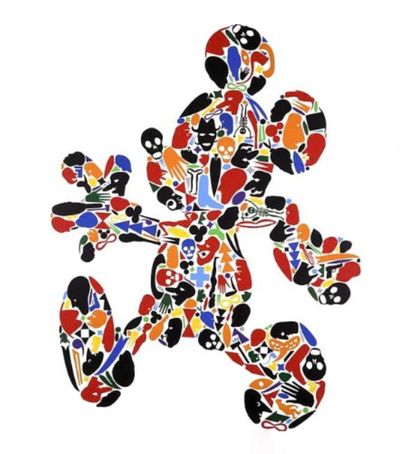
A later work with the same title, Walk This Way (2007), adopts a more overtly Pop-inflected approach. A central Mickey Mouse figure is constructed from repeated red, orange, blue, and black symbols. Within this globally recognisable form are references to New Zealand’s colonial history—silhouetted boots, pipes, skulls, guns, skeletons, and warrior heads—interspersed with European playing card symbols.
These card motifs recall early photographs (c.1908) of Hiona, the round meeting house of Rua Tapunui Kēnana (1869–1937), the Tūhoe prophet, land rights activist, and leader based in Maungapōhatu in the Urewera. In place of customary carving, Rua had blue and yellow card symbols painted on the structure. As Heaphy noted in a 2018 interview with the Otago Daily Times, ‘I thought it was incredible that one thing could slip into a culture and be adapted and adopted—understood in a completely different way’, adding that ‘filling up the canvas was really trying to make all these connections, to show that there is constant slippage between meanings.’
In works from the past two years, the symbols become more isolated, often dissolving into the picture plane, yet remain key to understanding Heaphy’s practice. Among the repeating forms are warrior heads, birds, vases, feathers and geometric shapes. In First Light on Silent Shore (2022), shown with Milford Galleries, the striking black shadow of a head takes centre stage contrasting with other smaller silhouettes, as well as the gentle backdrop of thin cream, verdant green and shimmering, slashing turquoise and purple.
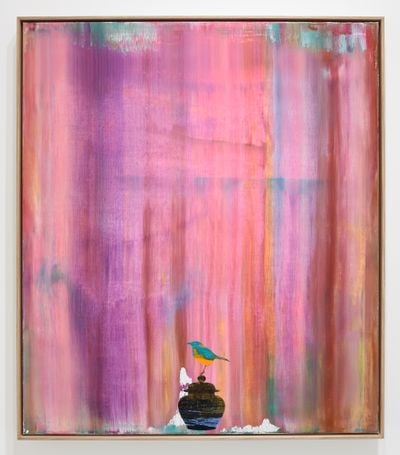
In Sunrise Again (2022), presented at Jonathan Smart Gallery, and Blanket of Sky (2023), shown with Gow Langsford, a small bird perched atop a vessel anchors the lower section of each composition. In the former, swathes of yellow and black bleed and drip across the surface, punctuated by smudges of green and red; in the latter, vertical pulls of hot pink, with hints of smouldering colour beneath, predominate. Heaphy has described the spaces between and around these silhouettes as being as significant as the forms themselves—silence, after all, can be charged with meaning.
While certain readings may seem immediate, it is through quieter juxtapositions—within and across individual works, exhibitions, series, and titles—and through the interplay of collective and personal contexts that more nuanced interpretations emerge. The meaning of a bird, a vase, a warrior, or a Disney character can shift; styles and symbols are continually reinterpreted across time and between viewers. Meaning remains in flux—never fixed, always evolving. —[O]
Main image: Exhibition view: Chris Heaphy, Everyday Life, Jonathan Smart Gallery, Christchurch (10 June–2 July 2022). Courtesy Jonathan Smart Gallery.


A respected voice in contemporary art discourse.
Focusing on ambitious storytelling and insightful art-world commentary. Ocula Magazine publishes in-depth interviews, critical essays and timely analysis on the artists, exhibitions and ideas driving the global art world.
Learn more about Ocula Magazine
Showcasing the best of the art world.
Ocula partners with galleries from around the world to highlight their artists, artworks and exhibitions. Gallery membership is by application and invitation, with each member vetted by an independent panel.
Learn more about Ocula Membership
Specialises in the sale of major artworks.
Led by a team with deep ties to the world’s leading auction houses, galleries and collectors. Ocula’s advisory team offers bespoke services to high-net-worth clients from around the world who are looking to acquire the best of contemporary and modern art.
Learn more about our team and services