The art world in focus
Subscribe to our newsletter for news and insights on artists, galleries and exhibitions.
In 1651, a marble statue of a woman, her curly hair held back by a ribbon, naked from the hips up, was unearthed among the ruins of an ancient theatre in Arles, in the south of France. Found in fragments, it was believed to be a Roman copy of a Greek statue that had been attributed to Praxiteles, one of the most renowned sculptors in Athens in the 4th century BCE. The French court sculptor François Girardon, known for his busts of Louis XIV, set about restoring the figure, piecing the parts together, and incorporating some of his own flourishes. He gave her arms and added, in one of her hands, an apple, and in the other a mirror. In giving her these symbolic objects, he declared the statue to be a depiction of Venus, the Roman goddess of love.
In ancient mythology, the story goes that it was a golden apple, marked “for the fairest”, thrown on to the floor at a wedding feast by Eris, the goddess of discord, that triggered the quarrel that led to the Trojan War. Venus bribed Paris, the judge, with the promise of marriage to the most beautiful woman in the room, Helen of Troy, who was already married to a war-hungry king. The apple was a means for Eris, who was angry at having not been invited, to upend the festivities. Girardon’s liberties with the restoration are a reminder that Venus (or Aphrodite, in Greek tradition) has always been a complicated figure: she embodies grace and beauty but also poses a warning about the powerful, destructive effects of vanity, as represented by the mirror.
These contradictions are explored by a new exhibition in Arles. The Venus of Arles, which is in the Louvre’s collection, has been returned to the site of its discovery and is on display alongside other works depicting Venus, probing her complexities and the ways she has been interpreted through the ages. In his simplified silkscreen interpretation of Botticelli’s The Birth of Venus, Andy Warhol drew attention to the way reproduction can numb our appreciation of beauty. Man Ray adorned casts of Venus’ face with make up and photographed them for a campaign for a beauty brand, as if to emphasise the goddess’ humanity. In her 2007 video installation In The Mirror, Chantal Akerman cast the mirror as an object that can control and influence us.
Here, the exhibition’s curators reveal their highlights, spanning third-century sculptures to Man Ray’s playful monochromatic photographs.
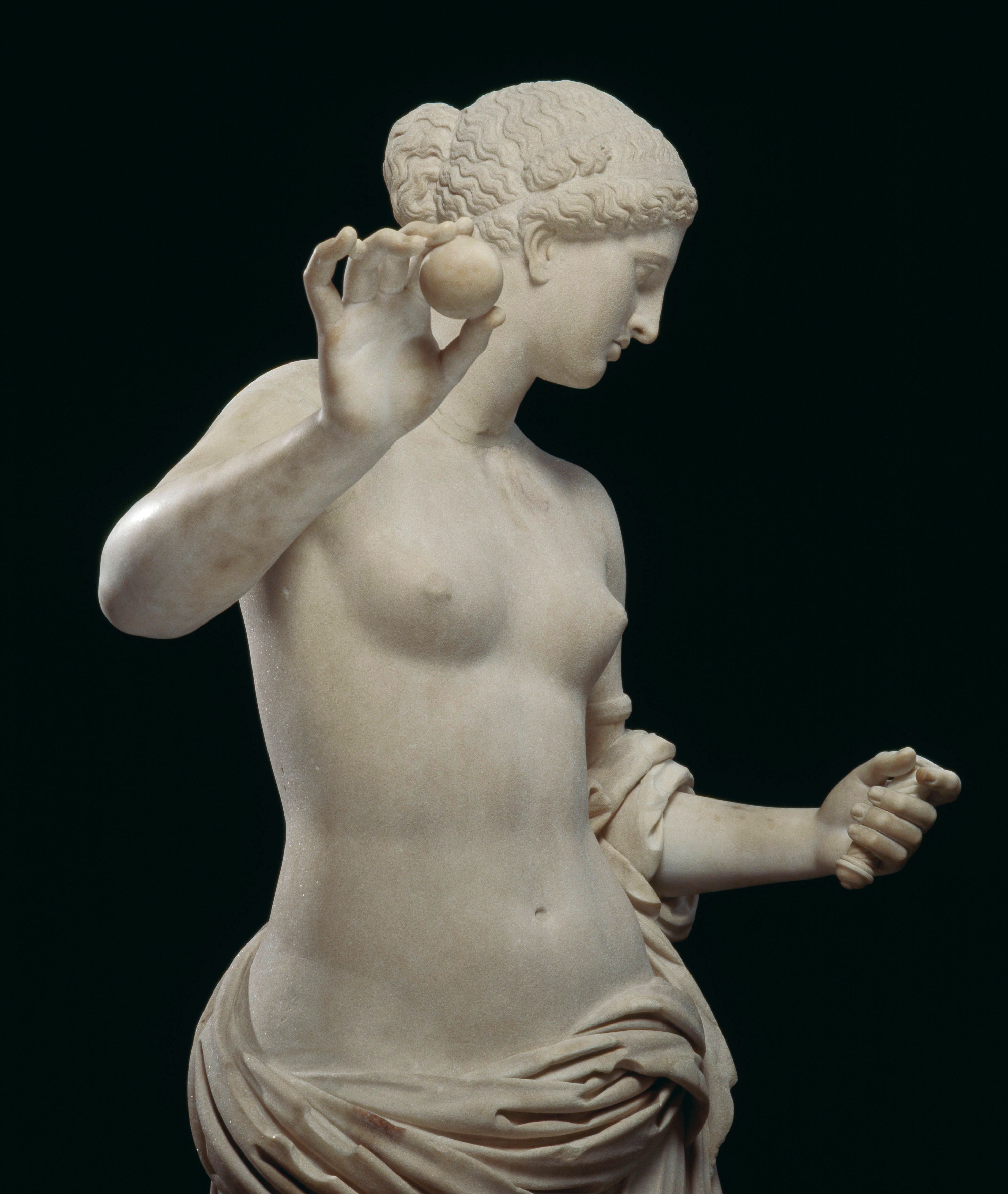
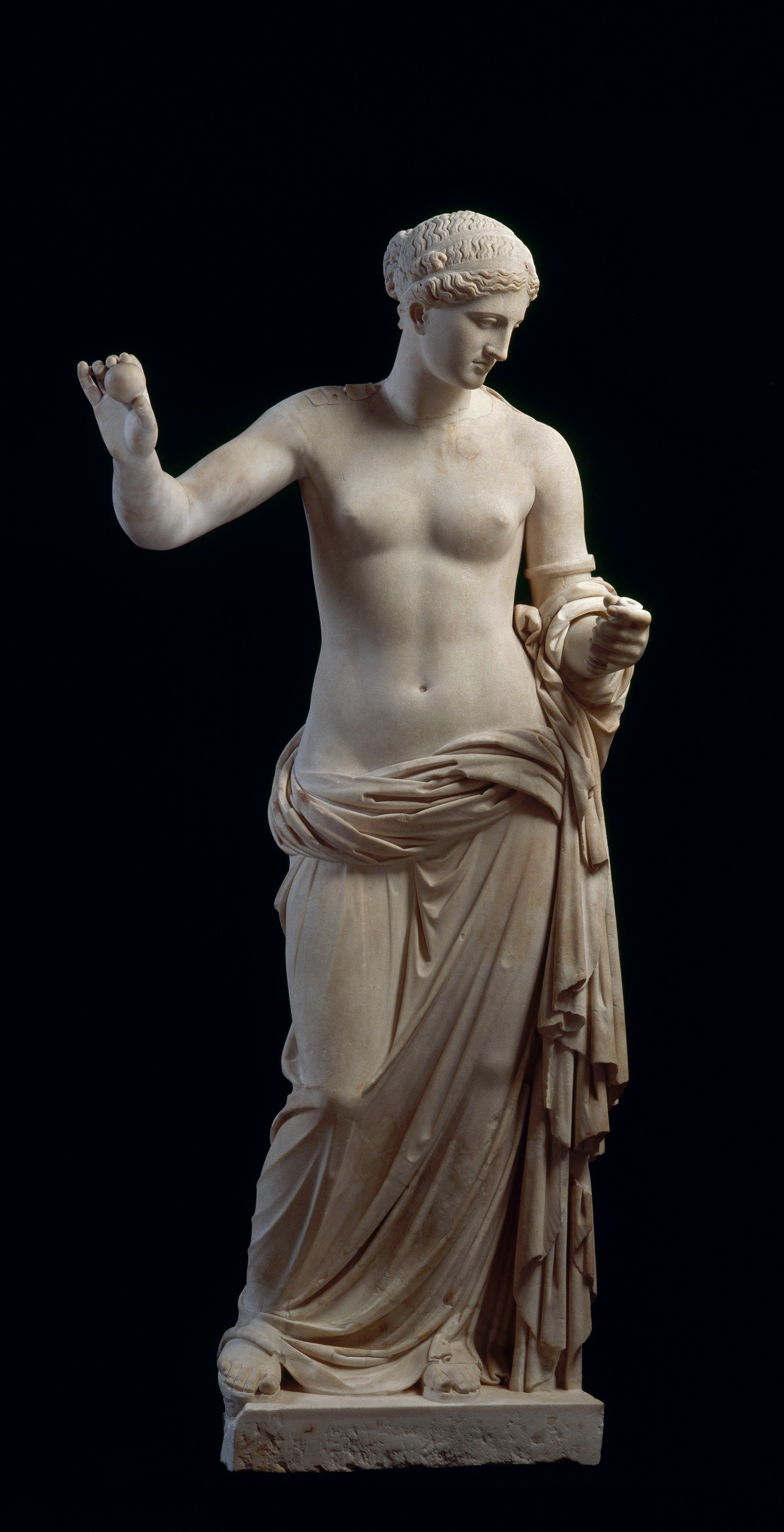
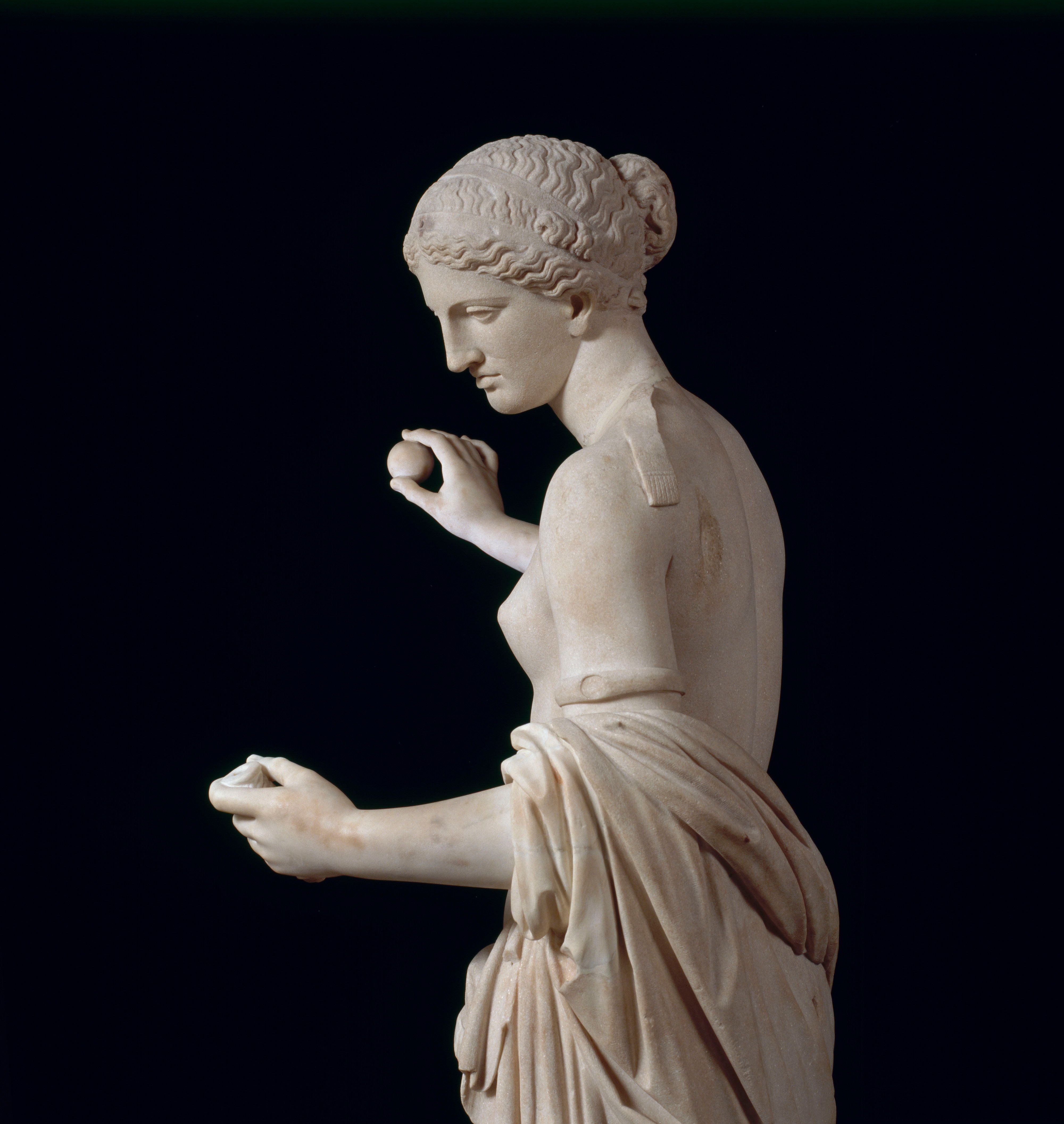
In the early days of Classicism, Aphrodite appeared heavily draped in a thick cloak; her face, massive and perfectly impassive, bore all the hallmarks of the austere style of Greek art. The depiction of the goddess evolved until the early 4th century BCE, when two types of statues emerged: the armed Aphrodite, holding a spear and a sword, and the Aphrodite with a sacred body. Unlike the other gods of the pantheon, Aphrodite’s power lies in her body: her breasts, her skin and her clear gaze. Greek art embraced this formidable divine body not gratuitously, nor out of voyeurism, but to translate into bronze and marble a sense of her vitality. Praxiteles marked the great turning point in this adventure by introducing the first female nude in Western statuary.
This large marble statue depicts Venus, legs and hips draped in a mantle that leaves her torso entirely exposed. The dating of the Venus of Arles, one of the most illustrious masterpieces in the Louvre’s collection, remains an open question. Was it the 4th century BCE, when Praxiteles revolutionised the depiction of Aphrodite by revealing her nudity in sculptures where the shimmer of the marble evokes the radiance emanating from the goddess’s body? Or the end of the 1st century BCE, when a Roman copy of the work was created, this time to emphasise the divine lineage of Emperor Augustus? Restored by François Girardon, a sculptor in the service of Louis XIV, the statue was interpreted as a triumphant figure of the goddess, combining physical grace with authority.
Ludovic Laugier, exhibition co-curator and chief curator in charge of Greek sculpture at the Musée du Louvre
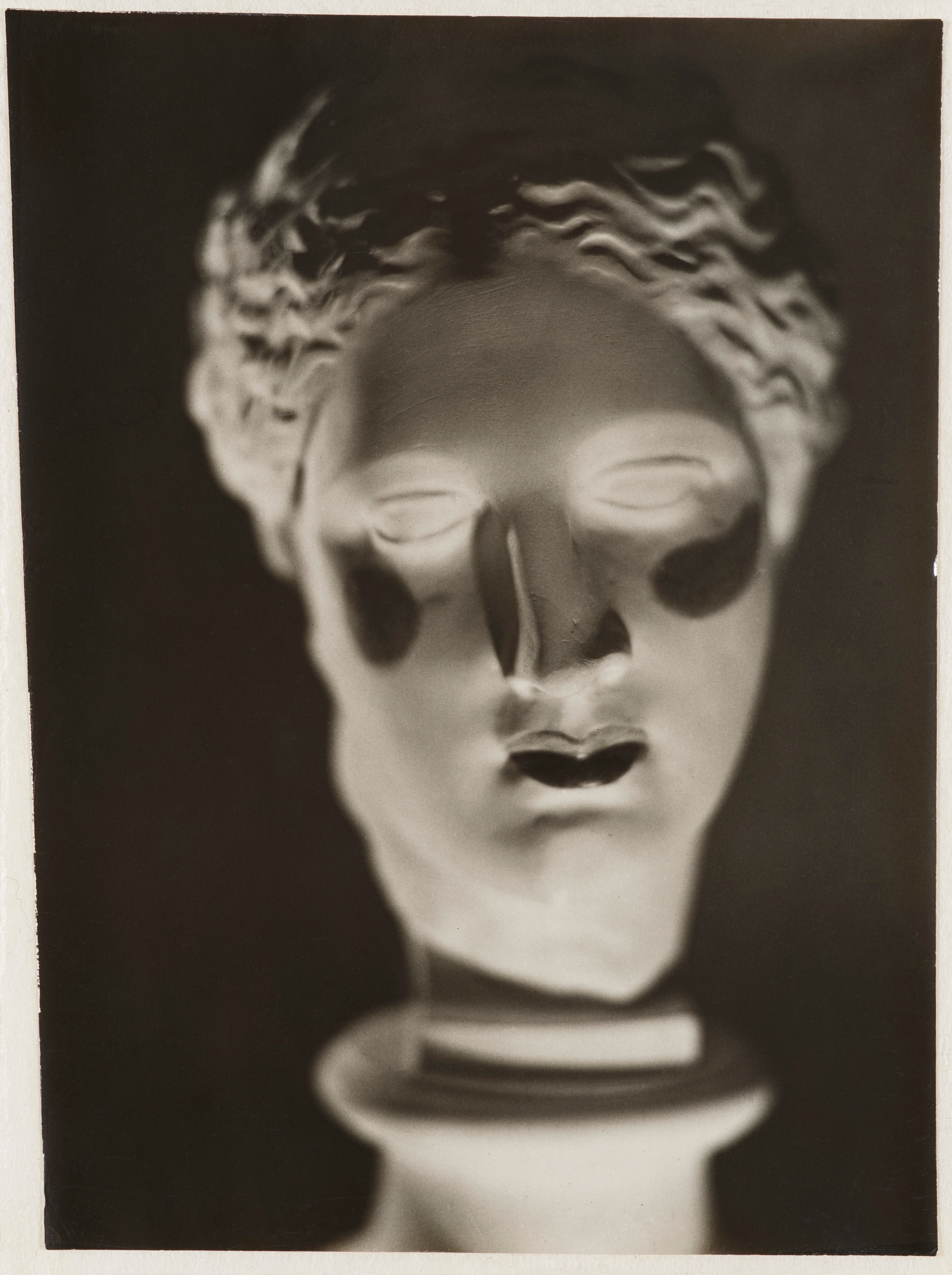
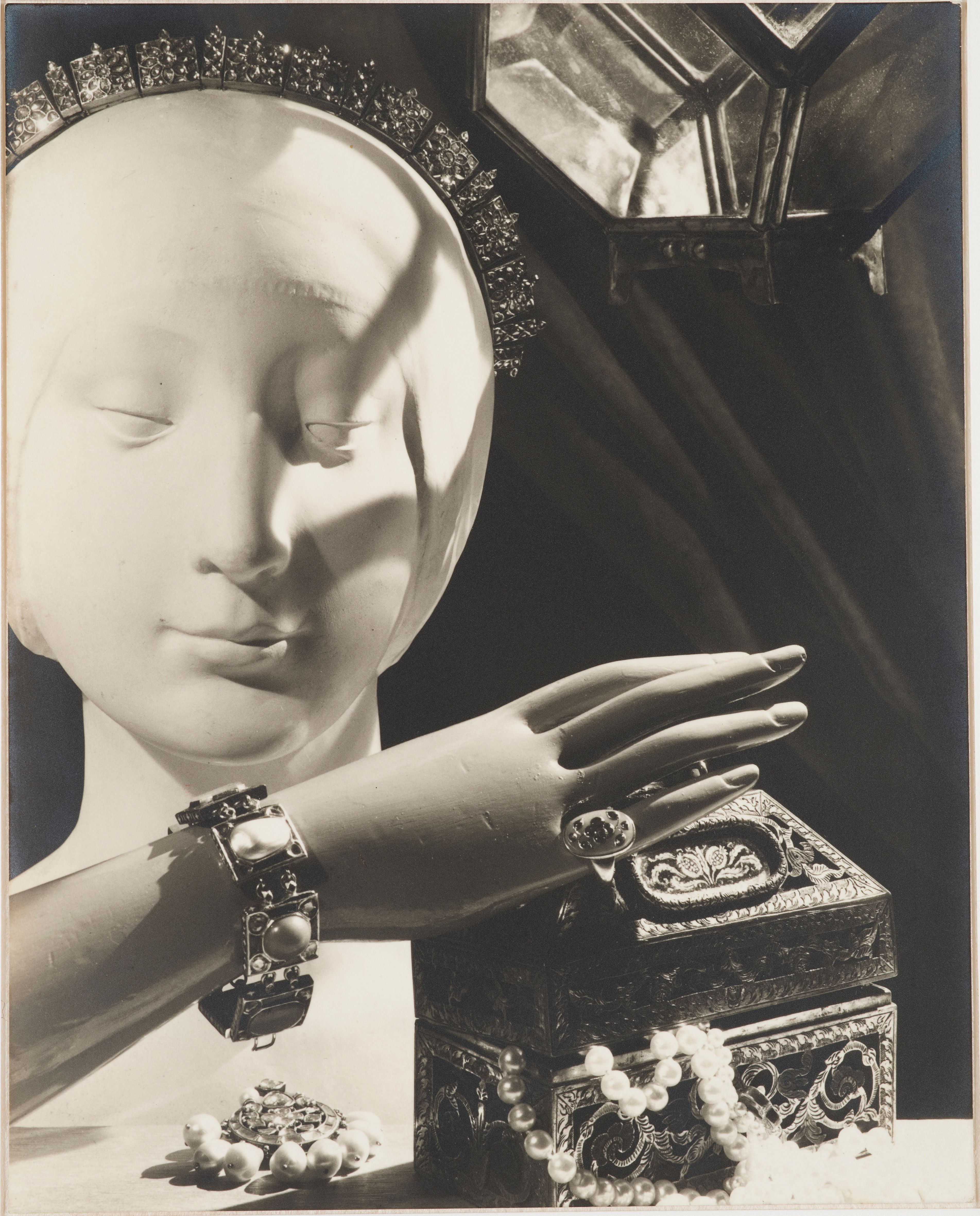
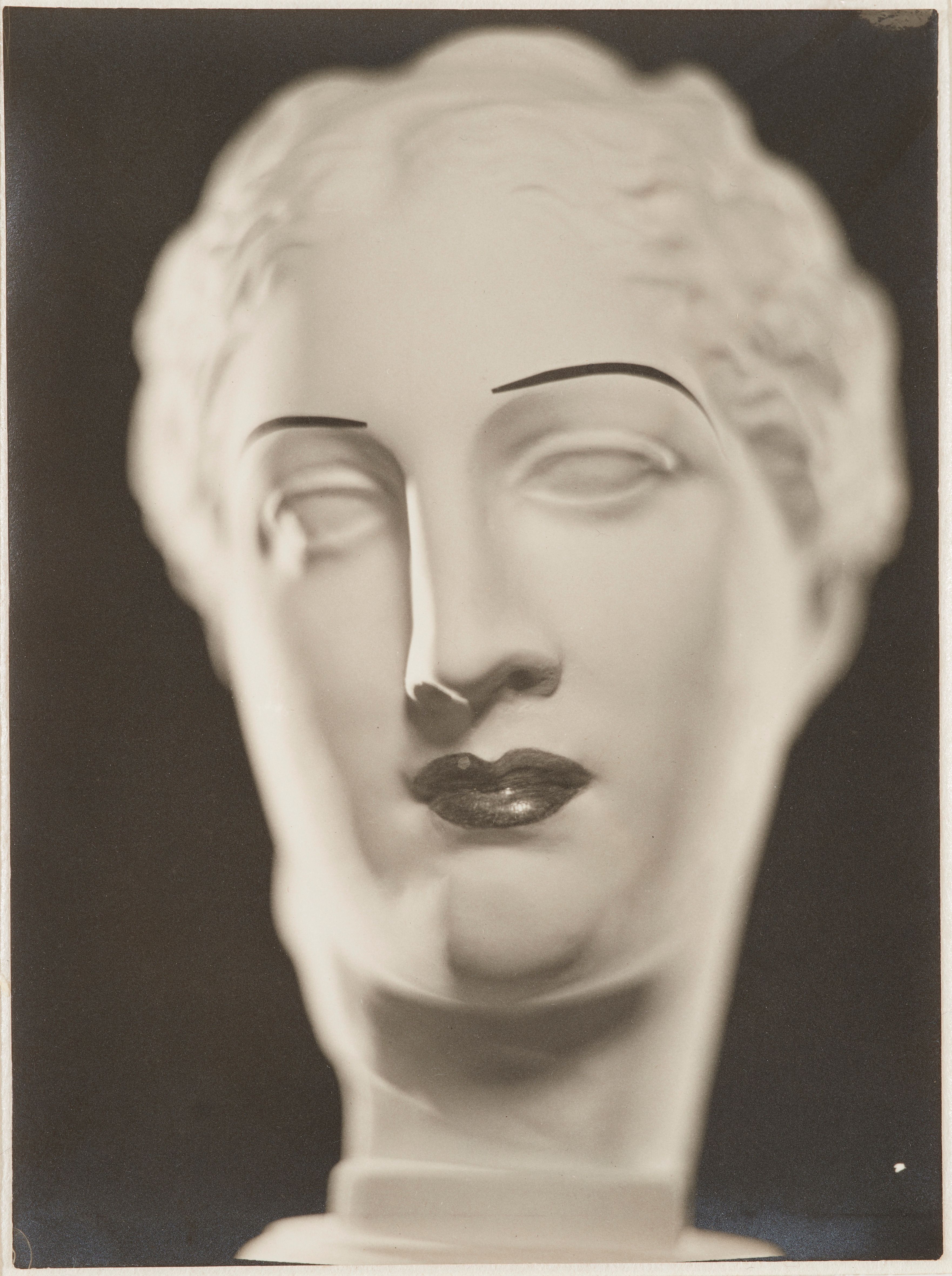
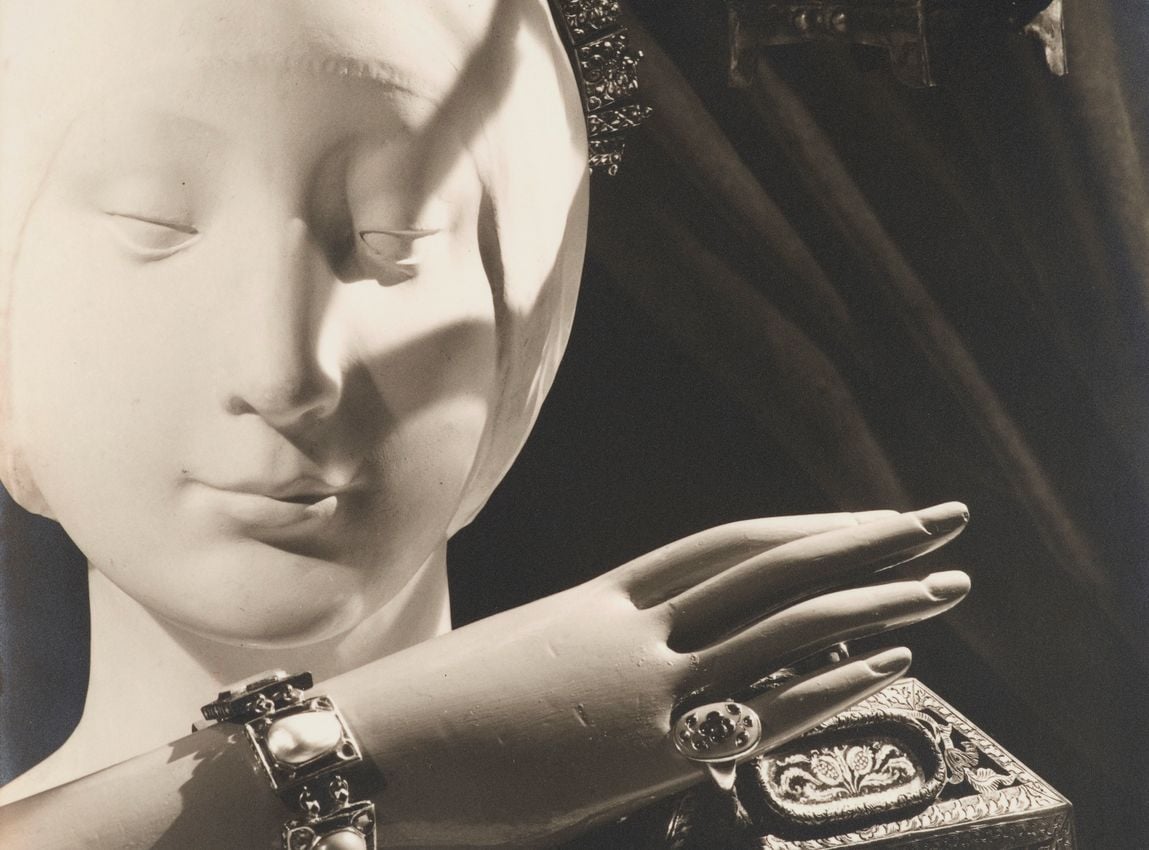
In 1932, Man Ray created a series of photographs for the cosmetics brand Elizabeth Arden by applying make-up to the eyes of various plaster casts of goddesses, notably, famous depictions of Venus. Their gaze is emphasised, transformed, and at the same time made more familiar: the goddess is a woman; the woman is a goddess. Among the plaster casts chosen by Man Ray was the Venus of Arles. Here, he embarks on a surrealist artistic experiment, playing with the ambiguity of how we perceive the living and the inanimate. We see fragments of bodies bathed in light, glossy surfaces, metallic reflections. Here, light acts as a revealer, interpreting ancient devices of seduction through the language of modernity.
Romy Wyche, co-curator of the exhibition and director at Musée départemental Arles Antique
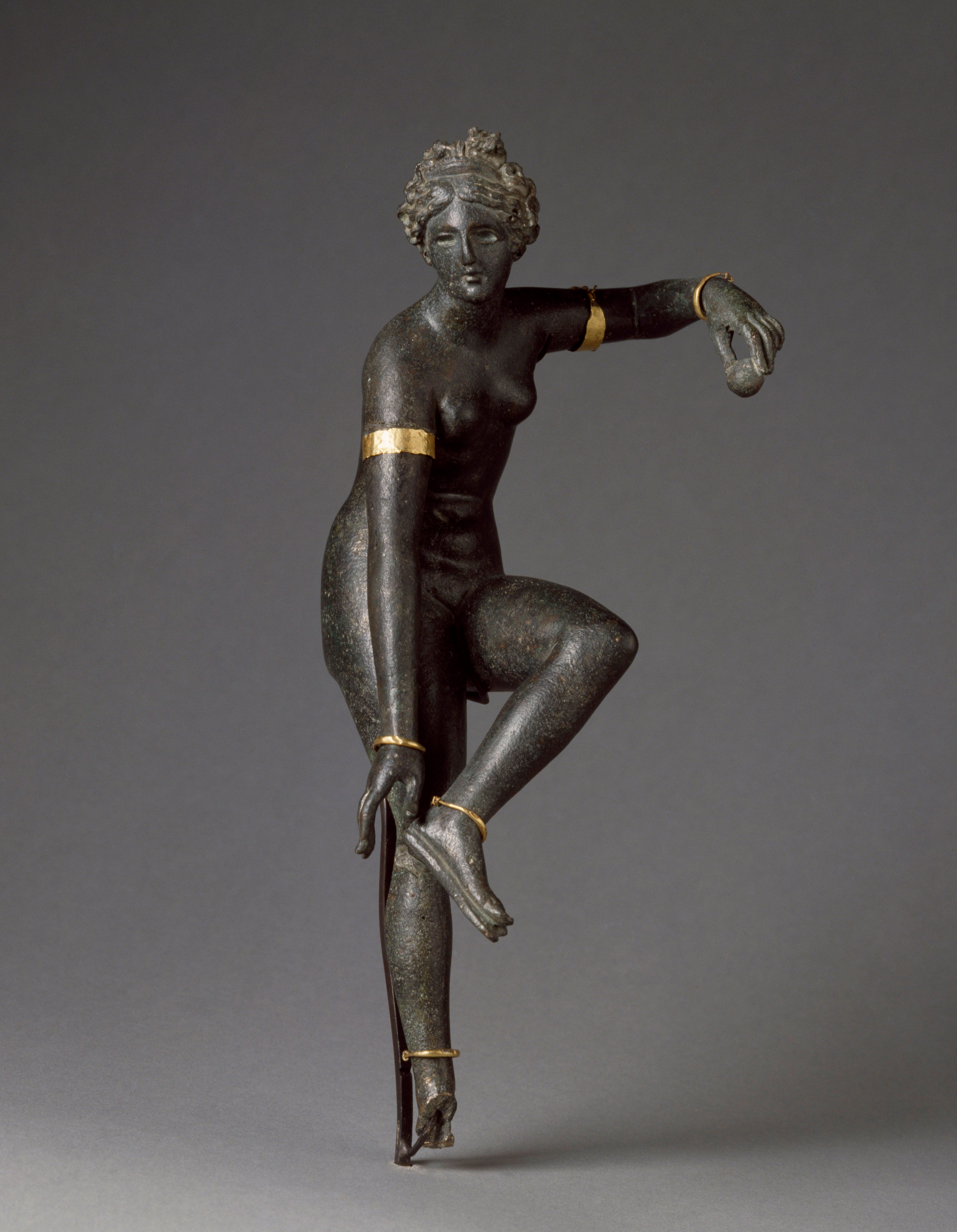
This bronze statuette, thought to be based on a bronze sculpture attributed to Polymachos from the late 3rd century BCE, depicts Aphrodite unfastening or fastening her sandal, with one leg bent, one arm raised. The added gold elements (bracelets, armlets) emphasise the role of adornment in the representation of the goddess’s body, while the ball of eyeshadow paste she holds in her left hand evokes the world of cosmetics. These ornaments, her hairstyle, hairpins, gold and pearl jewellery, body chains, necklaces and bracelets are expressions of her power. They went on to dictate beauty standards, with relatively few variations, for centuries.
Ludovic Laugier, exhibition co-curator and chief curator in charge of Greek sculpture at the Musée du Louvre
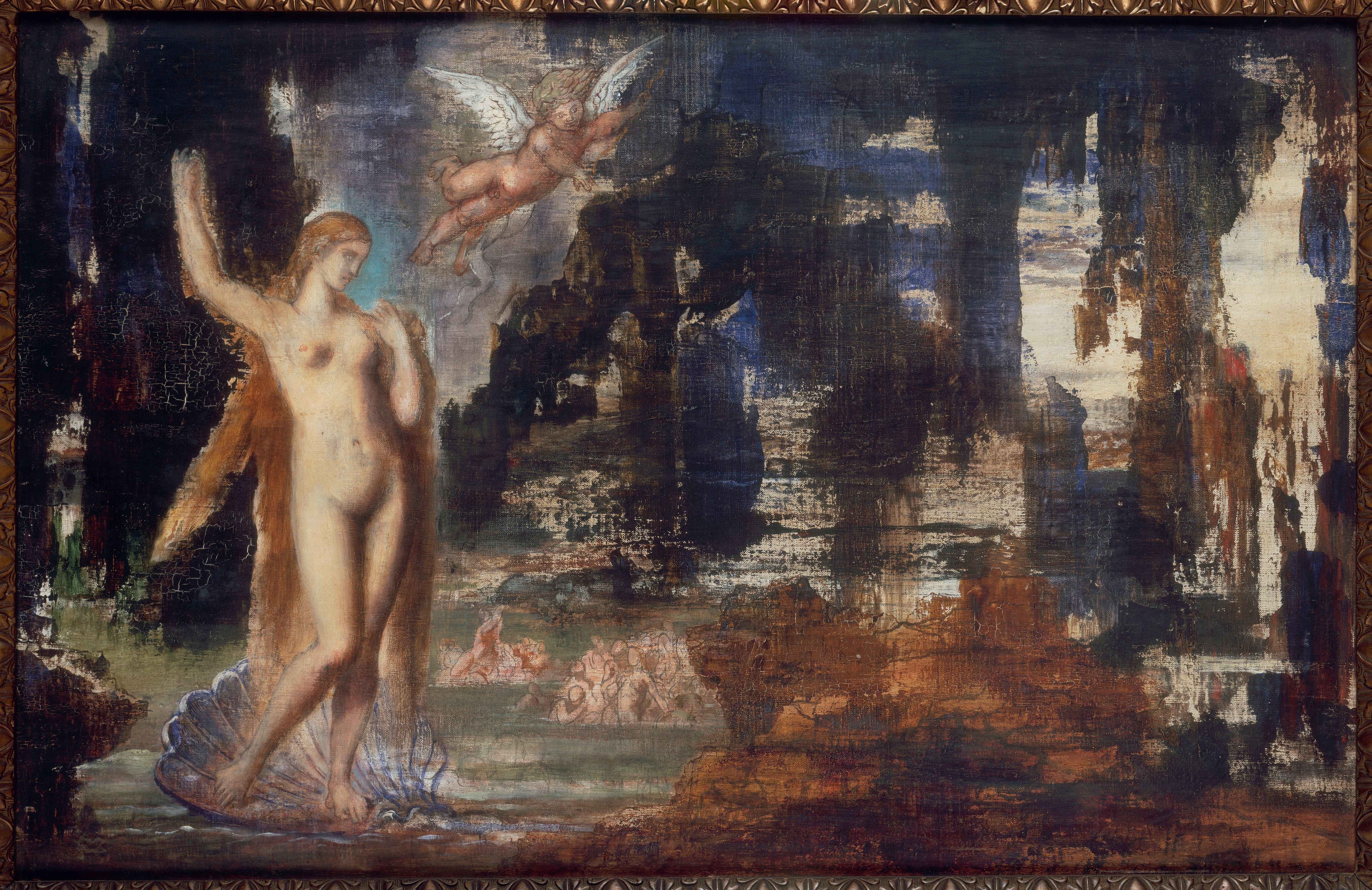
Gustave Moreau discovered Botticelli’s Venus when he visited the Uffizi Gallery in Florence with Edgar Degas in 1858. He quickly sketched it, and continued returning to the subject . In this piece, Moreau depicts Venus standing naked on the sketched conch shell, her right arm raised in a gesture of victory. With her left hand, she clutches her dripping hair and casts her gaze down toward the barren island. Beside her, Eros points with his hand toward the steep shore of desire. There is nothing there yet: no nature, only a mineral landscape made of oxides, silicates and calcite, whose colours will soon be transformed by Aphrodite’s auspicious gesture. In a moment, Venus will set foot on dry land and grass will sprout beneath her feet. On the horizon, one can make out the procession of the 50 daughters of Nereus (the ancient god of the deep sea), who accompanied Aphrodite during her emergence from the sea. Here, the artist establishes an equivalence between the birth of the image, the fertilisation of the world, and the appearance of the goddess of love. Moreau places her at the heart of a colourful emulsion, a froth of paint, as if the arrival of Eros were what enabled the transition from chaos to the visual order of the world. What remains are the classical references: the victorious Venus and Cupid, who, fluttering above her, points to the target he is about to set ablaze, and in the distance, the procession of the Nereids. What appears to be a rough sketch is in fact a departure from convention—a principle he reiterated on numerous occasions—and one that, of course, foreshadows abstraction.
Jean de Loisy, exhibition co-curator and artistic director of the Fondation Vincent van Gogh Arles
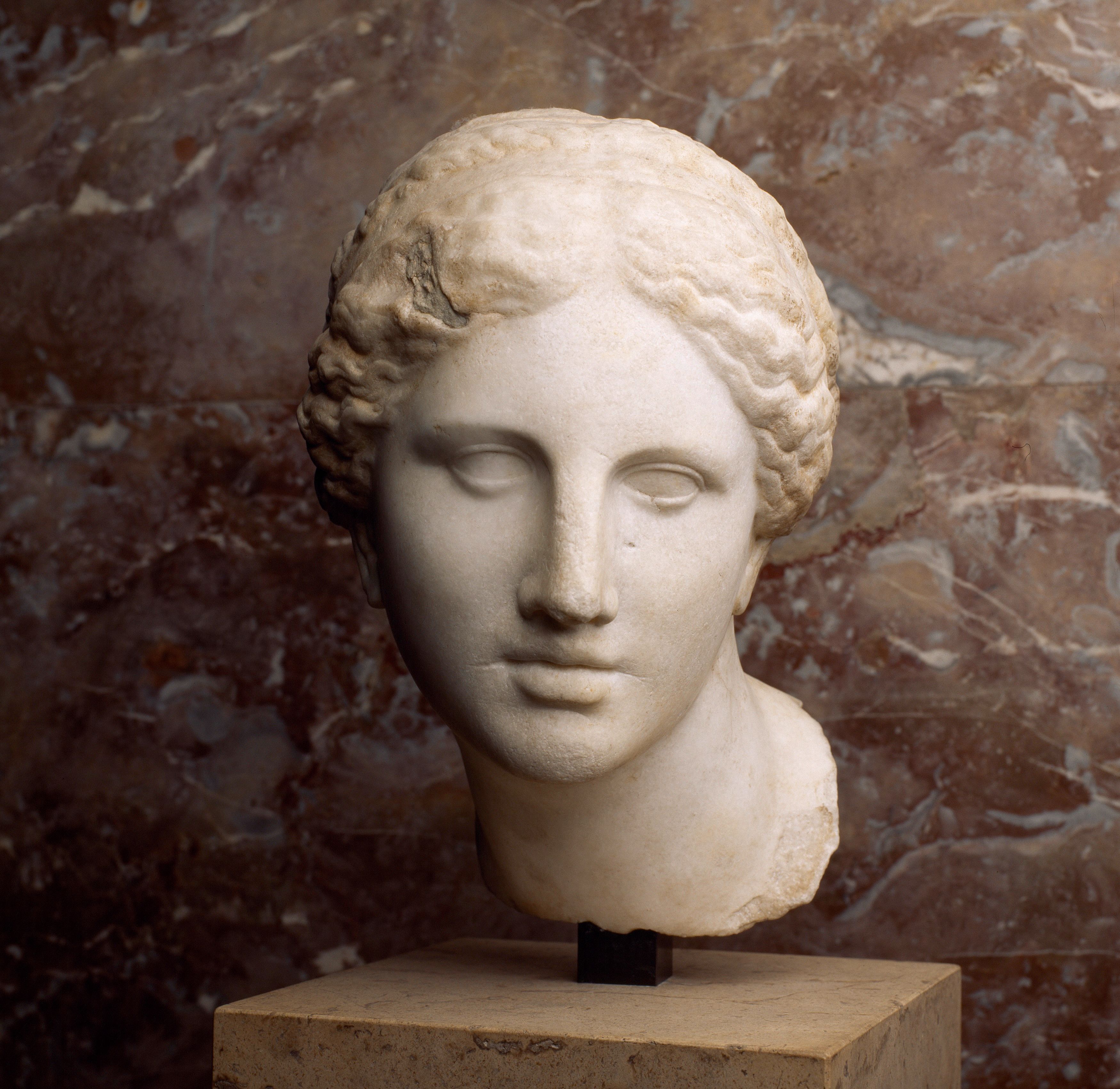
This marble head is a beautiful antique replica of the Aphrodite of Knidos, Praxiteles’ masterpiece. Her gaze is a tremendously powerful force: it captivates, unsettles and subjugates. She evokes an ambiguous impression of closeness mingled with absence; the smooth curve of the upper eyelid, which extends beyond the outer corner, is more sharply defined than the softened line of the lower eyelid—hence the wavering of her gaze, which we sense wandering. The Greek rhetorician Lucian of Samosata was still eulogising the original Knidos sculpture in the 2nd century AD, admiring “the moistness of the eyes as well as their brightness and benevolence”. You can also translate the Greek “benevolence” as “kindness”. —[O]
Ludovic Laugier, exhibition co-curator and chief curator in charge of Greek sculpture at the Musée du Louvre
The Passage of Venus (until 31 October) at the Musée départemental Arles antique




A respected voice in contemporary art discourse.
Focusing on ambitious storytelling and insightful art-world commentary. Ocula Magazine publishes in-depth interviews, critical essays and timely analysis on the artists, exhibitions and ideas driving the global art world.
Learn more about Ocula Magazine
Showcasing the best of the art world.
Ocula partners with galleries from around the world to highlight their artists, artworks and exhibitions. Gallery membership is by application and invitation, with each member vetted by an independent panel.
Learn more about Ocula Membership
Specialises in the sale of major artworks.
Led by a team with deep ties to the world’s leading auction houses, galleries and collectors. Ocula’s advisory team offers bespoke services to high-net-worth clients from around the world who are looking to acquire the best of contemporary and modern art.
Learn more about our team and services