





Black Void Speculates About Hybrid Futures
Black Void’s concurrent presentations in Beijing and Xi’an harness natural phenomena and modern technologies to envision a new hybrid ecology. Save to My Ocula
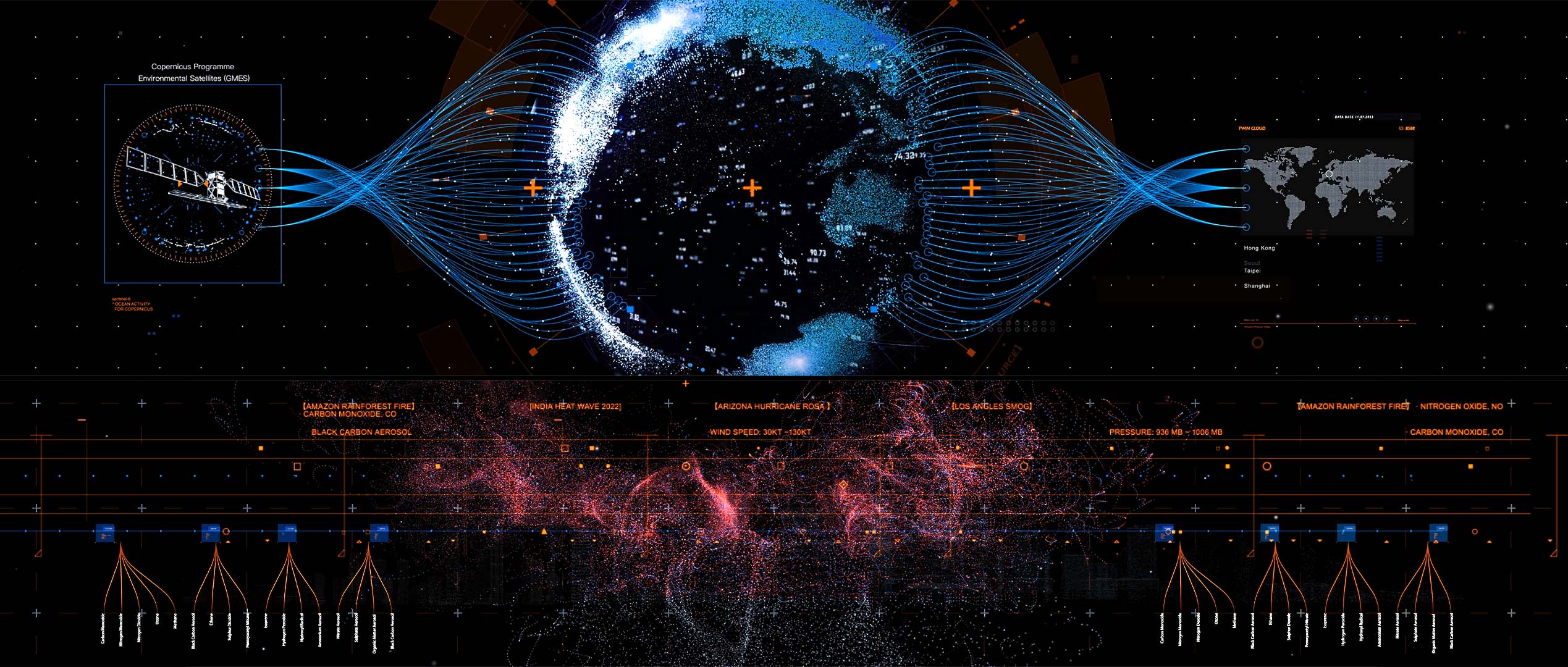
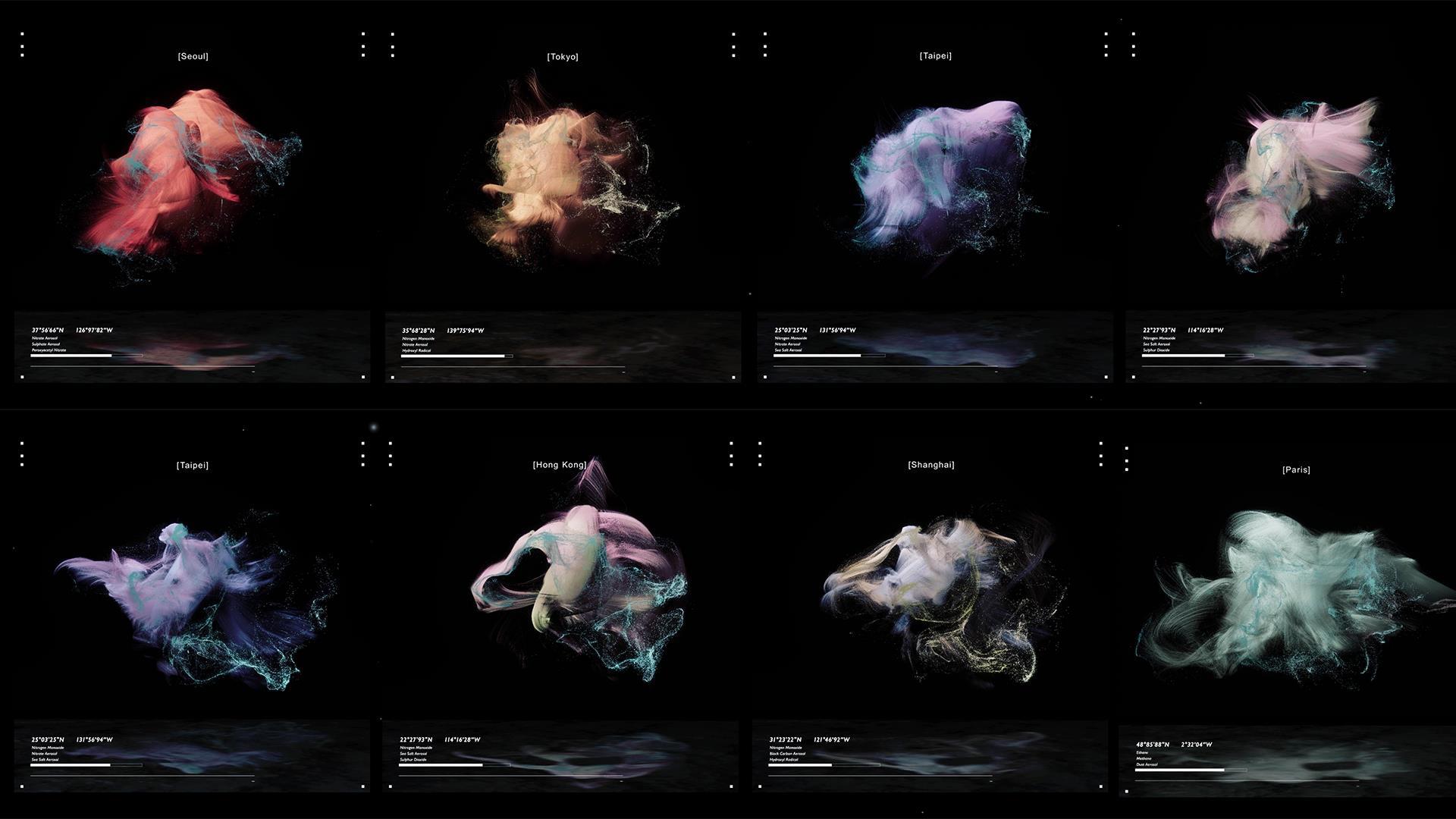
Founded in 2022 by artist and curator Yixuan Cai, Chinese art collective Black Void works at the intersection of human activity, ecology, and new digital realms. The group’s research-based practice is fuelled by the idea of hybrid ecology, where natural elements such as clouds, carbon, sun, and wind intertwine with cloud computing platforms and infrastructure. Their first project, Twin Cloud (2022), saw Black Void collect meteorological chemical data from environmental satellites to create digital cloud sculptures of the atmosphere in 300 cities around the world.
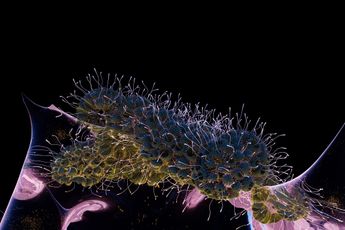
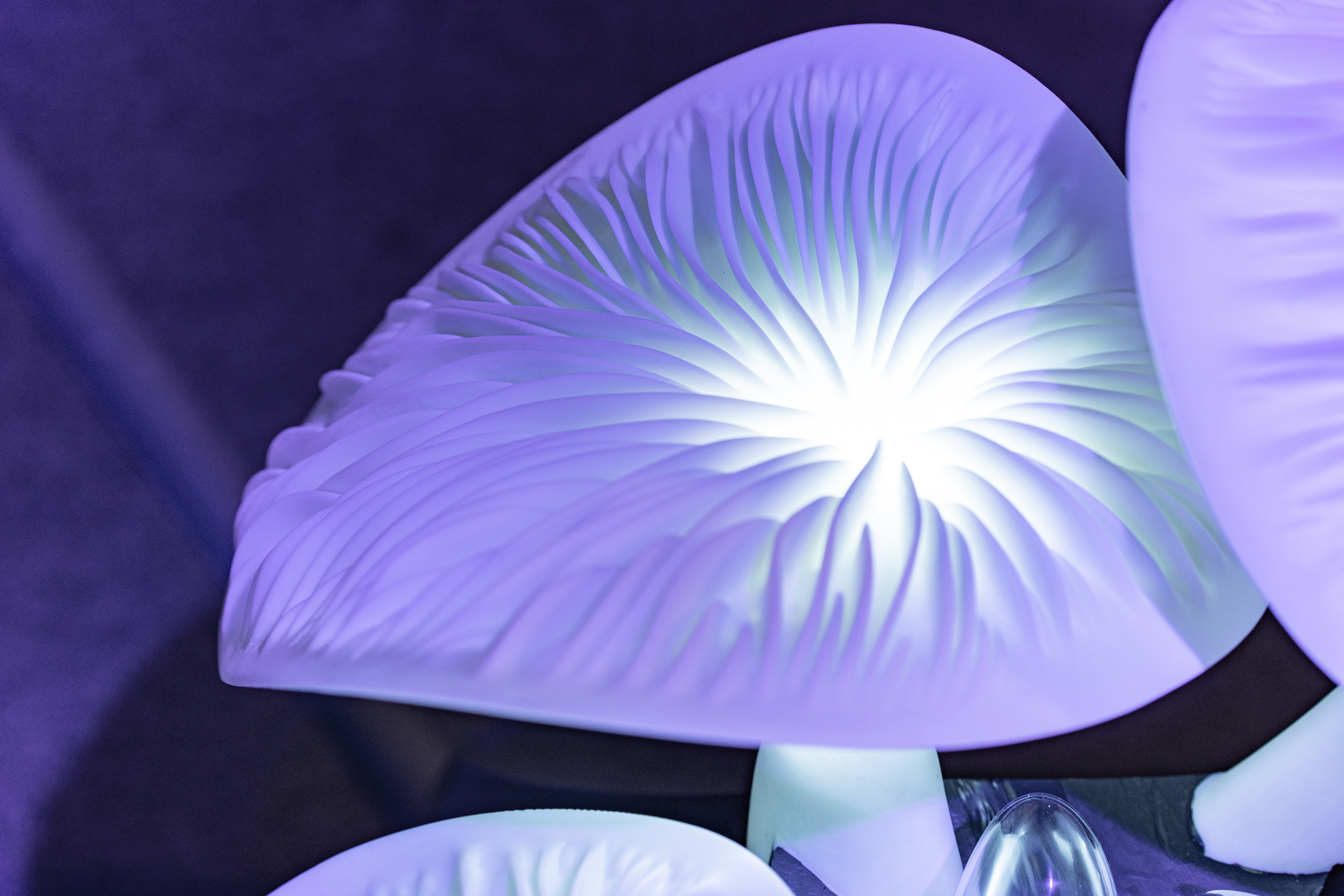
Twin Cloud was followed by Biosphere 3 (2023–2025), which takes inspiration from real-life experiments in astromycology, such as NASA’s Mycotecture Off Planet Project that aims to grow homes on the Moon and Mars from fungi. The project consists of computer-generated, 3D-printed mushrooms, and a short film in which Martian fungi and human space travellers forge a symbiotic relationship that rejects colonisation by Earth.
Black Void’s work is now showing at two locations in China. Twin Cloud and Biosphere 3, alongside other works, are presented in the collective’s solo exhibition Terraforming Dream at The BOX, co-organised by HEX and the Beijing Art and Technology Biennial until 22 May; Biosphere 3 is part of the group exhibition Chaos Butterfly: Xian ing Sci-Tech Art Session at the Chang’an Yun Xi’an City Art Center until 30 May.
Sam Gaskin spoke to Black Void director Yixuan Cai about the group’s fast-fruiting practice.
What motivated you to start Black Void, which you founded in partnership with architect Yuhan Xiao and new media artist Hong Yun?
We began working together in the second half of 2022, during a time when the world was still under pandemic control measures. The virus spread through the air, and since we could not control the invisible and fluid interface of the atmosphere, we could only attempt to block the spread of the virus by restricting human activity. This phenomenon made me feel the powerlessness of humanity when facing the environment. As Peter Sloterdijk writes in his book Terror from the Air (2002), the more fragile humans are, the more they desire control. At the same time, digital technologies such as blockchain and artificial intelligence experienced explosive development, and global capital became immersed in a state of new frenzy. At that time, I felt that we were simultaneously facing ecological fragility and limitations of advanced technology. These concerns run throughout our creative work.
Please tell me about your first work, Twin Cloud (2022), a climate data-driven generative art project and sustainable art initiative.
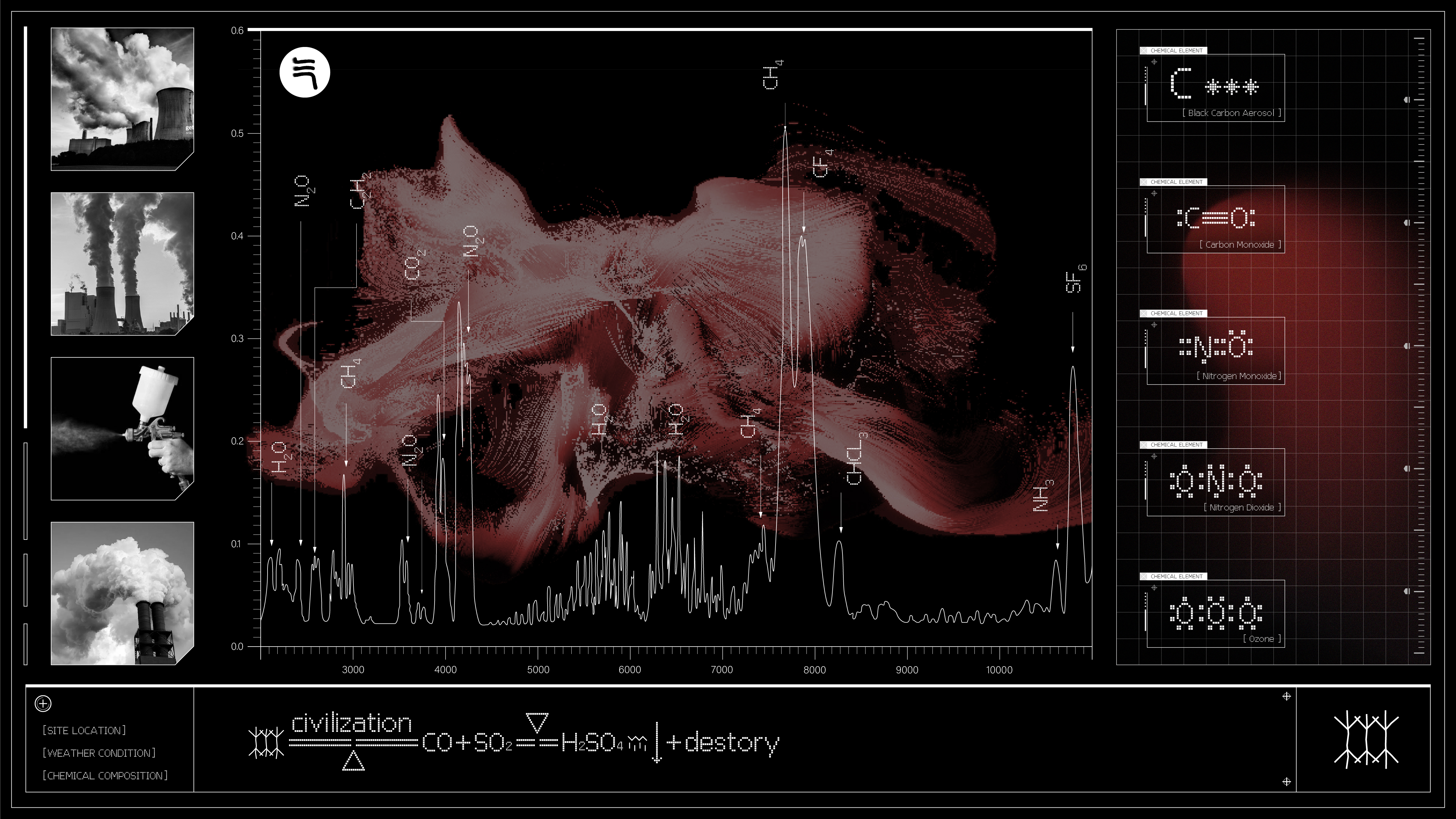
The pandemic made me realise that air is a living material. Air carries dust, viruses, birds, carbon dioxide, and various other substances. It travels between bodies and nature, cities and mountains, computation infrastructure and virtual platforms, shaping the shared environment we all breathe in. This realisation prompted us to generate climate identities for 300 cities around the world using satellite meteorological data. In our attempt to depict ground activities through the sky, we also studied atmospheric composition during events such as the Amazon rainforest wildfires, the Russia-Ukraine war, and the Los Angeles wildfires. Twin Cloud was initially released as an NFT project, then linked to an on-chain carbon credit project. By collecting the digital cloud sculptures, collectors were essentially purchasing carbon credits and returning carbon to the earth.
Why was it important for you to first realise Twin Cloud as an NFT project, then to introduce carbon credit to it?
Blockchain technology allows for both a digital cloud and a carbon credit to be stored within a single NFT. From the beginning, I envisioned connecting the sky and the earth—each digital cloud could be exchanged for a point of carbon on the ground, signifying a poetic climate action.
Our special edition Twin Cloud Bitcoin (2024), made in collaboration with the GreenBTC.Club, depicts the carbon footprint of the Bitcoin network from its 2009 genesis block to the present. The Twin Cloud initiative gradually offsets the Bitcoin network’s carbon footprint through decentralised photovoltaic panels—installed in countryside farms and residential houses across Europe and many other places—that generate green certificates.
The subjects of your research are international as well as interstellar, while Black Void is primarily based in China. How has working in China informed your practice?
China’s diverse geography and rapid renewable energy development have significantly shaped our research. When working on Twin Cloud Bitcoin, our data analysis revealed that before China banned Bitcoin mining in 2021, 46% of the global computation power supporting mining came from China. In search of cheaper electricity, mining farms would seasonally migrate from Sichuan, which is rich in hydroelectric power, to Xinjiang, which has abundant wind energy resources. In the work, we use colour saturation to show Bitcoin mining’s monthly energy sources, highlighting its reliance on fossil fuels and renewables.
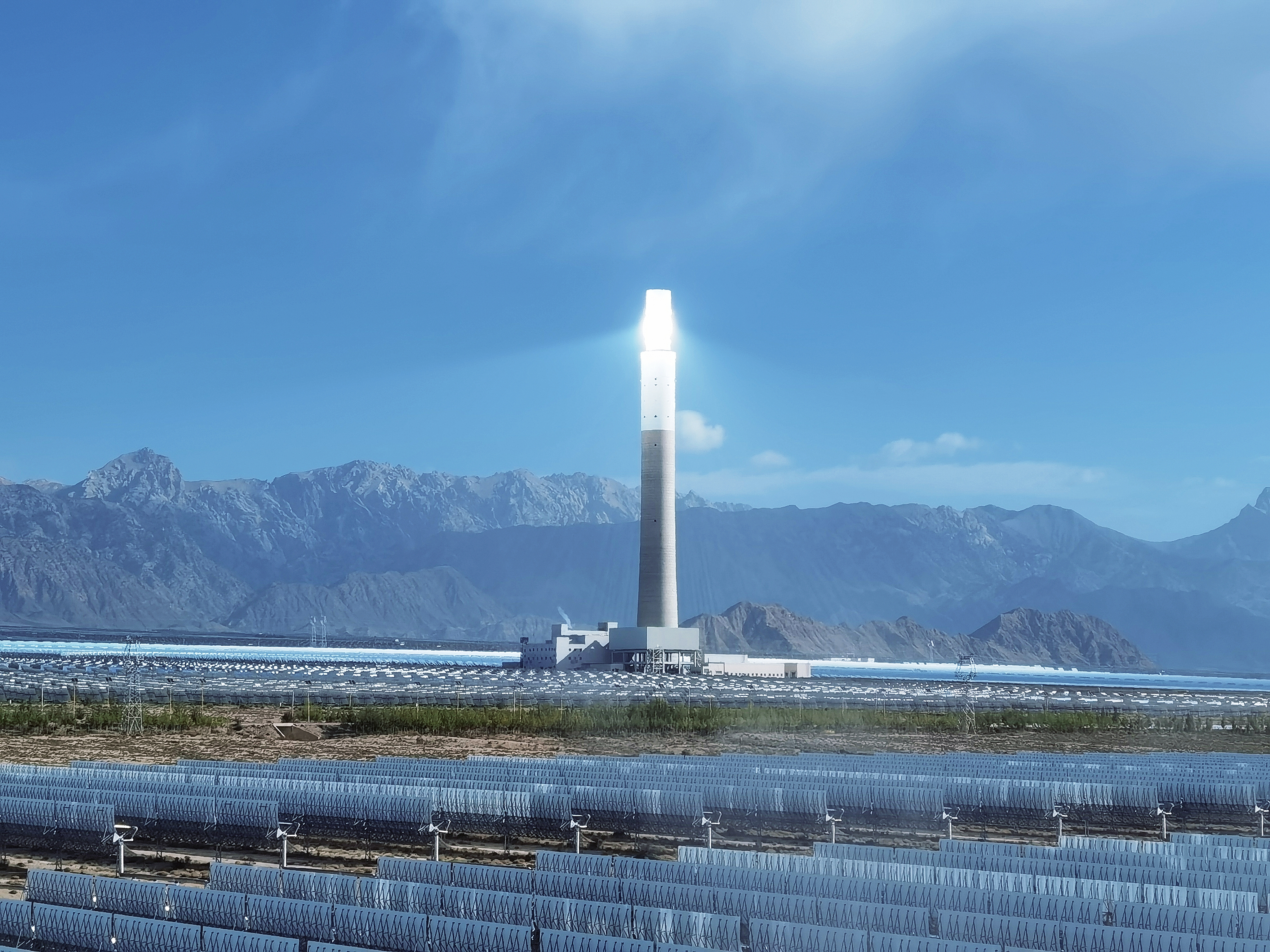
Building on our interest in natural energy and infrastructure, our next project explores solar power in China. We filmed Qinghai’s Gobi Desert solar plants and floating photovoltaics in Jiangsu and Zhejiang, and used data analysis to examine the ties between solar energy, silicon price, and capital flows. In Daoism, gold, earth, and fire interact in cycles of creation and transformation. This is comparable to the harnessing of solar energy that relies on the photovoltaic industry, in turn driven by capital (gold). Silicon (earth) is extracted and processed into solar panels, converting sunlight (fire) into energy that re-enters our lives as an intangible, fluid form.
Unlike Twin Cloud and your next project, Biosphere 3 (2023–2025) ventures into space. How did you create the Martian environment in the installations and the film?
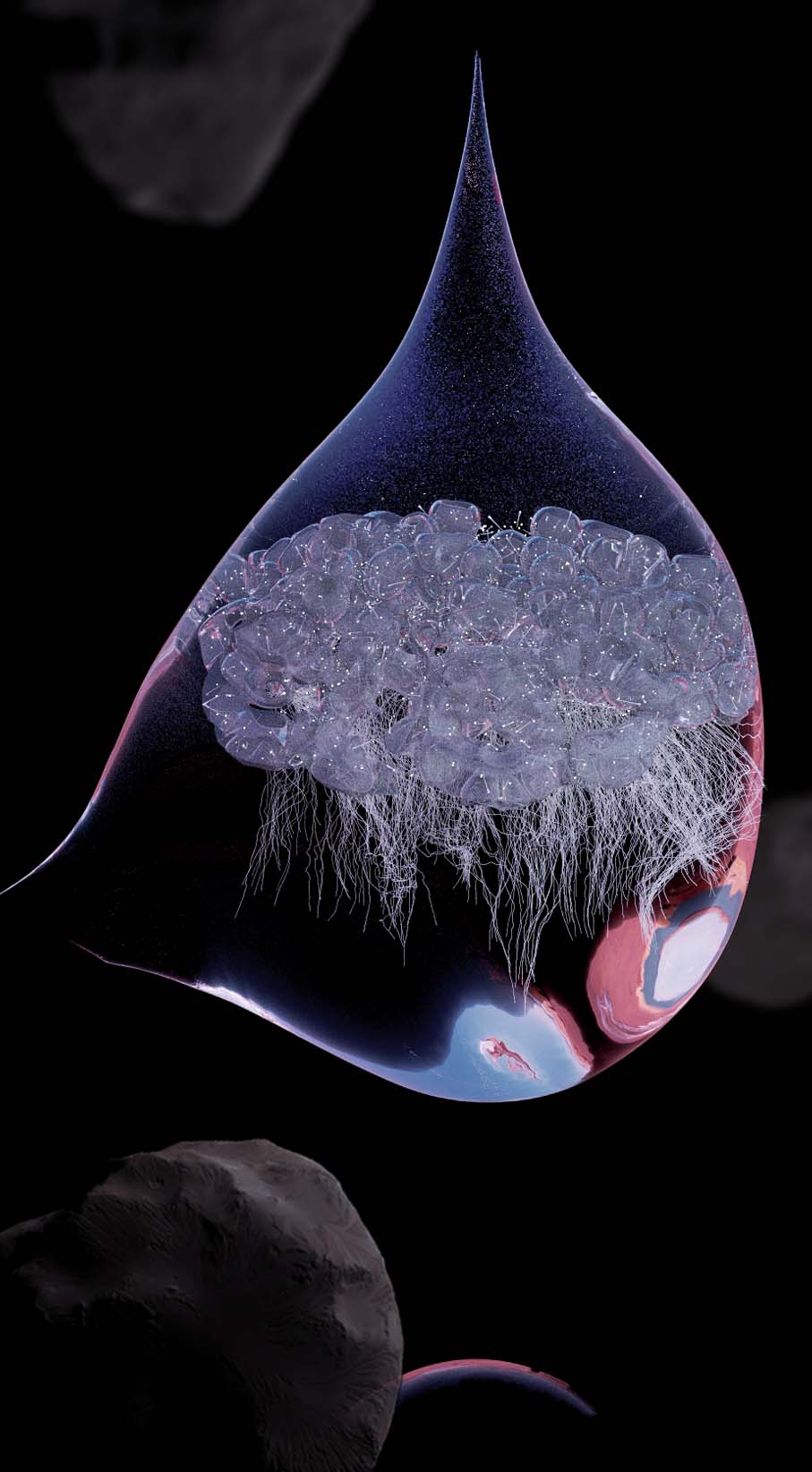
We imagined that life on Mars might not be like anything we know on Earth. Instead, it could exist as a hybrid of matter, information, and energy—decentralised, networked entities that communicate through light signals and electromagnetic waves, and feed on cosmic radiation. These digital fungi would transcend traditional lifecycles, embracing uncertainty and endless possibilities. To realise this, we used a code that generates fungal forms that adapt to different Martian environments, including deserts, plains, glaciers, and volcanoes. They respond to environmental factors like temperature, pressure, radiation, and gravity, with each parameter triggering a unique morphological transformation.
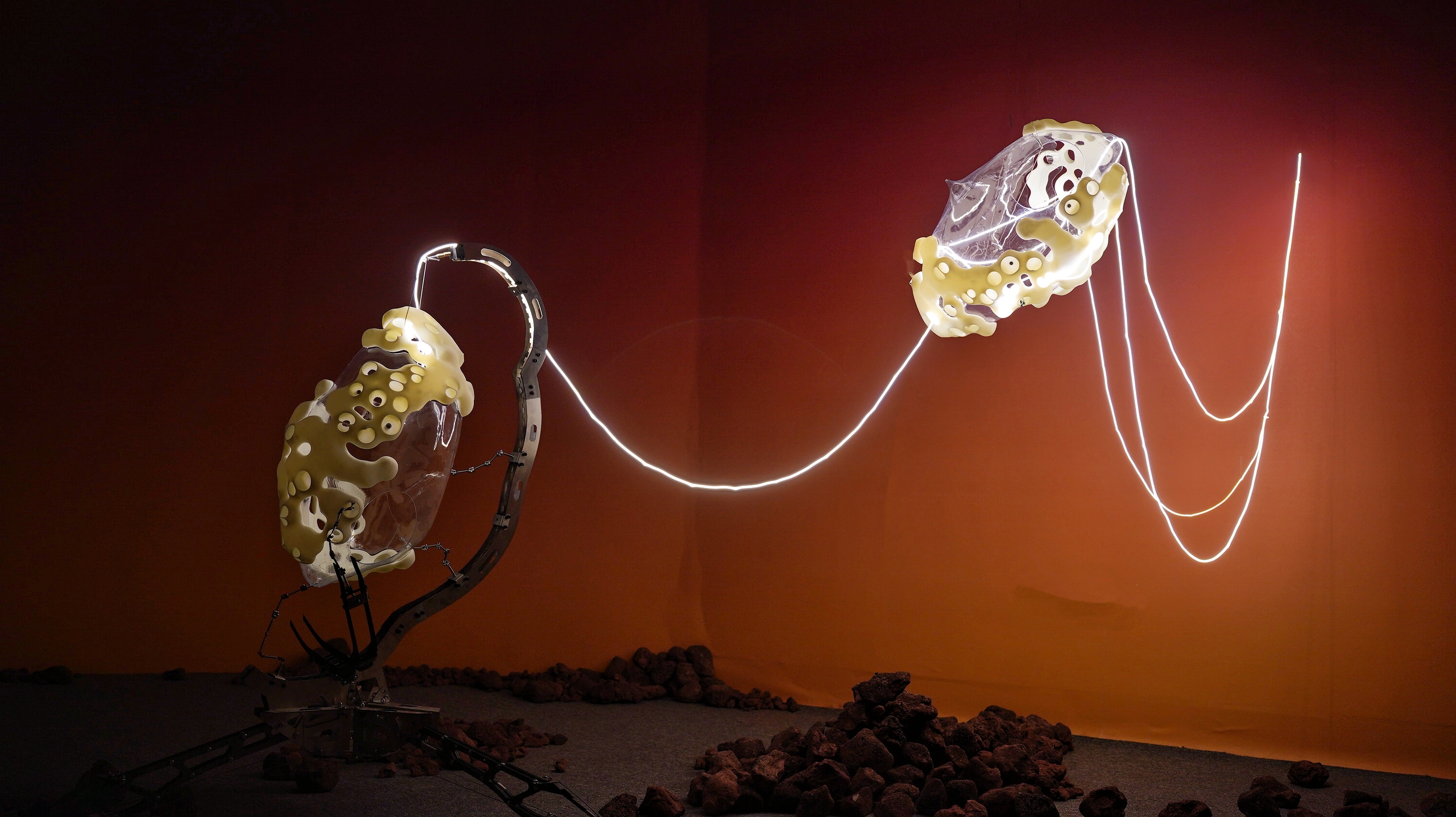
In the red-orange circular exhibition hall of Chang’an Yun Xi’an City Art Center, these digital fungi are brought into the physical world by 3D printing, resulting in a series of sculptures that resemble newly born, bizarre life forms. Surrounded by faint electrical sounds, they sit atop an apocalyptic landscape. The accompanying film integrates digital models, AI-generated technology, and real footage sent back to Earth by Mars rovers, telling the fictional story of the first astronauts to discover Martian fungi.
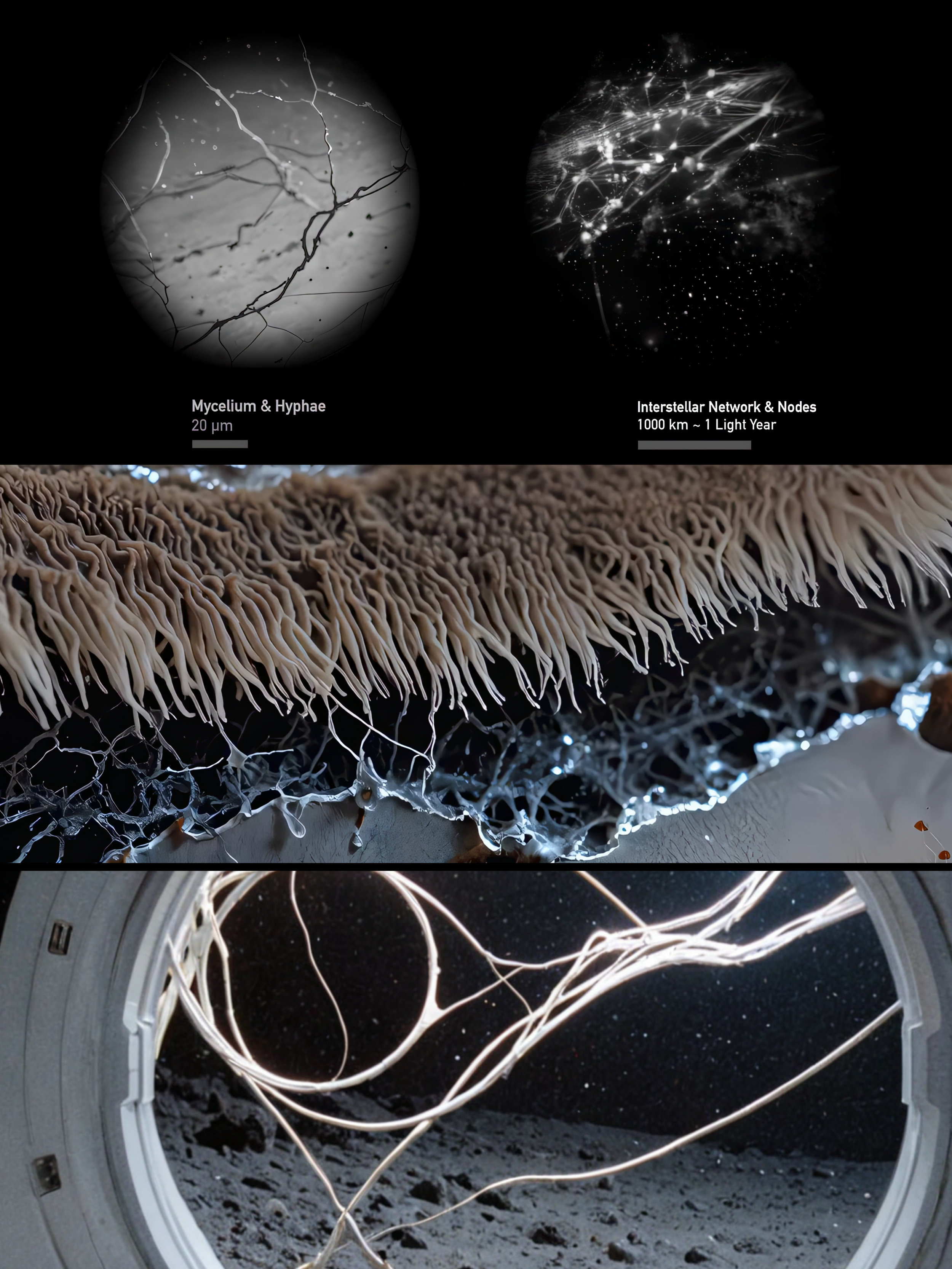
In the film component of Biosphere 3, Martian fungi can perceive astronauts’ emotions, communicate through chemical signals and light pulses, and share sensory experiences with humans, allowing consciousness to spread across the entire fungal network. The fungi eat the outer layers of the astronauts’ spacecraft and suits, forcing them into a direct biological connection with the fungi to survive. That sounds like something out of a horror movie, but you offer a different conclusion: the astronauts say, ‘Mars is not a mirror of Earth; it will never reflect Earth. I am here now, there is no need to return—wherever I am, I am with you through my existence.’
Life’s diversity and unity are celebrated, understood in opposition to the mere replication of preexisting life forms and structures. What makes you so optimistic about post-human life?
I actually think the result of the symbiotic relation between human and the Martian fungi is left unknown in the film. In it, the fungi are transformed by scientists because of their potential as builders, conductors, network engineers, and chemists. They are sent to Mars with the hope that the fungi can decompose the hard planetary surface and construct the soil foundations suitable for Earth life. However, in this particular future, they cut off communication with Earth twice: first when humans send the genetically modified fungi to Mars, and when the astronauts arrive and are captured by the Martian fungi. Mars is resisting remote human intervention.
I really admire the boundless ocean in Tarkovsky’s film Solaris (1972), a vast, intelligent life form capable of sensing human emotions and manifesting our deepest fears and desires. It symbolises the unknown, beyond our understanding or control, of both extraterrestrial mystery and the inner self. The ocean doesn’t communicate in human ways; it creates illusions, trapping humans in situations they cannot resolve. The mycelium on Mars in Biosphere 3 is like the boundless ocean in Solaris. It has no clear boundaries, but pulses through every inch of Martian land-like texture.
How should we approach unfamiliar ecosystems and life forms then?
Every outer space exploration projects our inner desires and fantasies—we always have a longing to conquer beautiful, mysterious, and unattainable lands. But I really resonate with Buckminster Fuller’s analogy in Operating Manual for Spaceship Earth (1969), where he compares Earth to a spaceship and each of us to its crew. Rather than looking outward to conquer new frontiers, perhaps our focus should shift to nurturing and preserving the vessel we already inhabit. —[O]
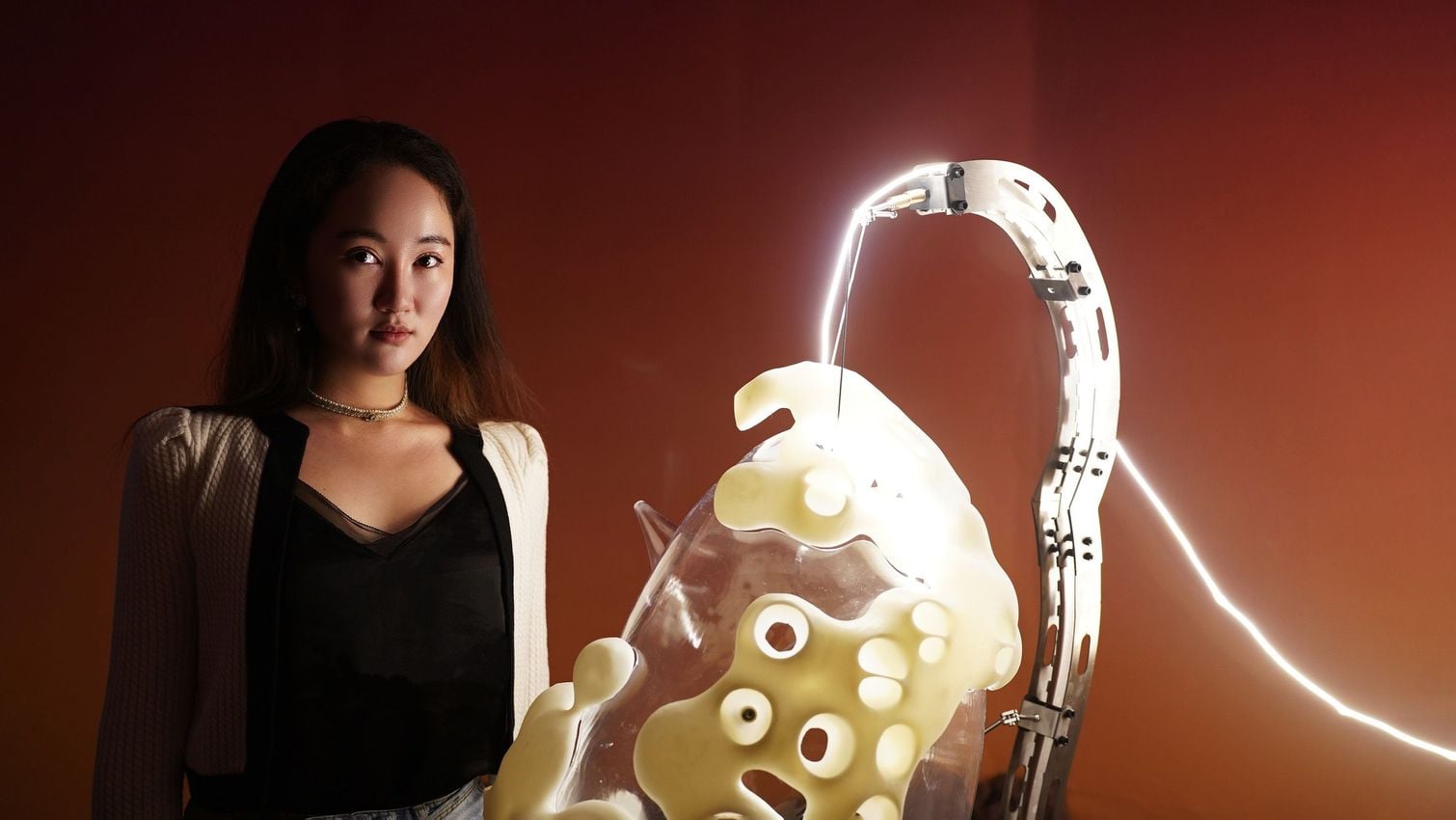
Main image: Black Void founder and director Yixuan Cai.

A respected voice in contemporary art discourse.
Focusing on ambitious storytelling and insightful art-world commentary. Ocula Magazine publishes in-depth interviews, critical essays and timely analysis on the artists, exhibitions and ideas driving the global art world.
Learn more about Ocula Magazine
Showcasing the best of the art world.
Ocula partners with galleries from around the world to highlight their artists, artworks and exhibitions. Gallery membership is by application and invitation, with each member vetted by an independent panel.
Learn more about Ocula Membership
Specialises in the sale of major artworks.
Led by a team with deep ties to the world’s leading auction houses, galleries and collectors. Ocula’s advisory team offers bespoke services to high-net-worth clients from around the world who are looking to acquire the best of contemporary and modern art.
Learn more about our team and services