





The Interlaced Life Work of Anya Paintsil and Stephen William
Weaving, carpentry, building—whatever the craft, Anya Paintsil and Stephen William are in it together. Ocula paid a virtual visit to the couple’s new home in northeast Wales to find out more about the drives and dynamics of their creative partnership. Save to My Ocula
Anya Paintsil and Stephen William are partners in art and life. Both raised in North Wales, the pair recently moved to the Ceiriog Valley, returning to the landscapes of their youth after years living in London. Paintsil’s family are from the island of Anglesey, while William grew up in Abergele. Their new house—which is over 350 years old—is one of three in a small hamlet which operates a neighbourhood open-door policy, with the nearest shop a one-hour walk away. When we speak over Zoom, their grey Staffordshire bull terrier Cybi nudges into the conversation at regular intervals.
Some of Paintsil’s family are still farmers, and their experience inhabiting ancient Welsh stone cottages have provided the couple with the creative and practical know-how to set about renovating their new home. ‘We were both raised by a very specific North Wales type of person,’ says William. ‘If we needed furniture for the house, we’d build it. The tradition and craft of learning is instilled in us.’ The couple bring their hands-on abilities not only to the renovation but also to their individual art practices. Paintsil’s characterful wall-based pieces and freestanding sculptures draw on a wide range of craft practices, while William, a weaver, also employs traditional methods of making, with woodworking skills built up over years learning from his grandad. William builds frames for Paintsil’s wall-based works, creating bespoke structures that are movable yet robust enough to hold their heavy yarn, allowing her to work on the front and back.
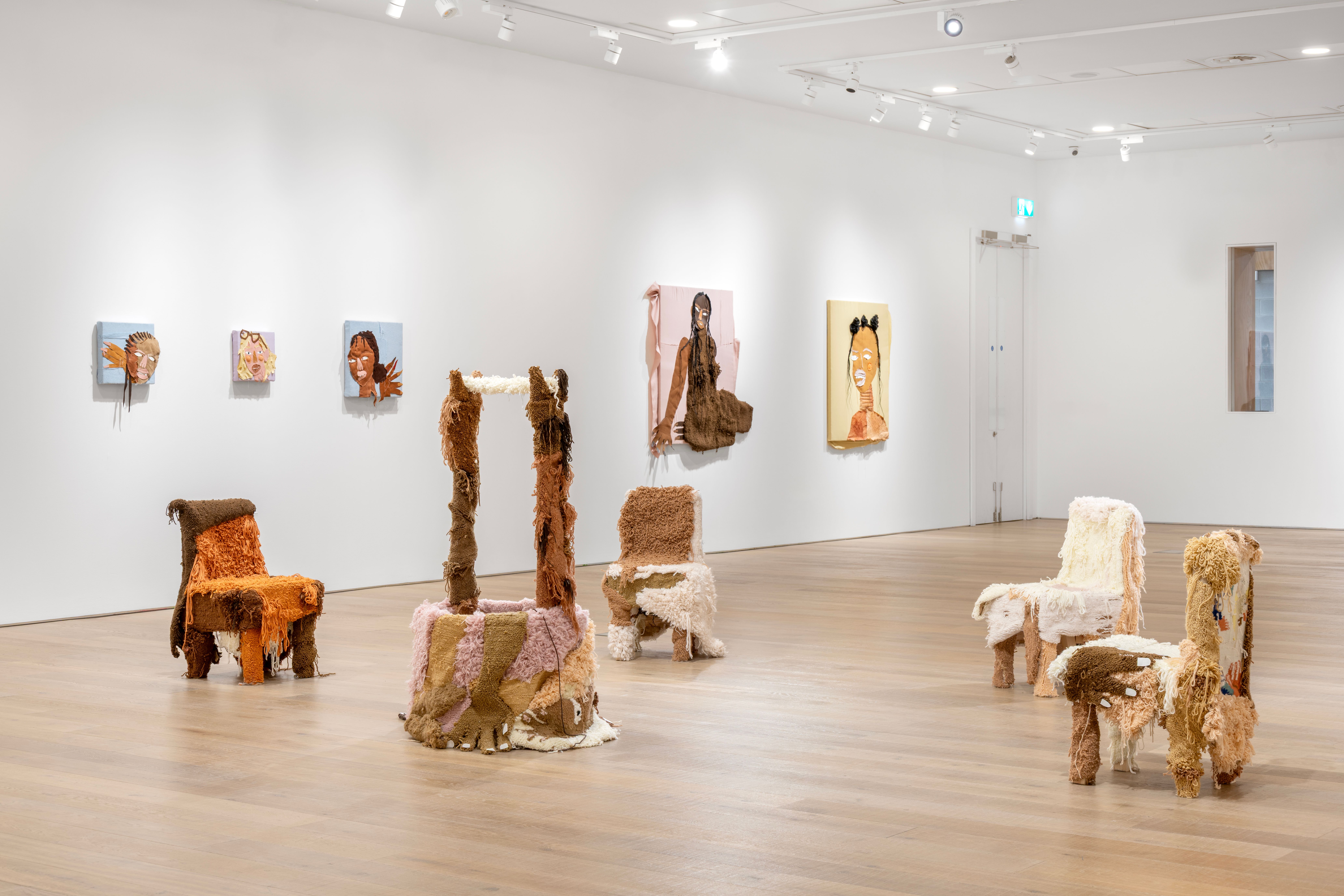
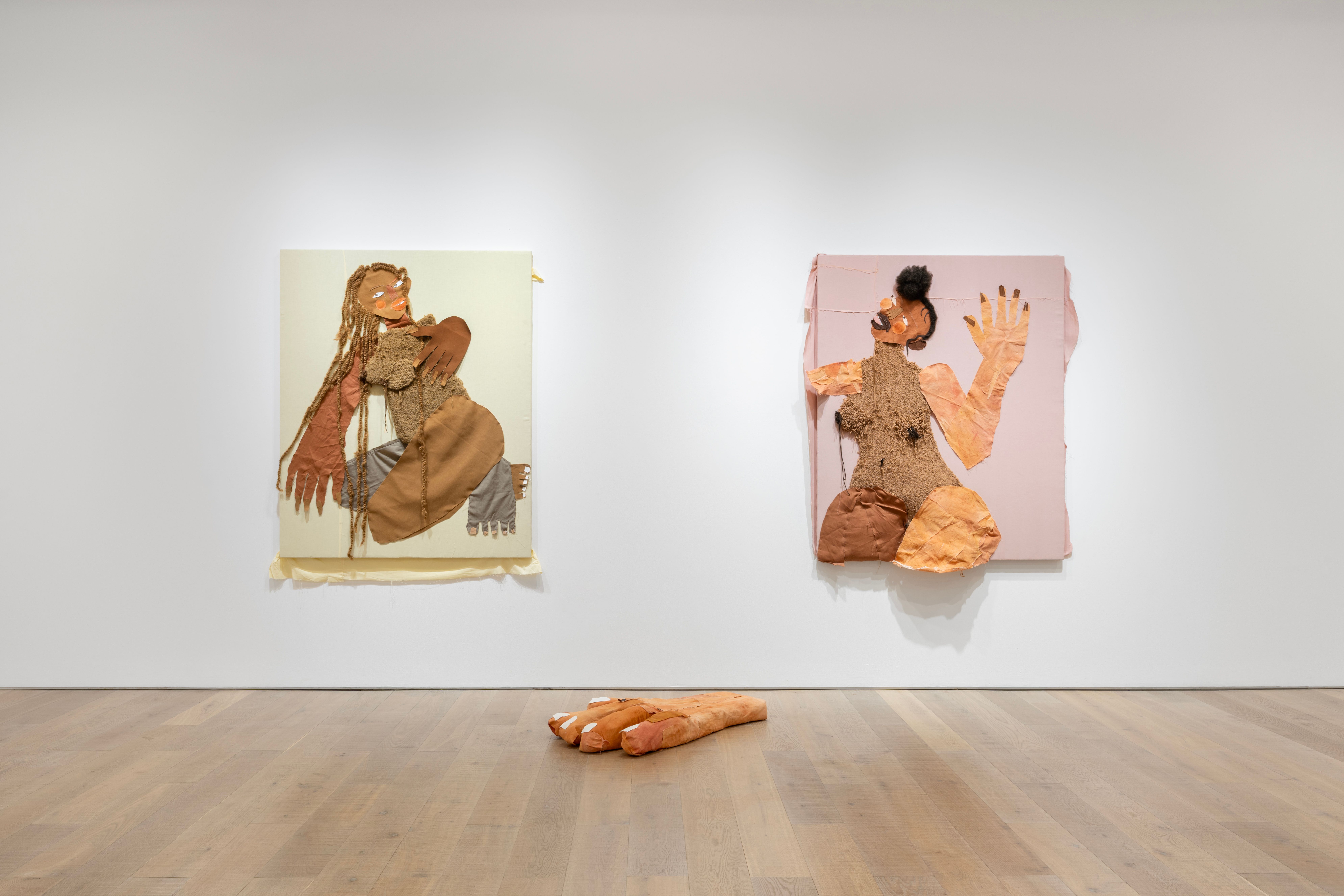
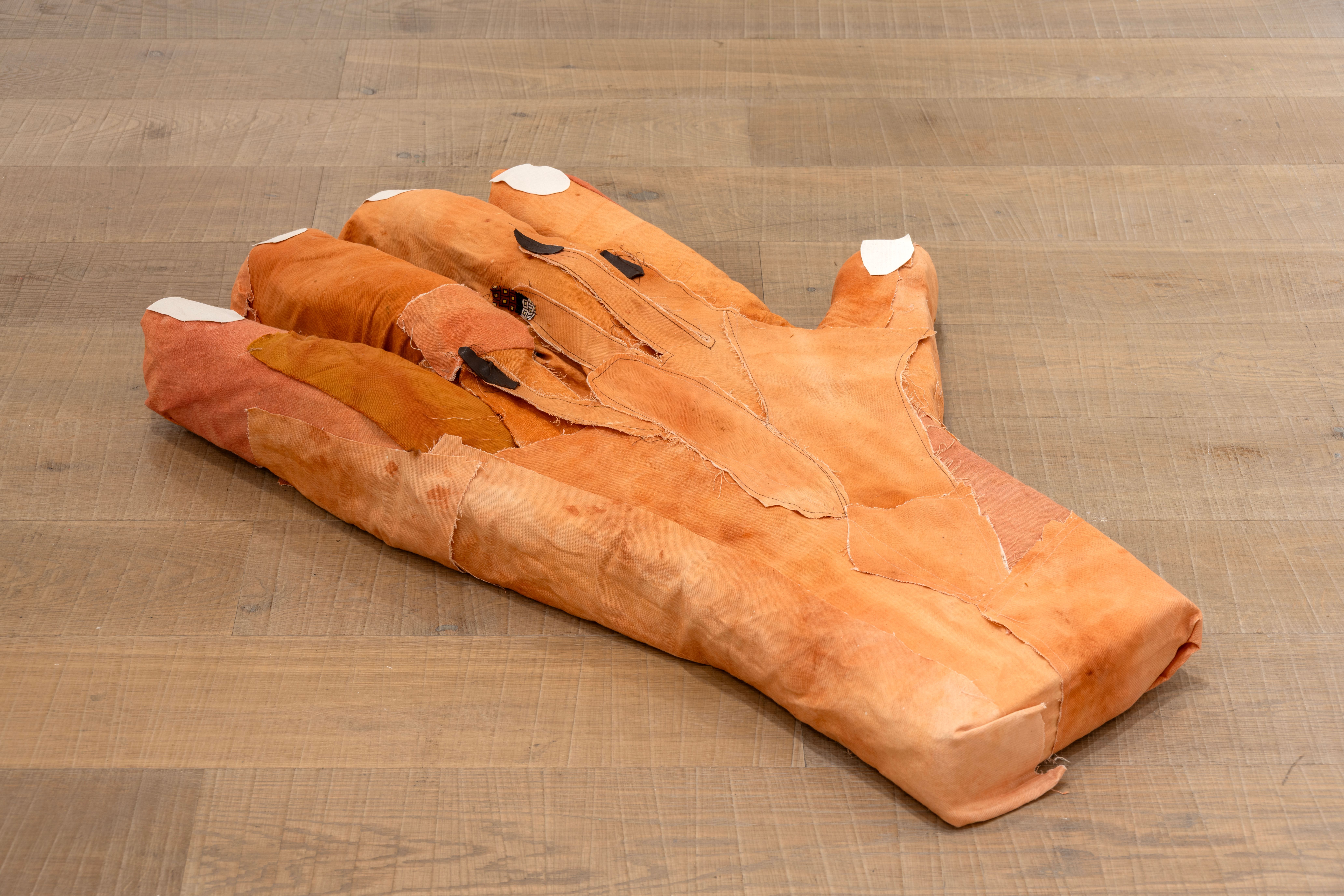
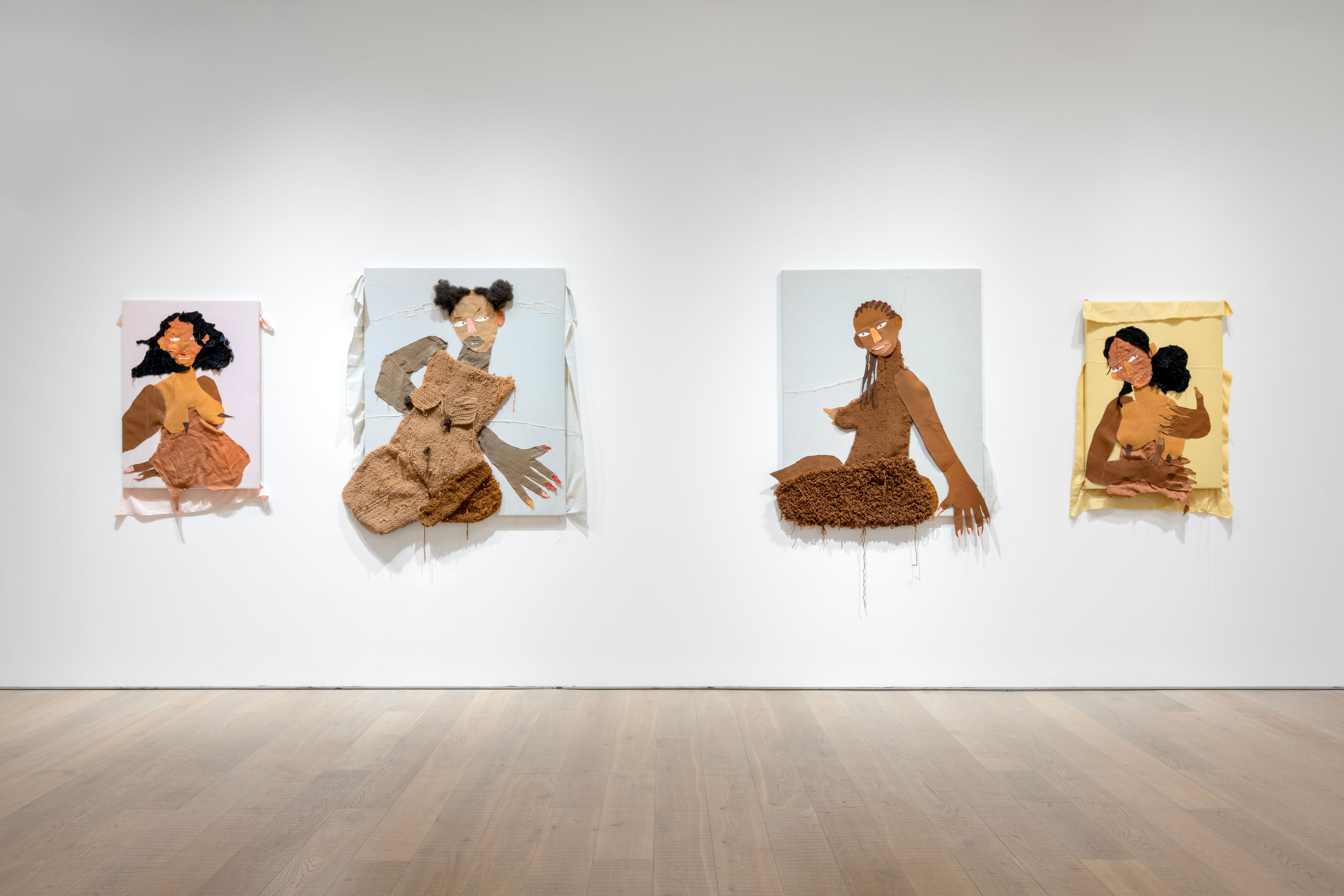
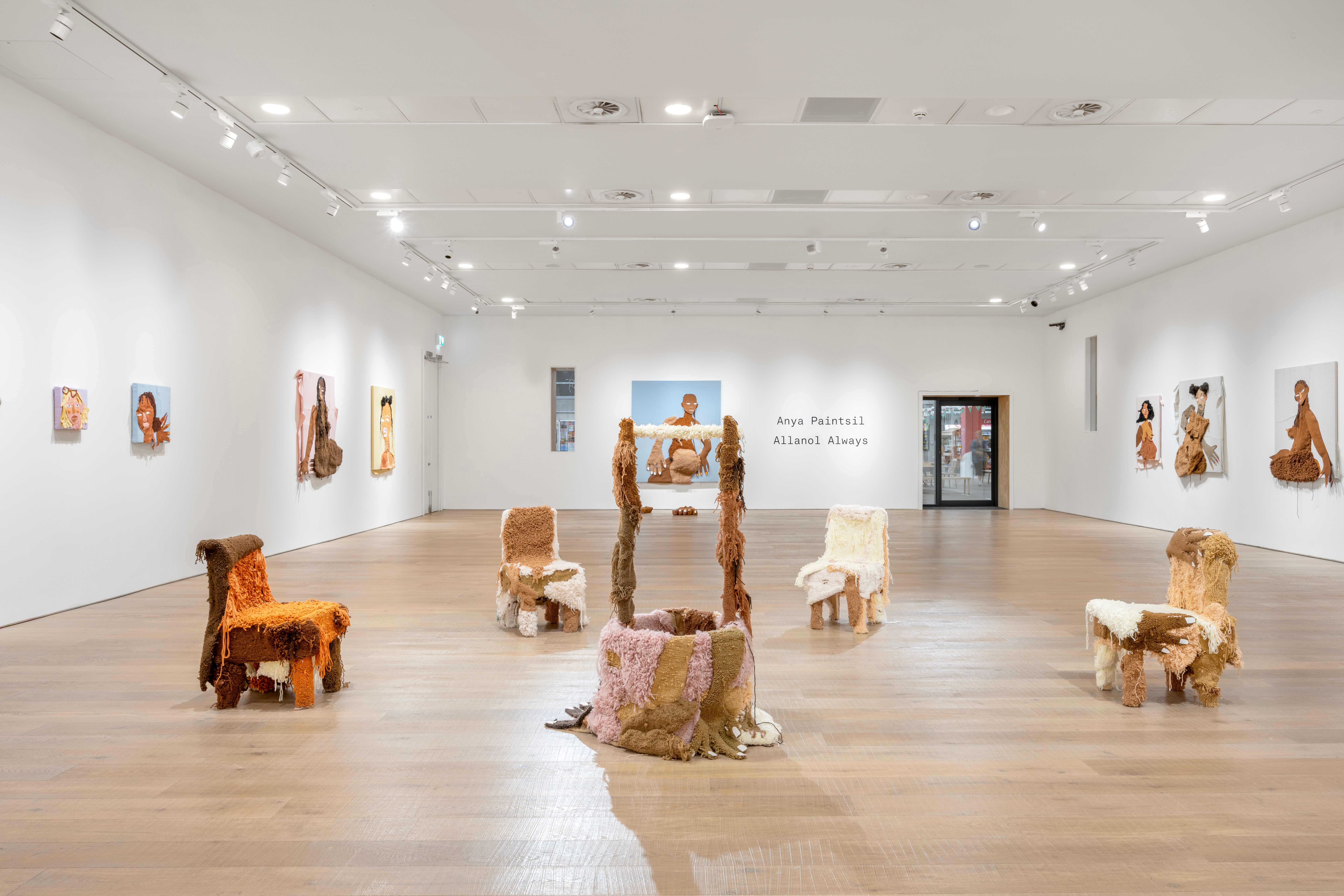
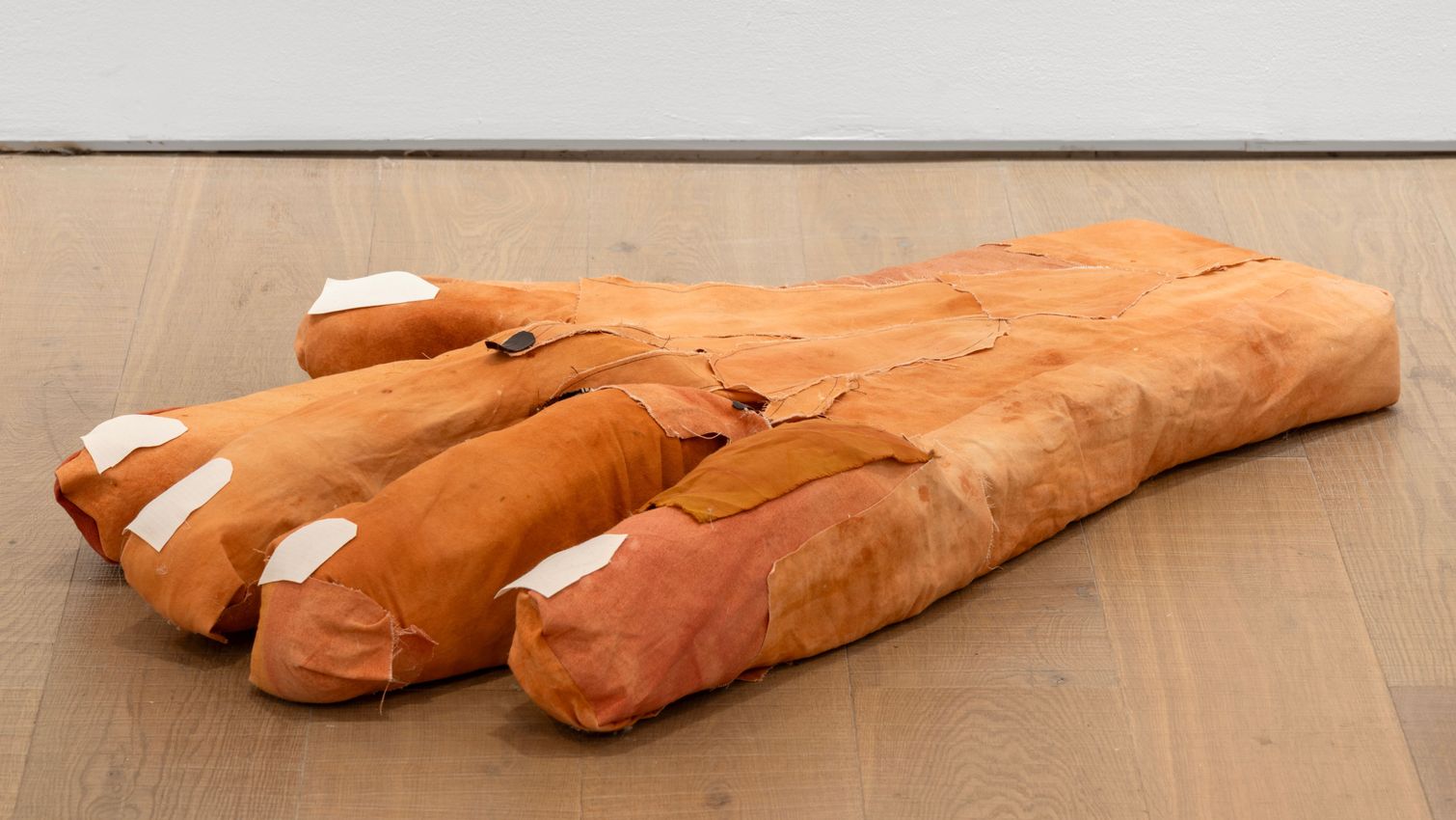
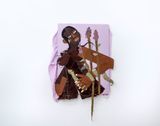
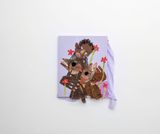
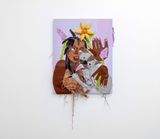
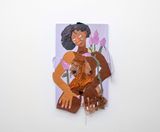
Allanol Always, Paintsil’s current show at Tŷ Pawb in Wrexham, northeast Wales, is a riot of expressive form and texture. Continuing her exploration of Black representation and beauty, and subverting the colonial expectation that is often placed on artists to depict Black bodies through the language of the European art canon, she draws upon techniques such as appliqué and assemblage to create textile portraits and soft sculptures of body parts. Paintsil takes an experimental approach, combining Afro hairstyling techniques with craft skills learned from her community during her childhood. The works in Allanol Always are threaded through with her Welsh Ghanaian heritage, referencing Welsh mythology and figurative Fante textiles, embracing ideas of monstrosity and the grotesque and weaving them through folkloric narratives.
Paintsil and William have collaborated on a new series of chairs that are also on show at Tŷ Pawb. Covered in masses of shaggy yarn and embellished with textile hands that caress their surfaces, the chairs appear both sturdy and on the brink of falling apart. ‘We wanted them to be interactive,’ says Paintsil. ‘People always say how much they want to touch my work. The sensory element is probably why I also find it so fun to make.’
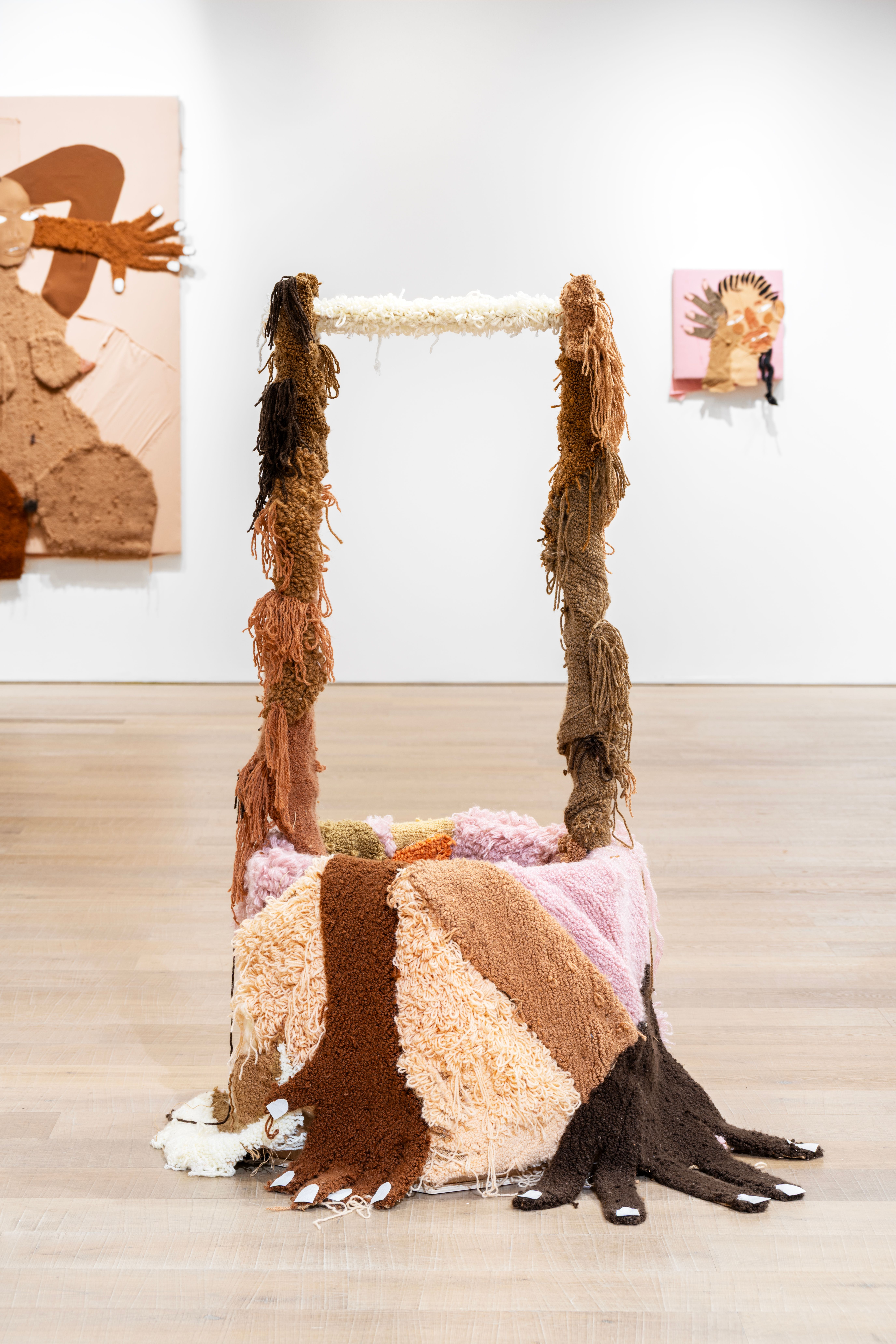
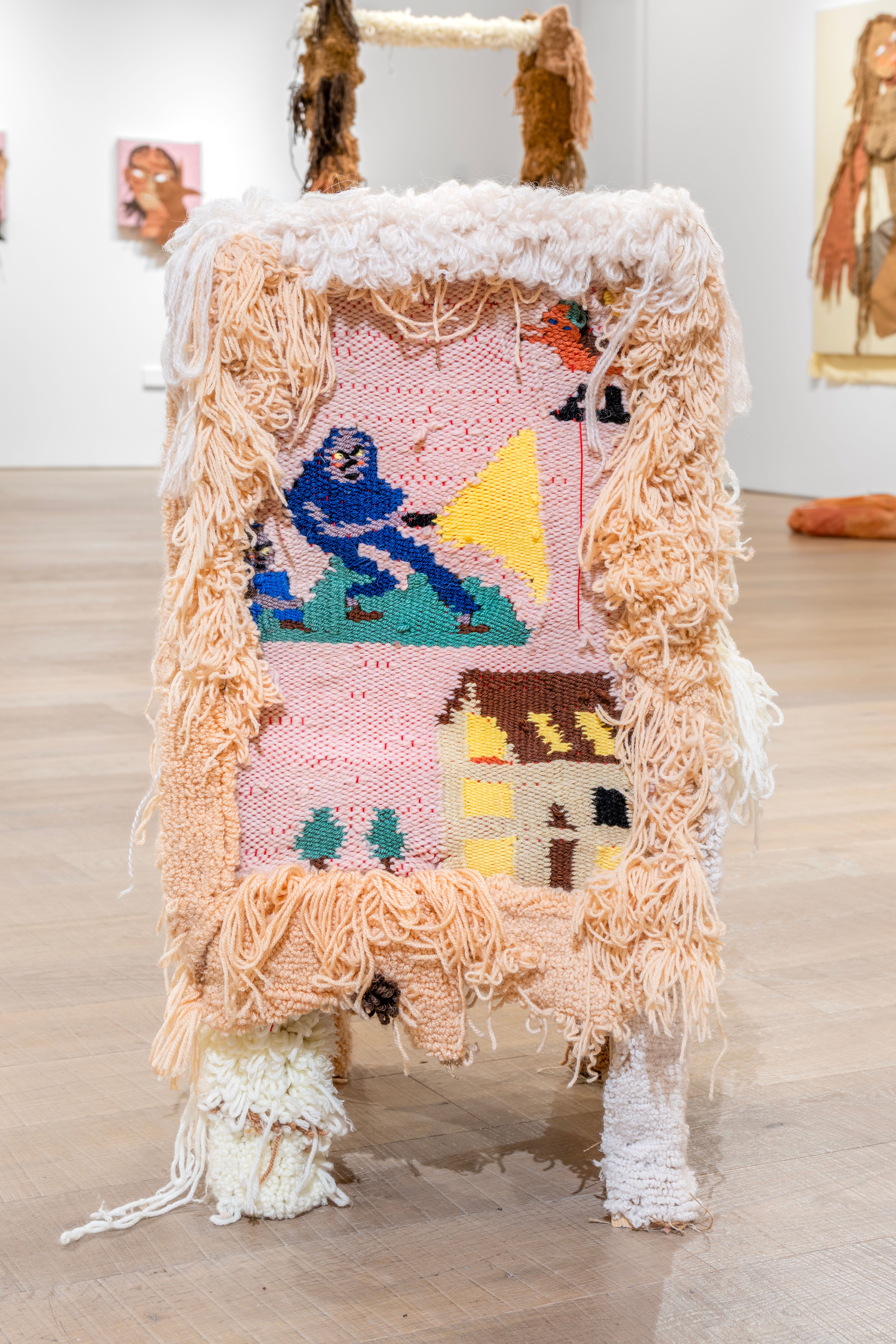
William assembles the chairs from deconstructed parts of Paintsil’s earlier works, and recakes the yarn. Paintsil describes the reuse of expensive material like yarn as ‘a typical element of working-class craft practice’ and highlights how a favourite variety might go out of production or change tone when dye lots are replaced, leading her to go back and pillage her archive to source a particular shade.
‘There’ll be artworks that I think are so beautiful and I hope they don’t sell so we can put them up in the house!’ William tells me. ‘Then Anya will say, “Can you take this apart please?” You slowly see it unravel, but then it’s repurposed into the next thing. I see the studio as constantly working. Absolutely everything is at a point where it is about to be used.’
The couple’s collaborative and exploratory way of working inspires their individual practices. ‘Skill sharing is really fun for both of us,’ says Paintsil. ‘It’s exciting to see how things work and are made. We both come from creative families in more of a technical sense, very skills-based. Doing things with a purpose and utility—it’s where our artistic practices come from, but there’s also fun to it.’
Deconstructing Paintsil’s works, seeing parts hanging down as they are pulled apart, has begun to inspire William’s own tapestries. ‘They’re so strong once they’re completed,’ he says. ‘But I like them to sit in this place where they seem as though they’re just holding themselves together. They end up being weirdly delicate.’
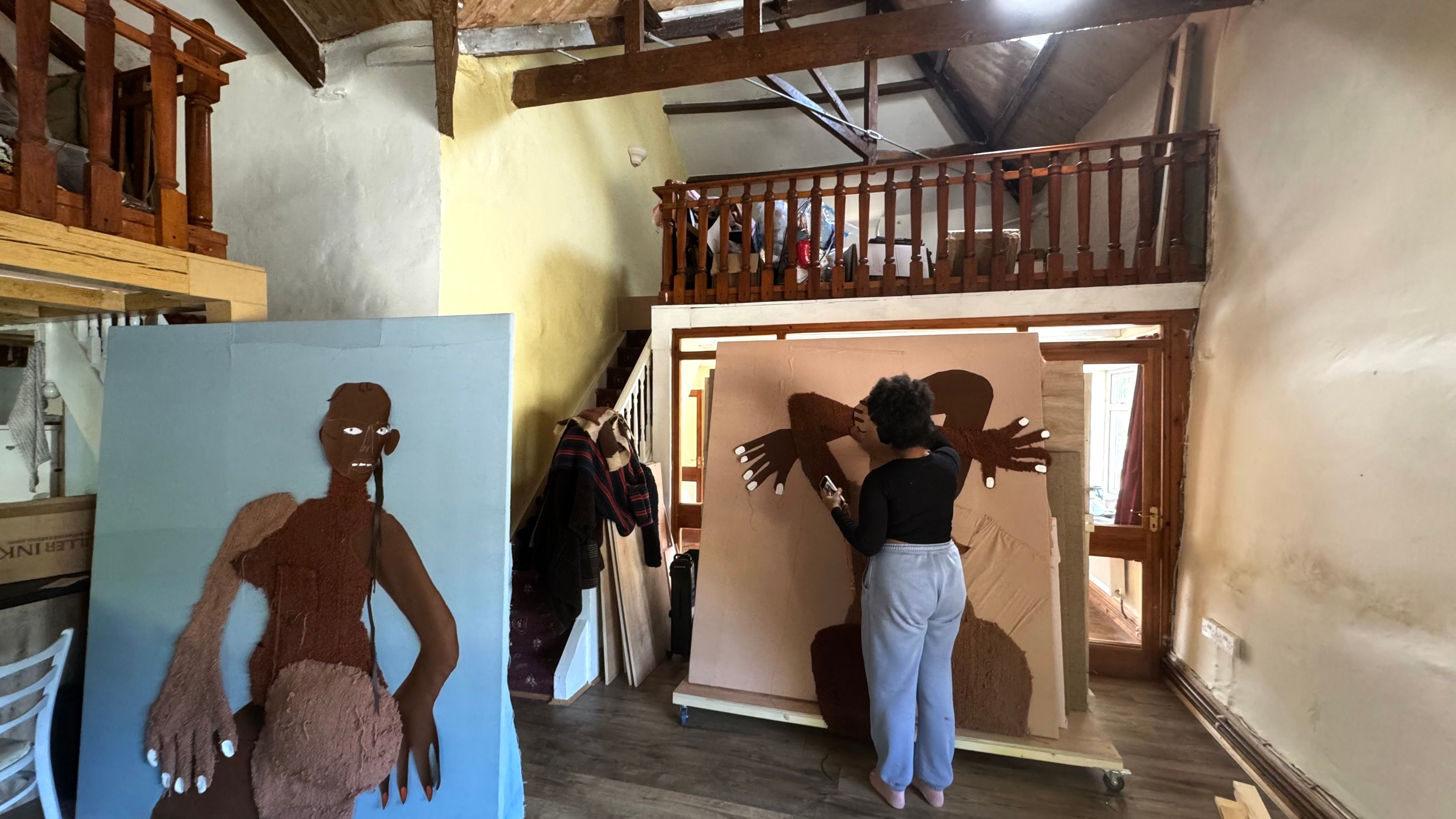
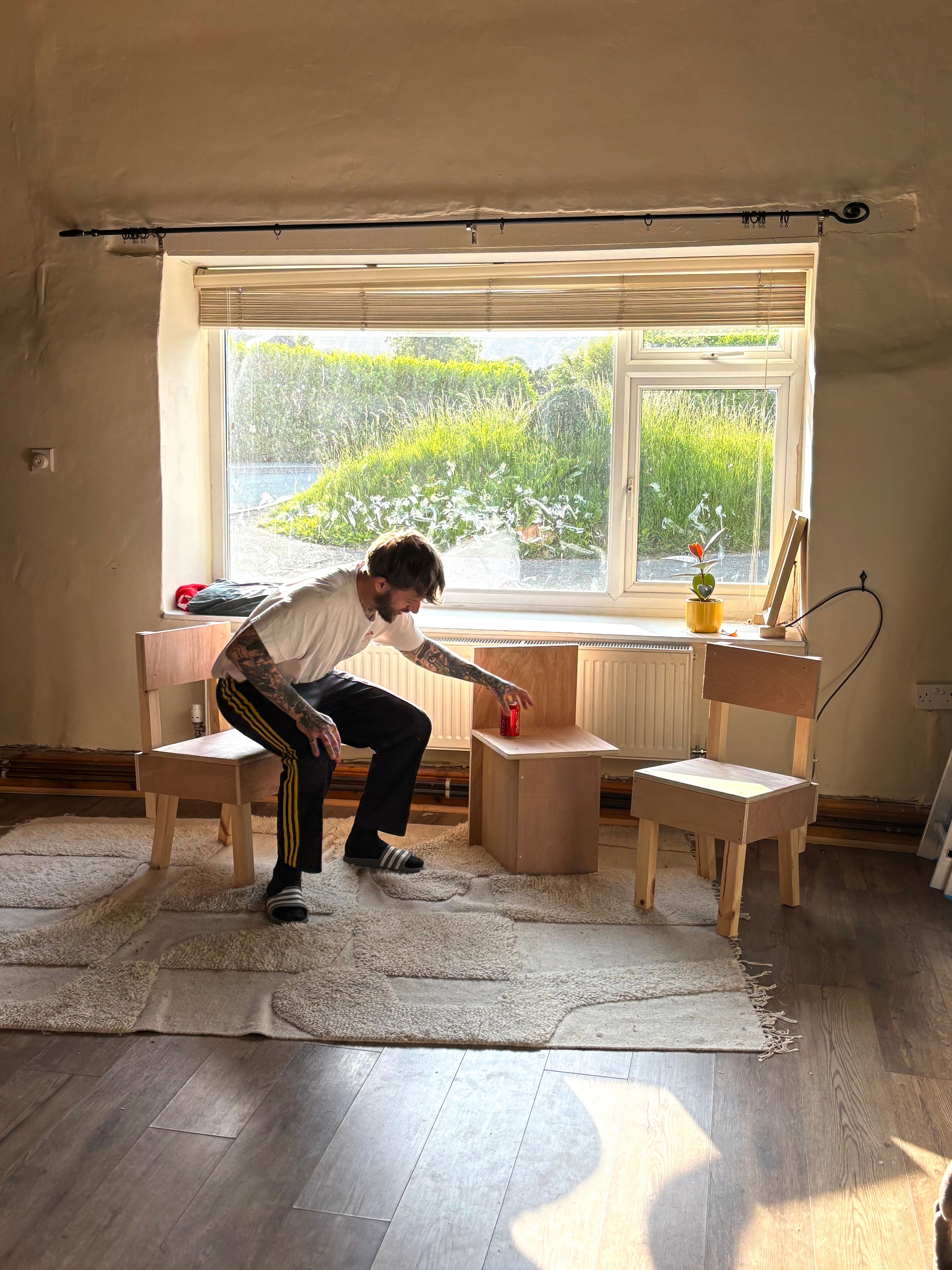
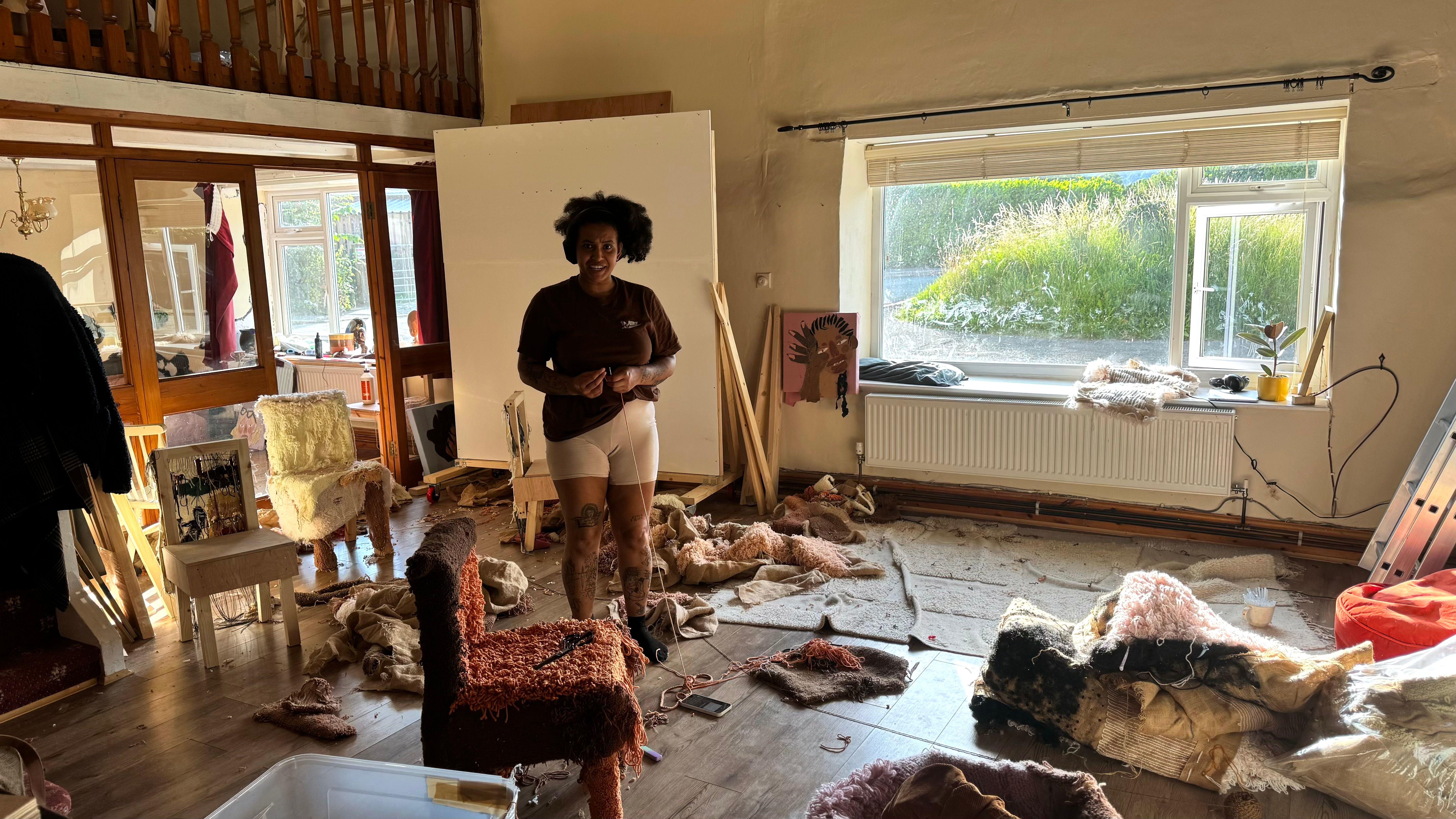
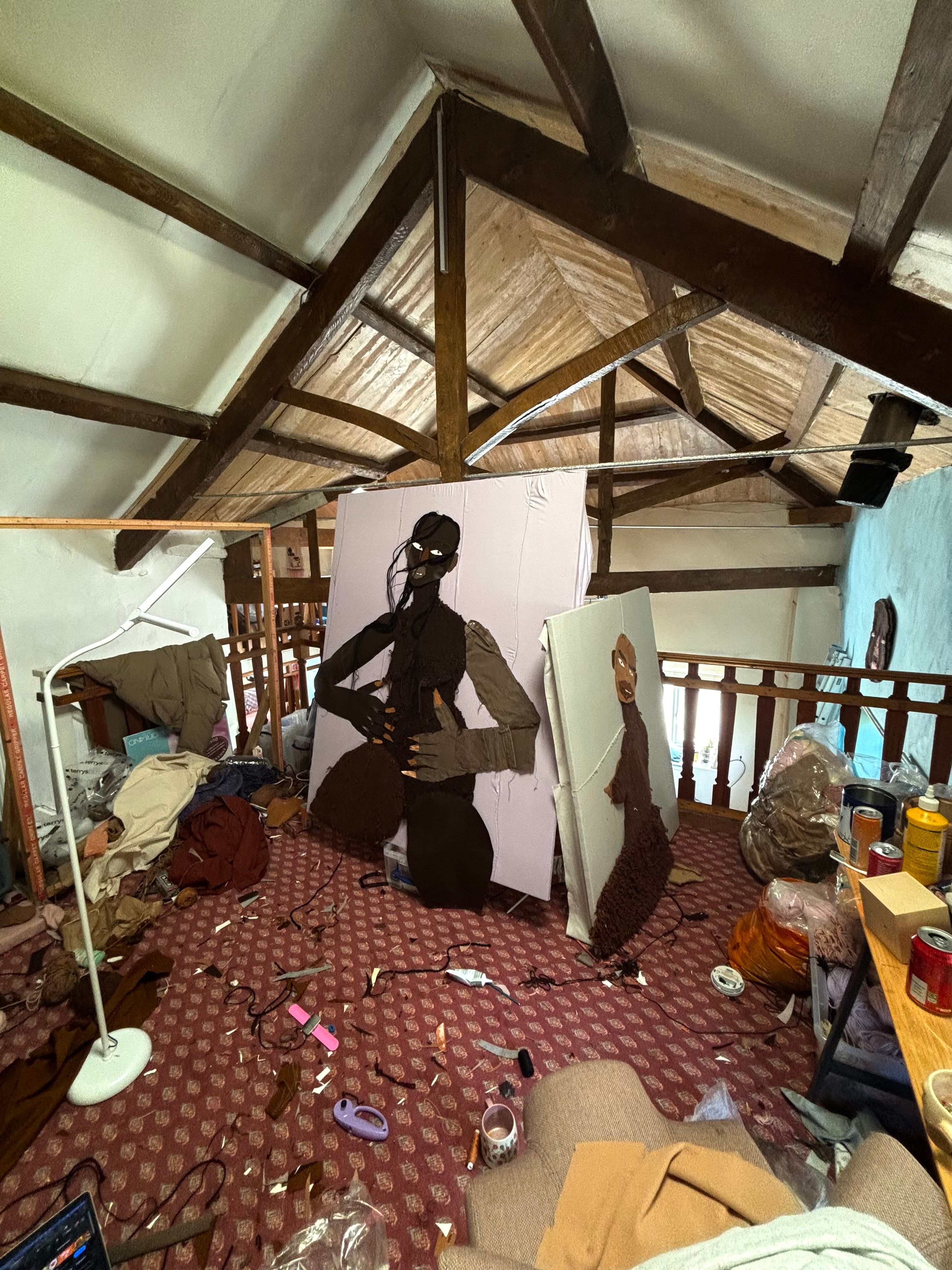
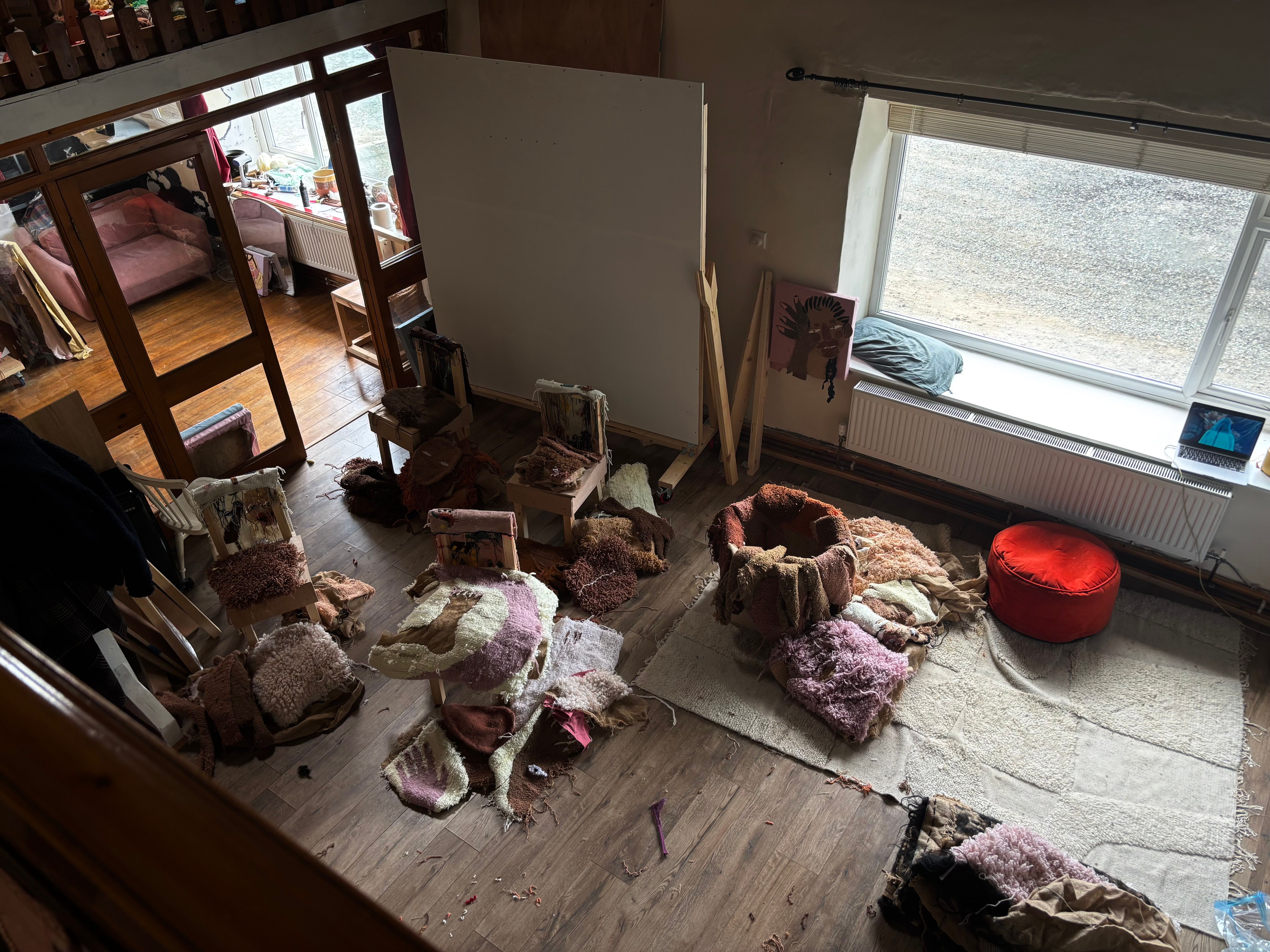
The creative space of the pair’s studio invariably merges with their work on the house, their handcrafted domestic furniture also imbued with the playful creativity of their artistic practices. ‘When you’re thinking about what looks good and you’re surrounded by Anya’s artworks, everything starts reflecting that,’ says William. ‘I think there is a translation between making art that is very craft-based and living somewhere like this. There’s something very hypnotic about the graft of it.’
The Tŷ Pawb exhibition’s title reflects upon the idea of the outsider, and their move back to Wales. The Welsh word allanol translates to ‘outside’ or ‘external’, mirroring the othering of many traditional African art practices—often defined as ‘outsider’ within the Western framework—as well as Paintsil’s exploration of the body as that which shapes individual identity and Black women’s experience. The title also considers the dual nature of being both an insider and outsider.
‘I didn’t really feel Welsh until I left Wales, and then I started to really miss it,’ says William, who didn’t grow up in a Welsh-speaking community. ‘There was this feeling of separation. Those things that Anya inherently felt, it took space being away for that to click for me. I still feel outside of some things.’ Paintsil tells me she ‘always felt really Welsh. But a big part of my life over the last ten years has been not speaking Welsh constantly, and my language skills becoming worse. There’s a very different sensibility and feeling of being Welsh if you speak the language.’
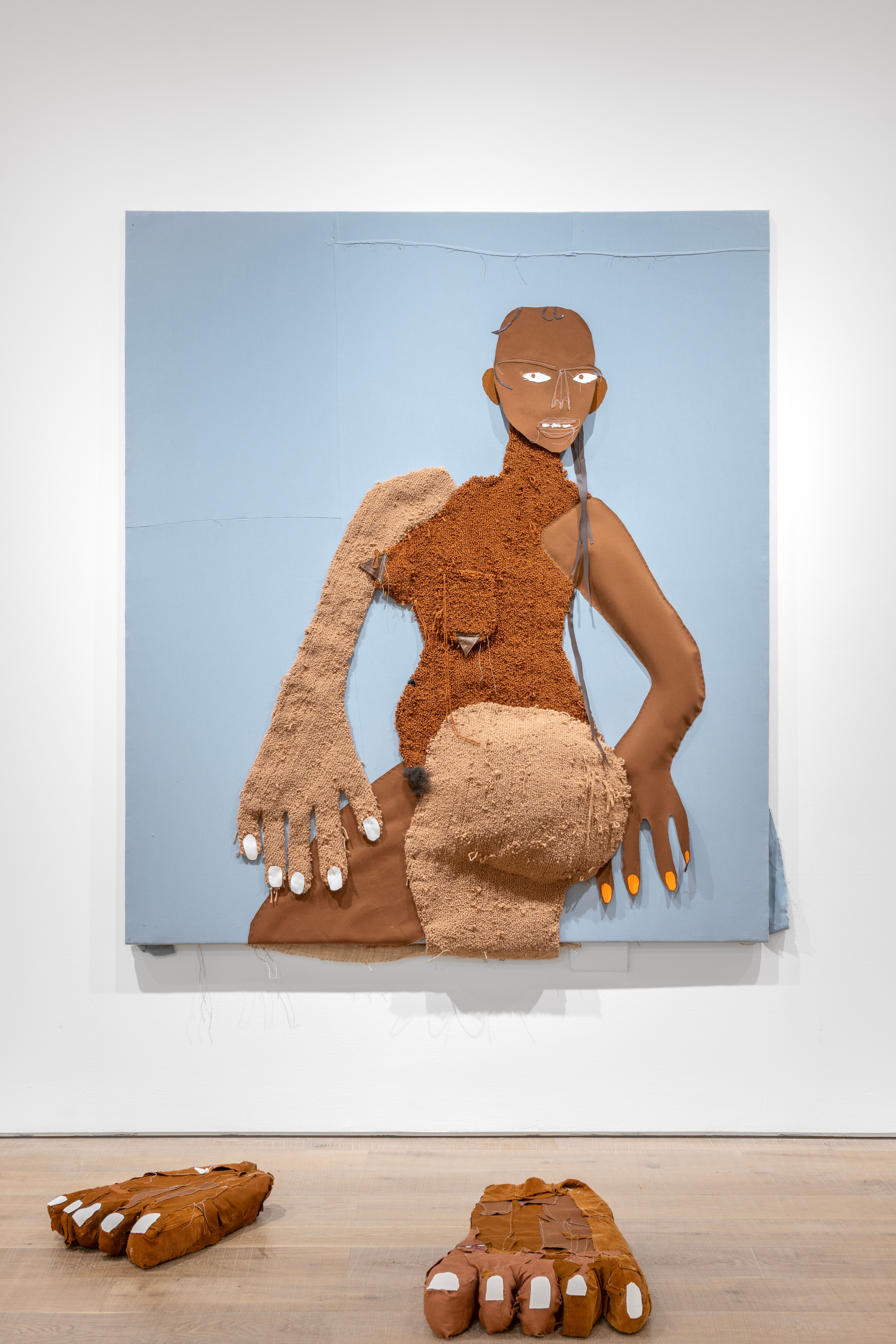
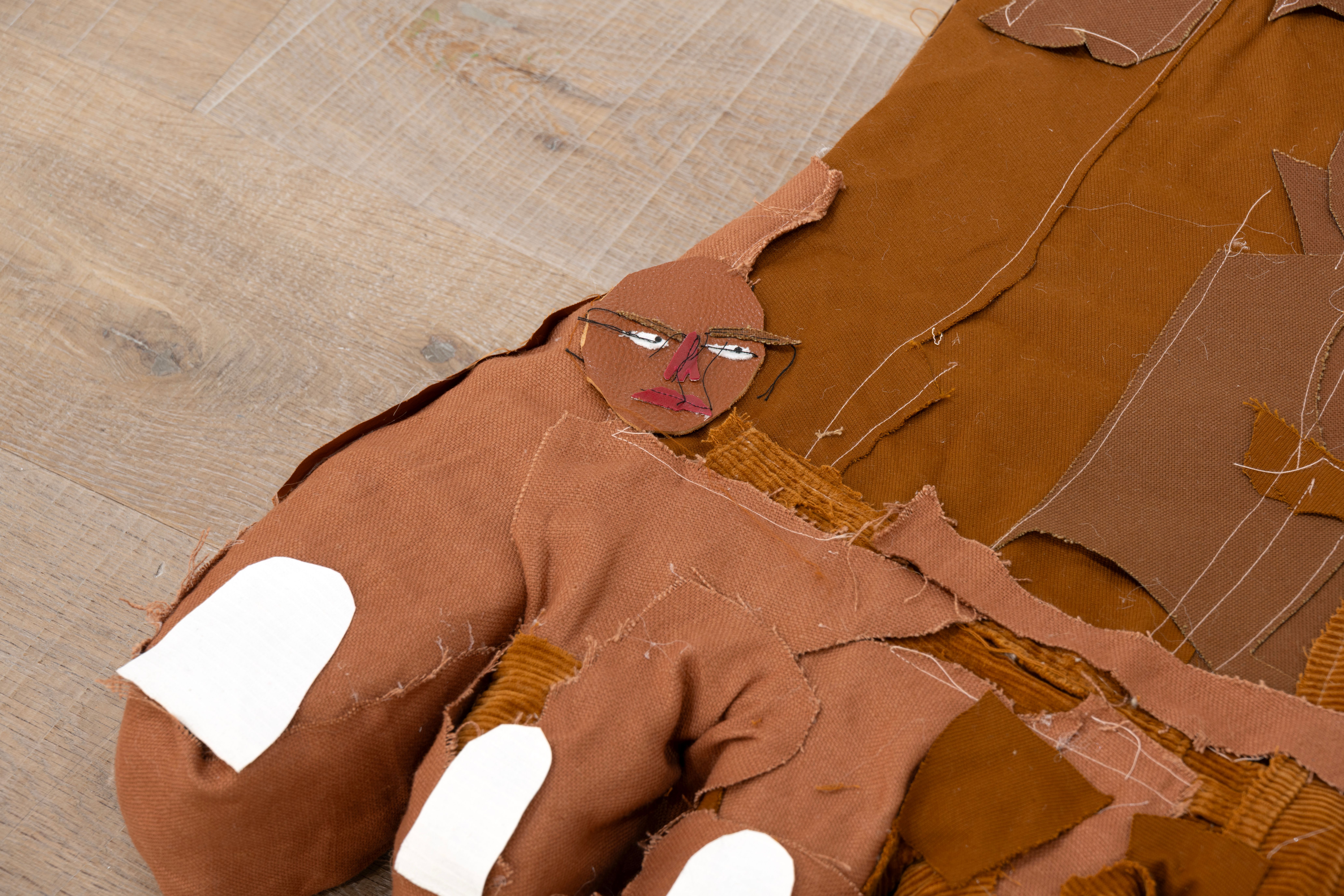
Paintsil describes Tŷ Pawb, which is based in an old butchers’ market that she visited as a child, as ‘a really special gallery’. ‘It gives an opportunity to interact with art within the fabric of the town centre and culture of the place,’ she says, noting that the food court and shops blend organically with the arts space. She is now embedded within the local scene, recently judging the Welsh language art competition Eisteddfod alongside artists Bedwyr Williams and Angela Davis. Growing up, Paintsil would submit her own artworks to the prize’s youth counterpart Urdd Eisteddfod, while William remembers visiting the competition with his family.
‘We have a really vibrant art scene in North Wales. There’s a really close and supportive community,’ Paintsil says of their return, telling me that many artists within the area visit each other’s shows. ‘We live like hermits and we’ve moved to the middle of nowhere,’ William laughs. ‘But I don’t think we’ve ever been more sociable.’ —[O]
Anya Paintsil: Allanol Always is on view at Tŷ Pawb in Wrexham, Wales, from 11 July to 25 October 2025.



80 x 64 cm
Ames Yavuz Request Price & Availability


A respected voice in contemporary art discourse.
Focusing on ambitious storytelling and insightful art-world commentary. Ocula Magazine publishes in-depth interviews, critical essays and timely analysis on the artists, exhibitions and ideas driving the global art world.
Learn more about Ocula Magazine
Showcasing the best of the art world.
Ocula partners with galleries from around the world to highlight their artists, artworks and exhibitions. Gallery membership is by application and invitation, with each member vetted by an independent panel.
Learn more about Ocula Membership
Specialises in the sale of major artworks.
Led by a team with deep ties to the world’s leading auction houses, galleries and collectors. Ocula’s advisory team offers bespoke services to high-net-worth clients from around the world who are looking to acquire the best of contemporary and modern art.
Learn more about our team and services