





Muhanned Cader's Night Vigils Abstract Views from Sri Lanka
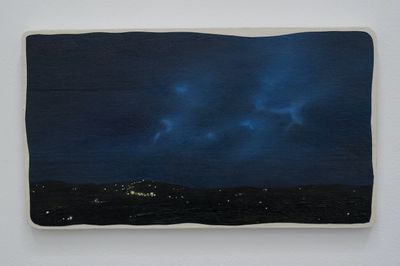
Muhanned Cader, Nugaduwa 5 (2021) (detail). Oil on wood. 24 x 43 cm. Courtesy the artist and Grey Noise.
The largely pocket-sized works of the series ‘Nugaduwa’ (2020–2021) seem to float above their frames. Even though there are three paintings in this series that are double in size to the others, they still read as miniature landscapes. An opaque black sky takes up most of the canvas in each painting, with smatterings of clouds tinged with glowing pink, the last vestiges of sun in Nugaduwa 4 (2020), or hints of thunder in Nugaduwa 5 (2021).
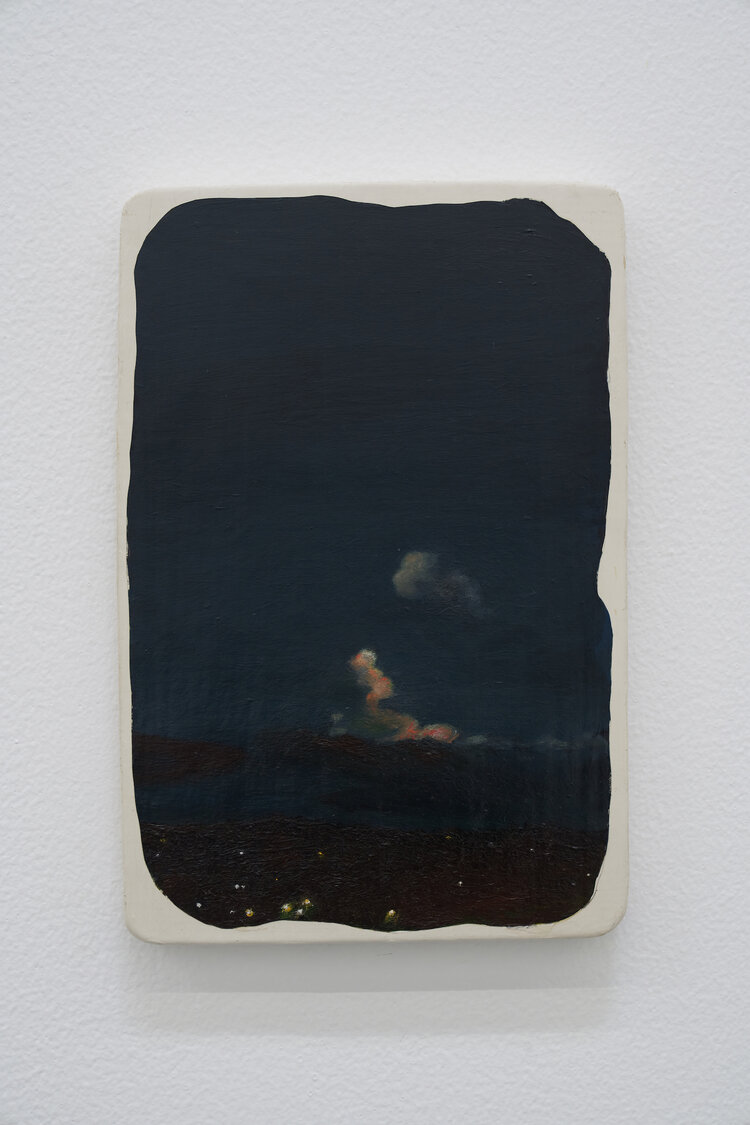
Cader’s mastery is in the way he communicates vastness and vicinity in constrained space. Painted from the perspective of the roof and balcony of his 8th-floor apartment in a 12-storey building in Nugaduwa, Sri Lanka, the images look like they could be anywhere. But abstraction isn’t the ultimate aim—a certain universal non-specificity is.
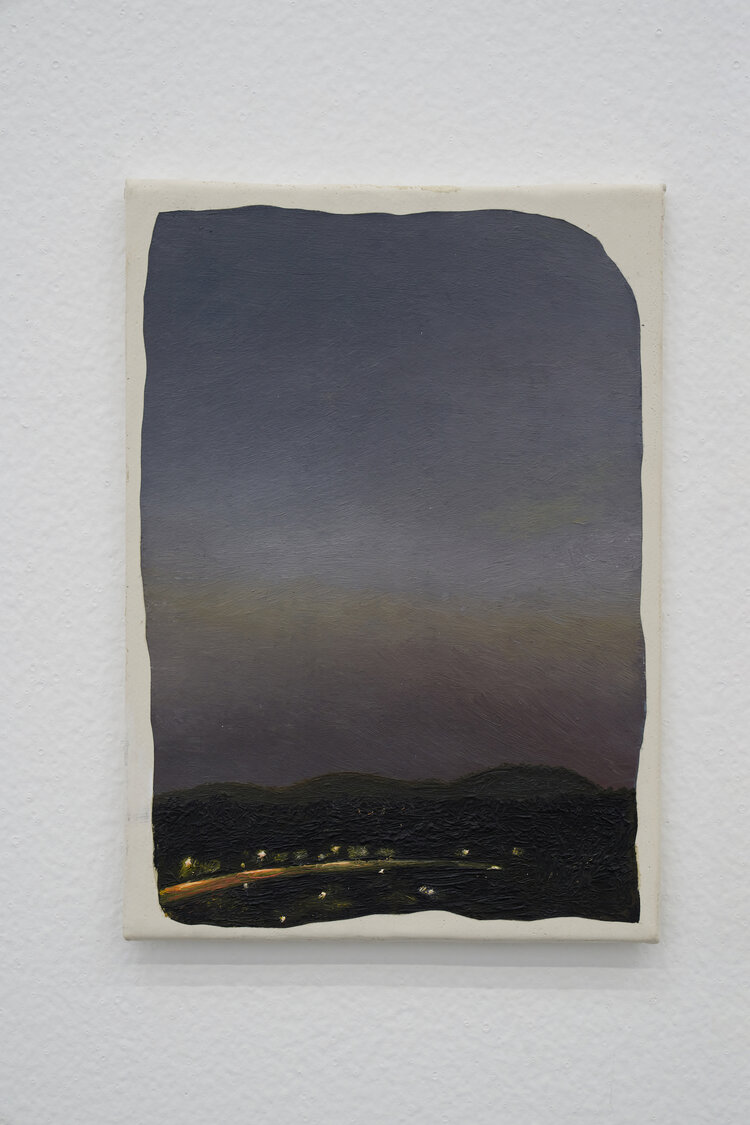
Located on the fringes of the city of Galle, Cader describes Nugaduwa as a marshland in the throes of real estate development, glimpses of which can be seen amid the sparsely clustered, hazy lights of his nighttime vistas. Through the painted shifts between sunset and sunrise, one can discern a winding road throwing light, or firefly-like dots illuminating the landscape.
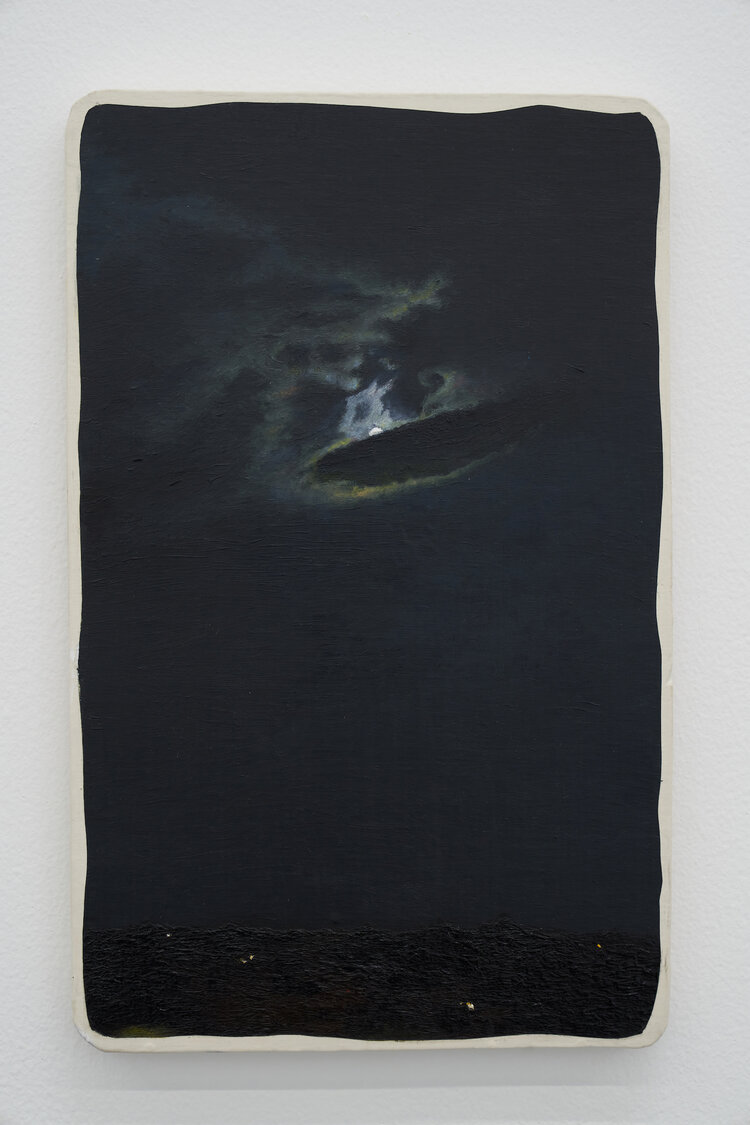
Cader chose to work in small scale because all the pictures from which his paintings are derived were taken from his iPad or phone. Besides, Cader says, ‘Everyone is looking at everything small these days.’
“While not overtly political, these night vigils are embedded with metaphors that not only reference the rigid traditions of landscape painting, but the mechanics of visual perception.
In a way, this process of replicating the visual document captures the technological failures of our digitised reality, pointing to elements of the sublime, not to mention movement and atmosphere, that evade representation. ‘The photograph is flat,’ he adds. ‘Sometimes I have to keep painting over and over to get the intensity of the colour.’ Yet, there is a detached minimalism in Cader’s dissolute forms; a softness to the darkness.
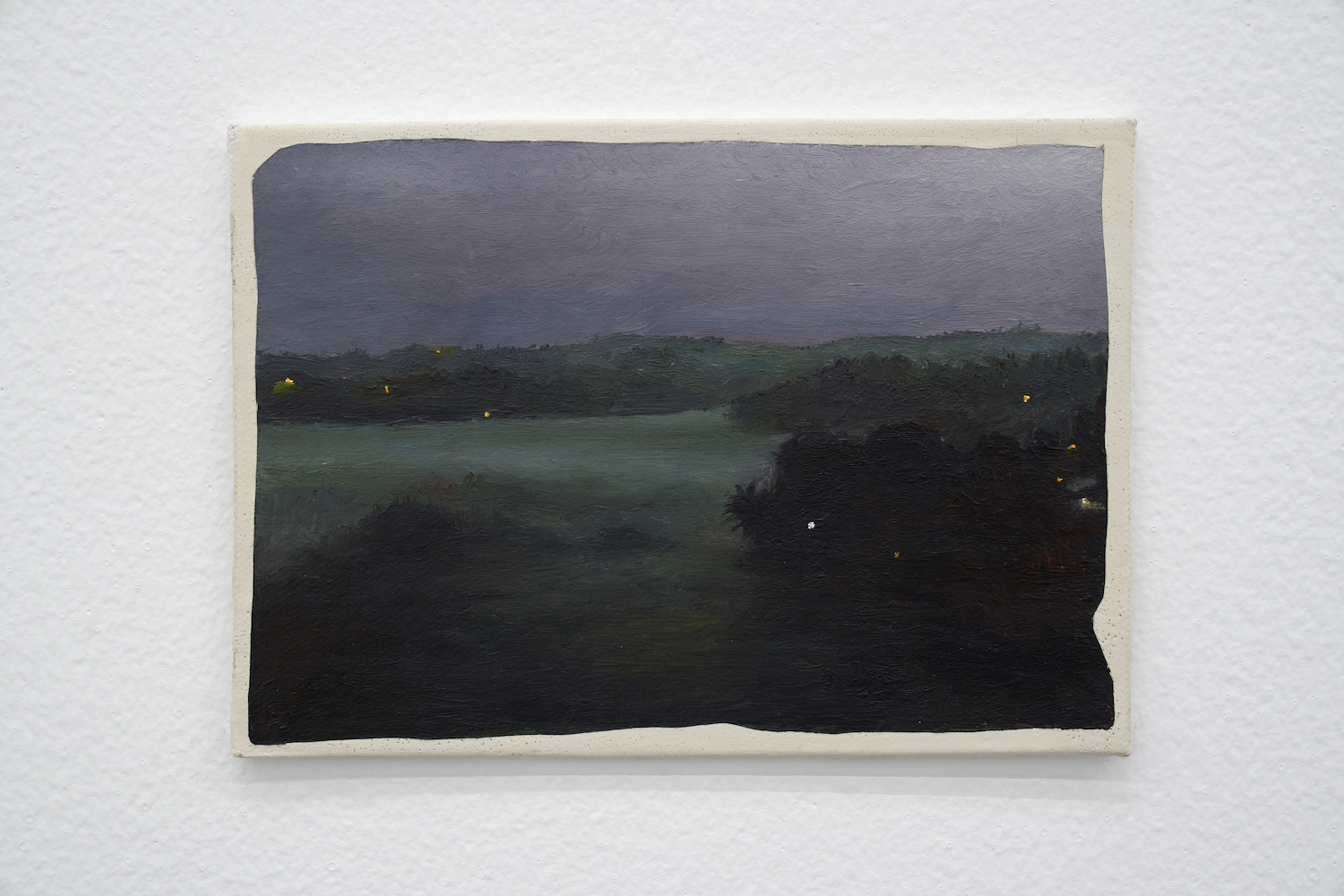
Nightscapes 2019–2021 is a continuation of a 1999 body of work (also entitled Nightscapes), in which Cader used his studio’s vantage point in Panadura Ganga by the Bolgoda River, south of Colombo, to make a series of 40 paintings overlooking the river at dusk, during one of the darkest years of Sri Lanka’s civil war.
Across these works, the horizon is carved out and interrupted by organic, sinuous forms—a characteristic that has defined much of Cader’s practice.
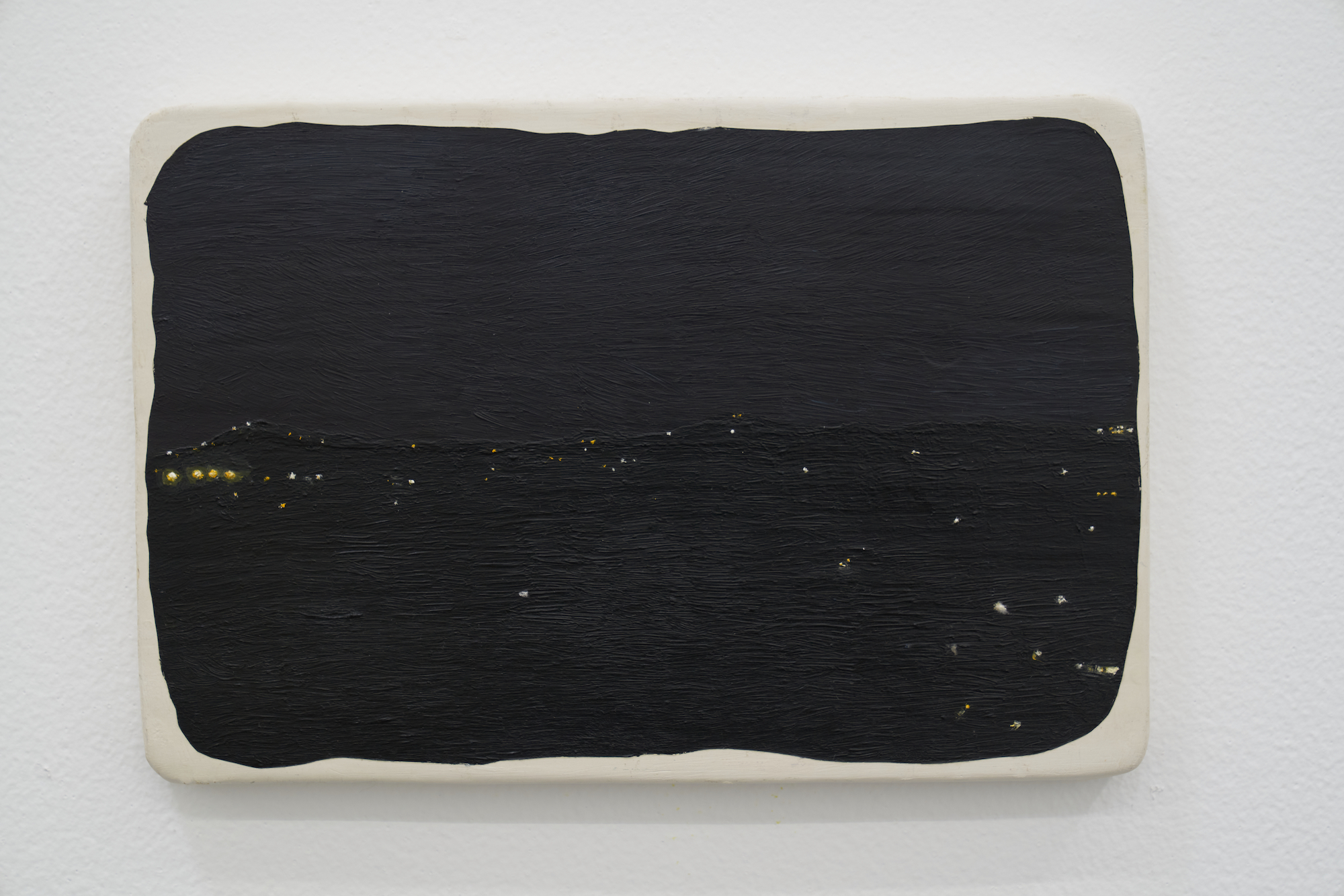
‘The curves are a critique of how we see. They are a way out of the colonial box of the rectangular, standard frame—but we don’t see that way in nature. If you look at rock paintings, it’s a continuous natural progression,’ Cader explains. ‘Once you remove the frame, the whole thing changes. It becomes an object. The painting becomes two ideas in one.’
Cader’s latest series evidences a shift to a more expanded form of sculptural painting—he says he is alluding to old stone tablets—by incorporating the rectangular frame, while painting non-linear borders within it.
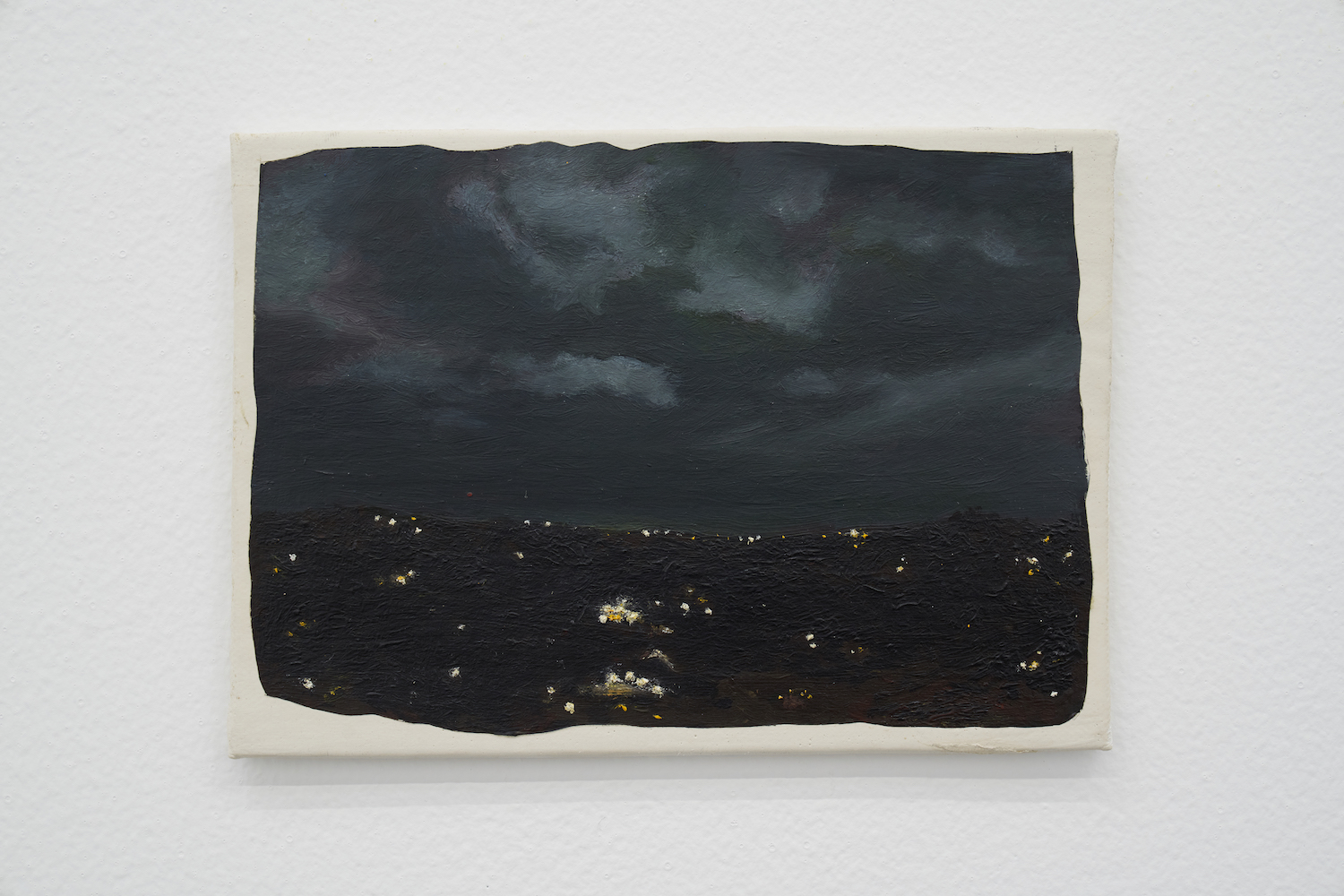
While not overtly political, these night vigils are embedded with metaphors that not only reference the rigid traditions of landscape painting, but the mechanics of visual perception.
Gesturing towards an inability to envision what lies beyond sight, they call attention to the politics of image production. Implicit, also, is the notion of self-censorship that comes with belonging to a minority group in Sri Lanka.
Cader’s 1980s training in graphic design and advertising may have played a role in developing his coded visual language.
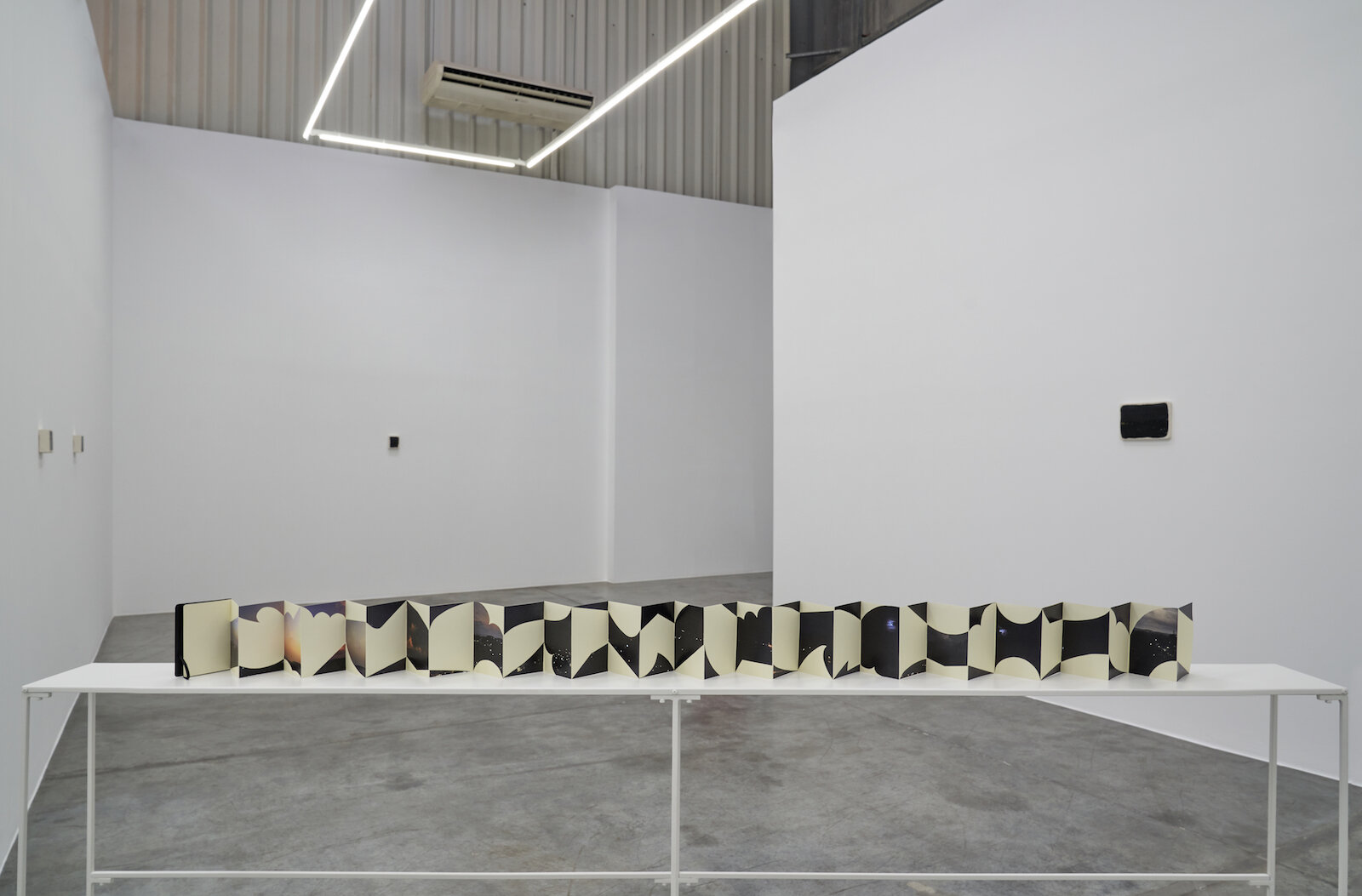
Ray Yoshida of the Chicago Imagists, who taught Cader at the School of the Art Institute of Chicago, where Cader studied painting and drawing, still stands as one of his greater influences—the residues of which can be seen in the unexpected contours of Let Sleeping Villages Sleep (2021), which forms a one-metre-high installation at Grey Noise, inviting viewers to peer down and look.
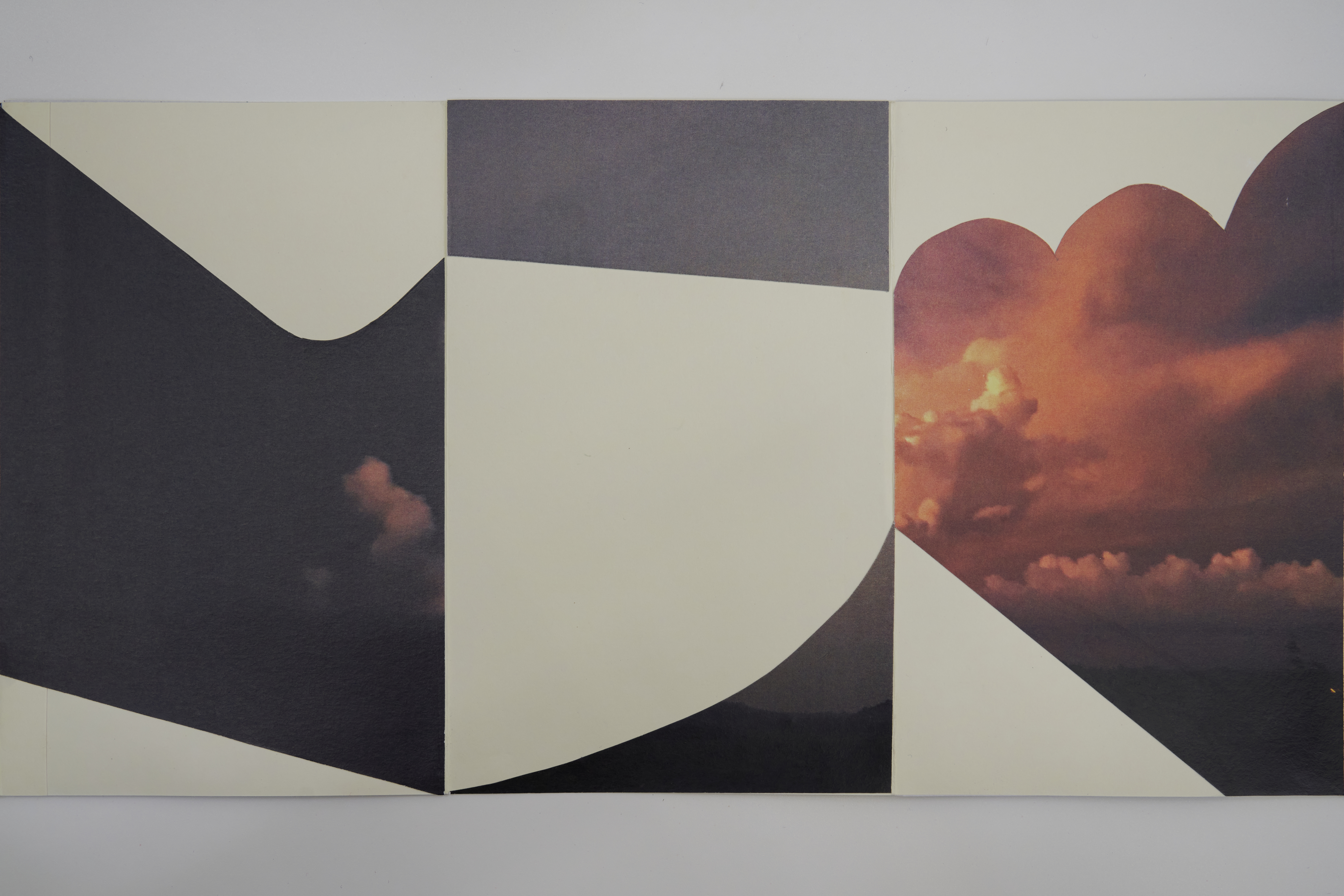
Taking the form of a hand-cut collage on Moleskine, this recto-verso accordion book displays excavated fragments of the same photographs that the Nightscapes are drawn from, offering a counter perspective punctuated by blazing red skies and dissected viewpoints.
There’s an engaging interplay of negative space that offers other points of access to the landscape. ‘I fold the photograph in two, measure the size of the page and then cut part of it into a specific shape. The shape goes on one side of the book, while the rest sits on another,’ Cader says. ‘It’s meant to depict how I am being looked at from the other side.’
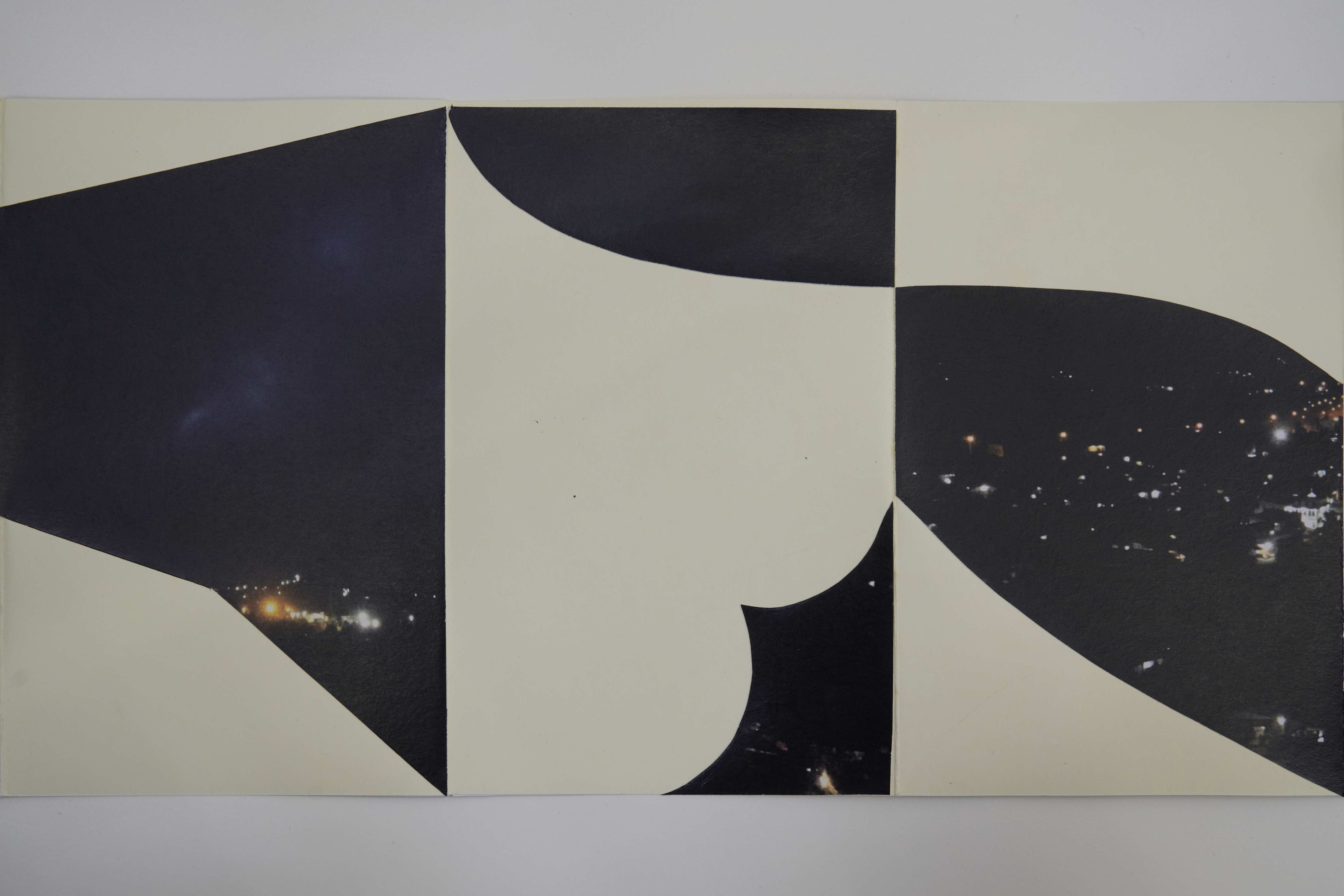
What is cut or removed is as significant as what remains visible. ‘While I see the landscape,’ Cader notes, ‘those who look at me miss a lot of it’. Cader’s understated night visions become about who is doing the looking. —[O]
Main image: Muhanned Cader, Nugaduwa 5 (2021) (detail). Oil on wood. 24 x 43 cm. Courtesy the artist and Grey Noise.
A respected voice in contemporary art discourse.
Focusing on ambitious storytelling and insightful art-world commentary. Ocula Magazine publishes in-depth interviews, critical essays and timely analysis on the artists, exhibitions and ideas driving the global art world.
Learn more about Ocula Magazine
Showcasing the best of the art world.
Ocula partners with galleries from around the world to highlight their artists, artworks and exhibitions. Gallery membership is by application and invitation, with each member vetted by an independent panel.
Learn more about Ocula Membership
Specialises in the sale of major artworks.
Led by a team with deep ties to the world’s leading auction houses, galleries and collectors. Ocula’s advisory team offers bespoke services to high-net-worth clients from around the world who are looking to acquire the best of contemporary and modern art.
Learn more about our team and services