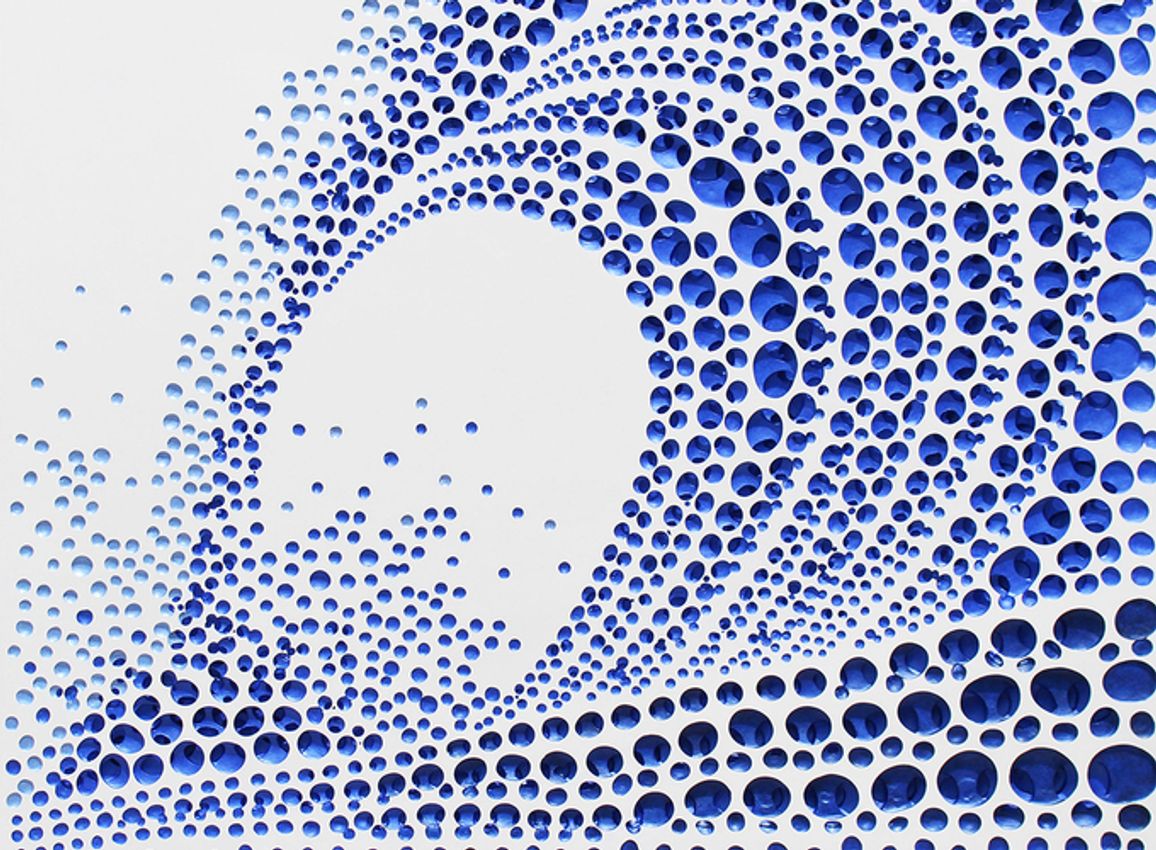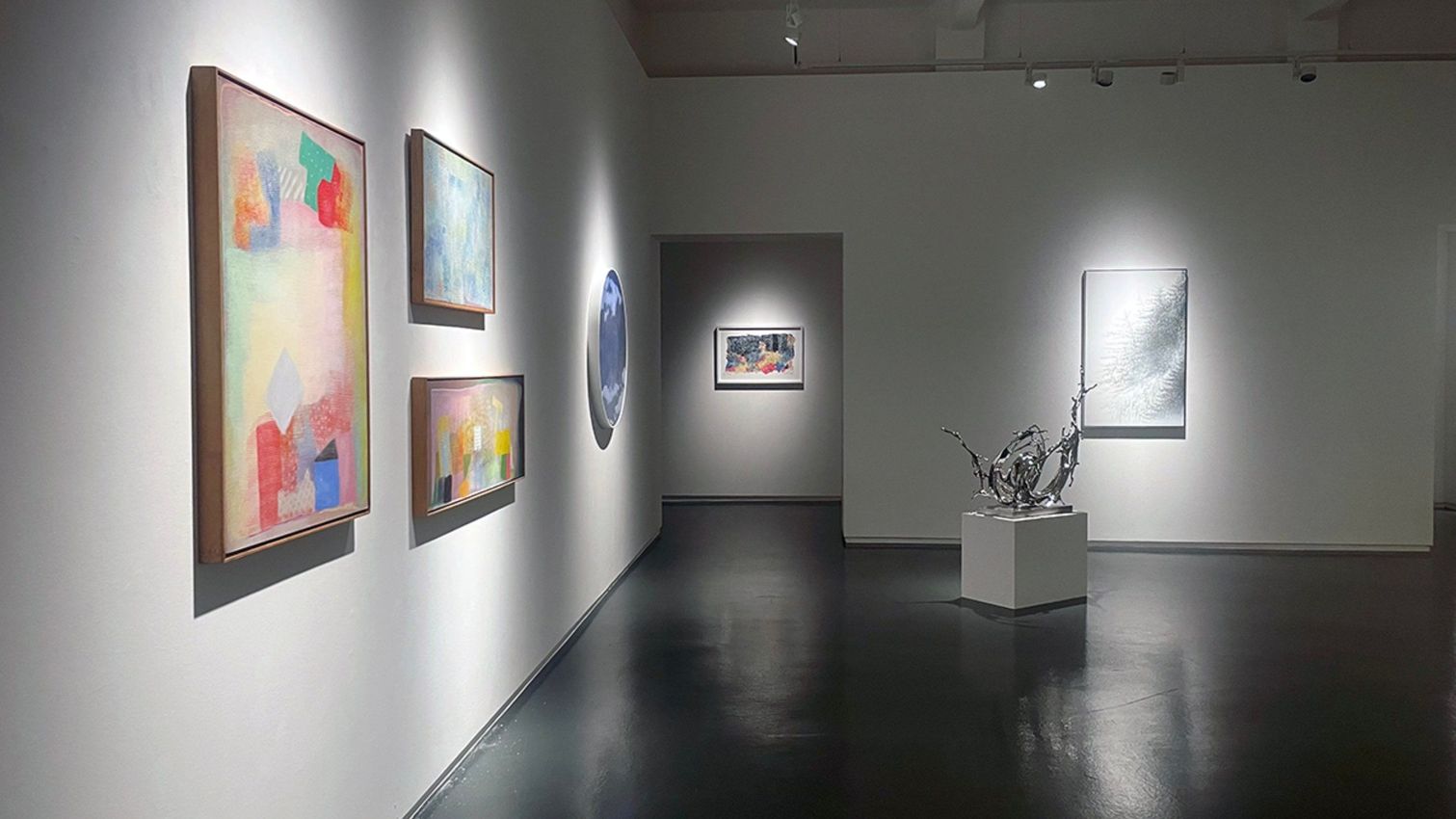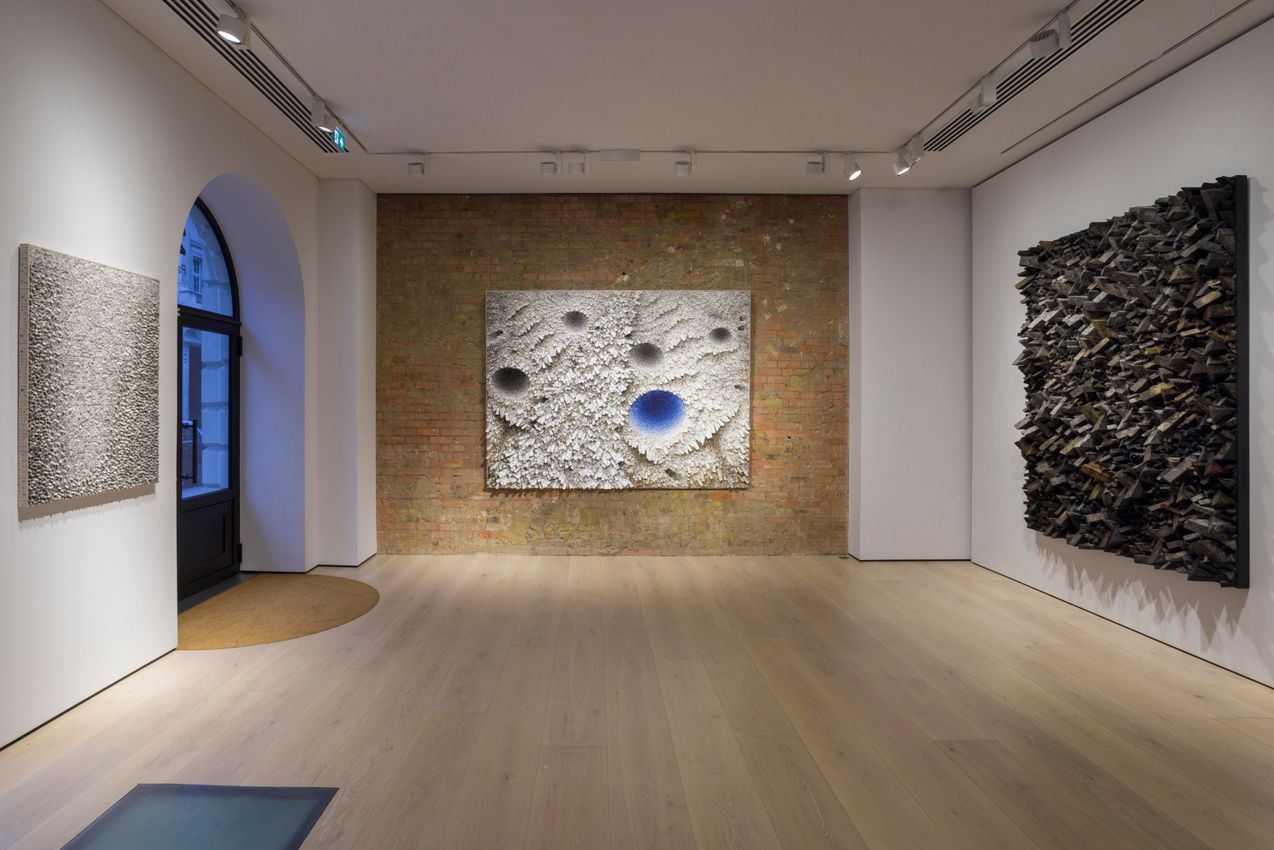
Opening on Hangul Day, October 9, the Korean national holiday celebrating the creation of the Korean alphabet, Aggregation: The Memory of Paper & Time presents new and recent works by Chun Kwang Young (b. 1944, South Korea).
The exhibition marks a significant evolution in the artist’s decades-long exploration of memory, history, and time, with a new group of works created specifically for London incorporating Hangul, Korea’s modern writing system and a powerful symbol of Korean culture.
Chun Kwang Young is internationally recognized for his Aggregations, sculptural installations and wall reliefs comprising thousands of triangular forms wrapped in carefully folded and dyed pages of text printed on traditional Korean mulberry paper. Each form embodies fragments of distinct human experience thanks to the words that envelop them. Chun’s abstract compositions are at once organic and architectural, evoking landscapes that appear both ancient and otherworldly.
EXHIBITION HIGHLIGHTS
The exhibition includes more than a dozen new Aggregations that signal a departure from Chun’s longstanding use of paper primarily sourced from antique Korean books printed in Classical Chinese characters, or Hanja. The new works shift the emphasis toward Hangul, the Korean alphabet developed in the fifteenth century.
Before Hangul, Korean government, scholarly, and literary texts were largely written using Classical Chinese characters, a complex system that did not align with the Korean spoken language and was understood only by those with a formal education. In 1446, King Sejong the Great introduced Hunminjeongeum, the new Korean alphabet, now known as Hangul. The simple, scientific system was designed to promote literacy across Korea by making reading and writing more accessible to ordinary people.
The principles behind Hangul’s creation were documented in historical texts, and in his new works, Chun incorporates these important texts, printing them onto traditional Korean mulberry paper, also known as hanji, handcrafted by a hanji artisan. By giving greater prominence to Hangul, Chun imbues a layer of contemporary Korean identity into his Aggregations while retaining language as a formal element. “This is not simply a change of text,” he says. “It’s a conceptual shift from accumulating the records of the past toward creating and accumulating the living time of the present.”
A CONVERSATION WITH CHUN KWANG YOUNG
Sundaram Tagore Gallery: Your work has been described as occupying a “third space” that dissolves the boundaries between painting and sculpture. How do you define your practice?
Chun Kwang Young: I would describe it as more than the physical act of cutting and wrapping hanji; it is a process of imbuing the paper with spirit. My work cannot be confined within the Western categories of painting or sculpture. What matters to me is not classification, but the process of accumulation—of material, time, and memory. Through my work, I seek to give physical form to these invisible layers of time and remembrance.
STG: How did your Aggregation series begin?
CKY: It began with a deeply personal childhood memory. I vividly remember the medicinal herb packages wrapped in hanji that hung from the ceiling of traditional herbal medicine shops. That image became deeply embedded in my subconscious.
Each small triangular form that makes up an Aggregation is the smallest unit capable of containing fragments of memory and the density of time. As if gently wrapping and embracing wounds and memories in hanji, I carefully attach each element to the canvas, gradually constructing the vast world of Aggregation.
STG: You have famously said, “This is not paper. This is accumulated time.” What philosophical idea lies behind this statement?
CKY: The antique books I use have absorbed centuries of human life. Every sheet of paper carries traces of thought, language, and lived experience—it is, in a sense, a material embodiment of memory.


Korean artist Chun Kwang Young incorporates elements of both painting and sculpture in his practice. He is best known for his acclaimed Aggregation series: freestanding and wall-hung amalgamations of small, triangular forms wrapped in antique mulberry paper, often tinted with teas or pigment.


A respected voice in contemporary art discourse.
Focusing on ambitious storytelling and insightful art-world commentary. Ocula Magazine publishes in-depth interviews, critical essays and timely analysis on the artists, exhibitions and ideas driving the global art world.
Learn more about Ocula Magazine
Showcasing the best of the art world.
Ocula partners with galleries from around the world to highlight their artists, artworks and exhibitions. Gallery membership is by application and invitation, with each member vetted by an independent panel.
Learn more about Ocula Membership
Specialises in the sale of major artworks.
Led by a team with deep ties to the world’s leading auction houses, galleries and collectors. Ocula’s advisory team offers bespoke services to high-net-worth clients from around the world who are looking to acquire the best of contemporary and modern art.
Learn more about our team and services