






Will Fungi Thwart the Destructive Rise of the Anthropocene?
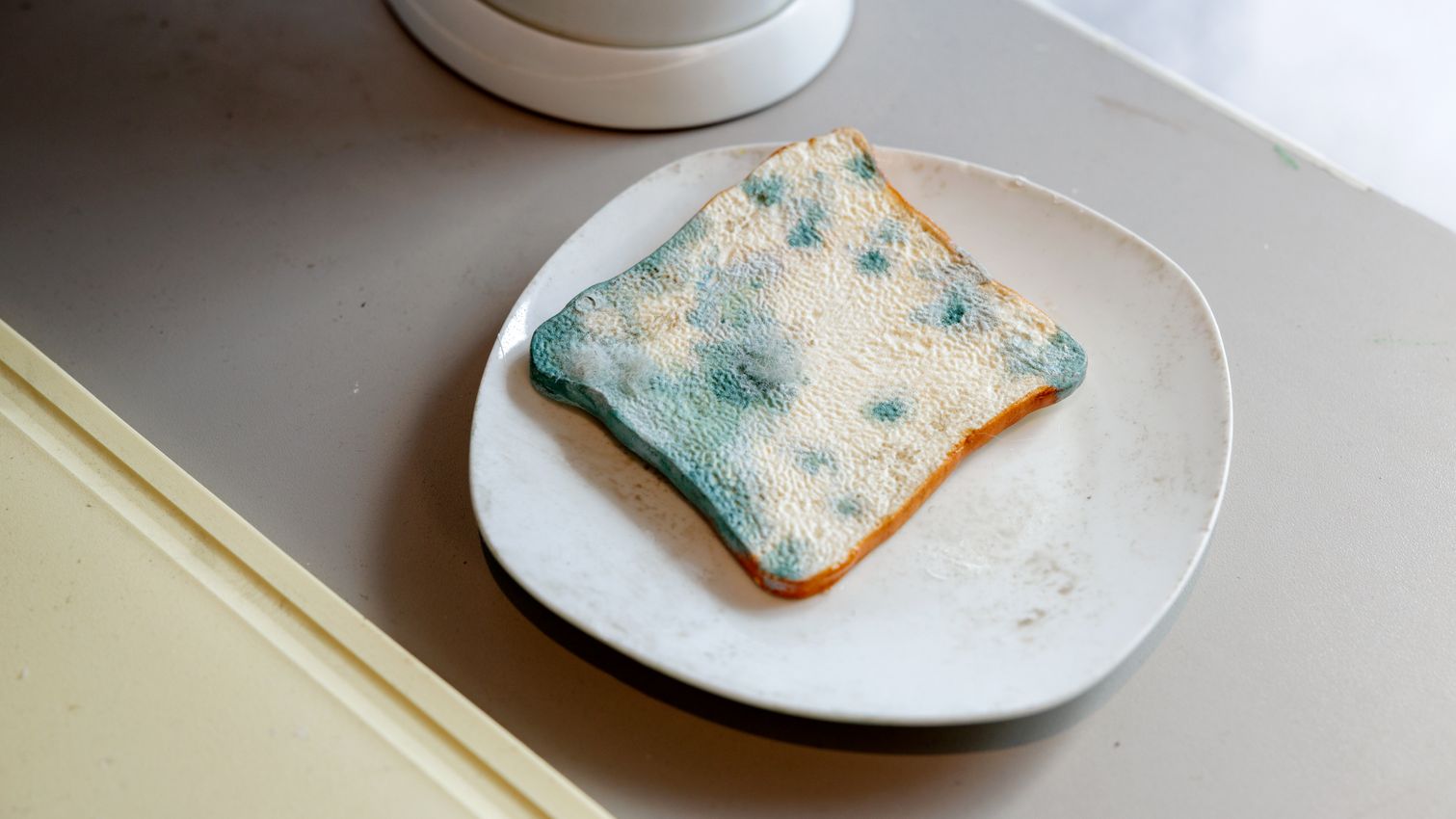
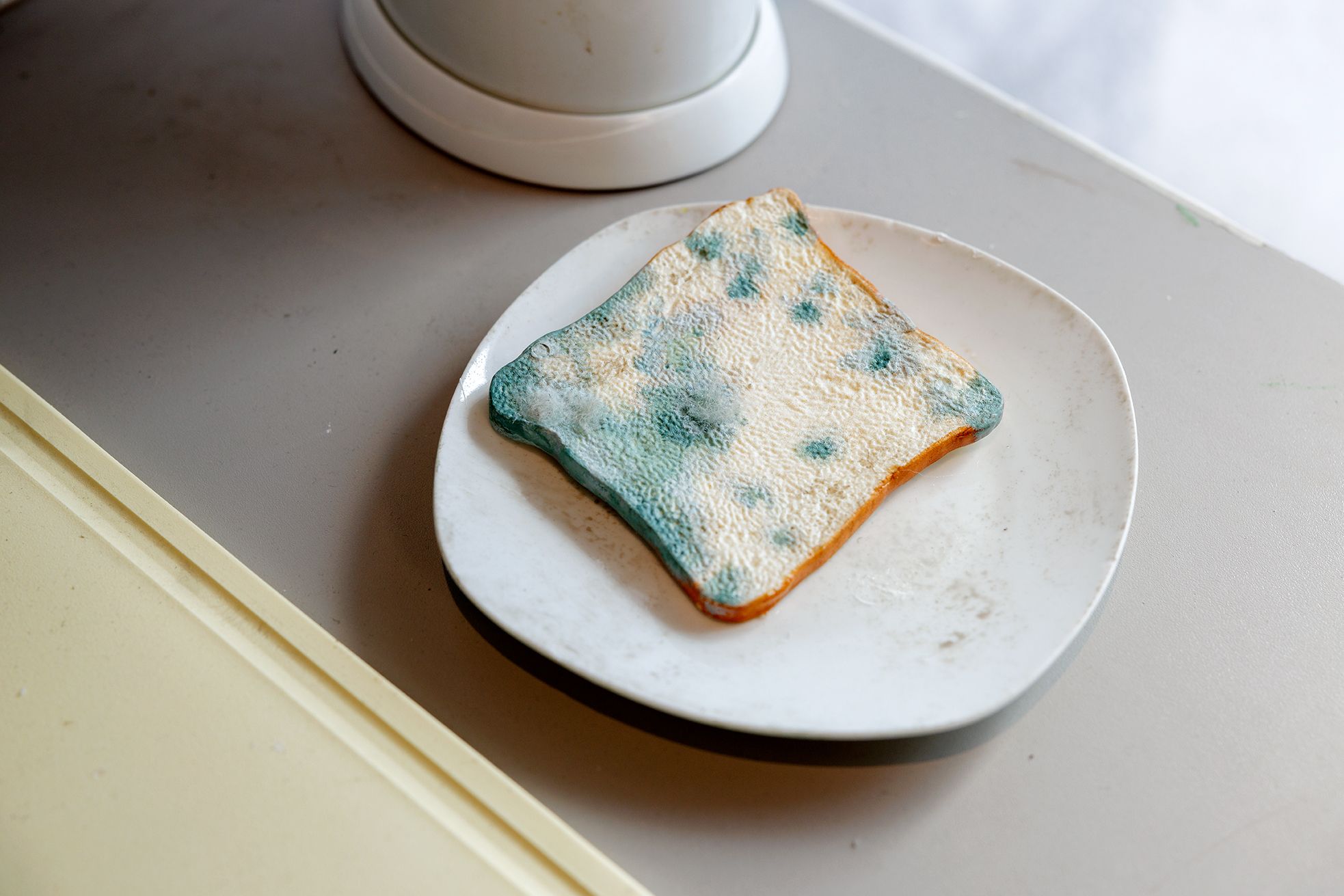
The earth’s ecosystem relies on interdependency, as the curators of Fungi: Anarchist Designers reflect in an interdisciplinary show that fuses research and art to centre mushrooms in our daily lives. Save to My OculaIt’s not every day that you encounter dirty dishes in a museum. A domestic kitchen greets me as I enter Het Nieuwe Instituut in Rotterdam to see the group exhibition Fungi: Anarchist Designers, complete with mouldy bread on a plate and a dirty sponge by the sink. The kitchen (created with spatial designers Marloes and Wikke) offers an immediately familiar backdrop to the omnipresence of fungi, a kingdom of living things closer in phylogeny to humans than to plants. Intimately connected, they are like us but not entirely like us—an oddly uncanny mirror that co-curators Anna Tsing and Feifei Zhou hold up throughout the exhibition in custom-built sets that make visible the unseen networks of our mushroom relatives.
Like spores, mushroom-themed exhibitions have been in the air in recent years. At London’s Somerset House in 2020, Mushrooms: The Art, Design and Future of Fungi brought together more than 40 artists, including collages by Cy Twombly and John Cage’s Mushroom Book of recipes. Fungi – in art and science at the Nobel Prize Museum in Stockholm in 2023 combined artist works with the literary world of novelist Olga Tokarczuk (in House of Day, House of Night (1998) she writes: ‘If I weren’t a human being, I would want to be a mushroom.’). Meanwhile, in 2022, experimental band The Observatory presented REFUSE, an exhibition about music, mushrooms and decomposition at the Singapore Art Museum.
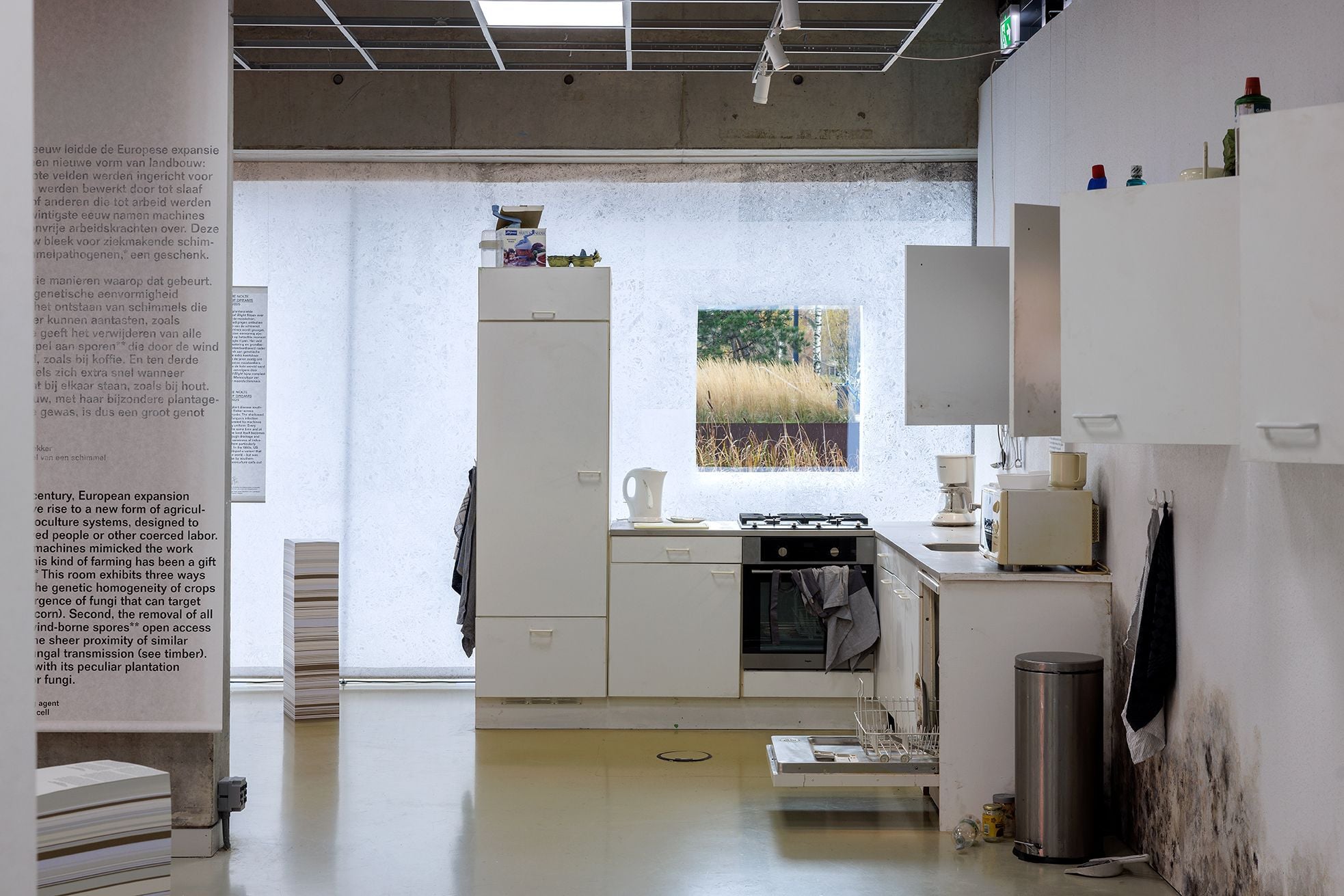
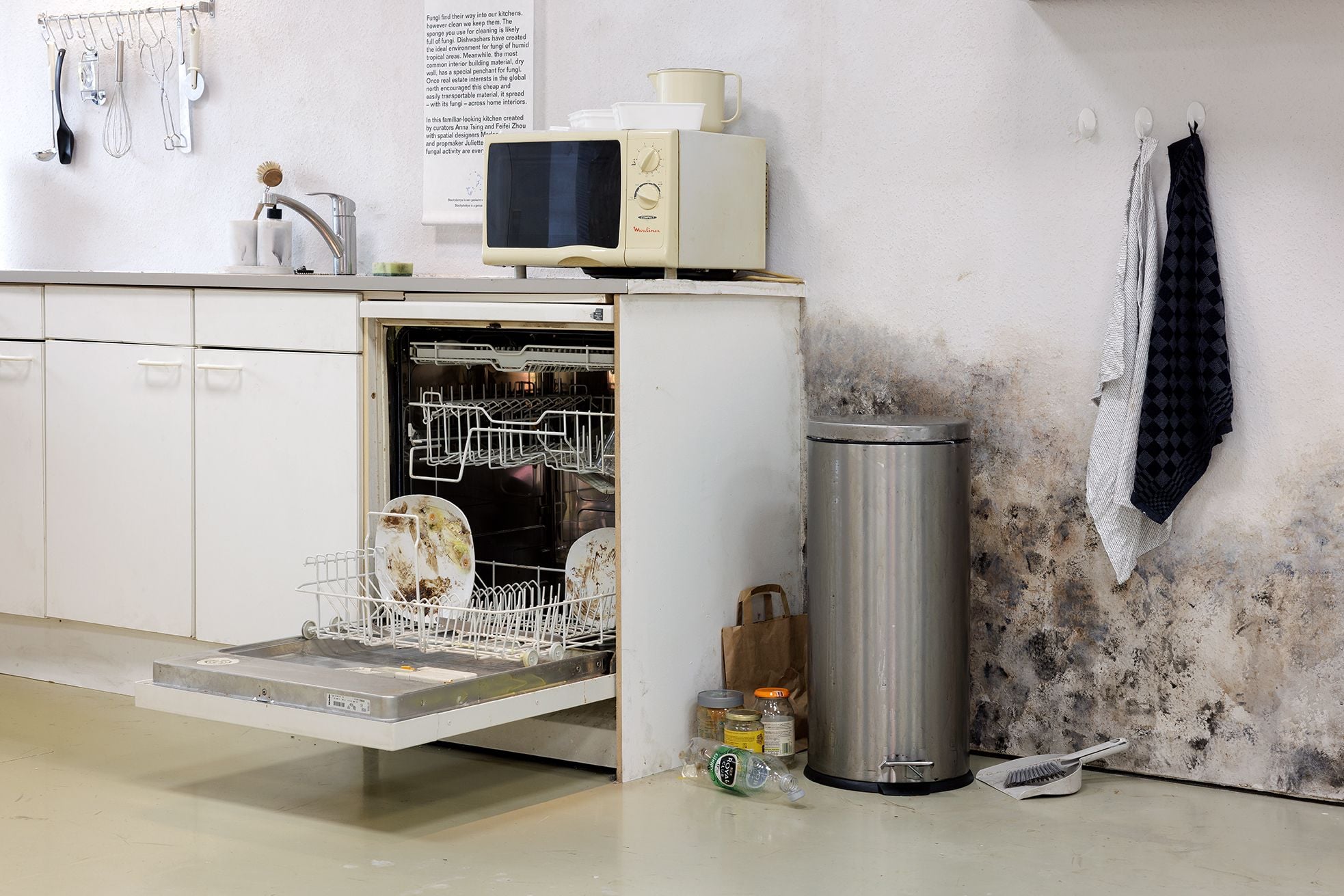
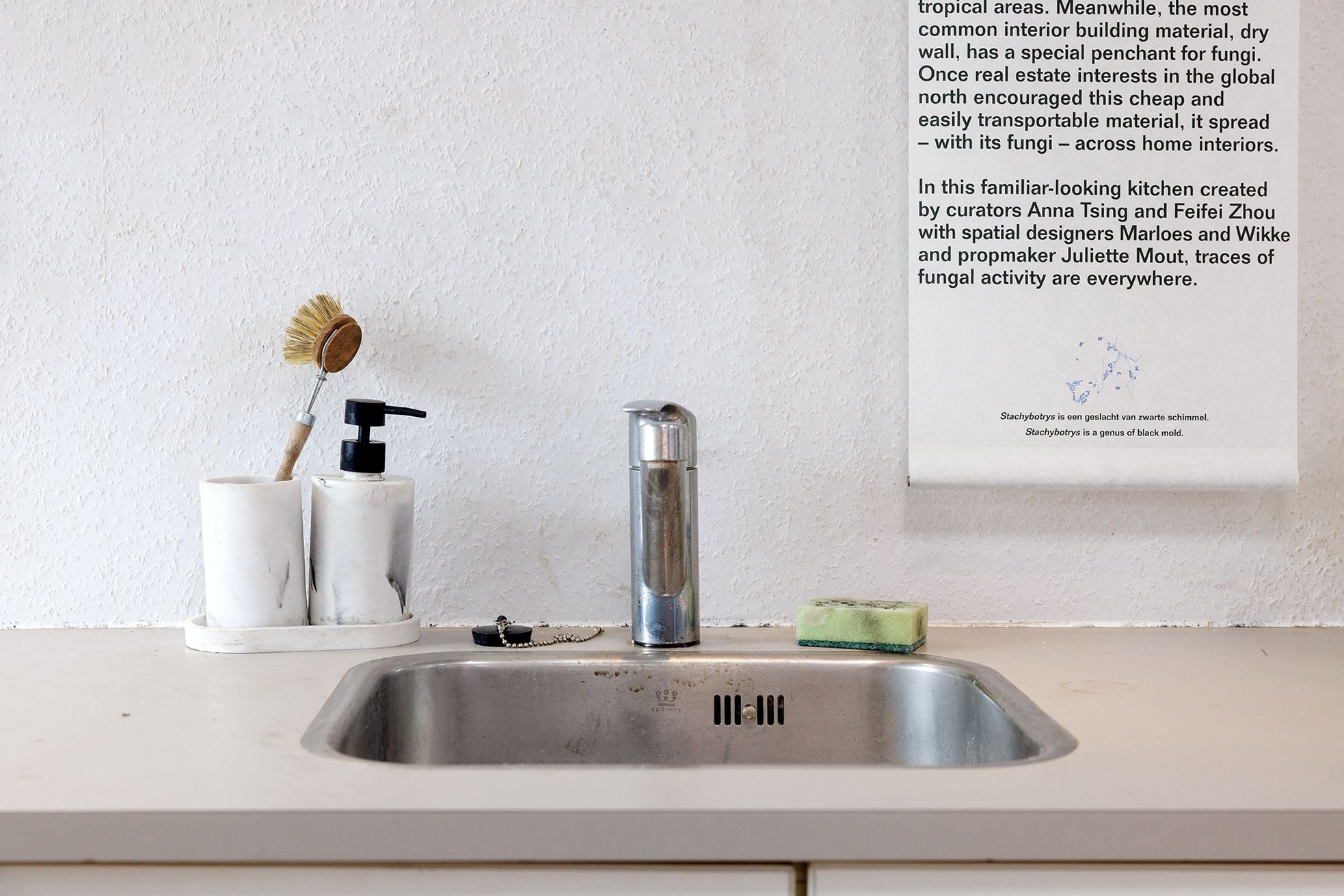

If artists and curators have been delighted to encounter mycology as an easy metaphor for alternative sources of knowledge and epistemic value systems, Tsing and Zhou’s show resolutely tries to do something different. Where prior exhibitions attempted to sublimate biological knowledge by putting these organic forms into the white-cube gallery space, this one is lucid in the curators’ drive to demystify and deromanticise fungi. Fungi: Anarchist Designers is an interdisciplinary show that tries to connect artistic creation and ongoing research by bridging art, science, design, set-making, interactive works and film.

Notably, Tsing is not a traditional curator but the anthropologist behind The Mushroom at the End of the World: On the Possibility of Life in Capitalist Ruins (Princeton University Press, 2015), the book that took, among others, the art world by storm. References to this book (both direct and indirect) can be detected in publications such as Yasmine Ostendorf-Rodriguez’s Let’s Become Fungal (2023); in artworks about matsutake and other mushrooms, such as Liu Yujia’s Mushrooms (2023), Long Pan’s Matsutake Rain (2022), and Mooni Perry’s 2019 Mushroom Orchestra (also inspired by Czech musician Václav Hálek and his 2003 score book Musical Atlas of Mushrooms); and in programmes including 2023’s Vevey Foodculture Days’ Fungi Cosmology.
Since then, Tsing has worked on several collective projects with Zhou, including the influential Feral Atlas (2020), a website featuring a constellation of ‘patches’ where human and non-human relations are entangled, followed by Field Guide to the Patchy Anthropocene: the New Nature (Stanford University Press, 2024). In both, Tsing worked with scientists and artists to explore how human-built or initiated infrastructures have developed and spread beyond human control, from chemicals seeping out of industrial tanks to the systemic transfer of radioactivity via the global trade in blueberries picked from the radioactive forests of northern Ukraine.
“Tsing and Zhou present the world as an ecosystem that is not made up of individuals but instead rooted in infinite interdependency”
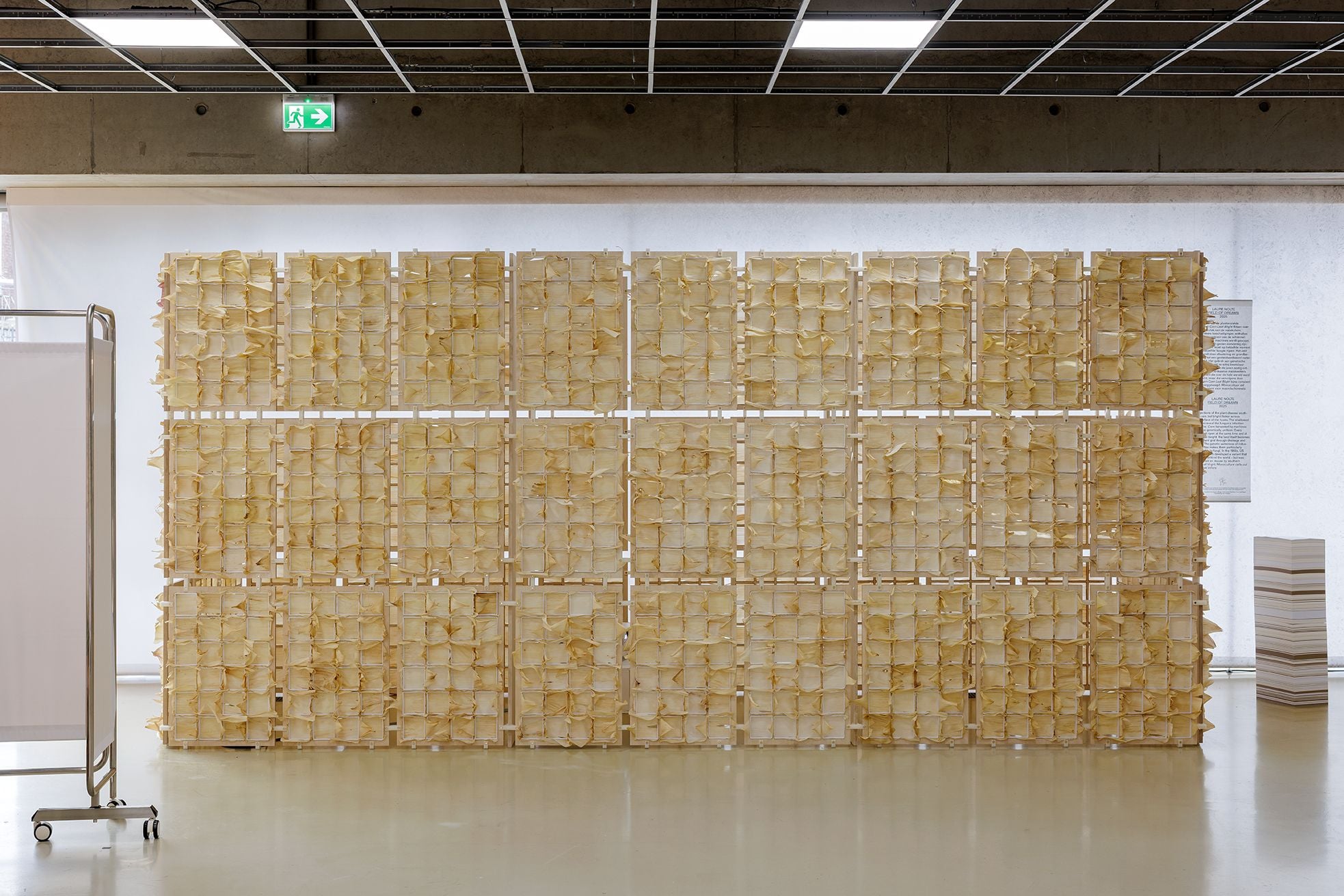
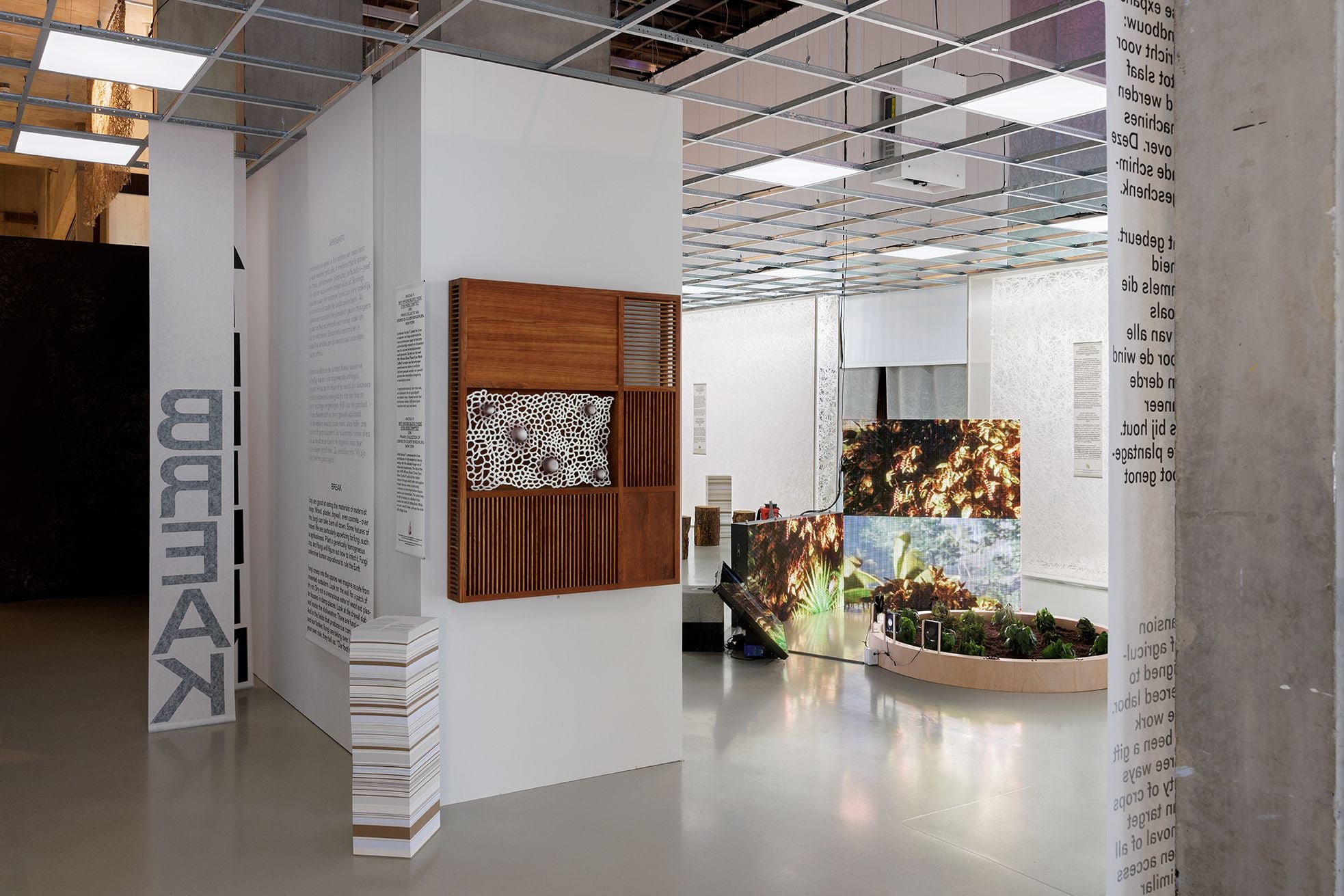
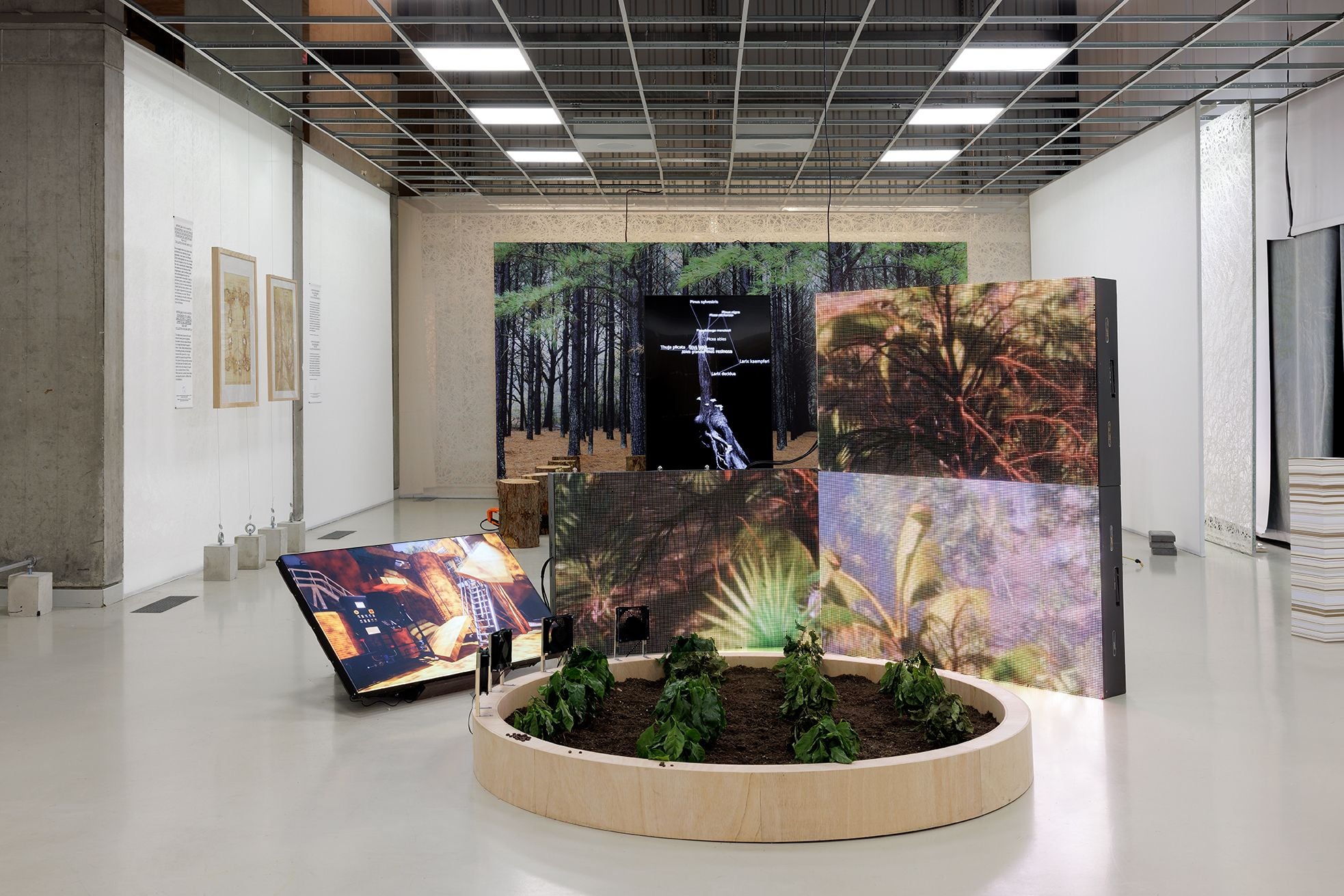
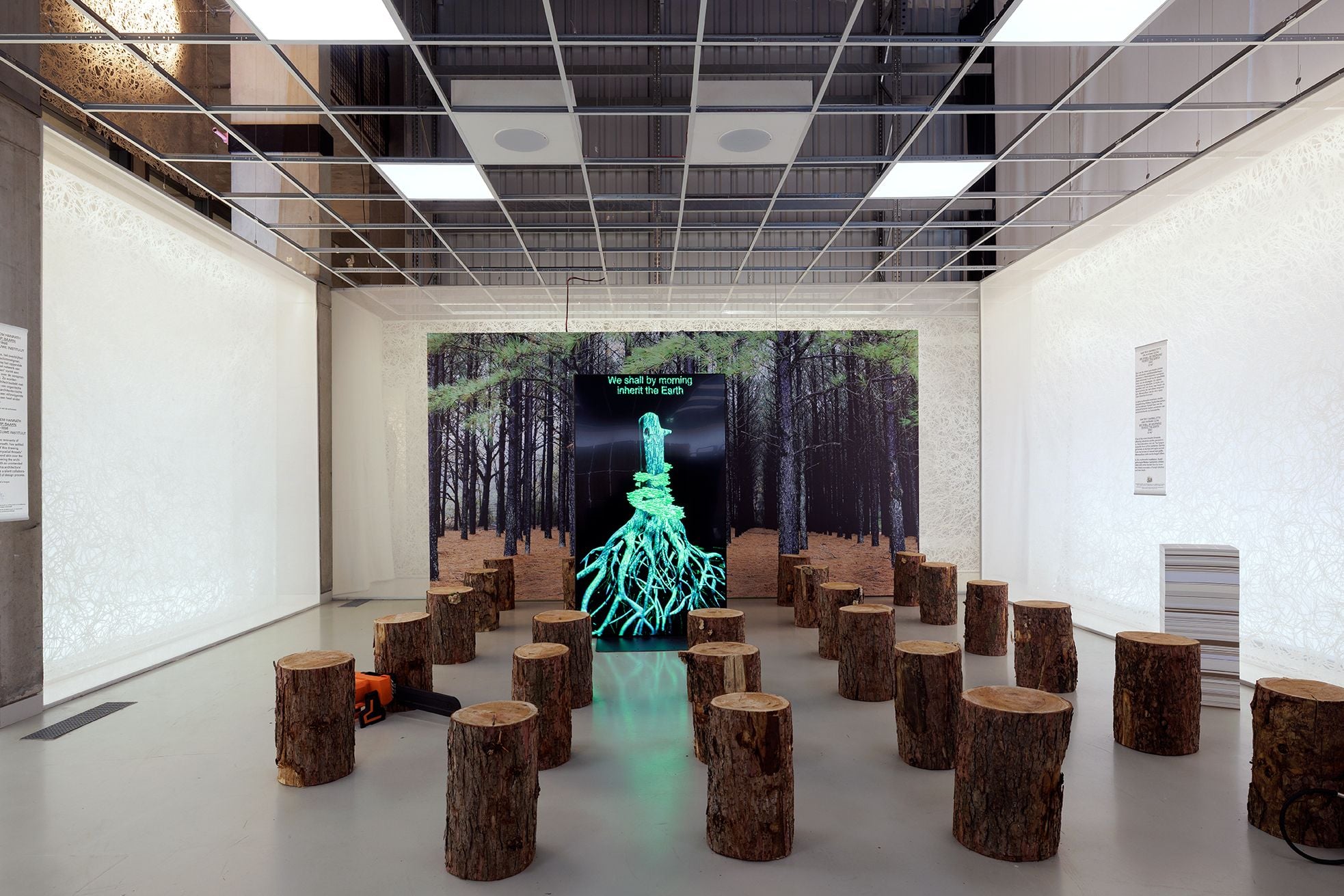
In Rotterdam, Tsing partners up again with architect-artist Zhou to deliver an exhibition in three acts: BREAK, ASSASSINATE and MOBILIZE. In ‘BREAK’, the exhibition’s opening section, coming right after the kitchen, we encounter works at the aesthetic crossroads of design and the mycelial network. Artist Anicka Yi presents a budding 3D-printed fungal lattice within an elegant, carved dark wooden wall panel in With Whose Blood Were My Eyes Crafted? (2019). The fungal network is not immediately obvious, forcing the viewer to turn to admire the piece if they are to discover it, and offering an implicit tension between making a work that lasts and the decomposing force growing from within it. Yi’s modern and minimalist approach in demonstrating how fungi are woven into the fabric our daily lives is echoed by biomaterials researcher and artist Laura Nolte’s Field of Dreams (2025), a large installation in which fungal stains are visible when light flickers on an infected corn husk. While abstract, the work’s formal qualities are reminiscent of a large monoculture field within the so-called ‘Corn Belt’ of the U.S. Midwest.
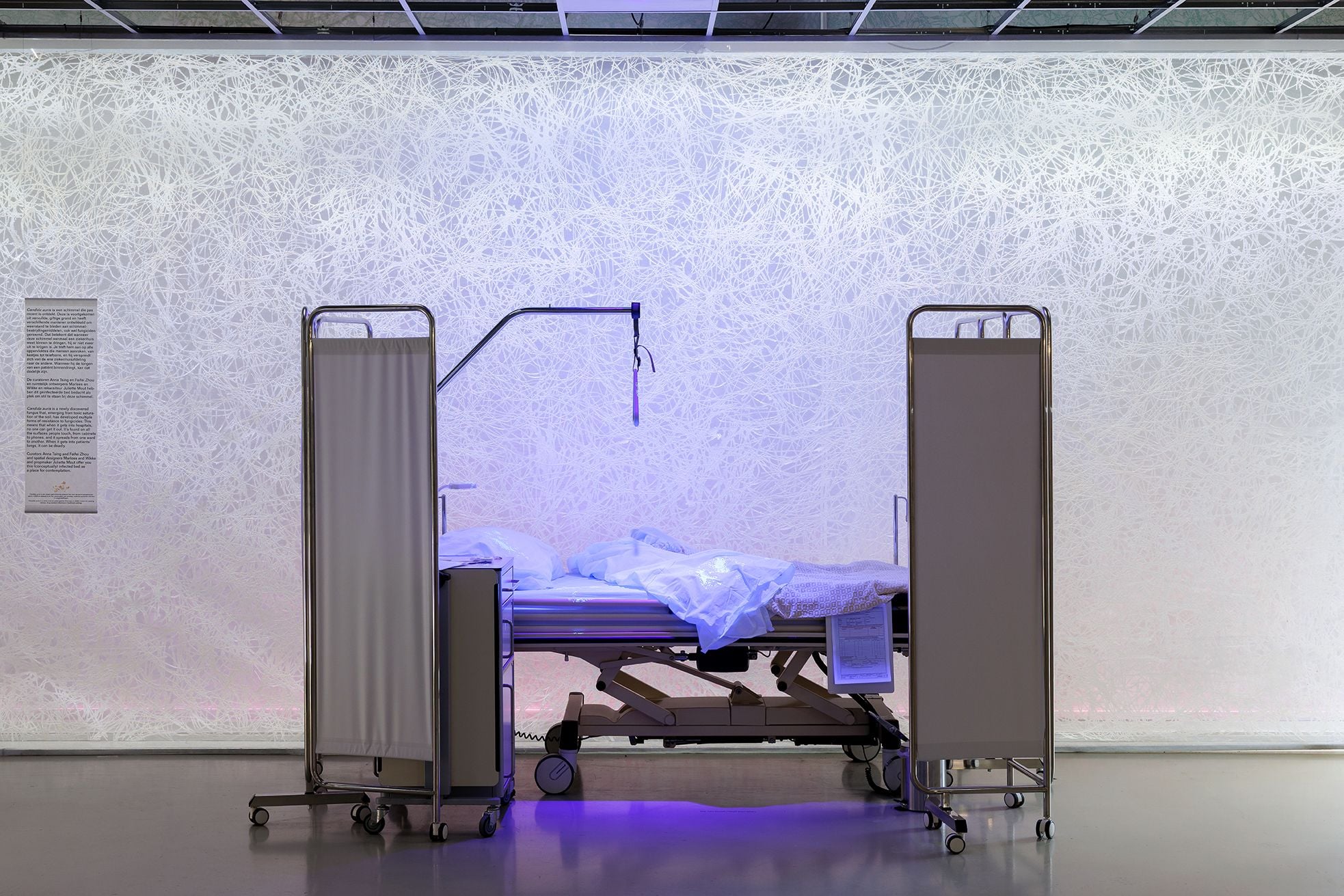
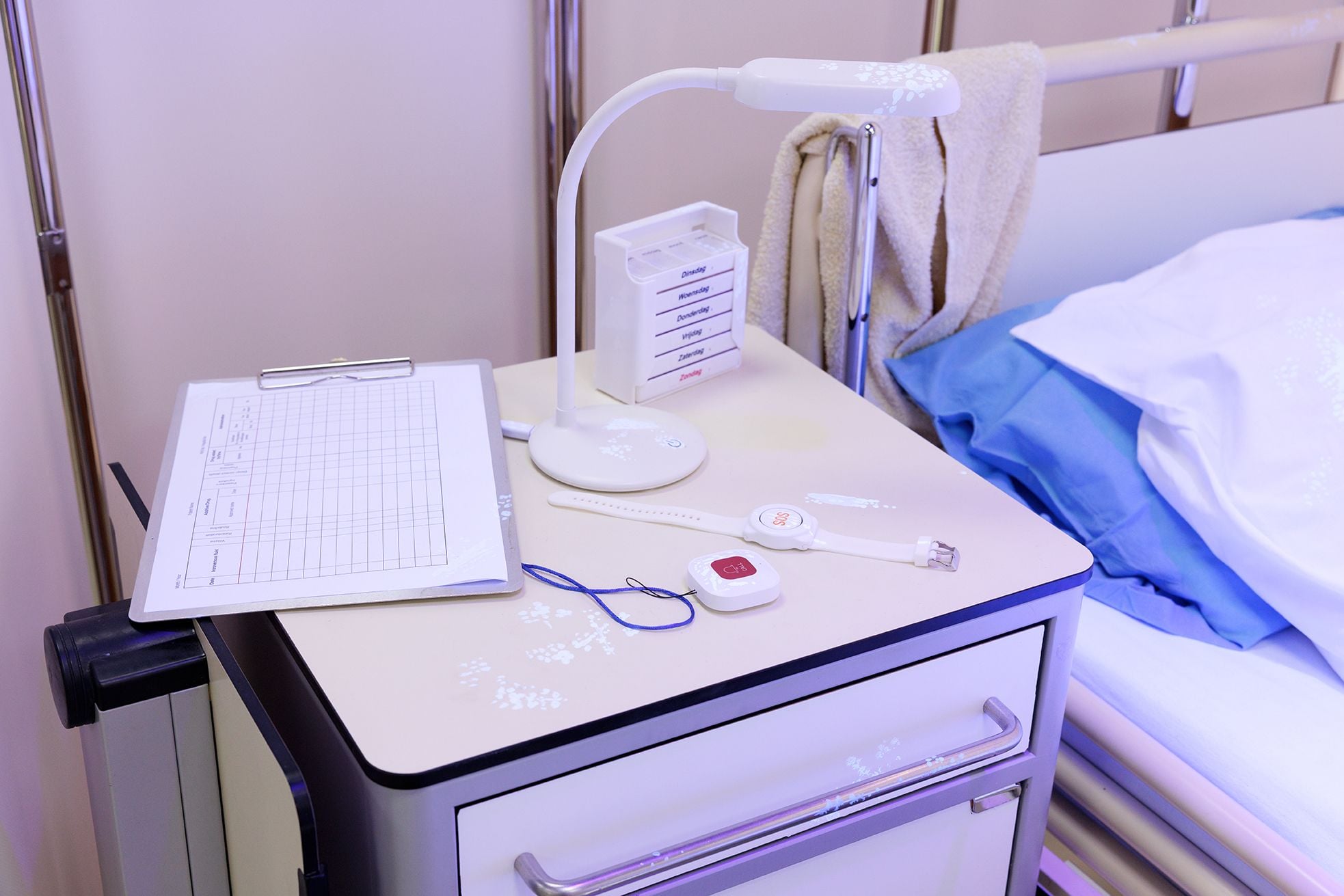
A few steps away, UV light reveals fluorescent spores on a prop hospital bed infected with Candida auris, highlighting the (at times fearful) relationship between the human body and fungi as a signifier of decay. The set-up (created again by the curators in partnership with Marloes and Wikke) encapsulates the challenge of arbitrating the fine line between flattening an otherwise invisible scientific phenomenon into an aesthetic conceit through the process of visualisation, and successfully synthesising these concepts for a broadly non-science-focused audience.

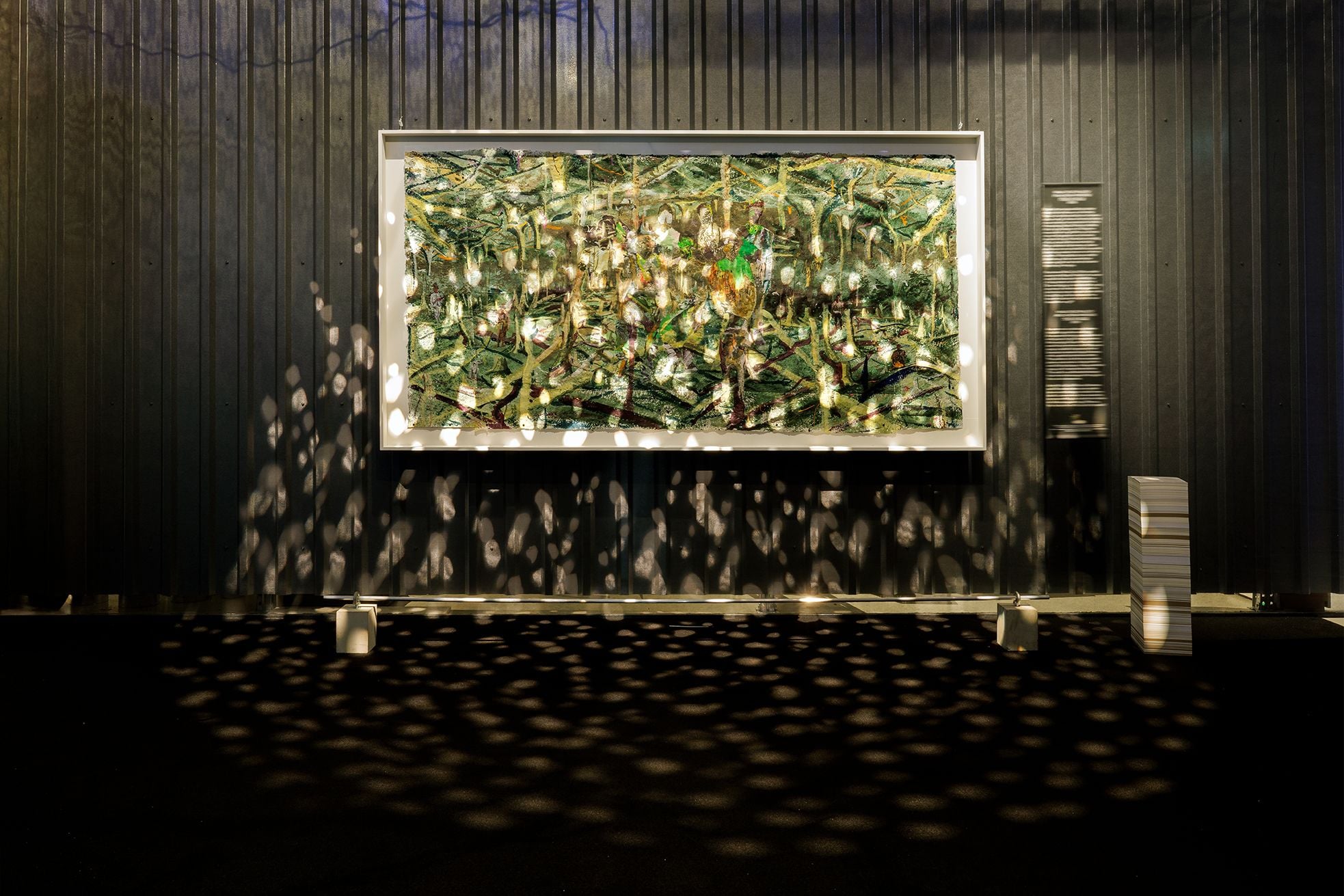
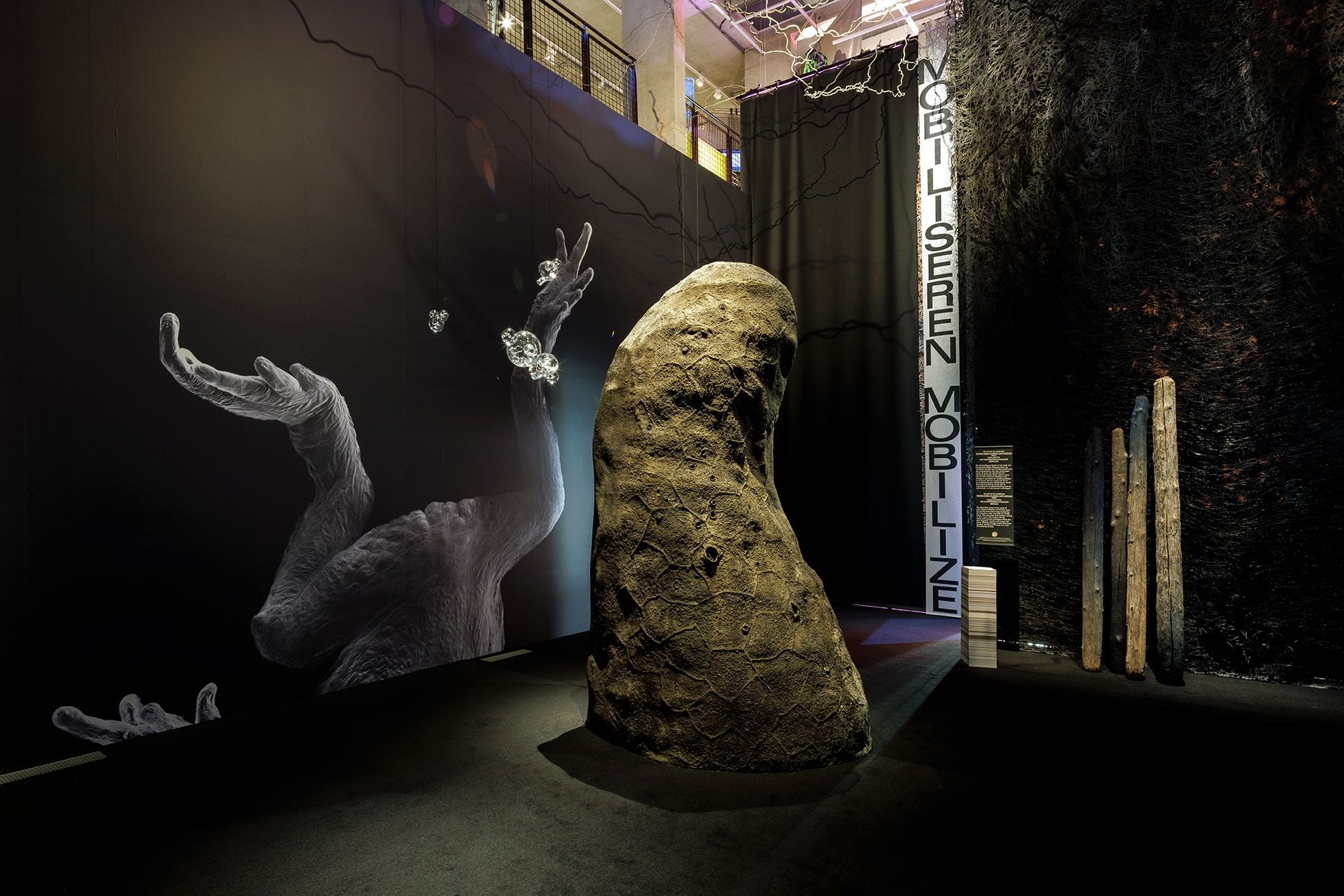
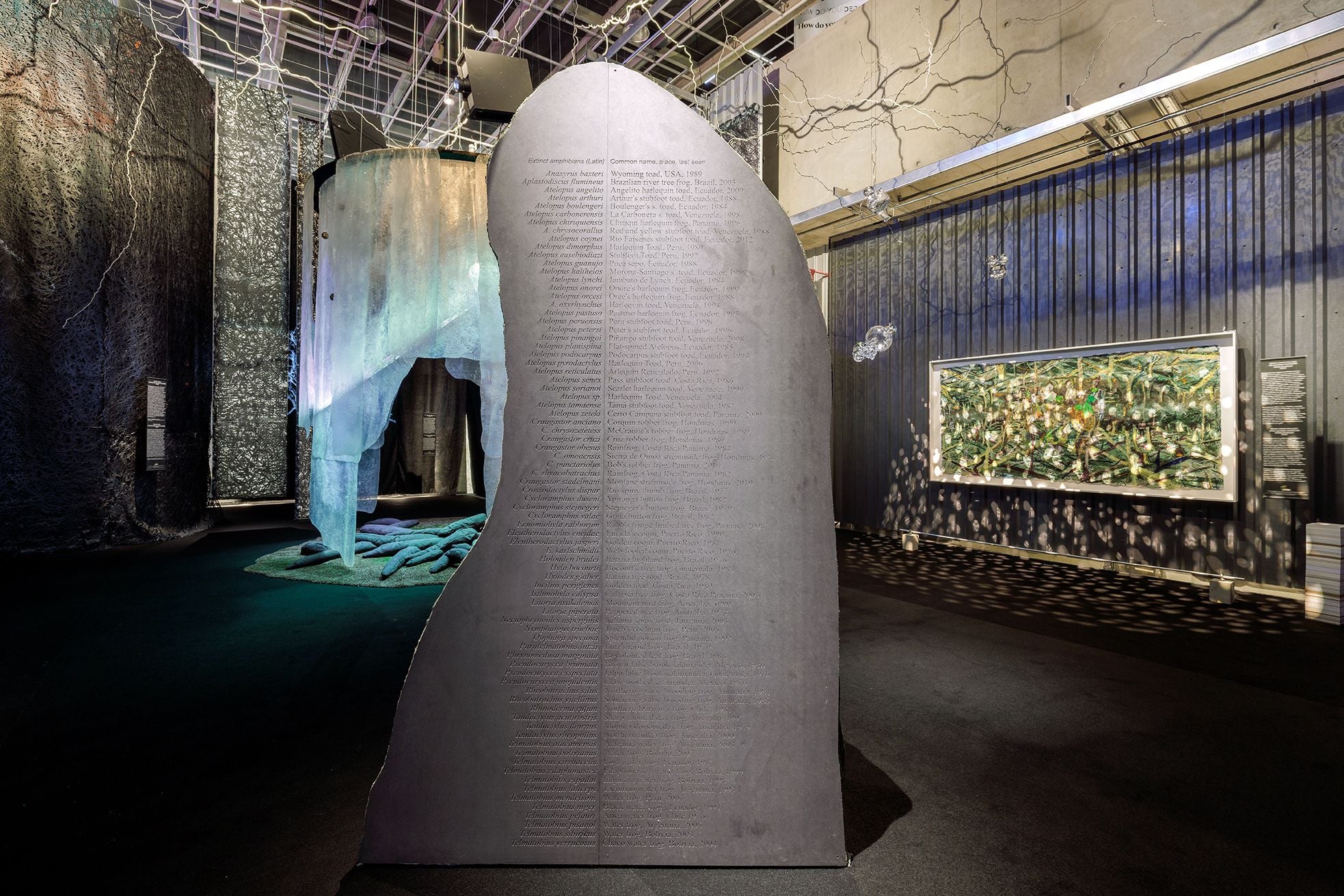
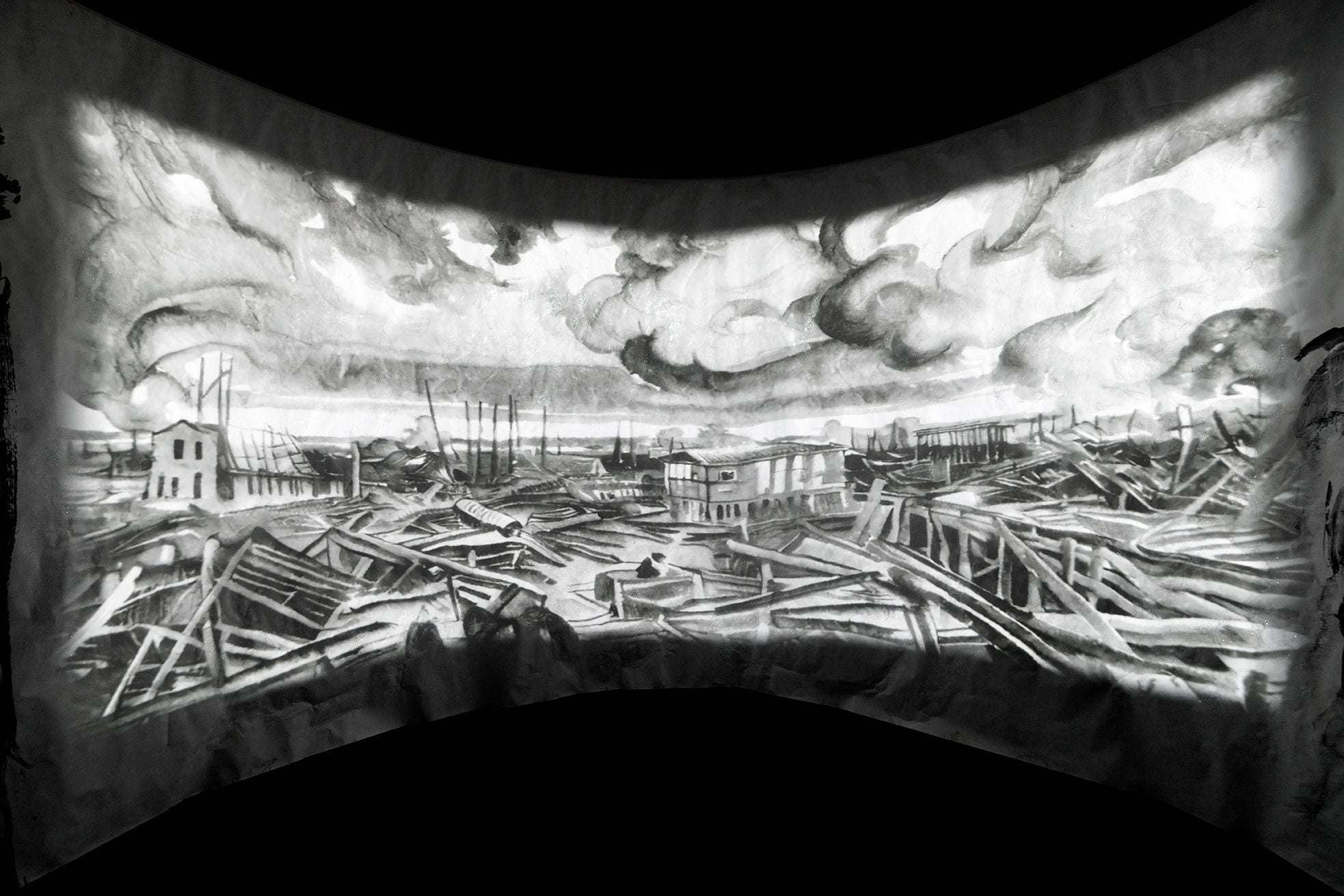
“The mushroom becomes not an object but an inescapable feral imagination”
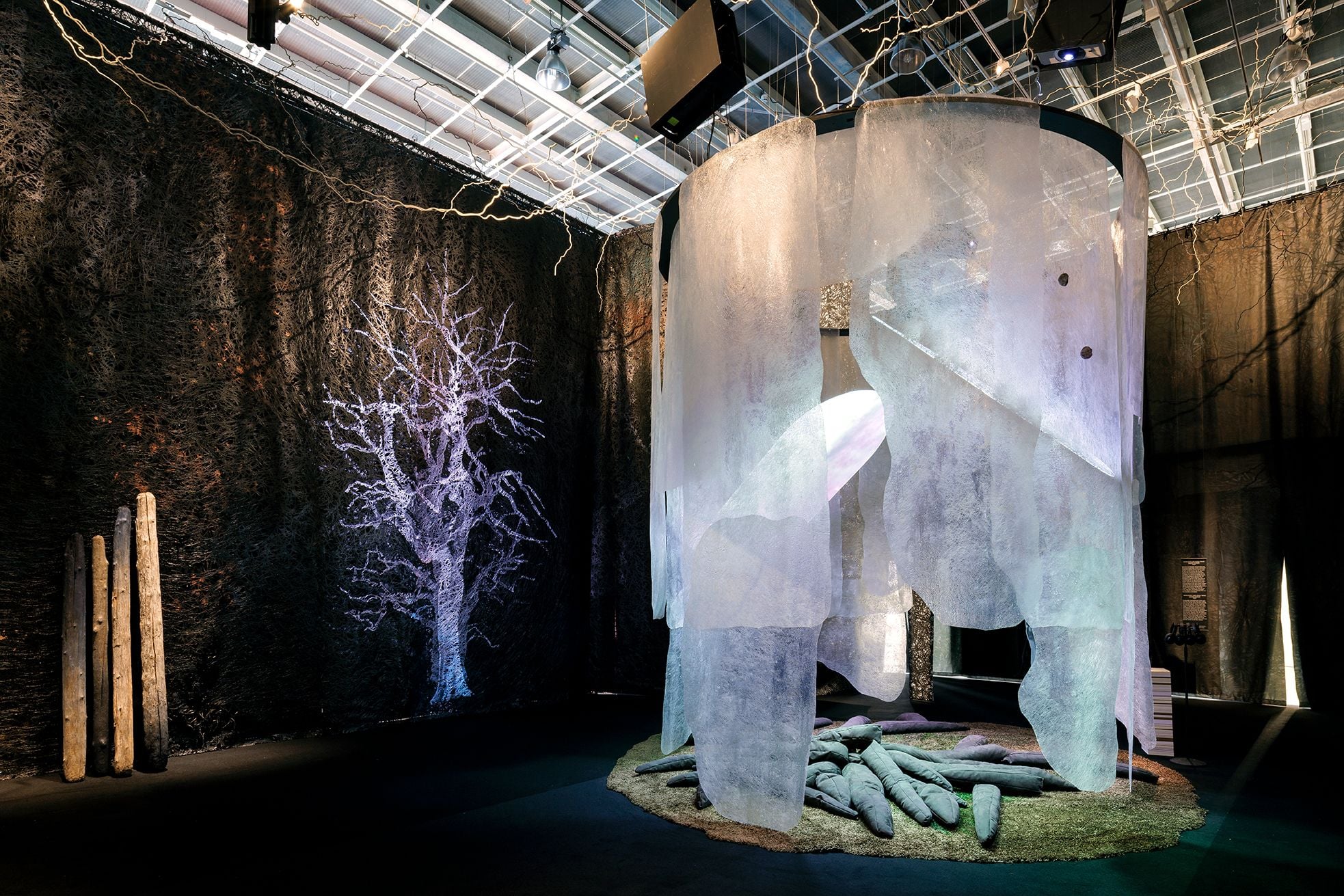
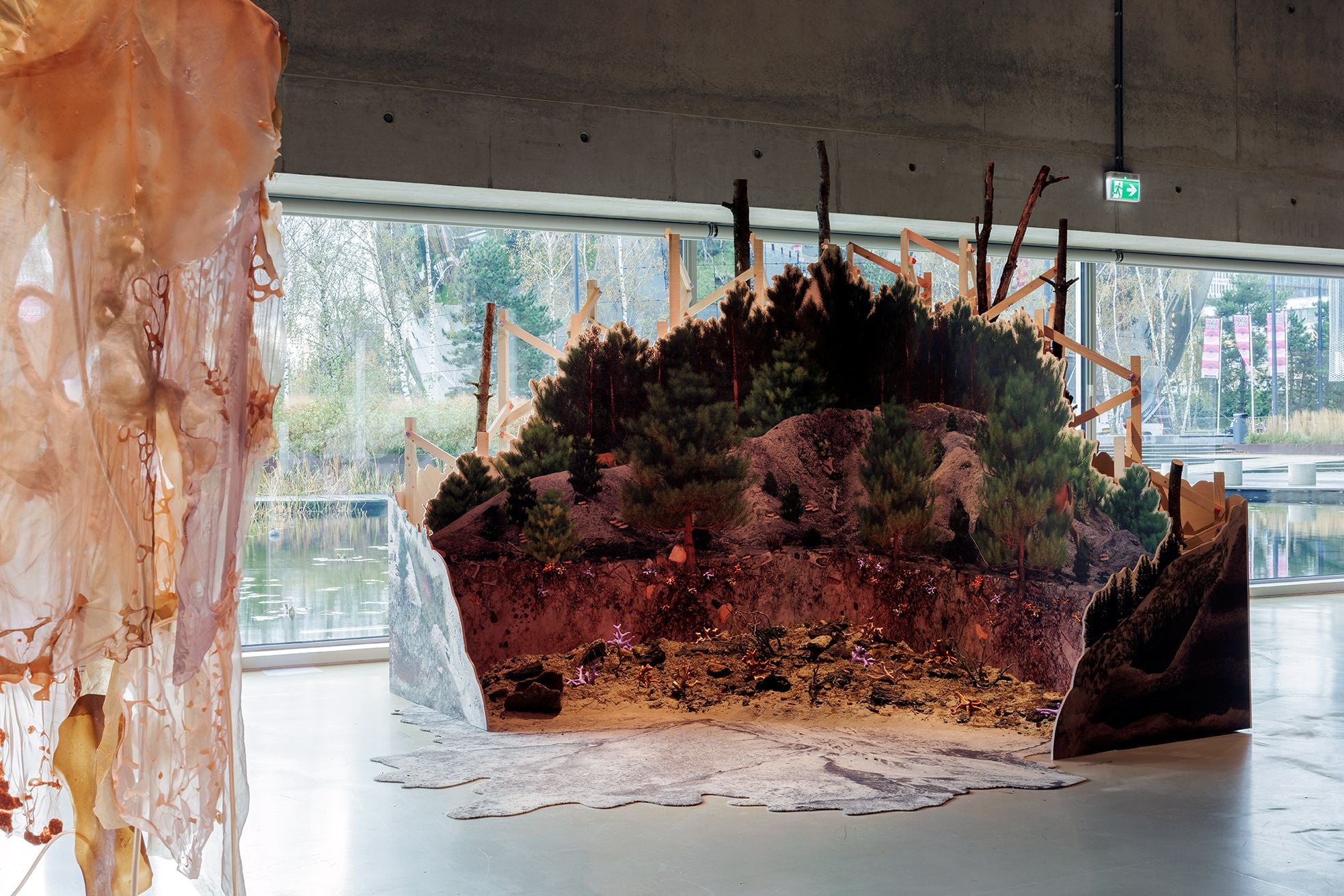
The exhibition’s second section, ‘ASSASSINATE’, serenades a much darker poetry. The entry and circulation of radioactive matter from the 1986 Chernobyl disaster into the global ecosystem via boars and truffles—as explored by Bettina Stoetzer, Asa Sonjasdotter and Rotterdam art collective Berkveldt in the video installation Of Boar and Fungi: A Nuclear Love Affair (2025)—indicates that there is no longer nature without man. Set within a tent-like structure covered with light veils, the floor is covered in materials resembling a moist forest ground, while two video projections hang close to the tip of the tent showing footage of mycelial growth and pig snouts sniffing for truffles, the close-up framing conjuring an urgent, visceral tone alongside a recorded voiceover. The Anthropocene (a newly created epoch of geologic time defined by humanity’s changes to the planet), the curators seem to argue, has grown into something wicked and uncontrollable. The argument that the system is broken (or at a tipping point) is woven throughout the exhibition, which actively resists embracing fungi as a new design and architectural material (as seen in the rise of mycelium panels). Instead, they are shown as organisms whose boundless growth more closely resembles the expansionism of colonial and capitalist endeavours.
A theme of decimation and death quickly becomes evident; the exhibition space acts as both memorial and cemetery. Examples of manmade monocultures or species at the mercy of ‘fungal’ agents include coffee, trees, corn and frogs. An installation by ecologists Ivette Perfecto and Zachary Hajian-Forooshani and artist Filipp Groubnov maps the spread of coffee rust, a fungus that thrives in industrial, monocultural coffee plantations throughout Latin America, and highlights how attempts to ‘civilise’ an ecosystem for commercial ends can quickly spiral out of control.
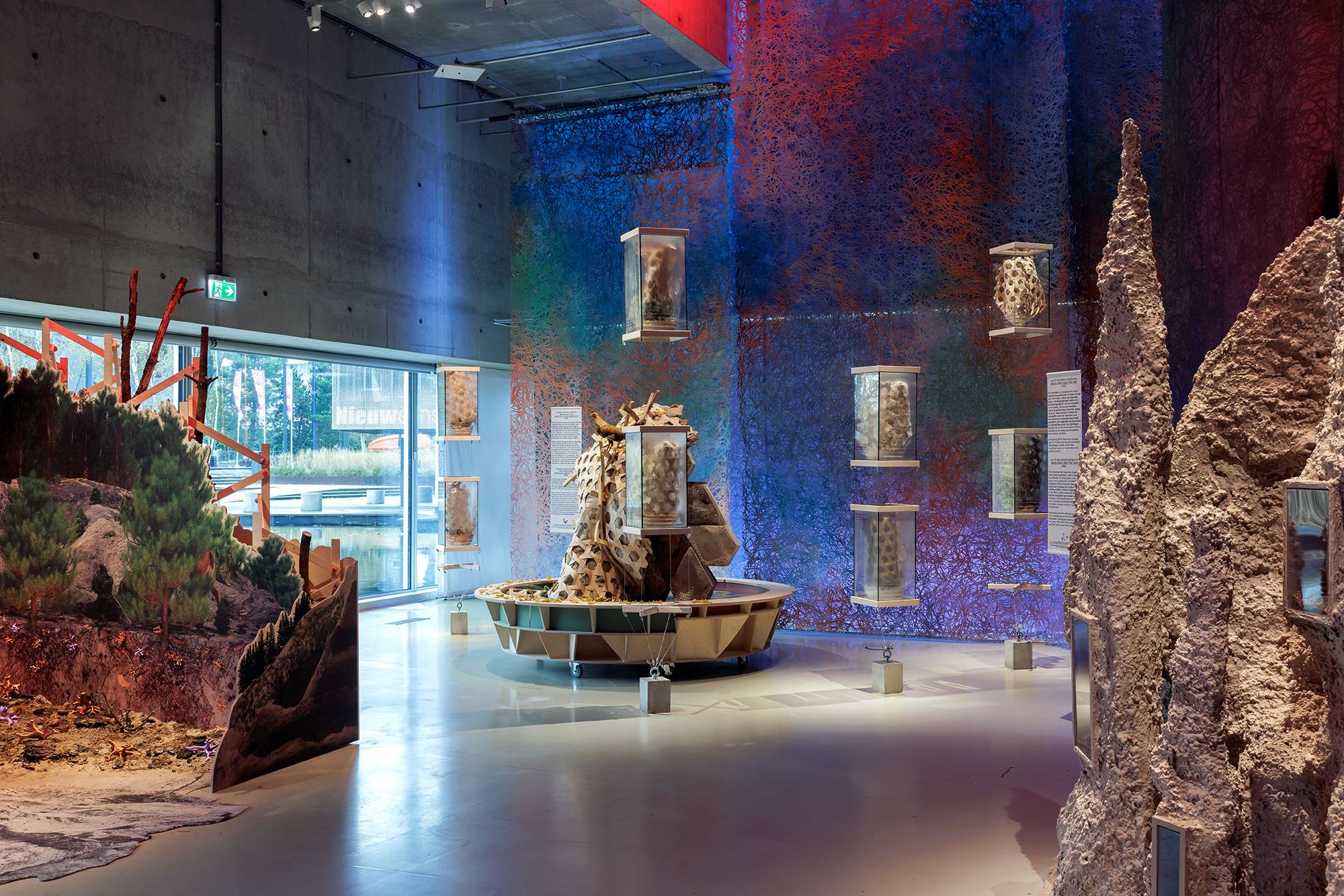
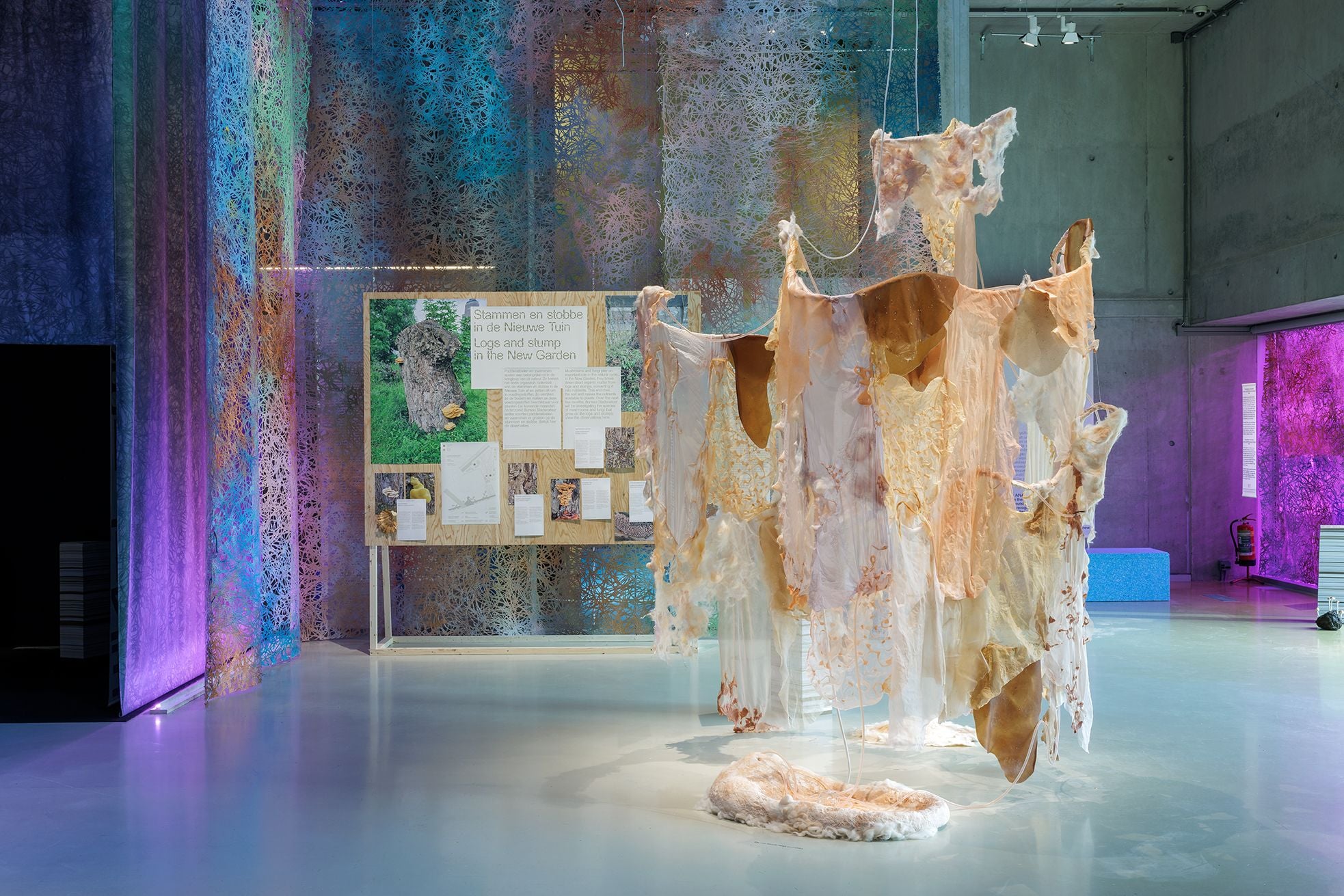
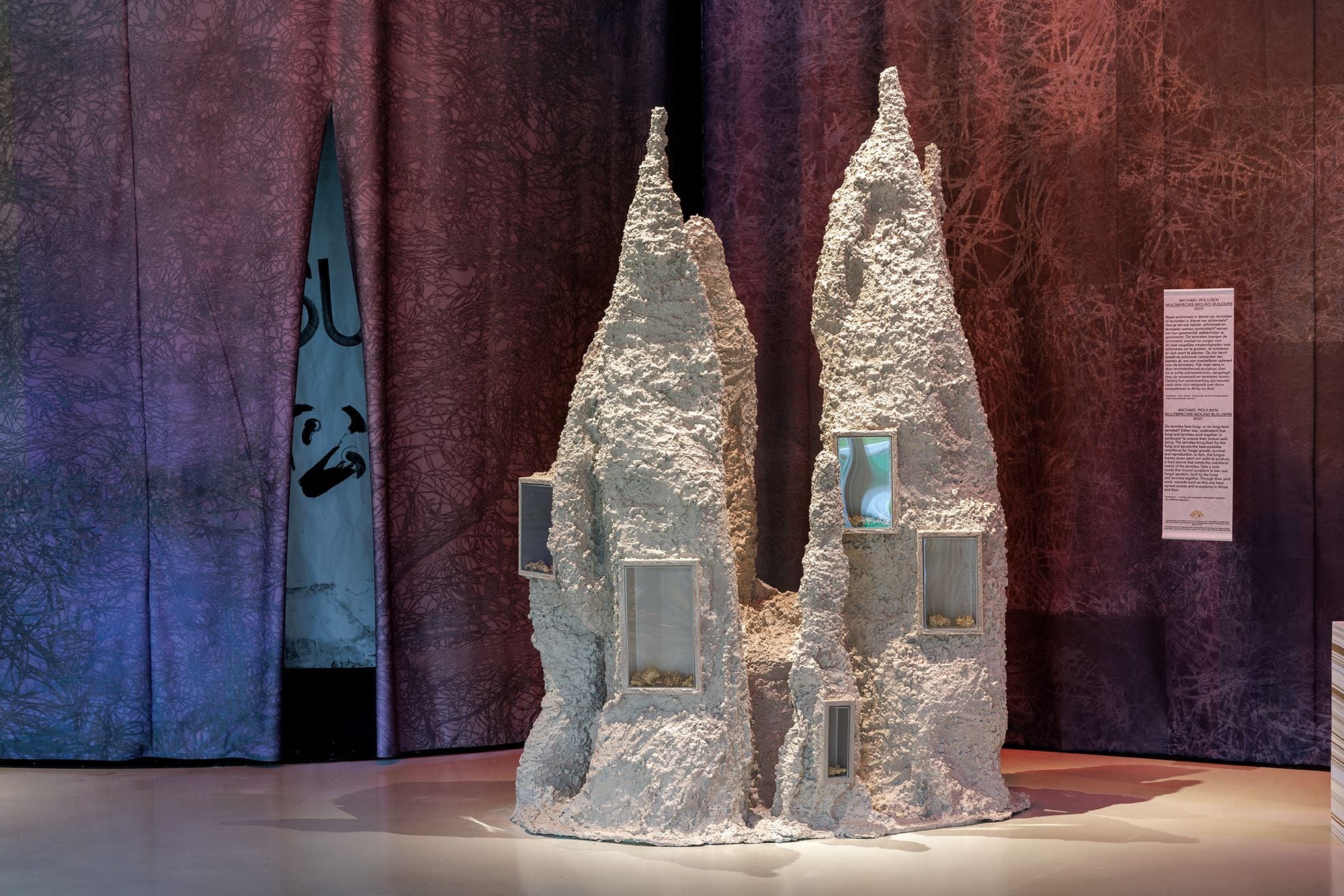
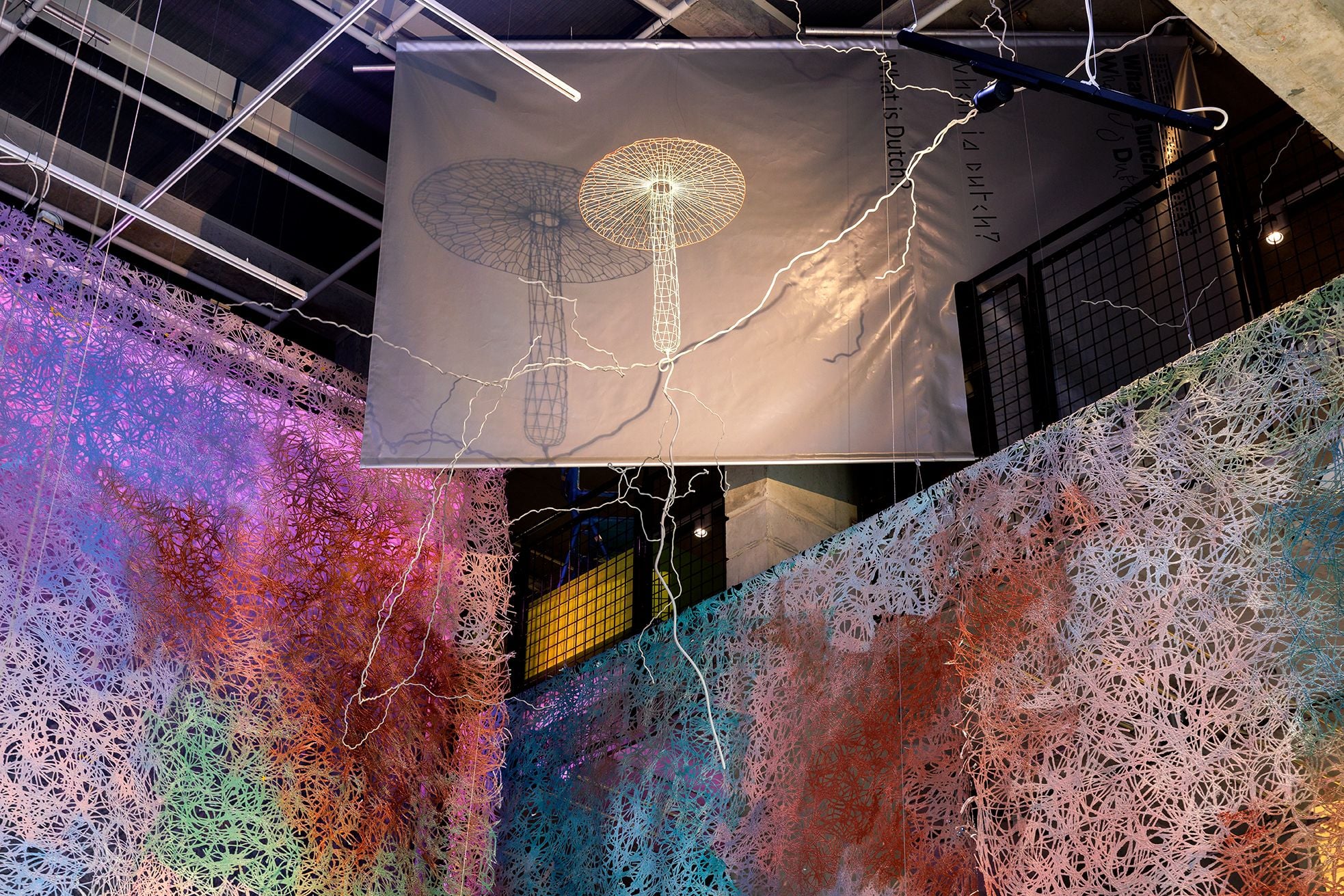
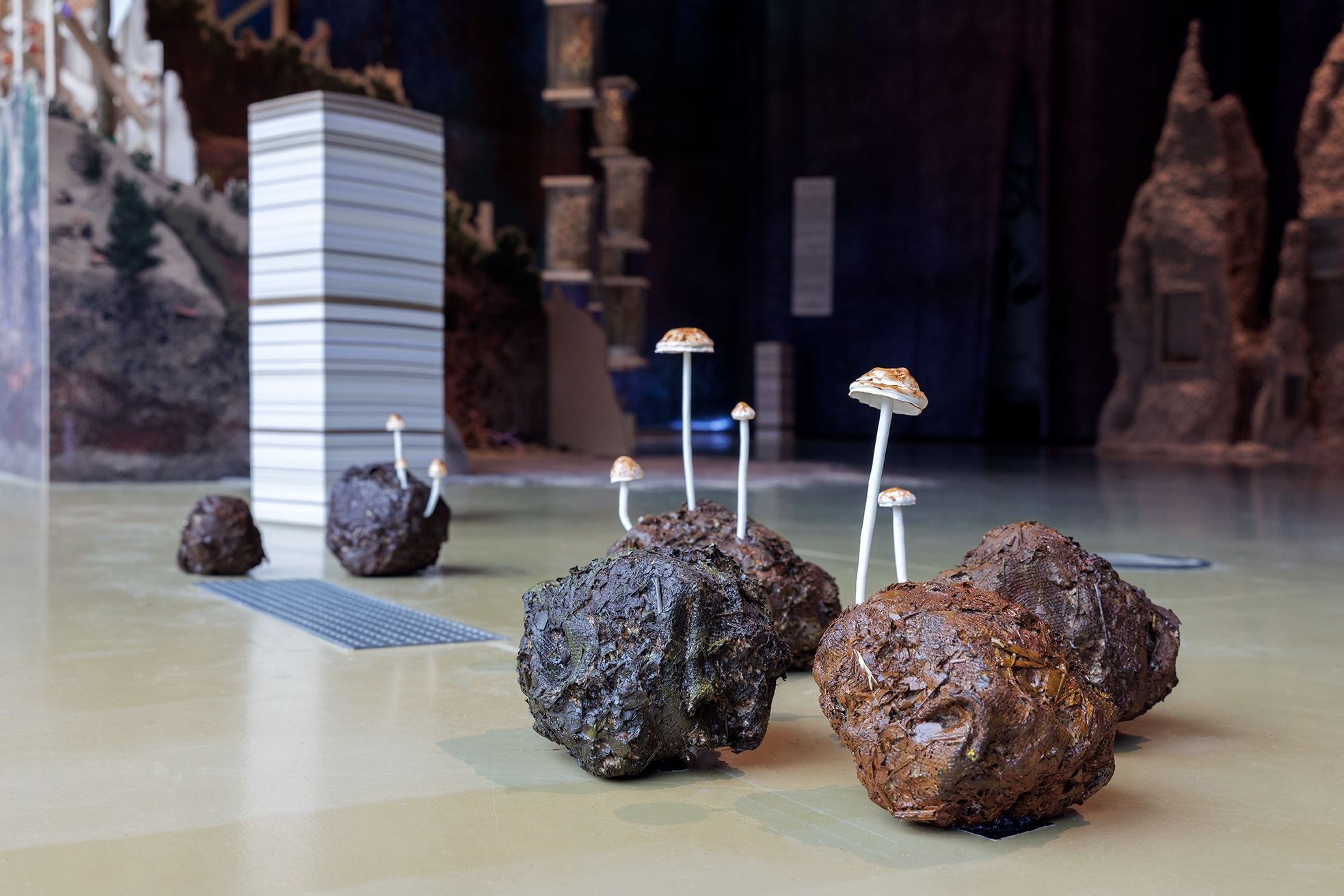
However, if interspecies entanglements between human and nonhuman forces provoke disasters, this exhibition ends on an optimistic and dialectic note of possible collaborations and redemption. ‘MOBILIZE’ features an array of mycorrhiza (the symbiotic association between a fungus and a plant) and mycosis (fungal disease) shedding light on new ways of living together. Rob Dunn and Baum & Leahy’s yeast worlding (2025) explores the productive, symbiotic yeast present in the human body, while Liu Yi and Shiho Satsuka’s Matsutake Lead the Way (2025) uses a poetic animation in the style of an ink painting to reflect on the mushroom reoccupying a ruined landscape. Michael Poulsen’s Multispecies Mound Builders (2025) gives sculptural quality to this vision, in which several tall structures imitate actual termite fungus and bacteria symbiosis, with vitrines showcasing small samples.
Tsing and Zhou present the world as an ecosystem that is not made up of individuals but instead rooted in infinite interdependency. In their hands, the mushroom becomes not an object but an inescapable feral imagination, with the exhibition a proposal to clean the plate and start over. Yet while fungi may refuse to yield to industrialisation and domesticity alike, with their so-called ‘anarchism’ feeding into an all-too-human anxiety around the realities of the Anthropocene, we are still talking about fungi in a human world, and not humans in a fungal world—even if we can begin to glean what it may feel like. —[O]
FUNGI: Anarchist Designers is on view at Nieuwe Instituut in Rotterdam until 8 August 2026.
Main image: Exhibition view: FUNGI: Anarchist Designers, Nieuwe Instituut, Rotterdam (2025). Courtesy Nieuwe Instituut. Photo: Aad Hoogendoorn.







A respected voice in contemporary art discourse.
Focusing on ambitious storytelling and insightful art-world commentary. Ocula Magazine publishes in-depth interviews, critical essays and timely analysis on the artists, exhibitions and ideas driving the global art world.
Learn more about Ocula Magazine
Showcasing the best of the art world.
Ocula partners with galleries from around the world to highlight their artists, artworks and exhibitions. Gallery membership is by application and invitation, with each member vetted by an independent panel.
Learn more about Ocula Membership
Specialises in the sale of major artworks.
Led by a team with deep ties to the world’s leading auction houses, galleries and collectors. Ocula’s advisory team offers bespoke services to high-net-worth clients from around the world who are looking to acquire the best of contemporary and modern art.
Learn more about our team and services