





Dora Carrington: The Queer Spells of a Modern Witch
An exhibition in the U.K. positions Dora Carrington as a fascinating persona relevant to the story of Modernism. Save to My Ocula‘There wasn’t a lover or a servant or a cat that did not preen him—or herself on being the most favoured of the lot’,’ wrote Julia Strachey of Dora Carrington. The death of Julia’s uncle, Lytton Strachey, Carrington’s beloved companion, had prompted the British artist to take her own life in 1932, aged only 38.
Carrington’s way of living—cropping her hair, dropping her first name, adopting an unconventional dress, and particularly her bisexual relations with men and women—reflects a striking independence of spirit. In a 1923 letter to her lover Gerald Brenan, she opined, ‘I often hope I shall die at 40. I could not bear the ignominy of becoming a stout boring elderly lady with a hobby of sketching in watercolours.’
The exhibition, Dora Carrington: Beyond Bloomsbury (9 November 2024–27 April 2025) at Pallant House in Chichester, positions Carrington far from the bland persona the artist dreaded but equally seeks to show her relevance to British Modernism beyond her fascinating persona. The focus chimes with the current interest in under-the-radar queer and female lives explored in exhibitions and publications: Lotte Laserstein’s output was recently explored in A Divided Life at Moderna Museet in Stockholm (2023-4), and Tirzah Garwood is receiving attention in Beyond Raviliou, currently on show at Dulwich Picture Gallery (19 November 2024–26 May 2025).
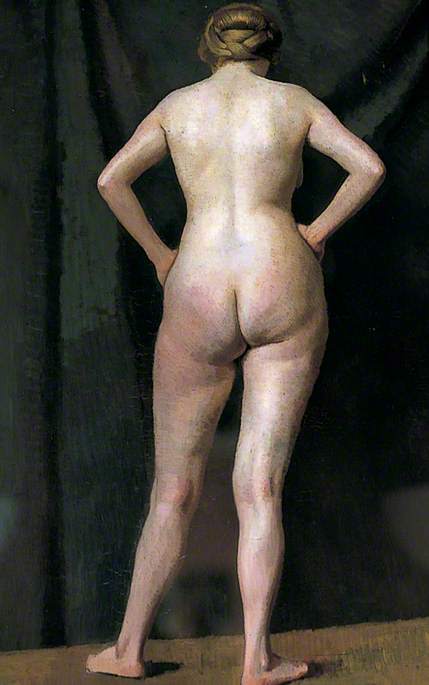
‘She simply wanted to live according to her own loves, her own impulses; she didn’t give a fig for what society at large thought about those,’ explains Anne Chisholm, co-curator with Ariane Bankes of the new exhibition at Pallant House in Chichester. Certainly, the artist’s rebellious spirit was forged early on, alongside an ambivalence towards her sexuality, expressed in the wish to be free of all ‘female encumbrances and hanging flesh’.
Born in 1893 in Hereford, she was raised with her four siblings in Bedfordshire. ‘I loved my father for his rough big character,’ she wrote in a letter to Mark Gertler in 1918. ‘His rustic simplicity and the great way he lived inside himself and never altered his life to please the conventions or people of this century.’ Her mother, however, was perceived as a schoolmarmish, and the young artist strained against her primness.
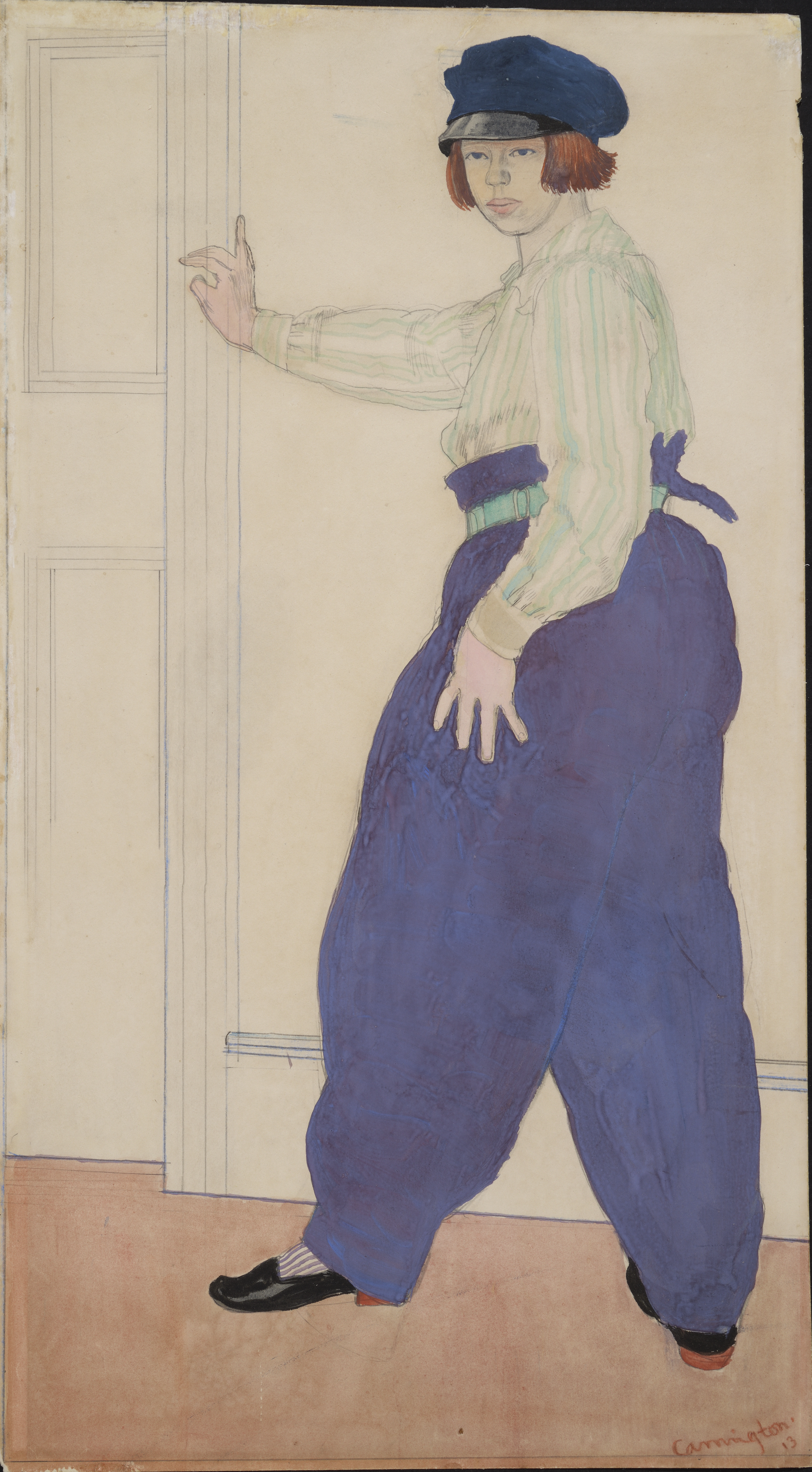
Escaping to study at the Slade School of Fine Art in London at 17, Carrington made drawings of her brothers, Teddy and Noel, her father, and an incomplete profile of her mother. These finely observed studies capture the personalities of the sitters—a facility that is also obvious in the 2,000 or so letters she wrote, bubbling over with caricatures of friends and acquaintances and sprinkled with puns and idiosyncratic spellings. In a watercolour from her Slade days, Self-Portrait (1913), we meet the androgynous Carrington, who had rid herself of her first name by then. She is dressed provocatively in a boyish cap, striped shirt, and breeches with a page-boy haircut. This was Carrington’s identity fully formed.
The portrait as a subject recurs throughout the artist’s oeuvre. These works are almost always of people she knew: her housemaid Annie Stiles, the Cornish farmer Mrs Box, and numerous friends, family members, and lovers. Anchored in the physical world, her paintings are bold in form, with a lyricism of line, appreciation of pattern, pleasing solidity, and warmth of colour. Seldom do they stray into the more Post-Impressionist treatment achieved by her Bloomsbury peers, Vanessa Bell and Duncan Grant. ‘Significant form’, championed by Clive Bell, Vanessa’s husband, in his book Art (1914), promotes the importance of ‘how’ a painting is made rather than what is depicted. By contrast, Carrington’s subjects remain—for the most part—resolutely undissolved and visible. There are exceptions, such as David Garnett (1919) and Soldiers at a Stream (1920), but Carrington was more modernist in her attitudes than in her painting.
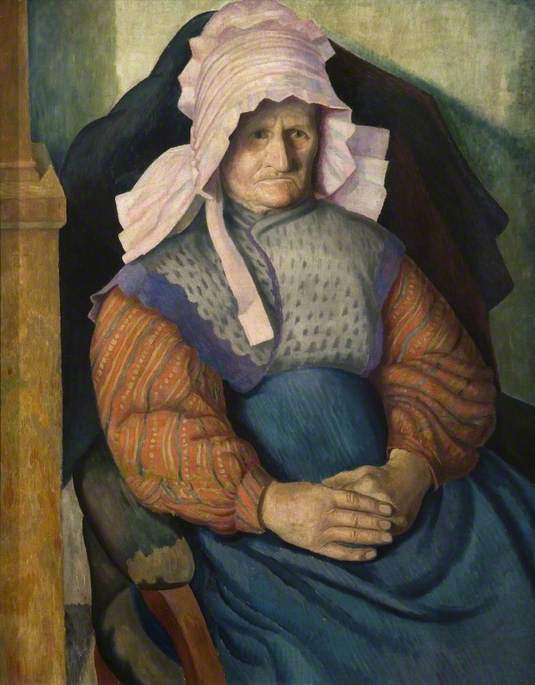
Mrs Box (1919) is Carrington’s largest portrait. The Victorian-looking farmer, as monumental as a landscape, sits against dark, hill-like drapery thrown over the back of a chair. She wears a flamboyant pleated pink bonnet that encases her head like a piece of eccentric architecture, a watery scalloped shawl, a folksy blouse, and a blue apron upon which her large workers’ hands are folded.
Annie Stiles (1921) and Portrait of Annie (1925), which both depict Carrington’s open-faced and comely maid, hang alongside Gertler’s portrait of Stiles, The Servant Girl (1923). Gertler, best known for Merry-Go-Round (1916), his painted response to the First World War, was a fellow student at the Slade, with whom Carrington was romantically involved but to whom she never fully committed. He was one of several suitors, who included the artists C.R.W. Nevinson and John Nash. Carrington’s most enduring relationship, however, was her platonic one with Strachey, a queer writer. Realising Strachey’s attraction to her lover Ralph Partridge, Carrington conceded to marry him, preserving what she described as their ‘triangular trinity of happiness’.
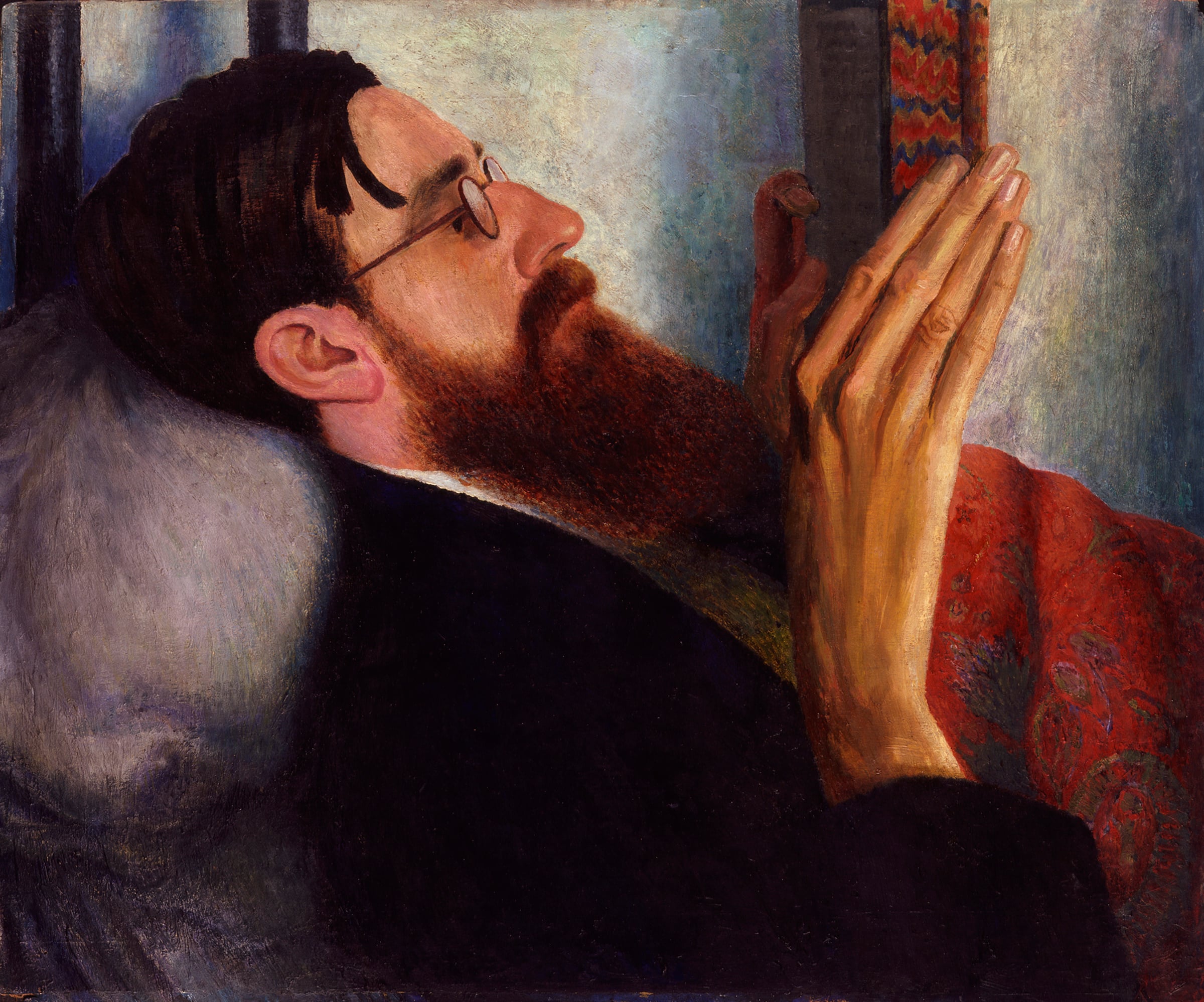
Strachey and Carrington had first met in December 1915 at a party at Asheham House in East Sussex, the country home of Virginia and Leonard Woolf. Carrington’s senior by 13 years, Strachey was as distinctive in appearance as she: tall, thin, with a reddish beard, round spectacles, and a distinctive voice. Carrington, then only 23, captured him in her most famous portrait, Lytton Strachey Reading (1916). Shown recumbent and in profile, his long-fingered hands with gleaming fingernails grasping the pages of a book, a soft highlight on his ruddy nose, Strachey appears entirely absorbed in his reading.
Carrington took the initiative to find and set up homes for herself and the two men in her life. The first was Tidmarsh Mill in Berkshire, where she and Strachey moved in 1917, later to be joined by Partridge. The second was Ham Spray in Wiltshire, to which they decamped in 1924. She furnished both houses with patterned wallpapers, illustrated ceramic tiles, decorated furniture, and trompe l’oeil effects, such as a door painted with shelves of books with punning titles on their spines to replicate Strachey’s library.

‘She was a wonderful maker of domestic spaces,’ Bankes tells me. ‘The doorways, the furniture, the fireplaces ... She covered surfaces with objects, sanded the floors and scented them with oils.’ A three-minute film made in 1929 by Carrington’s then-lover, Bernard Penrose, captures tantalising snatches of this playful life, with the artist riding her white pony, Belle, frolicking with an inflatable swan in the river and being lifted into a tree by Partridge and Frances Marshall, his future second wife.
Carrington captured both homes in paint. The finest of these works is represented only in reproduction in the exhibition at Pallant House. The Mill at Tidmarsh (1918) shows the sloping, orange-tiled roof of the house with its dark-timbered end stack and, at its base, the circular tunnel through which the River Pang flows and in which the building is reflected. Afloat on the water are two black swans. In reality, these birds were not found there—instead symbolising, the curators suggest, the odd coupling of Strachey and Carrington.

The emotional charge of The Mill at Tidmarsh is found in other landscapes: Farm at Watendlath (1921), for instance, and Spanish Landscape with Mountains (1924). Painted when Carrington’s ‘trinity of happiness’ was simultaneously expanding and cracking under the strain of each individual’s affairs, these landscapes bulge with tumescent hills and bursts of foliage or spiky succulents. At the same time, tiny figures pause or perambulate along slender pathways, dwarfed by the bosomy vistas before them.
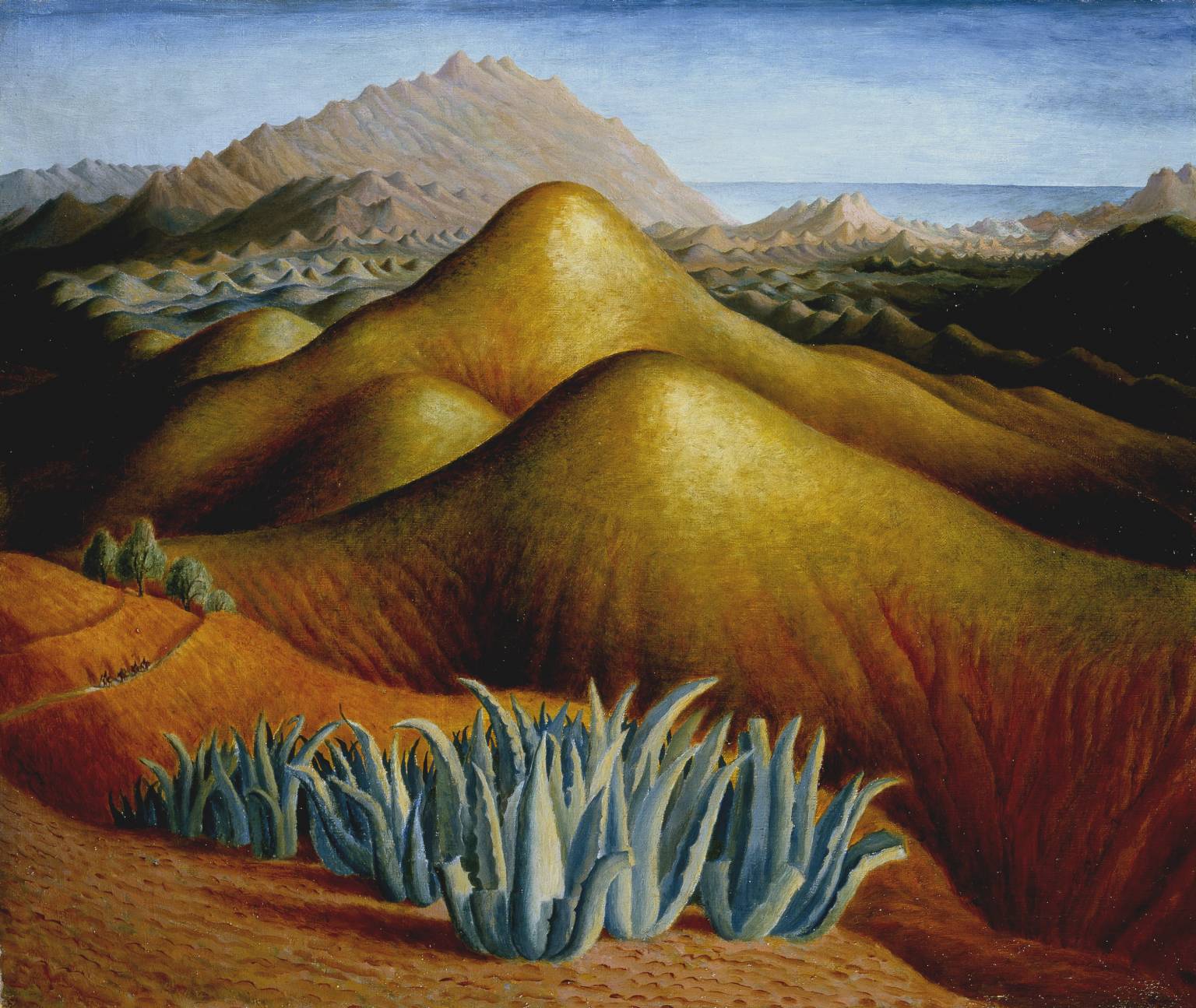
Carrington, whose paintings the Bloomsbury Group did not rate, rarely exhibited or accepted commissions and was even given to destroying her work. In a letter dated 15 March 1928 to her friend, Rosamond Lehmann, she wrote: ‘It’s rather maddening to have the ambition of Tintoretto and to paint like a mouse.’ In Frances Spalding’s The Real and the Romantic: English Art Between Two World Wars (2022), the author suggests that ‘Carrington might have achieved further success with the painting of landscape had her personal life been less fraught and her artistic interests less diverse.’
But, as Julia Strachey noted, and as this exhibition proclaims, Carrington was ‘a creation in fire, feeling and style’ which sparkles still in ‘the remarkable impression of sunlight she made’. —[O]
Dora Carrington: Beyond Bloomsbury is on view at the Pallant House Gallery in Chichester, United Kingdom, from 9 November 2024 to 27 April 2025.
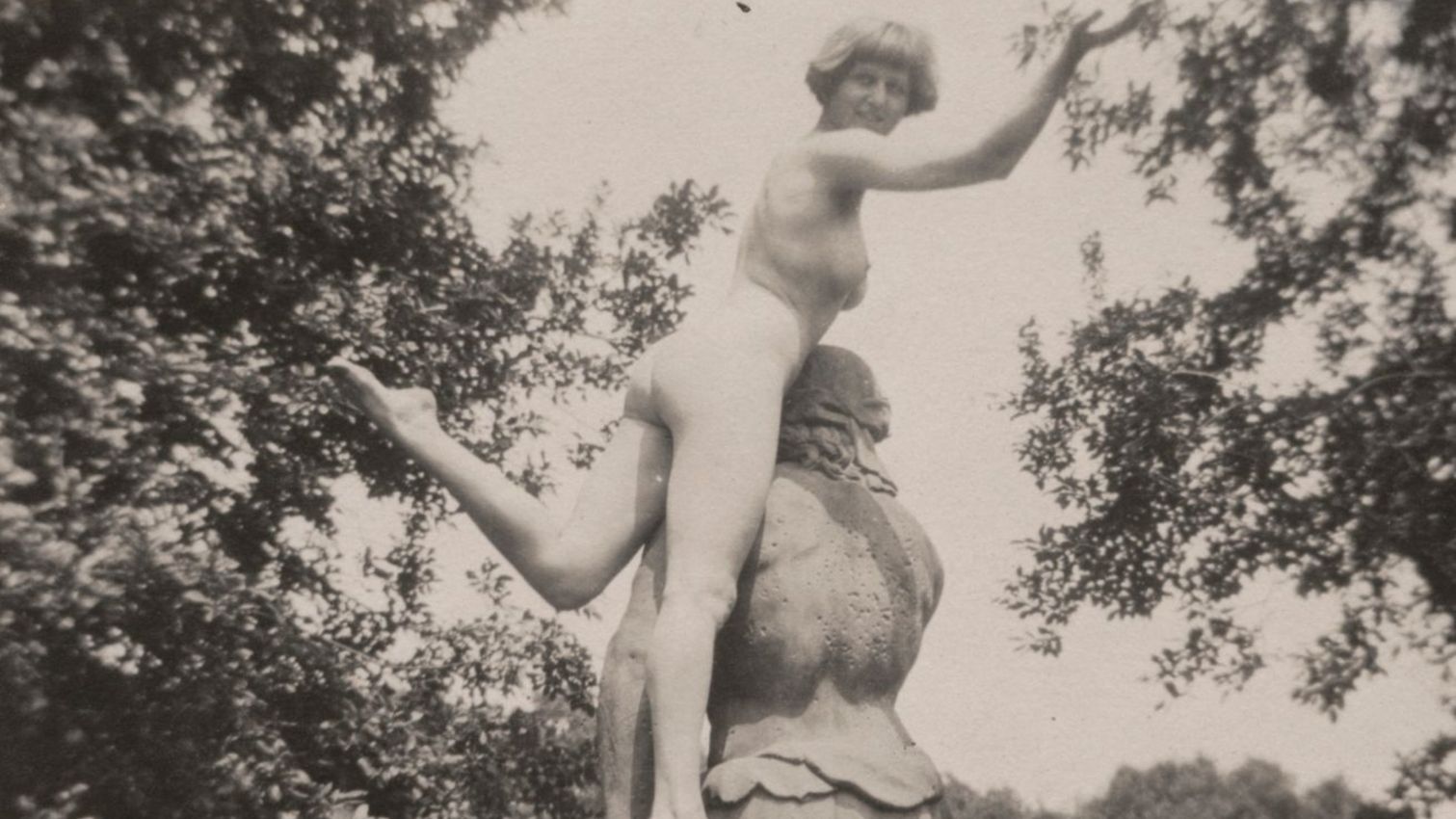
Main image: Lady Ottoline Morrell, Dora Carrington (1917). Vintage snapshot print. © National Portrait Gallery, London.
A respected voice in contemporary art discourse.
Focusing on ambitious storytelling and insightful art-world commentary. Ocula Magazine publishes in-depth interviews, critical essays and timely analysis on the artists, exhibitions and ideas driving the global art world.
Learn more about Ocula Magazine
Showcasing the best of the art world.
Ocula partners with galleries from around the world to highlight their artists, artworks and exhibitions. Gallery membership is by application and invitation, with each member vetted by an independent panel.
Learn more about Ocula Membership
Specialises in the sale of major artworks.
Led by a team with deep ties to the world’s leading auction houses, galleries and collectors. Ocula’s advisory team offers bespoke services to high-net-worth clients from around the world who are looking to acquire the best of contemporary and modern art.
Learn more about our team and services