





‘She Didn’t Come from Modernism. She Came from Dreaming’: The Rise of Emily Kam Kngwarray
With her work under the global institutional and commercial spotlight with concurrent exhibitions at Tate Modern and Pace Gallery, Ocula spoke with Emily Kam Kngwarray’s collaborators and artistic custodians about safeguarding her creative legacy. Save to My Ocula
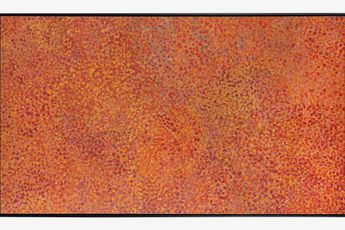
Emily Kam Kngwarray began painting in 1988. She was in her late seventies, and her career in contemporary visual art would span just eight years. During that period, she produced as many as 3,000 acrylic works on canvas.
Kngwarray was a highly respected Anmatyerr elder from the Utopia region of Australia’s Northern Territory. Kelli Cole, a Warumungu and Luritja woman from Central Australia and a curator of the Tate/National Gallery of Australia (NGA) exhibition, met Kngwarray for the first time at age seven. She was also present when Kngwarray began painting, when Cole’s uncle, the art adviser Rodney Gooch, delivered 100 blank canvases to Utopia.
‘Emily picked up a brush and created something immediately unlike anything else,’ said Cole, who is the director of curatorial and engagement at the National Aboriginal and Torres Strait Islander Art Gallery of Australia. ‘Her first painting, Emu Woman, depicted the ribcage of an emu, central to the story of her Country, Alhalker. Immediately it was clear her relationship to the canvas was profound.’
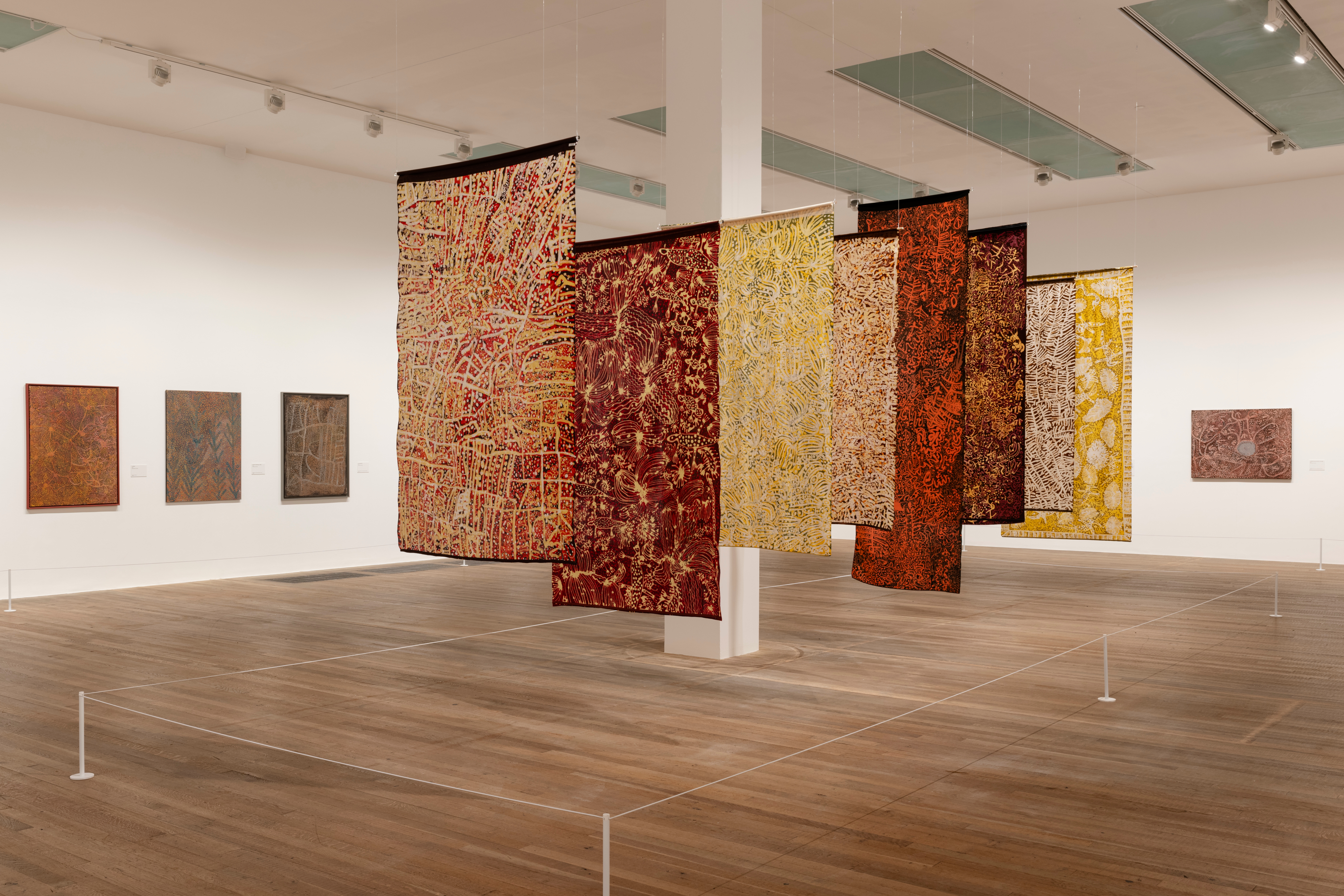
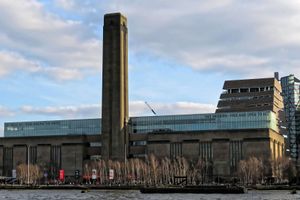
Her career is now honoured in a significant institutional and commercial revival: a landmark self-titled retrospective at Tate Modern in partnership with the NGA (10 July 2025–11 January 2026), and a simultaneous solo presentation at Pace Gallery in London. Together, these exhibitions mark a critical moment for Aboriginal art’s global positioning.
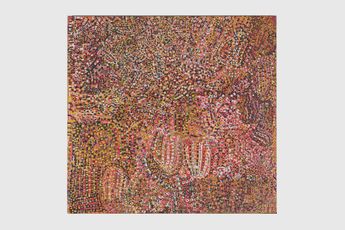
Although Kngwarray is now of intense interest to the Western art world, her work does not belong to the canon of Western art history. Responding to her work, some critics have compared her gestural canvases to Western abstraction, but Cole is unequivocal: ‘She didn’t come from Modernism. She came from Dreaming. Her work isn’t about form. It’s about responsibility—keeping Country alive.’
Born circa 1910, Kngwarray grew up immersed in Anmatyerr ceremonial life, and created work that is profoundly representational—a visualisation of her Dreaming (Altyerr), the foundational narratives connecting people, place, and custom.
‘Dreaming isn’t history or myth,’ Cole said. ‘It’s a living continuation of her presence on Country. Every mark Emily made came from knowledge, ceremony, and interconnection.’


Kngwarray often painted outside, under the Australian desert sun. ‘When she layered paint onto canvas, she embedded story, food, ceremony, kinship—everything needed for Country to live,’ said Cole.
Working in a gestural style underpinned by a remarkable command of draughtsmanship, Kngwarray often completed a painting in a single day. But, before painting, she worked almost exclusively in batik, a labour-intensive textile method introduced to Utopia in the 1970s, in which wax is applied to silk or cotton before dyeing. Cole remembers learning batik herself from Dr Jenny Green, who had moved to the community to support literacy and creative education.
‘Batik was considered craft, not fine art,’ said Cole, ‘because it was made on cloth, mostly by women. But in Emily’s early paintings, you see the rhythm of her hand, gestures rooted in those first wax marks.’
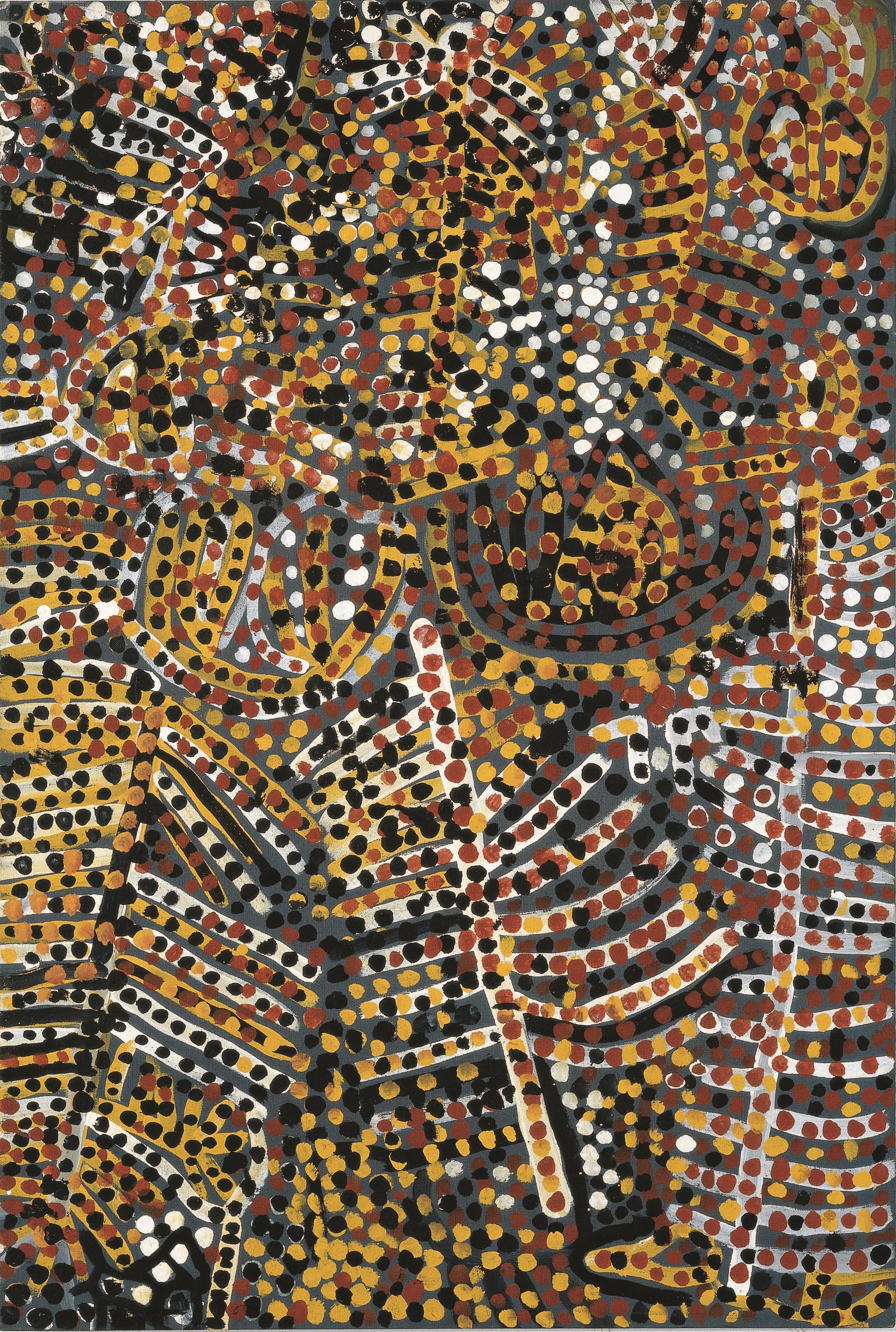
Kngwarray’s earliest major painting, Ntang Dreaming (1989), was created with her fingers and depicts the landscape shortly after rainfall. The work references woollybutt grass—‘alyatywereng’ in Anmatyerr, colloquially referred to as ‘ntang’—a native seed-bearing plant which is vital to seasonal life. Women would crush ntang seeds to produce colourful paint, which they would use to decorate their bodies in complex ceremonial markings. Kngwarray’s canvas replicates these symbols of cultural continuity and renewal.

Ntang Dreaming was acquired by the NGA shortly after its debut in the landmark Utopia Women exhibition in Sydney in 1989. The purchase meant that, in the final years of her life, Kngwarray became one of Australia’s most celebrated artists. Yet her success quickly led to ethical dilemmas. Kngwarray rapidly became the focus of intense market demand. Works initially sold for modest sums were resold for hundreds of thousands. ‘We call it the humbug story,’ Cole said. ‘She was generous with her family and community. But it placed pressure on her and those around her.’
The imbalance between her international recognition and the relative obscurity of other Utopia artists was also problematic. ‘There were incredible contemporaries—Lindsay Bird, Gloria Petyarre, Lily Lion—but the market zeroed in on Emily,’ Cole noted. ‘That spotlight distorts. In Anmatyerr culture, everything is shared.’
Today, there are signs of change. Molly Burrage, manager of the contemporary Utopia Art Centre, is among those leading efforts to create a more equitable and transparent art world for Aboriginal artists. ‘We are trying to shield artists from the kinds of pressures Emily faced,’ Burrage told Ocula, referencing the centre’s role in negotiating with galleries and maintaining clear ethical standards.
‘Our job is to ensure that cultural integrity comes first—and that artists have agency over where and how their work is shown.’ Burrage was also instrumental in co-developing the exhibition We Call It Urapuntja (4 June–4 September 2025) at JGM Gallery in London, which runs alongside the Tate retrospective and showcases works by seven contemporary artists with familial and stylistic links to Kngwarray.
As Kngwarray’s works re-enter the global spotlight, there are signs that some of the art world’s most significant galleries are also engaging with such issues. D’Lan Davidson of D’Lan Contemporary, a Melbourne gallery partnering with Pace, noted: ‘The timing of the exhibition opens a dialogue that highlights—and celebrates—the artist’s rise in prominence and recognition in the global contemporary art world.’
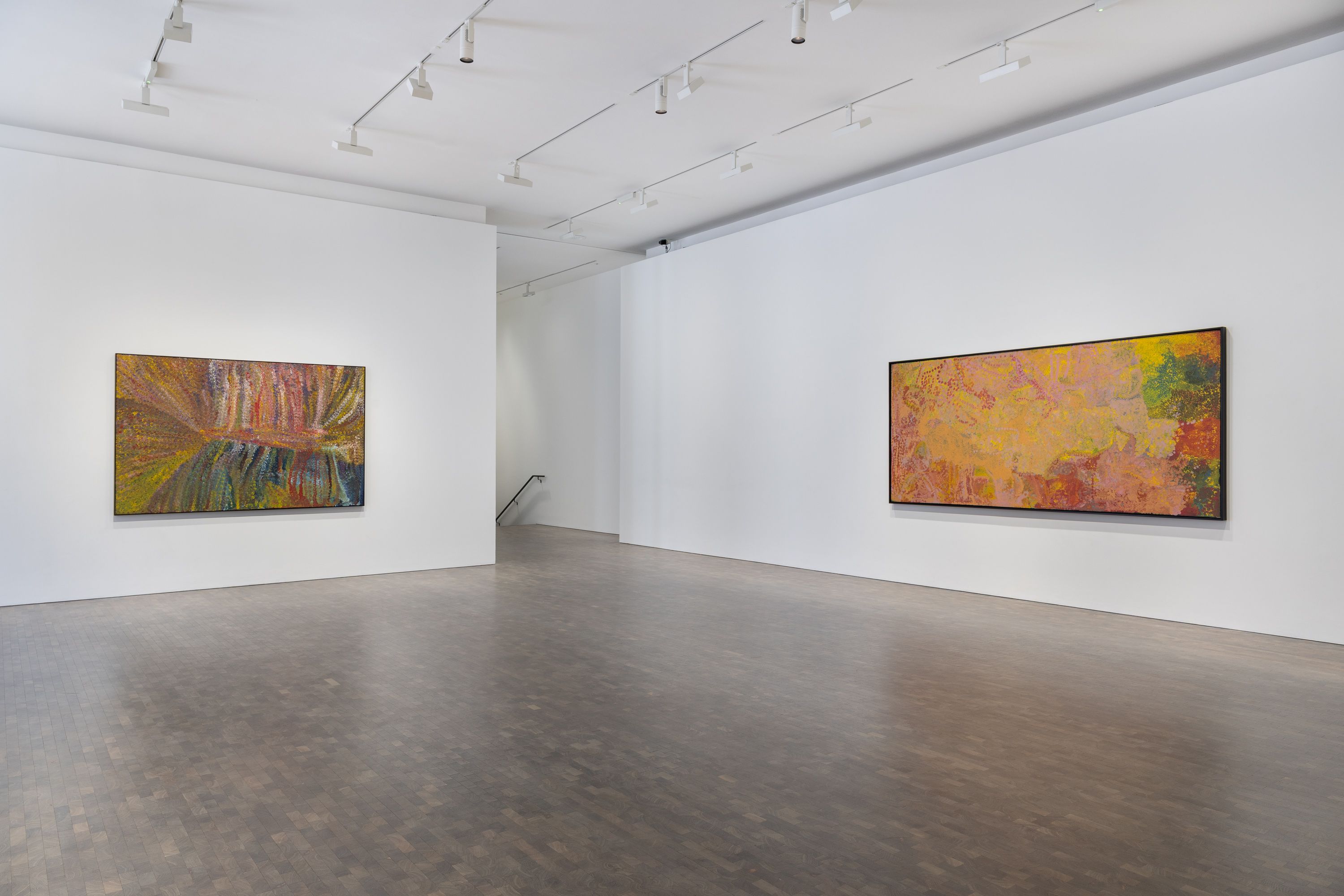
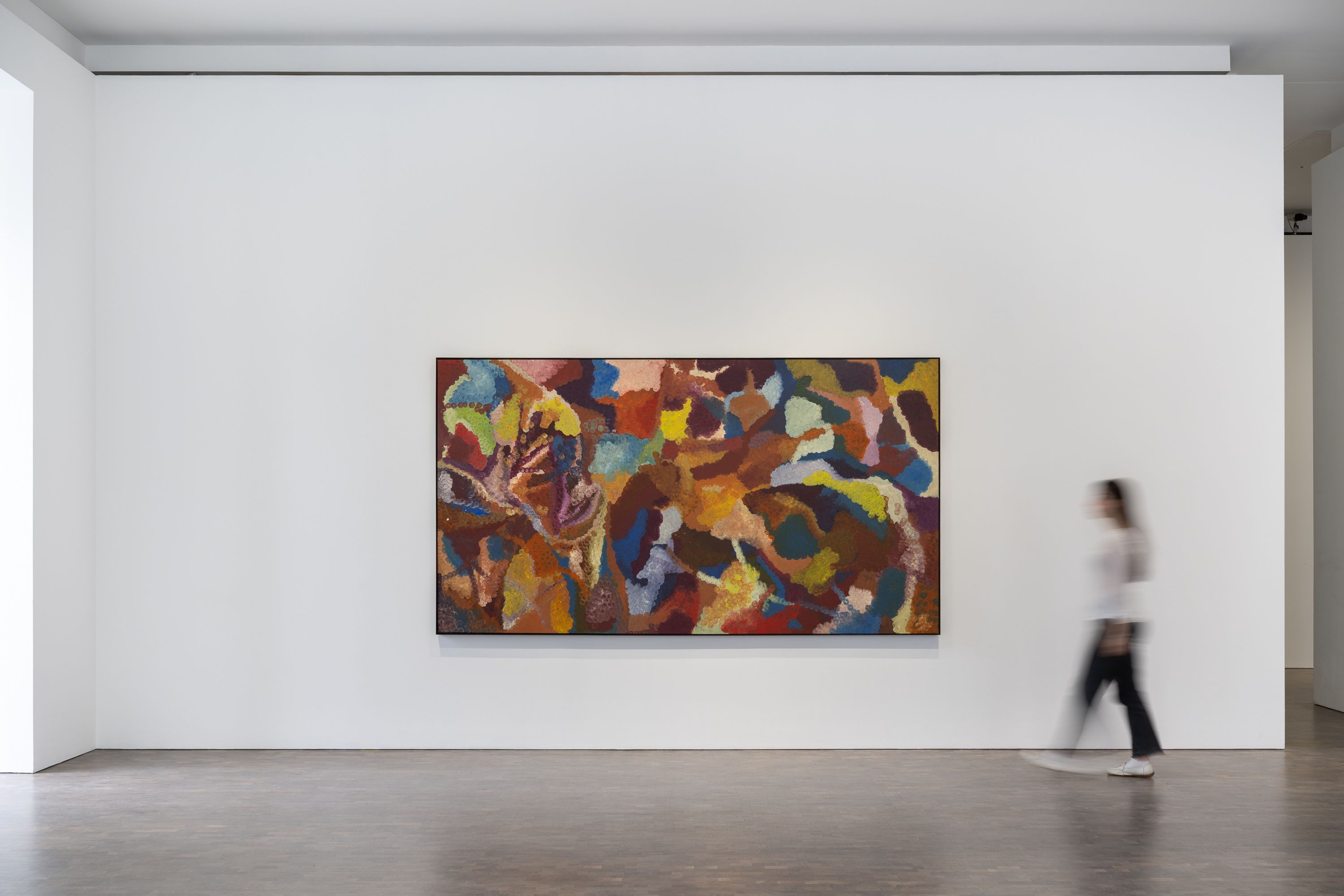

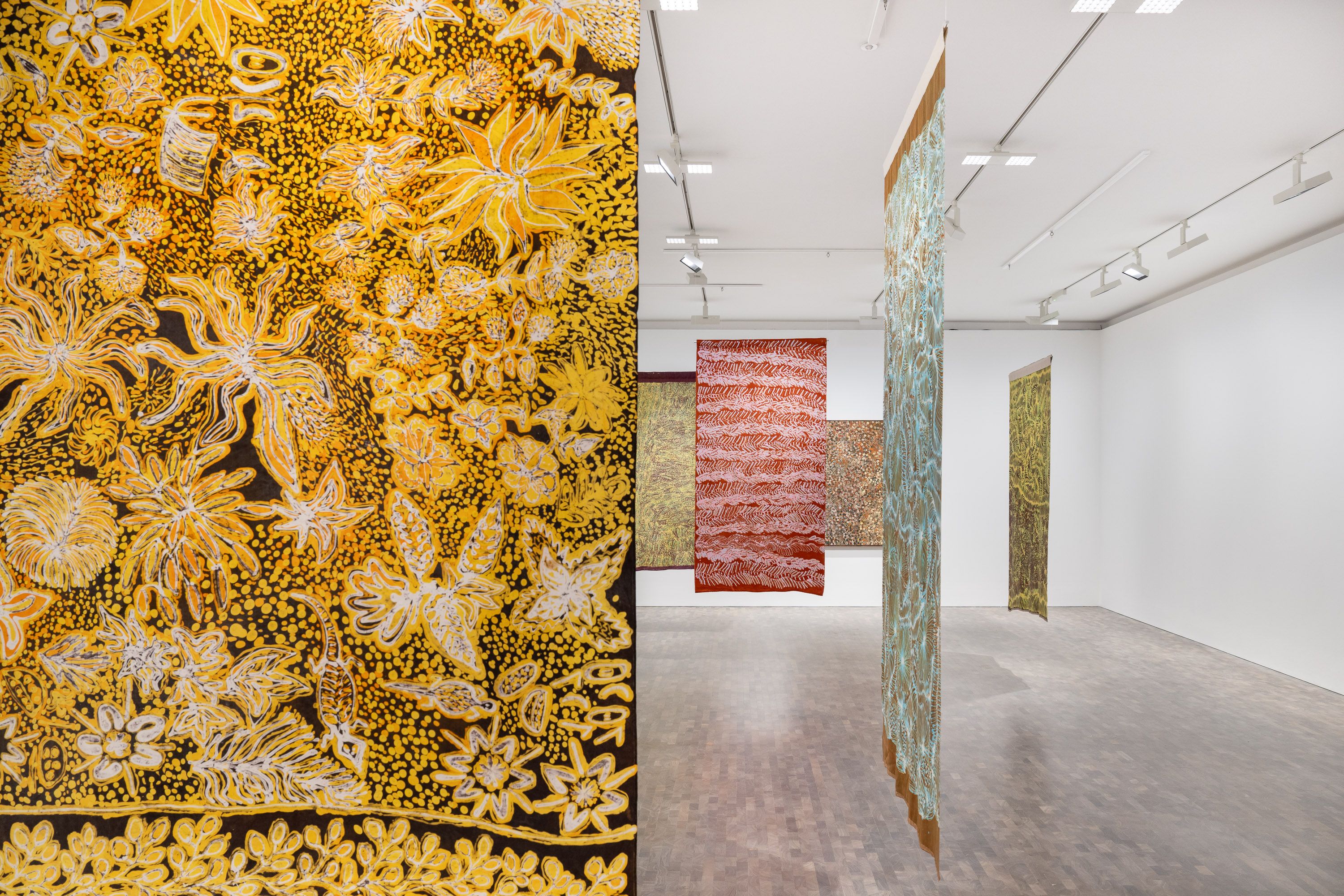
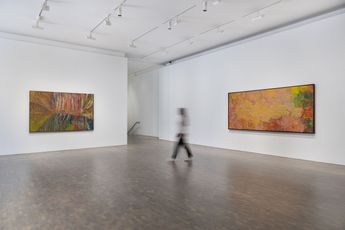
In June, Pace Gallery opened Emily Kam Kngwarray: My Country (6 June–8 August 2025) in London—its first solo exhibition of an Aboriginal artist. Elliot McDonald, senior vice president at Pace in London, told Ocula: ‘Emily’s work is grounded in the world of her Country, her ancestors, her community—but standing in front of it, it’s clear that painting, at its purest, is a universal, instinctive language. These aren’t separate truths; they’re completely intertwined—and at its best, that language tells us everything about what it means to be alive.’
Pace is showing paintings priced between $300,000 and $1.5 million (USD), pledging ten percent of proceeds to support the Utopia community. Davidson emphasises the commitment: ‘Both galleries felt strongly that Emily’s community should benefit from this landmark exhibition. This is on top of mandatory Artist Resale Royalty fees returned to Kngwarray’s estate.’
Davidson noted that D’Lan Contemporary already allocates 30 percent of its annual profits to support First Nations artists, programmes, and communities. ‘We firmly believe that as this global spotlight on Australian First Nations art continues to intensify, so too does the responsibility of the galleries and collectors who champion it,’ he said. ‘Presenting work with rigorous scholarship is vital to providing audiences with insight into the culture that informs the practice.’
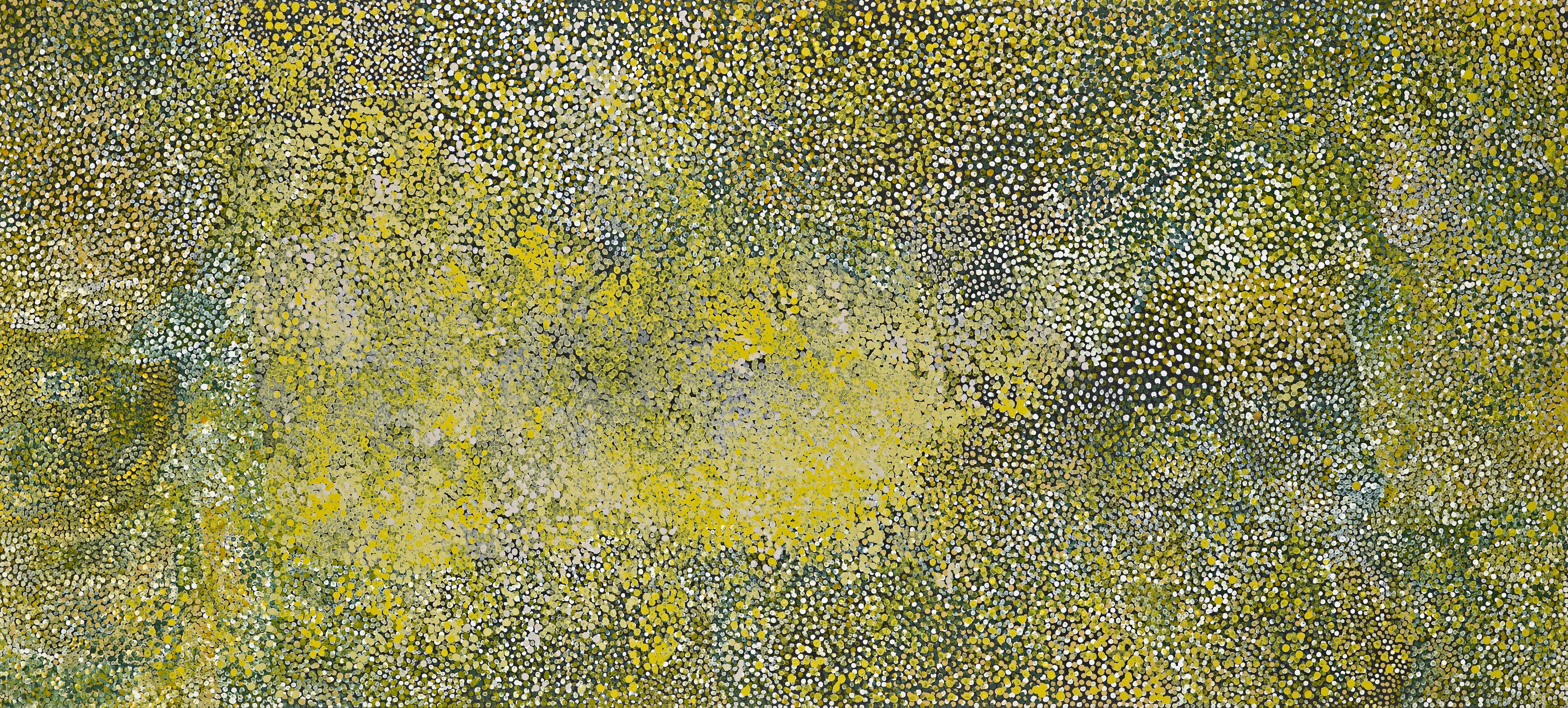
To ensure proper due diligence, Davidson explains, D’Lan Contemporary adheres to the ‘highest standards of provenance’, following a framework of standards and protocols developed and recognised by two Australian institutions—CAAMA and Delmore Gallery.
‘Kngwarray was a prolific artist without an exclusive agent,’ he said. ‘Her immediate success, paired with her transient lifestyle, led to varying quality in market offerings. That’s why provenance isn’t just about paperwork—it’s about safeguarding legacy.’
He adds: ‘We worked over two years to source the finest works from the secondary market that reflect each phase of her career. From early batiks to high-colour abstraction, My Country offers a carefully curated lens into her evolution.’
Davidson stresses that collectors must engage with more than the surface. ‘Kngwarray’s paintings are expressions of deep cultural knowledge, of ecology and Dreaming. They are acts of custodianship. Our goal is to inspire a new generation of collectors who understand that meaning.’
‘Emily’s legacy isn’t just visual—it’s ethical,’ said Cole. ‘It’s about listening to the community, about reciprocity, about understanding that her art was a way to care for Country. If the art world wants to embrace her, it must also embrace that responsibility.’ —[O]
Emily Kam Kngwarray is on view at Tate Modern in London from 10 July 2025 to 11 January 2026. Emily Kam Kngwarray: My Country is on view at Pace Gallery, London, from 6 June to 8 August 2025.
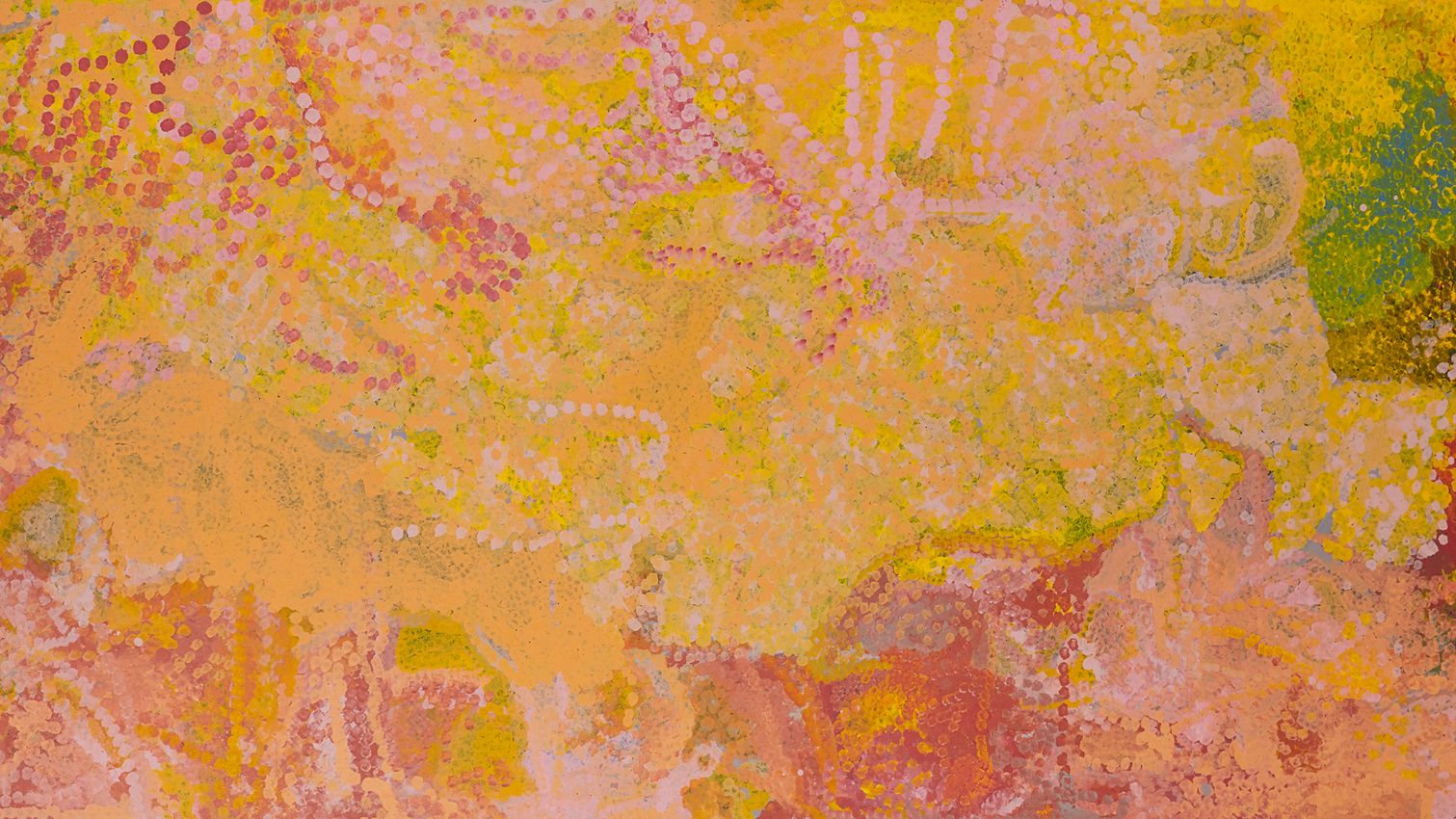
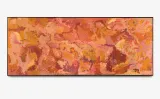
Main image: Emily Kam Kngwarray, Desert Storm (1992) (detail). Acrylic on canvas. 138.9 × 304.8 cm. © Emily Kam Kngwarray/Copyright Agency. Courtesy Pace Gallery.







A respected voice in contemporary art discourse.
Focusing on ambitious storytelling and insightful art-world commentary. Ocula Magazine publishes in-depth interviews, critical essays and timely analysis on the artists, exhibitions and ideas driving the global art world.
Learn more about Ocula Magazine
Showcasing the best of the art world.
Ocula partners with galleries from around the world to highlight their artists, artworks and exhibitions. Gallery membership is by application and invitation, with each member vetted by an independent panel.
Learn more about Ocula Membership
Specialises in the sale of major artworks.
Led by a team with deep ties to the world’s leading auction houses, galleries and collectors. Ocula’s advisory team offers bespoke services to high-net-worth clients from around the world who are looking to acquire the best of contemporary and modern art.
Learn more about our team and services