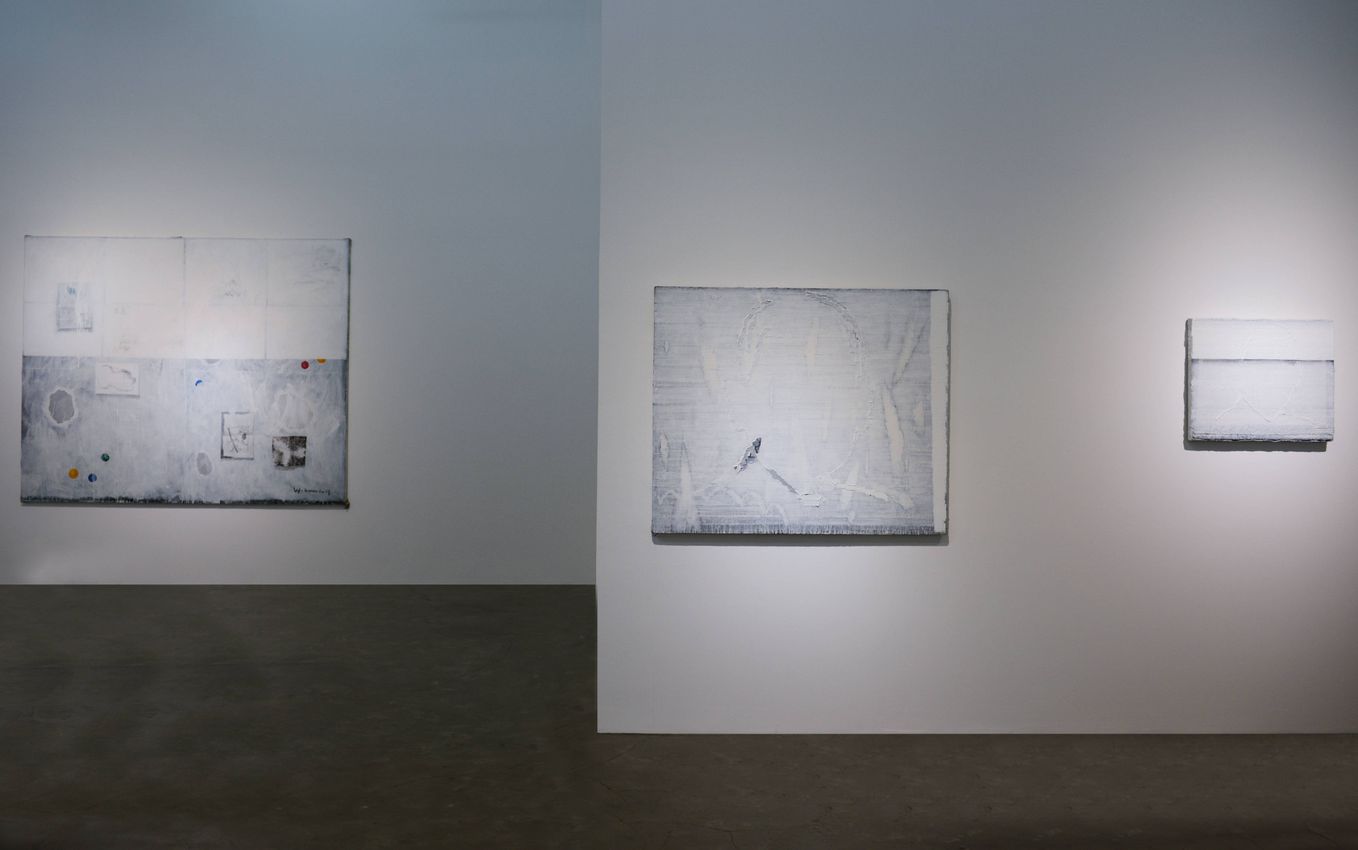
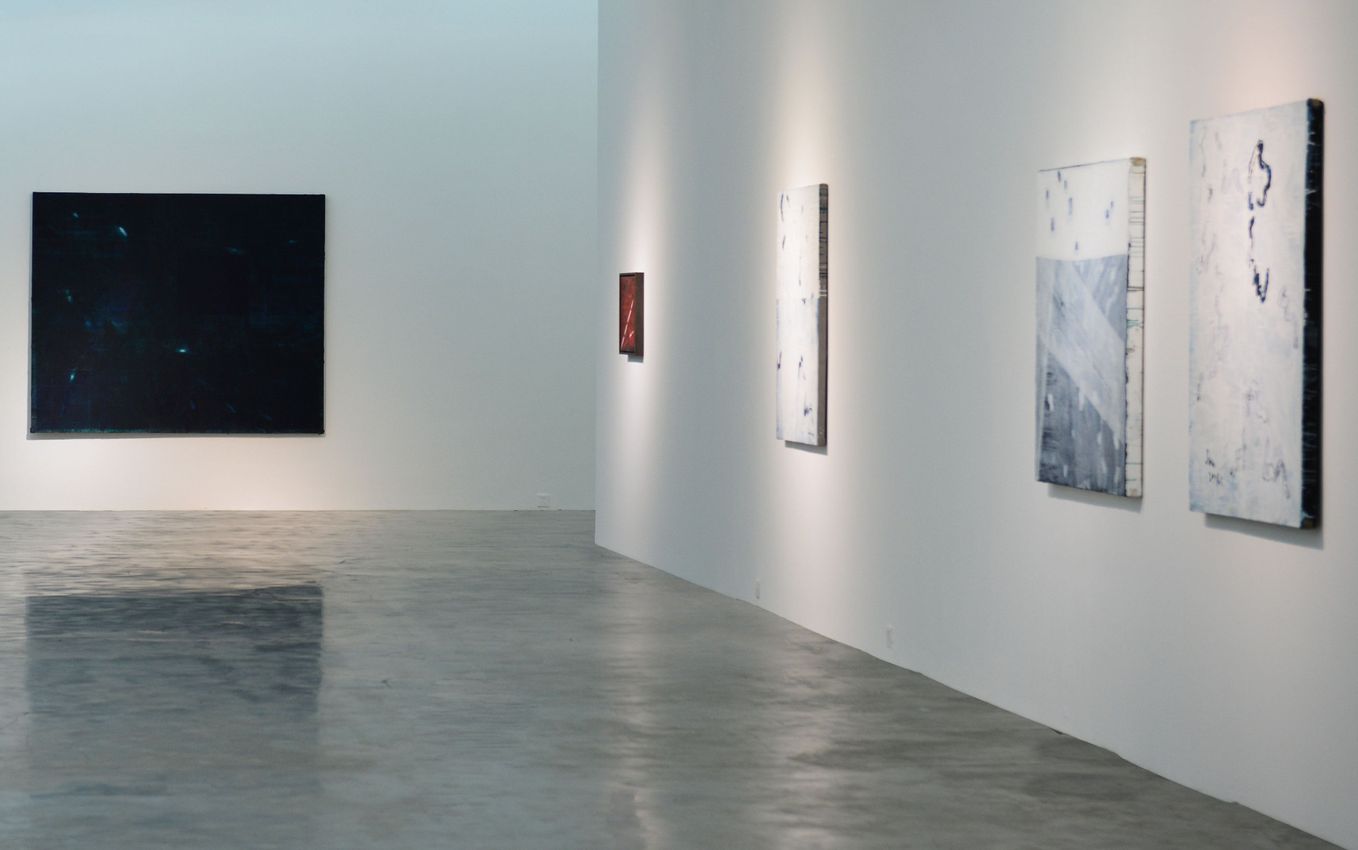
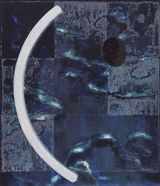
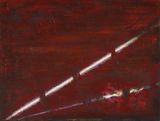
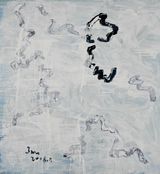
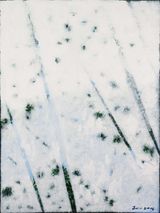
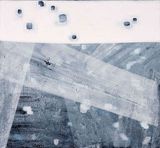
Wang Jun’s solo exhibition Flashback will be opened on June 25th at A Thousand Plateaus Art Space. Wang Jun is an excellent painting explorer among young generation artists. During the past years, he keeps doing adventuresome experiments on visual structure, through the attempt to break image structures, making totally new way to view. This exhibition will make an overall presentation on his nearly three years’ creation.
Different with other abstract paintings, every piece of Wang Jun’s new works is based on something figurative, such as a freely captured scenery picture, a personal letter, even sentences from a work report. Through long-term drawing, painting, covering, rebuilding over and over again, it finally turns into a kind of visual rhythm which is abstract but visible and pure. This rhythm comes from the process of ‘flashback’ between visual identification and destruction. The remains and ashes of a totally destroyed picture become the final image, which record the process that he seeks for image’s visual border, and finally develop into physical evidence of reserving image primitives within minimum limit.
Watching Wang Jun’s artworks, viewers’ internal imagination could be released. Some people find ease, while some people find breaking and tension. Thus, his works seem like a mirror for viewers to keep an eye on their innermost beings. In fact, this corresponds with his creating process, that through images, he experiences and observes himself. That is, the process of seeking for visual border is also the process of looking for the border of mind. Just like hunting ultimate perception, when the besieging circle keeps shrinking to a limit, another new universe suddenly been opened from the ultimate perception, and then lead to another cycle of encircling and searching. This specific methodology full of surprises also makes Wang Jun’s paintings back to caring for his innermost feelings.
Different from other abstract paintings, every piece of Wang Jun’s new works is based on something figurative, such as a freely captured scenery picture, a personal letter, even sentences from a work report. Through long-term drawing, painting, covering, rebuilding over and over again, it finally turns into a kind of visual rhythm which is abstract but visible and pure. This rhythm comes from the process of ‘flashback’ between visual identification and destruction. The remains and ashes of a totally destroyed picture become the final image, which record the process that he seeks for image’s visual border, and finally develop into physical evidence of reserving image primitives within minimum limit.

A Thousand Plateaus Art Space was founded in 2007 in Chengdu, China. It is a professional gallery committed to present and promote China’s contemporary art. Equipped with exhibition hall for artworks and collection and screening room for video data, it is mainly on researching, presenting and promoting outstanding works and experimental projects of China’s contemporary art and culture, actively carries out domestic and international cooperation projects.

A respected voice in contemporary art discourse.
Focusing on ambitious storytelling and insightful art-world commentary. Ocula Magazine publishes in-depth interviews, critical essays and timely analysis on the artists, exhibitions and ideas driving the global art world.
Learn more about Ocula Magazine
Showcasing the best of the art world.
Ocula partners with galleries from around the world to highlight their artists, artworks and exhibitions. Gallery membership is by application and invitation, with each member vetted by an independent panel.
Learn more about Ocula Membership

Specialises in the sale of major artworks.
Led by a team with deep ties to the world’s leading auction houses, galleries and collectors. Ocula’s advisory team offers bespoke services to high-net-worth clients from around the world who are looking to acquire the best of contemporary and modern art.
Learn more about our team and services