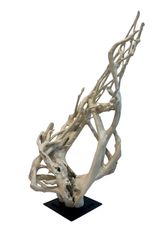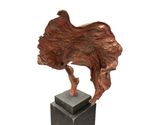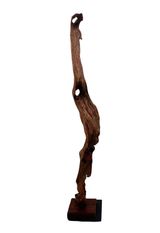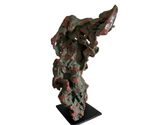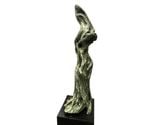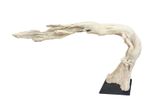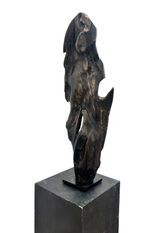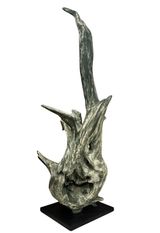
Alisan Fine Arts New York is excited to announce an exhibition of Robert Oxnam’s sculpture and photography. Featured in the 2025 Finding Qi exhibition, this body of work was curated by Amei Wallach and Vishakha Desai at the East End Arts Council. We are now honored to present it at Alisan Fine Arts; our gallery founder, Alice King, had a long-standing relationship with both the artist and his wife, Vishakha Desai. A portion of the proceeds from this exhibition will be donated to the Asia Society New York.
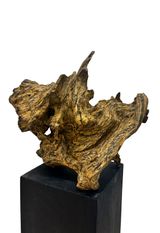
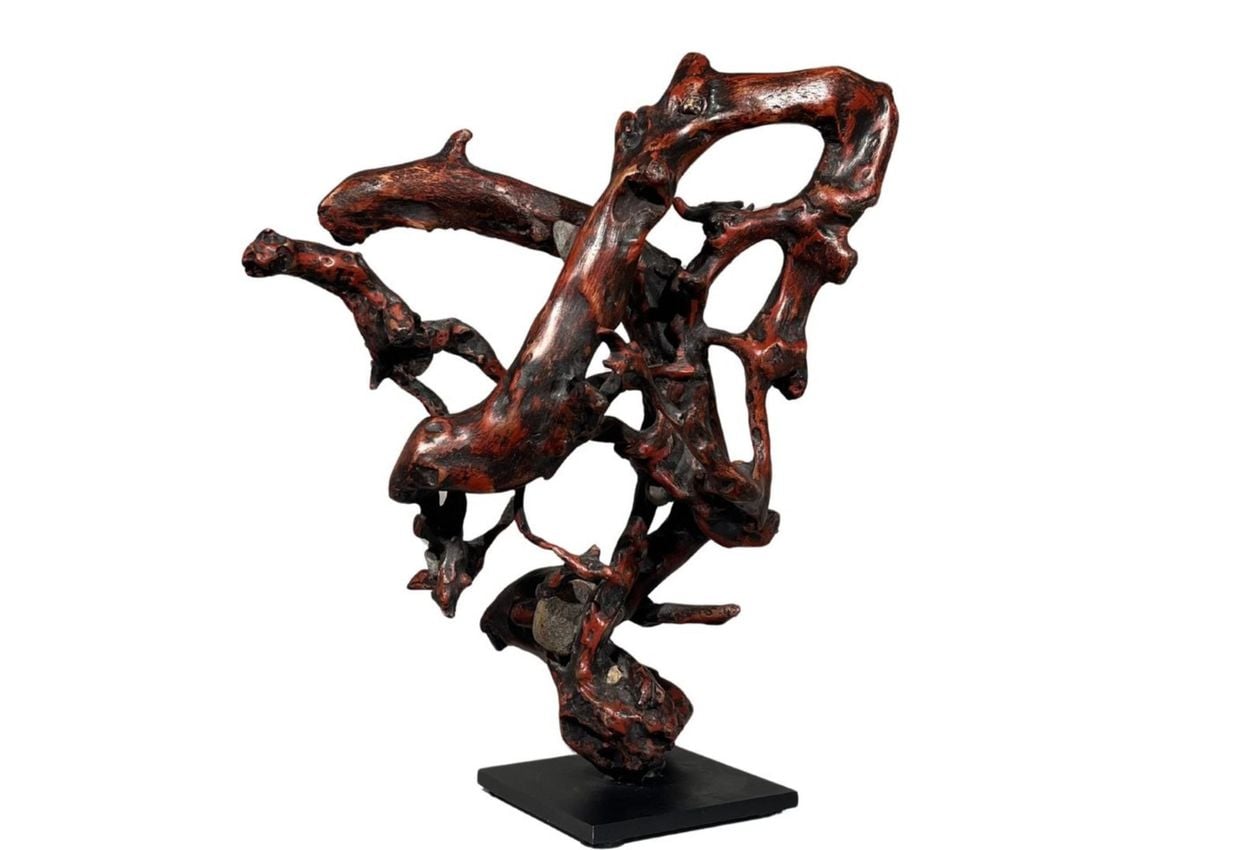
A scholar by training and a non-profit leader by profession, Robert Oxnam discovered his artistic practice almost by chance. Walking the beaches of the Long Island Sound, he noticed fragments of weathered wood—washed up on the shore by currents, half-buried under sand and wedged between rocks, carved from sea water, climate, and insects. Oxnam collected these gnarled, irregular shards, cleaning them to reveal a striking parallel. The wooden forms bore an uncanny resemblance to ancient Chinese scholars’ rocks—a millennium-long practice wherein scholar-officials collected unusual rocks for their studios. The custom symbolized an association of small fragments with the expansive, cosmic energy of nature.
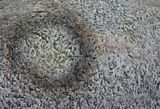
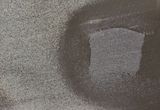
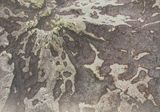
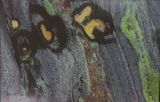
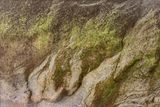
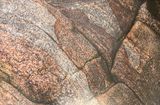
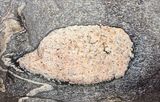
The intent, Oxnam noted, was not to replicate the scholar stones tradition, but to seek inspiration in its conceptual metaphor. He continued to explore the close relationship of fragments to the whole, investigating this intimacy in a series of macro photographs. Capturing glacial rocks and boulders on Rocky Point Beach, he became enthralled by the finer details—a circular mark on a rock, a flash of color invisible to the naked eye, an impression filled with sea water after a wave. To Oxnam, these features were simultaneously specific and vast; as if taken from “Google Earth,” they remained minute while suggesting a natural expanse.
Searching for Qi presents these two related bodies of work: Oxnam’s driftwood sculptures, for which he was best known, and his foray into photography.
From his first encounter with the storm-tossed wood, which had traveled far to reach the North Fork beaches, Oxnam endeavored to integrate three passions: the adventure of looking, the creativity of making, and a reverence for the great traditions of China. Working in tandem with natural sculpture, his transformative process released an “inner spirit”—that of the wood he collected, and that of his own interior world.
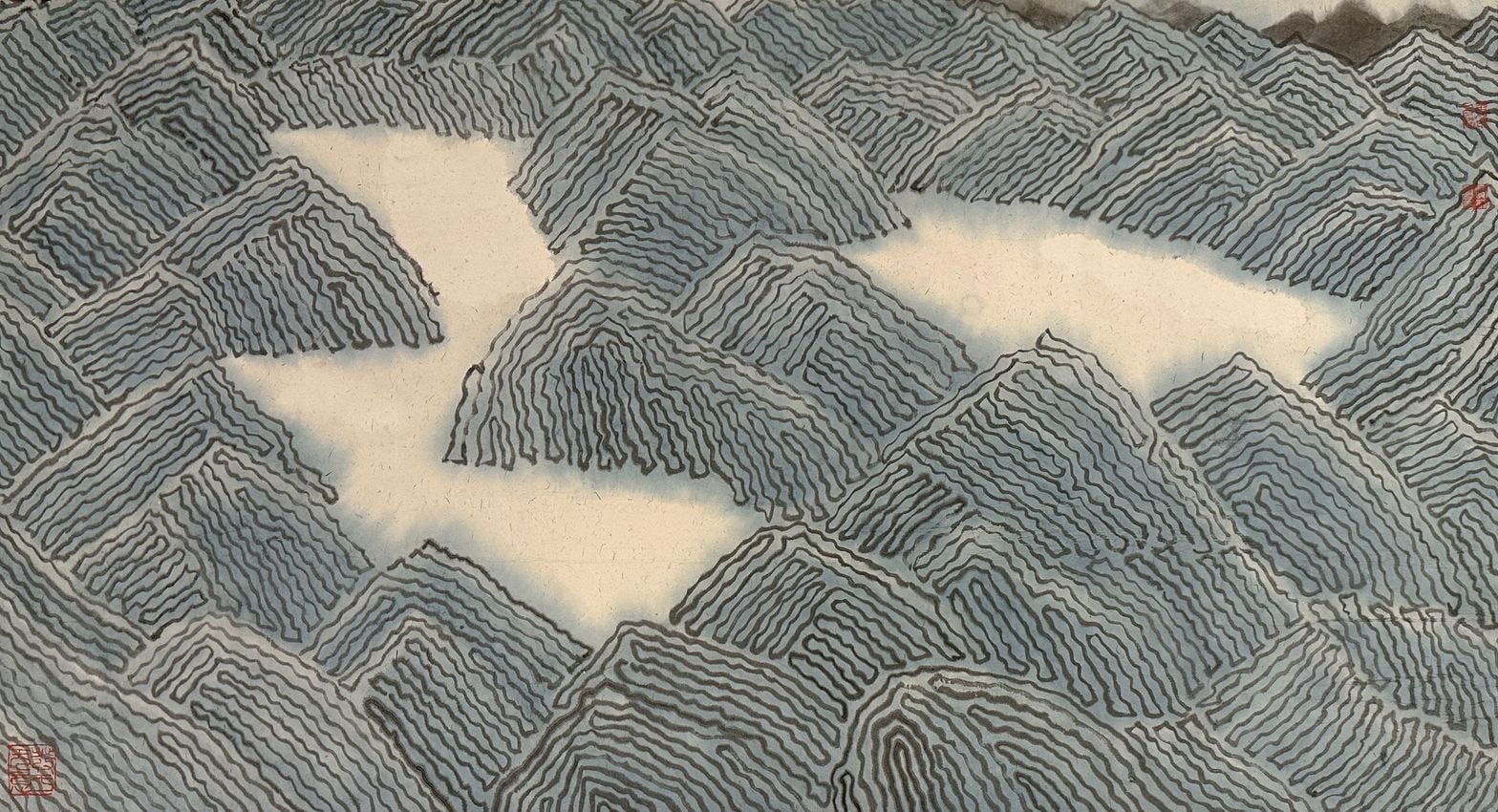
This process began, inevitably, with the search for wood. However dead, the ideal fragment would present an unusual spark in its form, a lifelike vigor. Oxnam respected the wood’s innate artistry, crafted by nature through powerful forces—surging waves, harsh winds, stony beaches, insect invasions, and burning sun. His goal was to highlight rather than overhaul, emphasizing the organic shape, movement, and texture of the pieces.
Though self-taught as an artist, Oxnam possessed a highly-trained eye, developing a distinctive approach to his interactions with wood. His techniques were established over time—he experimented with the removal of accumulated algae and slime, the extraction of pulp (which attracts bugs and other seafaring creatures), the use of milk paint to preserve the wood’s natural state, and the application of organic waxes to burnish his work. While inspired by the tactile qualities of Chinese scholars’ rocks, specifically the deep indentations, bumpy surfaces, and intriguing cavities, Oxnam did not wish to imitate the tradition. Unlike the Chinese artists who went to great lengths to manipulate the rock pieces to make them look unusual but more “natural” (similar to the Japanese tradition of making miniature bonsai trees), Oxnam aimed to preserve the wood’s inherent form, allowing its existing shapes to speak for themselves.
As Oxnam described it:
“Once I get a promising piece back to my studio, I do not think of myself as an ‘artist’ working on an ‘object,’ but rather, I experience a dynamic partnership with the driftwood. At every step of the way—finding the ideal balance point, attaching the base to the surface, gently cleaning the wood and removing the pulp, applying organic milk paints to the surface and then using fine sandpaper to reveal the underlying structure, and finally, burnishing the piece using natural waxes—I am working collaboratively with the wood. My mantra is, ‘do what Nature tells you to do, and do nothing against Nature’s intent.’”
Following his arrival to the North Fork in 2005, Oxnam was quickly compelled to document its beauty. Early photographs featured the obligatory sunset scenes, with a particular interest in those obscured by clouds, but it was not until Oxnam discovered his passion for sculpture that his subjects began to shift. Engaging the Chinese aesthetic of the microcosm, he aimed his camera at the beach rocks in North Fork, recording what he found with precise detail.
By 2014, Oxnam was particularly concerned with a single stretch: Rocky Point Beach in East Marion. Equipped with a macro lens and a digital Nikon, he frequented the site for six months, spanning various seasons and times of day. His prolonged approach exposed the minuscule—an abnormal texture, a perfect circle, a drop of water that hugged the face of a rock—all of which went unseen by beach walkers. Oxnam never Photoshopped his work; his target was to find the perfect detail in nature. He would then enlarge these idiosyncrasies, suggesting the microcosmic and revealing the remarkable that lives within the mundane.
The result is a suite of photographs, some reminiscent of subtle ink paintings by Zen masters, others suggestive of Earth images from outer space, yet all insistent that a rock is far more than an obstacle on the shore. The subtle interplay of light, water, and texture prompts us to redefine our own practice of observation, ultimately expanding our perception of the universe.
Robert Oxnam (1942–2024) was a prominent American China scholar who led the Asia Society (1981–1992) as president. He transformed the group into a major institution for U.S.-Asia relations, drawing on a deep knowledge of Chinese art, culture, and history. During beach walks near his Southold home, Oxnam was captivated by wave-worn tree branches—roots that might have washed up from anywhere in the world. He recognized in them the kind of energy and nature-sculpted history that Chinese artists have sought in scholars’ rocks for well over 1,000 years.


A respected voice in contemporary art discourse.
Focusing on ambitious storytelling and insightful art-world commentary. Ocula Magazine publishes in-depth interviews, critical essays and timely analysis on the artists, exhibitions and ideas driving the global art world.
Learn more about Ocula Magazine
Showcasing the best of the art world.
Ocula partners with galleries from around the world to highlight their artists, artworks and exhibitions. Gallery membership is by application and invitation, with each member vetted by an independent panel.
Learn more about Ocula Membership

Specialises in the sale of major artworks.
Led by a team with deep ties to the world’s leading auction houses, galleries and collectors. Ocula’s advisory team offers bespoke services to high-net-worth clients from around the world who are looking to acquire the best of contemporary and modern art.
Learn more about our team and services