Press Release

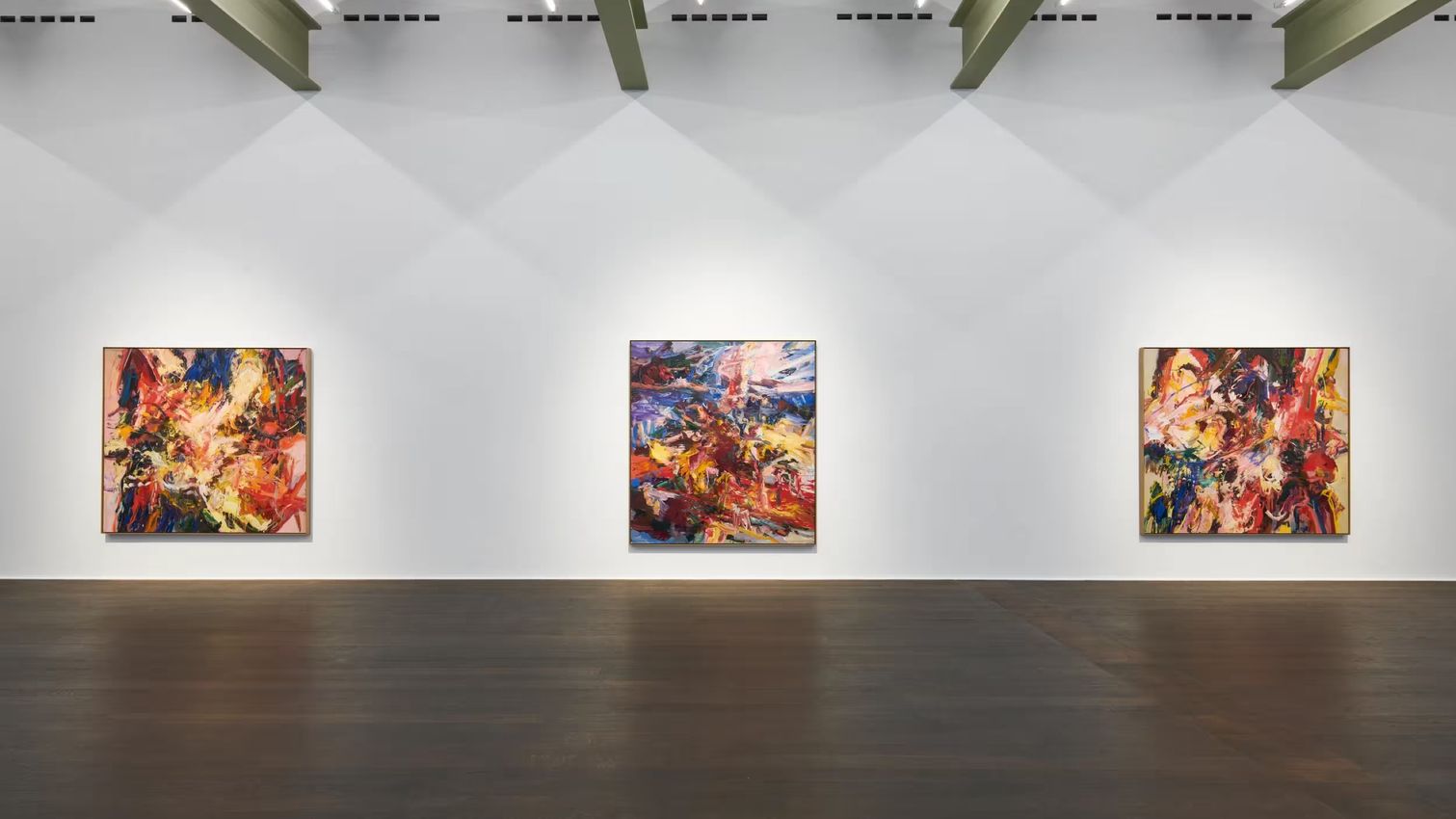
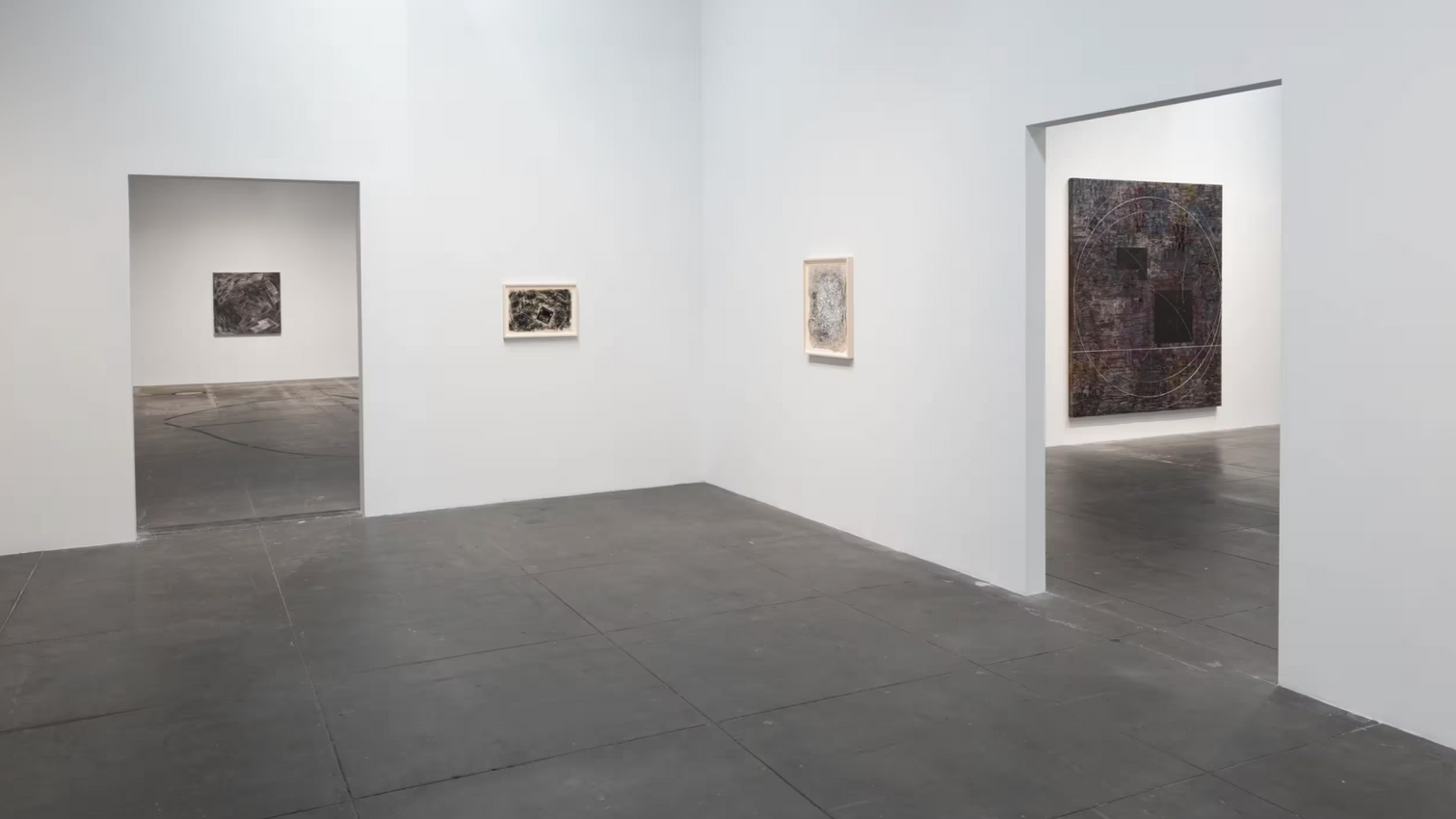
Los Angeles...Following the late artist’s critically acclaimed 2025 retrospective at The Museum of Modern Art,New York, Hauser & Wirth will present ‘The Numinous,’ an exhibition of Jack Whitten’s paintings and workson paper from the 1980s, at its Downtown Los Angeles gallery. The exhibition focuses on a pivotal and stillunder examined period in Whitten’s six-decade career, where technical innovation and spiritual inquiry cametogether with new force.

After a 1980 house fire forced an extended pause in his practice, Whitten returned with renewed urgency. Testingand pushing acrylic paint to new effects, he began to treat the medium as a dense, malleable material—somethingthat could be cut, layered and collaged like ‘a skin.’ Another turning point came in 1983, when The StudioMuseum in Harlem presented a survey of Whitten’s work from 1970 – 1980, organized by longtime supporterHenry Geldzahler. By then, the question for the artist was no longer how to build a new language of painting, butwhat that language could convey. The advanced imaging technologies of the era—cathode-ray scanning, radar,electron microscopy—offered Whitten new models for seeing and transmitting information. He began to imaginepainting as a form of transmission: a way to channel the essence of a person, spirit or place through coded,repeatable units.

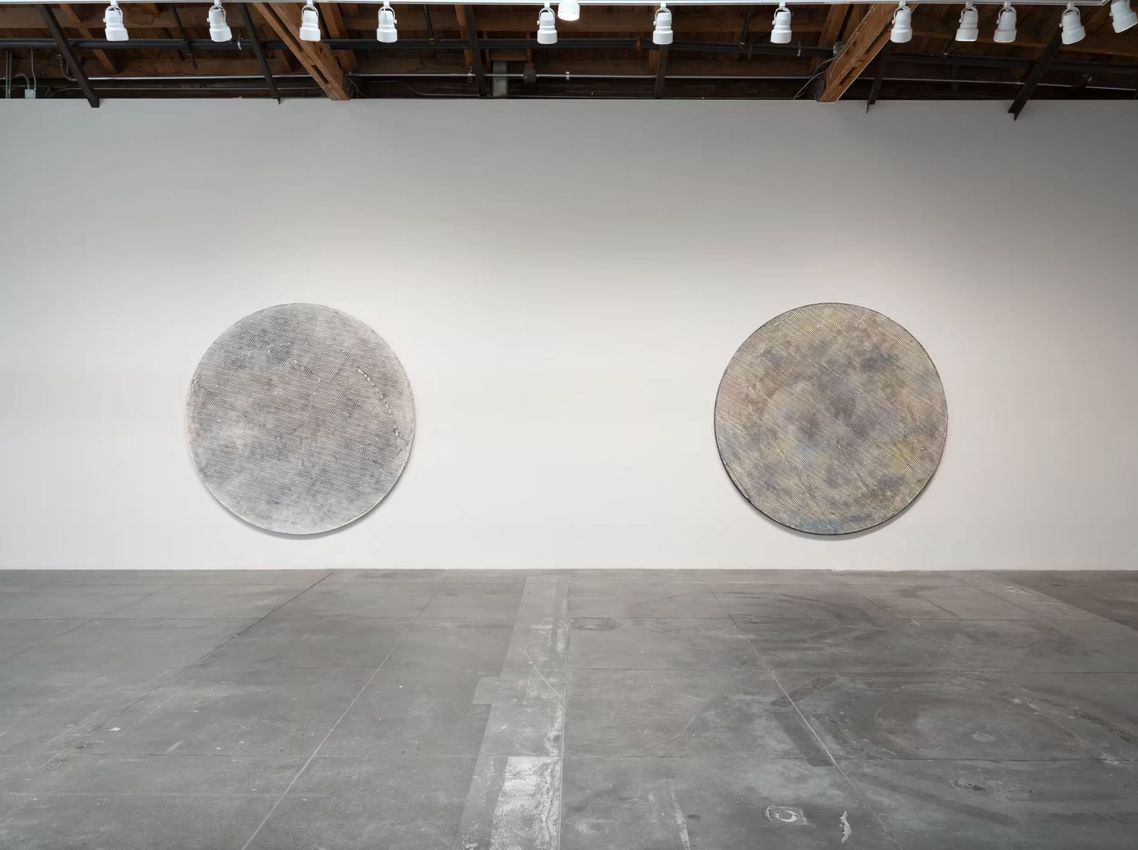
These ideas took shape in the Soulspace paintings and circular reliefs, begun in 1983. After more than a decade ofminimizing the artist’s hand and working with canvases laid flat on the studio floor, Whitten reintroduced gesturalbrushwork and returned to working upright. He used self-designed tools to incise arcs, lines and concentriccircles into thick acrylic planes. Their rough, heavily worked surfaces evoke celestial navigation while alluding tothe artist’s own constellation of friends, family and influences.

For Whitten, meaning was embedded in matter itself. He described soul as a ‘molecular’ force of thought andfeeling that preceded culture and ideology. This force was itself a source of wonder—or, as the title of theexhibition suggests, numinosity. Likening light in his paintings to John Coltrane’s use of sound, Whitten believedthat, like jazz, ‘painting elicits the presence of the soul.’ ‘Soulspace’ was therefore not only a metaphor. It was aproposition that painting could make the invisible perceptible.

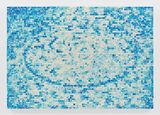
By 1985, Whitten had begun pressing wire mesh netting into wet acrylic, creating pixel-like grids of individuallycolored squares that anticipate his later tesserae works. He also began casting acrylic reliefs from urbansurfaces—manhole covers, tire treads, metal screens and city walls—to produce the Site paintings. Rather thandepicting a specific place, these works register the city’s physical imprint, creating a topographical space thatexists between representation and abstraction. For Whitten, ‘Site’ referred less to a location than to a state ofmind. He connected it to an atopic condition, from the Greek meaning ‘without place,’ that reflected broaderquestions of Black identity and belonging beyond fixed geography.

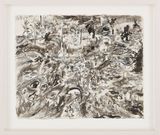
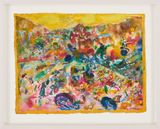
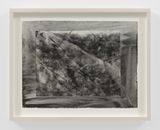
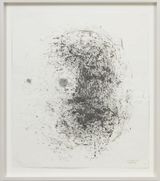
On view in the exhibition, more than a dozen Site works on paper, created through a range of experimentalprocesses and material interventions, evidence the expansion of Whitten’s inquiry into surface and index. In suchworks as ‘Site #3’ and ‘Site #4,’ the direct transfer of texture onto delicate Japanese paper left little room forrevision, making chance and irreversibility part of the act of making.

By the end of the decade, Whitten turned these material and spiritual concerns toward commemoration. Hebegan what would become the most sustained series of his career: monumental tributes to luminaries of Blackcultural and intellectual life. Works such as ‘Spiral: A Dedication to R. Bearden’ (1988) exemplify this impulse andforeshadow his landmark Black Monolith series, which translates remembrance into layered reliefs and swirlingtopographies.

At a moment when critics declared the death of painting, Whitten expanded what the medium could do. ‘TheNuminous’ brings renewed focus to the extraordinary works he made in the 1980s, repositioning this period as acrucial chapter in his practice––one in which his investigations into material, spirit and abstraction coalesced intoone of the most original bodies of work in postwar American art.

Courtesy Hauser & Wirth.

Read More

Installation Views

About the Artist

Born in Bessemer, Alabama in 1939, Jack Whitten is celebrated for his innovative processes of applying paint to the surface of his canvases and transfiguring their material terrains. Although Whitten initially aligned with the New York circle of abstract expressionists active in the 1960s, his work gradually distanced from the movement’s aesthetic philosophy and formal concerns, focusing more intensely on the experimental aspects of process and technique that came to define his practice.

View Artist Profile

Also Exhibiting at Hauser & Wirth

About the Gallery

Hauser & Wirth was founded in 1992 in Zurich by Iwan Wirth, Manuela Wirth and Ursula Hauser, who were joined in 2000 by Partner and Vice President Marc Payot. A family business with a global outlook, Hauser & Wirth has expanded over the past 26 years to include outposts in Hong Kong, London, New York, Los Angeles, Somerset and Gstaad. The gallery represents over 70 artists and estates who have been instrumental in shaping its identity over the past quarter century, and who are the inspiration for Hauser & Wirth’s diverse range of activities that engage with art, education, conservation and sustainability.

View Gallery Profile
Address
901 East 3rd Street
Los Angeles
United States
Opening Hours
Tuesday – Sunday
11am – 6pm
(1)
Los Angeles 901 East 3rd Street
Hauser & Wirth
901 East 3rd Street, Los Angeles, United States
+1 213 943 1620
http://www.hauserwirth.com

Opening hours
Tuesday – Sunday
11am – 6pm
The art world in focus