What does César’s work say to us today?
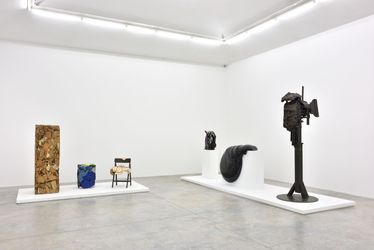
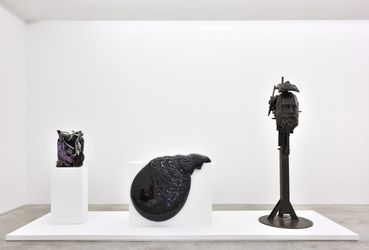
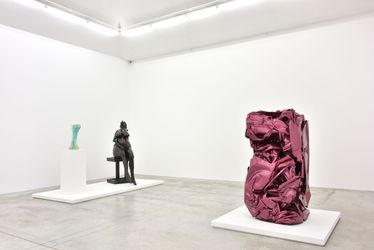
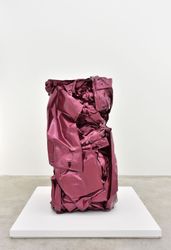
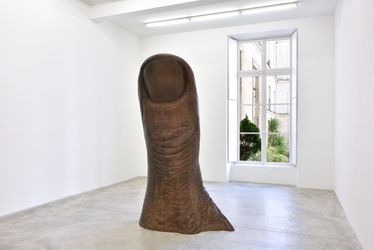
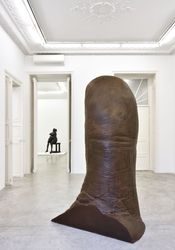
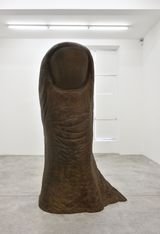
A master of technique and form, the leading sculptor of the Nouveau réalisme movement of the 1960s developed a true dialectic of gesture and material that revitalised sculpture in the 20th century: the first assemblages of soldered iron, compressions of automobile scrap metal and all kinds of collected materials, polyurethane expansions, plaster and resin impressions and moulds, sculpted bread dough, bronze sculptures, and more.
The performative and participatory dimension of César’s public expansions and his participation in the action-spectacles of the Nouveaux réalistes, a possible prologue for relational aesthetics, have inevitably faded with time. His monumental oeuvre and his many public commissions—gleaming expansions, vibrant, painted compressions—could place him among the joyful or ironic celebration of society of Les Trente Glorieuses and industrial modernity—a radiant César. His bronzes and his late self-portraits dialogue with the traditions of sculpture and its masters, especially Picasso, and suggest melancholy, or even a certain morbidity that resonates with his early practice of collecting and recycling industrial materials and garbage—a gloomier, melancholy César. His formal and playful appropriation of modern urban reality was related on the one hand to the theories of Pierre Restany, and to the recycled, petrified object that critic Alain Jouffroy called a ‘mental Pompei’ on the other.
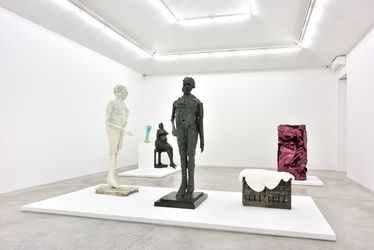
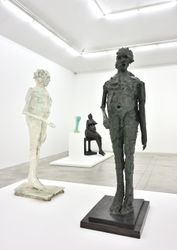
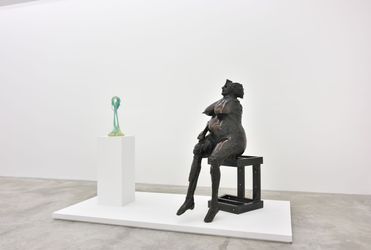
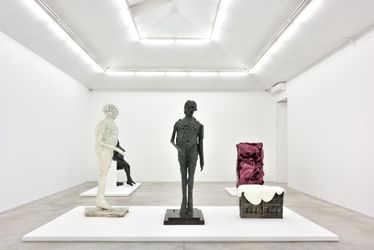
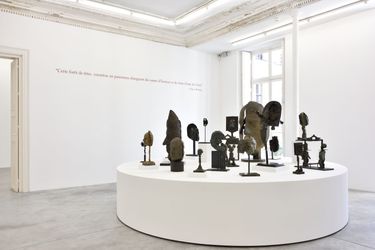
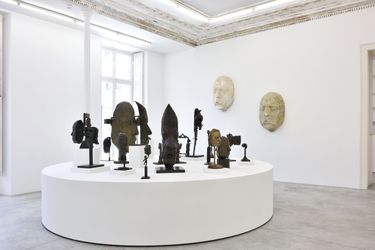
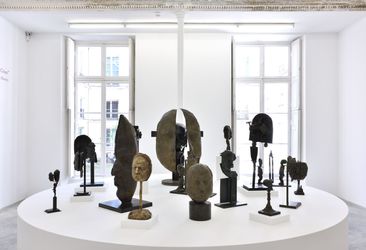
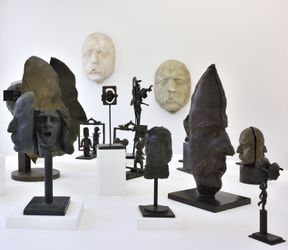
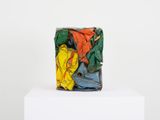
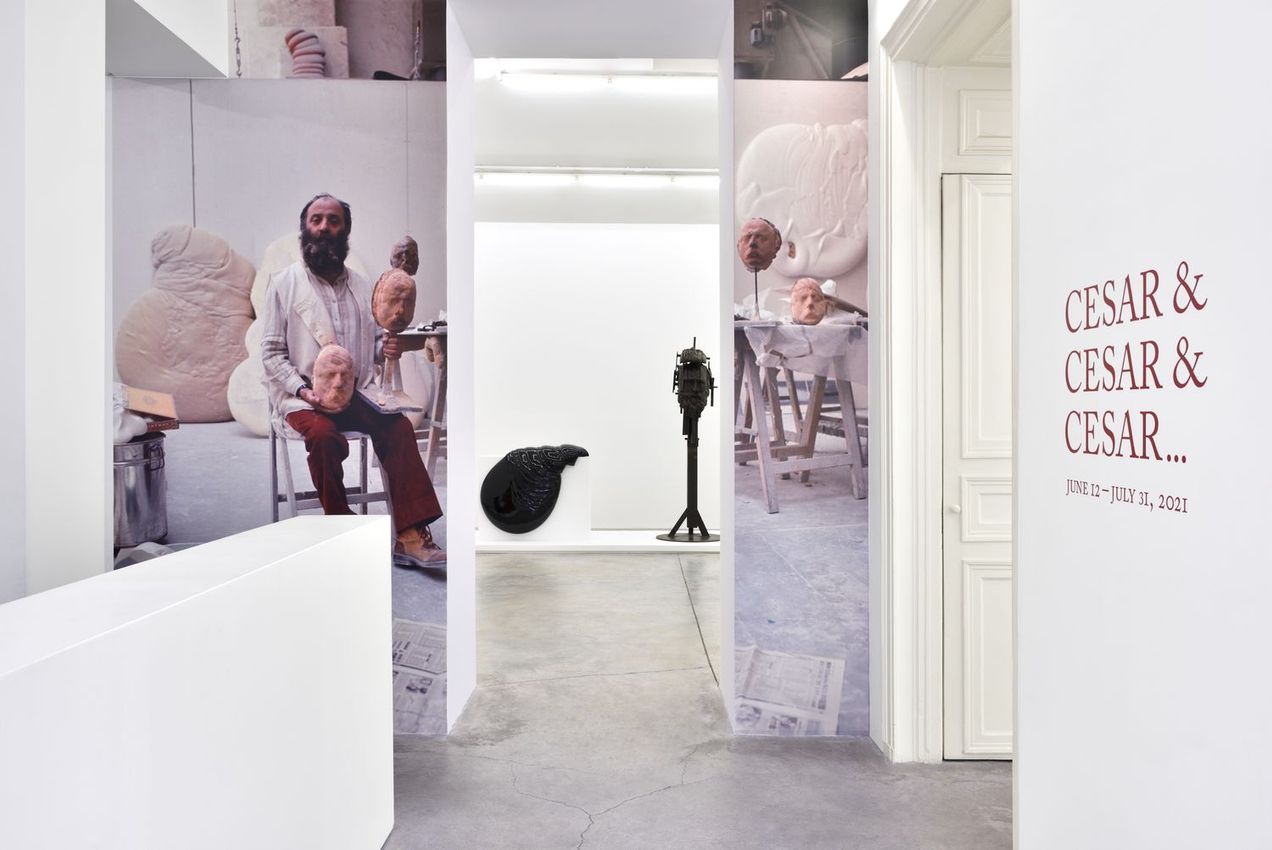
Regarding his cardboard compressions, César considered his sculpture a poetic act: ‘From industrial waste, I moved to urban waste. (…) These compressions are kind of everyday poetry. The little things of life.…’ This turn towards a humanism of the city led him to revisit his old effigies of welded iron, which were made of a myriad of collected materials—nails, screws, nuts and bolts—with bronze castings, sometimes involving welding. With his female figures, such as the emblematic Victoire de Villetaneuse (1965), this figure from a factory in the northern suburbs of Paris joined the age-old Venus figurines of the Upper Paleolithic. His late self-portraits appear as examples of Vanitas, commentaries on the art of sculpture, from his bread faces, a shamanic invitation to be eaten and a distant reminder of his participation in Spoerri’s Eat Art Gallery in Düsseldorf, to arrangements of masks—evoking Picasso’s African masks and baroque memento mori.
César constructed an homage to Picasso, who was also a genius inventor of modern sculpture. Just as the painter and sculptor passionately pursued his dream of a Monument à Apollinaire, César created Le Centaure (1986), one of his most complex and self-reflexive sculptures. The hybrid, mythological beast has the head of the artist with a mask with Picasso’s features above it—the dual identity of modern sculpture that looks toward the past, while aiming toward the future, like Benjamin’s angel.
As for his gigantic works such as 520 Tonnes, the mountain of compressions shown at the Venice Biennale in 1995, don’t they have a new resonance now, in the 21st century, when we’re fully aware of belonging to the Anthropocene epoch?
Text by Cécile Debray, Director of the Musée de l’Orangerie, Paris and former Chief Curator of Modern Art collections at the Centre Pompidou. Courtesy Almine Rech.


César (César Baldaccini, 1921–1998) was born to Italian parents in the Belle de Mai quarter of Marseille, France. At the time, this area of the Mediterranean port city was chaotic and economically depressed, teeming with waves of immigrant populations and the detritus of their lives. The cross-section of excess and deprivation that Marseille represented would serve as a significant source of César’s artistic endeavours.


Almine Rech opened its doors on April 1st, 1997 in the 13th arrondissement in Paris. The gallery was founded on an axis of California Minimal, Perceptual art and Conceptual art, representing artists such as James Turrell, John McCracken and Joseph Kosuth.

A respected voice in contemporary art discourse.
Focusing on ambitious storytelling and insightful art-world commentary. Ocula Magazine publishes in-depth interviews, critical essays and timely analysis on the artists, exhibitions and ideas driving the global art world.
Learn more about Ocula Magazine
Showcasing the best of the art world.
Ocula partners with galleries from around the world to highlight their artists, artworks and exhibitions. Gallery membership is by application and invitation, with each member vetted by an independent panel.
Learn more about Ocula Membership

Specialises in the sale of major artworks.
Led by a team with deep ties to the world’s leading auction houses, galleries and collectors. Ocula’s advisory team offers bespoke services to high-net-worth clients from around the world who are looking to acquire the best of contemporary and modern art.
Learn more about our team and services