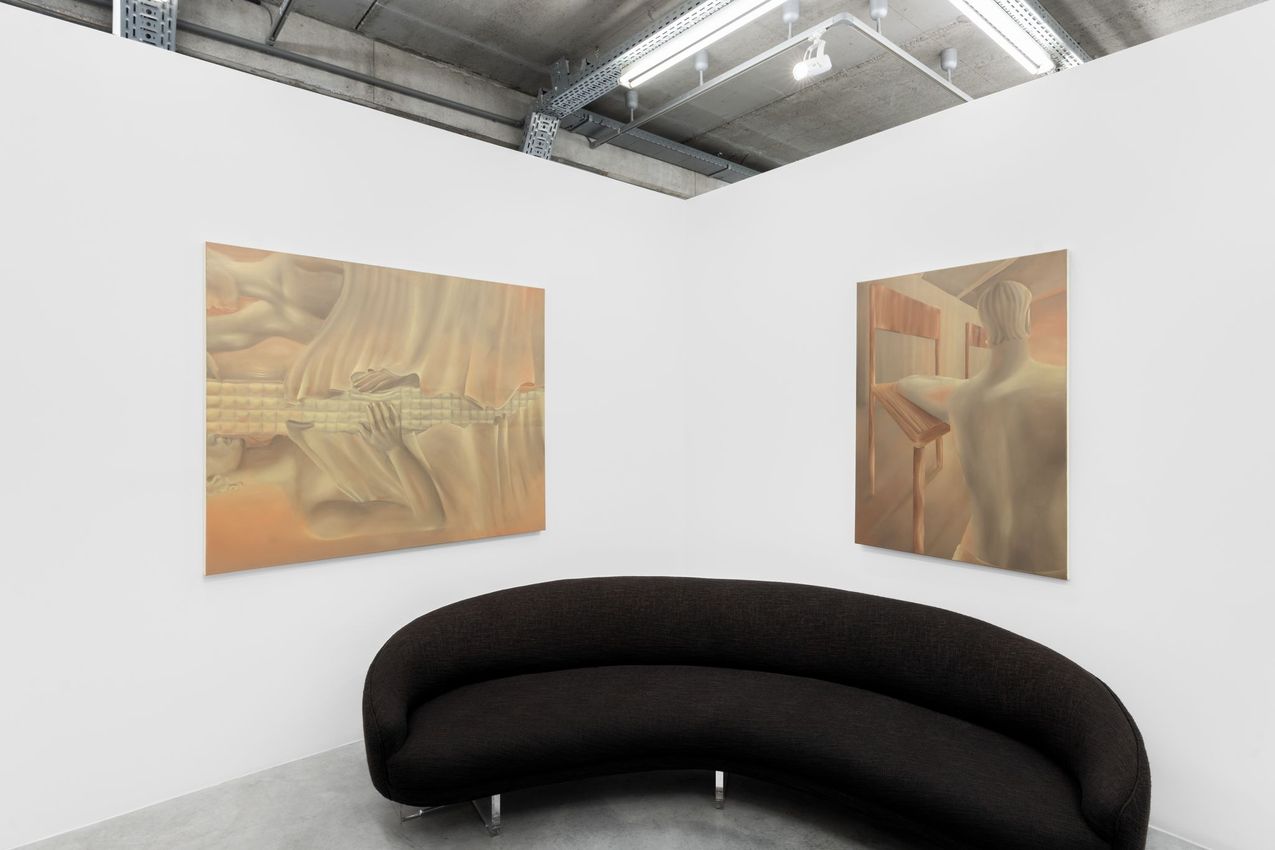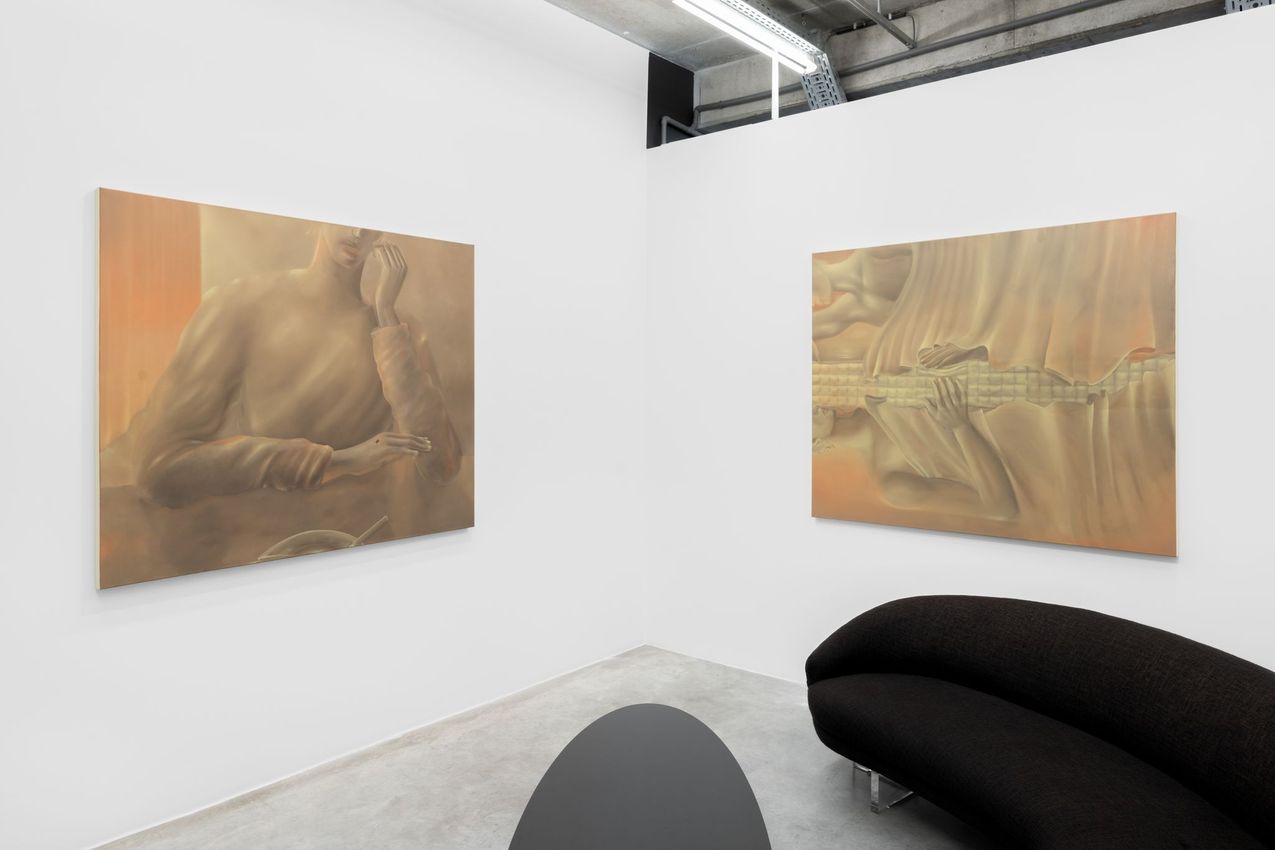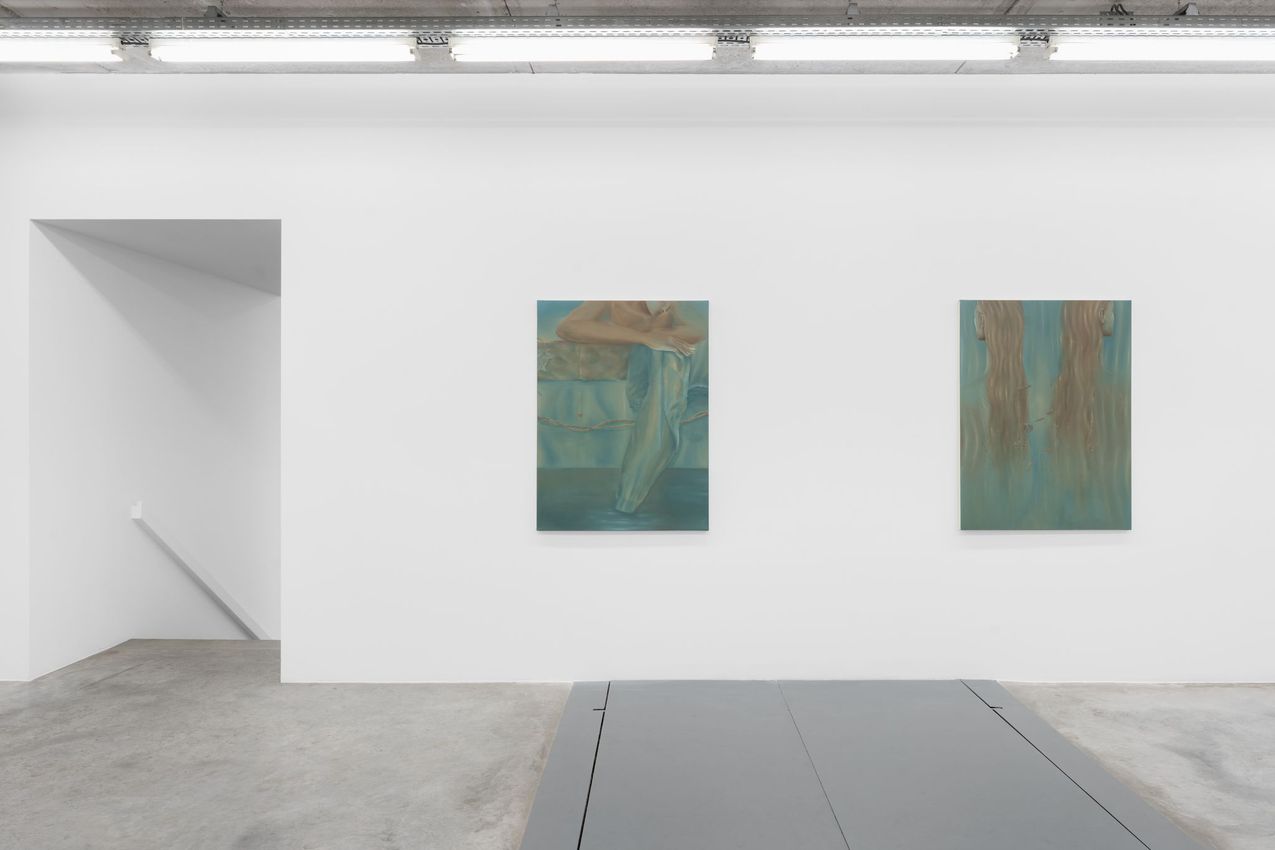
Almine Rech Brussels is pleased to present Corridors, Fabien Adèle’s first soloexhibition with the gallery.
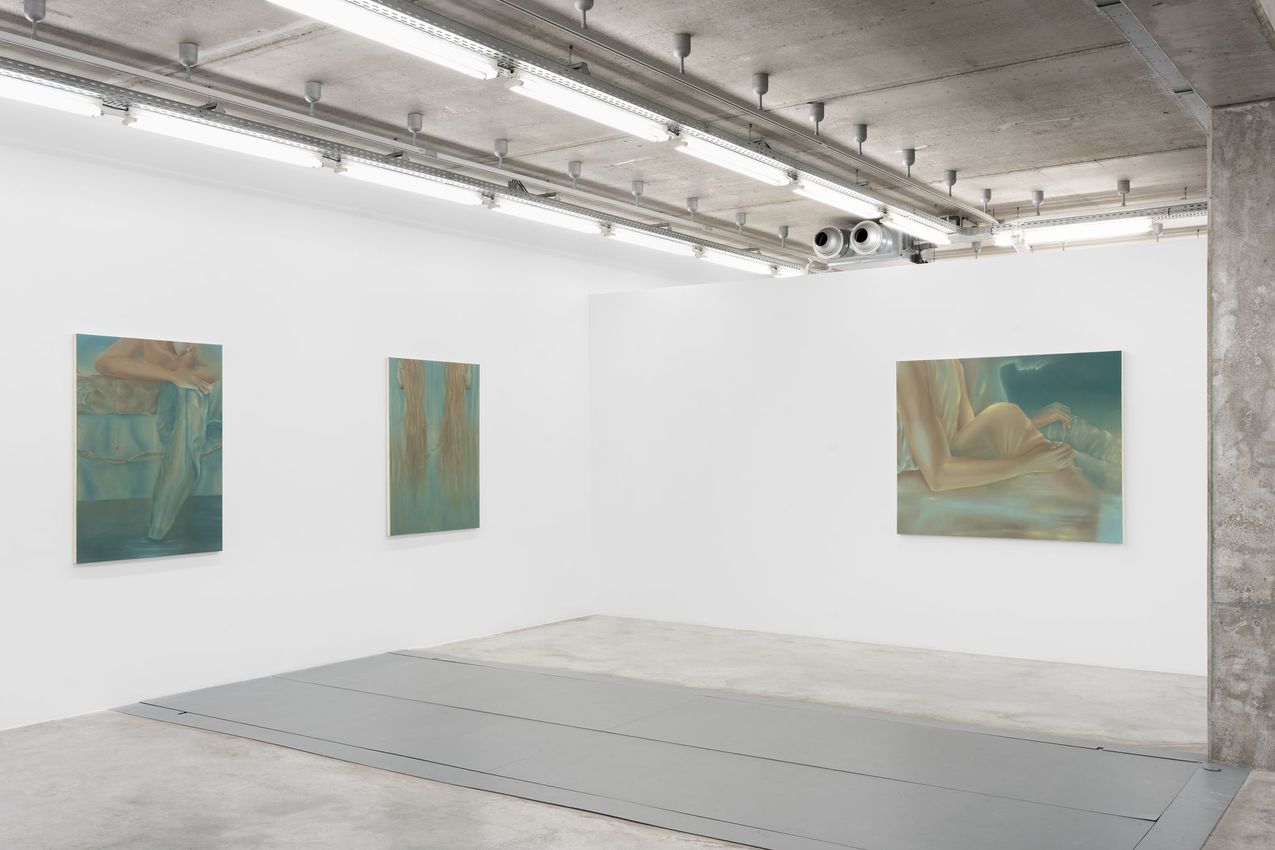
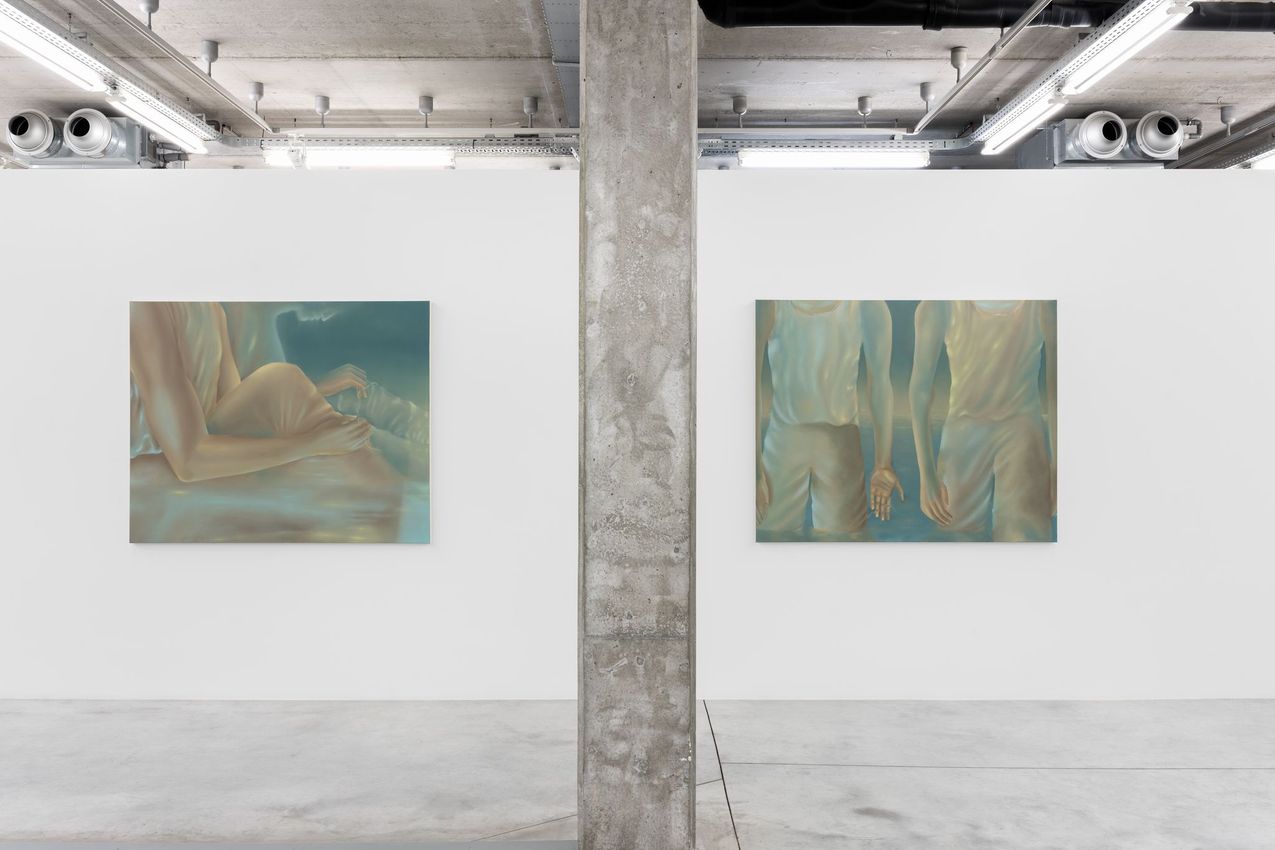
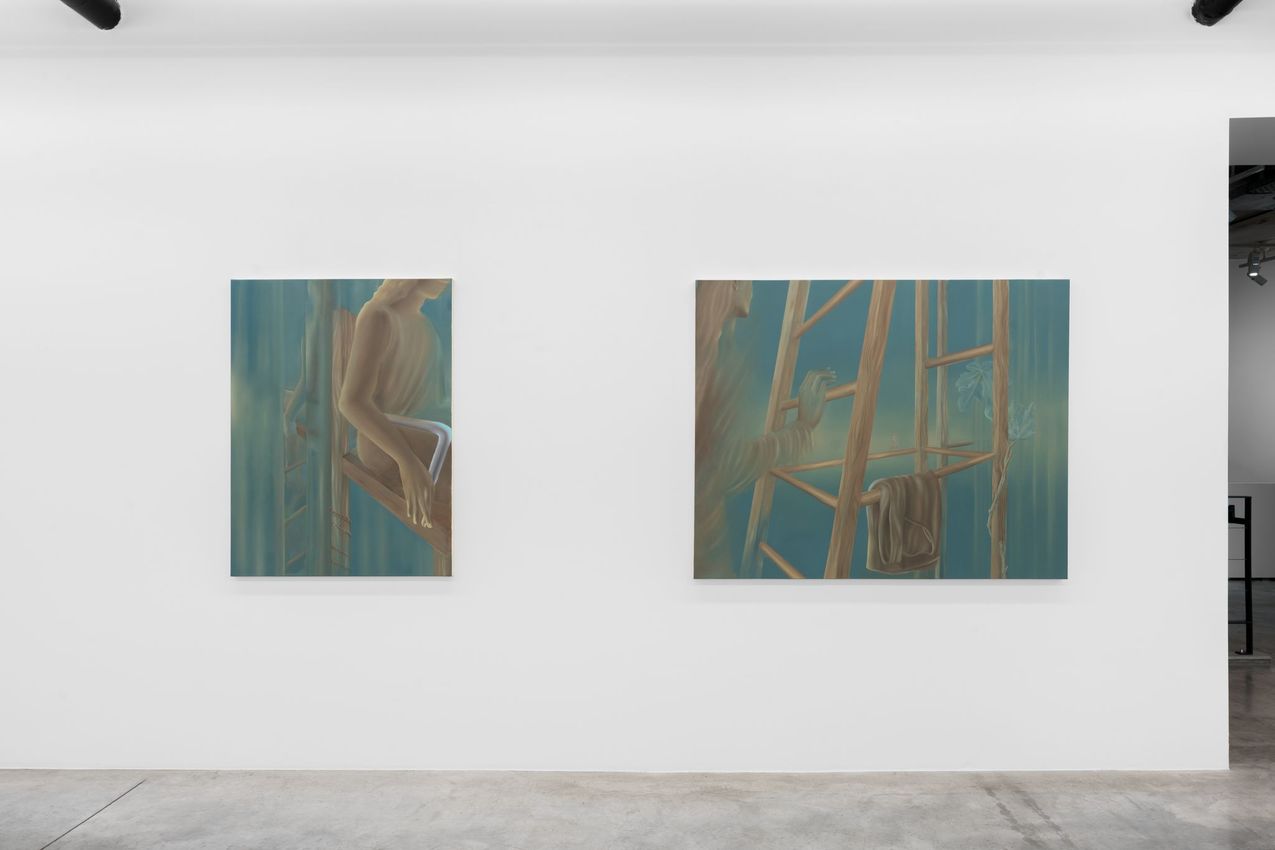
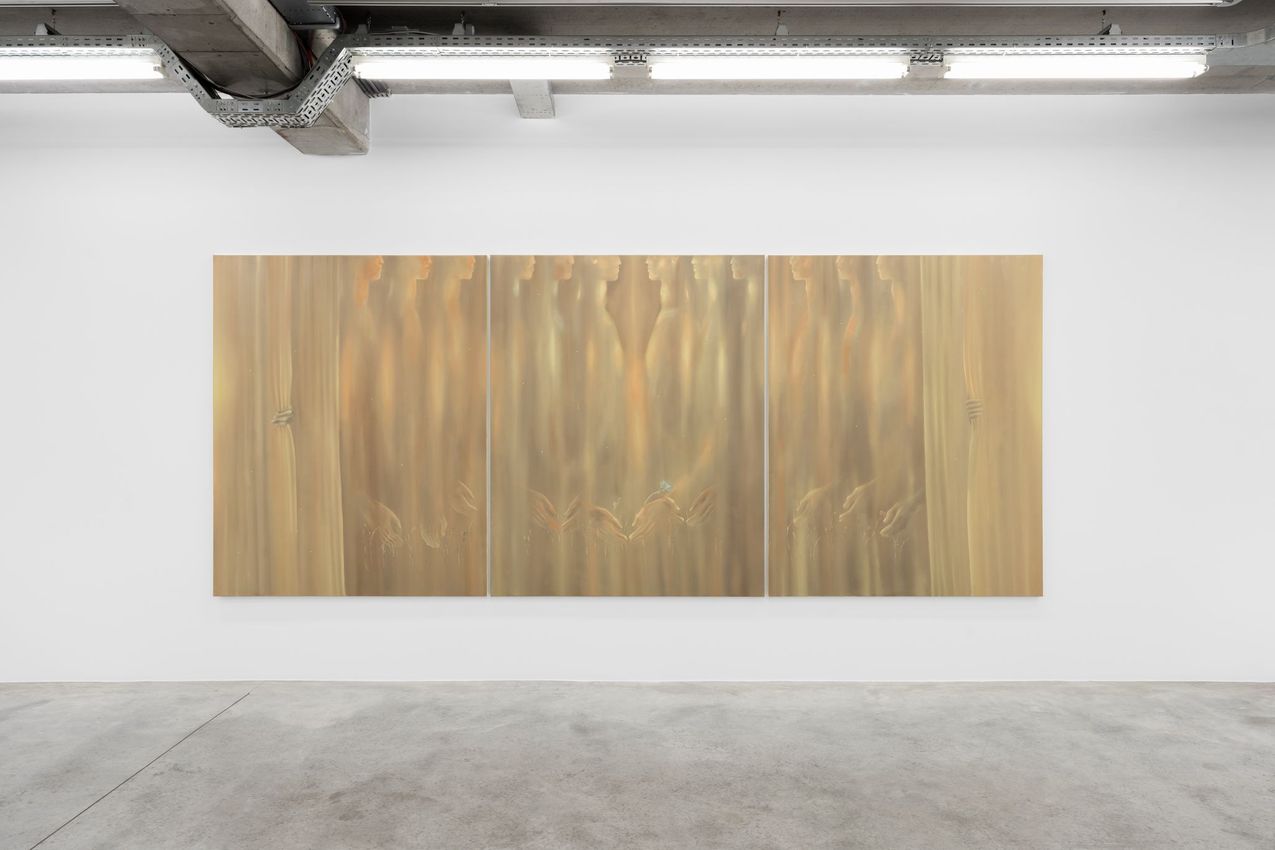
In his East-Paris studio, Fabien Adèle chose to use a narrowed palette of colours for thisnew set of paintings. Their complementary shades of warm browns ranging from orangeochre to burnt sienna, along with lighter, more intense blues, underline the space where histwelve oils on canvas are displayed.
The painting of the young French artist (born in 1993), which has only been shown on rareoccasions, is populated by singular protagonists. His human figures, with their stoic andfrozen expressions reminiscent of antique statues, are immersed in interiors or landscapesthat are both ethereal and bewitchingly luminous. Take the woman seated on a chair, herhead slightly tilted forward, or the two female busts with endless hair, bathed in the aquaticelement and staring into the distance to bluish halos suggesting the horizon at sea. Orperhaps the man leaning on a table, his hand barely resting on his cheek, his mouth halfopen, his garment fading into an incandescent sky. Seen from the front or back, thesebeings and their nebulous surroundings come together in paintings of the psyche andinteriority that appear keen to suspend the passing of time.
The scenes that Fabien Adèle deploys straddle a line that embraces the symbolism ofFernand Khnopff, surrealism of De Chirico, Delvaux or Magritte, and Florentinemannerism of Pontormo, whom the artist admires for his chromatic anachronisms,outstretched necks and sexless saints seemingly contradicting the rules of the Renaissance.And although they do indeed weave ramifications between reality and dreams, theirconnection with surrealism is probably not as crucial as it seems. They don’t quite reach theLynchian worldview’s dramatic tension either, although undeniably resonating with thisline from a dream of Gordon Cole (the FBI agent played by David Lynch himself) in season3 of Twin Peaks: ‘We are like the dreamer who dreams, and then lives inside the dream’. It isprobably more in the magical realism of Americans Paul Cadmus – for his massive malebodies, especially – or George Tooker – for his hieratic, dreamlike genre paintings – thatone could find some of the sources that inspired Fabien Adèle’s work.
Even more than in previous paintings, the characters are shrouded with a ghostly presence,further highlighted by the radiant shimmer passing through their clothing and use ofoff-screen to depict the bodies, partly concealing faces and suppressing their gaze. Despitetheir spectral dimension, they display an evident carnal quality expressed in the delicatelypainted hands, gestures, or treatment of the drapery.
To construct his metaphysical cosmos - which borrows equally from philosophicalmysticism and a geography of the imagination - Fabien Adèle uses mental collages based onpreliminary sketches or his own memories of landscapes, people he has met or moments hehas experienced. In these highly atmospheric paintings, suffused with sky and water, theplant world is merely evoked in a few fleshy leaves, or a bramble crawling over the textured,crafted wood of furniture. Beyond mere ornament, it serves as a metaphor for theproliferation of thought and deployment of dreams.
With its penchant for the timeless, the supernatural, and a form of spirituality rooted in thesensible, Fabien Adèle’s painting is steeped in introspection and wisdom, melancholy andintimacy. With the motif of the double, otherness is also one of its key hallmarks, as are themany plays of mirrors and reflections: the two women, twins side by side, symmetricallygazing sideways, or the seated character, whose double emerges through diaphanous veils.The intensity of Fabien Adèle’s painting arises from a peculiar alchemy, endowed with theability to bring together the sensible and the metaphysical, thus inviting the viewer to applytheir own experience to the irrational and dreamlike outlines of his take on realism.
Press release courtesy Almine Rech. Text: Charles Barachon.


A respected voice in contemporary art discourse.
Focusing on ambitious storytelling and insightful art-world commentary. Ocula Magazine publishes in-depth interviews, critical essays and timely analysis on the artists, exhibitions and ideas driving the global art world.
Learn more about Ocula Magazine
Showcasing the best of the art world.
Ocula partners with galleries from around the world to highlight their artists, artworks and exhibitions. Gallery membership is by application and invitation, with each member vetted by an independent panel.
Learn more about Ocula Membership

Specialises in the sale of major artworks.
Led by a team with deep ties to the world’s leading auction houses, galleries and collectors. Ocula’s advisory team offers bespoke services to high-net-worth clients from around the world who are looking to acquire the best of contemporary and modern art.
Learn more about our team and services