



Press Release

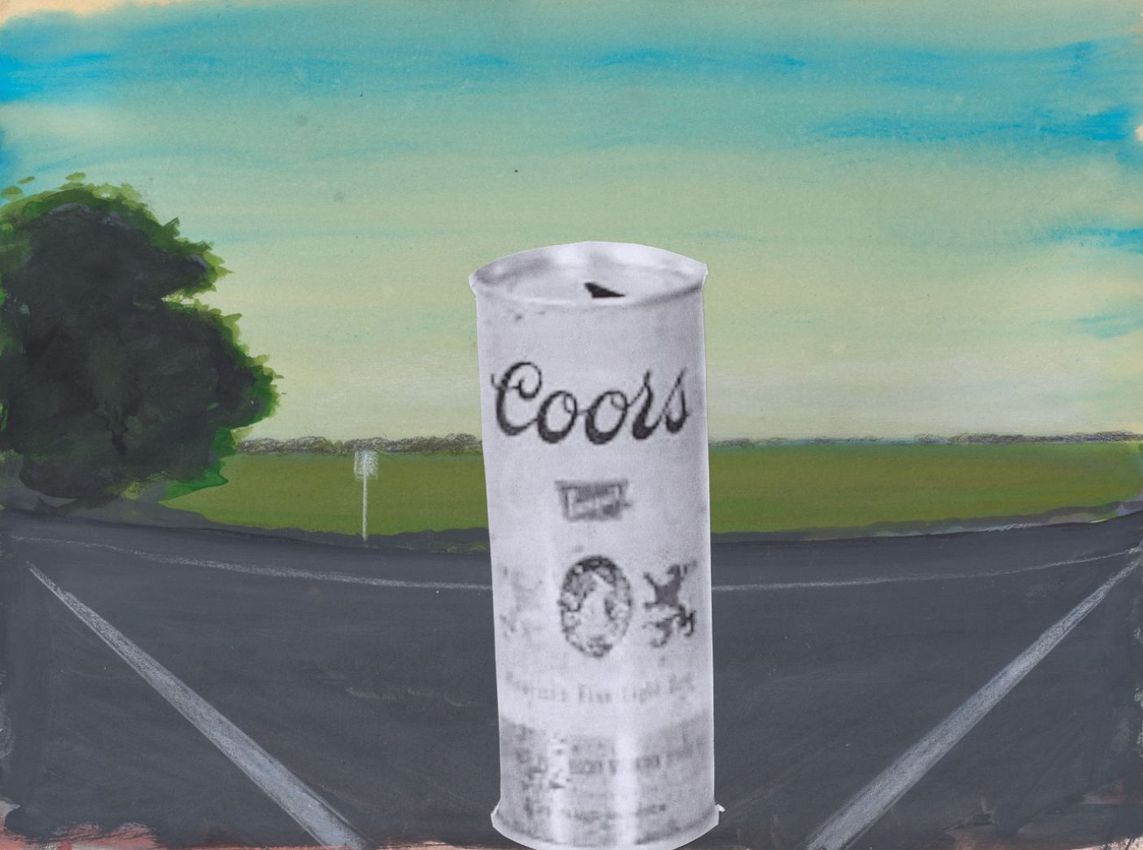
A Joe Andoe painting sounds like a low vibrational hum, like static between radio stations, the soft drone of electromagnetic waves traveling through ink black space before snapping into focus. Andoe’s pictures are him tuning into a station, which can be a moment in time, or a feeling. They can look like real places or recognisable things, Andoe’s pictures, spectral stags and chickens, ghostly in their stark white whiteness; a pond in cinematic panorama (what Joe calls his Hillbilly Elysian Field, or an afterlife fishing hole), but they’re really portals, the way all sounds are. Tune the dial and the frequency changes.

Andoe often locates his frequency in the shapes of his Tulsa youth. For a while he didn’t like to talk about where his imagery came from, not from embarrassment or secrecy or posturing but because he didn’t think it was important. Like the lights and cables around a movie set: ‘you pan away from the set, it kills the magic.’ But people like knowing these things. His subjects aren’t riddles. He thinks of them as colours that he dips into.

Maybe that moment in your life feels true because your frontal cortex is still opened, like a record skipping. He says his record skipped when he was 18, stoned, sitting in his car on a dirt road at the edge of town, which is when he realised how beautiful everything is. There’s no irony in this realisation, which is what his paintings are like, too: dry, straight on.This is an abbreviated presentation: four recent paintings. When you put on a show this succinct, something funny happens: the power of each painting expands. There’s an alchemy of effort. Or as Joe says: you get your hit.

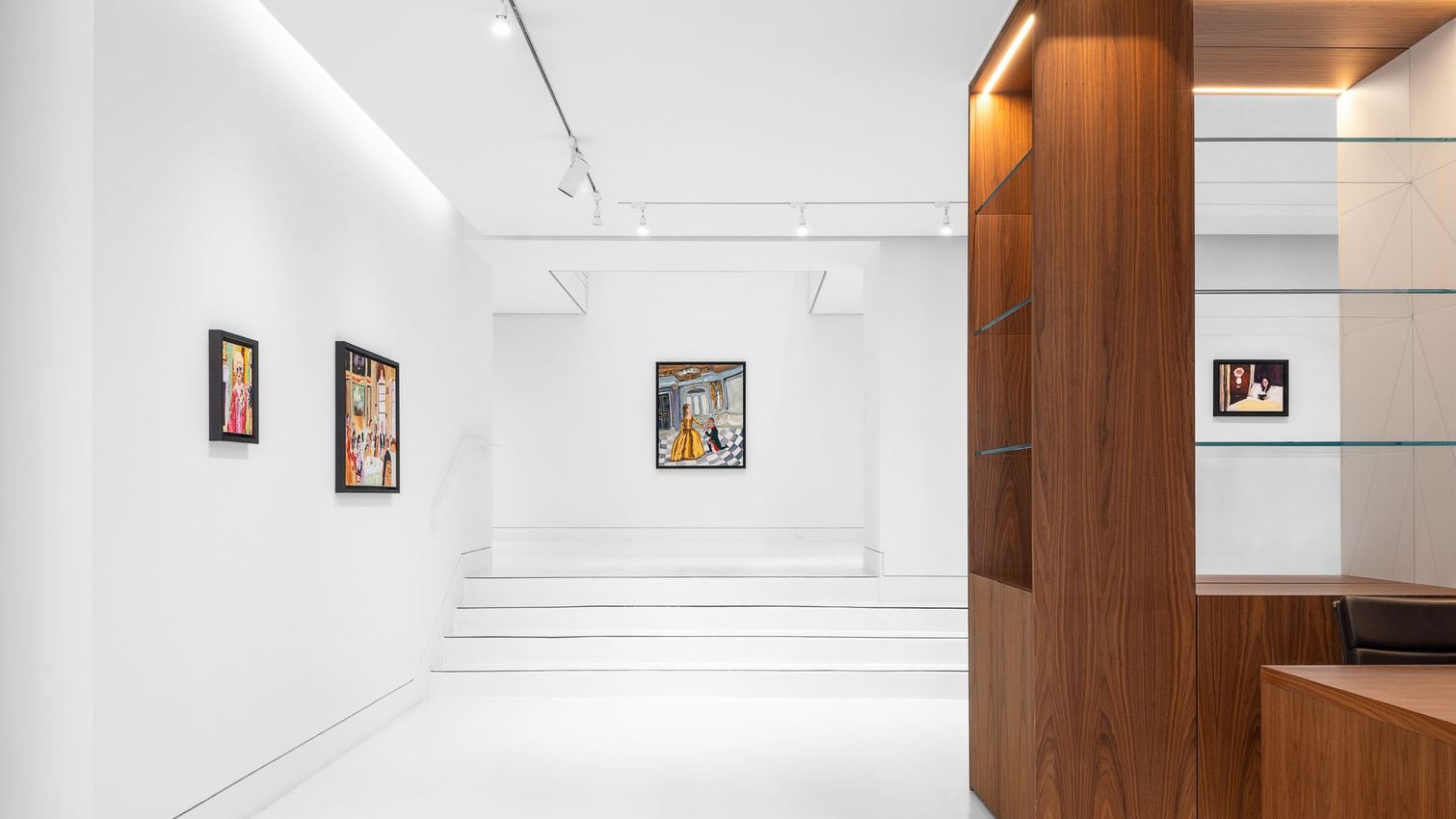
Four paintings don’t provide much cover. There’s no space at all to hide, which suits just fine. The spareness of the imagery becomes amplified. The hum fills the room. These paintings don’t form a deliberate body of work, unless you consider the sweep of Andoe’s project a distinctly American one, unified less by intention than by mood.

The figurative focus is a kind of feint. Not a trick, exactly, but also not the point. Andoethinks of them as abstractions, shapes lifted from the material plane and reformed, a bodygiven new purchase. Andoe’s technique is to apply a thick layer of oil paint to his surfaces,marking the outlines, and then wiping away the wet paint. The result reveals the dyed grainof the fine canvas linen underneath, a textural thrust that joins them to Americanminimalist painters like Ryman and Kelly.

There’s a painting of a tree trunk that’s more of the suggestion of a tree trunk, a silhouette, half there and half not, sturdy but letting the static in. It surges up the canvas, dialling the tuner back to AbEx’s muscular gestures. Barnett Newman described his paintings as pullingExcalibur from the stone, a gentle hand finessing the composition into existence. Andoe’s Excalibur resides in a common sturdiness, sublime in its plainness. That’s the real trick: persuading the image out of its absence while letting its absence remain. You can feel their hum reverberating, rushing back at you, head on.

Press release courtesy Almine Rech. Text: Max Lakin, critic and writer.

Read More
About the Artist

Tulsa-born painter Joe Andoe is known for his austere depictions of everyday subjects, such as roadsides with cloud-filled skies, horses, dogs, and flowers. For his painting, he uses a reductive technique where he covers an entire canvas with thick black oil paint, then wipes off the paint while still wet to reveal an image beneath, creating an enigmatic and textural minimalism. ‘Since the late ‘70s I have fancied myself a landscape painter, and a painter of the things that hang around on the landscape’ wrote Joe Andoe in his memoir Jubilee City (2008). In his recent work, Andoe underscores the possibilities of imagery by developing a cinematic vision of American mythologies. Often compared to the photographic documentation of teenage life in Tulsa by Larry Clark, Andoe’s universe has emerged as one great depiction of the American spirit and its iconography.

View Artist Profile

Also Exhibiting at Almine Rech

About the Gallery

Almine Rech opened its doors on April 1st, 1997 in the 13th arrondissement in Paris. The gallery was founded on an axis of California Minimal, Perceptual art and Conceptual art, representing artists such as James Turrell, John McCracken and Joseph Kosuth.

View Gallery Profile
Address
64 Rue de Turenne
Paris
France
Opening Hours
Tuesday – Saturday
11am – 7pm
(1)
Paris 64 Rue de Turenne
Almine Rech
64 Rue de Turenne, Paris, France
+33 145 837 190
http://www.alminerech.com

Opening hours
Tuesday – Saturday
11am – 7pm
The art world in focus
