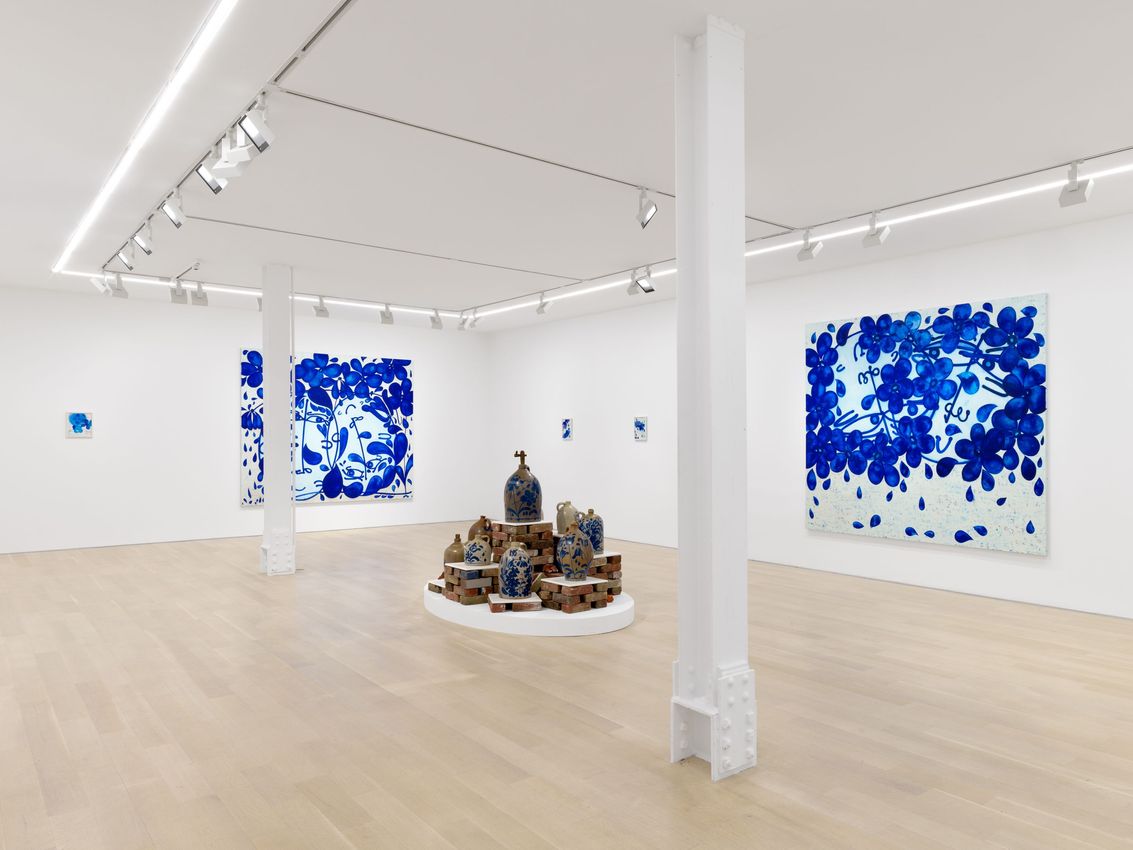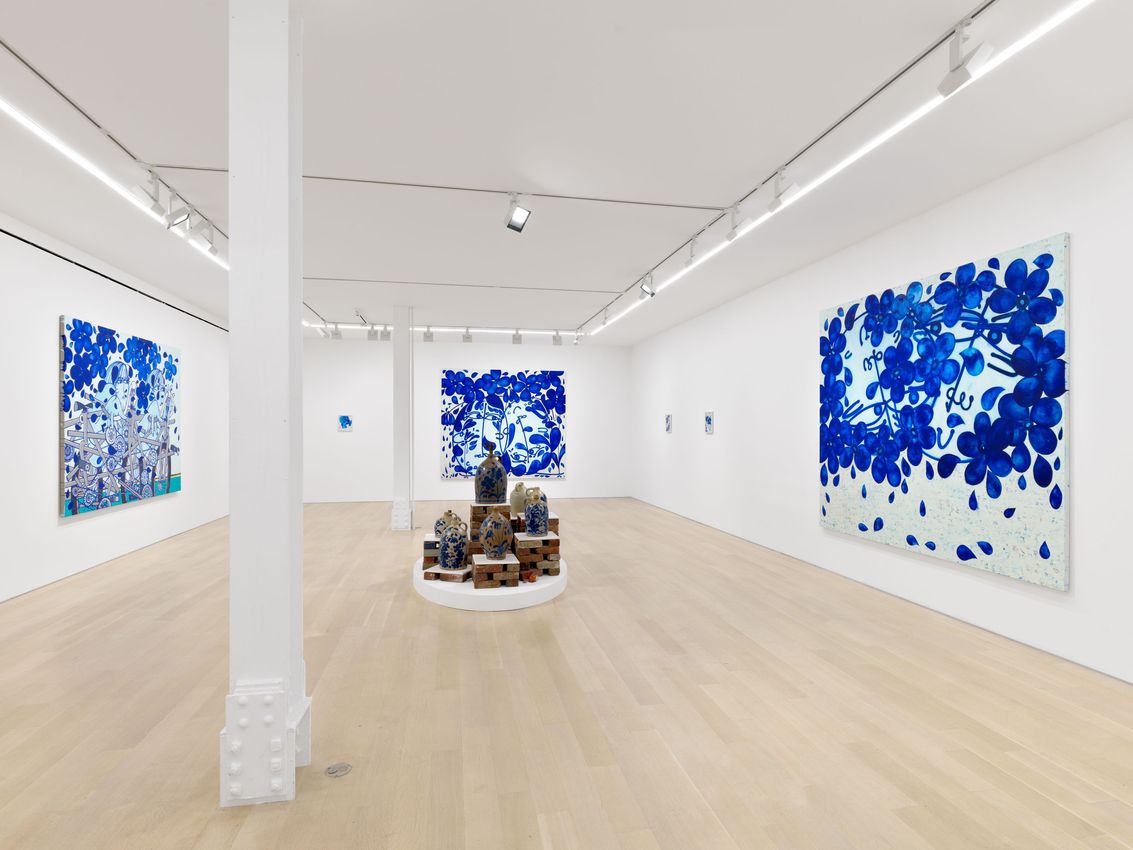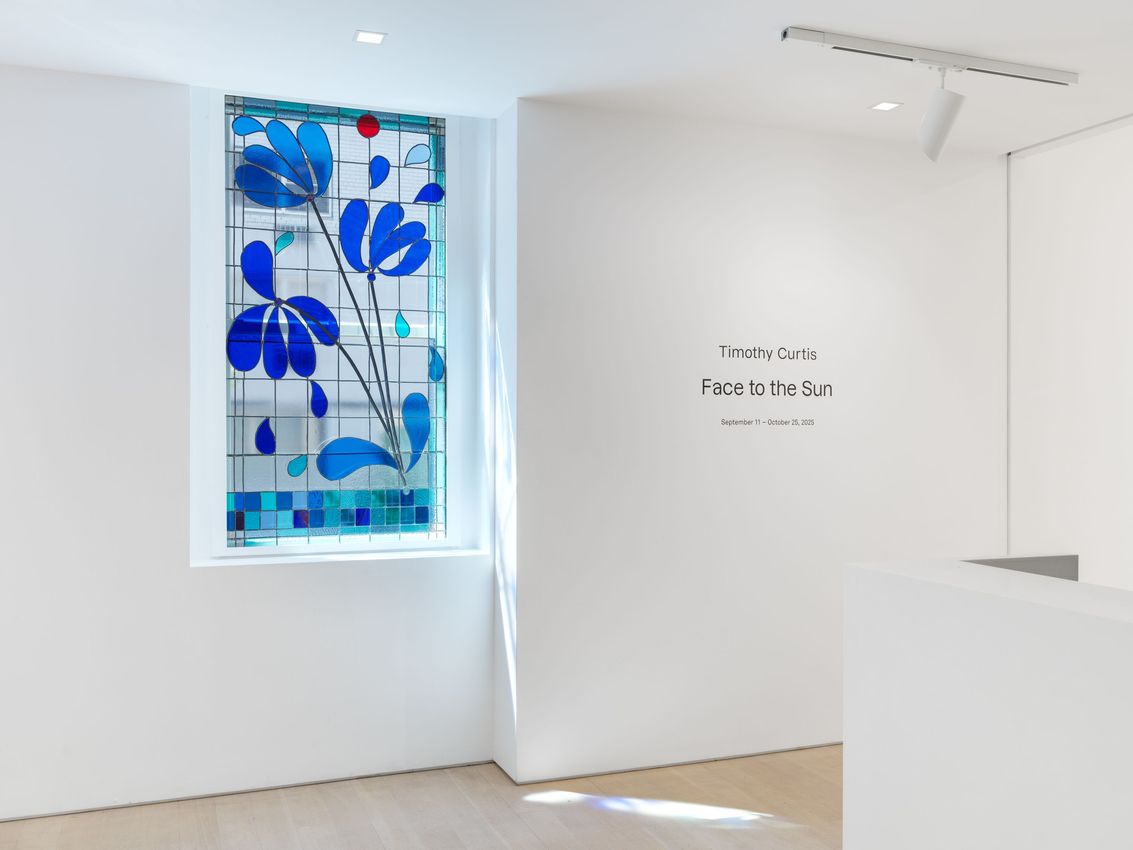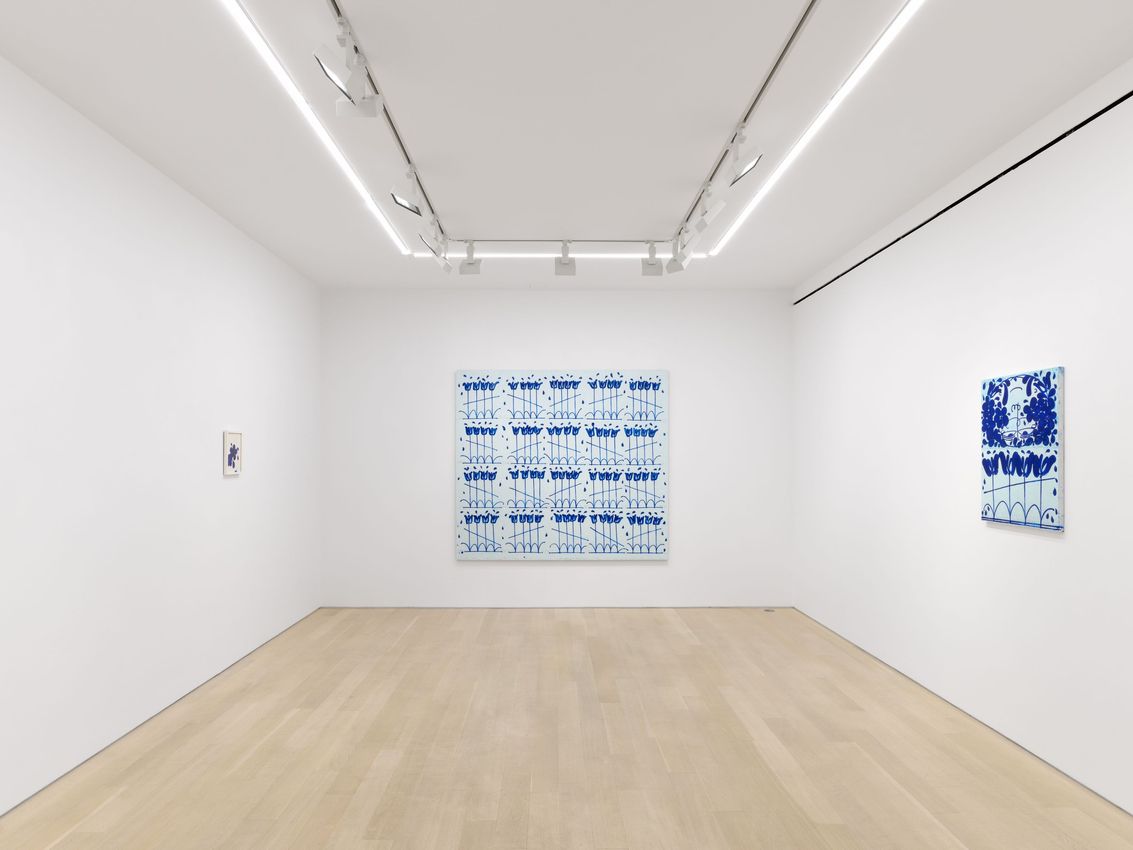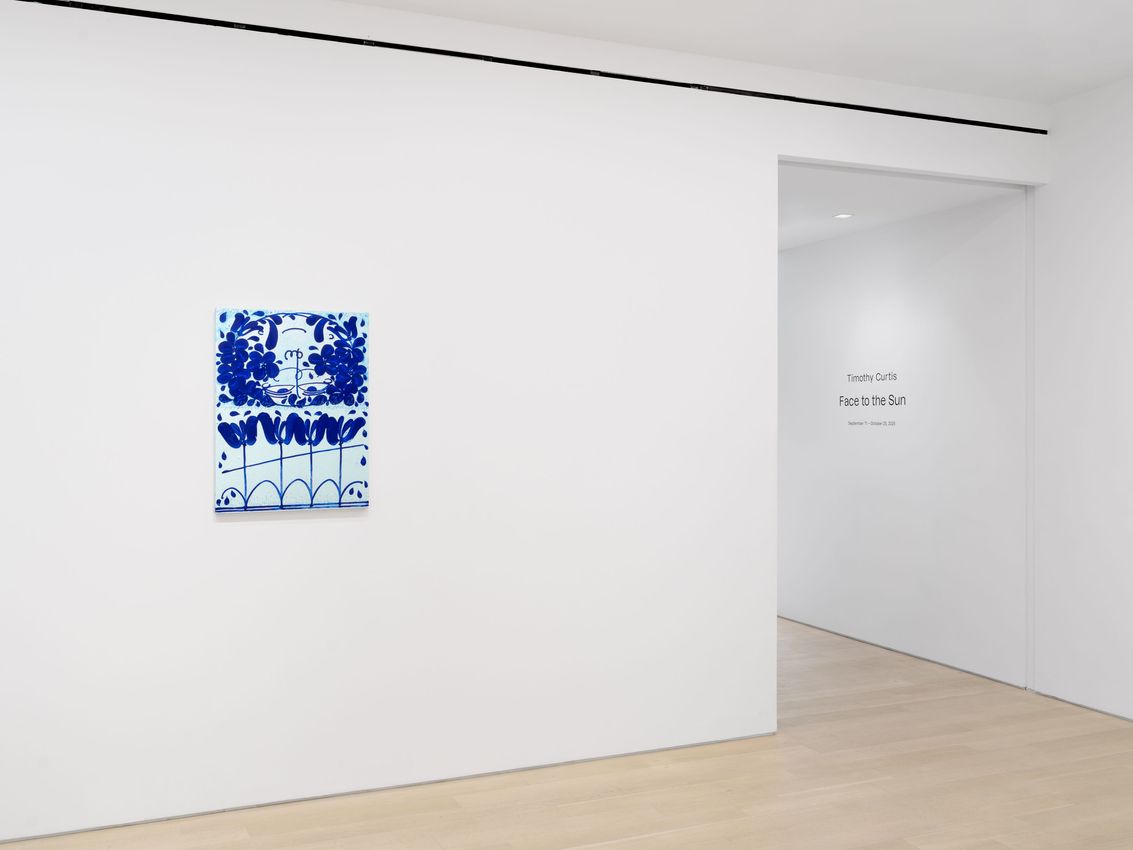

Almine Rech New York, Upper East Side is pleased to present Timothy Curtis’s second solo exhibition with the gallery, on view from September 11 to October 25, 2025.
A major New York exhibition by Philadelphia-born artist Timothy Curtis, ‘Face to the Sun’ shows an artist turning his face toward the warming sun of freedom through artmaking. A recurring motif in the show is flowers, symbols of happiness that also turn their faces to the sun. Curtis has built a remarkable career, especially for a self-taught artist, with solo presentations in Tokyo, New York, Berlin, and Paris and inclusion in group shows at the Drawing Center in New York, the Pennsylvania Academy of the Fine Arts in Philadelphia, the Saatchi Gallery in London, and the Museo Picasso Malaga in Spain.
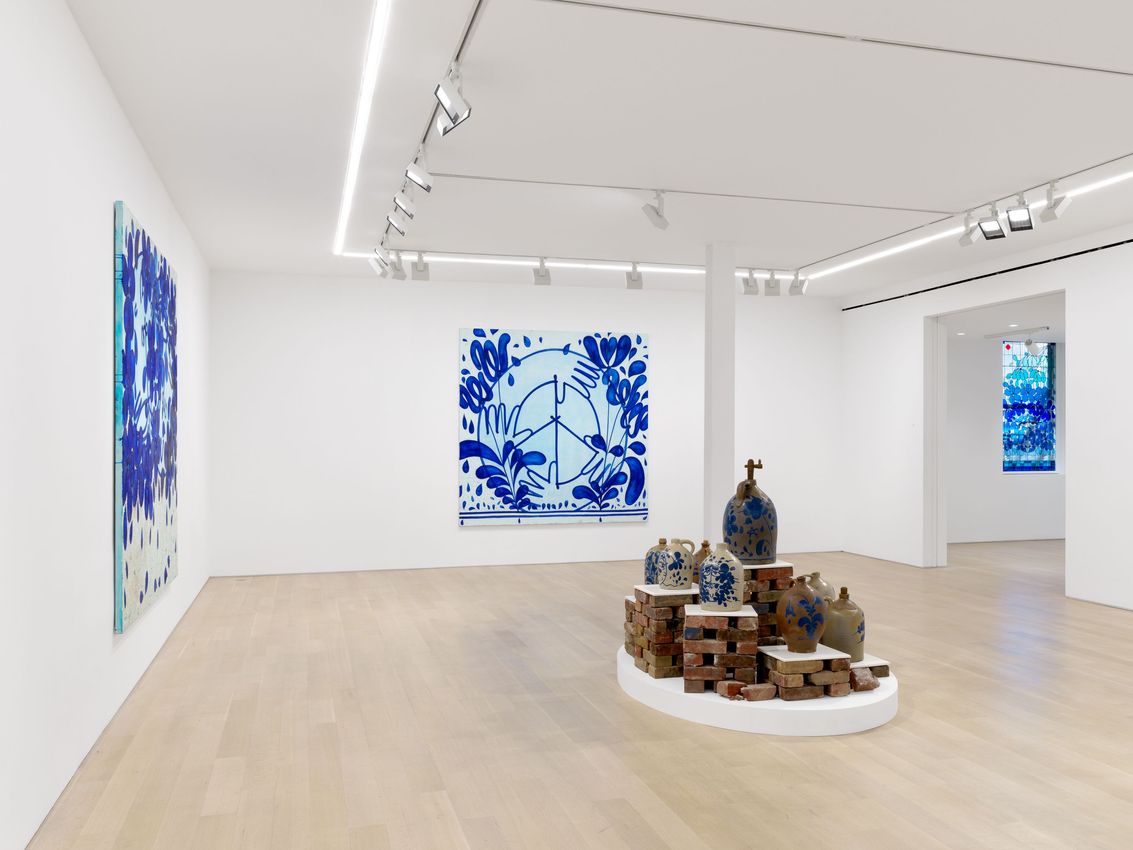
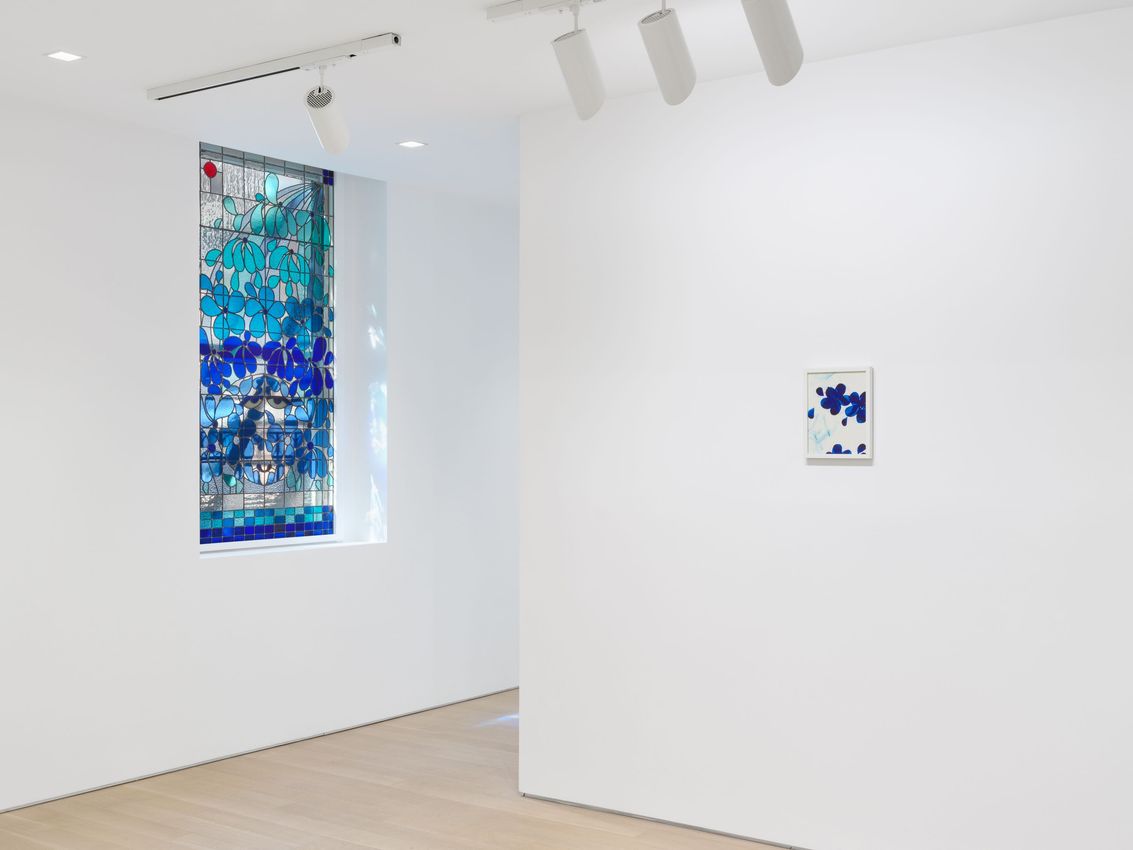
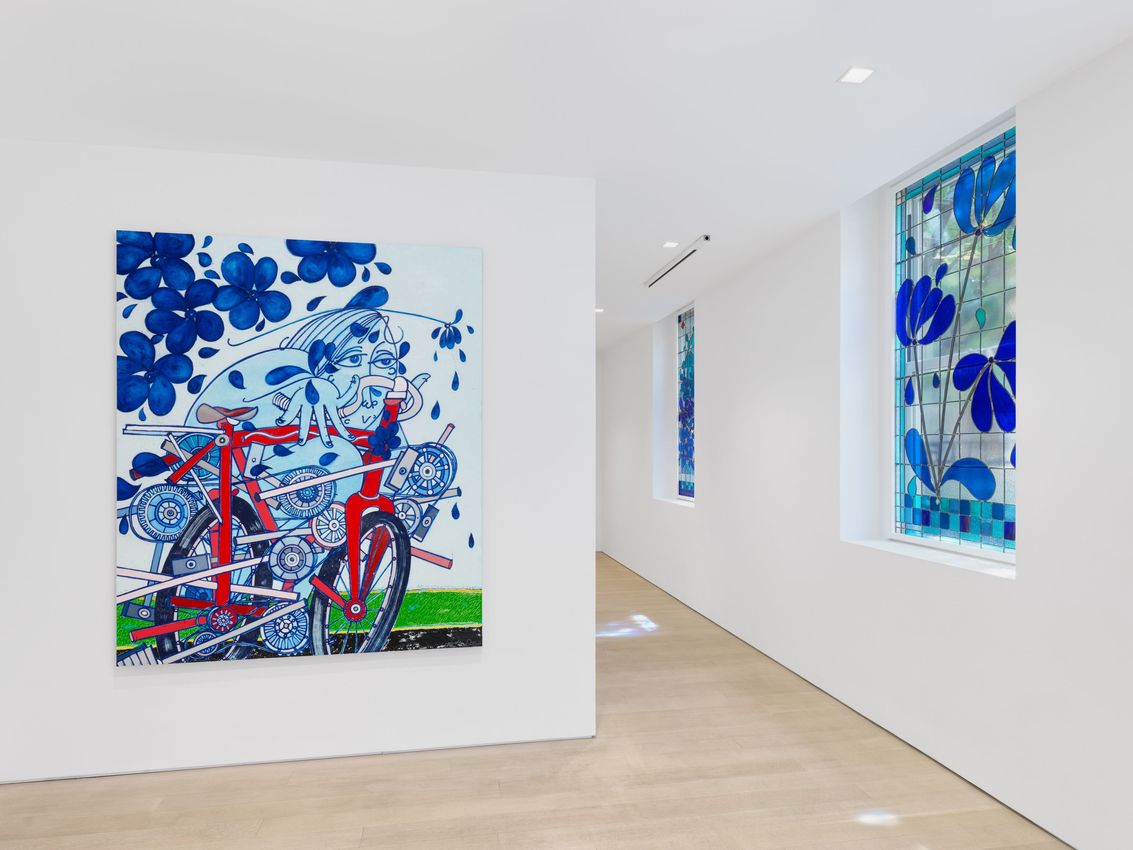
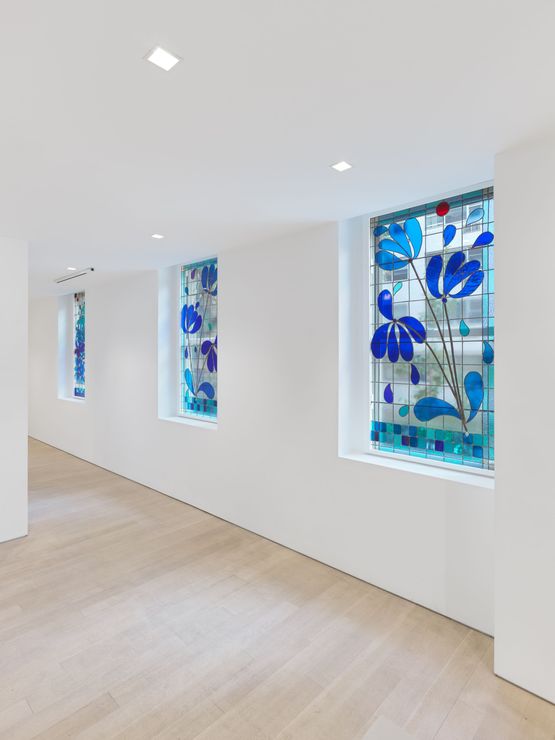
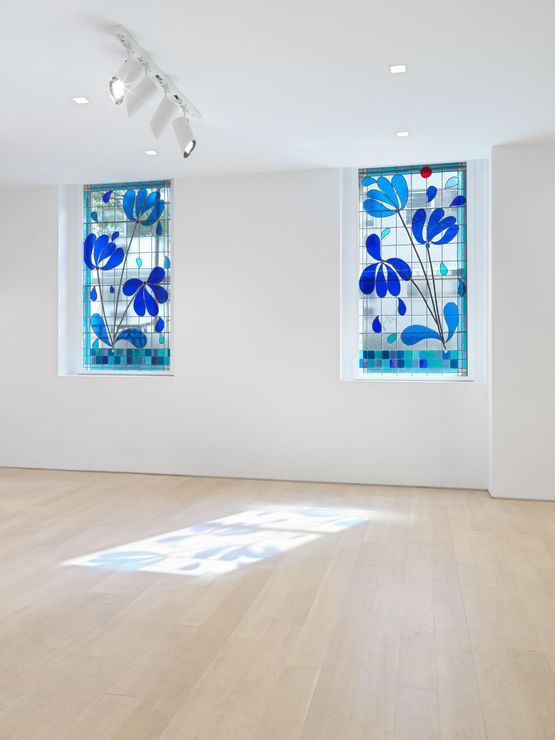
Three stained-glass windows greet visitors to Almine Rech’s Upper East Side gallery, bearing some of Curtis’s trademark imagery: faces and flowers. Stained-glass windows are a characteristic feature of row houses in the artist’s native city, where they lend a stately elegance to modest homes. Nearby hangs a painting, Lost Time, marked with years’ worth of tally marks, reflecting the decade the artist has spent building a life through art and helping others to do the same through a mural-painting program he taught to men serving life sentences in a Pennsylvania state prison. The work combines abstraction and an incredibly personal signification.
The artist’s previous Almine Rech exhibition, ‘SELF WATERING FLOWERS,’ took place in Paris in 2023; the new show carries forth some of the motifs he explored in that show. For example, Curtis’s flowers engage in a centuries-long tradition of floral imagery but are linked especially with those of two other Pennsylvania natives: stoneware painter Shem Thomas and Andy Warhol, also famous for his renditions of faces and flowers.
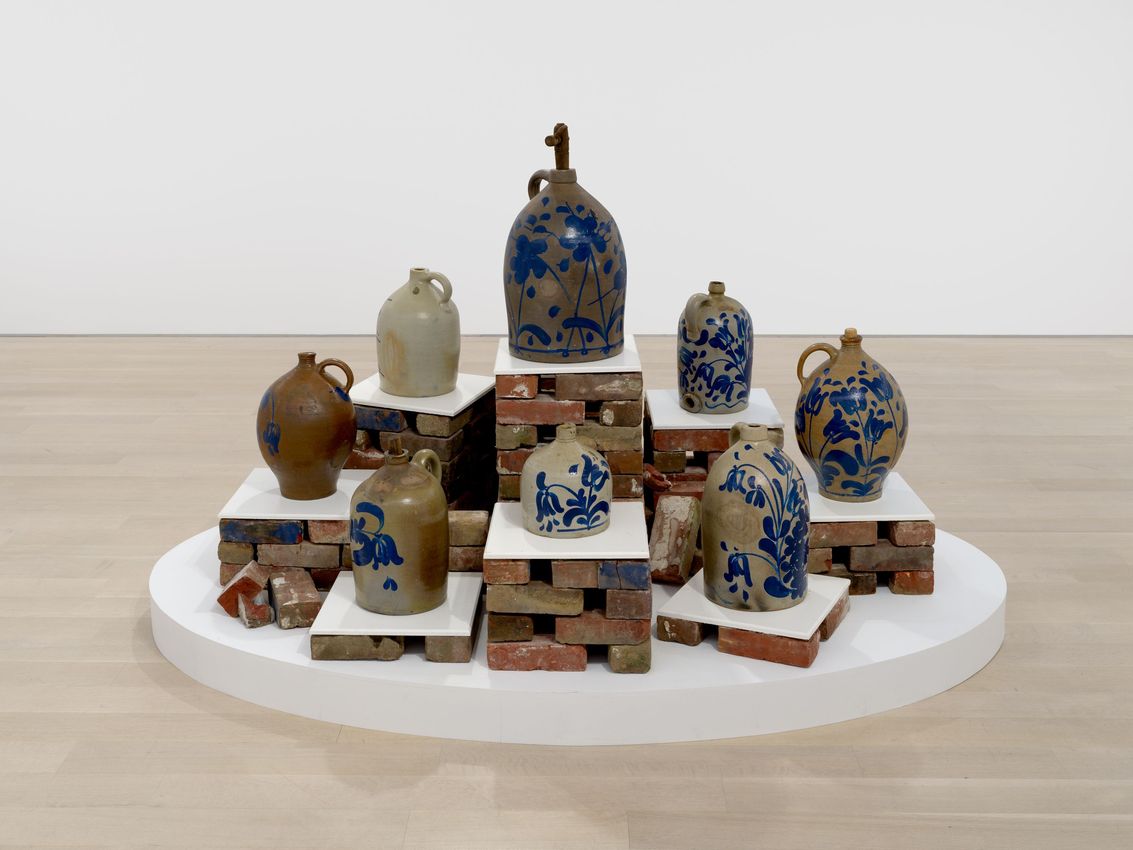
This show also builds on recent exhibitions at Atlanta Contemporary and The Current in Stowe, Vermont. The Atlanta show consisted of paintings themed on inkblots and on grids of faces that form “feelings charts,” both themes the artist conceived of while incarcerated. At The Current, he explored the relationship between Pennsylvania stoneware and graffiti, another art form in which he excels.
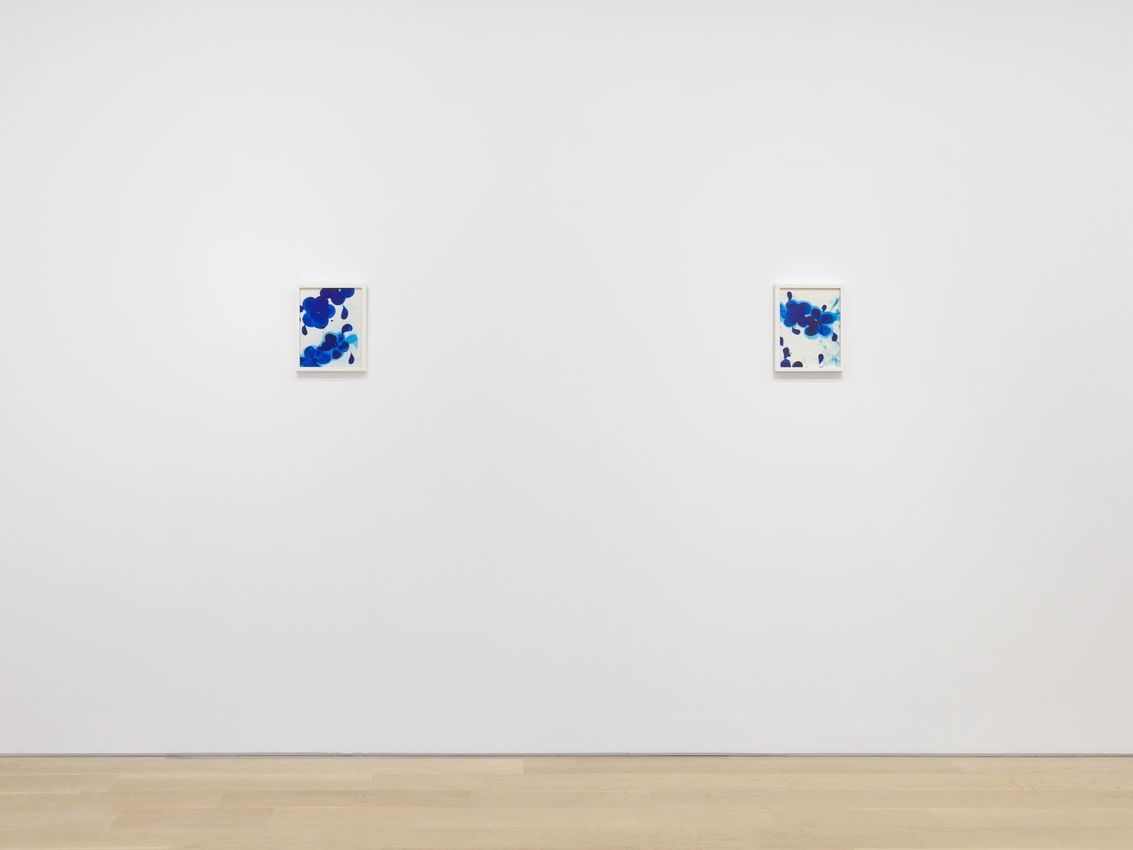
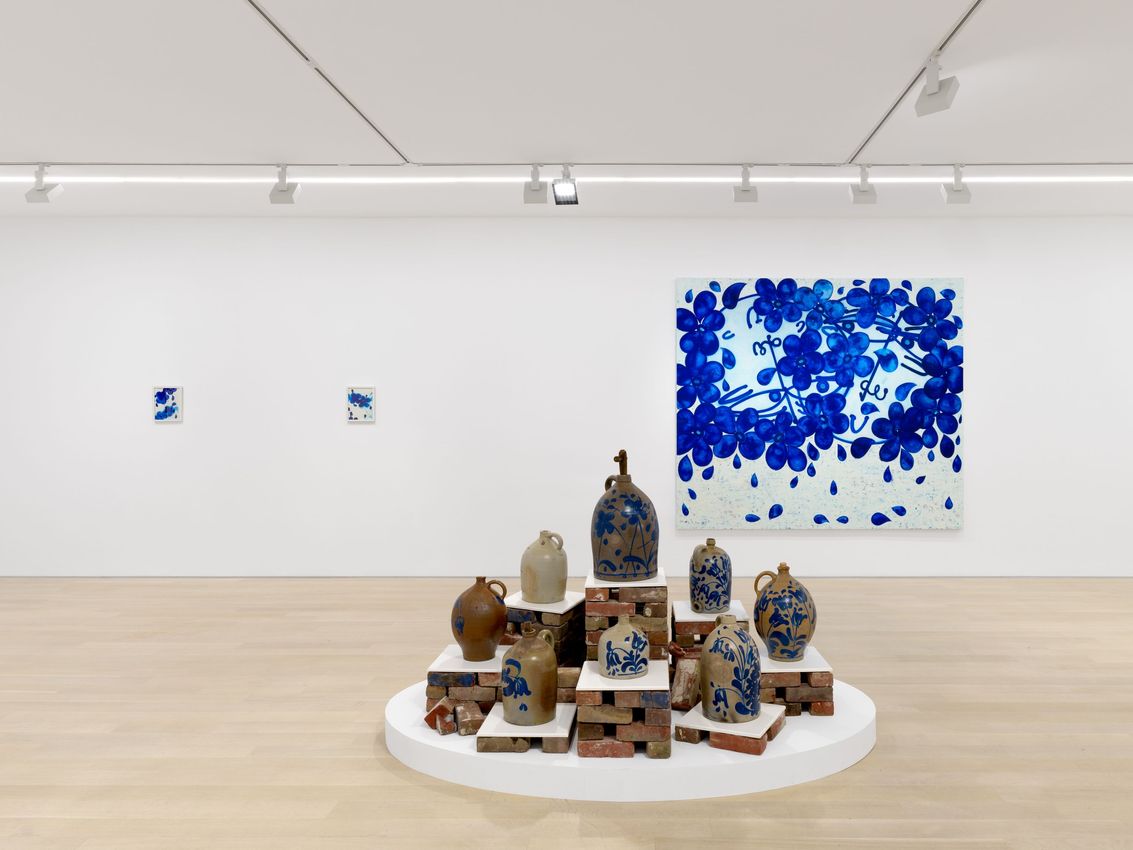
‘Face to the Sun’ features a wall of drawings, the most immediate form of mark-making, one that Curtis engages in almost obsessively; these pieces, which stretch from 2010 to the present, explore a number of his most reliable motifs, including faces, bicycles, cityscapes, and freedom and confinement.The gallery’s main room combines several new, loosely thematically related paintings, all arrayed around a set of modified found objects that are truly generative for Curtis’s work and are set up on a kind of pedestal.
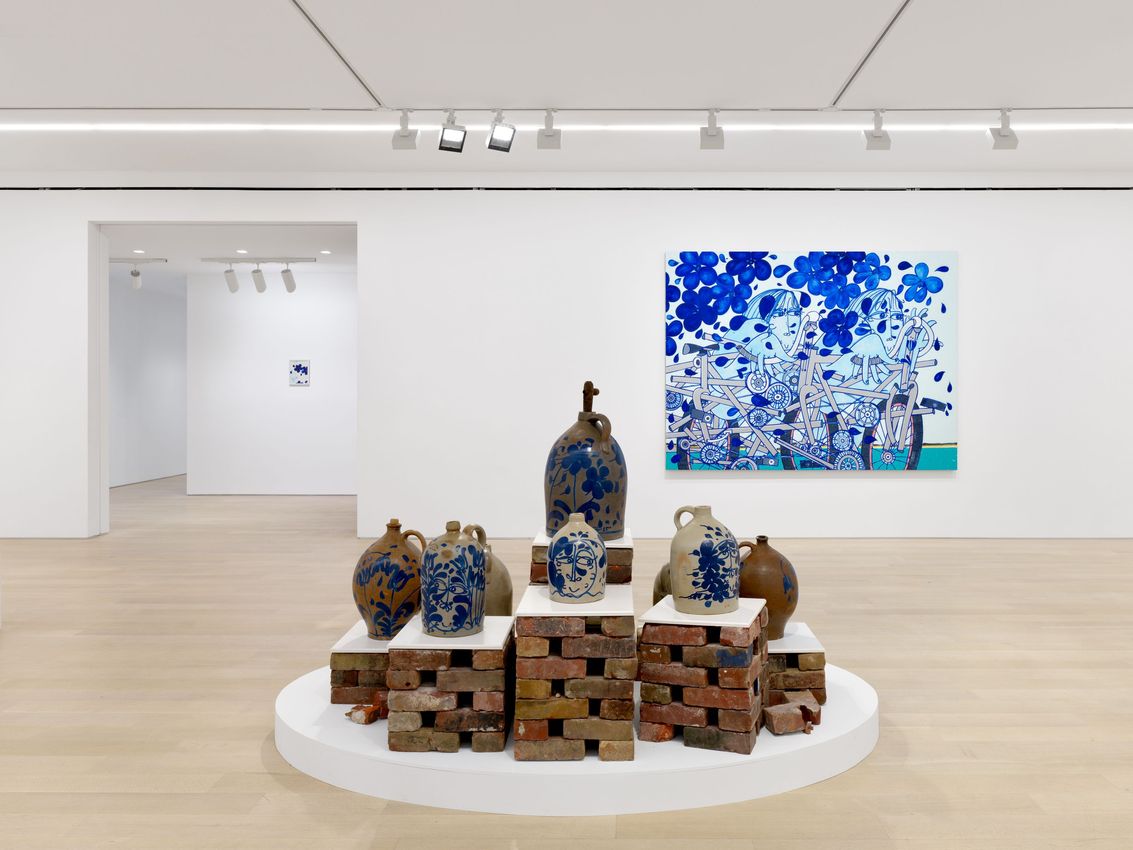
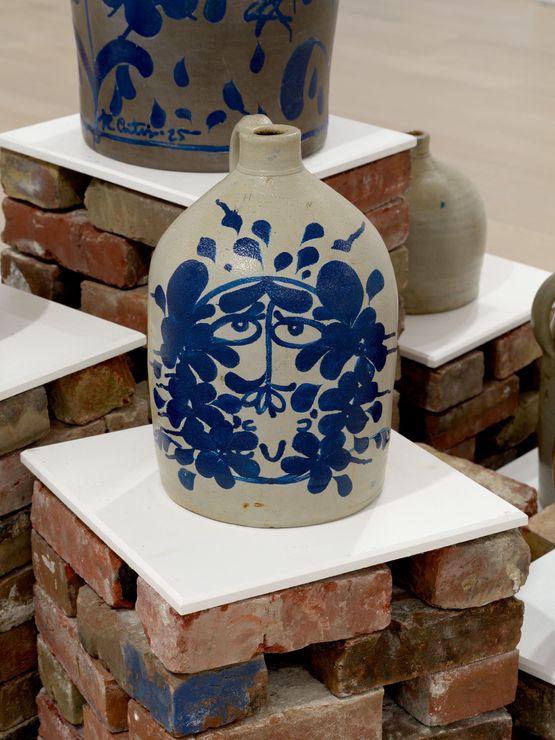
At the room’s center stands a veritable garden of painted stoneware that is unique to Pennsylvania and which, along with cobalt blue renditions of a “man in the moon” facial motif, frequently features images of tulips. By painting his own motifs on these historic examples of Pennsylvania stoneware, the artist enters into a conversation with the past. The pots stand atop a low pedestal of brick, recalling the notable role of brick in Philadelphia’s built environment, including the magnificent Victorian architecture of the Pennsylvania Academy of the Fine Arts in Philadelphia, one of the longest continuously operating art museums and art schools in the United States. Such bricks were created in the same kilns the craftsmen who created the distinctive Pennsylvania stoneware that is so important to Curtis used.
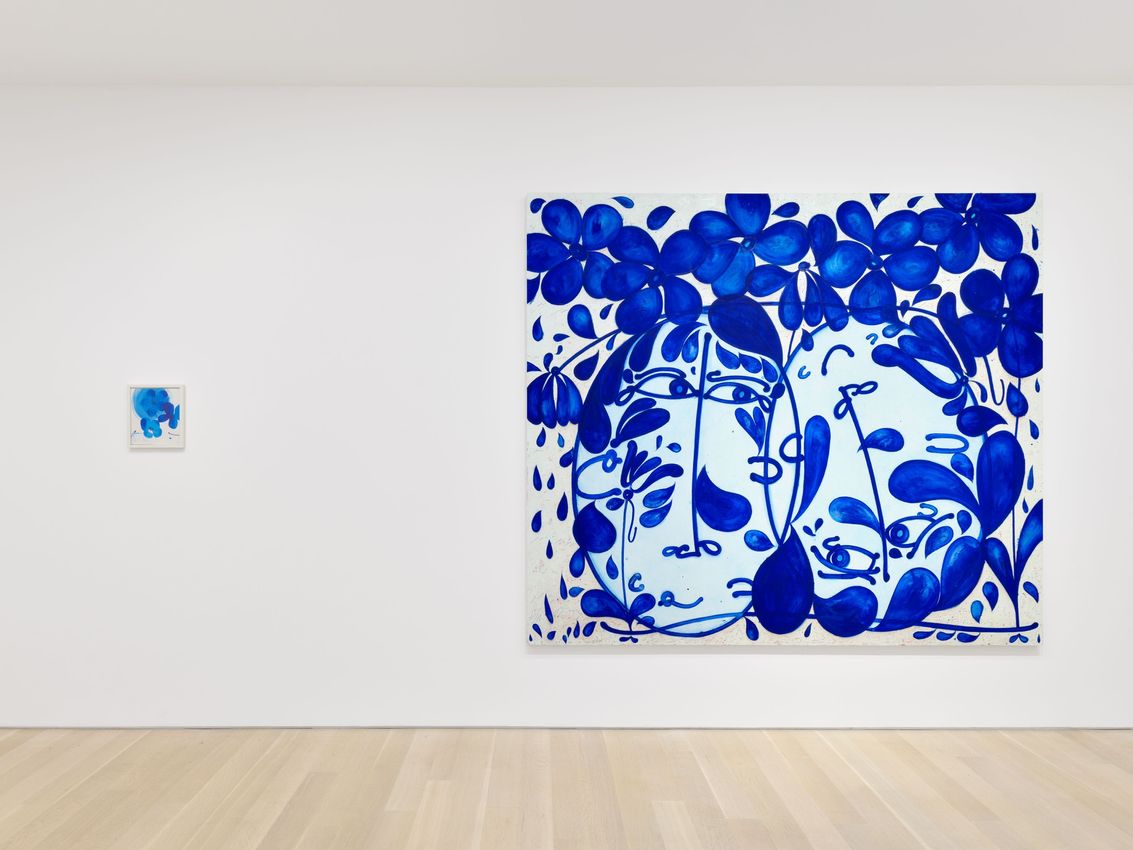
A large canvas, Let’s Not Forget Love, is painted in that same cobalt blue. Here, the surface is largely covered in flower petals, from which emerge two stylized faces that gaze lovingly toward each other. These faces are a longstanding motif of Curtis’s, inspired by the smiley motif created by artist Harvey Ross Ball but made popular by Philadelphia brothers Bernard and Murray Spain. They also recall the stoneware’s “man in the moon.”
Another large painting shows a man on a bicycle, a richly meaningful image for the artist who worked for several years as a bike messenger. Like flowers and faces, bicycles also have a place in art history, with artists like Fernand Léger and Georges Braque having dwelt on the subject, often employing them as symbols of freedom during wartime. In the past, Curtis has frequently painted these emblems of mobility, often showing them broken or locked up; but in one of the new paintings in this show, a man zooms away on a bike, carrying Curtis’s own paintings with him—a painting within a painting, symbolizing freedom through artmaking.
Even as he uses some of the same imagery as in past works, the increasing freedom is palpable. Says the artist, “Everything is about growth.”
— Brian Boucher, writer


Timothy Curtis is a self-taught artist from Philadelphia, where he was first introduced to the arts via graffiti writing as a young child. Following his release from a lengthy prison sentence Curtis moved to New York City where he established a focused studio practice in 2015. While incarcerated he threw himself into studying art history, drawing, and painting and was able to use his studies to form a mural painting crew consisting of artists sentenced to life in prison, painting educational murals around the prison campus to teach, motivate and add colour to the otherwise drab environment.


Almine Rech opened its doors on April 1st, 1997 in the 13th arrondissement in Paris. The gallery was founded on an axis of California Minimal, Perceptual art and Conceptual art, representing artists such as James Turrell, John McCracken and Joseph Kosuth.

A respected voice in contemporary art discourse.
Focusing on ambitious storytelling and insightful art-world commentary. Ocula Magazine publishes in-depth interviews, critical essays and timely analysis on the artists, exhibitions and ideas driving the global art world.
Learn more about Ocula Magazine
Showcasing the best of the art world.
Ocula partners with galleries from around the world to highlight their artists, artworks and exhibitions. Gallery membership is by application and invitation, with each member vetted by an independent panel.
Learn more about Ocula Membership

Specialises in the sale of major artworks.
Led by a team with deep ties to the world’s leading auction houses, galleries and collectors. Ocula’s advisory team offers bespoke services to high-net-worth clients from around the world who are looking to acquire the best of contemporary and modern art.
Learn more about our team and services