Press Release

The emergence of textile art in Spain in recent years , has its fundamental antecedents in the non-utilitarian use of textiles by many women in the 19th and early 20th centuries as a political instrument that transcended their traditional domestic and functional role ; brought about by the women artists of the Bauhaus (who were “condemned” to the ostracism of disciplines considered artisanal and traditionally feminine); and, of course, in the more immediate genealogical precedent of the nouvelle tapisserie, an international movement that radically transformed the conception of tapestry from the 1960s onward.The movement entered Spain through the Escola Catalana del Tapís, with Jean Lurçat as a methodological and conceptual mentor.

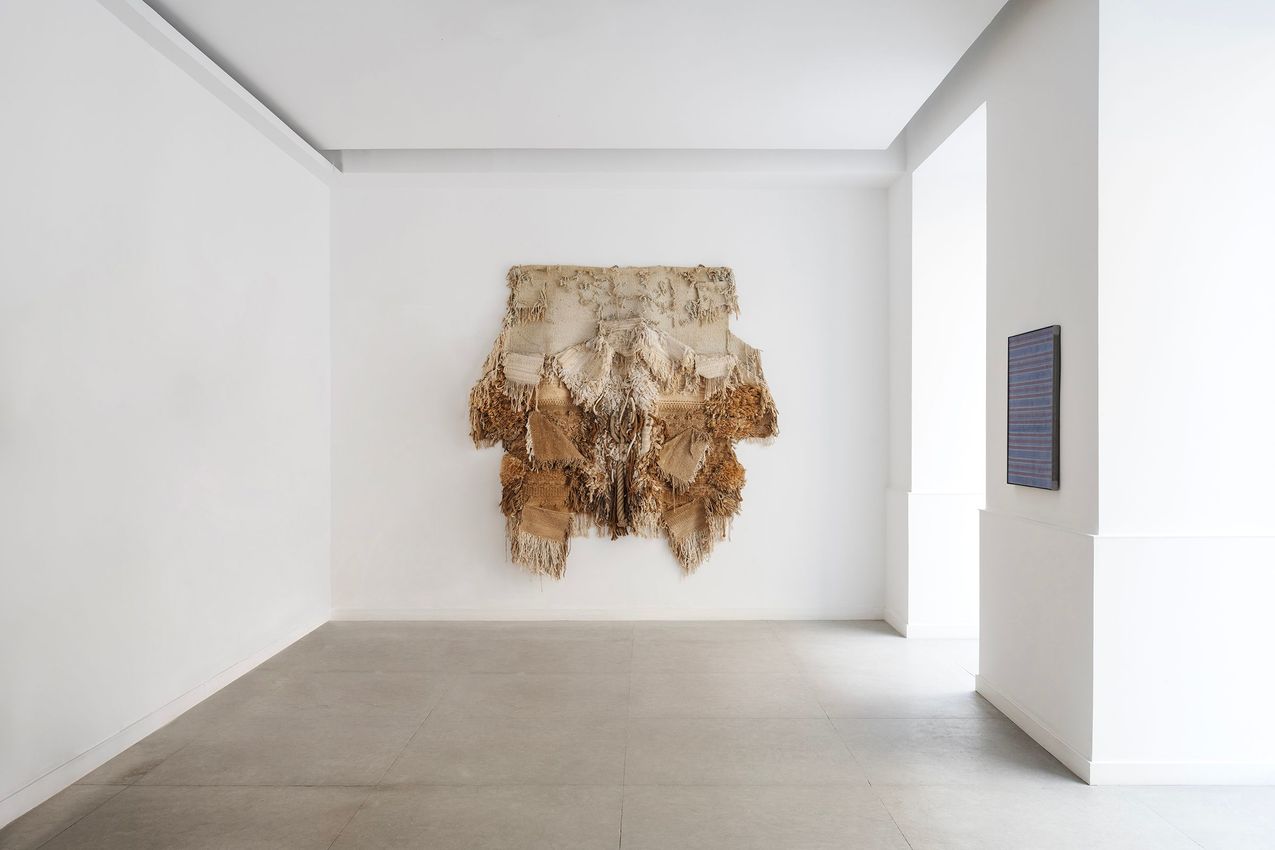
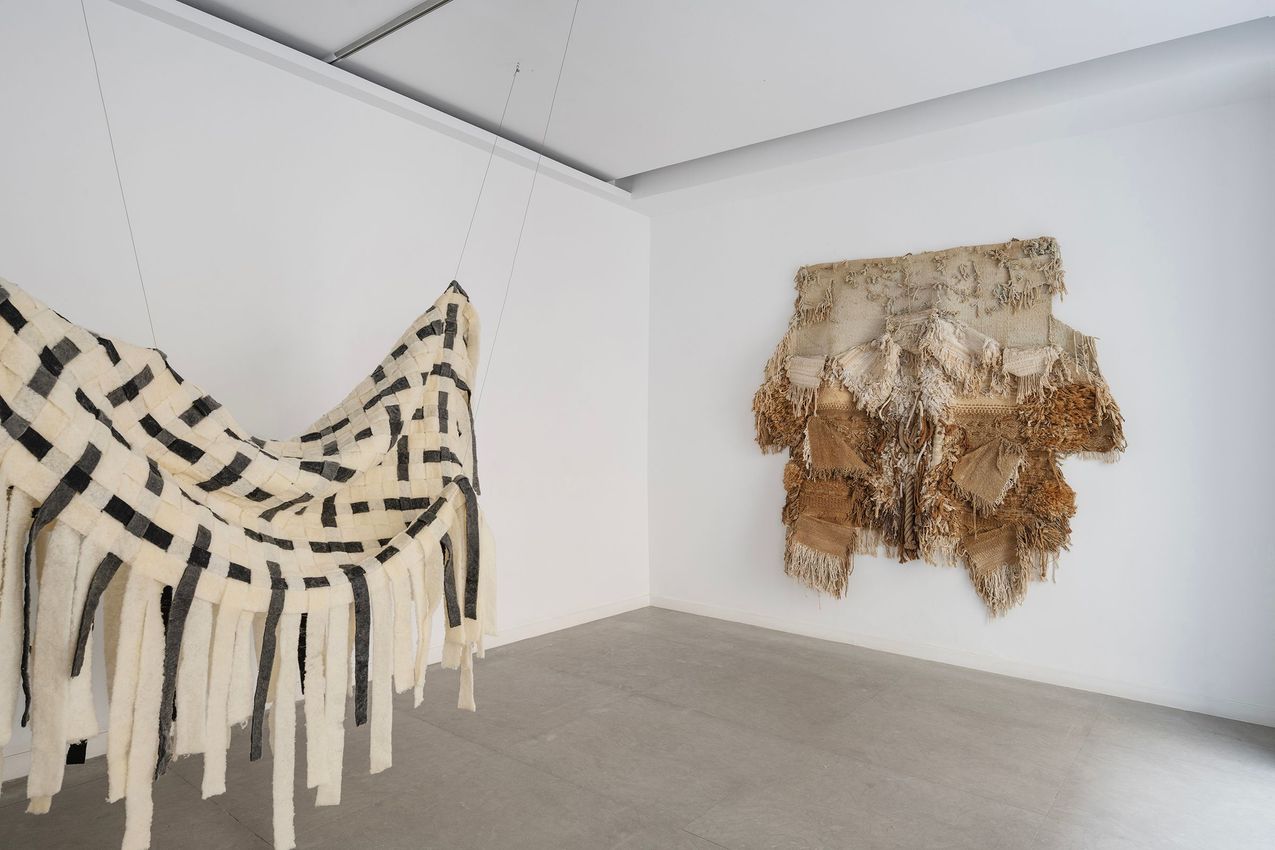
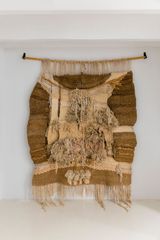
Josep Grau-Garriga, together with other women artists such as Aurèlia Muñoz and Dolors Oromí, worked towards establishing textiles as a contemporary artistic discipline 4 . Their work had a decisive influence on subsequent generations of artists in Spain—predominantly women, thus maintaining the traditional feminisation of the discipline—and explored the specificity ofthe medium as a way of asserting its artistic value. At the same time, paradoxically, it challenged the hierarchical separation between painting, sculpture and textiles, fostering from the outset an interdisciplinary practice connected to what Rosalind Krauss famously termed the “expanded field” in her influential essay of the 1970s . The artists mentioned above also served as mentors and teachers in art schools and specialised workshops, such as the Escola Massana in Barcelona, generating a genealogy of artists who incorporated textiles into their practice or made—and continue to make—the medium their primary focus. This collective exhibition bears witness to this genealogy. In this sense, it is necessary to critically examine the mutual influences between Antoni Tàpies’s Informalism and Grau-Garriga’s work, including their political dimension.Textiles, from the outset, moved beyond the tradition of the loom and the use of natural fibres by incorporating industrial materials. At the same time, the traditional two-dimensionality of the medium (apart from floor or ceiling), associated with both its ornamental and utilitarian functions—protecting architecture and the people inhabiting it from winter cold and draughts—was abandoned in favour of volume, ranging from relief to sculptural and spatial forms. In parallel, artists featured in this project, such as Grau-Garriga and Oromí (with “Delos”, 1974, and “Carota”, 1988, respectively), explored in their work, in line with their international peers, themes of the body, memory, and territory, while the former also addressed political concerns.

In subsequent generations, and focusing on the six contemporary women artists who accompany the two pioneers mentioned in “Texto significa tejido”, the past is revisited by integrating the sewing and embroidery of our grandmothers and craftswomen with knots, plant fibres, and recycled materials. From a contemporary perspective, these practices are brought into dialoguewith digital technologies, industrial processes, and materials drawn from other disciplines, with painting being particularly significant. The artists featured in this group exhibition thus engage with themes of sustainability, care, the recovery of local knowledge, material culture linked to personal or territorial identity, and feminism.

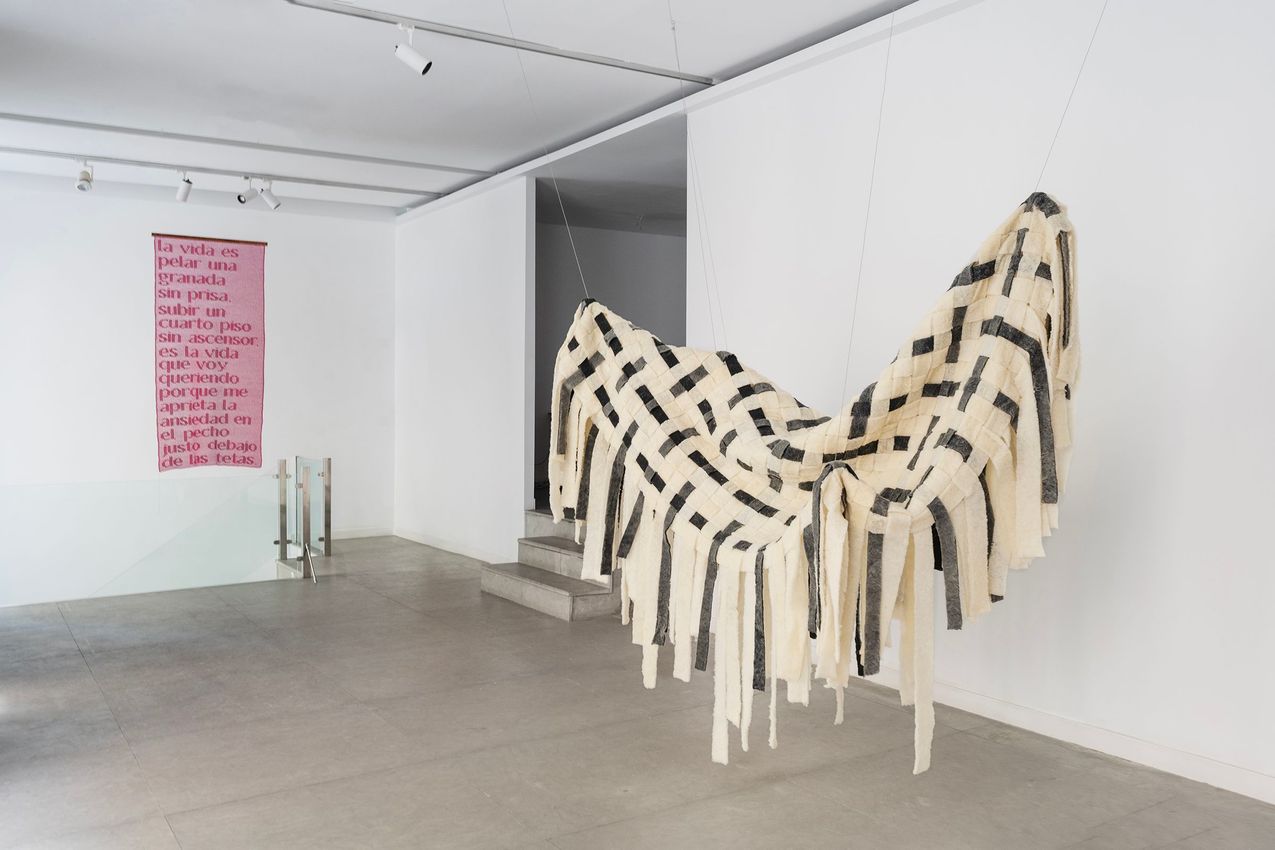
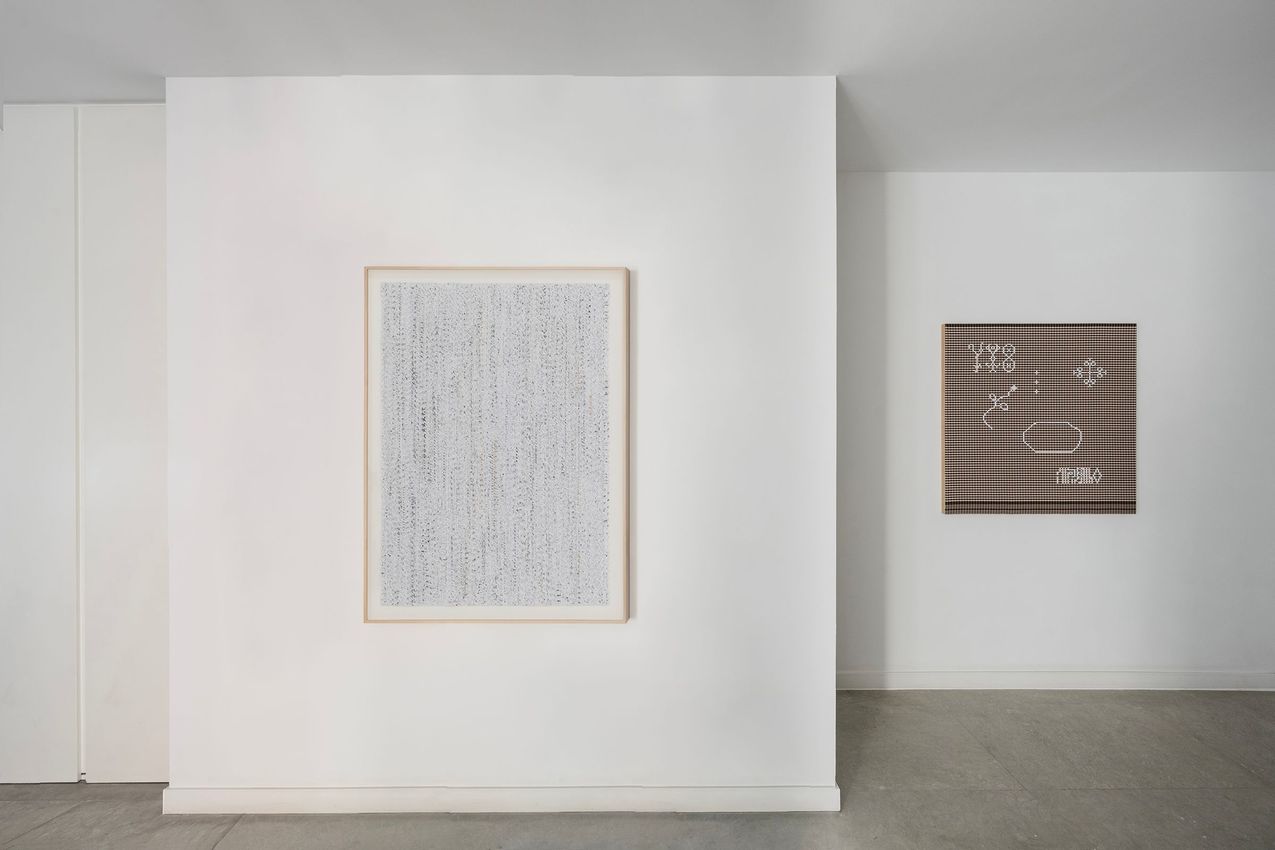
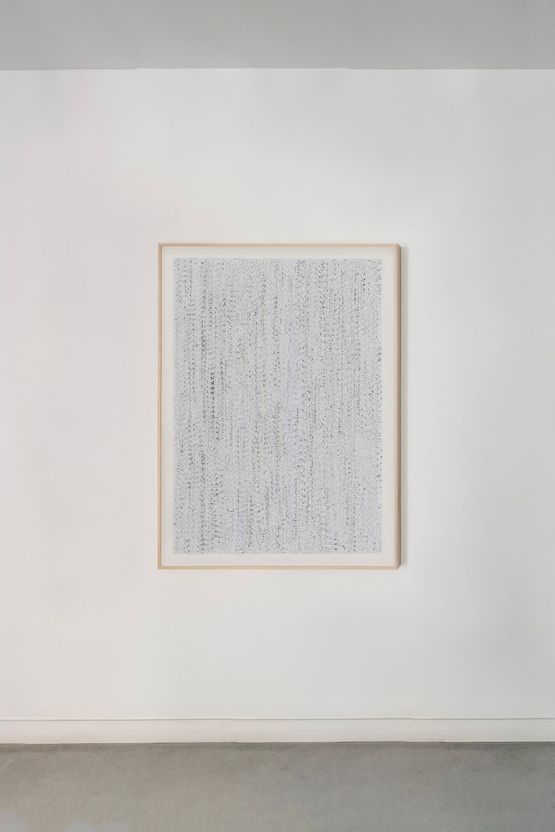
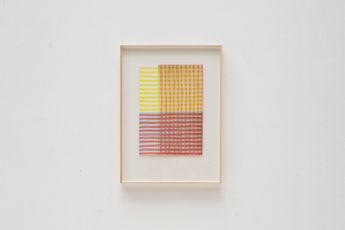
Isabel Servera (Mallorca, 1986) has recently been experimenting with paper cut into fine, elongated strips and then sewn or braided. Puntes de tres brins A0 I (2026) is part of Ripunts, a series in which she transforms discarded documents through processes rooted in traditional craft. The artist recovers shredded reports from an accounting firm and manually reassembles them through a laborious process of braiding—using traditional Mallorcan basketry techniques—and machine sewing. The research incorporates patterns such as llatró and puntes de tres brins, which, when translated into paper, bring together craft practices, inherited memory, and the transformation of matter. Based on the repetition of a single act, the process turns the gesture of interweaving into an exercise in reconstruction and care. The Mallorcan term ripunt means “basting stitch” and refers both to a sewing technique and to the possibility of reassembling something that has been fragmented. Her artistic practice explores artistic production through repetition and routine, taking it as far as the mechanical gesture; from a post-minimalist perspective with a gendered reading, Servera revives craft techniques rooted in a specific territory.

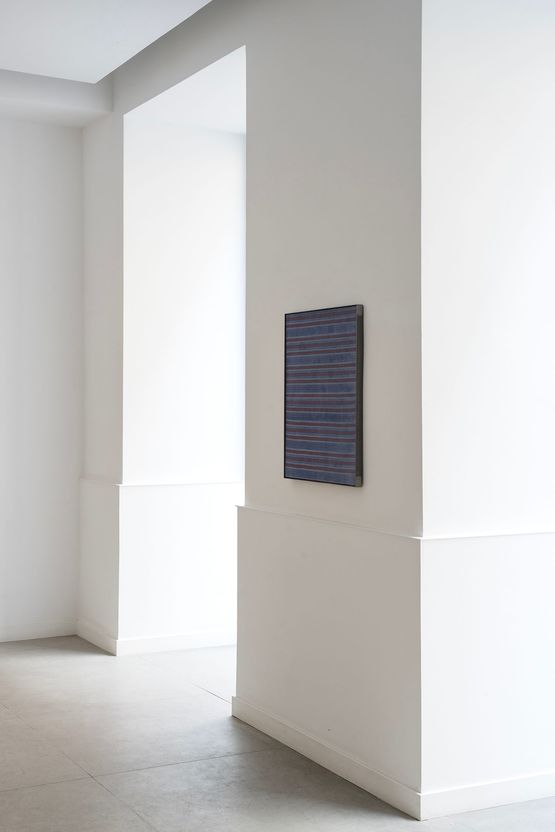
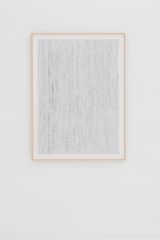
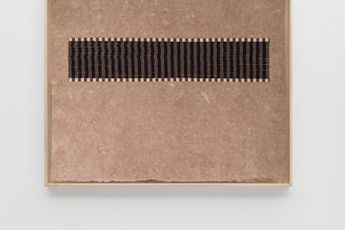
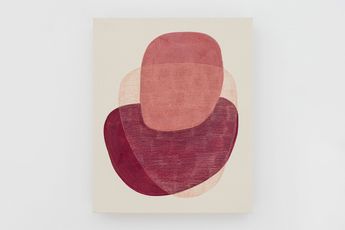
María Tinaut (Valladolid, 1991) is a multidisciplinary artist with a strong conceptual approach who works with textile and intertwines it with other disciplines such as painting, photography and installation. While in earlier works she used family photographs or images from her personal archive, photocopies, and reused supports to materialise memory and the fragility of recollection, here she works with an old, dyed and bleached mattress cover—a scaled-down version of a series of works she has been developing for years. This material resource expands the possibilities of painting without requiring direct painting, while also offering a nod to minimalist approaches such as that of Agnes Martin, in her poetic reflection on repetition, to which Tinaut adds the imprint of time. The artist questions the traditional manual processes of established disciplines and investigates the limits of representation and the materiality of the image, which, in her hands, takes on a powerful emotional charge.

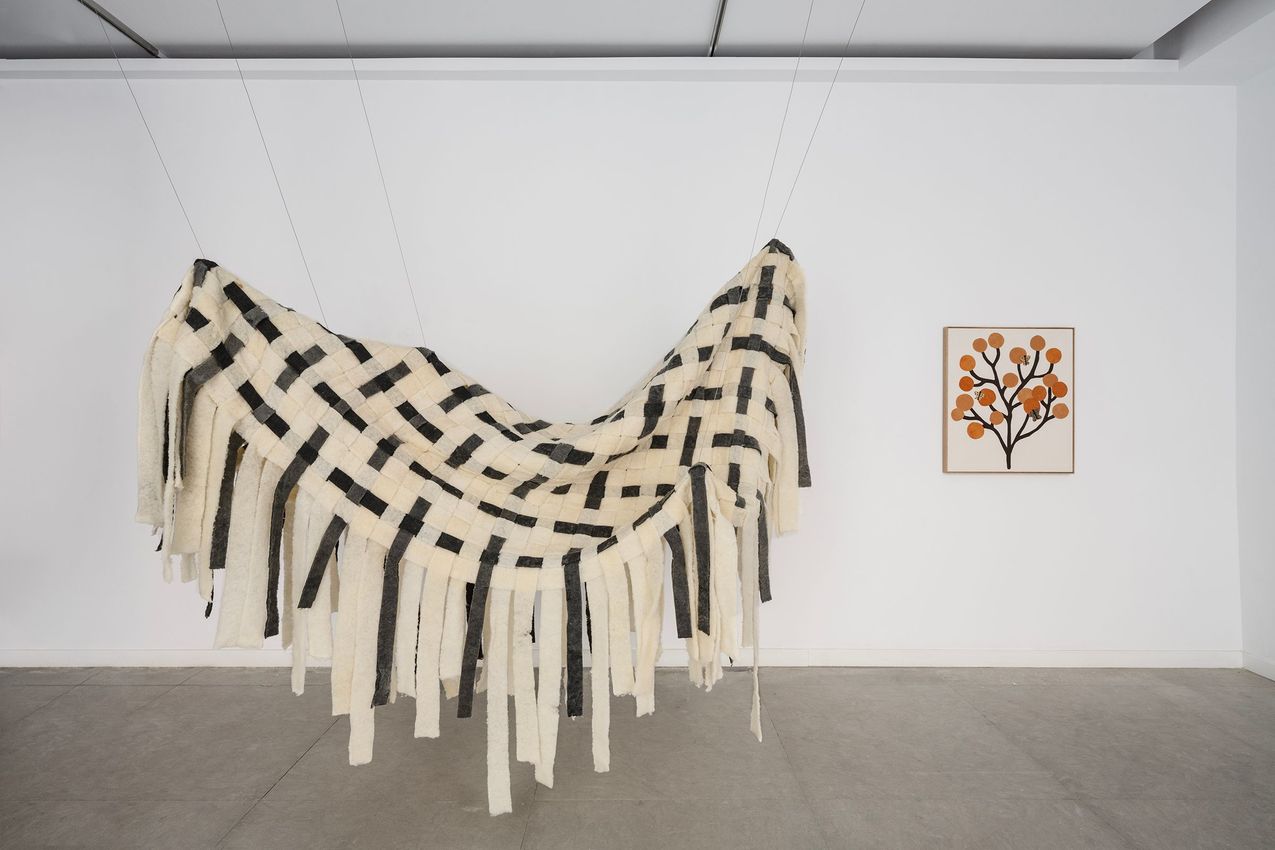
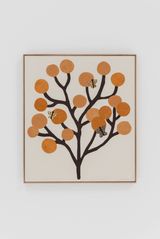
Lucia Vergara Ballester (Castellón, 1979) turns to embroidery and sewing in Nineteen Oranges and Flowers Grown From the Earth (2026) to create textiles that evoke childhood and assert the importance of the transmission of knowledge from mothers to daughters, understood as ancestral techniques that have been passed down through generations. The space generated by the textile is conceived as a trench against the immediacy of contemporary culturalconsumption, while remaining free from nostalgic interpretations. In fact, coinciding with her first solo exhibition at Alzueta, the Valencian artist spoke of her interest in manual work—slow and almost ritualistic—and traditional craft, acknowledging the influence and echoes of dreams, writing, nature, and mythology in her practice.

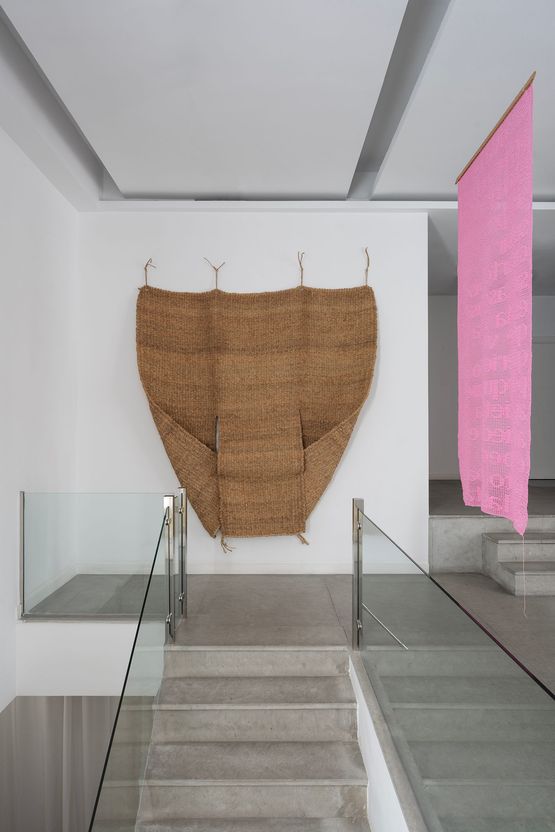
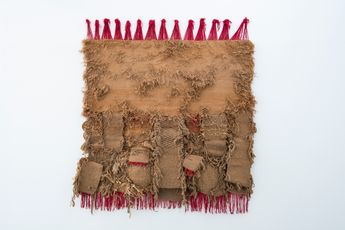
In “Artisanal Big Data”, Laura Zuccaro (Buenos Aires, 1977) uses the mocador de farcell, a traditional bundle-wrapping textile deeply rooted in Catalan popular culture, indiscriminately as both support and material. Traditionally used to wrap, transport, and preserve everyday objects, the cloth transcends its utilitarian function here and becomes a material archive in which inherited stories, knowledge, and ways of making converge. The artist intervenes on the fabricthrough painting, reclaiming the memory of place inscribed in the material itself while simultaneously questioning traditional hierarchies between artistic disciplines. Painting no longer imposes itself on the support but enters into dialogue with it, occupying the same plane as the textile and its processes of production. This approach connects with the genealogy opened up by Isabel Oliver in the 1970s, when, by incorporating embroidery, needlework, and textiles into the language of painting, she blurred the boundaries between the fine arts and practices historically relegated to the domestic and feminine sphere. By painting on the mocador de farcell, Zuccaro acknowledges that image and weave are part of the same process of constructing meaning.

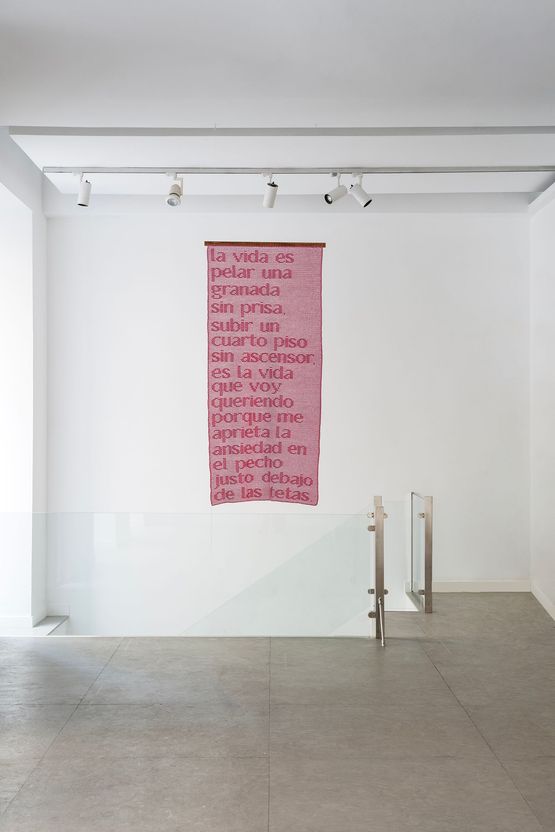
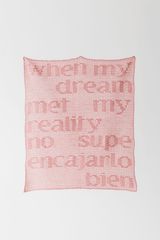
Maru Quiñonero (Murcia, 1979) creates crochet pieces “ in between paintings.” “When my Dream Met my Reality no supe encajarlo muy bien” (2026) exists in at least two versions: one in pink thread and a square format—the work included in this group exhibition at Alzueta—and another in an oblong yellow format, in which the text giving the work its title humorously recalls the LED panels used for Jenny Holzer’s truisms. In fact, the phrase appears to be a colloquial Spanish translation of Protect Me from What I Want, 1983. In these works, Quiñonero revives traditional popular weaving techniques practiced by women from working-class backgrounds—specifically crochet, used by our grandmothers for chair and table covers, bread bags, and other domestic objects—to address contemporary concerns related to memory, female identity, and care.

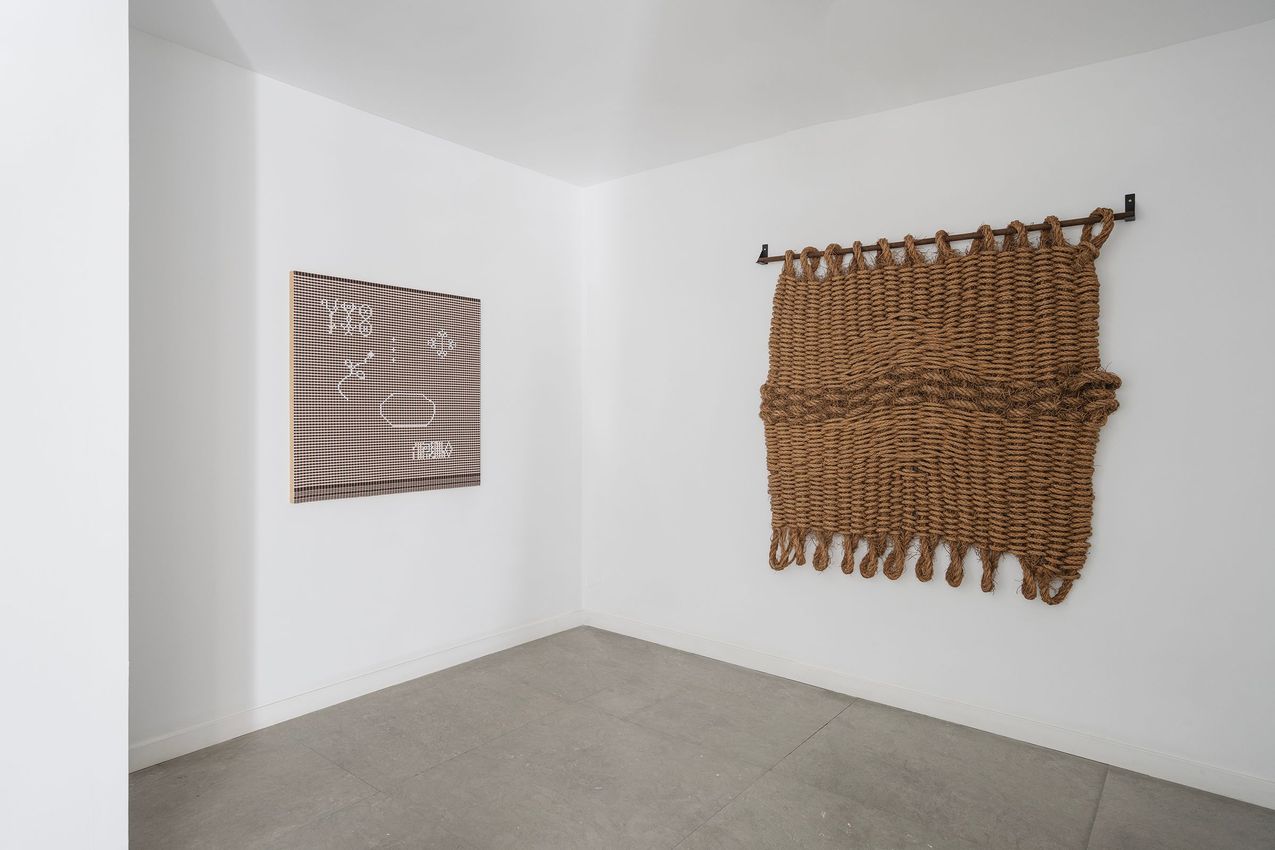
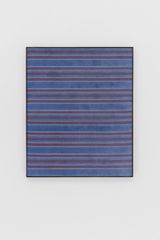
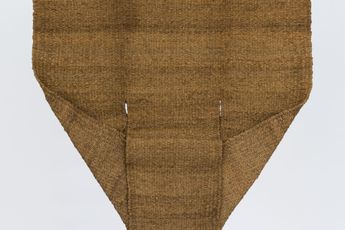
Barcelona-born Ines Sistiaga (1992) brings together design and textile creation in her practice, positioning herself between the utilitarian and the aesthetic. Although she trained as a jeweller, she began working with a knitting machine during a specialisation course in the Netherlands. Since then, she has explored the possibilities of fibre, weaving techniques, and systems of textile construction, integrating artisanal processes with digital tools. Her artwork investigates how matter is generated through its own constructive logic, turning technique into a space for exploration and knowledge through a methodology based on experimentation, observation, and repetition. Her textiles transcend theirs status as mere process to become a tool for thought, understanding textile practice as an ancestral technique that has accompanied humanity since its origins and continues to offer new ways of understanding the relationship between the body, matter, and the environment.

Although these six women artists employ very different artistic languages, they can be understood as part of the same genealogy of contemporary Spanish textile art. They all develop their practices within an artistic context in which textiles have been fully legitimised as a contemporary medium and engage in dialogue with design, sculpture, and painting. In this sense, their research extends the disciplinary openness initiated during the 1960s and 1970s, expanding it through new concerns related to ecology, material culture, feminism, memory, and sustainability.

Text written by curator Isabel Tejeda Martín, CU, UM

Read More

Artists Exhibiting

Also Exhibiting at Alzueta Gallery

Address
C/ Marqués de Monasterio, 1
Madrid
Spain
Opening Hours
Monday – Friday
9am – 2pm / 4pm – 7pm
(1)
Madrid C/ Marqués de Monasterio, 1
Alzueta Gallery
C/ Marqués de Monasterio, 1, Madrid, Spain

Opening hours
Monday – Friday
9am – 2pm / 4pm – 7pm
The art world in focus