





DAVID NASH
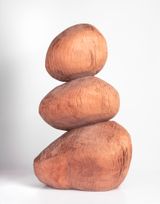
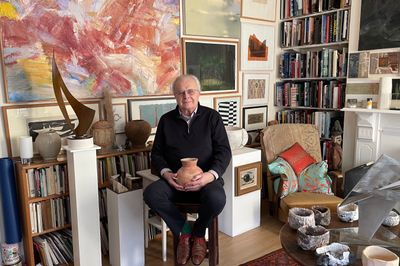
b. 1945, United KingdomBritish artist David Nash joyfully embraces the ongoing life and entropy of organic objects. The sculptures for which he is best know are made mostly from wood that has fallen naturally or been felled for practical reasons (age, safety, et cetera). After utilising air, fire, and water to alter the wood, the final works often remain in a state of flux, stretching and cracking as the aging process continues.
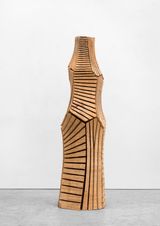
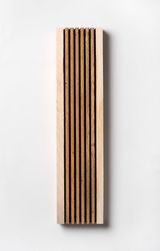
David Nash studied at Kingston College of Art and Chelsea School of Art, London. He has travelled extensively throughout his life, first experimenting with his signature wood-charring style during a stay in Japan in the early 1980s. This charring technique blackens the surface of the wood and is utilised in pieces such as Scale Column (1999) to create works with a range of tones akin to charcoal on paper.
Many of David Nash’s most famous works are ongoing as they continue to grow or decay. Wooden Boulder (1978—ongoing) is a rough sphere about three feet wide and made out of a 200-year-old oak tree. Nash has tracked, lost, rediscovered, and occasionally intervened in the boulder’s path in the wild for more than 35 years.
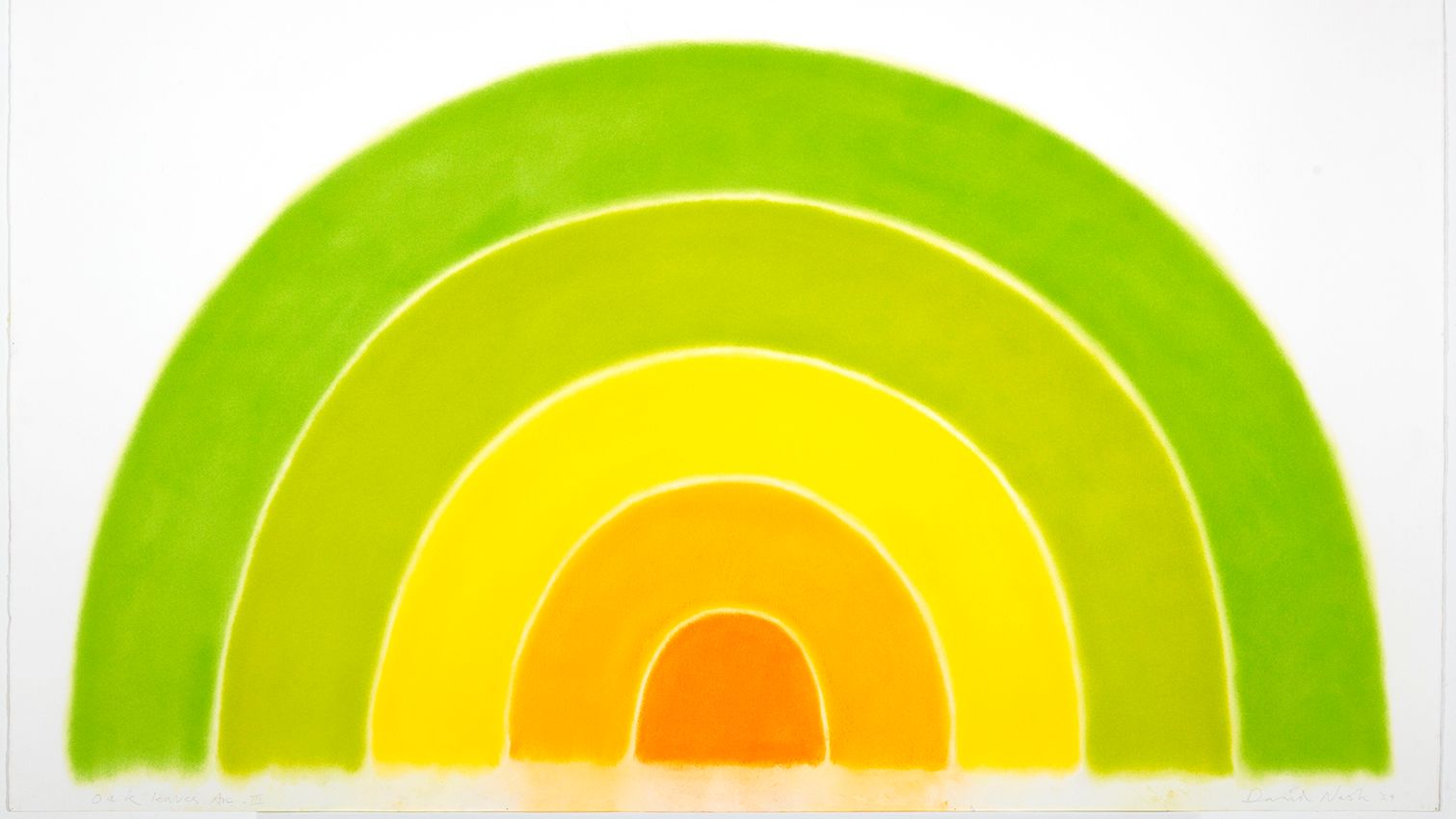
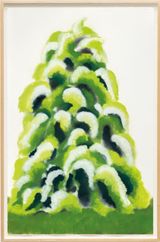
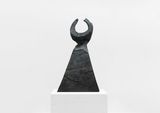
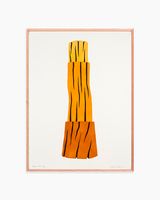
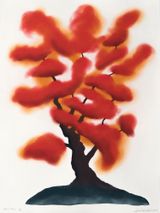
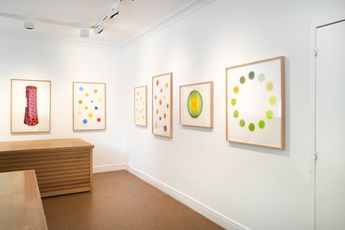
In addition to his extensive sculptural practice, David Nash has a significant drawing practice, generally consisting of geometric abstractions executed in stencils or pastel on paper. Often more colourful than most of his sculptures, these drawings nevertheless echo his three-dimensional forms, with the stacked shapes of Yellow Stack (pastel stencil on paper; 2016), for example, recalling the stacked shapes of Blue Column (bronze, blue patina; 2018).
David Nash has been exhibited at prestigious galleries and institutions world-wide, including Galerie Lelong & Co., Paris (2016); Frederik Meijer Gardens & Sculpture Park, Grand Rapids (2014); Yorkshire Sculpture Park (2010); and Kunsthalle Mannheim (2009). His work is held in significant collections including The Metropolitan Museum of Art, New York; Victoria & Albert Museum, London; and The Museum of Contemporary Art, Los Angeles.
David Nash was elected to the Royal Academy of Arts in 1999. In the same year he was appointed a research fellow at Northumbria University, Newcastle upon Tyne, and received an Honorary Doctorate from Kingston University London. He received an OBE in 2004 and lives and works in Blaenau Ffestiniog in North Wales.
Casey Carsel | Ocula | 2020

View David Nash's Artworks



















Explore David Nash's Exhibitions




Explore and Follow Artists Shaping Contemporary Art
A respected voice in contemporary art discourse.
Focusing on ambitious storytelling and insightful art-world commentary. Ocula Magazine publishes in-depth interviews, critical essays and timely analysis on the artists, exhibitions and ideas driving the global art world.
Learn more about Ocula Magazine
Showcasing the best of the art world.
Ocula partners with galleries from around the world to highlight their artists, artworks and exhibitions. Gallery membership is by application and invitation, with each member vetted by an independent panel.
Learn more about Ocula Membership
Specialises in the sale of major artworks.
Led by a team with deep ties to the world’s leading auction houses, galleries and collectors. Ocula’s advisory team offers bespoke services to high-net-worth clients from around the world who are looking to acquire the best of contemporary and modern art.
Learn more about our team and services