Press Release

Capsule is pleased to present Trompe L’œil , Anthony Iacono’s (b. 1987, Nyack, NY; lives and works in Philadelphia) second solo presentation with the gallery, opening on April 18 and on view through June 6, 2026.

Taking its title from the historical genre of illusionistic painting, Trompe L’œil engages as a game of perception, misrecognition, and the subtle mechanics of visual belief. The term—literally “to deceive the eye”—points to a long tradition in which painted surfaces masquerade as reality, staging moments of doubt between what is seen and what is inferred. A canonical example is Raphaelle Peale’s Venus Rising from the Sea, which is believed to be the first painting in American art to depict a nude figure—but Peale has only convinced us that this is a nude, as the viewer is able to access just glimpse of the partial figure. A handkerchief appears to drape over the image, tempting the audience to lift the veil and peek underneath—merely to discover that the illusion resides entirely within the picture itself. A trompe l’oeil is a world of code and foolery.

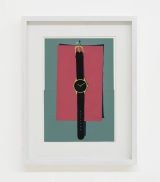
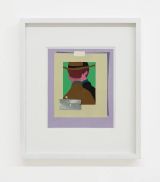
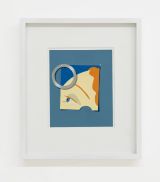
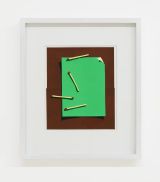
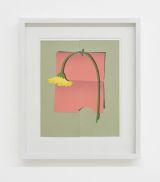
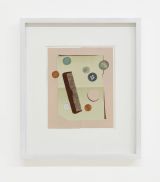
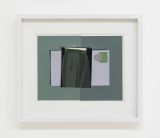
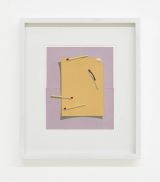
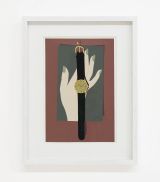
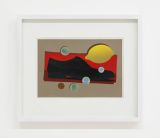
The cunning nature of perception is foregrounded through Iacono’s material process. Working primarily in collage from painted papers, Iacono produces images that initially appear seamless, almost graphic in their clarity. Yet closer inspection reveals a nuanced physicality: cut edges, layered surfaces, slight misalignments, subtly textured brushwork, and shadows that both construct and destabilise spatial illusion.

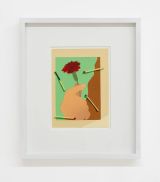
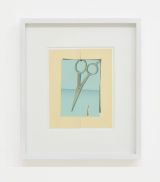
Iacono’s relocation to Philadelphia further informs this approach. The city’s history of trompe l’oeil painting—once central to the development of American realism—persists today in murals, storefronts, and everyday displays. This lineage intersects in the artist’s studio. Props from model sessions decorate the space; postcards, color swatches, scissors, and fragments of other collages—a nod to the artist’s tools and studio process—are pinned to walls and cast shadows which camouflage as reality in the works in this exhibition. Coins scatter across an opened envelop; paper corners curl forward; a flower hangs over a nail; a razor blade is pinned atop a print taped to the wall... Multiple pictorial planes stack and hover within a single frame. Rendered to scale, these studio still-lifes entice the eye into a visual game of shadows, spatial relations, and implied narratives. The viewer oscillates between reading the image as flat representation and as three-dimensional object, caught within a perceptual loop that never fully resolves.

In Iacono’s work, the logic of deception extends beyond optics into unstated meanings. The works draw upon a lineage of coded language—systems that operate through indirection, ambiguity, and shared recognition. Everyday objects and gestures become charged with latent significance: a carnation, a button or coin, or even the act of asking for the time or for a match to light a cigarette... Identity, stance and desire are communicated obliquely through signs concealed under the everyday. Meaning is neither fixed nor singular: it depends on recognition, on context, on who is looking. A flower may function as ornament or as invitation; a gesture may register as incidental or intimate. Across these works, Iacono constructs a visual language that operates like code—public in appearance, yet privately inflected.

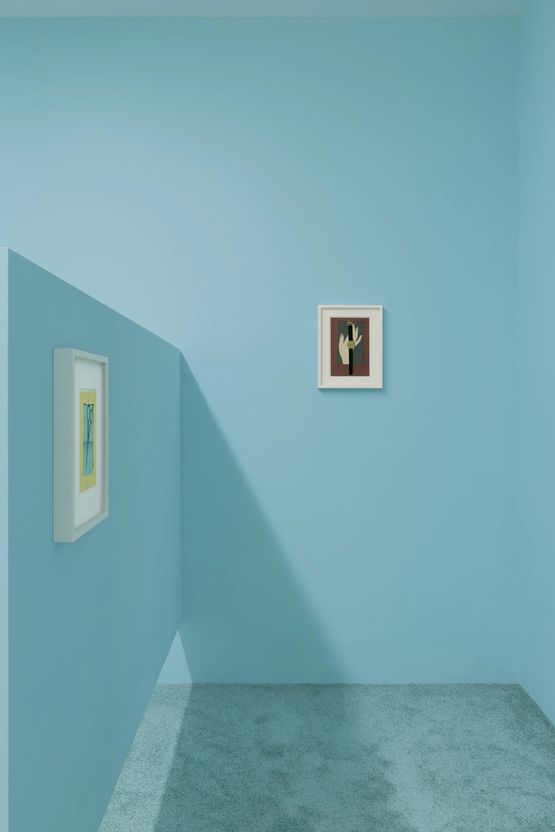
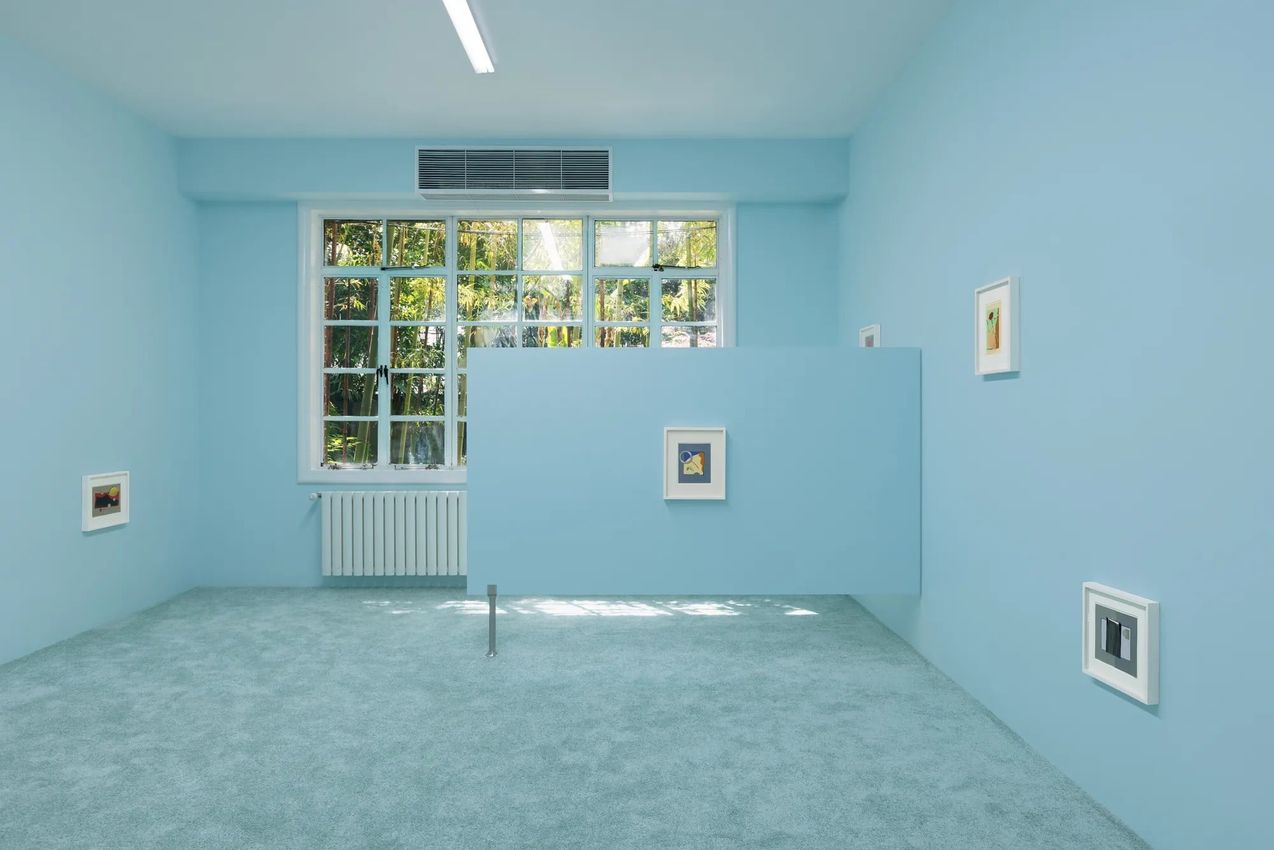
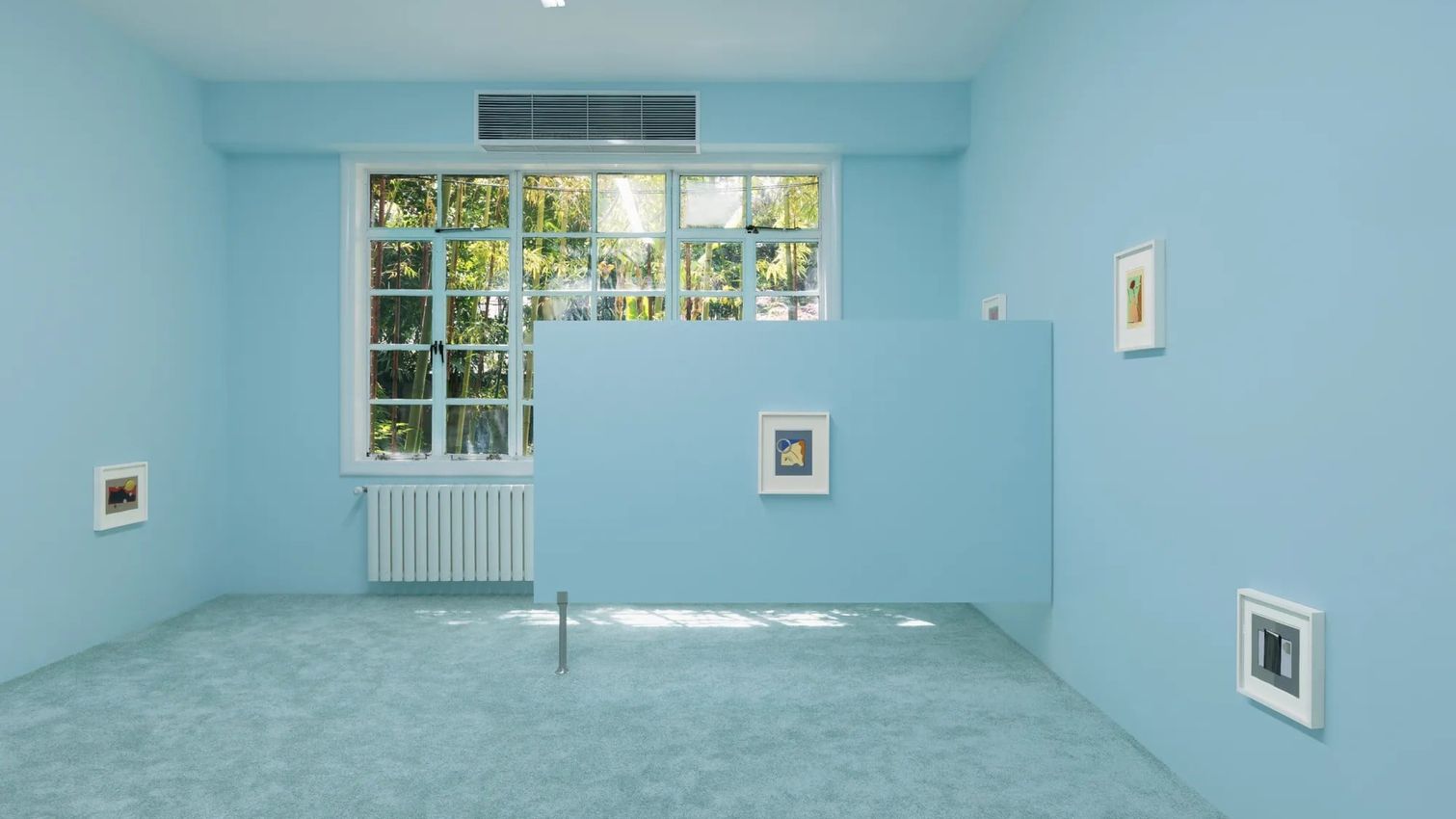
This tension is reinforced by the spatial experience of the exhibition itself. Works are installed at varying heights—some positioned above eye level, others placed low, requiring the viewer to kneel or crouch. This deliberate choreography of the viewing body introduces a heightened awareness of posture, proximity, and visibility. The exhibition space is further transformed through the introduction of partition walls that block windows to the outside and mimic a maze-like space. Within this setting, the act of looking is inflected by a dual sensation: a feeling of privacy coupled with a lingering awkwardness, an awareness of being both alone and potentially observed. The architecture activates not only movement, but also perception, framing each work as something glimpsed, approached, or partially concealed. Seeing becomes situational, contingent, and subtly performative.

Across Trompe L’œil, deception is not simply a visual trick but a relational condition. The exhibition short-circuits the loop between seeing and interpretation, opening a crevice where meaning emerges through suggestion, through timing and proximity, through what is articulated and what is withheld. When recognition is always partial and potentially mistaken, embrace the deceit. Lean into the illusion, for it can be a portal to a realm of alternative histories, perceptions, and ways of understanding.

Read More

Installation Views

Selected Works

Loading...
About the Artist

Anthony Iacono is an artist based in New York (b. 1987). He received his BFA from the School of Visual Arts in New York and his MFA from Virginia Commonwealth University in Richmond, Virginia. He attended the Skowhegan School of Painting and Sculpture in 2013 and has been an artist in residence at LMCC Workspace and the Museum of Art and Design. He has had solo exhibitions at P.P.O.W. Gallery, The Approach, Marinaro Gallery and Capsule Shanghai.

View Artist Profile

Also Exhibiting at Capsule

About the Gallery

Established in late 2016 by Italian gallerist and long-time influential figure of the Shanghai art scene Enrico Polato, Capsule Shanghai is a self-described ‘gallery and art laboratory’ based in Shanghai’s central Xuhui District. Situated on the first floor of a picturesque 1930s garden house in the idyllic greenery of the former French Concession, the gallery works primarily with emerging Chinese and international artists who push the boundaries of contemporary art. Its special focus has been on artists who have personally and professionally migrated between regions, creating unique trans-national and trans-regional links.
View Gallery Profile
Address
1st Floor, Building 16
Anfu Lu 275 Nong
Xuhui District
Shanghai
China
Opening Hours
You can book via our Wechat Mini-program or by sending a mail to info@capsuleshanghai.com

Tuesday – Saturday
11am – 6pm

Closed Sunday, Monday and national holidays
(1)
Shanghai 1st Floor, Building 16, Anfu Lu 275 Nong
Capsule
1st Floor, Building 16, Anfu Lu 275 Nong, Xuhui District, Shanghai, China
Opening hours
You can book via our Wechat Mini-program or by sending a mail to info@capsuleshanghai.com

Tuesday – Saturday
11am – 6pm

Closed Sunday, Monday and national holidays
The art world in focus