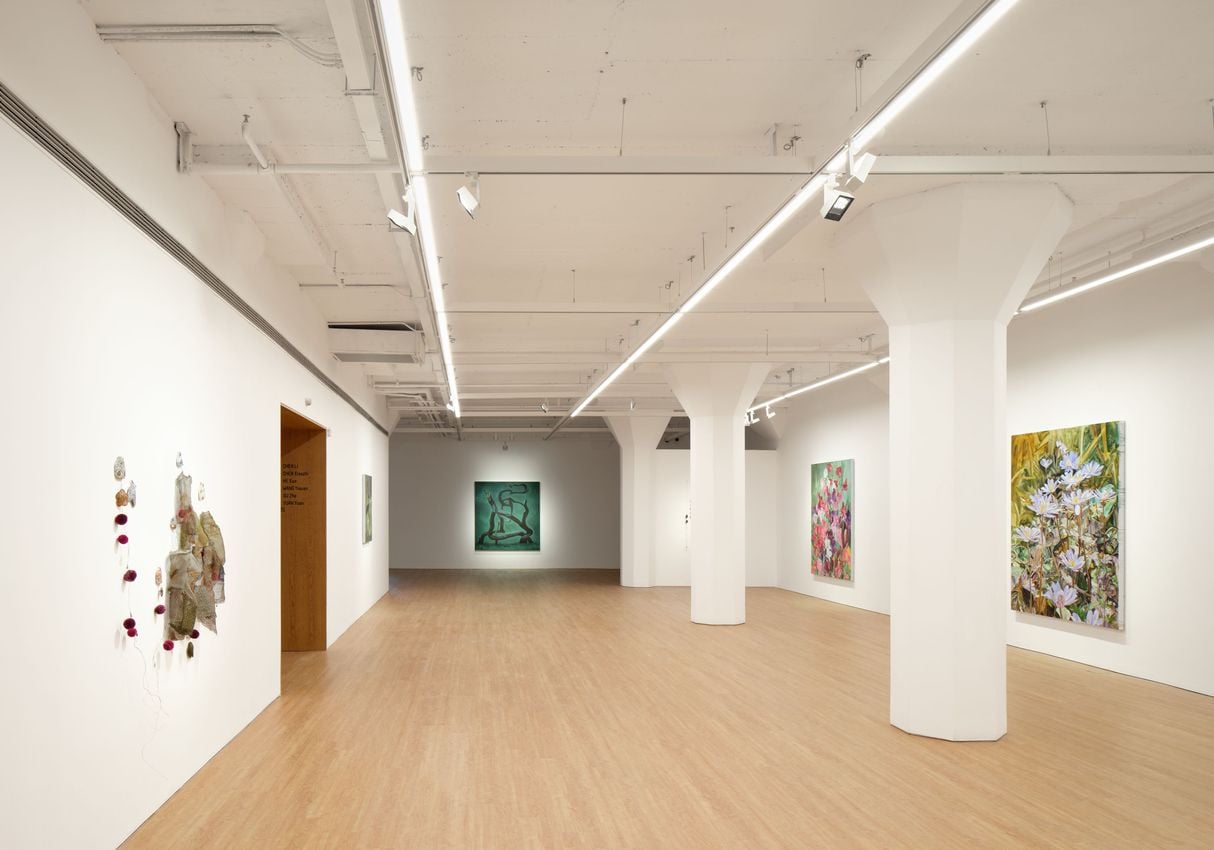
Arario Gallery Seoul is hosting a solo exhibition called Botanimal Garden by Ruby Unkyung Hur, who has long worked in her own unique artistic language. This solo exhibition, presents more than 100 ‘botanimal’ drawings, including a large installation project at the basement floor of the exhibition hall.
Hur has created a unique world of art by adding strange vitality to organisms just as cells multiply. The images displayed on the first floor may seem like plants, but they are all drawn in the shape of heteromorphic creatures. The Botanimal series—whose title came from the combination of ‘botanic’ and ‘animal’—tests the border between standards and heteromorphism, the classification of animals and plants, and the limitations of beauty and unfamiliar imagination. Hur prepared these creatures’ place on one corner of the Earth where grotesqueness and atypia are excluded. The artist tells us to pay attention to how organisms that look so insignificant and useless are adapting to surroundings in a desperate manner. Even a desperate life energy is felt in a single blade of grass, soft hair that come out on a grass stem, and shining eyes that seem to light the universe.
Hur’s work, in which animals and plants are combined to create new creations, is sometimes felt as part of taxonomy, a branch of biology that divides the biotypes and species of living creatures into specific criteria, collects information on all living creatures, analyzes their evolutionary processes, and lays the foundation for the analysis of the ecosystem. The creatures that appear in Hur’s work resemble a process of evolution that has been selected and eliminated by natural environment. The artist changes the existing biological properties to create new species, and then increases and divides them, creating mixed genes of different creatures. In fact, Hur’s creatures often question the genetic diversity of the species formed as a result of natural selection according to the theory of evolution. As if they subvert philosophical questions of biology and religions like ‘Who creates living things?’ and ‘Can you explain creation only in a scientific way?’ the artist’s creatures disprove our attitude of trying to explain creation and creatures through scientific logic in a limited way.
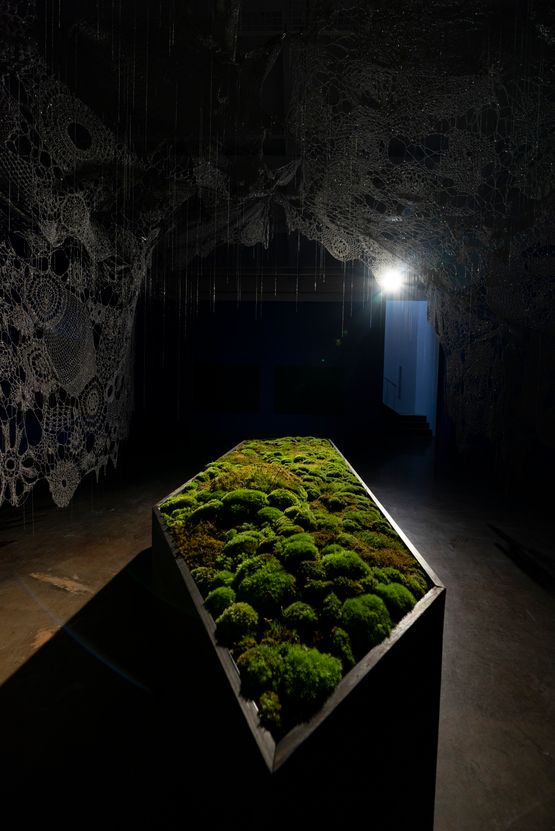
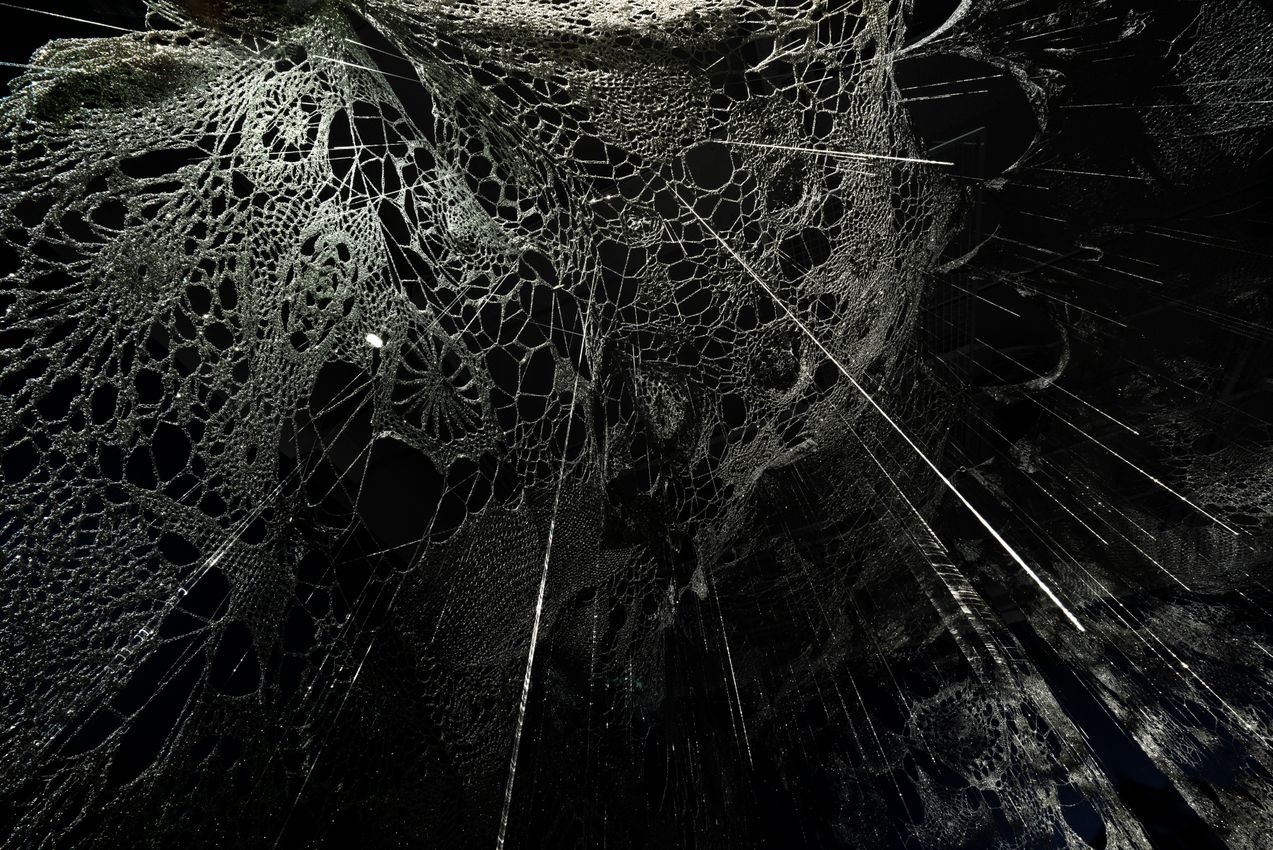
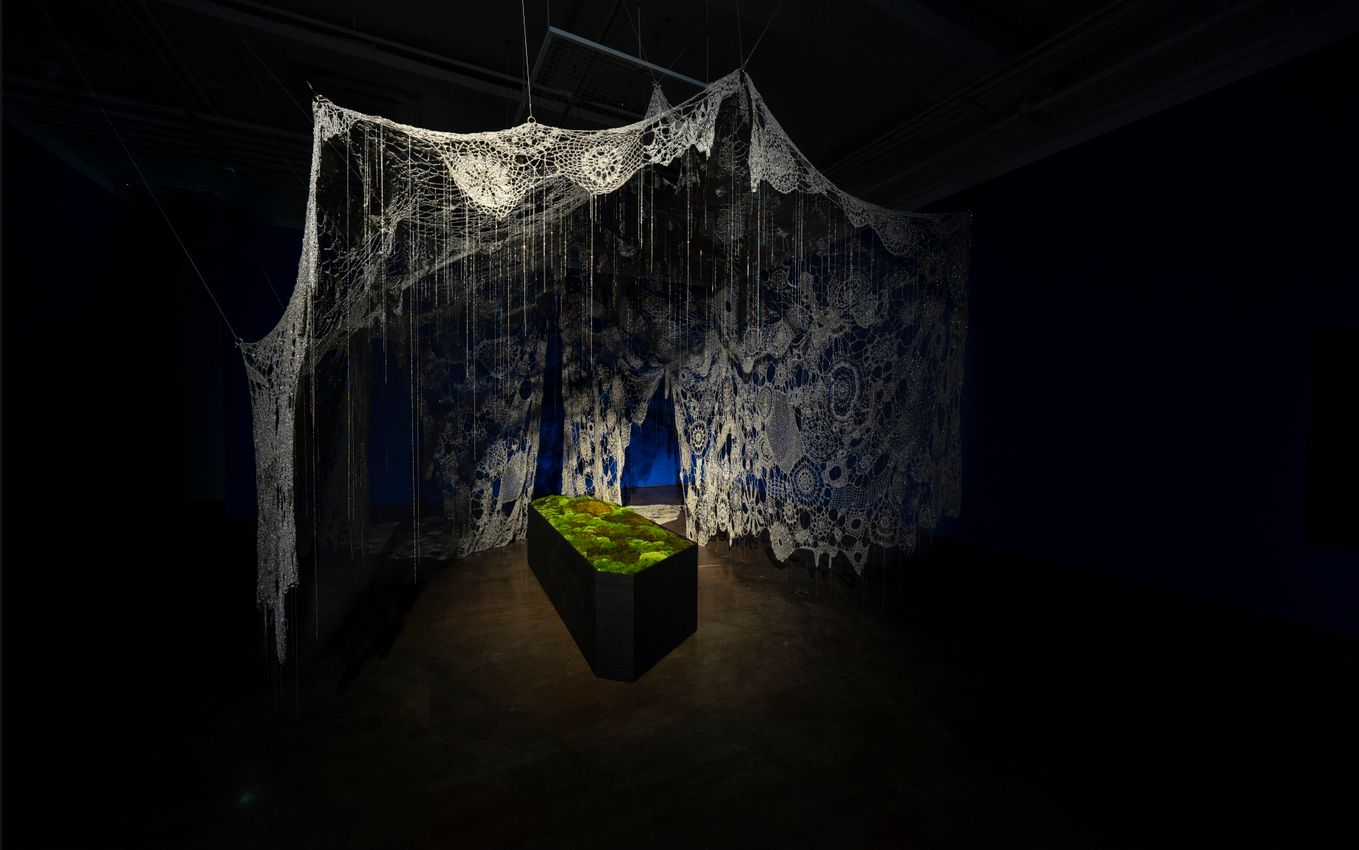
In the basement of the exhibition hall, you will find a work to extend the artist’s thoughts on organisms into a three-dimensional space. A lace tent made by knitting silver thread creates the sky, and on the ground wet moss grows on a tomb that looks like a coffin of a creature. The artist delivers cosmic vitality by guiding the audience to an alien place, not the place where living creatures actually live. In this way, we can feel a sense of humankind that exists in such a huge mechanism, and furthermore the time and fate that governs human beings. At this exhibition that displays Hur’s Botanimal series—which multiplies and divides heteromorphic unfamiliarity in familiar surroundings in a completed way—we hope that viewers can find aspects of aesthetic exploration in which the artist expressed creations and beings with her unique thoughts and philosophy.
Ruby Unkyung Hur was born in 1964 in Seoul, Korea. After graduating College of Fine Arts at Seoul National University, Hur received BFA and MFA at Art Center College of Design, Pasadena (CA, USA). She began her artistic career with the first exhibition, After Myth, at Art Center College of Design, Pasadena, and held several solo exhibitions in Korea as well as participated at numerous group exhibitions in Korea, Germany, and China.


ARARIO GALLERY SEOUL opened its doors in Sogyeok-dong in 2006. Since then, it has established its foothold as a leading contemporary art gallery in Korea and across Asia, continuing to be at the forefront of the international art scene through its efficient representation system and bold exhibitions. In March 2014, ARARIO GALLERY SEOUL relocated near the National Museum of Modern and Contemporary Art. In April 2018, ARARIO GALLERY SEOUL RYSE HOTEL, a second exhibition space in Seoul, opened in the Hongdae area. Running concurrently with its primary location until November 2019, the project space aimed to mirror the experimental spirit of the neighbourhood through its innovative programming. In 2022, ARARIO GALLERY SEOUL ended its Sogyeok-dong era. However, the various experimentation and ventures carried out in the gallery’s previous spaces continue to shape its future at its current location in Wonseo-dong, which reopened in February 2023. Through the preemptive discovery of young artists, steady support of represented artists, and the realisation of meaningful and original exhibitions, ARARIO GALLERY SEOUL aims to continually grow and contribute to the growth of the contemporary art scene in Korea.

A respected voice in contemporary art discourse.
Focusing on ambitious storytelling and insightful art-world commentary. Ocula Magazine publishes in-depth interviews, critical essays and timely analysis on the artists, exhibitions and ideas driving the global art world.
Learn more about Ocula Magazine
Showcasing the best of the art world.
Ocula partners with galleries from around the world to highlight their artists, artworks and exhibitions. Gallery membership is by application and invitation, with each member vetted by an independent panel.
Learn more about Ocula Membership

Specialises in the sale of major artworks.
Led by a team with deep ties to the world’s leading auction houses, galleries and collectors. Ocula’s advisory team offers bespoke services to high-net-worth clients from around the world who are looking to acquire the best of contemporary and modern art.
Learn more about our team and services