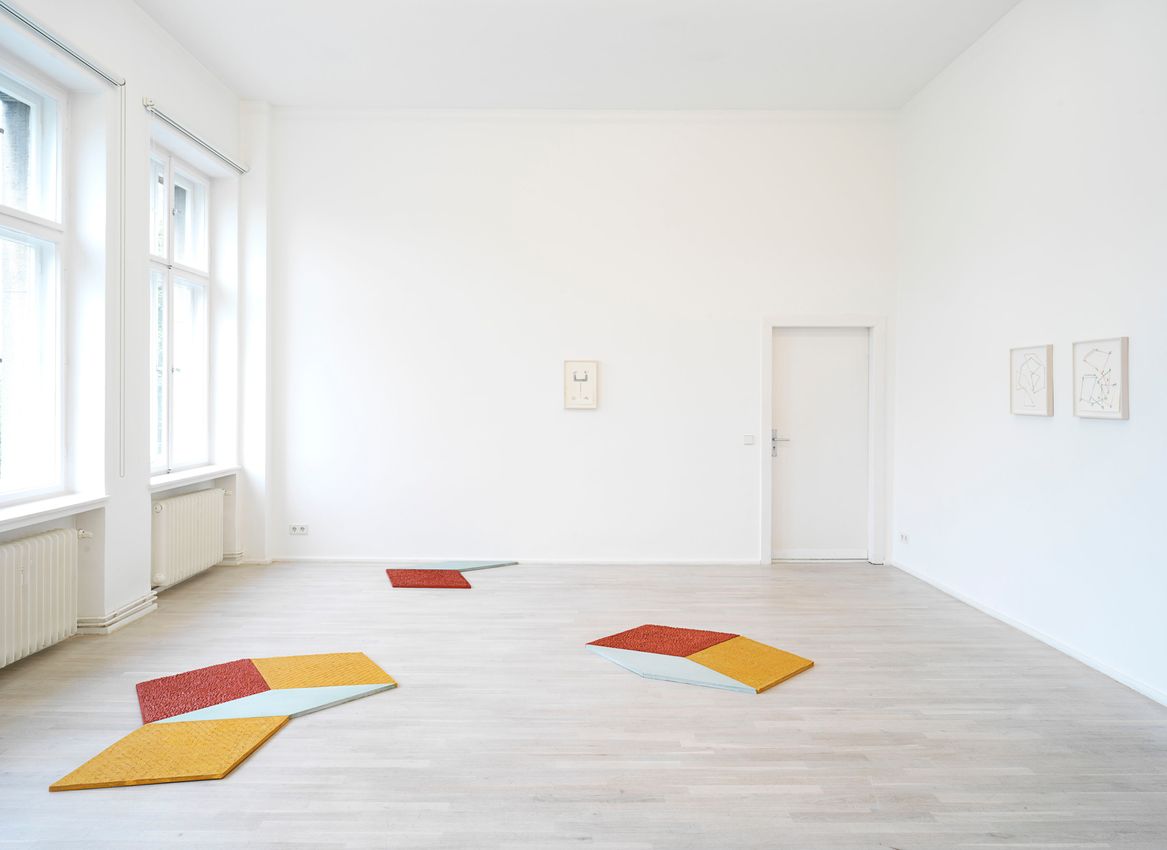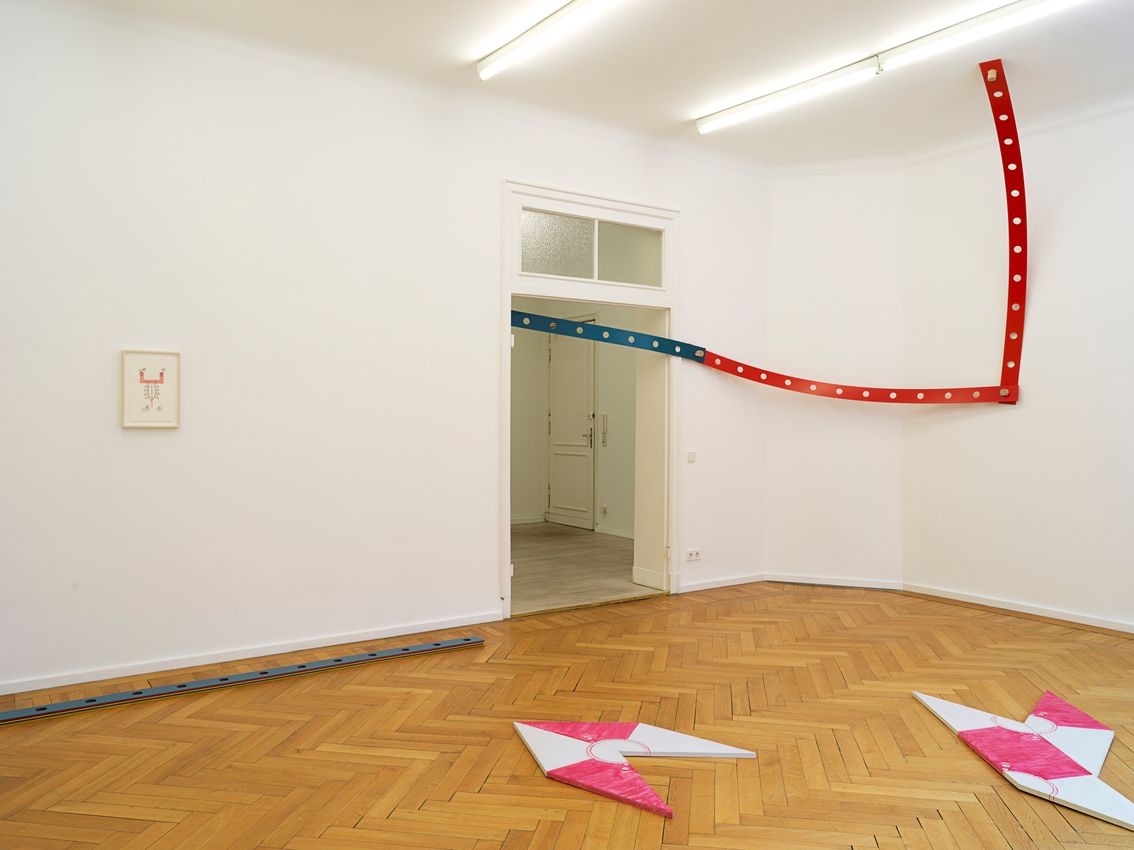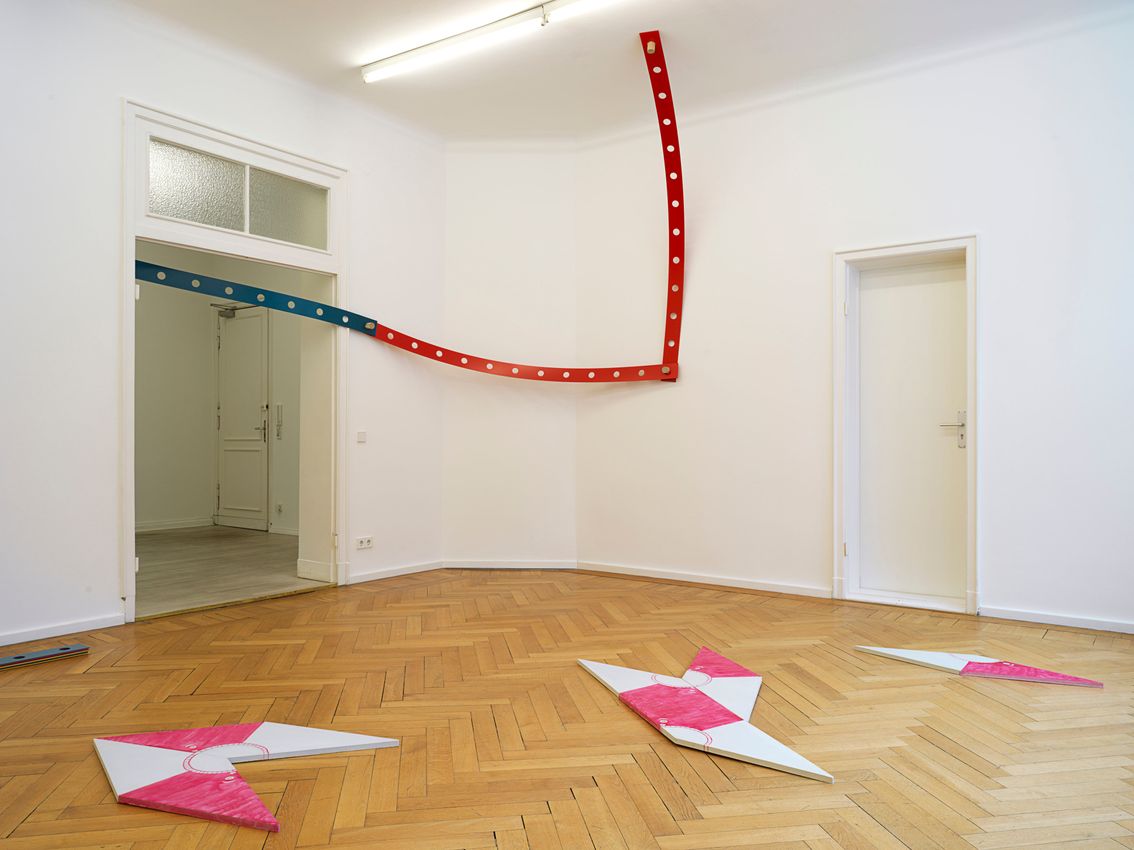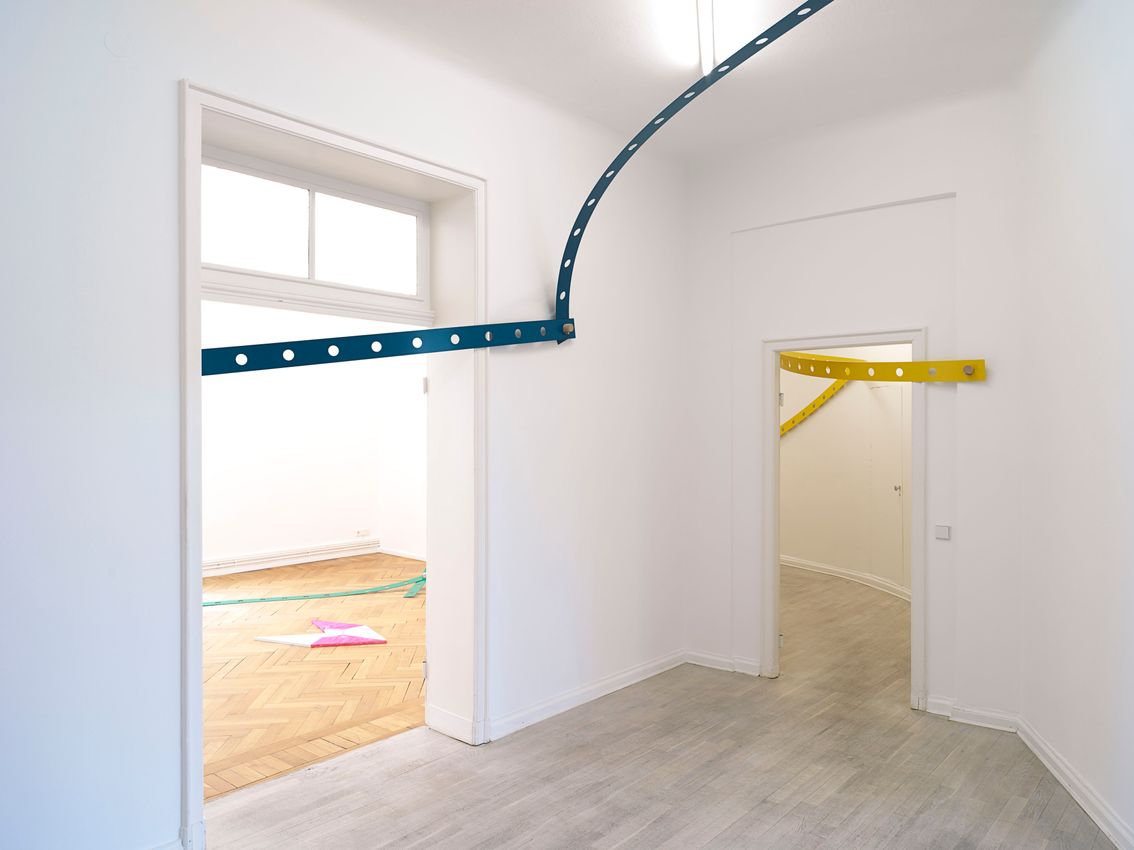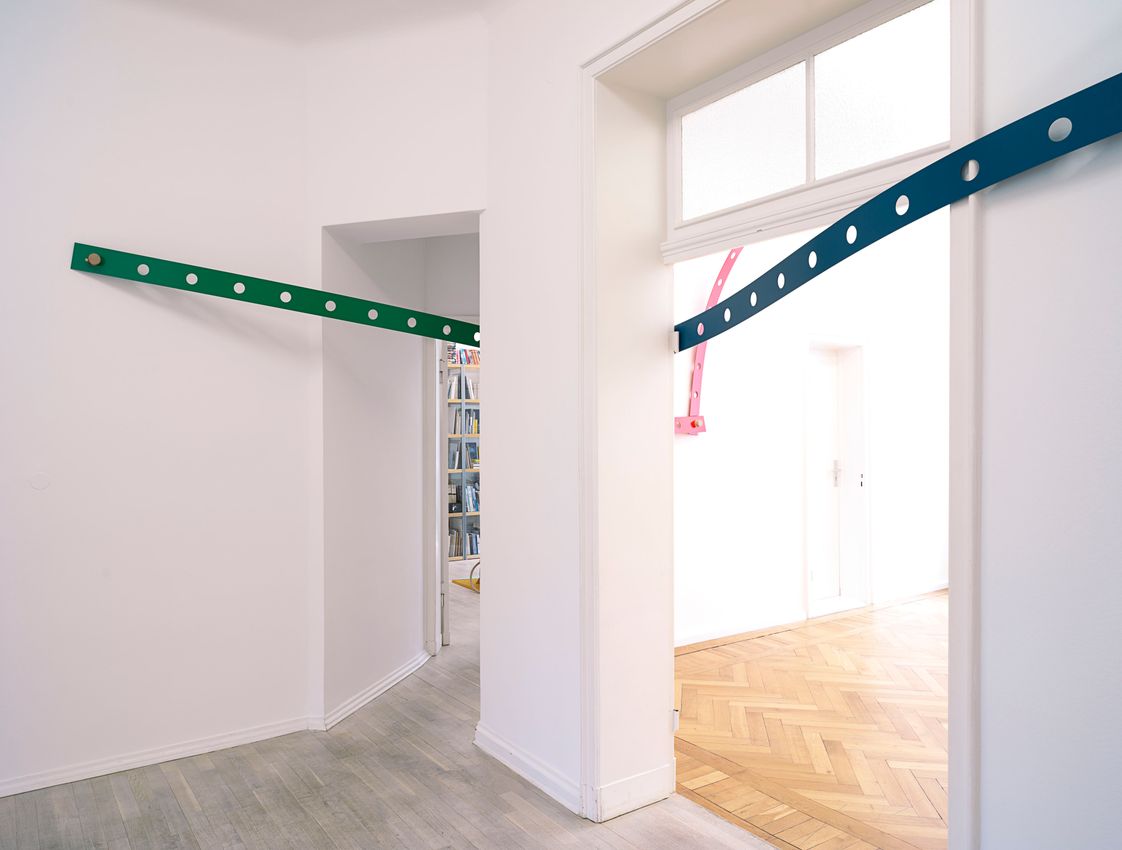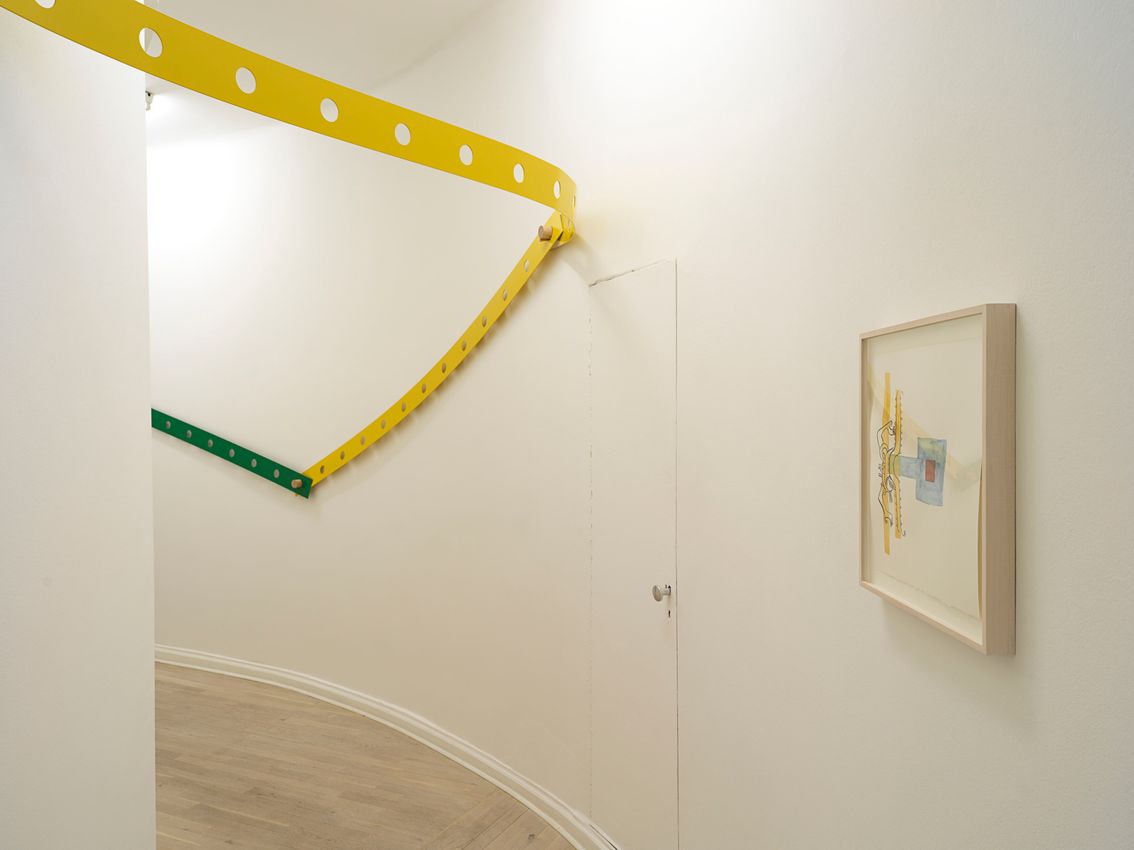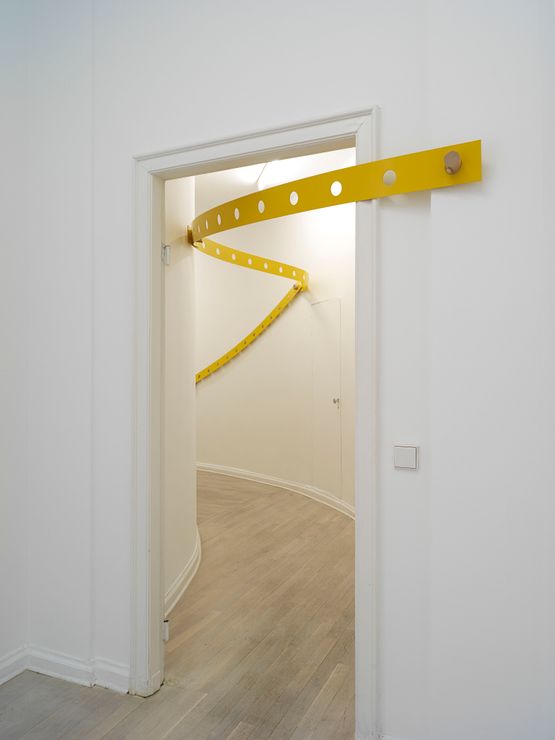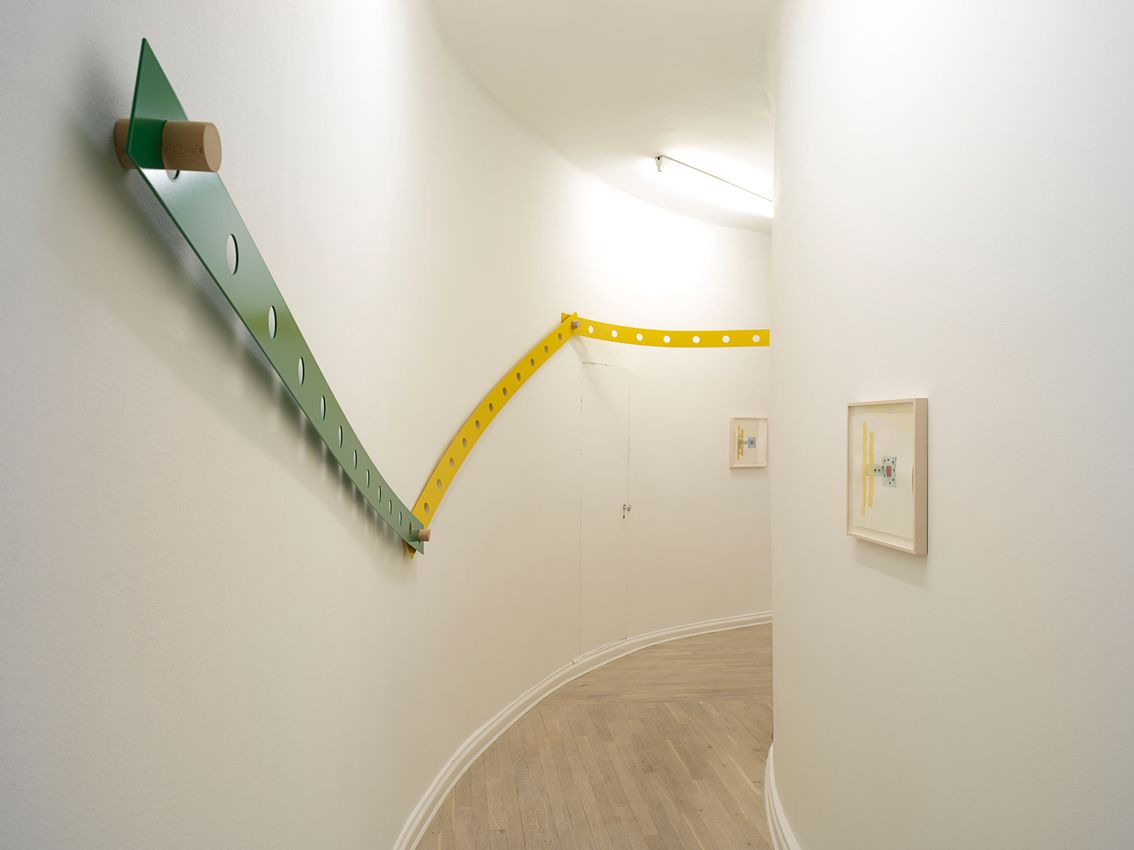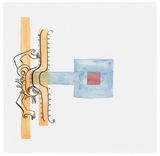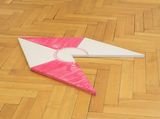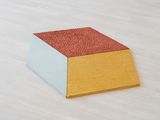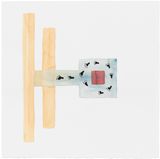
In conjunction with Gallery Weekend 2018, we will present the fourth solo exhibition by Mariana Castillo Deball at our gallery.
das Haut-Ich
“Thoughts are thoughts of the body: one’s own body, other bodies;thinking seeks to bring thoughts together in a body of thoughts.” DidierAnzieu
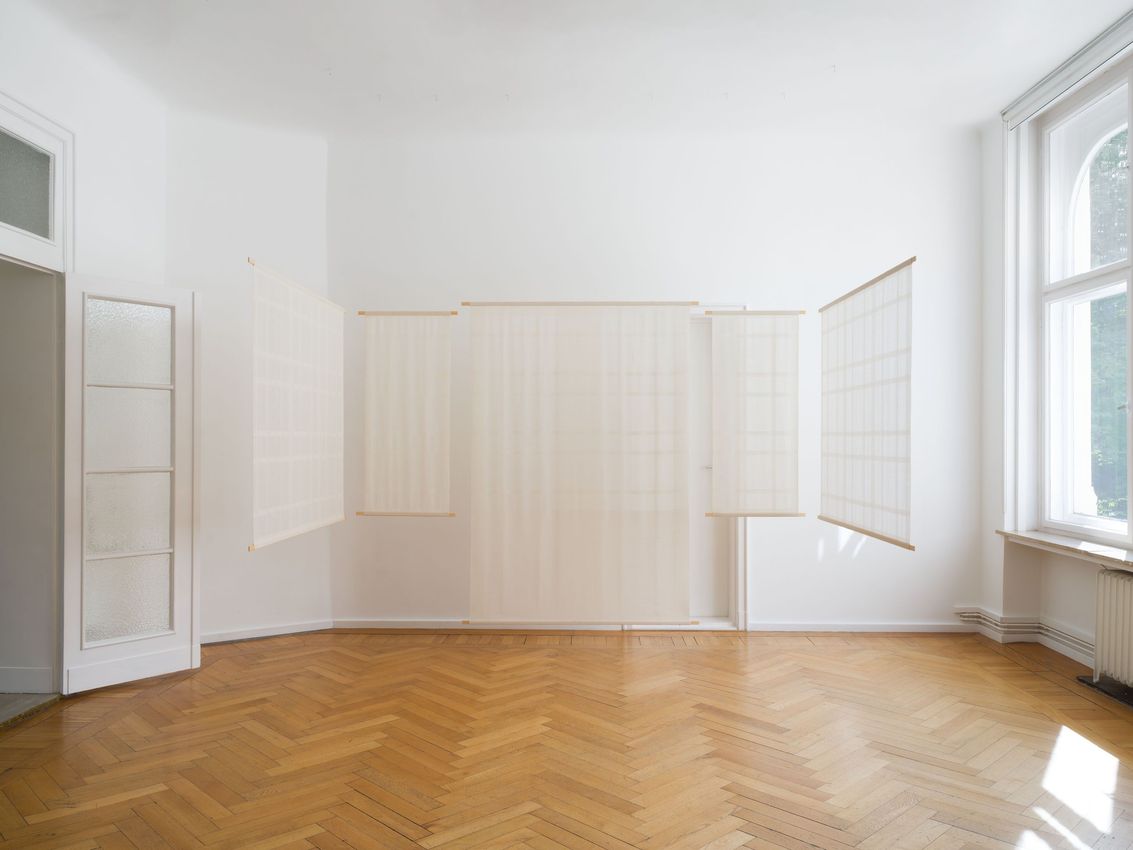
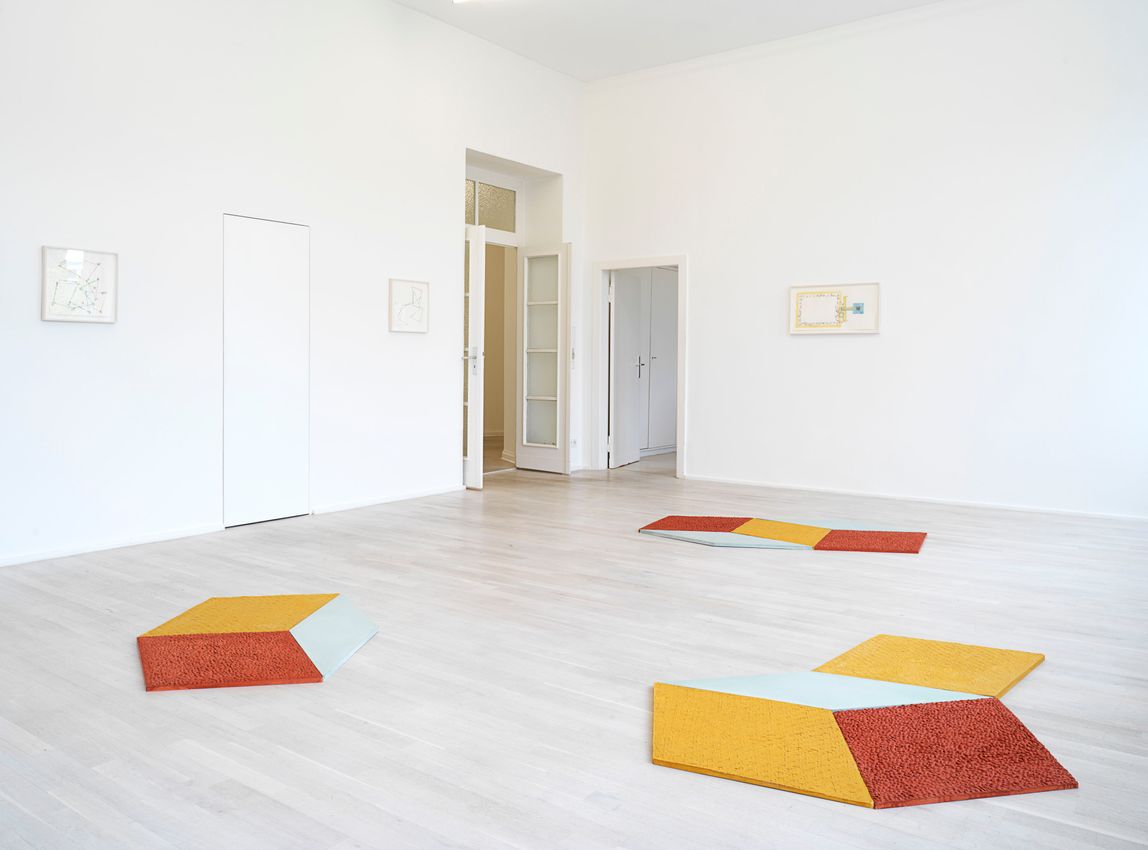
The Skin-Ego is a concept coined by French psychoanalyst Didier Anzieuon the relations between the skin and the formation of the ego. ForAnzieu, both the brain and the skin are surface entities. The exhibitionexplores these mental and bodily skins through a time-space calendarand a shared skin, and includes a series of new sculptures, drawings andan architectural intervention. The works draw a vis-à-vis between the body and the measuring of space and time, taking a calendar and the deity Xipe Totec as a starting point.
The tonalpohualli is a cosmological technology for the count of time. The first evidence of the Mesoamerican calendar dates to the VIcentury BC in the form of calendrical signs and numerals carved inrelief on stone monuments in Oaxaca. Apart from measuring time, it is adivinatory system entangling spatial coordinates, agriculture and ritualsacrifices. The Gods, events and other elements it carries as auguralmessages, define the way people conduct their affairs and even what kindof people they are likely to become.
The tonalpohualli is a calendar of 260 days, composed of two cycles: a cycle of 20 day signs and a shorter cycle of 13 numbers. Eachday is a combination of a day sign and a number, and they runconcurrently until all the combinations are exhausted. The day 1Crocodile is always followed by 2 Wind, 3 House, 4 Lizard, and so on,until the shorter 13 number cycle ends with 13 Reed, after which itstarts anew with 1, yet continues to combine with the remaining daysigns - 1 Jaguar, 2 Eagle and so forth.
The connection between the body and the environment is present in thecalendar, for instance the signs of the days and the body parts maintaina correspondence. The sap of the amate tree used to make paper isblood, the smoke of fire is human breath, and the tree bark is humanskin. It is a game of substitutions and transmutations in the indigenouscosmogony. Departing from the skin and its materiality, the materialgives shape and identity. It materializes but also substitutes andpersonifies, not only by visual analogies but also by subtle materialrelations.
In the calendar, the deity Xipe Totec is often depicted as a man wearing the flayed skin of another on top of his own. The annual festival related to Xipe Totec consisted of the sacrifice of the victim, and the transfiguration ofanother person through wearing the skin of the sacrificed. The Nahua concept of ixiptla derives from the particle xip, meaning skin, coverage or shell. As a natural outer layer of tissuethat covers the body of a person or animal, the skin can be separatedfrom the body to produce garments, containers for holding liquids orparchment as a writing surface. Ixiptla has been understood as image, delegate, character and representative.
Within the frame of our exhibition, Mariana Castillo Deball will present the fourth issue of Ixiptla: a series of collaborative research journals published by Bom Dia Boa Tarde Boa Noite in Berlin.
Parallel to the opening of our show, the exhibition Hello World. Revising a Collection opens at the Hamburger Bahnhof – Museum für Gegenwart in Berlin wherethree major works by Mariana Castillo Deball will be on display. Theceramic columns Rhomboid, Mechanical Column and Snake that have been shown at our gallery in 2015 are part of her project Who will measure the space, who will tell me the time?. The initial question for the project was what relationship the Atzompapotters have with their archeological heritage and how it is expressed,contaminated or dissolved in the present. Several patterns can beidentified among the different ceramic modules of the columns:pre-Hispanic figures, screws, toys or even Brancusi’s famous rhomboidsfrom the Endless Column. The exhibition at Hamburger Bahnhof Berlin will be on view until August 26.
Mariana Castillo Deball (*1975 in Mexico City) lives and works inBerlin. In 2013 she won the Nationalgaleriepreis für junge Kunst(National Gallery Prize for Young Art), which led to her solo exhibitionParergon at the Hamburger Bahnhof – Museum for Contemporary Art, Berlin in 2014. Deball has had solo exhibitions, nationally andinternationally, at the San Francisco Art Institute, Musée RégionalD’Art Contemporain Languedoc-Roussillon in Sérignan, Museo de artecontemporáneo de oaxaca maco in Oaxaca and in Haus Konstruktiv inZurich, among others. She has also taken part in numerous groupexhibitions.
In 2018, Deball has a solo exhibition at the Savannah College of Art andDesign Museum (SCAD) and her works are on show at the HamburgerBahnhof, Berlin, as well as at the Fondazione Sandretto Re Rebaudengo inTurin, among others. In the show Statues also Die. Conflict and heritage from the ancient world to the modern day in Turin, the Mschatta Fassade – Deball’s main work from her Parergon exhibition – is shown in the Palazzo Reale’s Salone delle Guardie Svizzere until September 9.
Mariana Castillo Deball (b. 1975, Mexico City) lives in Berlin, Germany. Castillo Deball works in installation, sculpture, photography and drawing, exploring the ideologically constructed conditions under which artefacts appear in today’s culture. She takes on a kaleidoscopic approach to her work, culling information from various disciplines such as archaeology and science, and through research and collaboration, creating works that arise from the collision and recombination of these different languages.
Based in Berlin’s central Tiergarten district, Barbara Wien is an established contemporary art gallery with a focus on conceptual art. Since Barbara Wien opened her namesake gallery in 1988, it has also operated a bookshop, selling artist books that date as far back as the 1960s.

A respected voice in contemporary art discourse.
Focusing on ambitious storytelling and insightful art-world commentary. Ocula Magazine publishes in-depth interviews, critical essays and timely analysis on the artists, exhibitions and ideas driving the global art world.
Learn more about Ocula Magazine
Showcasing the best of the art world.
Ocula partners with galleries from around the world to highlight their artists, artworks and exhibitions. Gallery membership is by application and invitation, with each member vetted by an independent panel.
Learn more about Ocula Membership

Specialises in the sale of major artworks.
Led by a team with deep ties to the world’s leading auction houses, galleries and collectors. Ocula’s advisory team offers bespoke services to high-net-worth clients from around the world who are looking to acquire the best of contemporary and modern art.
Learn more about our team and services