





LUCAS SAMARAS
1936-2024, GreeceDecades before the selfie, self-portrait pioneer Lucas Samaras (1936–2024) was a trailblazer for new ways of making images. Moving from a Polaroid into the digital sphere, his portraits and autobiographical pieces focused on selfhood, transformation, psyche and the body. Samaras was also known for his “boxes”, which combined elements of sculpture and painting with found objects and often played with the idea of the “box” itself.
Early Years
Born in Kastoria, Greece, in 1936, Lucas Samaras emigrated to the US in 1948. He studied at Rutgers University when it was the focal point of the Happenings movement (performances breaking down the boundaries between artist and audience), led by Samaras’ professor, Allan Kaprow.
Lucas Samaras: Artworks
Experimentation lay at the core of Samaras’ practice. While some of his work used traditional media (photography, sculpture, painting and drawing) he also made tapestries and re-imagined furniture.
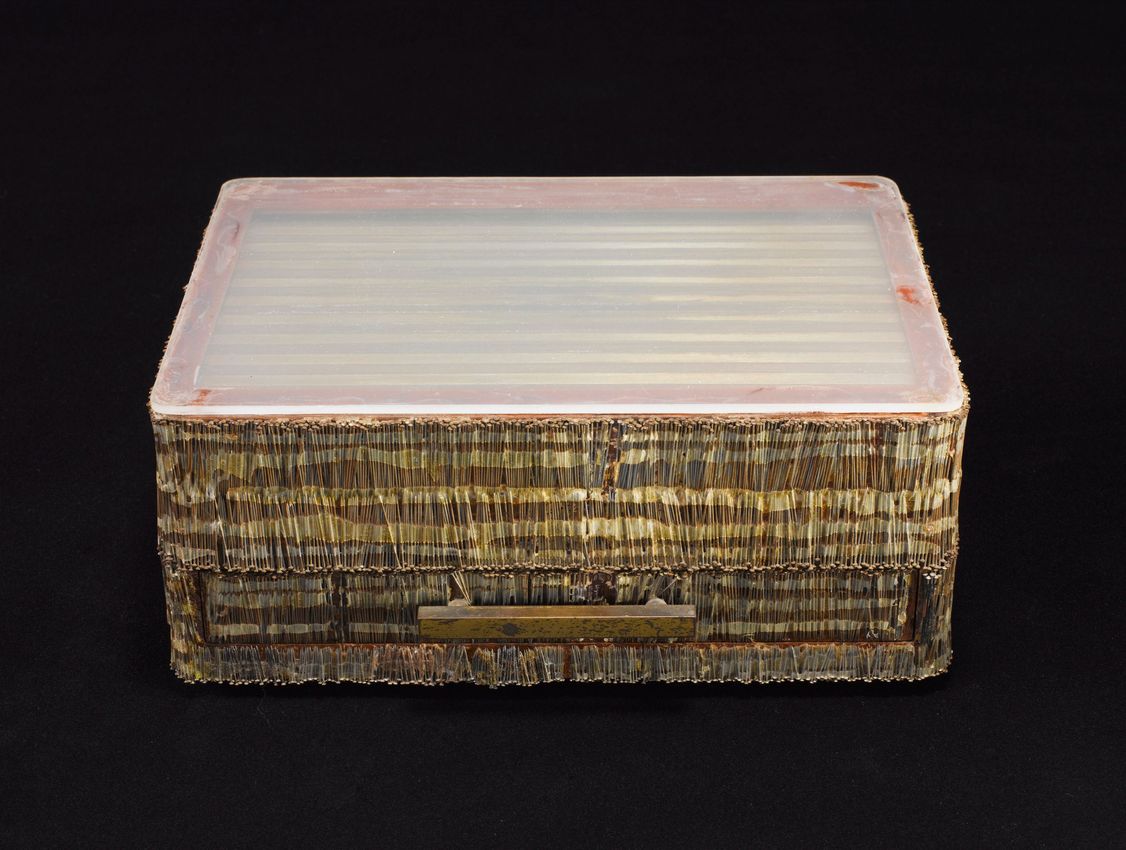
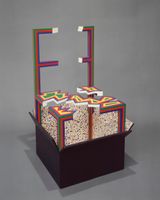
Samaras began his iconic Boxes series during the early 1960s, eventually creating 295 artworks. Each box centres on the self, using found objects to bring viewers to the edges of Samaras’ mind. While the series began with actual found boxes, later examples were more sculptural, distorting traditional structures. A related work is 1966’s Room No 2, which invites viewers to become active participants in a room-sized, mirrored installation.
Samaras’ AutoPolaroid series (1969–1971) consisted of Polaroid photos—many of which were self-portraits—enhanced with hand-applied ink to re-imagine the negative space around him and distorting the truth of the original image. He continued his Polaroid adventure during the 1970s: in the Photo-Transformations (1973–1976) series he smeared and scratched the developing photographic emulsion, creating surrealist, abstract imagery.
Samaras did not limit himself to analogue tech: he was responsive to digital technology and the new possibilities it opened up for image production and self-imagery. After acquiring his first computer in 1996 and digital camera in 2002, the artist went on to create such works as the Photofiction series (2003), which used Photoshop to create self-portraits and abstractions suspended between reality and fantasy.
In the Boxes series, Box #42 (1963) is covered in yarn, and inside lies a mixture of the sharp and the soft (a skull, a globe, a syringe). But in a lower tray live wooden sticks topped with cut-outs of nude figures.
In Split (1973), spliced dyptichs fuse together two Polaroids, joining together the slashed pictures on a diagonal, blending self-portraits with images of objects.
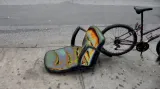
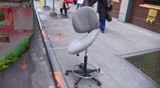
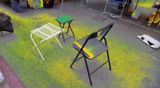
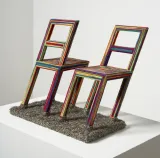
Chair Transformation Number 20B (1996) is an abstract sculpture that transforms the mundane object of a chair into a nonsensical thing of artistic splendour, drawing from Marcel Duchamp’s readymades. In the work, Samaras stacked multiple chairs on top of one another to create an illusion of a staircase leading up to the sky. The sculpture appears to be upright, slanting backwards, or leaning forwards, depending on the viewing angle.
Lucas Samaras: Exhibitions
Select Solo Exhibitions
- Lucas Samaras: Sitting, Standing, Walking, Looking, The Art Institute of Chicago (2026)
- Lucas Samaras: Master of the Uncanny, The Intermission, Piraeus (2025)
- Lucas Samaras, Dia: Beacon, New York City (2024–)
- Pace Gallery, New York (2022)
- Lucas Samaras: Offerings from a Restless Soul, Metropolitan Museum of Art, New York City (2014)
Select Group Exhibitions
- Guggenheim Pop: 1960 to Now, Solomon R Guggenheim Museum, New York City (2026)
- Animal Watch, 125 Newbury, New York City (2024)
- Beyond Surrealism, Waddington Custot, London (2024)
- documenta 14, Kassel (2017)
Further reading
- Spotlight on Lucas Samaras from Ocula (2026)
- Lucas Samaras’ page from the Whitney Museum of American Art
- Article from the Brooklyn Rail about Samaras’ Photo-Transformations (2018)
- Lucas Samaras obituary from Pace Gallery (2024)
Lucas Samaras FAQs
Did Lucas Samaras take Polaroids?
Yes, Lucas Samaras was well-known for taking and manipulating Polaroid images. In his AutoPolaroids series (1969–1971) he photographed himself from all angles, then added hand-painted ink to distort the images. He took this further with Photo-Transformations (1973–1976), in which he played with the developing Polaroid emulsion to create more abstract imagery.
Where can I see works by Lucas Samaras?
You can see works by Lucas Samaras at the Whitney Museum of American Art in New York City, in the Sculpture Garden of the National Gallery of Art in Washington DC and the Iwaki City Art Museum in Fukushima, among other galleries.
What were the main themes in Lucas Samaras’ work?
A significant proportion of Lucas Samaras’ work was based on the self, whether identity, self-investigation or self-portraiture. While often grouped into the Pop Art milieu, Samaras was perhaps more realistically mid-century avant-garde, and his work played with surrealist themes. Samaras’ own body was often a key subject of his works. The artist is known for photography and Boxes, although he also worked in figurative pastels, immersive mirrored installations, sculpture and digital art.
Ocula


View Lucas Samaras' Artworks































Explore and Follow Artists Shaping Contemporary Art
A respected voice in contemporary art discourse.
Focusing on ambitious storytelling and insightful art-world commentary. Ocula Magazine publishes in-depth interviews, critical essays and timely analysis on the artists, exhibitions and ideas driving the global art world.
Learn more about Ocula Magazine
Showcasing the best of the art world.
Ocula partners with galleries from around the world to highlight their artists, artworks and exhibitions. Gallery membership is by application and invitation, with each member vetted by an independent panel.
Learn more about Ocula Membership
Specialises in the sale of major artworks.
Led by a team with deep ties to the world’s leading auction houses, galleries and collectors. Ocula’s advisory team offers bespoke services to high-net-worth clients from around the world who are looking to acquire the best of contemporary and modern art.
Learn more about our team and services