de Sarthe is pleased to present its second solo exhibition for the Vietnam-based contemporary artist Richard Streitmatter-Tran, We No Longer See the Stars. Featuring a new series of paintings, sculptures, and interactive installations, the exhibition stages a commentary on the global tension and social unrest consequent to ongoing disputes across the world. We No Longer See the Stars opens on 18 January and runs through 7 March 2020.
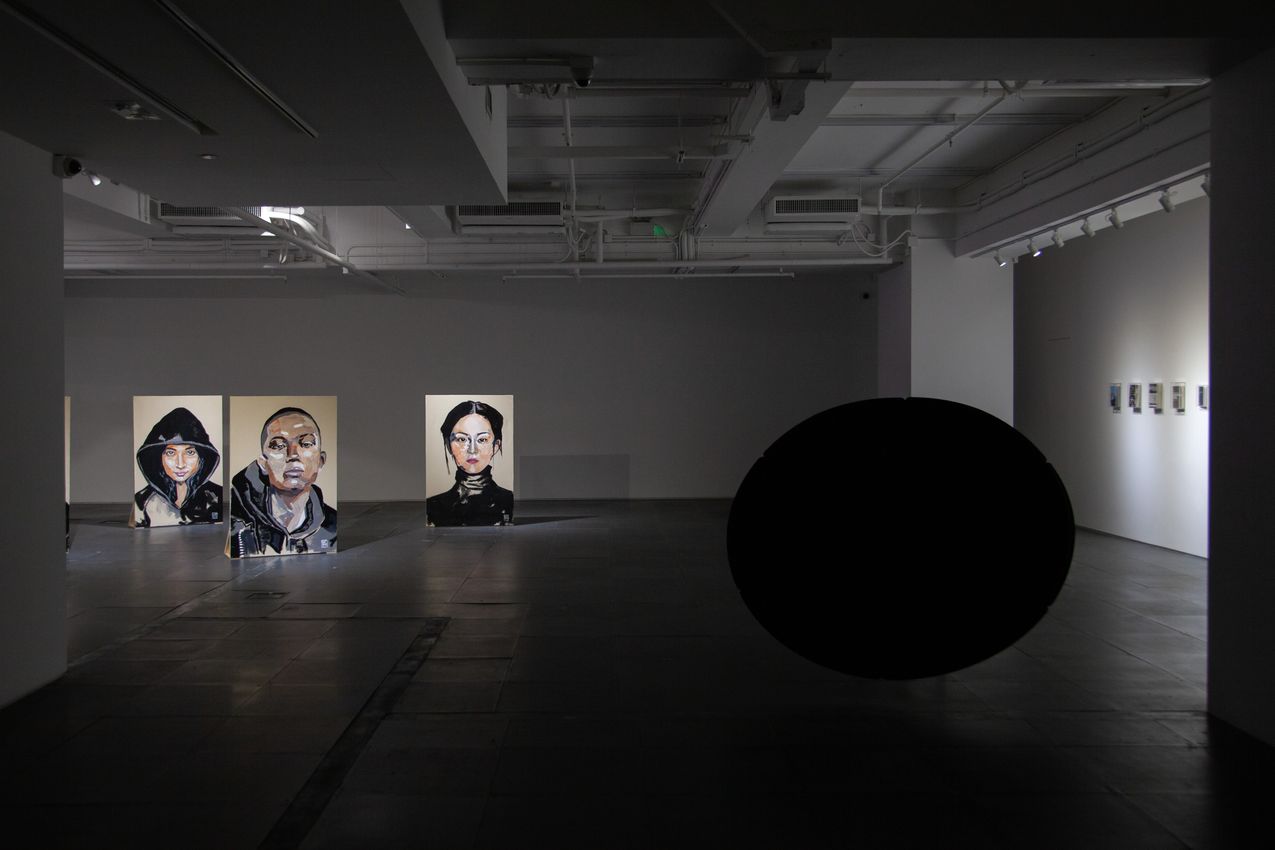
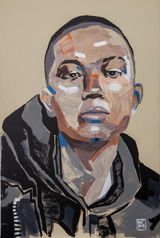
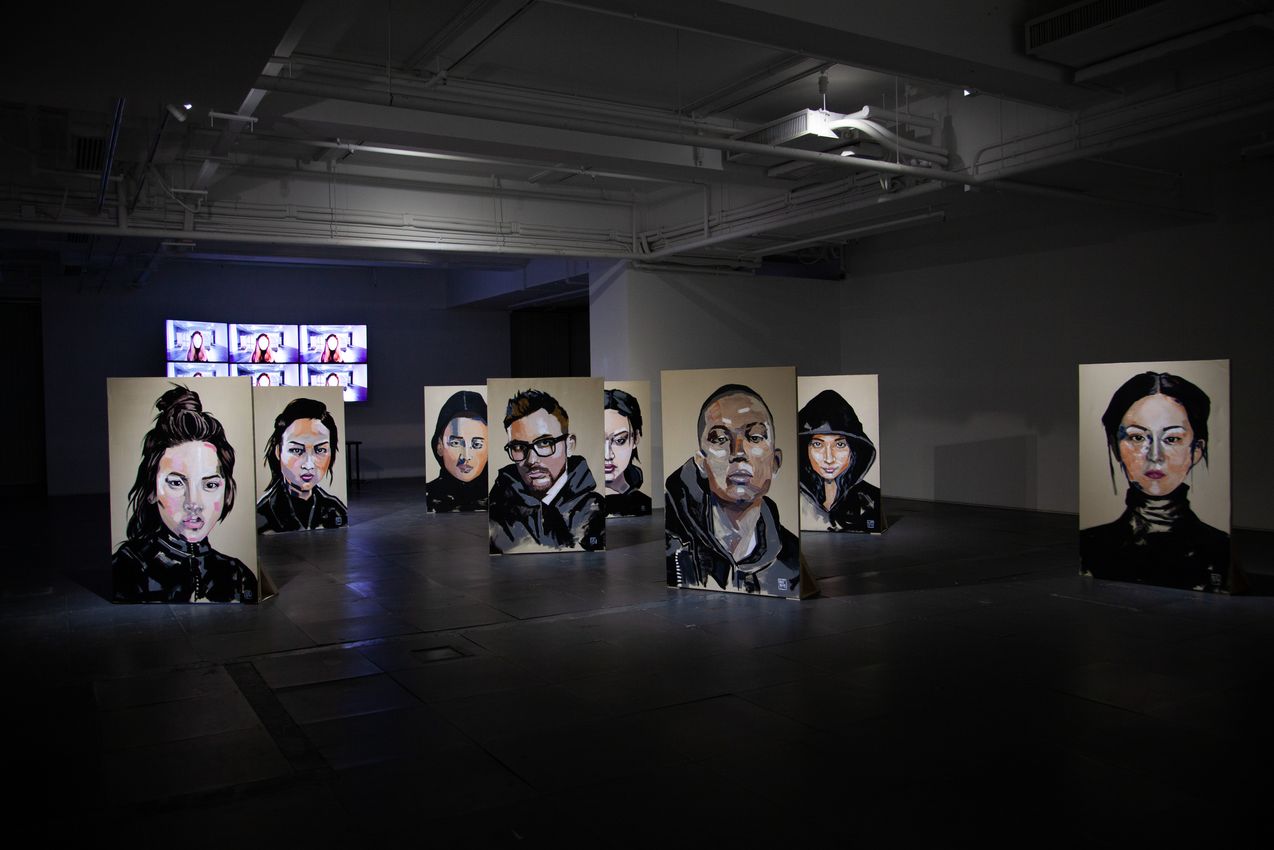
In Bless the Beasts and the Children (2019-20), freestanding portraits of people of various ethnicities dressed in black are propped throughout the gallery. As visitors weave through the space, they are forced to confront the unwavering gaze of the painted subjects. Titled after the 1971 film, in which a group of youth struggle in a pyrrhic battle against preordained defeat, the series speaks to the universal tenacity of human will in the face of conflict. Positioned in a front-facing formation, the figures stand in a field of echoed silence.
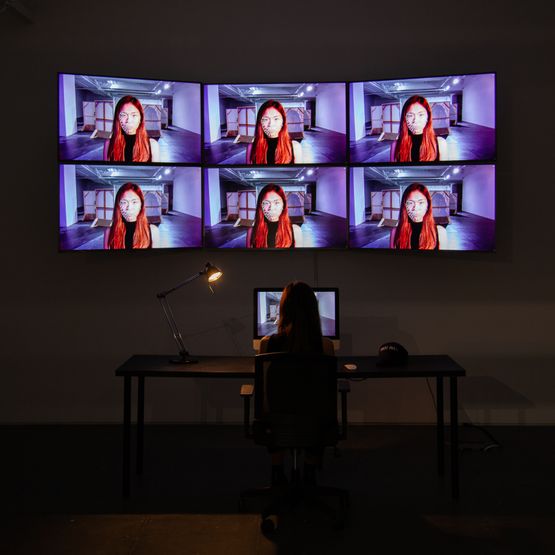
A six-screen installation is centered on the wall behind the standing portraits, in which visitors see a live video feed of themselves moving through the gallery. The interactive installation Face Off (2015–2019) utilizes facial recognition software that perpetually scans for faces, emulating the omnipresent surveillance technologies employed by the public and private sectors. As if stumbling onto unknown footage of oneself, the installation forces the alarming realization that we are constantly under observation, with our identities perpetually digitized, and transformed into two-dimensional portraiture with the rest of the paintings in the space.
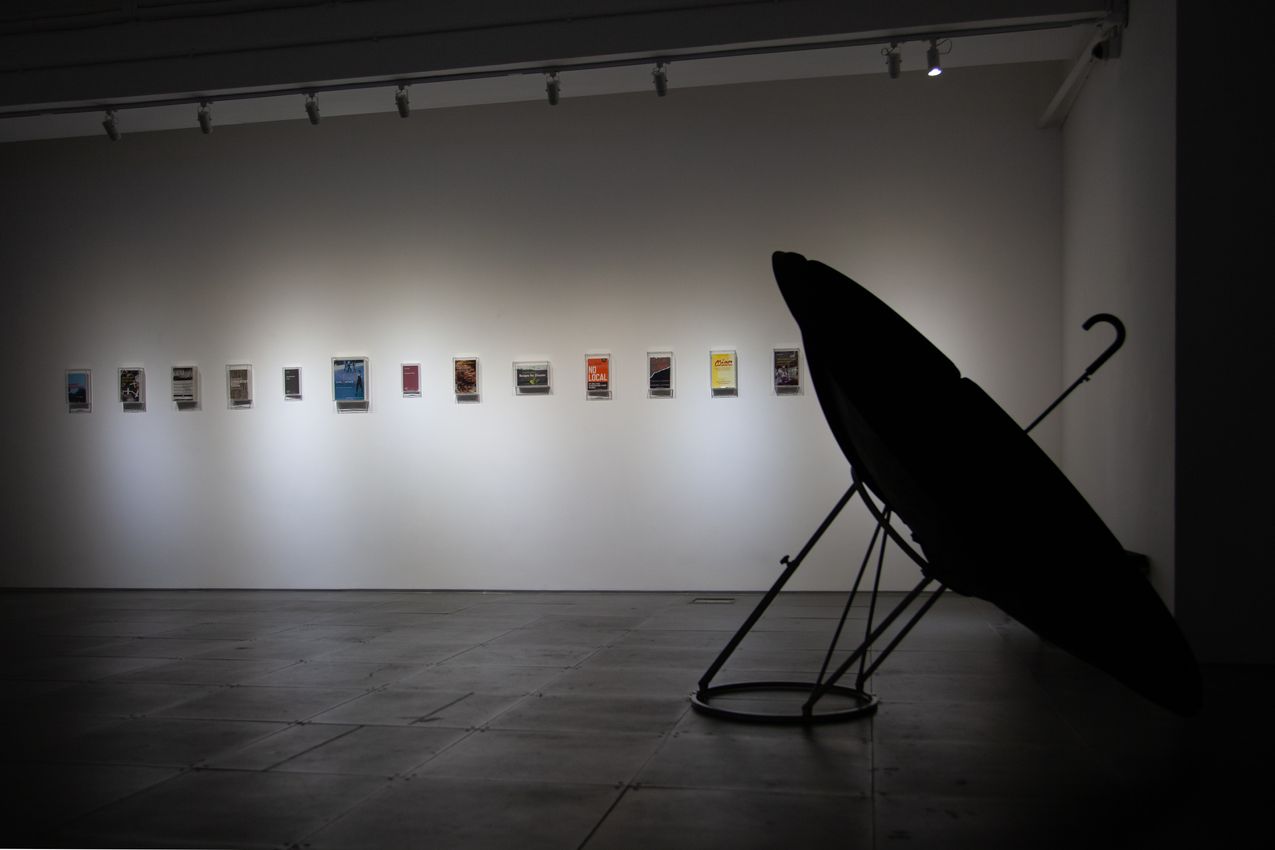
One of the most prominent series in the exhibition is comprised of two works. The first, titled Between the North Star and a Black Hole (2020), is an array of books encased in clear acrylic mounted across the wall, the topics of which range from a variety of disciplines including philosophy, anthropology, art theory and more. The second, titled A Black Hole (2019), is a sculpture combining the components of a parabolic satellite dish with that of an ubiquitous umbrella, coated in ultra-black paint that absorbs light. Seemingly a black hole from afar, the sculpture reveals its physical form as visitors step around it.
The pairing of these two works represents forever existing, yet not mutually exclusive, oppositions - the filling and purging of information. While visitors are free to pick whichever book, if any, to withdraw from its case, the presented options are limited to a fixed spectrum, and thus so is the information they provide. Though the center of the satellite is visually obscured, its tangible evidence is also undeniable. Is the seemingly endless abundance of information our digital era has provided a liberating force or a guised farce? By juxtaposing two modified tools for communication, one of traditional means and the other symbolic of advanced information technologies, the artist urges us to consider the potential undercurrents of information exchange and asks us to evaluate the legitimacy of our knowledge and further, what is the future of information?
In Constellations (2019), Streitmatter-Tran juxtaposes facial pattern recognition matrices with the lattices of I.M. Pei’s iconic Bank of China building in Hong Kong - an immediately recognizable piece of architecture within the city. By drawing connections between the visual similarities of structures and systems, the artist elucidates how the physical attributes of our surrounding environment relate to architectures of surveillance and power.
Richard Streitmatter-Tran was born in 1972 in Bien Hoa, Vietnam. He received his degree in the Studio for Interrelated Media (SIM) at the Massachusetts College of Art in Boston. For the first decade of his career Richard’s artwork could be described as strictly conceptual, but after 2013 he began to focus on producing artwork that required a meticulous level of fine craftsmenship. As a result, his current body of work is both rooted in the conceptual rigor of contemporary art theory and the skills behind traditional techiques.

DE SARTHE is a pioneering platform for boundary-pushing contemporary art from Asia. It has also contained an influential international presence in modern and post-war art since 1977.

A respected voice in contemporary art discourse.
Focusing on ambitious storytelling and insightful art-world commentary. Ocula Magazine publishes in-depth interviews, critical essays and timely analysis on the artists, exhibitions and ideas driving the global art world.
Learn more about Ocula Magazine
Showcasing the best of the art world.
Ocula partners with galleries from around the world to highlight their artists, artworks and exhibitions. Gallery membership is by application and invitation, with each member vetted by an independent panel.
Learn more about Ocula Membership

Specialises in the sale of major artworks.
Led by a team with deep ties to the world’s leading auction houses, galleries and collectors. Ocula’s advisory team offers bespoke services to high-net-worth clients from around the world who are looking to acquire the best of contemporary and modern art.
Learn more about our team and services