





ED ATKINS
b. 1982, United KingdomEd Atkins is a British contemporary artist renowned for his groundbreaking work in video art, poetry, and writing. In 2025, the Tate Britain opened a major retrospective dedicated to his work. Influential curator Han-Ulrich Obrist has referred to Aitkins as ‘one of the greatest artists of our time’.
What Is Ed Atkins Best Known For?
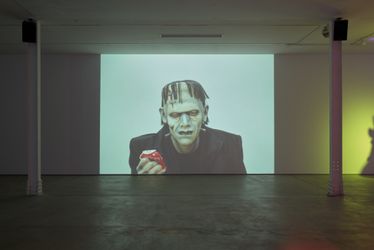
Atkins is best known for his computer-generated videos and animations that feature digital avatars as protagonists. These avatars, often modeled on his own face and movements, grapple with existential themes such as mortality, melancholy, and human vulnerability. By using cutting-edge digital technologies, Atkins creates works that blur the lines between reality and artifice, evoking profound emotional responses while exposing the limitations of digital representation.
Seminal Works: Key Highlights
The Trick Brain (2013)
This video work combines archival footage of surrealist André Breton’s apartment with new material and a spoken narrative by Atkins. It explores themes of loss—both physical and symbolic—while reflecting on the commodification of art objects and human mortality. The piece uses Breton’s legacy as a lens to interrogate how cultural artifacts are imbued with emotional resonance, even as they are transformed into commodities.
Death Mask I & II (2010)
Death Mask I: This work is a fictional biopic centered around Madame Tussaud, the historic immortalizer. It includes two screenplays, two videos, and several objects that reimagine historical figures as living heroes. The piece examines the relationship between art and cadavers, likening digital technology to a deceased body—both representing life temporarily before becoming inert code. The work is infused with horror, humor, and melodrama as it interrogates the limitations and possibilities of digital media.
Death Mask II: The Scent:
A continuation of the Death Mask series, this video features interlaced images such as fruit, candles, and human profiles. These visuals evolve through color tints and dividing frames, accompanied by eerie soundtracks like those from Cannibal Holocaust. The work juxtaposes tactile imagery with digital manipulation to evoke sensory experiences tied to decay and mortality. Recurring motifs—such as liquids poured over freckled fruit skins—symbolise decomposition, while the anonymity of human heads filmed from behind emphasizes universal themes of loss.
Delivery to the Following Recipient Failed Permanently (2015)
Inspired by a personal experience following his father’s death, this work reflects on grief through a poignant email bounce-back message. The title references an automated email response Atkins received after his father’s account was deactivated due to inactivity. The piece intertwines personal narratives with universal themes of loss, emphasizing the emotional weight carried by seemingly mundane digital interactions.
A Tumour (In English) (2011)
Presented at Tate Britain’s Art Now exhibition, this provocative installation delves into themes of abjection and bodily decay. Using high-definition video and writing, Atkins explores corporeality through digital imagery and soundscapes. The visceral language mirrors his fascination with mortality and the fragility of human existence, creating an unsettling yet deeply resonant experience for viewers.
The Worm (2021)
This computer-generated animation captures a phone conversation between Atkins and his mother during the COVID-19 lockdowns. The work features an avatar of Atkins that is both hyper-realistic and disconcertingly inhuman. Through shifting close-ups and recursive imagery, The Worm juxtaposes mundane dialogue with existential reflections on digital life. It highlights the cyclical nature of technology-mediated existence while exploring themes of intimacy, isolation, and familial connection during a time of global separation.
Ed Atkins FAQs
Why Does Ed Atkins Use Digital Avatars?
Atkins employs CGI avatars to explore otherwise inaccessible sensations and emotions. These avatars serve as allegorical figures that embody both personal trauma and universal struggles. By mapping his own facial movements onto these digital surrogates, he creates a visceral connection between the artificial and the real, inviting viewers to confront questions about identity, embodiment, and the limits of technology.
What Themes Define Ed Atkins’ Work?
Atkins’ work is rooted in themes of:
- Mortality: His art often reflects on death, illness, and the impermanence of life.
- Abjection: Drawing from Julia Kristeva’s concept, he examines bodily decay and emotional vulnerability.
- Digital vs. Physical: He contrasts the immateriality of digital media with the tangible realities of human existence.
- Love and Intimacy: Despite its somber undertones, his work frequently touches on moments of affection, such as his Post-it note drawings for his children.
Where Can You See Ed Atkins’ Work?
Atkins’ work has been exhibited globally in prestigious institutions such as Tate Britain (UK), where a career-spanning retrospective was opened in 2025, showcasing. 15 years of moving image works alongside paintings, embroideries, and drawings that reflect his multifaceted approach to artmaking.
Ed Atkins continues to redefine contemporary art by merging digital technologies with deeply human themes. His works challenge viewers to confront uncomfortable truths about mortality, identity, and the limits of representation while offering moments of profound emotional resonance. Through his innovative use of CGI avatars and poetic narratives, Atkins remains a pivotal figure in exploring what it means to be human in an increasingly digitized world.
Exhibitions
Ed Atkins has exhibited globally at leading institutions such as Tate Britain, MoMA PS1, Palais de Tokyo, Stedelijk Museum Amsterdam, Hammer Museum, and Venice Biennale. His ability to merge technological innovation with deeply human narratives continues to redefine contemporary art.
Ocula | 2025
Explore Ed Atkins' Exhibitions




Representative Artworks

View exhibition







Explore and Follow Artists Shaping Contemporary Art
A respected voice in contemporary art discourse.
Focusing on ambitious storytelling and insightful art-world commentary. Ocula Magazine publishes in-depth interviews, critical essays and timely analysis on the artists, exhibitions and ideas driving the global art world.
Learn more about Ocula Magazine
Showcasing the best of the art world.
Ocula partners with galleries from around the world to highlight their artists, artworks and exhibitions. Gallery membership is by application and invitation, with each member vetted by an independent panel.
Learn more about Ocula Membership
Specialises in the sale of major artworks.
Led by a team with deep ties to the world’s leading auction houses, galleries and collectors. Ocula’s advisory team offers bespoke services to high-net-worth clients from around the world who are looking to acquire the best of contemporary and modern art.
Learn more about our team and services