






Ed Atkins: Six Superlatives with Polly Staple and Nathan Ladd
With a survey of British artist Ed Atkins open at Tate Britain, Ocula set out to explore some of the superlative moments of the exhibition with its curators, Polly Staple and Nathan Ladd. Save to My Ocula

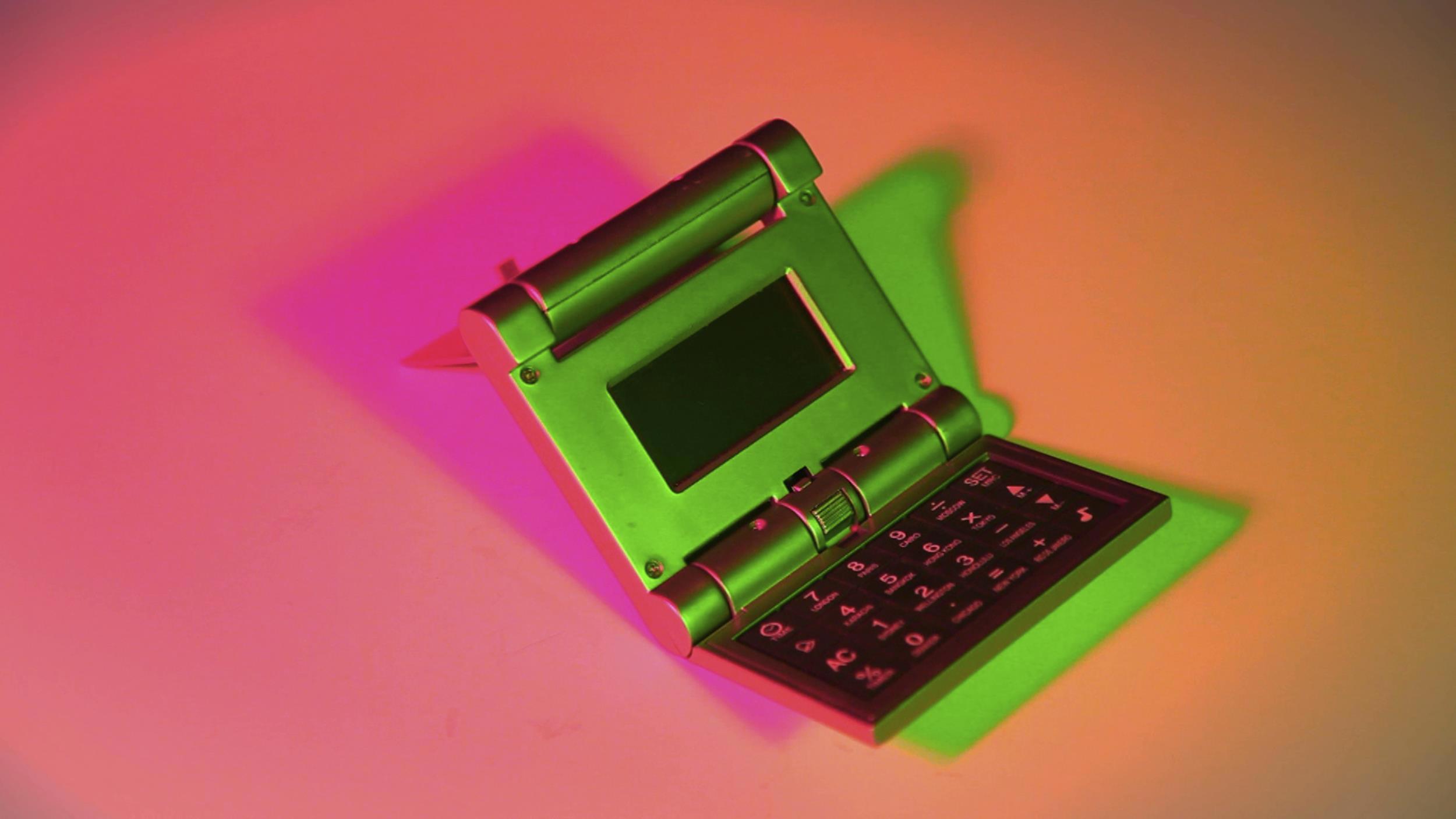
The first work you’ll encounter in Ed Atkins’ survey show is Death Mask II: The Scent (2010), a tightly edited, single-channel video that plays with the relationship between digital materiality and mortality. It’s as mesmerising as it is absurd and jarring, with fluid transitions and abrupt cuts that marry sound and image with surprising synchrony: a spring-loaded calculator unfurls to a sanguine synth horror-movie soundtrack; an electric guitar riff dramatises a reverent closeup of a lemon.
It’s a defining piece that illustrates Atkins’ proclivity for artifice and excess, and it’s in this spirit that we asked the exhibition’s co-curators, Polly Staple and Nathan Ladd, about six superlatives and the works by Atkins that best represent them—from an animated baby sandwich and self-portraits as a spider, to a feature-length film narrating the artist’s father’s diaries in the last months of his life.
1. Happiest
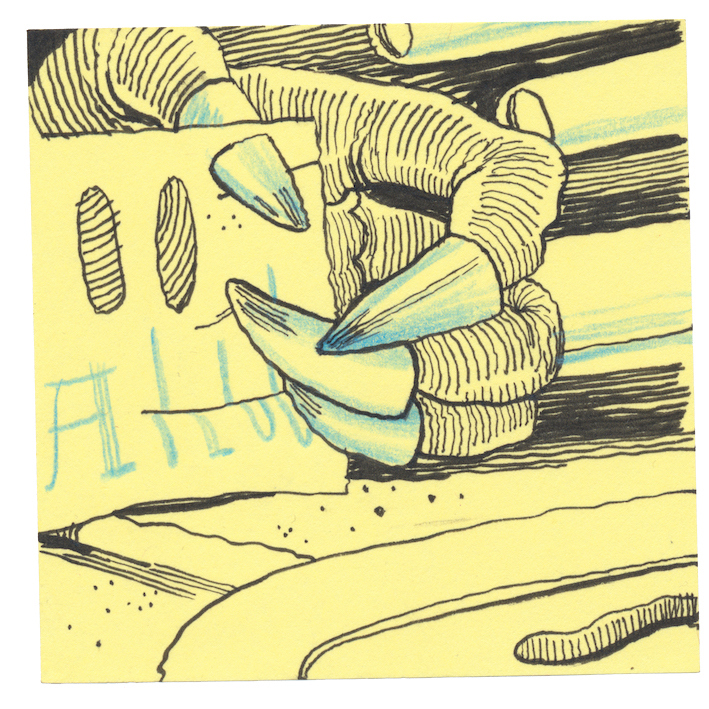
PS: The heart of the show is a room of drawings that Ed has made on Post-it notes. There’s approximately 700 of these drawings, which he made daily, and they make a whole one-room installation. They’re very beautiful to look at and very joyful and playful.
NL: Ed originally started making these in 2020 for his daughter. He’d draw them and put them in her lunchbox. Each of them are these little worlds, really empowered by love. I think you feel that joy, humour, and happiness within those works.
2. Saddest
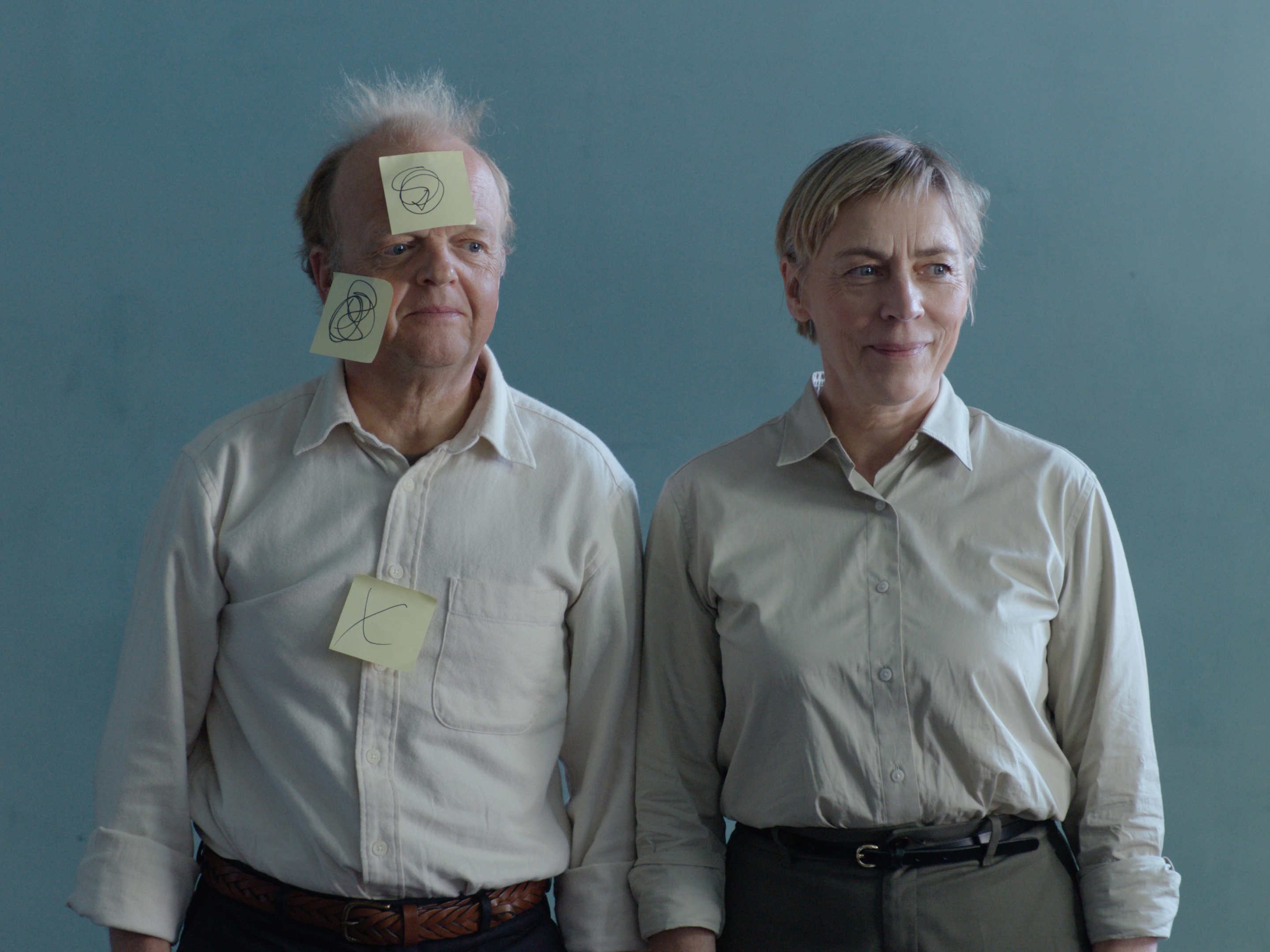
PS: There’s a lot of sadness in all of Ed’s work, but it’s always tempered with love and joy. I think one of the saddest works is the new film, Nurses Come and Go, But None for Me (2024), which is a feature-length film that Ed has made in collaboration with the poet Steven Zultanski. It features actors Toby Jones and Saskia Reeves. The film takes Ed’s father’s diaries that he wrote when he was diagnosed with cancer, and it documents six months of the end of his life. It’s a very moving work.
NL: The diaries are read in full by Toby Jones in the first part of the film. There’s obviously an inherent sadness within that idea of loss. However, in much of Ed’s work, he punctuates this in the second part of the work with a game that he plays with his daughter, called the Ambulance Game. There’s a sadness of loss, but also joy in that memory.
3. Funniest
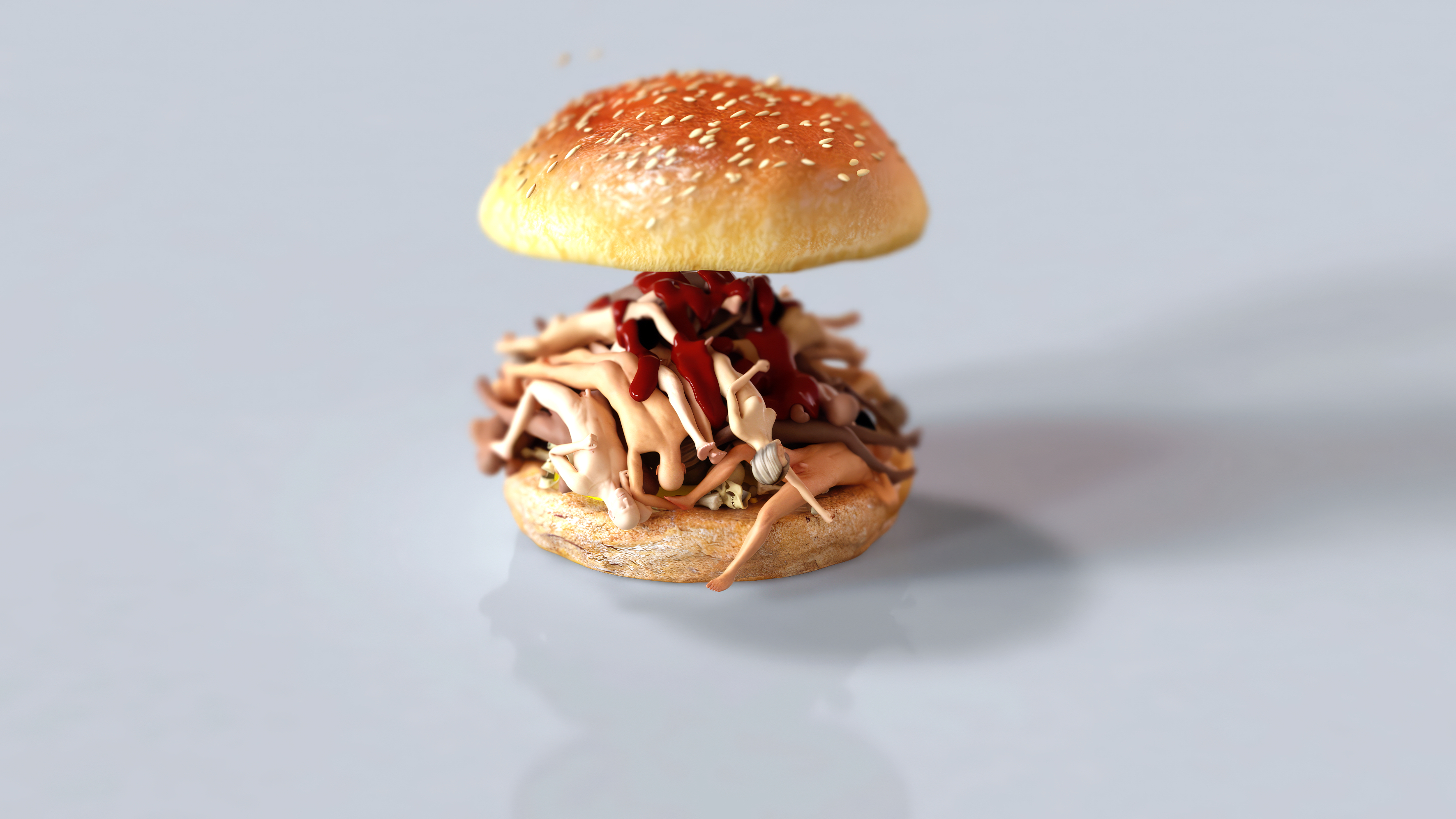
PS: In all of Ed’s work, there’s a kind of slapstick humour, a gallows humour; sometimes lots of cartoonish impact on bodies. I think maybe where that’s best is in Old Food, where there’s a video which I find very funny—other people might find it a bit gory—of animated bodies falling into a sandwich.
NL: It is essentially this sandwich of loads of body parts, but also sauce and lettuce, and all the parts come falling down together, and then they get squeezed together. There’s always that slightly slapstick, gory humour within the show.
4. Grossest
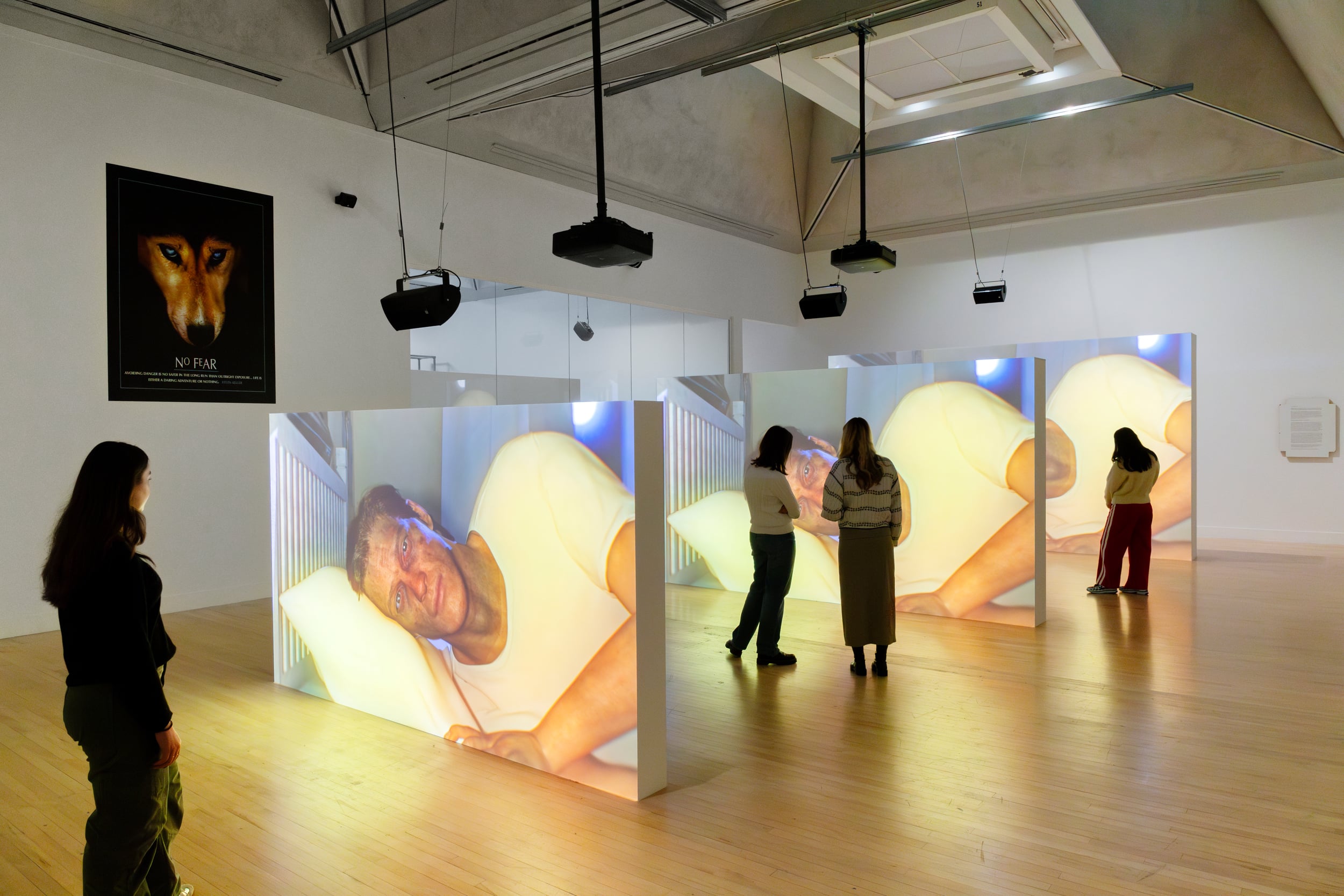
PS: Maybe we’re back to that body sandwich... There’s a scene in Hisser (2015), which is the three-channel video where there’s a man in his bedroom and at one stage he masturbates to a picture. You don’t really see it in full, but he’s in his bedroom on his own. It’s a bit gross, but endearing at the same time, weirdly.
NL: There’s a big monitor within the Old Food installation called Good Man (2017), which shows this old man crying. There’s so much drool and tears dripping and congealing down his face. And because the monitor is 86 inches, it’s really writ large within that installation.
5. Ugliest
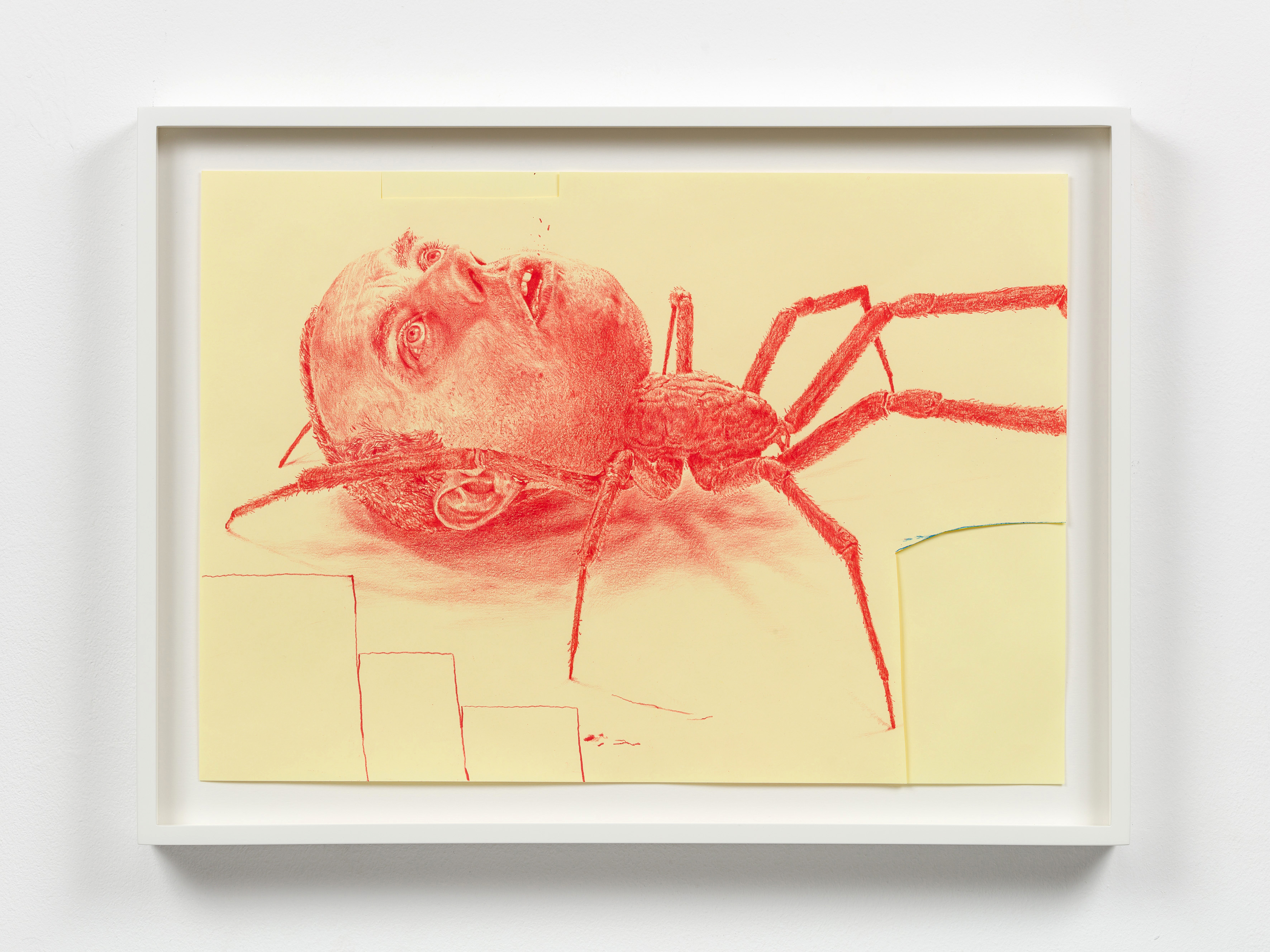
PS: I don’t think any of Ed’s work is ugly, but something that viewers might find a little bit scary or ugly are some portraits Ed has drawn of himself as a spider. So if you’ve got a thing about spiders, this is a trigger warning.
NL: Ed does a really intricate drawing of his own face and then superimposes it on an equally meticulously drawn spider’s body. There’s an ugly terror, a fear that goes with that series.
6. Sexiest
PS: I think the first work in the show, which is an early video work of Ed’s from 2010 called Death Mask II, is a really beautiful, sexy work. It’s very high-visual, high-soundtrack. It’s beautifully edited and it moves you along with all the seduction of a pop video.
NL: I would say the mattress and pillow works [Untitled, 2020]. They have this absent body that maybe was once there. There’s also this beautiful precision to the way that Ed is able to use the ink and the bleach within the composition. They have this seductive, sexy energy. —[O]
Ed Atkins is on view at Tate Britain, London, from 2 April to 25 August 2025.
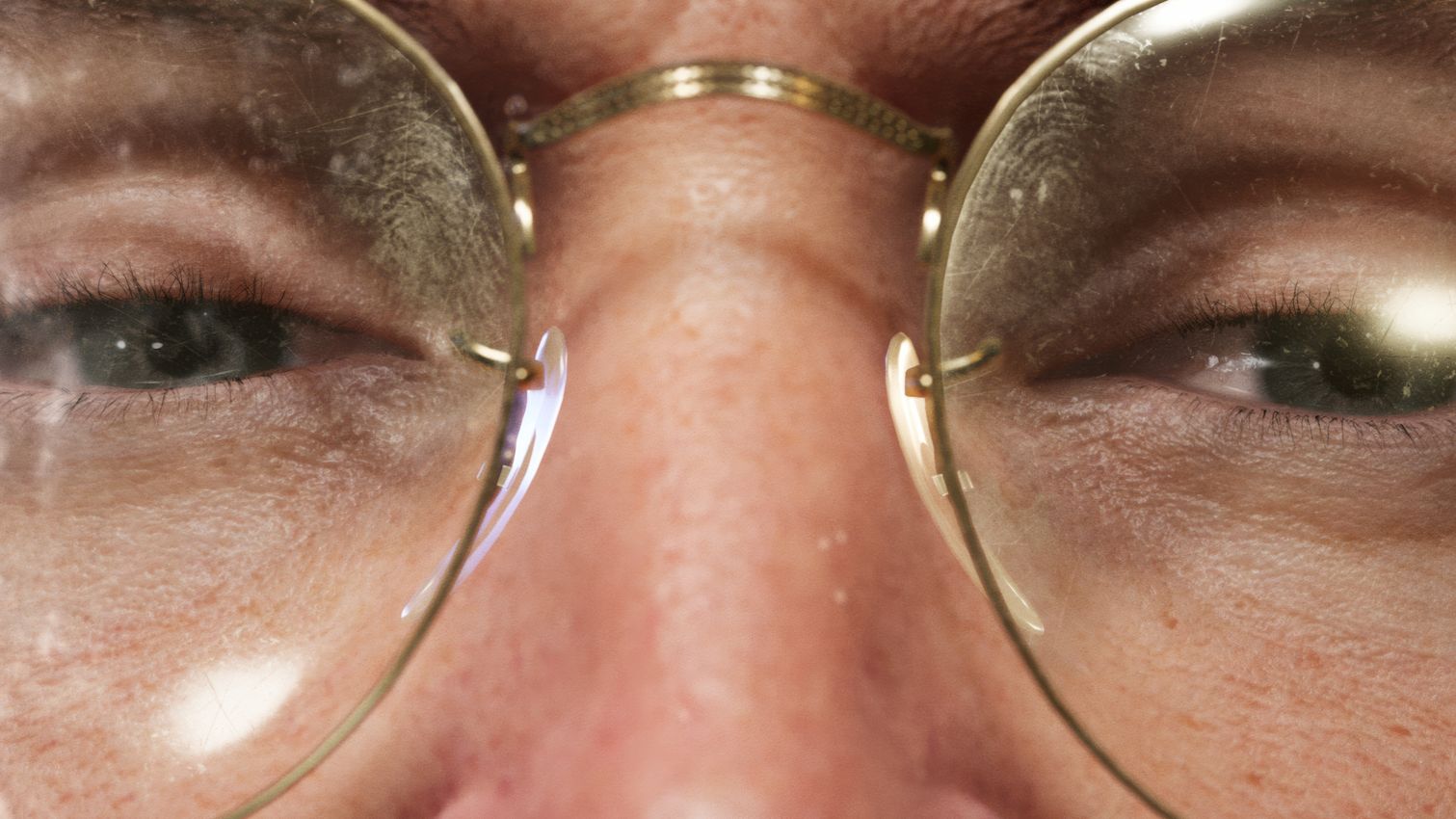
Main image: Ed Atkins, Pianowork 2 (2023) (still). © Ed Atkins. Courtesy the artist; Cabinet Gallery, London; dépendance, Brussels; Galerie Isabella Bortolozzi, Berlin; and Gladstone Gallery.


A respected voice in contemporary art discourse.
Focusing on ambitious storytelling and insightful art-world commentary. Ocula Magazine publishes in-depth interviews, critical essays and timely analysis on the artists, exhibitions and ideas driving the global art world.
Learn more about Ocula Magazine
Showcasing the best of the art world.
Ocula partners with galleries from around the world to highlight their artists, artworks and exhibitions. Gallery membership is by application and invitation, with each member vetted by an independent panel.
Learn more about Ocula Membership
Specialises in the sale of major artworks.
Led by a team with deep ties to the world’s leading auction houses, galleries and collectors. Ocula’s advisory team offers bespoke services to high-net-worth clients from around the world who are looking to acquire the best of contemporary and modern art.
Learn more about our team and services