





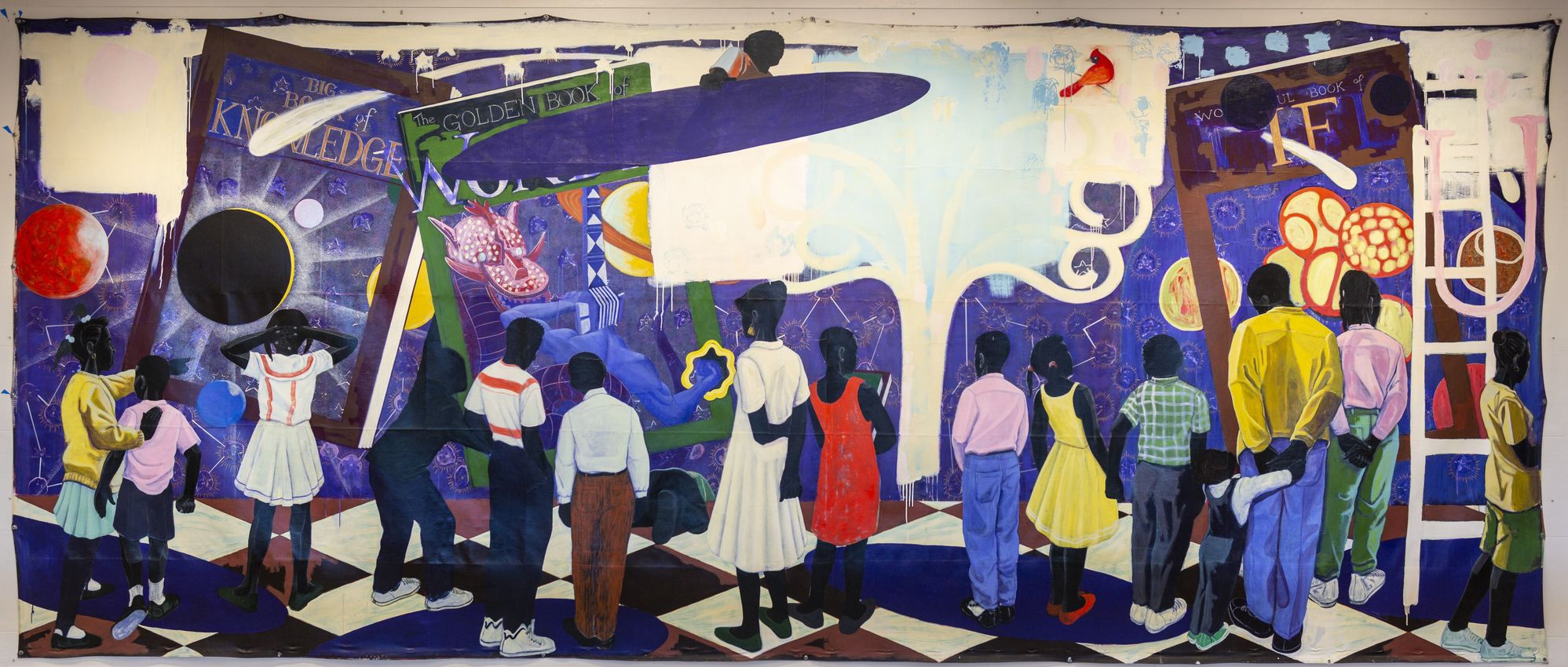
The Year in Art: Censorship, Satire, and Introspection
Save to My OculaGeography and society influence contemporary art just as much as fashion or finance. Our editors look back at 2025.
Louise Benson reflects on how European exhibitions in 2025—whether theatrical or highly personal—centred art at the heart of our everyday lives.
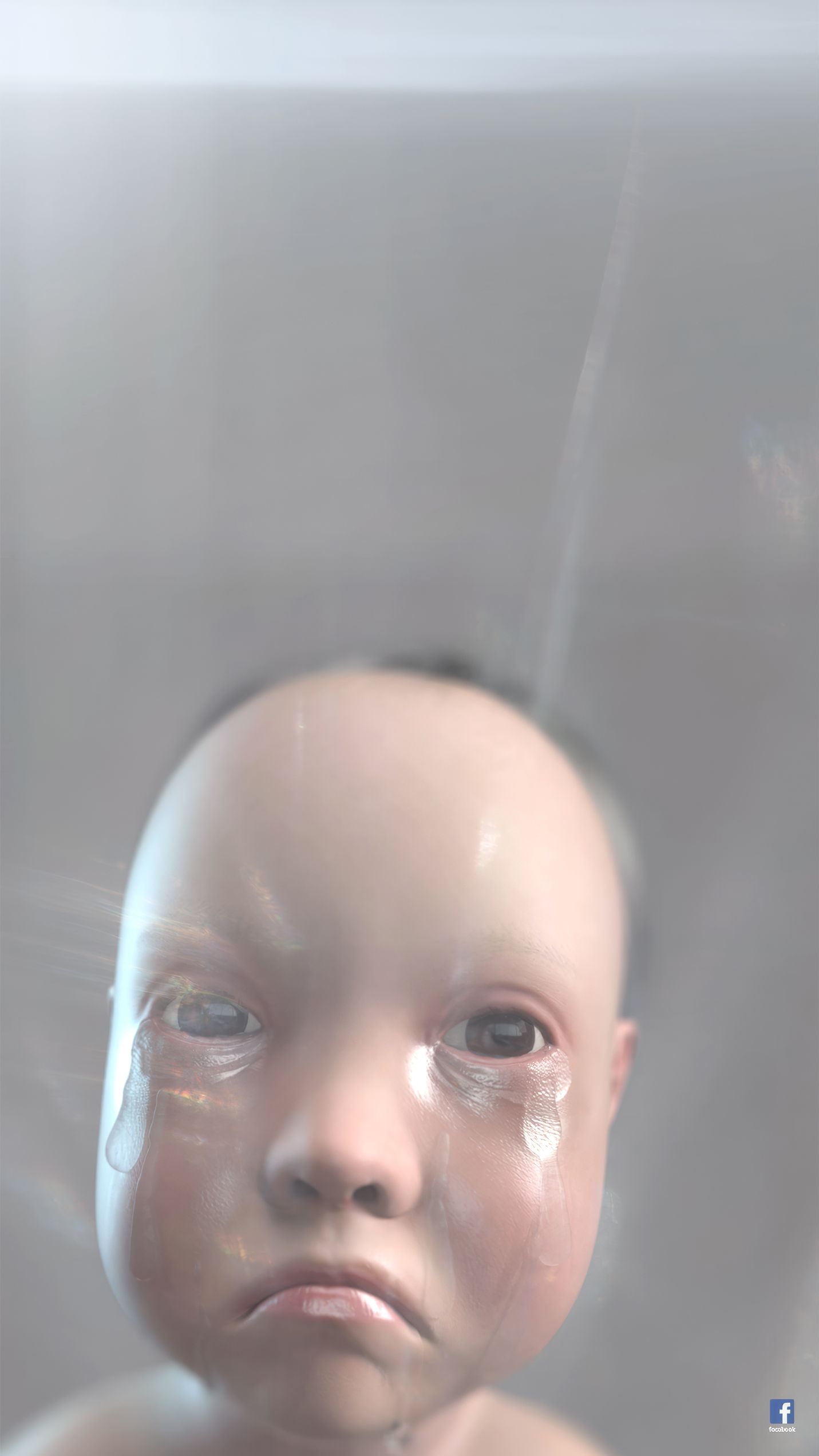
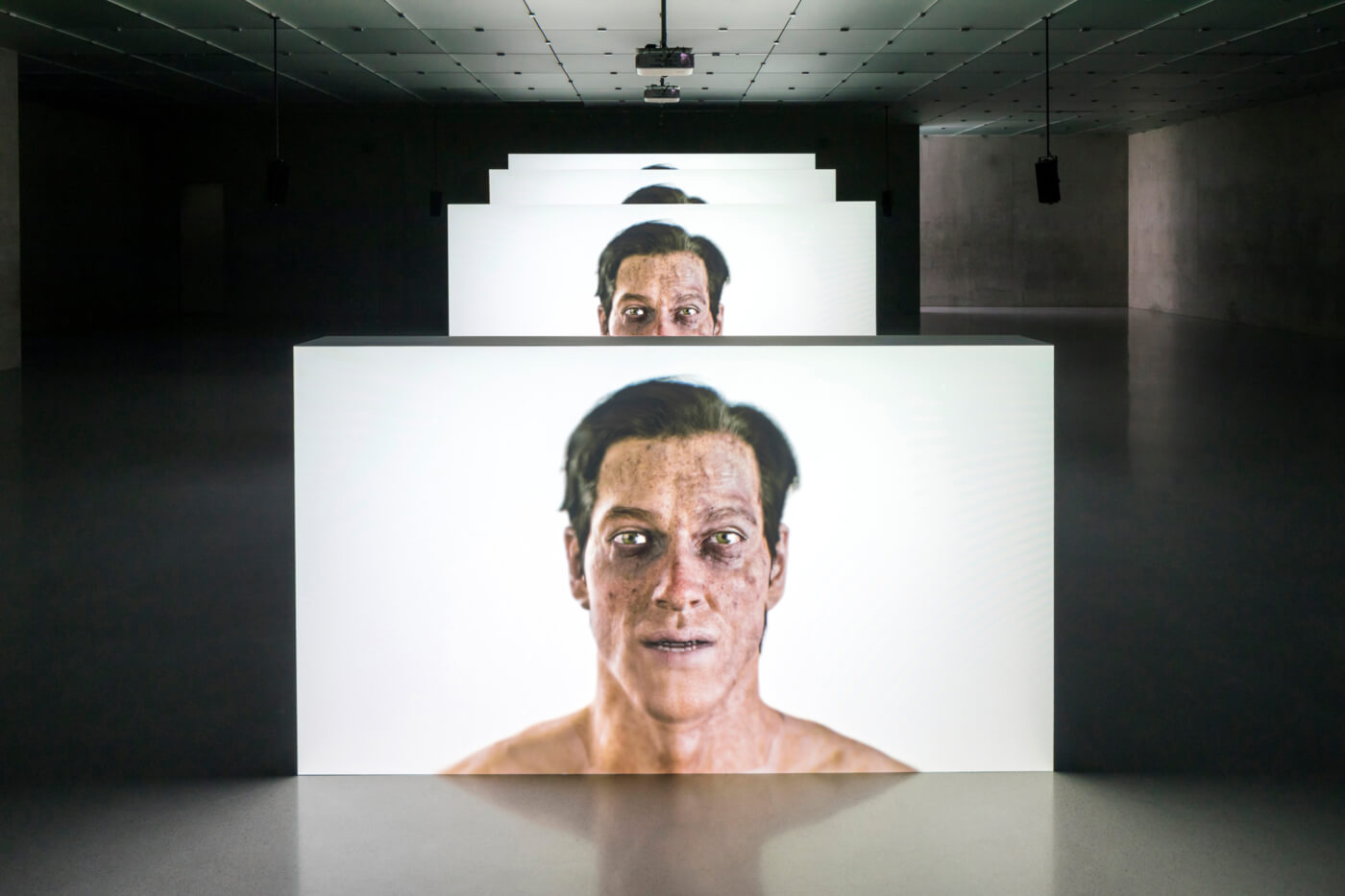
‘I’ve always thought of artworks as a kind of CAPTCHA test I might not pass.’ I smiled when I read this admission by American poet and novelist Ben Lerner in ‘Regarding the Pain of Avatars’, an essay published in the catalogue that accompanied Ed Atkins’ remarkable, searingly personal exhibition at Tate Britain in the spring of 2025. ‘Am I feeling things at the right level of intensity?’ It’s a question I increasingly ask myself in an age where it is near-impossible to visit a global cast of biennials or exhibitions without having first seen images of them shared online. Atkins’ assorted melancholy, sobbing, moaning CGI avatars deconstruct and confront the contemporary experience of digital technologies as a mediating lens for reality, like sauce leaking from a punctured squeezy bottle. The absurdist, illuminating effect is one of stepping behind the curtain to witness the lights and costumes backstage, alongside the fragile scaffolding holding up the set.
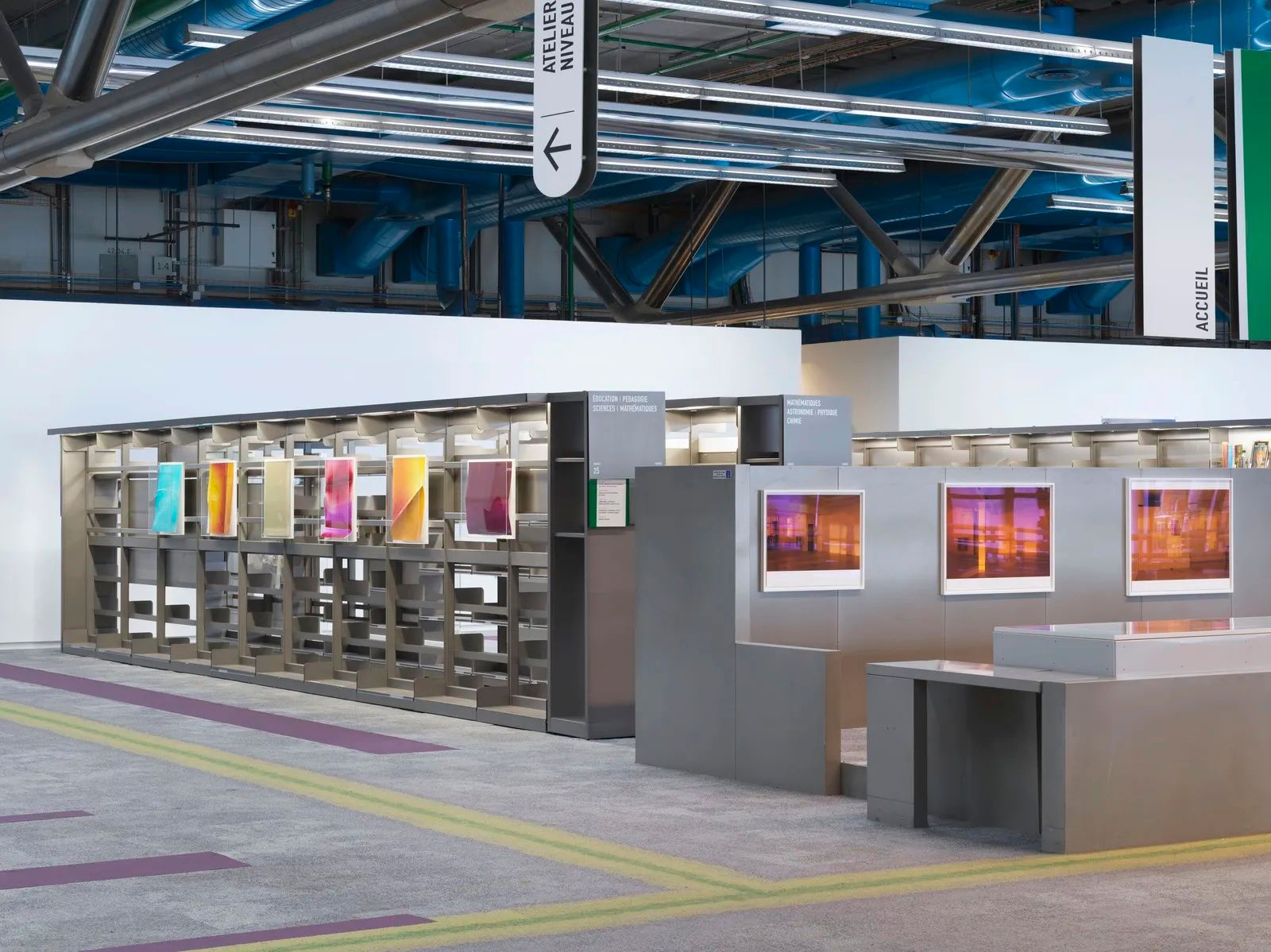
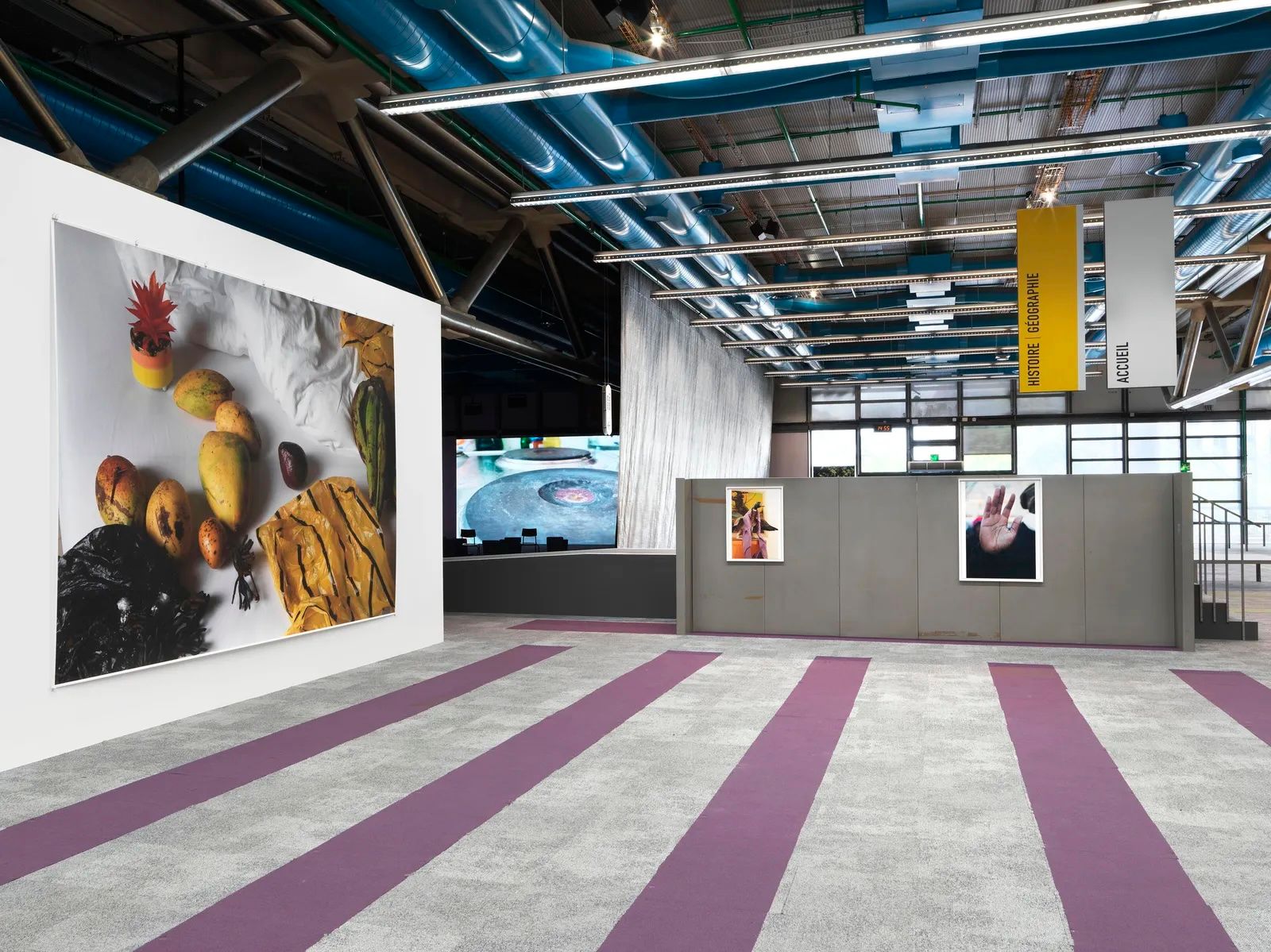
It’s an effect that was echoed throughout the year as artists and institutions alike sought to break down the art world into its constituent parts. In the summer, as the Pompidou Centre prepared to close for five years for renovations, Wolfgang Tillmans presented photographs of friends, club kids, strangers and lovers in Nothing Could Have Prepared Us—Everything Could Have Prepared Us, his career survey displayed throughout the expanse of the hollowed-out municipal library on the first floor of the museum. Images of outstretched hands and dancers locked in embrace were hung unframed among the empty library stacks, a reminder of how art can and should be intimately entwined with our ordinary lives. While in Berlin in July, I exhaled as I found myself drinking white wine in the sun on a white plastic chair at the newly opened Café Tiergarten, where artworks by Galli, Jack O’Brien and Marcel Broodthaers have been casually displayed on the restored site of a former bakery, in the modernist Hansaviertel district where the social housing was designed by architects including Walter Gropius and Oscar Niemeyer during the late 1950s amid the city’s postwar ruins.
“Artists and institutions alike sought to break down the art world into its constituent parts.”
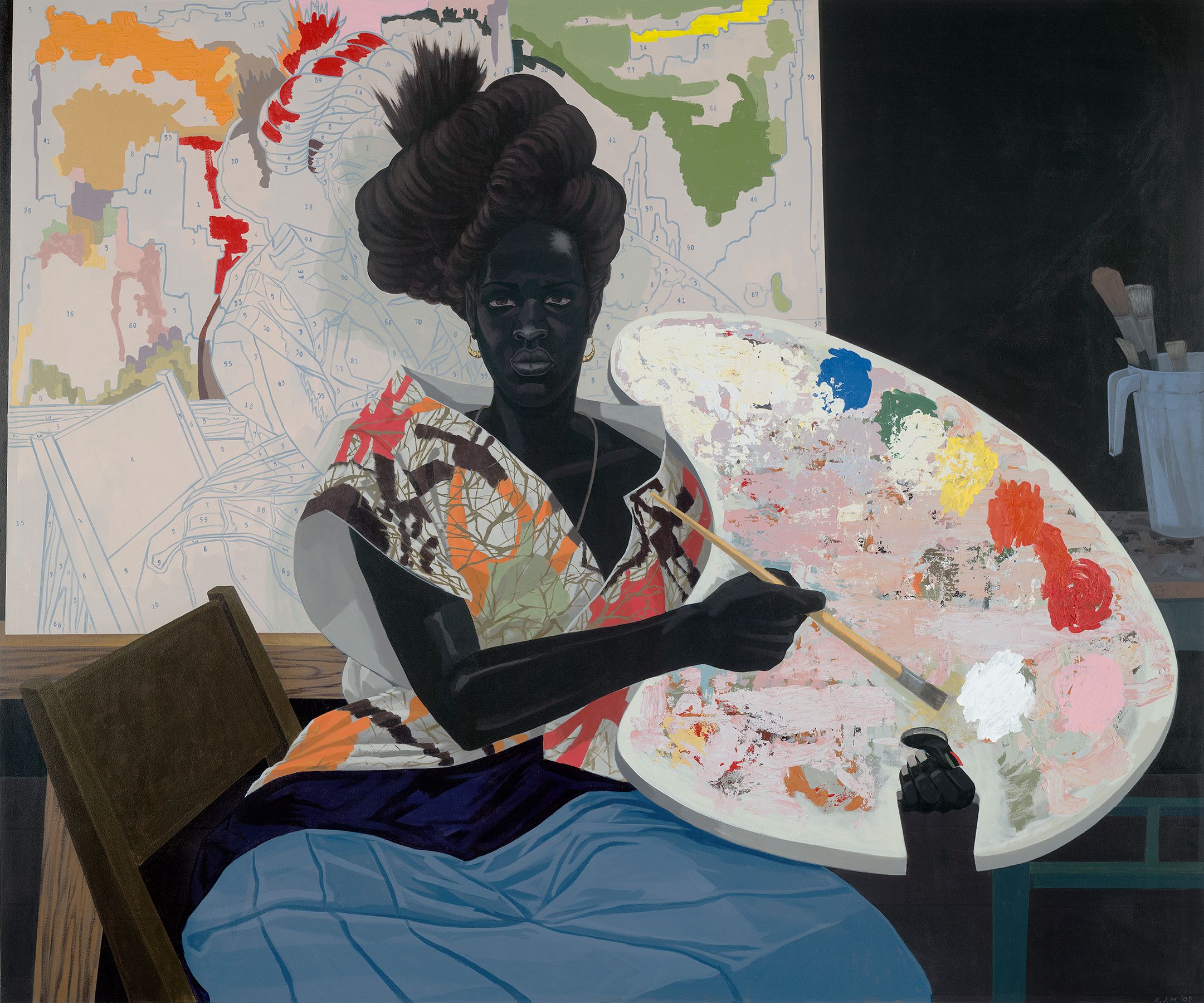
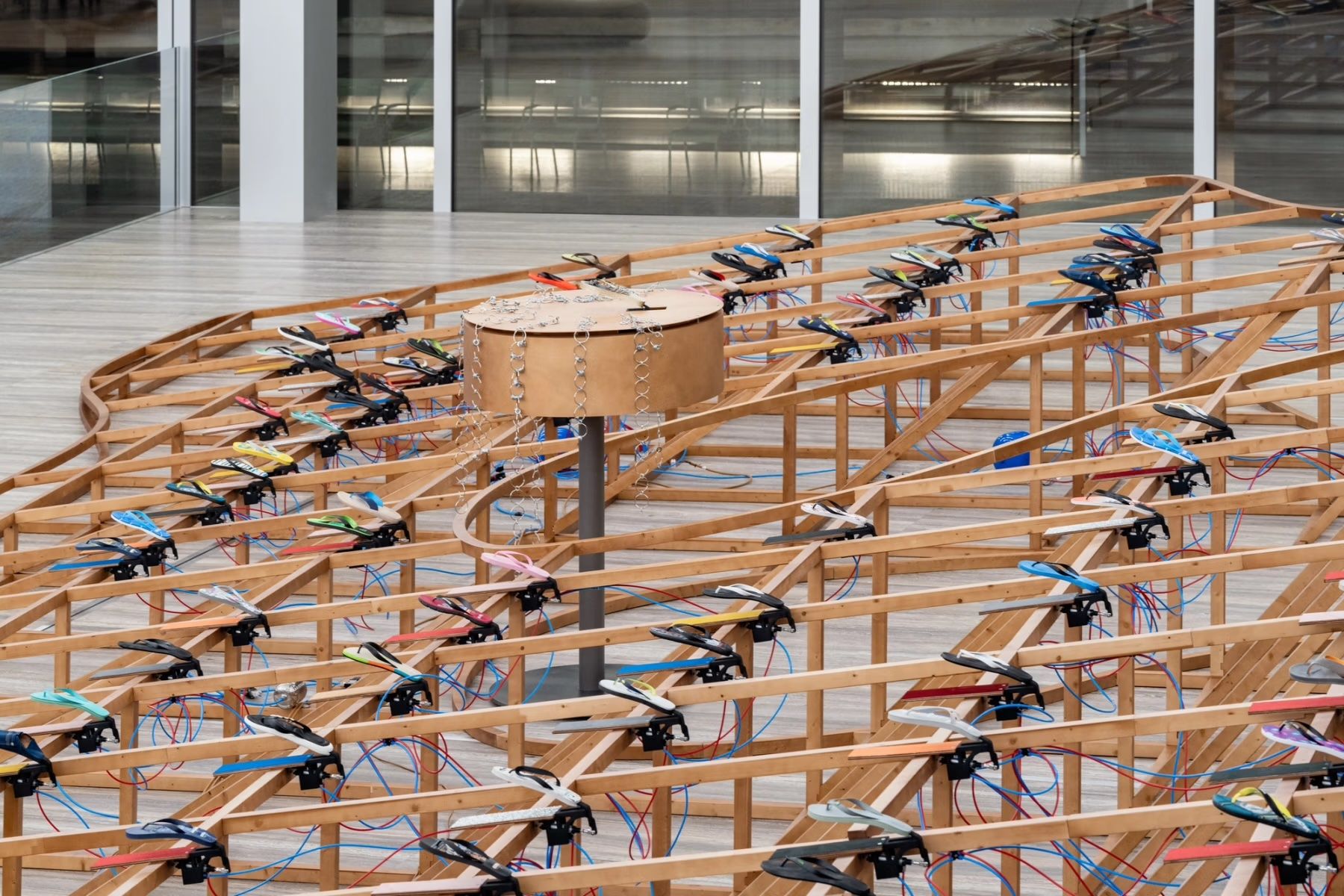
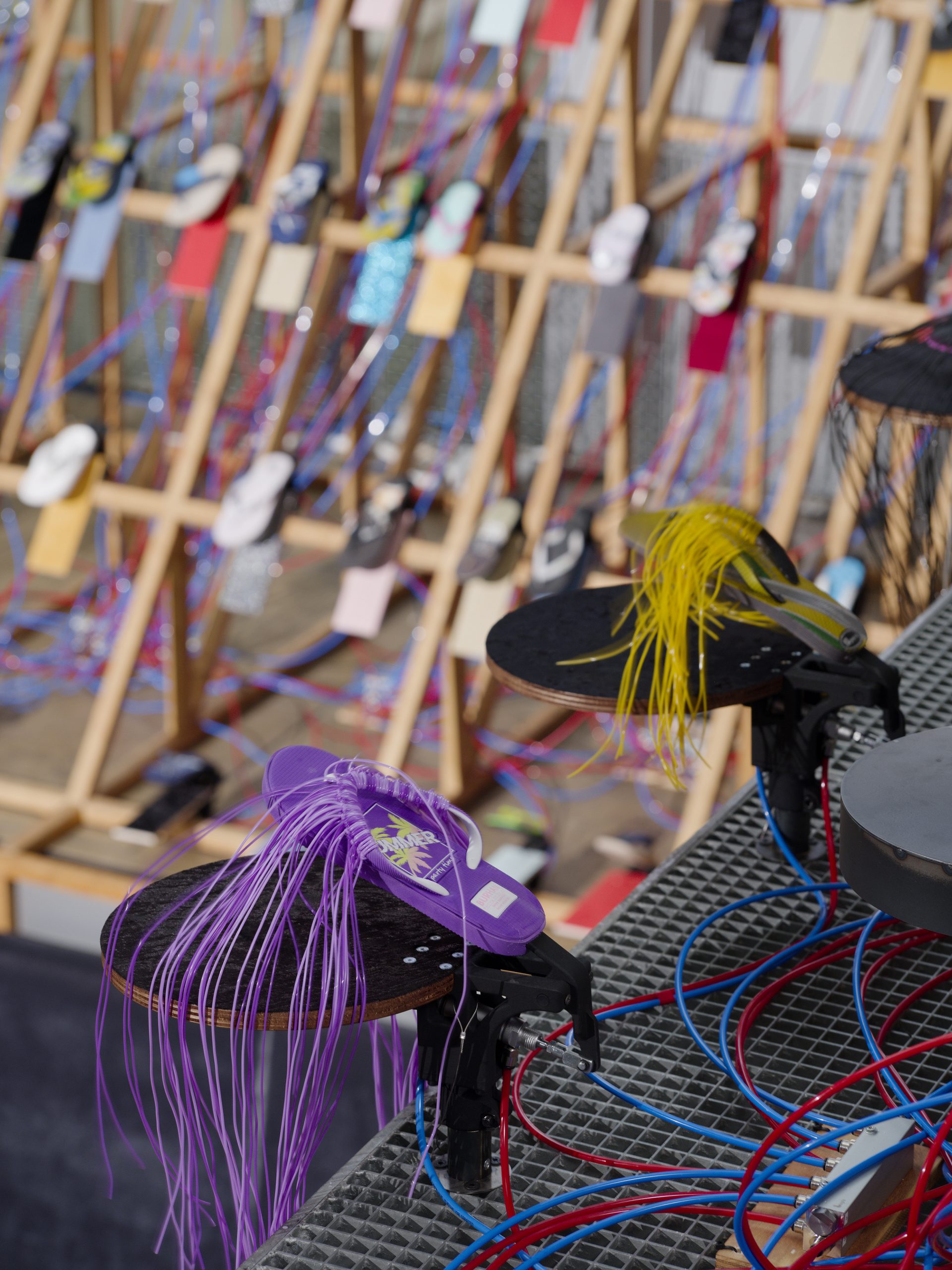
Come September, and Kerry James Marshall cut a different route through the exclusionary narratives perpetuated by the art world across the centuries in The Histories at London’s Royal Academy of Art. I found myself unable to move away from Untitled (Underpainting) (2018), a three-metre-tall diptych in which a museum is filled entirely with Black visitors languidly moving through an exhibition. The sepia tones of the painting lent it an air of unreality, hovering somewhere between polemic and a distant dream. There was more theatre in the late British painter Patrick Procktor’s Stages at the Redfern Gallery as the days grew shorter, while Sole Crushing, Meriem Bennani’s absurdist symphony tap-tapped by an orchestra of mechanised flip-flops at Lafayette Anticipations in the Paris autumn brought some welcome levity as the artist quite literally turned the exhibition format on its head, one toe at a time. Let’s hope 2026 continues where we left off: from the bottom up.
In New York, Aimee Walleston unearths small moments of pleasure from what sometimes felt like an introspective, paranoid contemporary art scene.
‘I fucking knew I’d see you here!’ On 9 January 2025, I stepped out of the New York arctic tundra and into the SVA Theatre, where this assertion was gleefully catapulted at me by a former editor. The event was ‘Wither Contemporary Art?’, critic Dean Kissick’s talk with the Red Scare girls (which, despite claims otherwise, I hadn’t planned on attending). The trio discussed Kissick’s then-recent Harper’s piece, ‘The Painted Protest’, in a way that seemed both to give the essay (which I liked) more life and also signal its inevitable fade-out from 2025 relevance—with Kissick (unfortunately) and the girls (fingers crossed) soon to follow. According to my Google calendar, this was the first art event I attended in 2025.
What followed was a year when I took in lots of talks and shows, and many of them seemed to glide around the same terrified question: What the hell is going on? Just days after the Kissick talk, I sat smooshed up against a bunch of boys in baseball caps at a talk by art critic and technologist Mike Pepi, who was promoting his book (which I also liked) Against Platforms: Surviving Digital Utopia. In July, I attended a panel talk at Artists Space titled ‘What is Contemporary Art for Today? And what should it be for if anything?’ That was literally the title.
“Talks and shows seemed to glide around the same terrified question: What the hell is going on?”
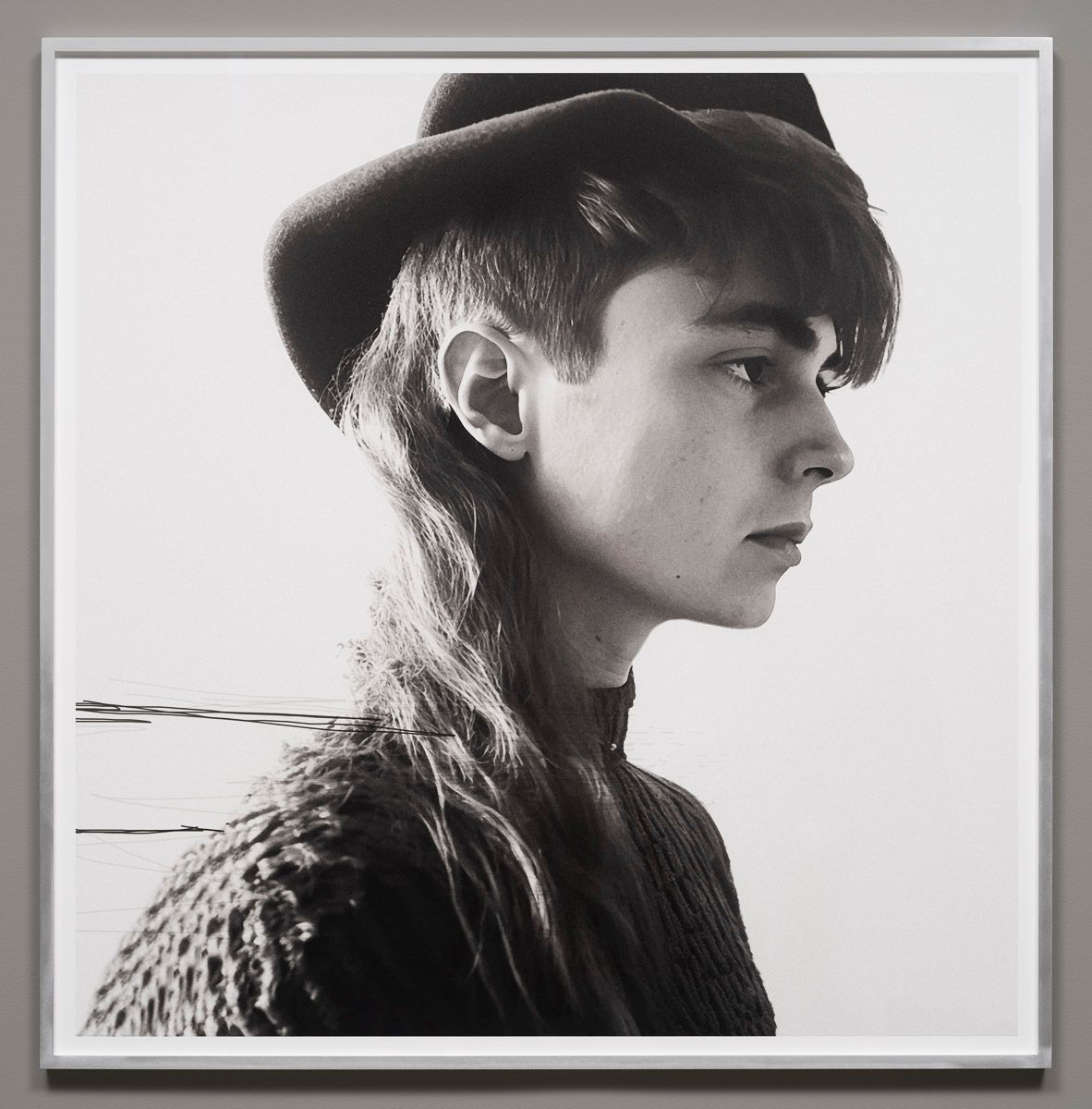
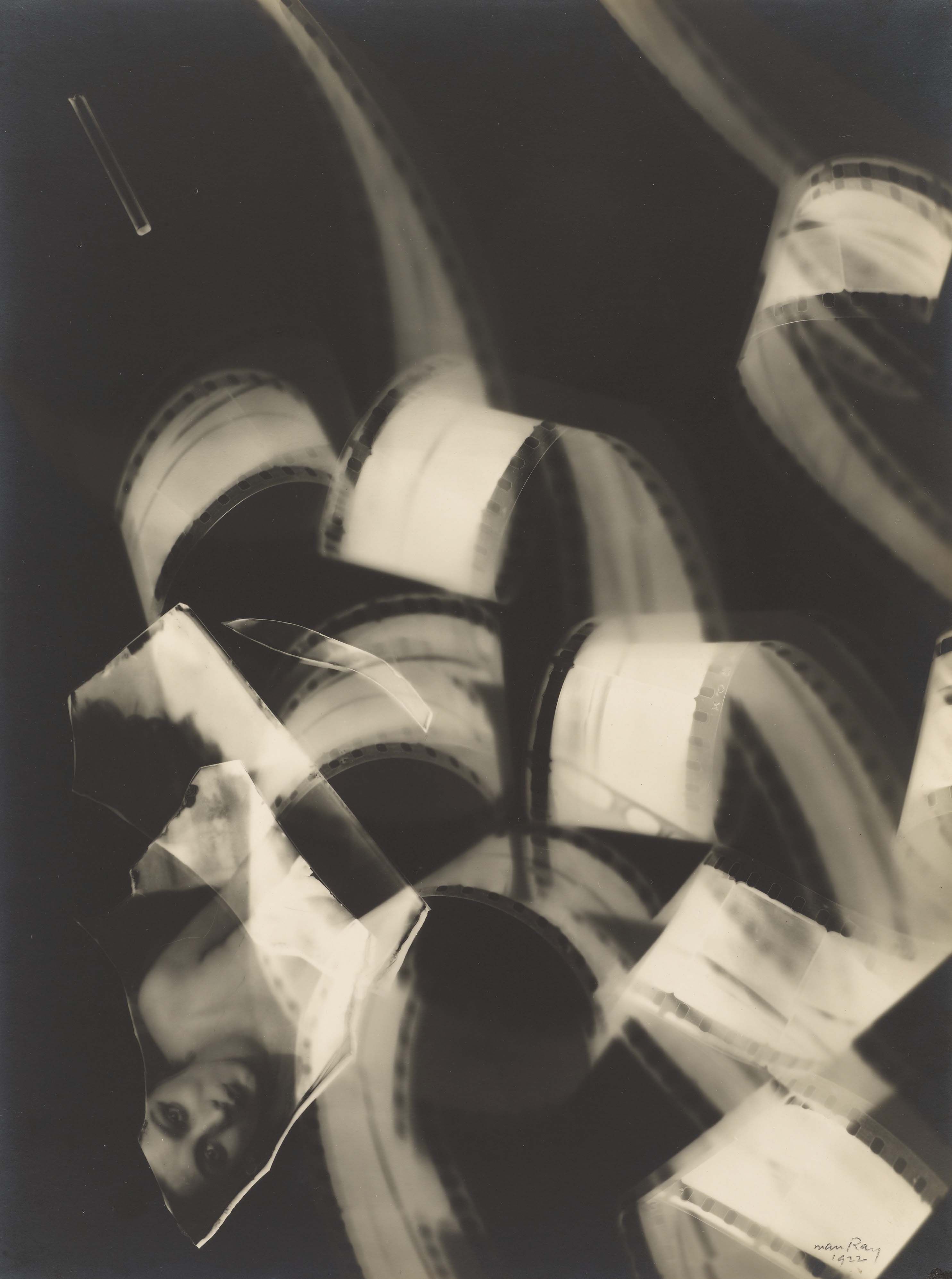
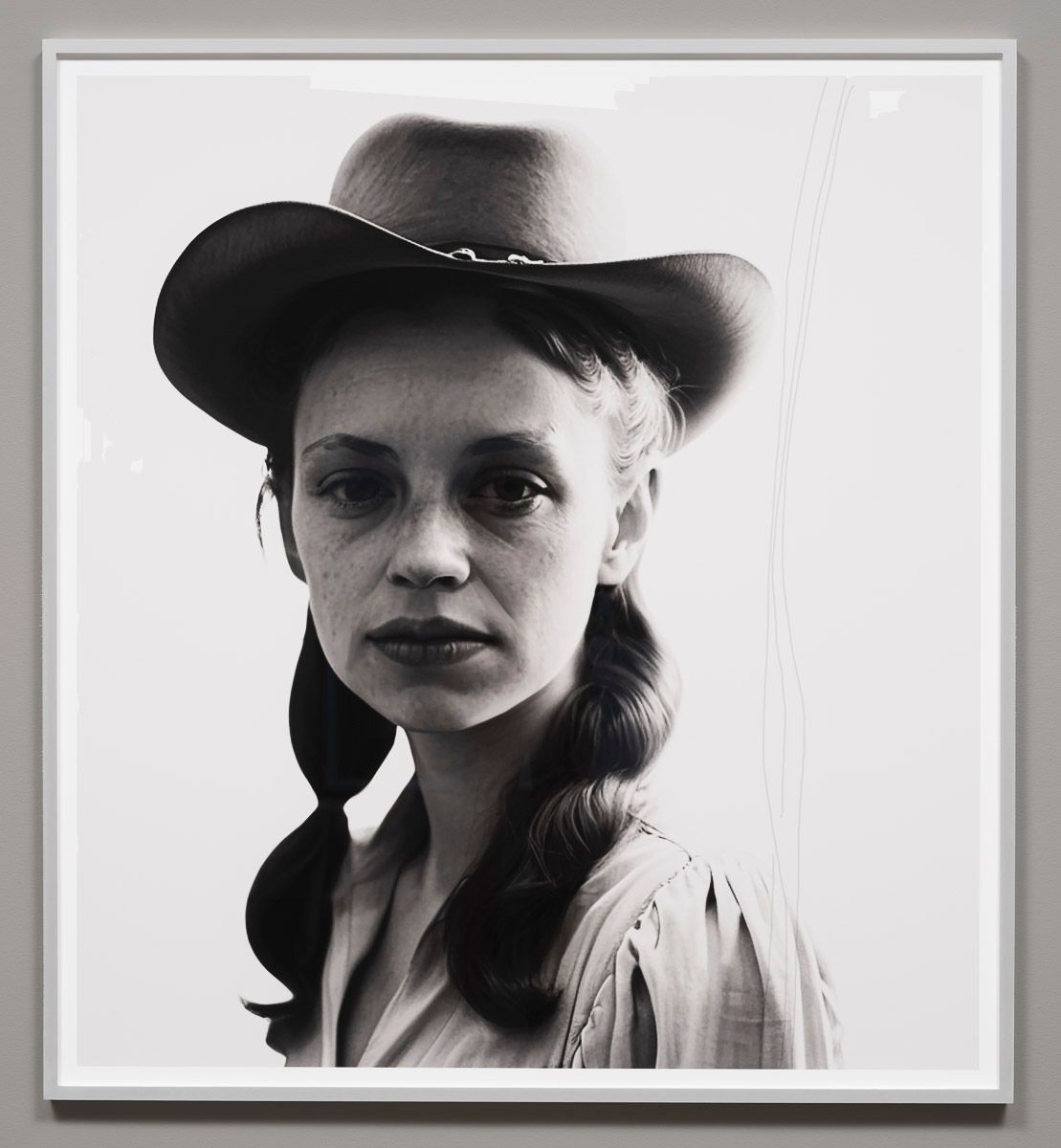
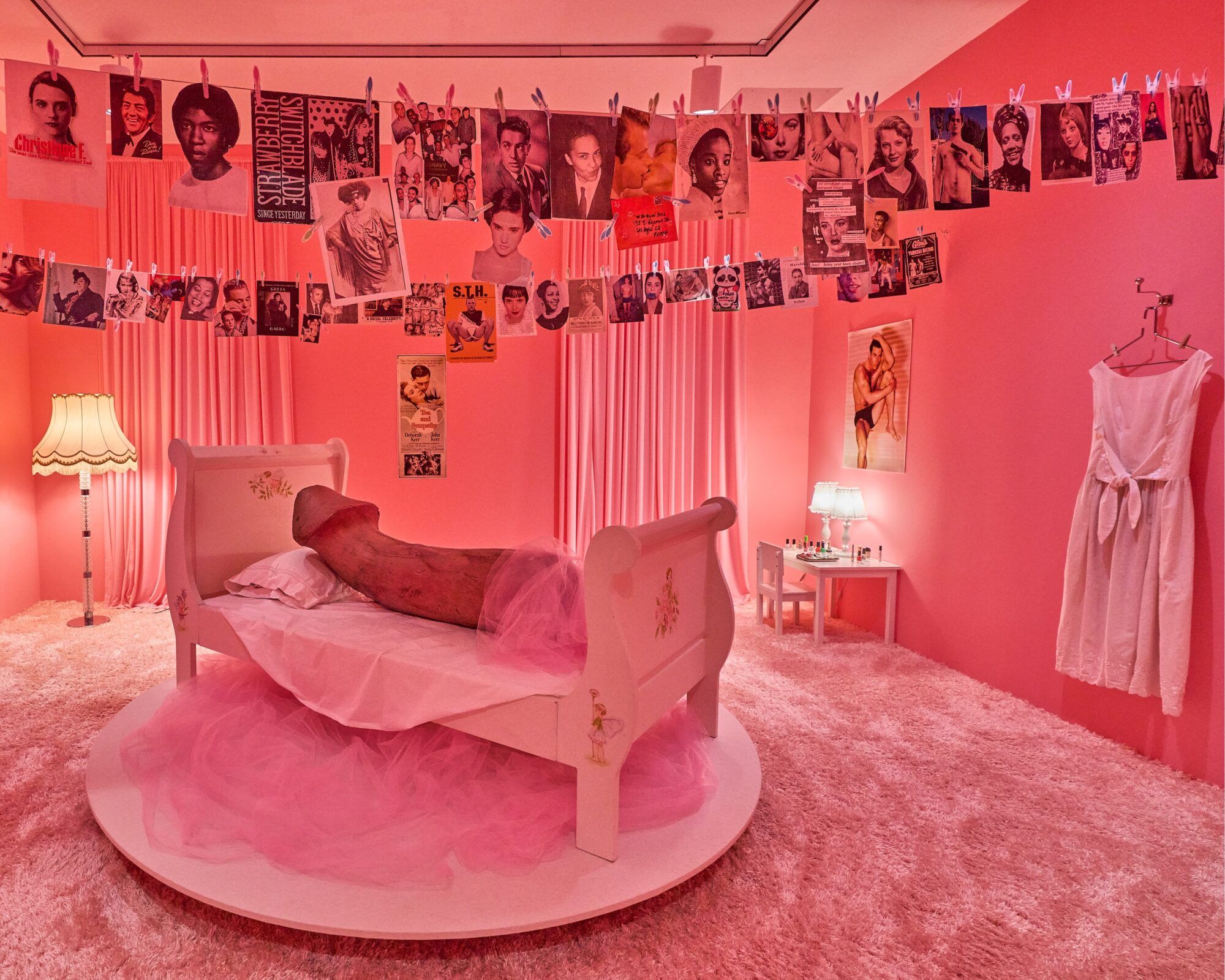
Interspersed throughout this neuroticism were little beeps of pleasure. Rosemarie Trockel at Gladstone doing AI slop art and showing everyone she’s still got it. Trisha Donnelly getting knock-kneed over Jay DeFeo during a walkthrough at Paula Cooper. PS1’s fall exhibitions, including Ayoung Kim, Vaginal Davis and Inuuteq Storch, looking better than any NYC museum has looked in years. Nico-Lou Monheim Carrasquillo’s delicious Mutt reading series, most recently at Ruby/Dakota gallery. And the quiet joy of watching my students get enthralled by Man Ray at The Met. If no one knows what the hell is going on, the answer is to just keep going.
Shanyu Zhong in Beijing sees that amid declining global market share and state-influenced isolation, Chinese and Hong Kong galleries are rebuilding by re-examining and contextualising local talent.
According to the Art Basel and UBS Global Art Market Report 2025, China fell to become the third-largest art market in 2025 with a sharp drop of 31 percent. Living in Beijing, I hardly need to read the report to feel the isolation. The absence of mega-galleries from the Shanghai fairs, Pace’s decision to close its H Queen’s space, and the growing urge among artists to seek representation outside China all point in the same direction. The next question, then, is: does it matter that much—at least for us as writers, researchers, curators… or even simply as audiences?
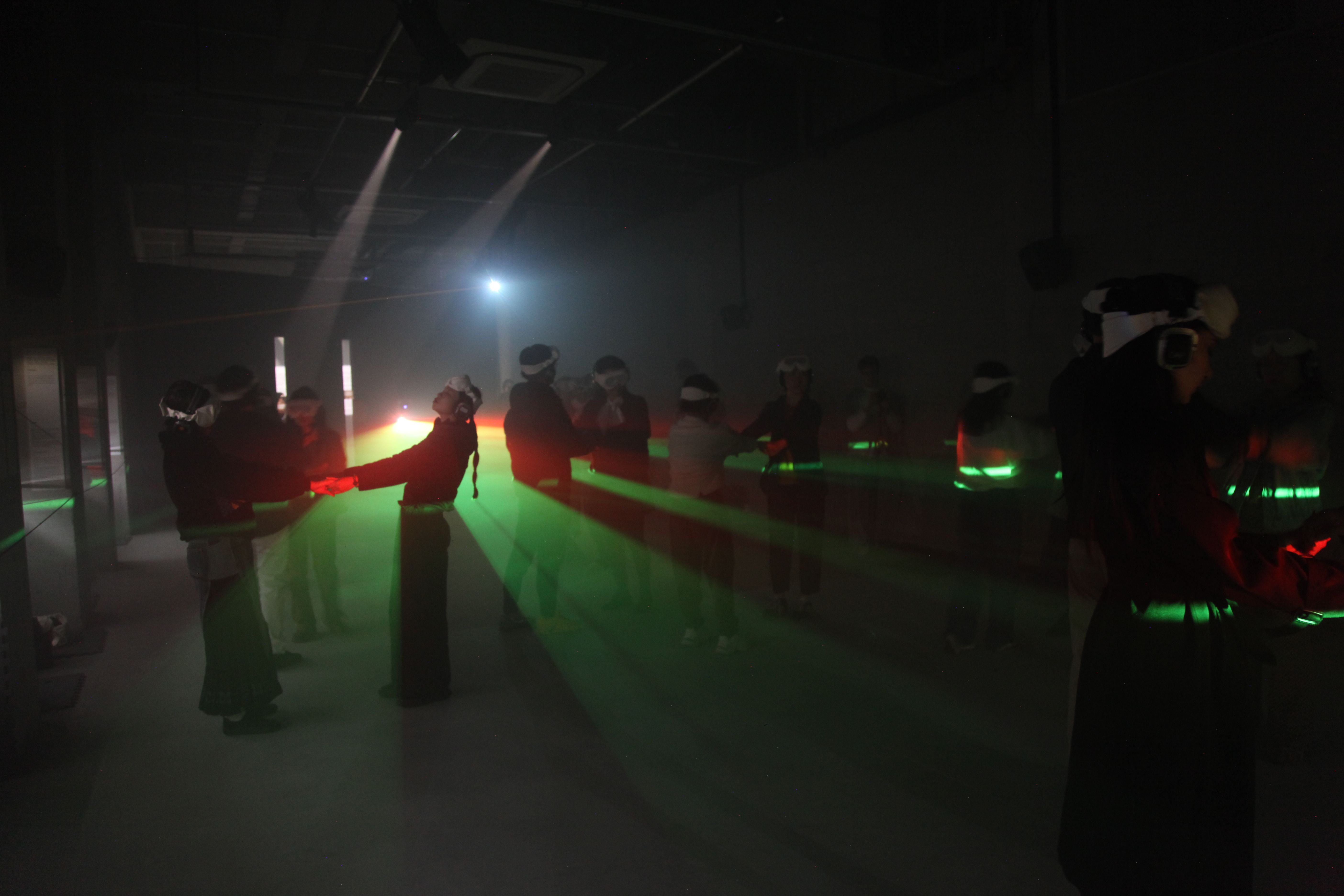
Looking back over the past 12 months, I recall encountering more impressive exhibitions than during the booming post-COVID years, when paintings of a certain dynamic, expressionist style dominated gallery halls. Institutions now seem less addicted—or less compelled (partly as a result of declining collecting interest)—to importing blue-chip superstars. Instead, they have begun to contemplate and re-examine the real context of local artists. Li Binyuan’s solo exhibition and Zhang Xiaogang’s major retrospective, both at the Song Art Museum, were unexpectedly visceral, and offered occasions to reread artists I thought I already knew. In River Biographies—Huangpu River, Stockholm-based Lundahl & Seitl’s immersive project at the West Bund Museum, I felt a gentle current flowing outward and backward. As the artists held my hand and navigated softly through a mysterious realm, eyes covered, hearing only instructions in my headphones, I became water itself. I flowed from the Huangpu River to the ocean, to the banks of a small town in South America or Europe. The connection was not market-driven, nor bound by borders, but intrinsic—embedded in the hydrology of our own bodies.
“Institutions in China now seem less addicted to importing blue-chip superstars.”
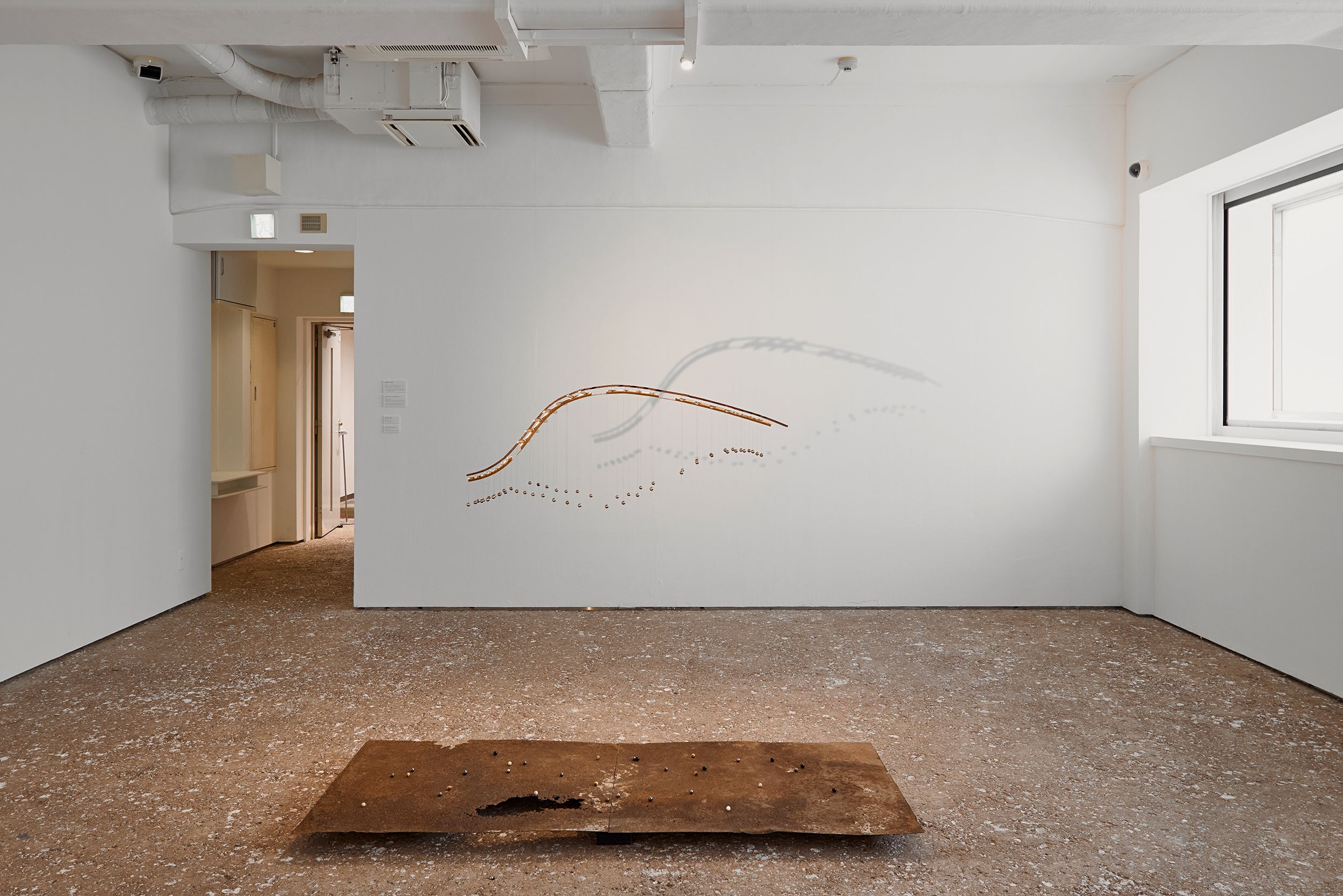
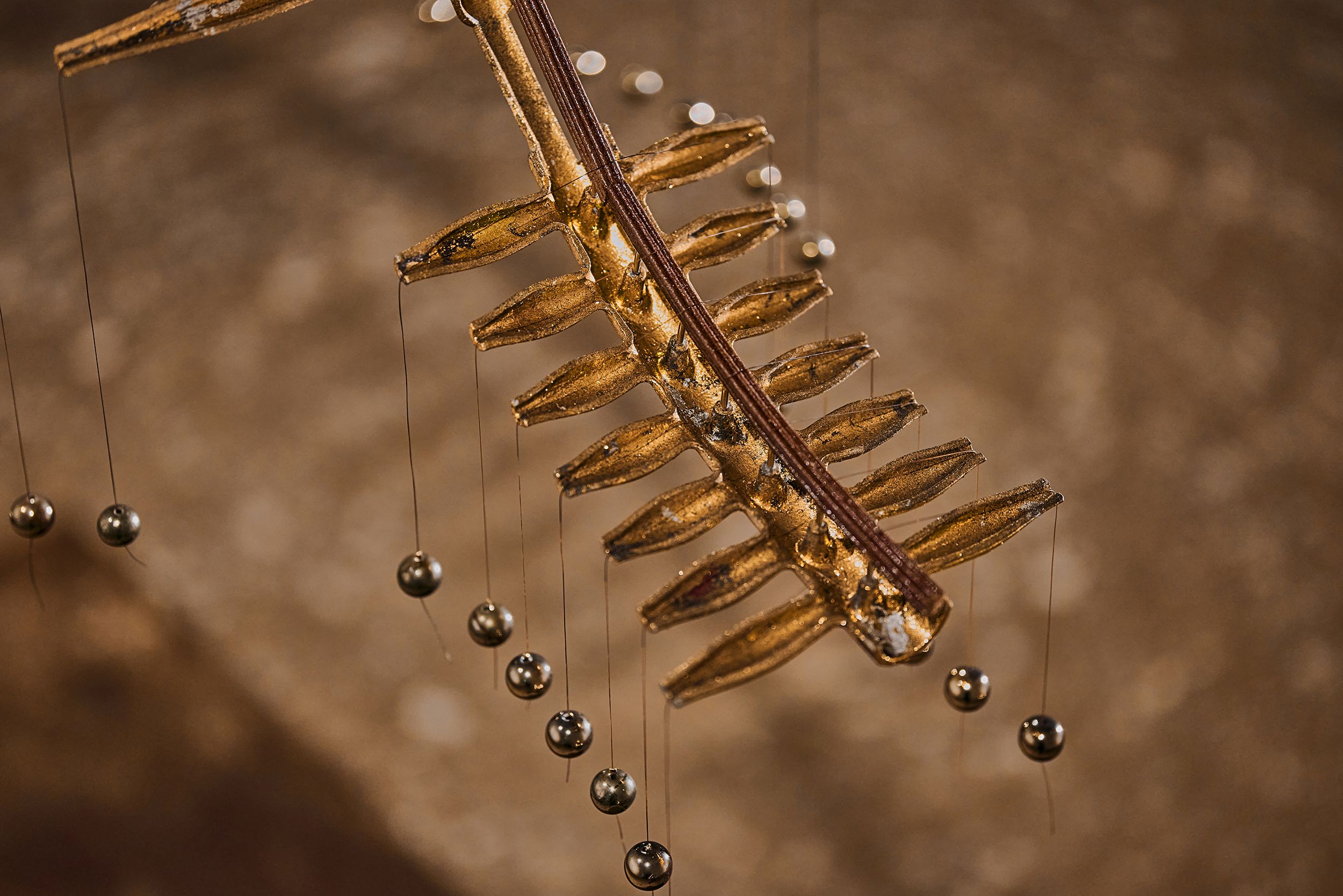
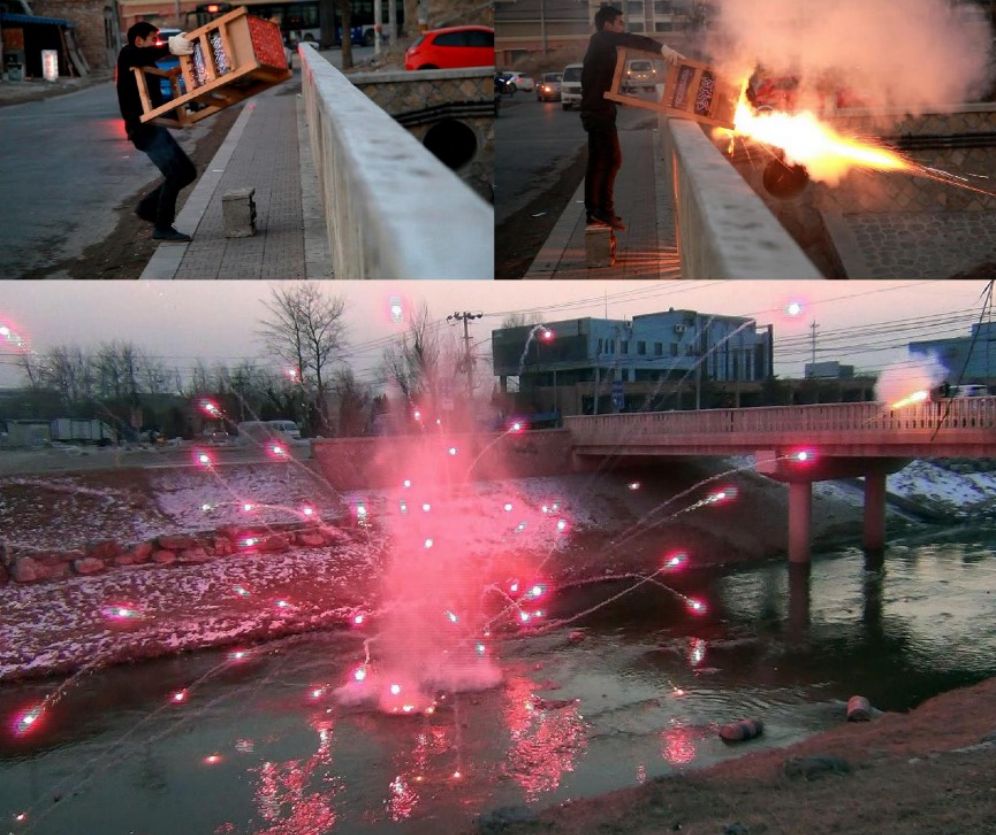
Beyond this, do we really have to passively accept isolation? In December, New York-based artist Miranda Fengyuan Zhang, who works with handwoven wall pieces and sculptures, brought up to me the phrase ‘self-salvation’. Why not? Artists are orchestrating experimental projects they didn’t previously have the chance to realise, and actively seeking residencies that allow them to encounter cultural affinities. Mid-year, Chen Zhe presented a metallic, arching sculptural spine in a kneeling, worship-like posture at Tokyo Arts and Space, inspired by Buddhist rituals in Japan and ancient Chinese incense timers. As the incense burned down, metal beads fell one by one on to the ground—an enigmatic moment that connected the body with the cosmic, the unspeakable.
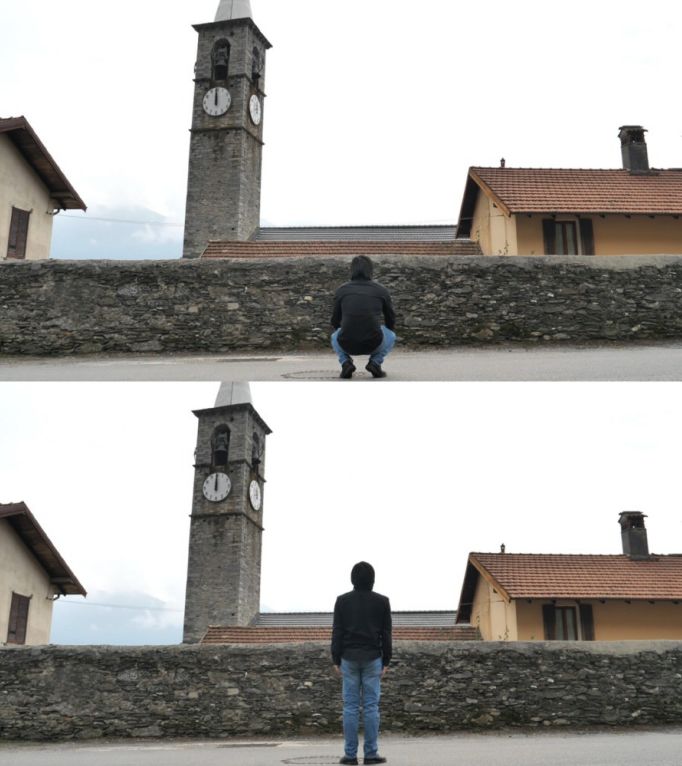
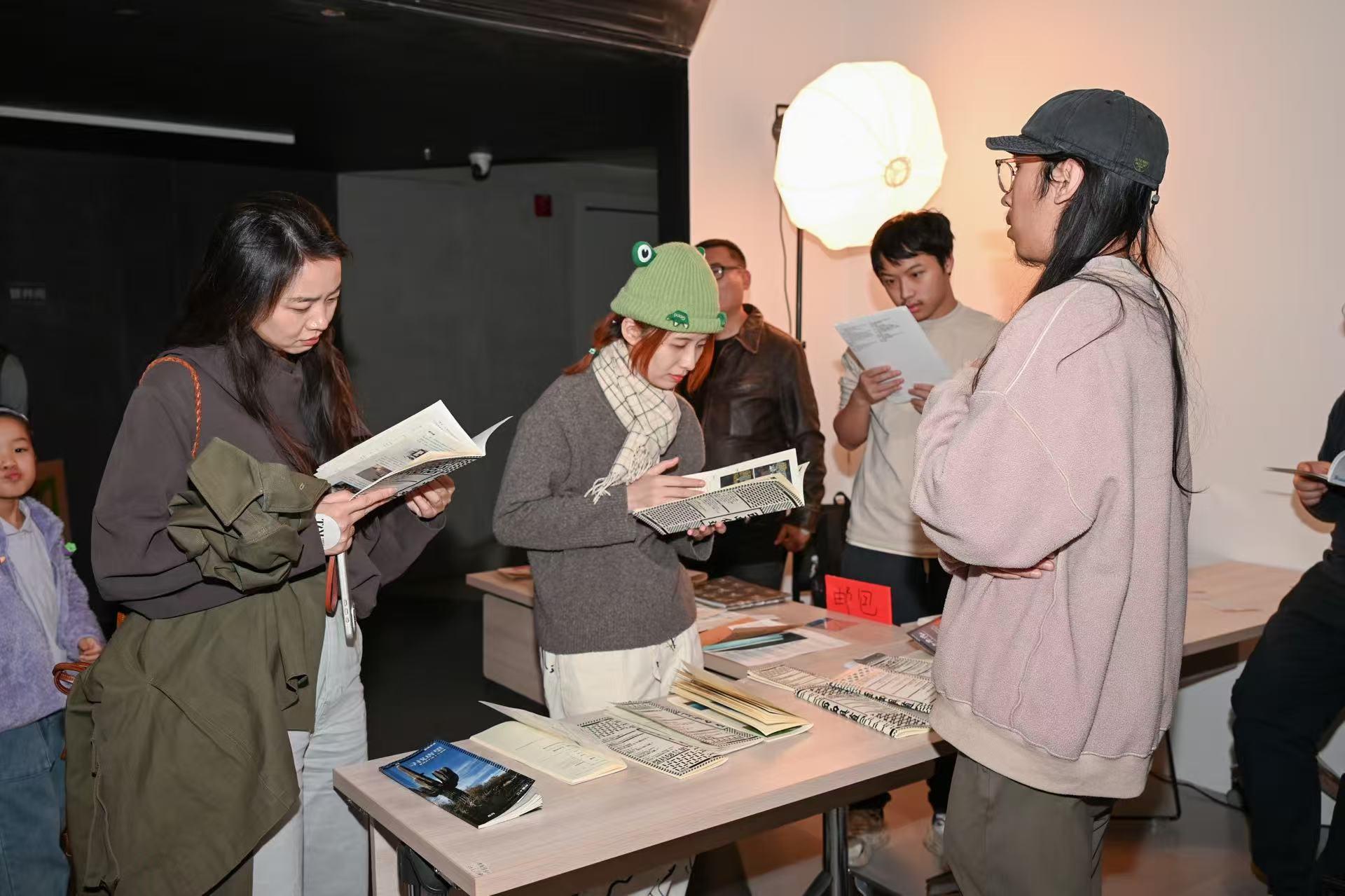
At Taikang Art Museum’s year-end party, I met Tianqi, editor of Icosa Magazine, a Guangzhou-based independent art publisher. Since the government banned independent publishing in 2024, book fairs in Tokyo, Singapore, and Kuala Lumpur have become new refuges. Over the past year, Icosa published monthly, offering guidelines on how to disseminate printed matter with caution alongside digital editions that subscribers could print at home. There is vulnerability in this model, certainly—but also an optimism that seems to emerge almost out of nowhere. Yes, we’ll always find a way to re-bridge you and me.
London-based Lydia Eliza Trail travelled Europe and the U.S. in 2025, revelling in immersive, genre-blending work that sends itself up to just the right extent.
2025 was the year I discovered my own bad taste. Losing my Art Basel virginity this June kickstarted a realisation: my interests were not located in the Messeplatz second floor, but in the circus-like, oddball, oversaturated curation that occurs in the outposts, including Basel Social Club. The annual, independent, itinerant fringe fair, situated this year in a former 18th-century private bank, adopted a curatorial thread that drew on ‘the language of finance and exchange’.
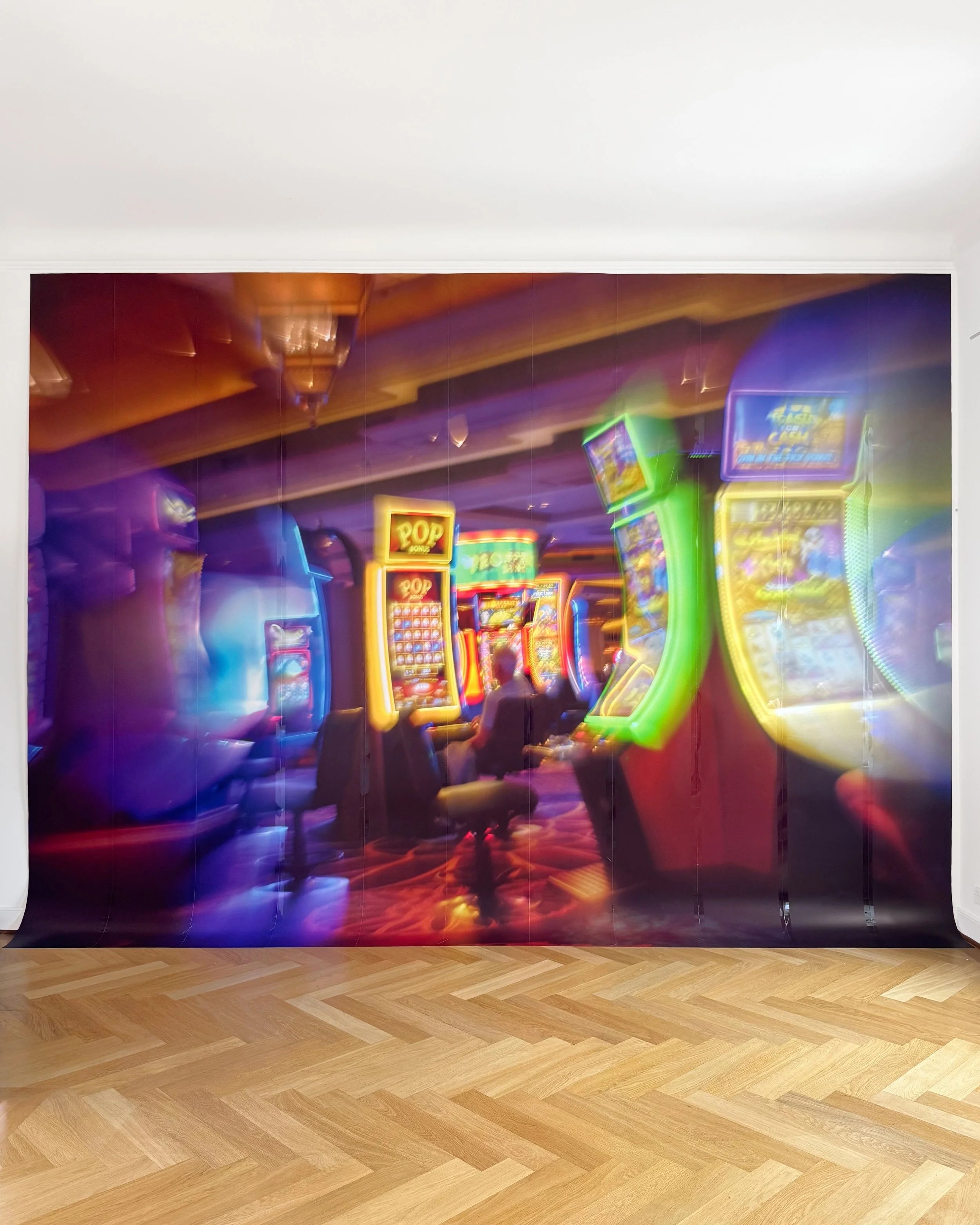
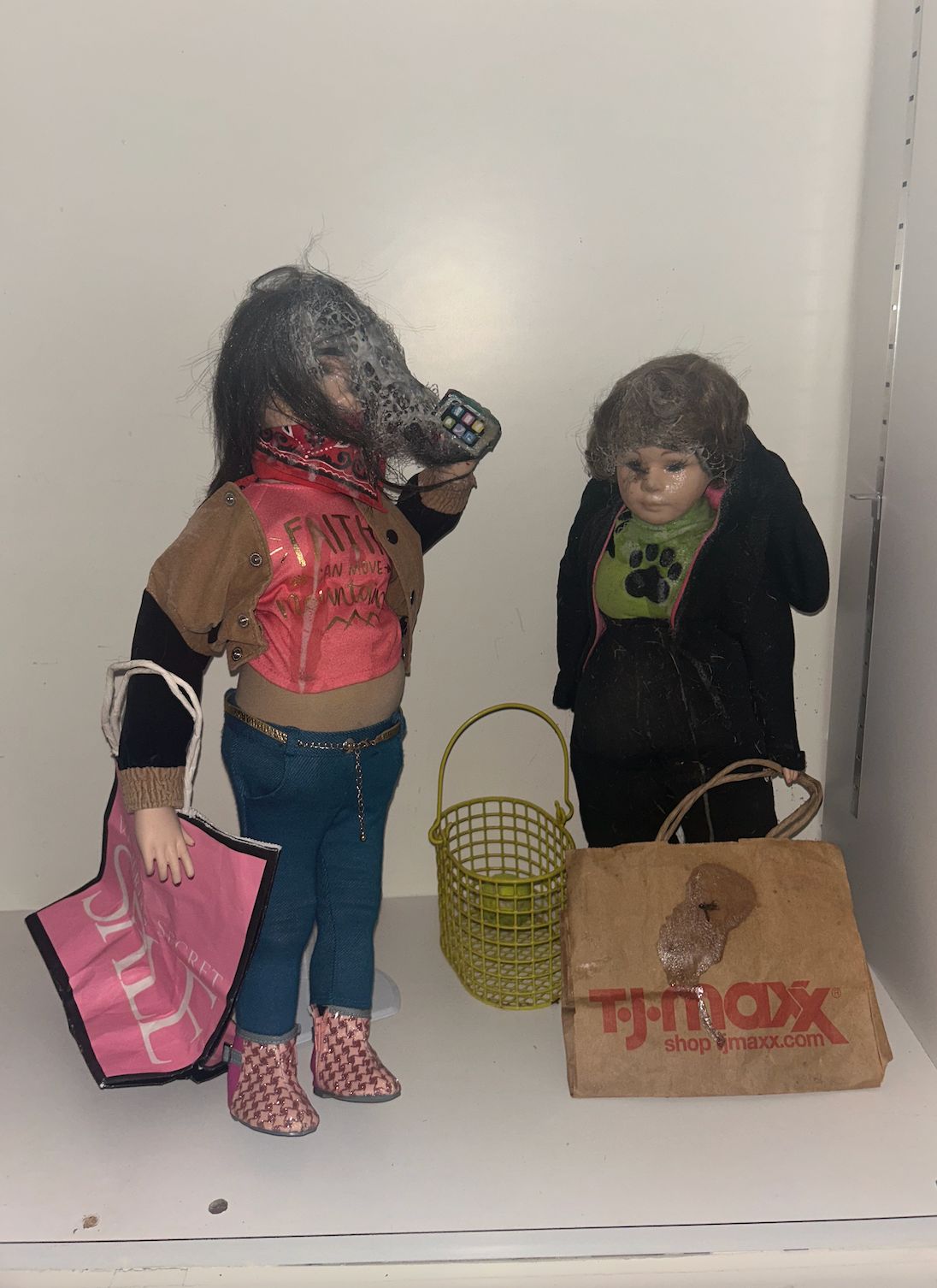
Artist Nina Roehrs borrowed works from the Arab Bank Switzerland’s collection in a curatorial feat that managed to mock hedge funds while somehow keeping the bank’s participation just on the right side of self-irony. A doozy. In an adjacent room, Galerie Oskar Weiss showcased American artist Alex Bag’s tiny sculptural toy dolls, carrying plastic shopping carrier bags from the likes of Victoria’s Secret, TJ Maxx and Sephora. Upstairs, newly founded Chicago gallery Hans Goodrich presented blurry photos of a Las Vegas Casino beside an actual casino table, where a Swiss card dealer appeared to be conducting a game with fake money and told me to leave. In the same room, cult figurine artist Jeffrey Dalessandro presented action figures of Ghislaine Maxwell, Jeffrey Epstein and Luigi Mangione: grotesquerie is alive and real.
That same emphasis on self-satirisation permeated the art-world proper during 2025. In November, I visited the group exhibition Seriously. at Sprüth Magers in London, to see that a museum-quality survey of levity and humour in contemporary art lends itself perfectly to the zeitgeist. Two video works stood out: Martine Syms’ satirical take on her FYP (the personalised, algorithmically generated ‘For You’ Page) on TikTok, She Mad: The Non-Hero (2021) and artist duo Peter Fischli and David Weiss’s absurdist video work The Way Things Go (1987) in which a series of objects career into one another, perfectly positioned to generate a chain reaction, appearing to misbehave sans human intervention.
“An emphasis on self-satirisation permeated the art-world proper during 2025.”
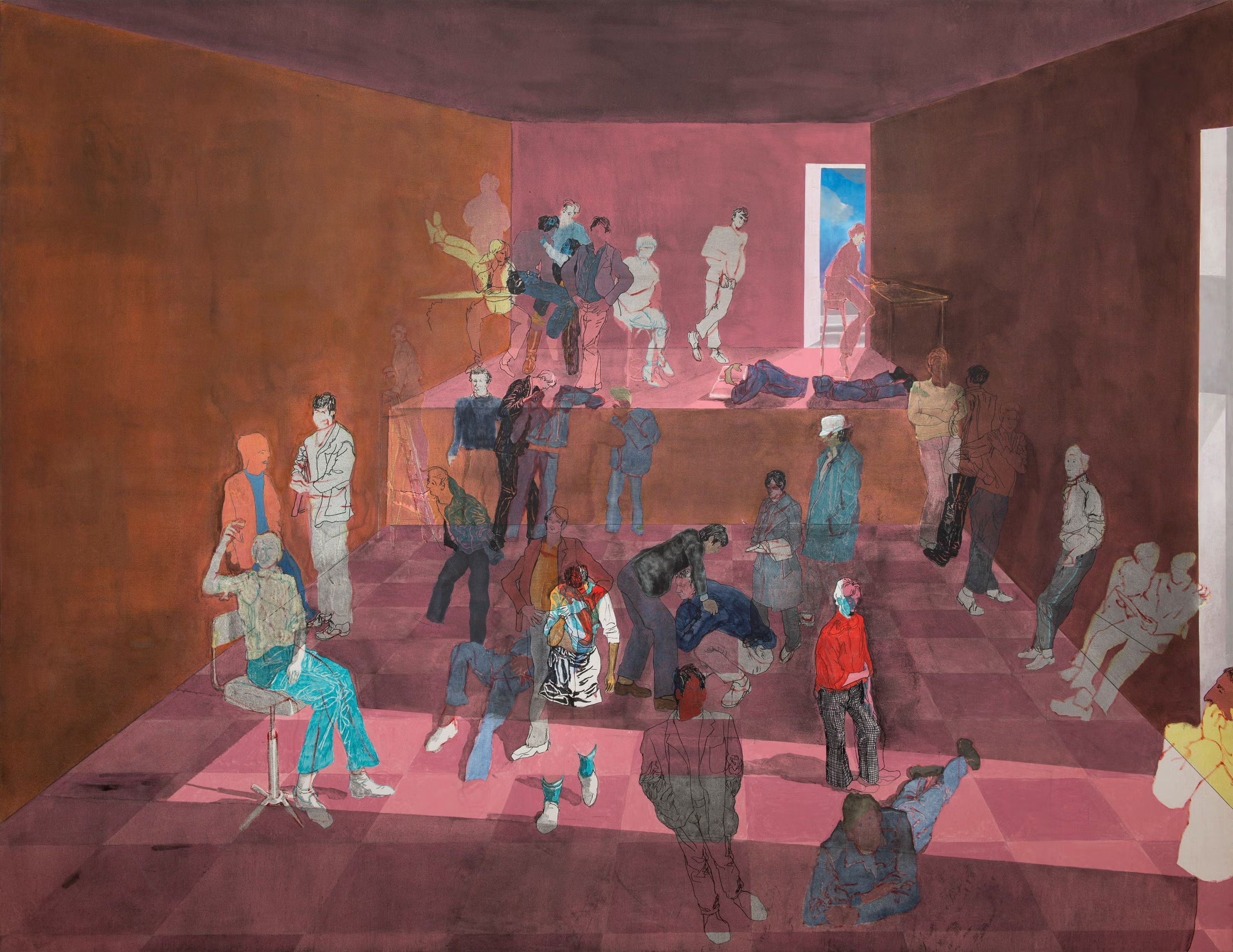
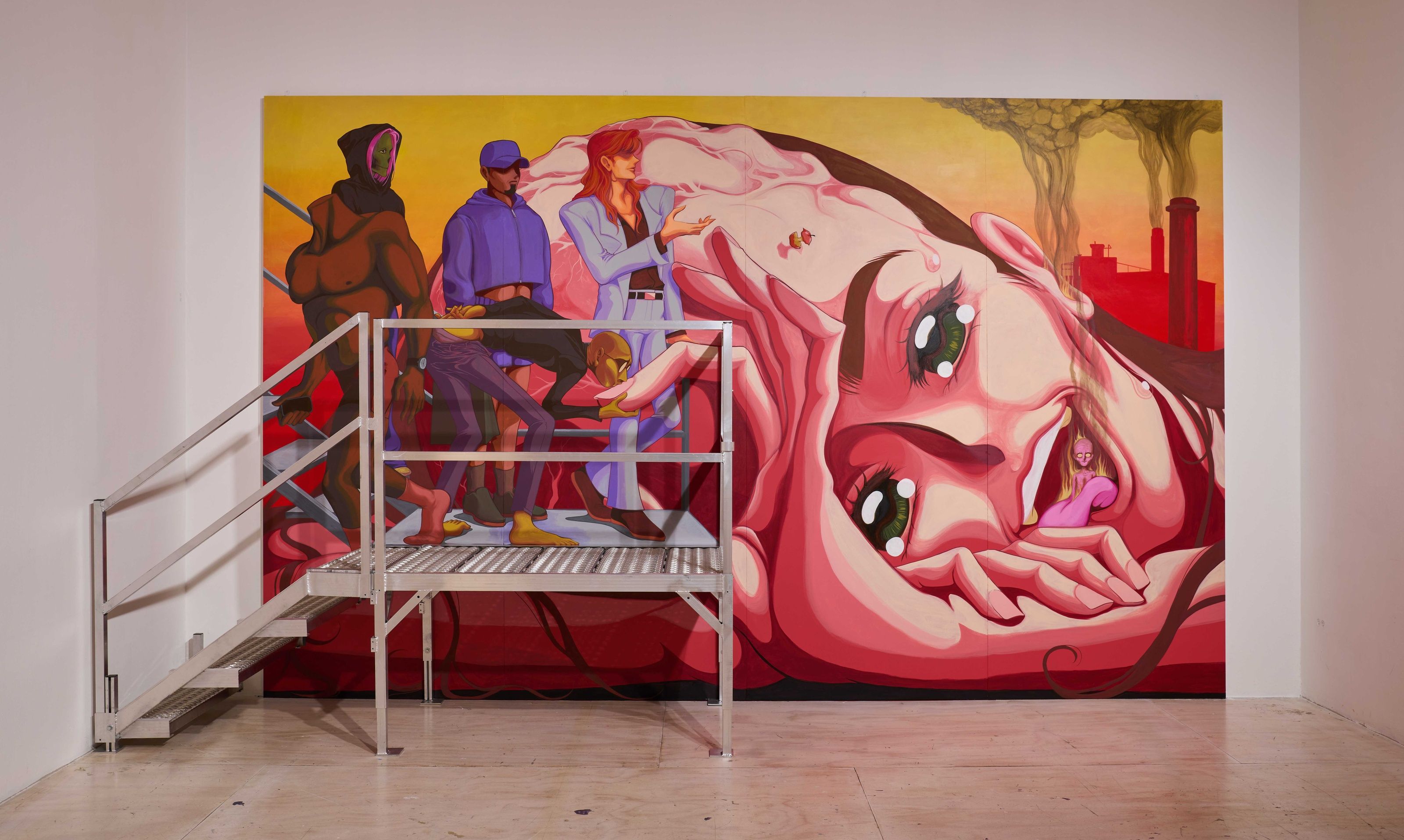
Throughout the year, I found myself gravitating toward theatre, wanting to be immersed through large-scale institutional shows that married the archival impulse with the stage set. Take Julien Ceccaldi’s retrospective at MoMA PS1, Adult Theater, curated by behemoth of the underground artist network Kari Rittenbach. A Collection of Little Memories (2025), sees a muralistic depiction of Ceccaldi’s protagonist greeting a line of romantic suitors on a three-dimensional steel staircase. The show epitomises the genre-defying show of 2025: part archive, presenting a vitrine of Ceccaldi’s sketches and comics; part interactive playground, inviting visitors to sit, wave and laugh through his anime-esque narrative. If 2025 was typified by a gothic mash-up of genre—grotesque, pornographic, theatrical, satirical—is 2026 going to be another Frankenstein year?
Shanghai-based Zian Chen has found many reasons to despair during 2025, but notices quiet glimpses of rebellion in an often-constrained artistic landscape.
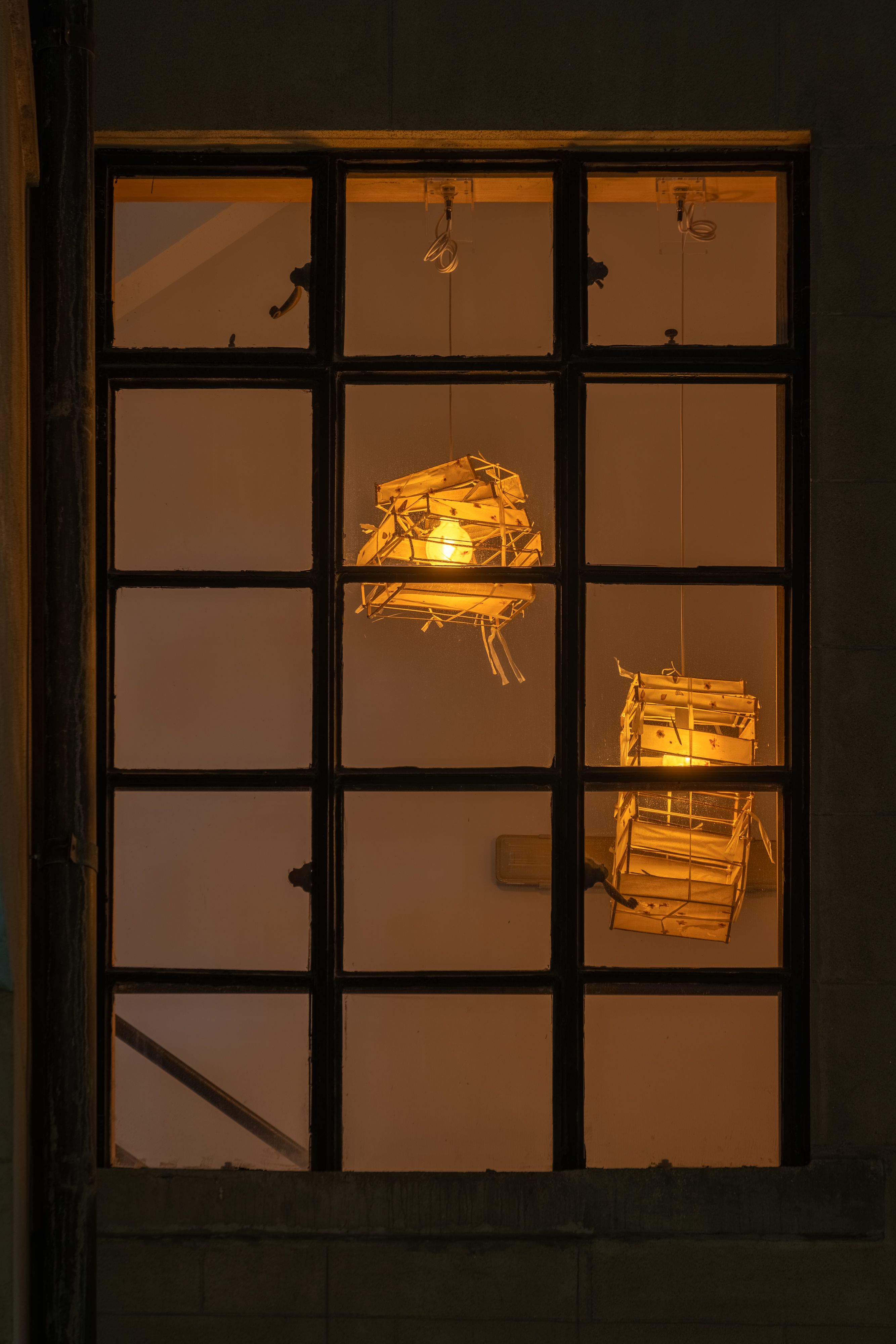
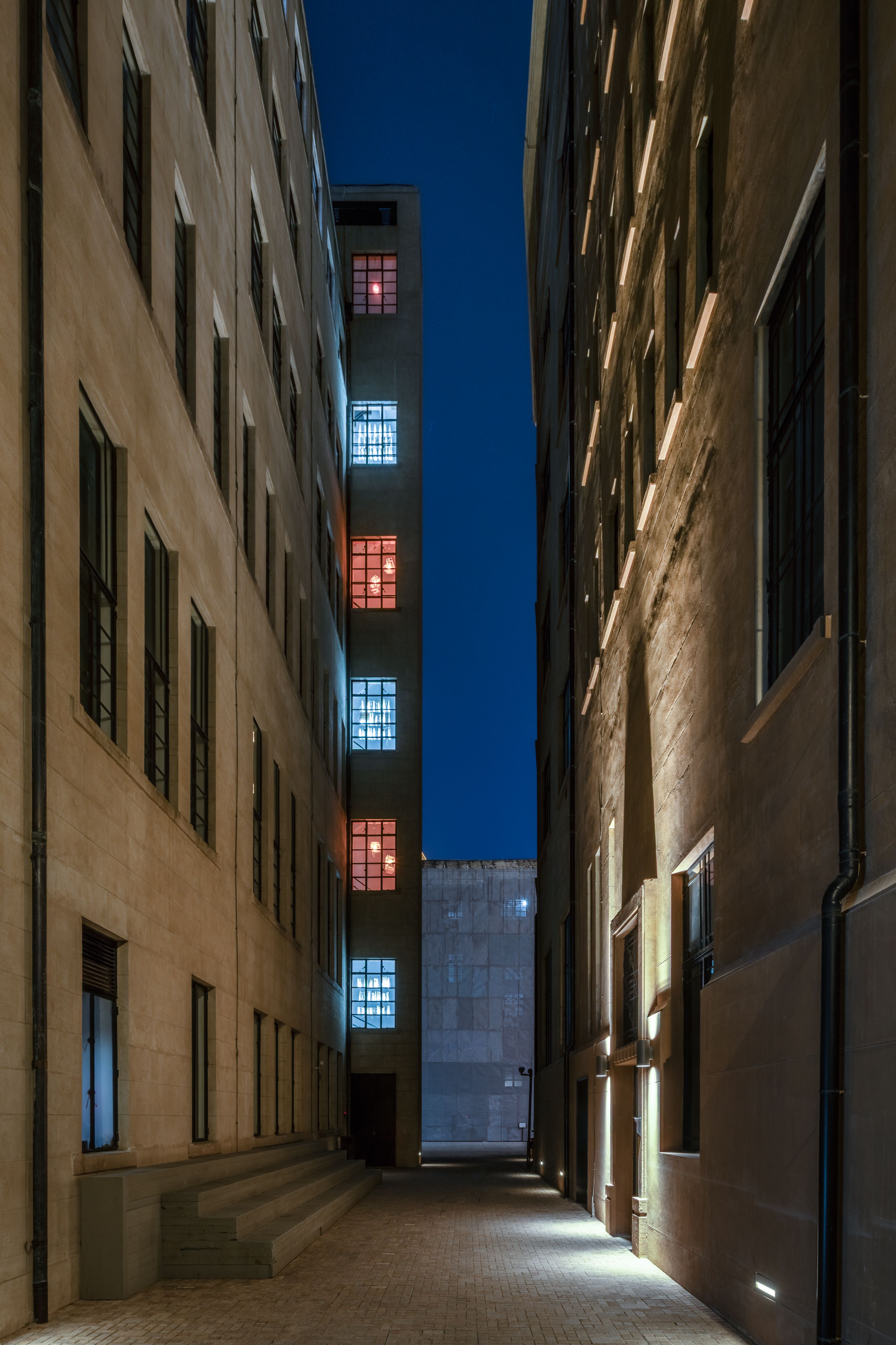
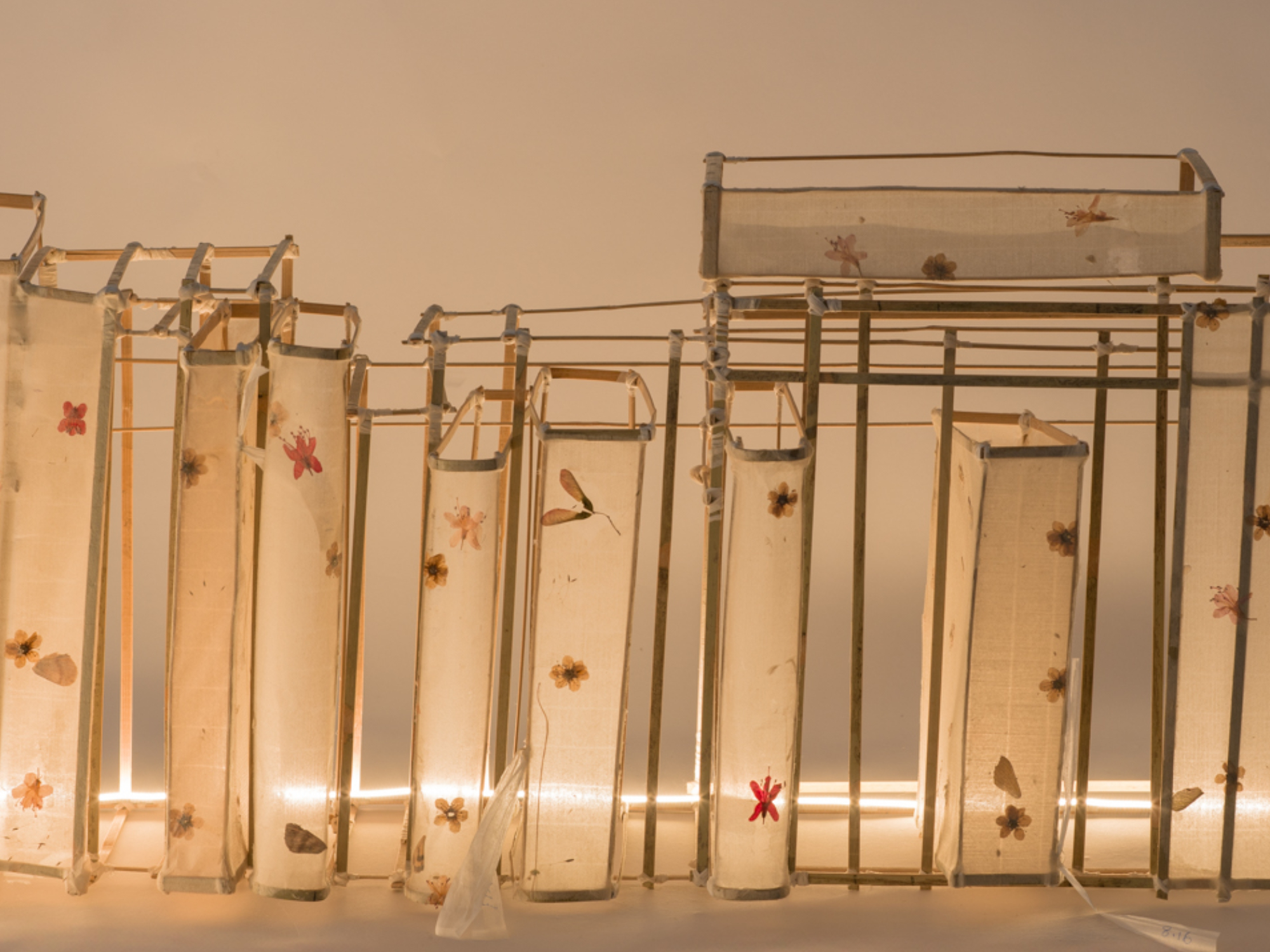

2025, in every sense, was a dispiriting year. Following Trump’s return to the White House in January, many around the world were surprised to discover that even the most progressive public arenas have suffered from the polarisation of discourse. In this light, I was heartened to learn that New York-based artist Cici Wu’s moving Lanterns from the Unreturned installation, in which she reflects on books confiscated during China’s Cultural Revolution, could be publicly shown at the Rockbund Art Museum in Shanghai. Sculptural lanterns were suspended along the staircase where librarians once carried and sorted these books, conjuring a largely unstudied history in a low-key, tactile, and quietly ritualistic way. Despite limited access and cautious language, these are the edges of possibility. The culture of exhibition-making under such conditions is existential—nothing to brag about. And yet, conjuring dark history into light may, in itself, be a form of hope.
Even in Japan, where public discourse feels increasingly constrained, several shows reflecting on colonial histories, militarism, and postwar entanglements were quietly mounted. Among them, the reopening of the Yokohama Museum of Art featured Art between Japan and Korea since 1945, critically examining the colonial responsibilities of Zainichi Korean-Japanese artists and the fraught legacies that continue to shape contemporary practice. The exhibition opened discreetly, given that Zainichi Korean-Japanese issues had previously sparked the controversial 2022 censorship of Yuki Iiyama’s work at the Tokyo Metropolitan Human Rights Plaza.
“Even the most progressive public arenas have suffered from the polarisation of discourse in 2025.”
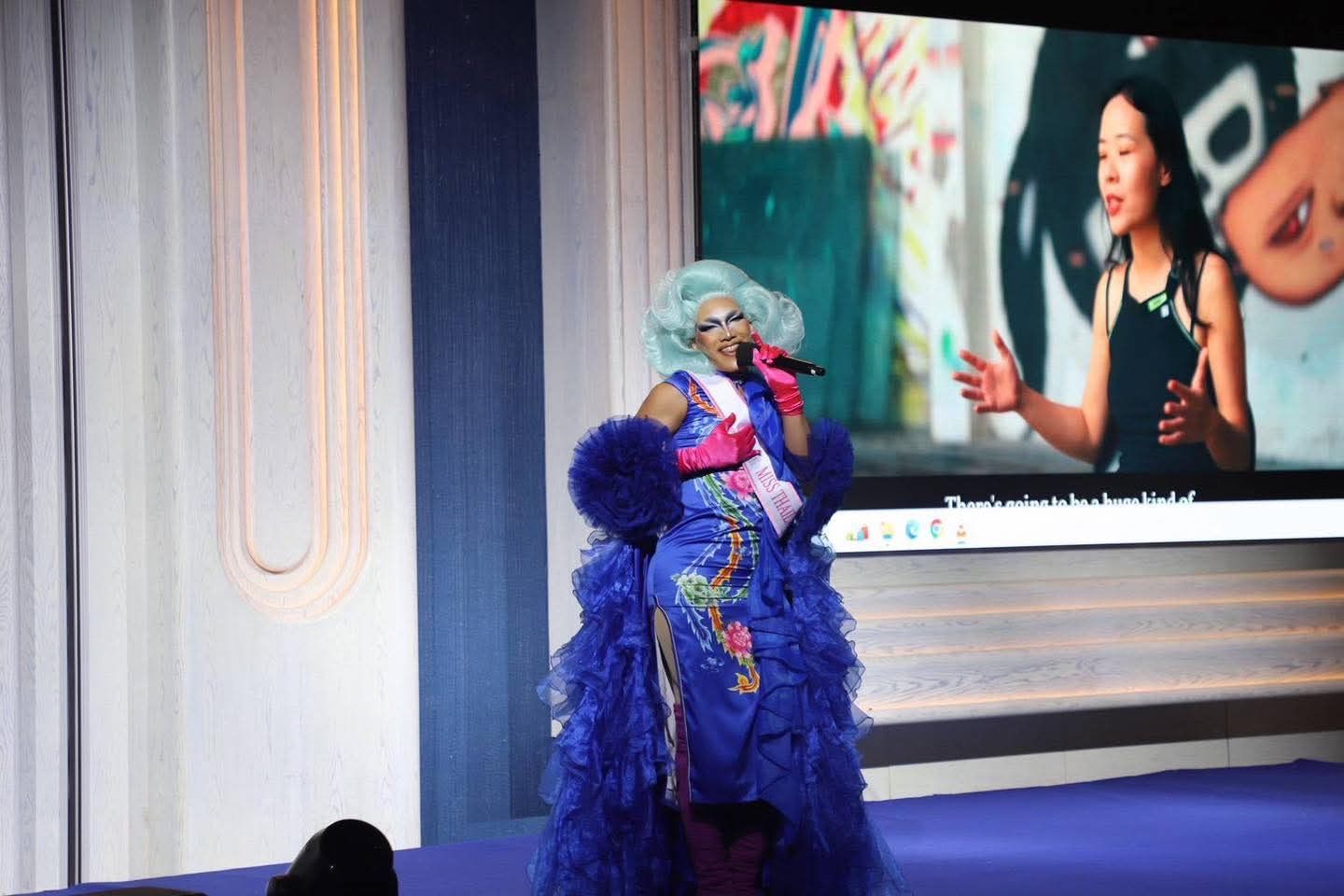
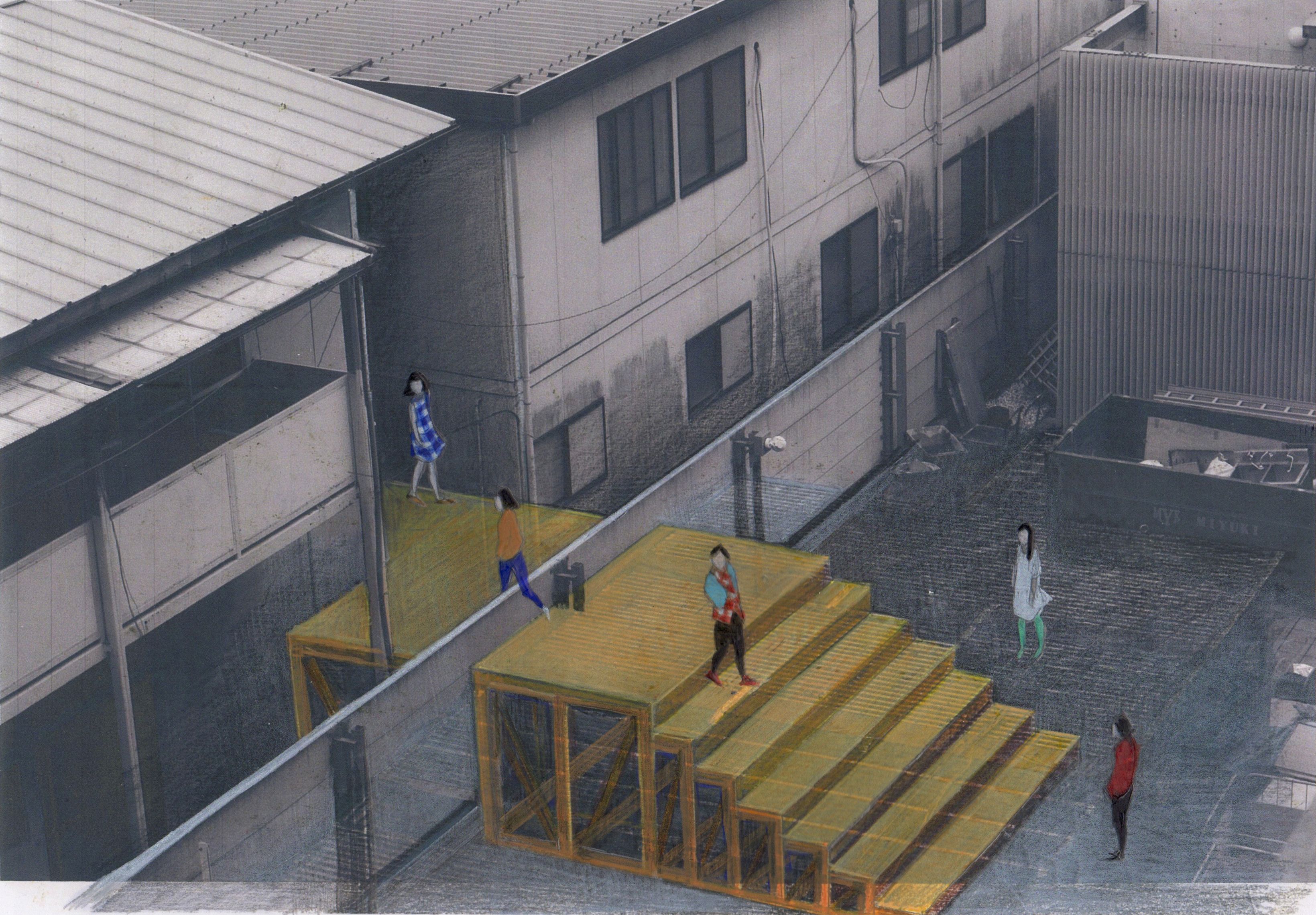
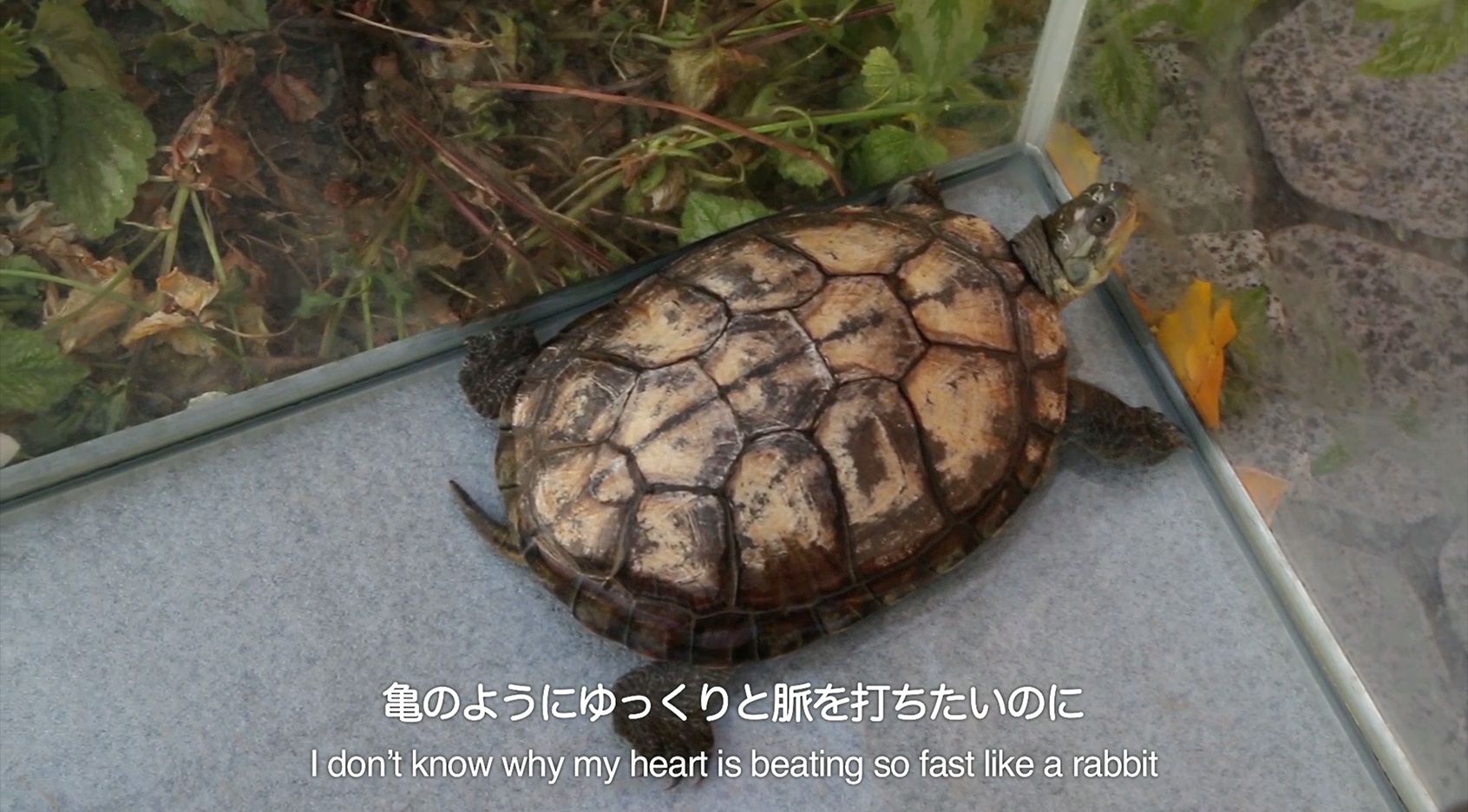
Two biennale openings captured this ethos vividly. At Taichung’s Taiwan Art Biennial, Indigenous artist Mayaw Biho gave an opening speech and, when he asked whether Taiwan’s Indigenous peoples remain colonised, was met with polite avoidance. While at the Thailand Biennale, artist Oat Montien staged a spectacular drag queen pageant to mock the organisers’ neglect of the artists, with multiple venues unfinished or not ready by the opening date in November. The performance was able to prompt discussion among curators and participants without diminishing the celebratory atmosphere, placing critique and celebration side by side. The lesson from 2025 in Asia’s constrained artistic sphere? One must adapt strategically, moving across geographies or playing with scale. Small biennales can still take risks, while larger institutions practice subtle persistence, quietly making things happen. —[O]
Main image: Kerry James Marshall, Knowledge and Wonder (1995) (detail). Mixed media on canvas. 294.6 x 698.5 cm. City of Chicago Public Art Program and the Chicago Public Library, Leger Regional Library. © Kerry James Marshall. Photo: Chicago Department of Cultural Affairs and Special Events.







A respected voice in contemporary art discourse.
Focusing on ambitious storytelling and insightful art-world commentary. Ocula Magazine publishes in-depth interviews, critical essays and timely analysis on the artists, exhibitions and ideas driving the global art world.
Learn more about Ocula Magazine
Showcasing the best of the art world.
Ocula partners with galleries from around the world to highlight their artists, artworks and exhibitions. Gallery membership is by application and invitation, with each member vetted by an independent panel.
Learn more about Ocula Membership
Specialises in the sale of major artworks.
Led by a team with deep ties to the world’s leading auction houses, galleries and collectors. Ocula’s advisory team offers bespoke services to high-net-worth clients from around the world who are looking to acquire the best of contemporary and modern art.
Learn more about our team and services