Press Release

Each Modern is honoured to participate in Frieze Masters for the first time, presenting a solo booth dedicated to the pioneering Chinese photographer Lang JingShan. With the generous support of the artist’s estate and important private collection, the presentation features a selection of the artist’s iconic composite photographs printed 1950s to the 1970s. These works highlight his distinctive synthesis of Chinese pictorial traditions and photographic innovation, underscoring his enduring contribution to the history of modern photography.

Lang JingShan (also romanized as Long Chin-San, 1892–1995) stands as a foundational figure in the history of modern Chinese photography and a key contributor to the formation of photographic modernism in East Asia. Frequently described as the “Father of Chinese Photography,” Lang’s career spanned more than a century, during which he not only shaped the institutional and aesthetic development of photography in the Chinese-speaking world but also positioned Chinese photographic practice within an international discourse. His work constitutes a sustained effort to negotiate between Chinese visual traditions and Western photographic modernity.

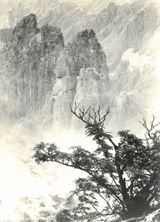
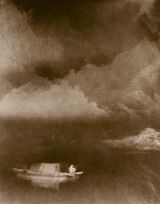
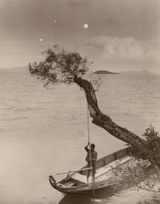
Central to Lang’s historical significance is his development of “Composite Photography,” a practice he began formulating in the early 1930s through the deliberate combination of multiple negatives into a single image. Through this method, Lang translated the compositional logic, spatial philosophy, and poetic sensibility of classical Chinese landscape painting into the medium of photography. This was not merely a technical experiment, but a conceptual proposition: photography—often understood in the West as an indexical and realist medium—could operate according to the same expressive principles as ink painting, privileging intention, rhythm, and atmosphere over direct representation. In doing so, Lang articulated an alternative genealogy of modern photography—one that runs parallel to, rather than derives from, Western pictorialism, reframing it through a Chinese intellectual and aesthetic lineage. In 1934, the original print Majestic Solitude (1934) was exhibited at the Royal Photographic Society’s salon exhibition in London, marking the first international presentation of this approach.

In 1949, Lang relocated to Taiwan following an invitation from the United States Information Service, where he would remain for the rest of his life. Despite geographical displacement and political rupture, he continued to work with negatives produced in mainland China, Taiwan, and Hong Kong, recombining them in later decades to construct idealised visions of the Chinese landscape. These works can be read as acts of cultural continuity, preserving and reimagining a Chinese visual worldview amid the upheavals of twentieth-century Asia. From the 1960s onwards, Lang increasingly incorporated human figures into his composite landscapes, frequently portraying eminent cultural figures such as the painter Zhang Daqian, thereby reinforcing the literati tradition in which landscape, calligraphy, and moral character are inseparable.

Alongside his artistic practice, Lang played a decisive role in photography education, exhibition-making, and international exchange. After settling in Taiwan, he became a central figure in the promotion of photographic culture, mentoring younger generations and advocating photography as a legitimate art form. His international recognition expanded steadily: in 1968 he was invited by Kodak to visit its film factory in New York; in 1980 he was named one of the ten most influential photographers by the Photographic Society of America. From the early 1980s, Lang engaged in sustained cultural exchange with France, exhibiting at the Musée-Galerie de la Seita in Paris, donating works to the Bibliothèque nationale de France, participating in the inaugural Rencontres d’Arles, and later holding a solo exhibition at the Galerie du Château d’Eau. His works subsequently entered the collection of the Musée de Toulouse. In 1991, a centennial retrospective was held at the Palace Museum, Beijing, affirming his canonical status within Chinese art history.

Lang JingShan passed away in Taipei in 1995 at the age of 103. His legacy resides not only in a body of work of exceptional historical importance, but also in his enduring influence on the development of Asian photography as a transnational practice. Since his death, scholarly attention and market recognition have continued to grow. A dedicated Sotheby’s auction in 2017 and major institutional exhibitions, including at the National Art Museum of China, have reaffirmed his international significance. His works are held in major public collections across Asia, Europe, and the United States, including the Art Institute of Chicago: Home, the Victoria and Albert Museum, M+, the Tokyo Photographic Art Museum, the Fukuoka Asian Art Museum, the Taipei Fine Arts Museum, the Taipei History Museum, the National Art Museum of China.

Pictorialist Landscapes and Urban Modernity

Born in Huai’an, Jiangsu Province, Lang was deeply immersed from an early age in traditional Chinese painting and calligraphy—an education that would later inform his photographic language. As a teenager, he studied photography in Shanghai and began working in journalism in 1911. By 1926, he had become a photographic reporter for Eastern Times, one of Shanghai’s most influential newspapers, making him among the earliest professional photographers in China.

Although operating within a journalistic framework, Lang’s photographic vision extended beyond documentary realism. His images from this period reveal an experimental engagement with pictorial photography, seeking to reconcile Western photographic techniques with Chinese aesthetic values. The photographs published in Eastern Times captured the rapidly modernising city of Shanghai: its hybrid urban spaces, the coexistence of tradition and modernity, and the visible presence of foreign powers within the concessions. In this regard, Lang’s work may be situated alongside contemporaneous Western photographers such as Eugène Atget, Alfred Stieglitz, and Paul Strand, not as a derivative follower, but as a parallel modernist negotiating local conditions of modernity.

In 1928, Lang co-founded the China Photography Association in Shanghai. Through strategic connections with journalism, publishing, and business networks, the association organised four exhibitions between 1928 and 1930, attracting wide public attention and stimulating early photographic criticism in China. The association also facilitated exchanges with the Japanese photographic group Kōgasha, situating Chinese photography within a broader East Asian modernist network. This activity played a critical role in the pre-war flourishing of photography in China and established Lang as one of its most influential practitioners.

Nude Photography and the Modern Body

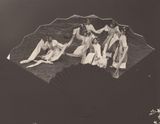
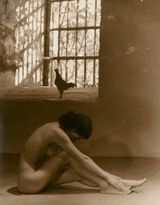
Lang’s nude photography of the late 1920s and 1930s represents another pioneering chapter in his career. At a time when representations of the nude remained culturally contentious in East Asia, Lang approached the genre through a synthesis of Western classical composition and an East Asian sense of restraint and lyricism. His nude portraits, many of which were published in the magazines he edited, reflect the influence of contemporary fashion, theatre, and Western cinema, projecting the cosmopolitan glamour of Shanghai onto the modern Chinese female body.

In 1930, Lang published what is widely regarded as the first nude photography art book in Chinese history. His work helped to establish nude photography as a legitimate artistic genre rather than a sensational or illicit subject. It was only in the late 1930s that nude photography became more widely circulated in Chinese newspapers and magazines, by which time Lang had already assumed a leading role, elevating the medium to the level of fine art and aligning it with international modernist practices.

Composite Photography: Tradition Reimagined

From 1931 onwards, Lang actively participated in international exhibitions with the explicit aim of redefining China’s cultural image on the global stage. His exhibition with the Royal Photographic Society in London in 1934 marked the international debut of his Composite Photography.
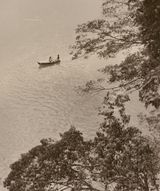
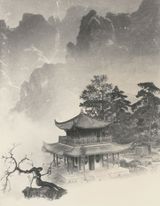
Unlike Western photographic traditions that prioritised optical realism, traditional Chinese painting has long privileged expressive intention and spiritual resonance. Lang’s composite works embody this philosophy by constructing imagined landscapes through the careful orchestration of multiple negatives. Influenced by Song dynasty ink painting, these images deploy layered spatial relationships and expansive negative space, echoing the “shan shui” tradition in which foreground, middle ground, and distance are arranged to guide the viewer’s mental and emotional journey.
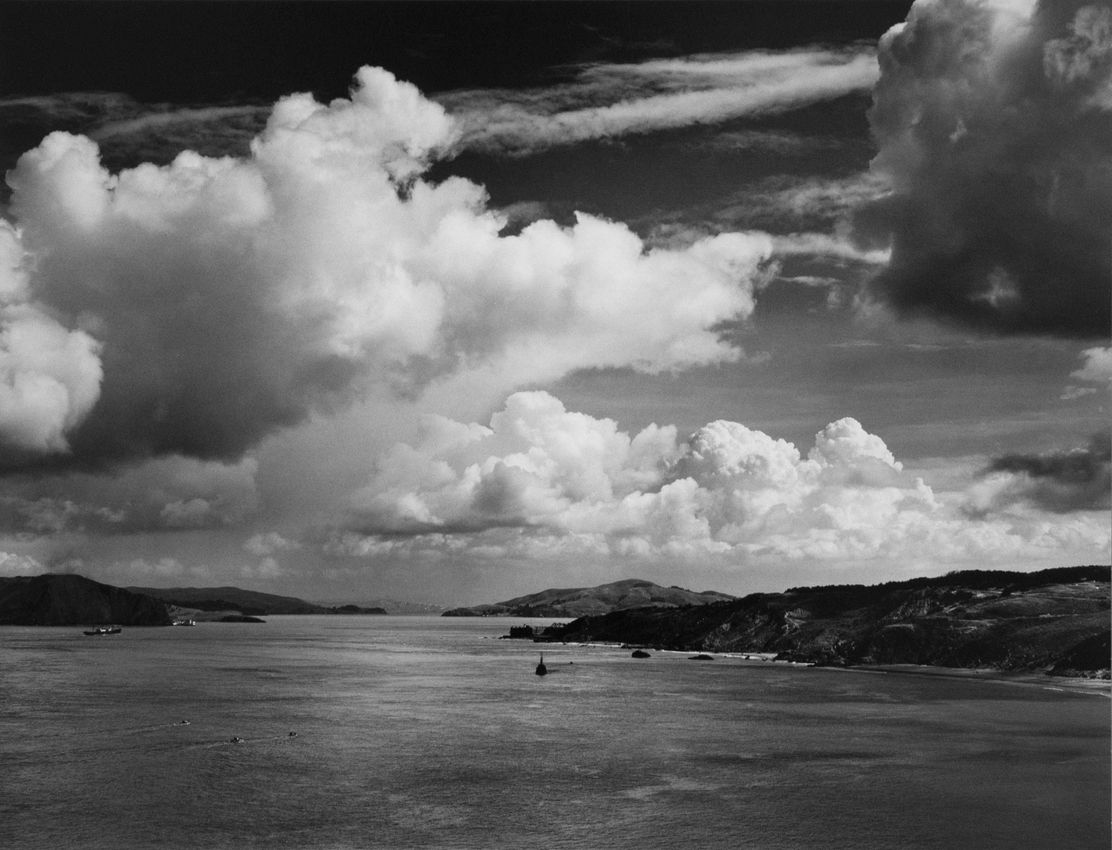
The use of negative space in Lang’s composites—often resembling mist, clouds, or voids between mountain forms—addresses one of the most complex challenges in Chinese landscape painting: the dynamic balance between emptiness and substance. This approach produced a distinctly Chinese photographic language that diverged fundamentally from Western landscape photography. In this sense, Lang’s conceptualisation of landscape photography may be understood as developing independently of, and in certain respects earlier than, the monumental naturalism associated with figures such as Ansel Adams.

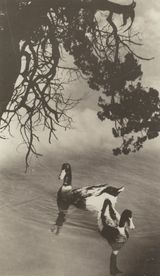
In parallel, Lang’s composite flower-and-bird photographs extend the lineage of Song dynasty painting, using close-up imagery and symbolic composition to evoke moral character, refinement, and auspicious meaning. Such works reflect both the elite cultural background of their maker and a conscious withdrawal from overt social commentary, instead asserting the continuity of literati values within a modern photographic medium.

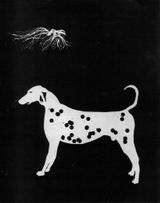
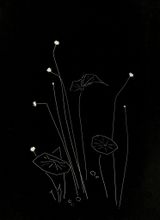
Alongside his composite photography, Lang also experimented with the photogram. By placing plants or drawing directly onto photosensitive paper and exposing them without a camera, these works move beyond optical representation. The resulting images, formed through silhouette and tonal variation, evoke the atmospheric qualities of Chinese ink painting. Rather than engaging with the photogram as a modernist device, Lang used it to further articulate his long-standing interest in translating Chinese aesthetic principles—such as rhythm, emptiness, and poetic resonance—into the photographic medium.

Read More

Installation Views

Selected Works

Loading...

Also Exhibiting at Each Modern

The art world in focus