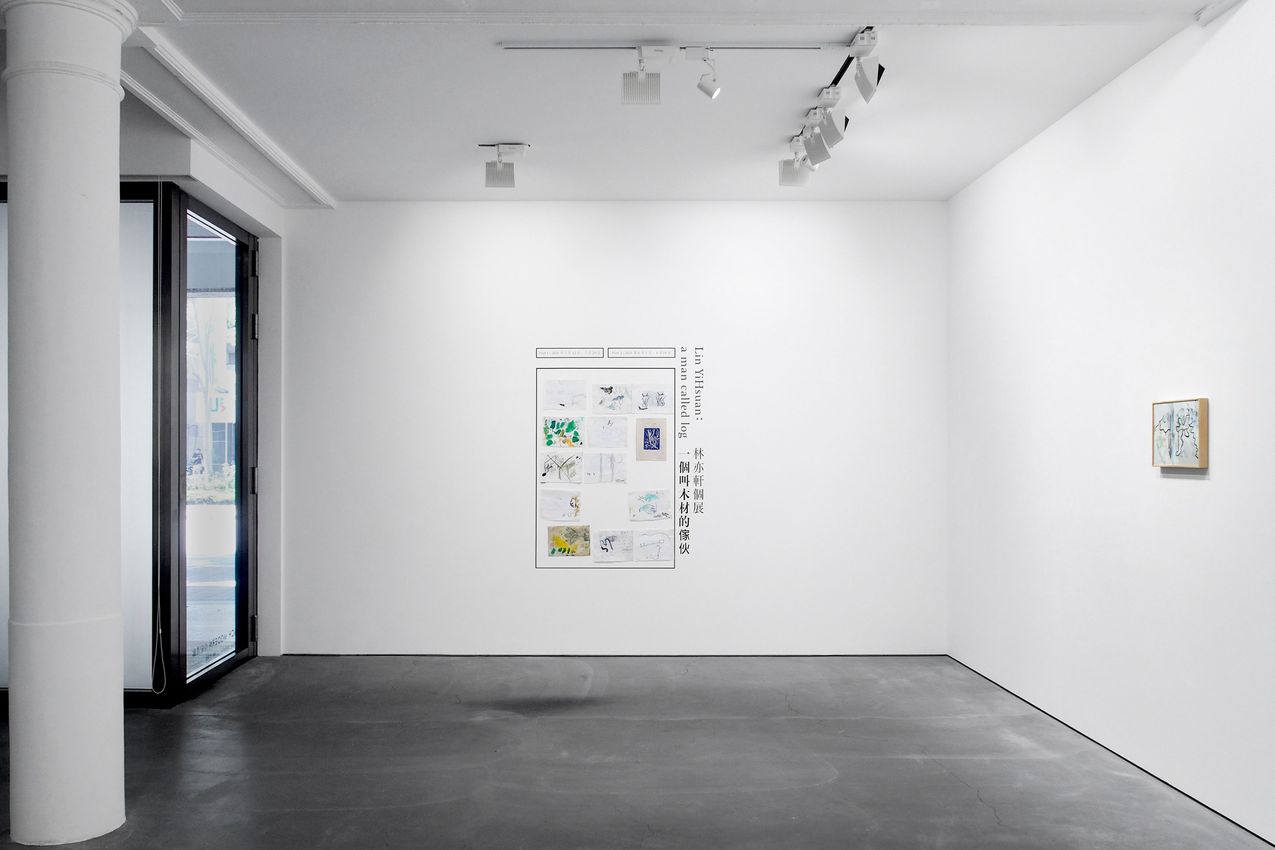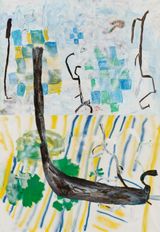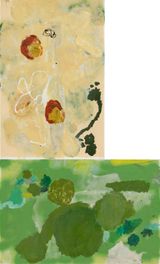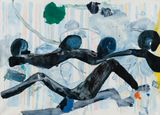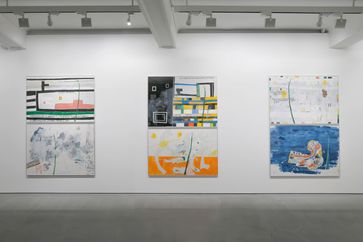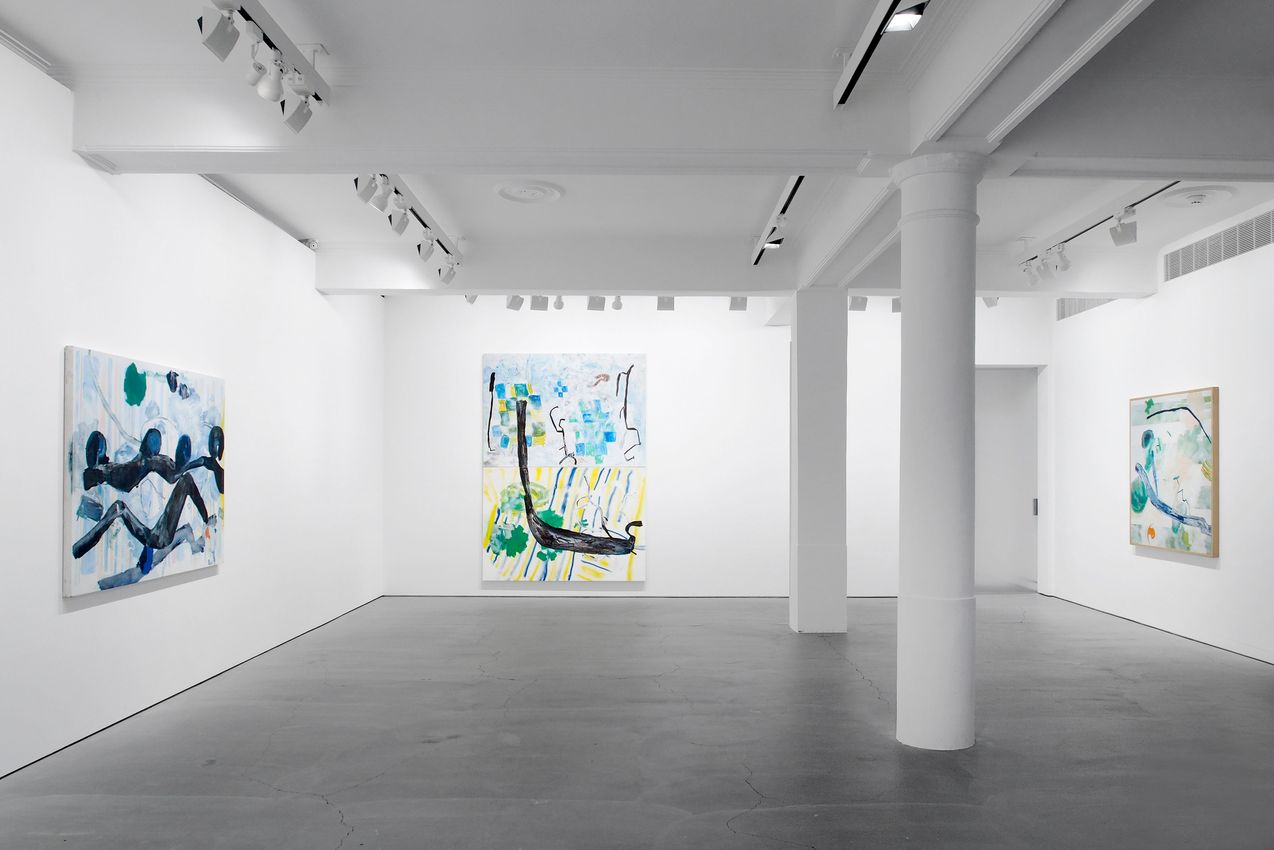
Each Modern is pleased to announce Brazil-based artist Lin YiHsuan’s latest solo exhibition, “a man called log”. This two-part exhibition presents, for the very first time in Taiwan, a series of recent paintings made in 2020 and 2021. The titular “log” references the important export product of the Pau Brasil tree, which is destroyed, semi-processed, and prepared for distribution around the globe. This changing status – from tree to log - also reflects Lin’s reaction and thoughts on the context of Brazil, and his own art.
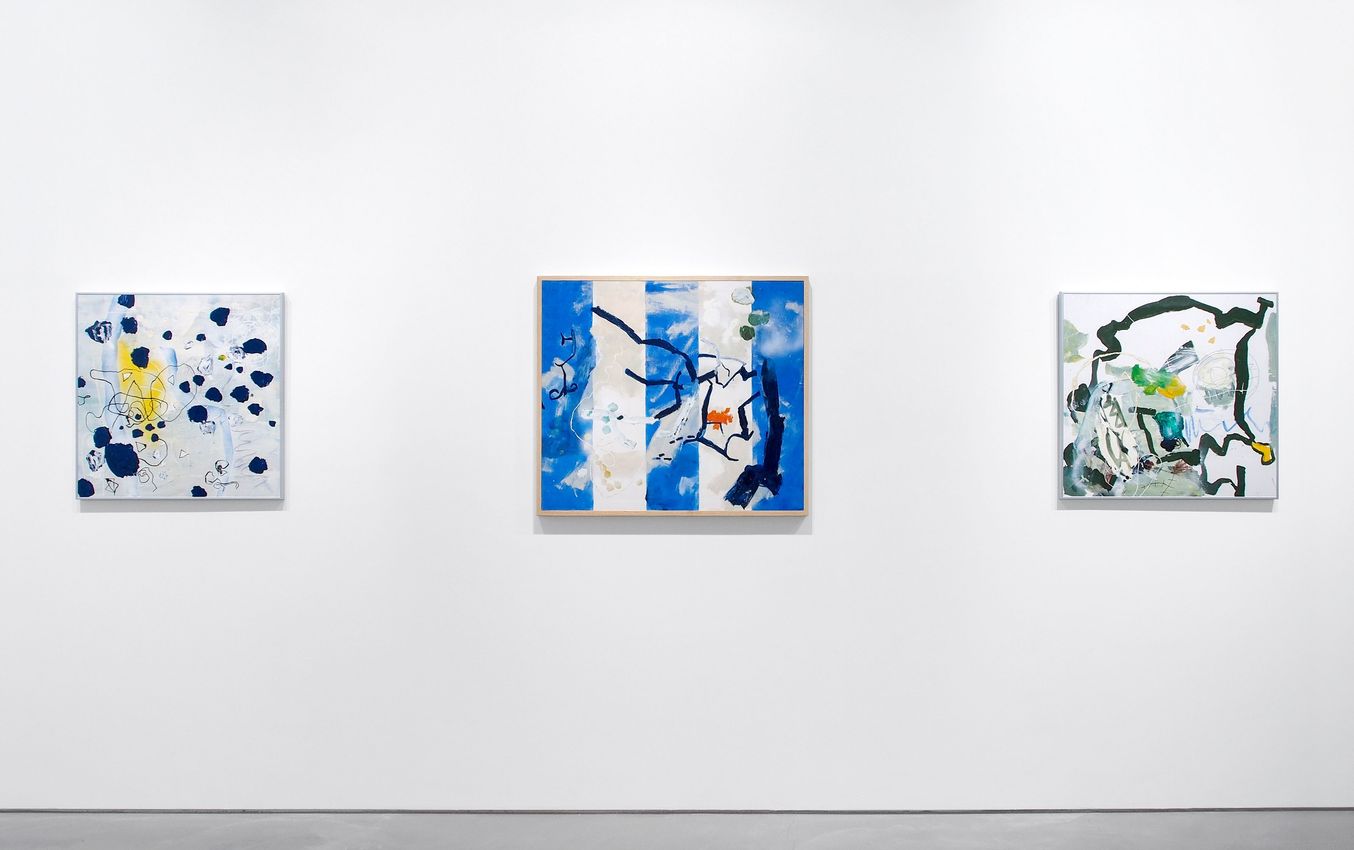
Manifesto Antropófago, written by Brazilian poet novelist Oswald de Andrade in 1928, and the subsequent Tropicália artistic movement of the 1960s, are seen as Renaissances of post-colonial Brazil. The core tenant of these cultural movements was to swallow and digest cultures from Africa, Europe, and Asia, and then synthesize them with Brazil itself to regenerate a new multicultural Brazilian status quo. Having lived in Latin America for years, Lin’s abstract paintings reflect a mixture of Brazilian graffiti and Asian lines, depicting what he has seen from Honduras, Argentina, and adopted home, Brazil, where he has resided for over a decade. Just like the artistic movements of Brazil, fundamental painting elements, such as lines, circles, and color fields, are constantly combined, juxtaposed, decomposed, and unified in Lin’s work. Gradually, he turns from a wanderer to an inhabitant – or approaches a localized status.
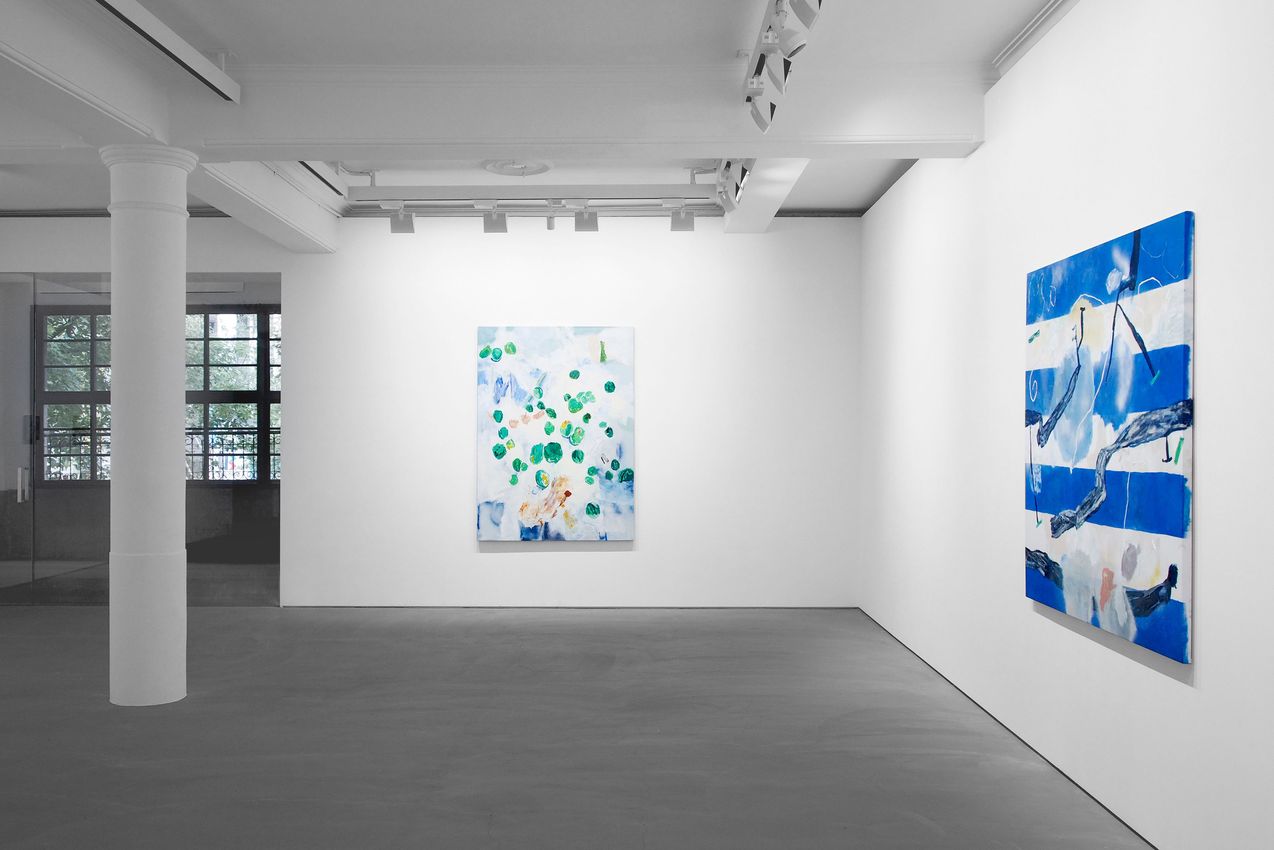
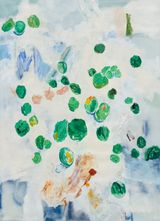
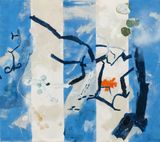
During the peak of the pandemic in 2020, Lin continued to paint while in lockdown in Brazil. For the artist, time seemed to flow at a slower pace, and his ambiguous shapes slowly turned into defined symbols. In “Leaves at 1 PM”(2020), we can see multiple green circles jumping with rhythm – the leaves are presented with an illusionary appearance. Beneath strong visual motifs, Lin’s backgrounds are an abstract rendering of a landscape. “Lençóis Maranhenses”(2020) portrays the unique desert lake scene of Lençóis Maranhenses National Park in Brazil, the blue white sky and water are under the spiral lines of the dunes and waves.
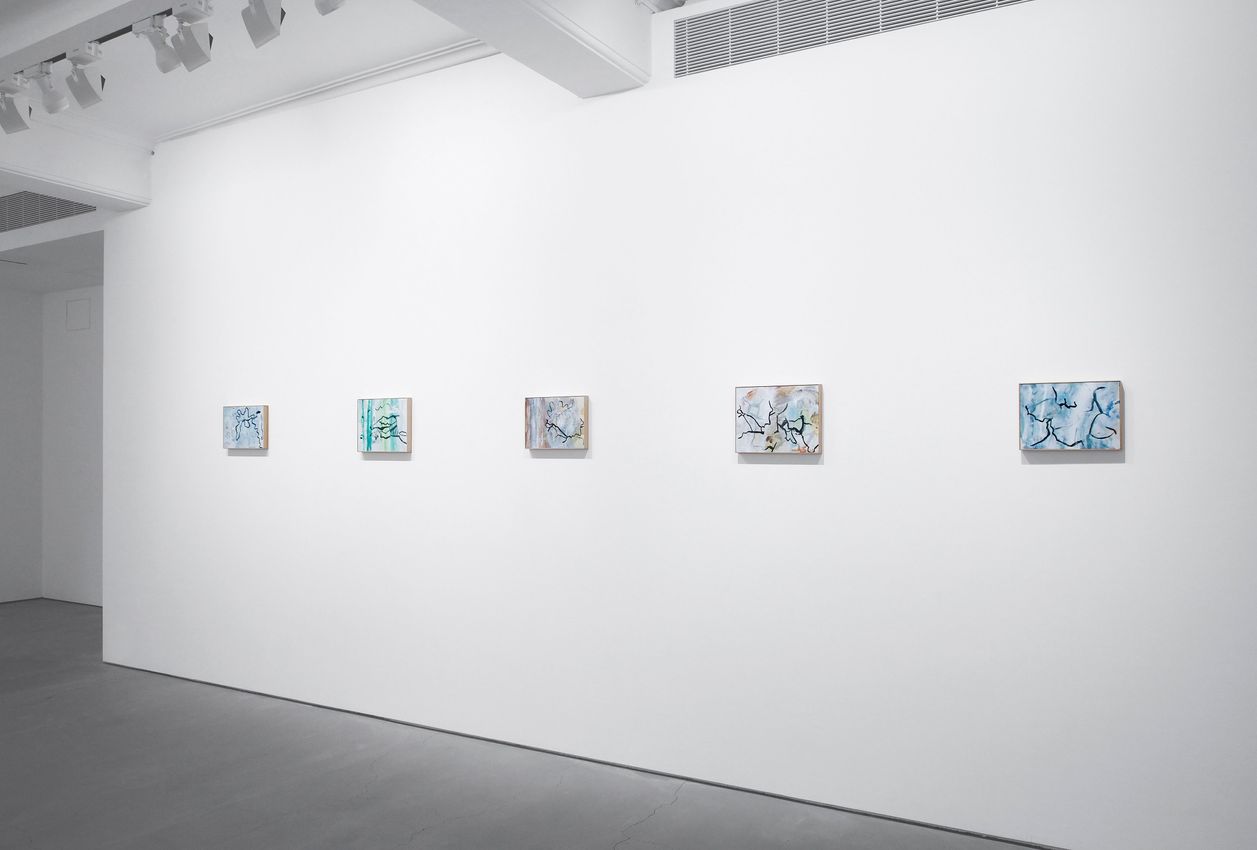
Adorned with black lines, “le cru et le cuit”(2020 - 2021) references French anthropologist Claude Lévi-Strauss(1908 - 2009)‘s Mythologiques: Le Cru et le Cuit, first published in 1964. As a result of different surrounding, trees will always adapt themselves to grow branches and leaves in varied shapes most suited for their environment. In this series, Lin utilizes this concept of “le cru”(the raw) which he takes to indicate an unpracticed skill, and “le cuit”(the cooked) which indicates a skill he is familiar with – to paints his staggered tree branches. In “Pieces of sky hanging on the treetops”(2021) and “jabuticaba”(2021), we can also see the twisted, maze-like tree boughs with yellow leaves standing out from an angular sky.
Indeed, Lin’s abstract painting is about landscape. But the foreign land is no longer what it looks like, and it is not the South America we expect, either. This landscape which belongs to Brazil is now beyond the native Brazil, instead responding to the multicultural history of the country and the artist. Perhaps, his paintings are as rough, rebellious, and poetically free as the Beat Generation. Perhaps, using the term “cannibalism” is a kind of counterattack to exportation the “log” back to the Western world, which would otherwise use such a term to depreciate Brazil. What Lin has aroused is not only an imagination or interpretation to a specific place. What he has achieved belongs to the world, and sits within the invasion and mixing of cultures.
Lin YiHsuan (b. 1985) was born in Yilan, Taiwan, then relocated to Latin America in 2009 and has since lived in Honduras and Argentina. Currently, he lives and works in São Paulo. Lines, symbols, passages of colors and brushstrokes are imbued with painterly techniques in Lin’s abstract paintings.
WE BELIEVE THAT ART GENERATES VALUE AND CONTINUES TO SHAPE THE FUTURE.

A respected voice in contemporary art discourse.
Focusing on ambitious storytelling and insightful art-world commentary. Ocula Magazine publishes in-depth interviews, critical essays and timely analysis on the artists, exhibitions and ideas driving the global art world.
Learn more about Ocula Magazine
Showcasing the best of the art world.
Ocula partners with galleries from around the world to highlight their artists, artworks and exhibitions. Gallery membership is by application and invitation, with each member vetted by an independent panel.
Learn more about Ocula Membership

Specialises in the sale of major artworks.
Led by a team with deep ties to the world’s leading auction houses, galleries and collectors. Ocula’s advisory team offers bespoke services to high-net-worth clients from around the world who are looking to acquire the best of contemporary and modern art.
Learn more about our team and services