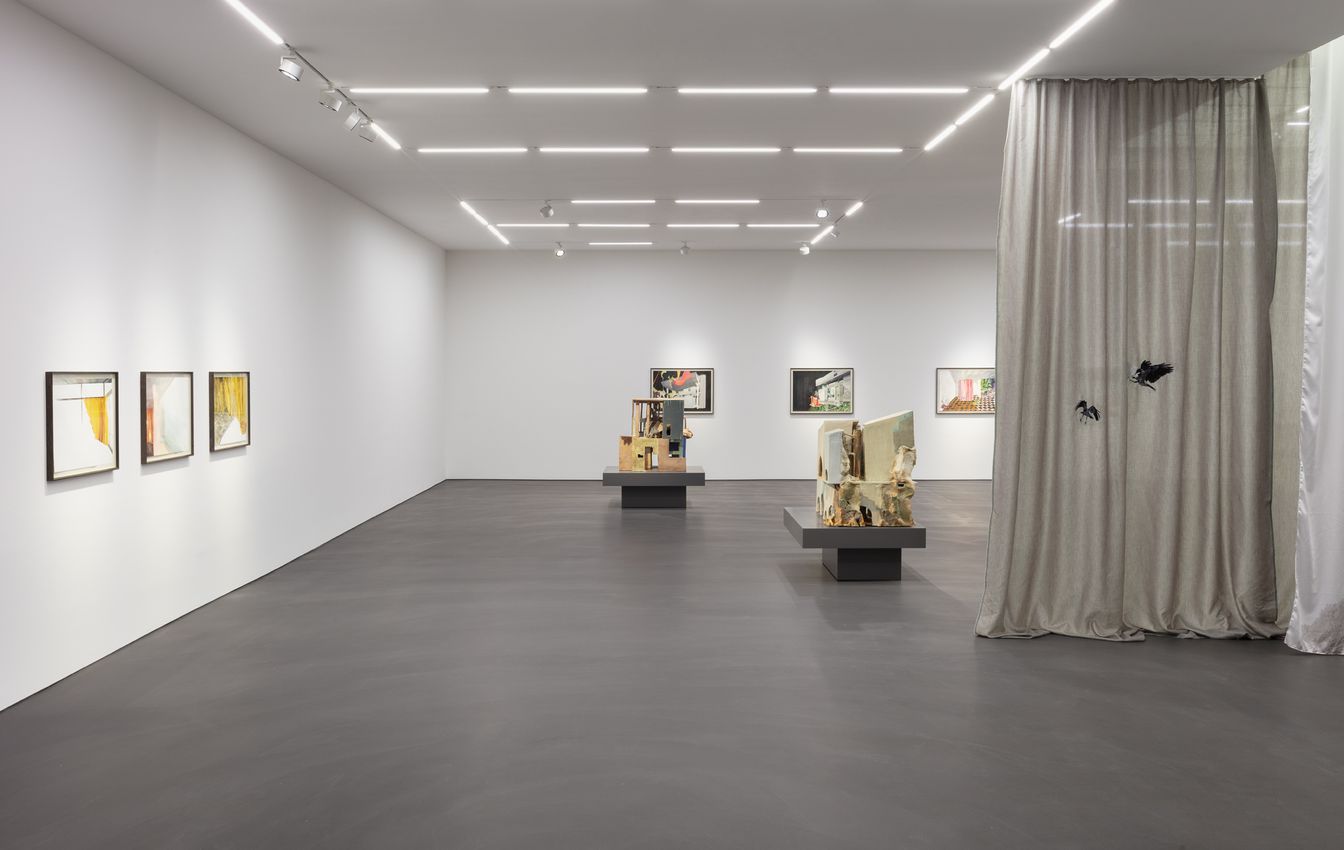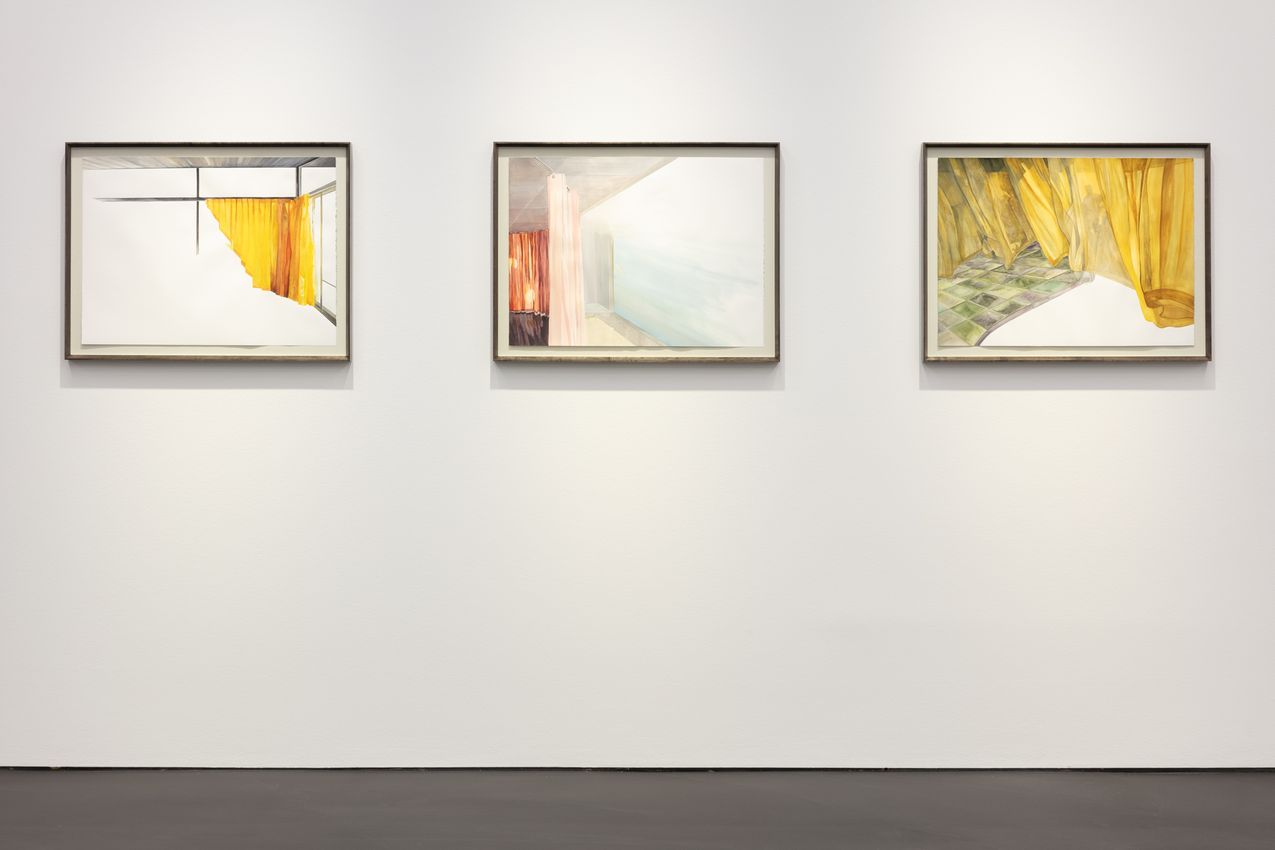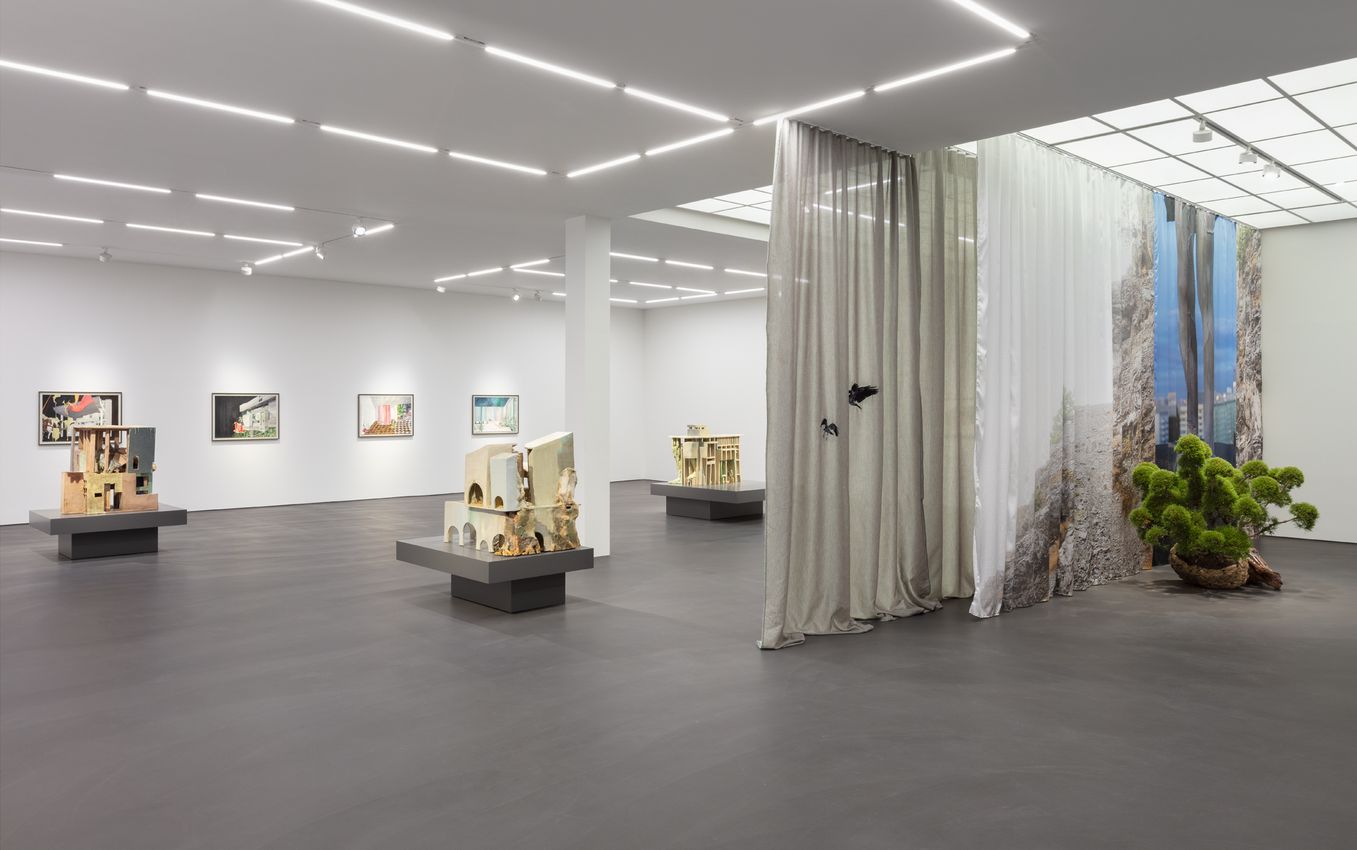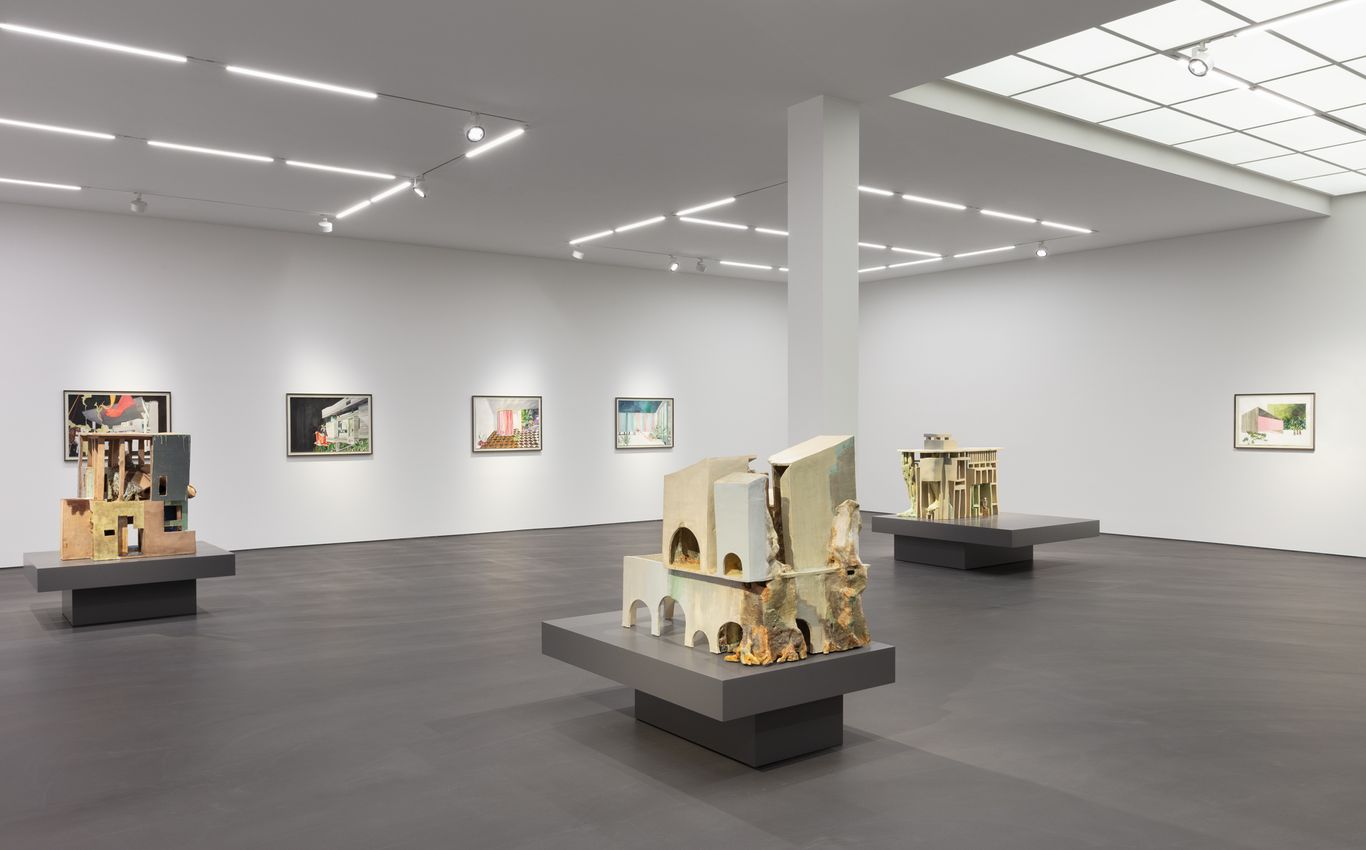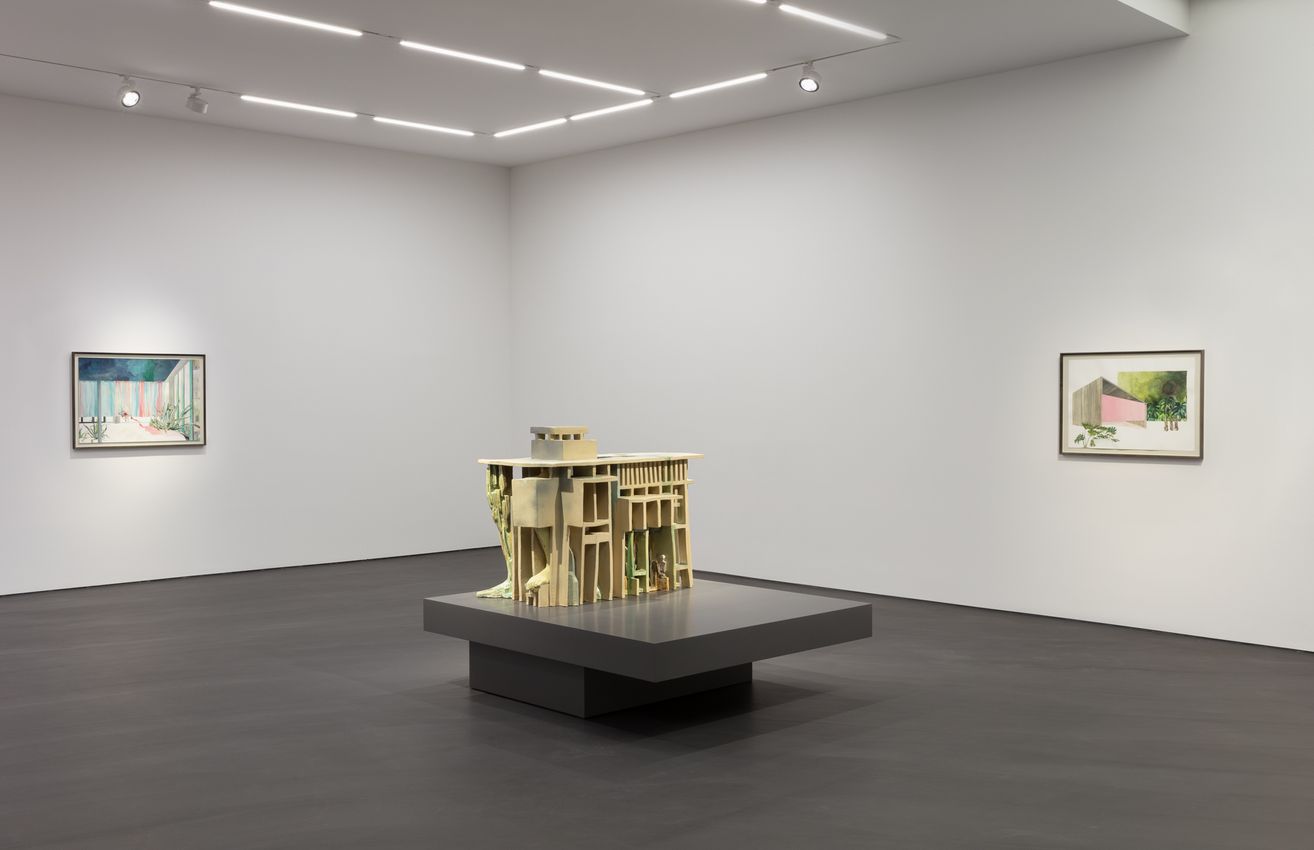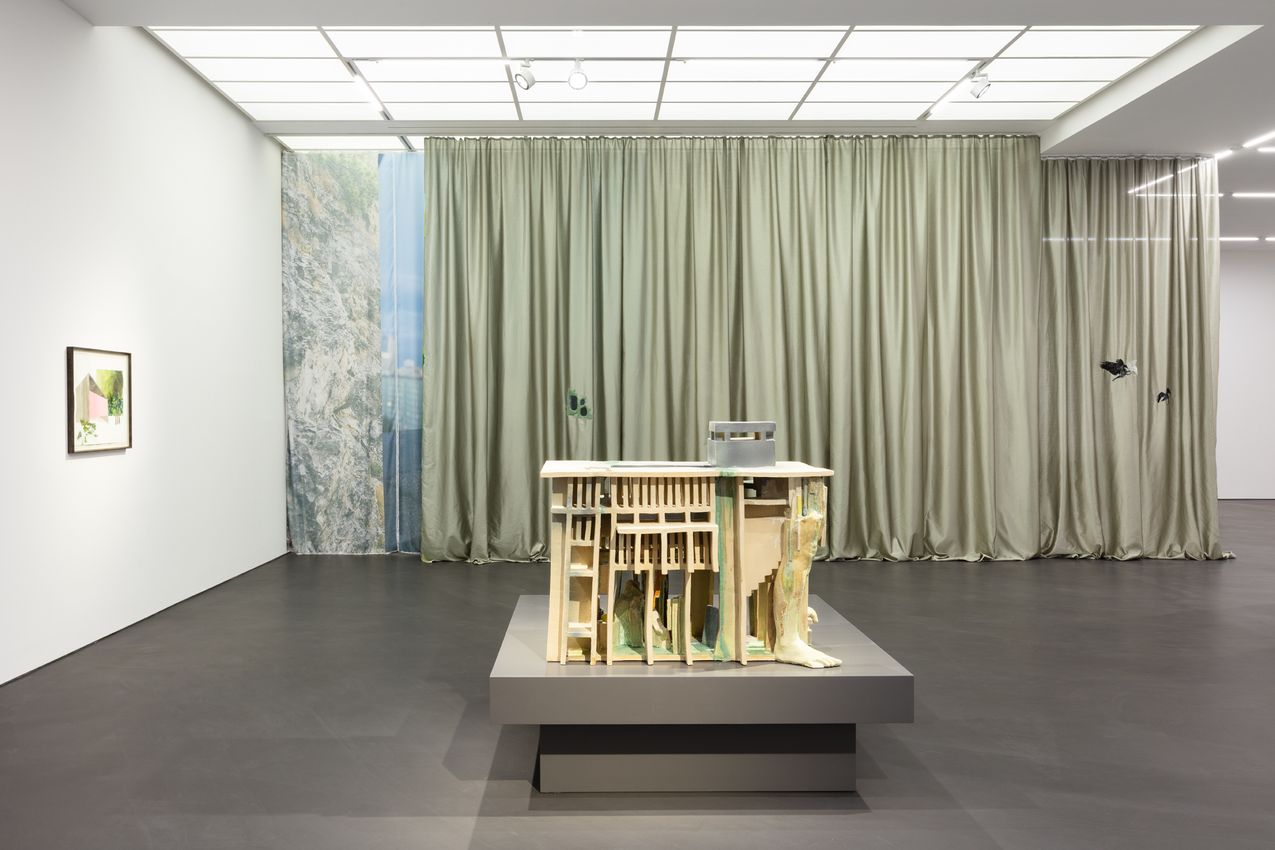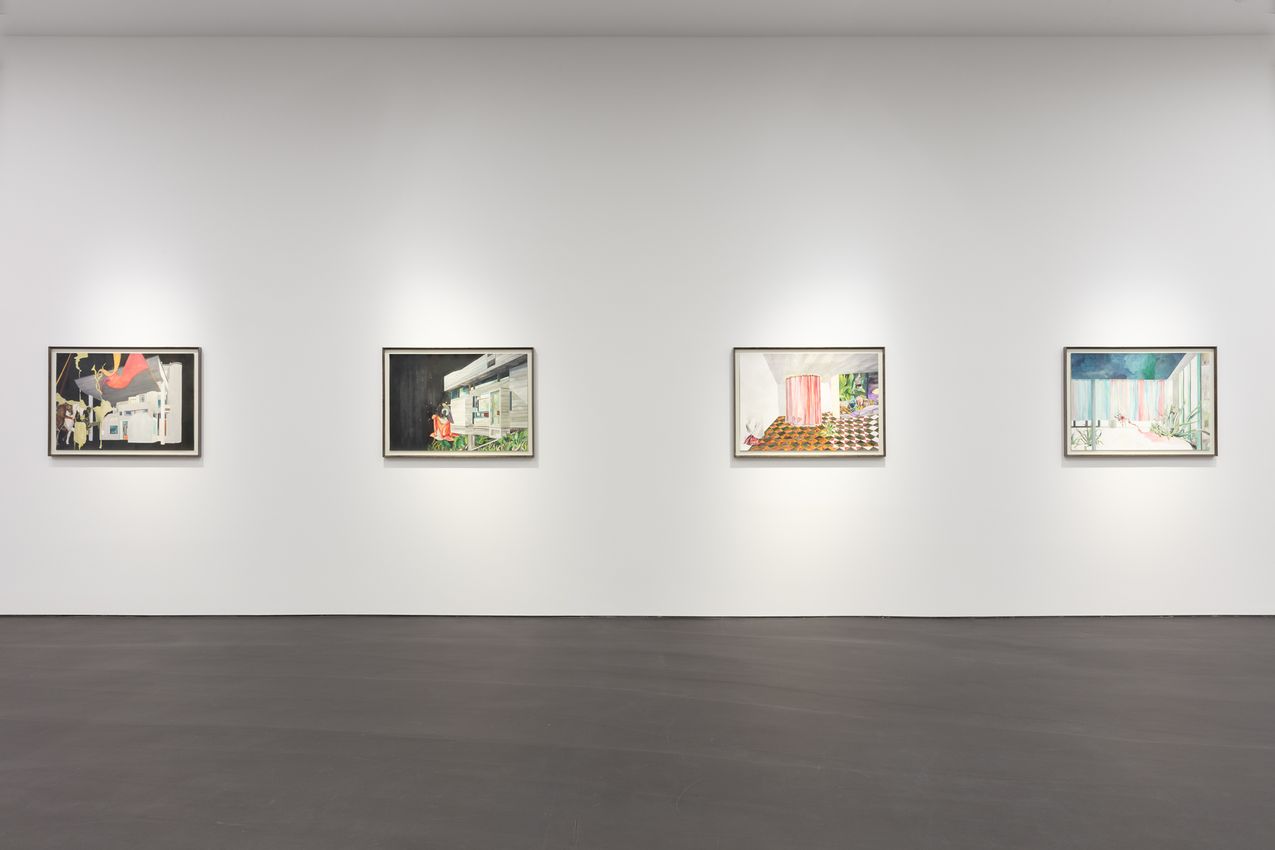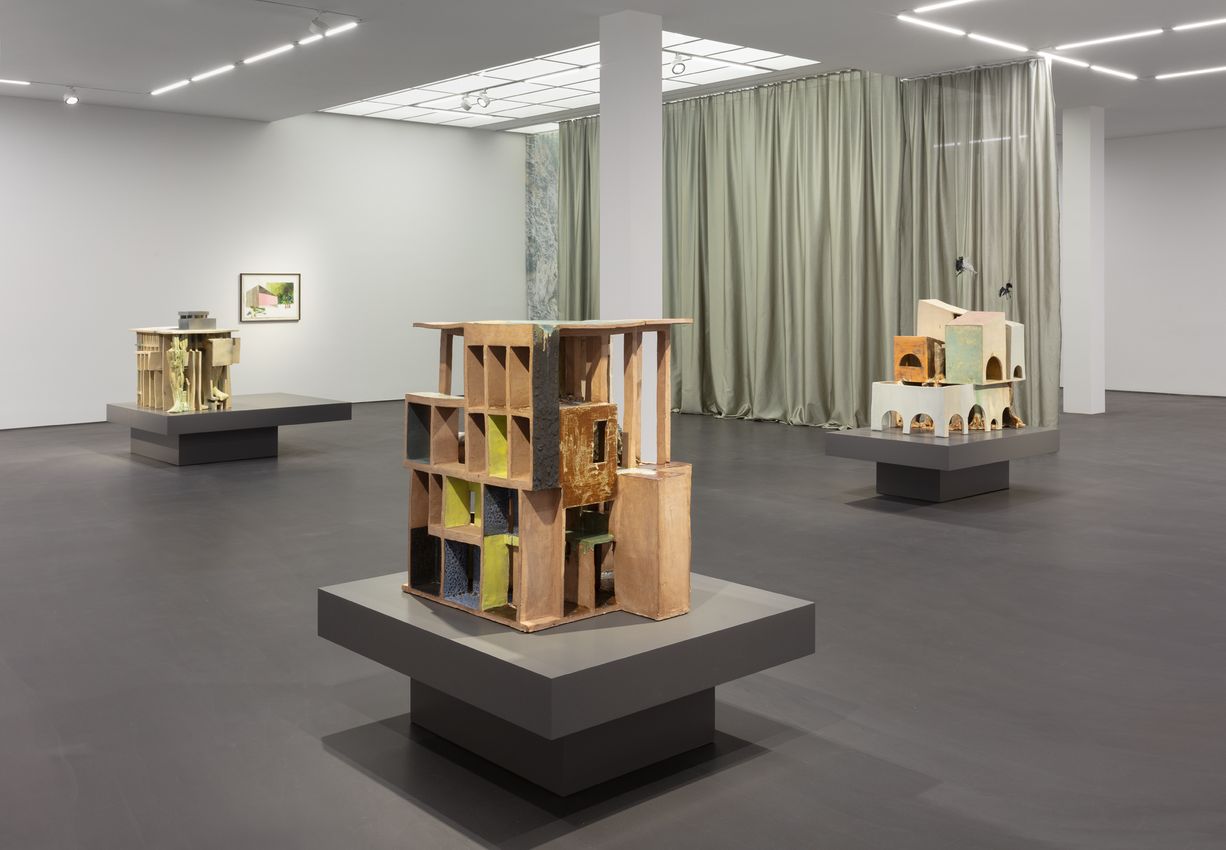
Esther Schipper is pleased to present Isa Melsheimer’s third solo exhibition with the gallery. Entitled false ruins and lost innocence, the exhibition includes three large-scale ceramics, textile works, and a suite of gouaches.
Known for her engagement with the history of architectural styles, Isa Melsheimer’s works are expressions of her intense research as well as formal investigations. The artist, whose work engages with modernist, postmodernist, and brutalist aesthetics, has in recent years increasingly introduced organic elements into the buildings, infused by her reading of post-human theoretical debates, as well as her engagement with Metabolist architecture, a movement originating in 1960s Japan. Isa Melsheimer’s works carry their far-reaching associations lightly: personal, literary, historical, philosophical, architectural references are resolved in an intense materiality.
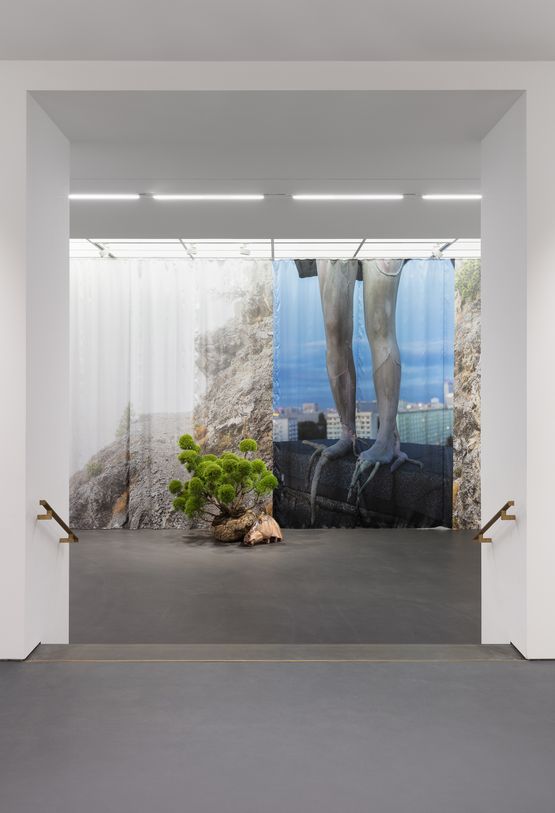
Three large-scale ceramics draw on existing buildings: the artist gives these landmarks an ‘interior’ life that evokes theoretical debates in architectural discourse. One work for example juxtaposes Le Corbusier’s Villa Shodhan (Ahmedabad, 1951–1956) with a horse’s head from the pediment of the Greek Parthenon, circa 438 BC, thus suggesting an organic element in the “machine for living in” as Le Corbusier famously referred to a house. Similarly, for another work Boston’s Brutalist City Hall is flanked by giant, statuesque human legs and harbors clusters of small postmodern ruins in its depth. Inside a third work, an airy building by a young Vietnamese firm, a small forest of trees appears to grow.
The new sculptures are her largest and technically complex ceramics to date. Similar to her idiosyncratic use of concrete, Isa Melsheimer, who begun to work in ceramics in 2013, has pushed the boundaries of this craft in scale and technique, making the medium completely her own. The architectural structures are filled with unexpected sculptural details and colorful glazes that evoke fantastic microcosms, a world in which it is not at all surprising that tree stumps grow in houses and buildings incorporate human and non-human elements.
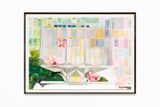
A suite of gouaches, also in a new, larger format, introduce art historical motifs among her paintings of architectural landmarks: fragments from works by Piero della Francesca and Perugino add motifs from a classical painterly canon.
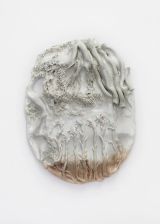
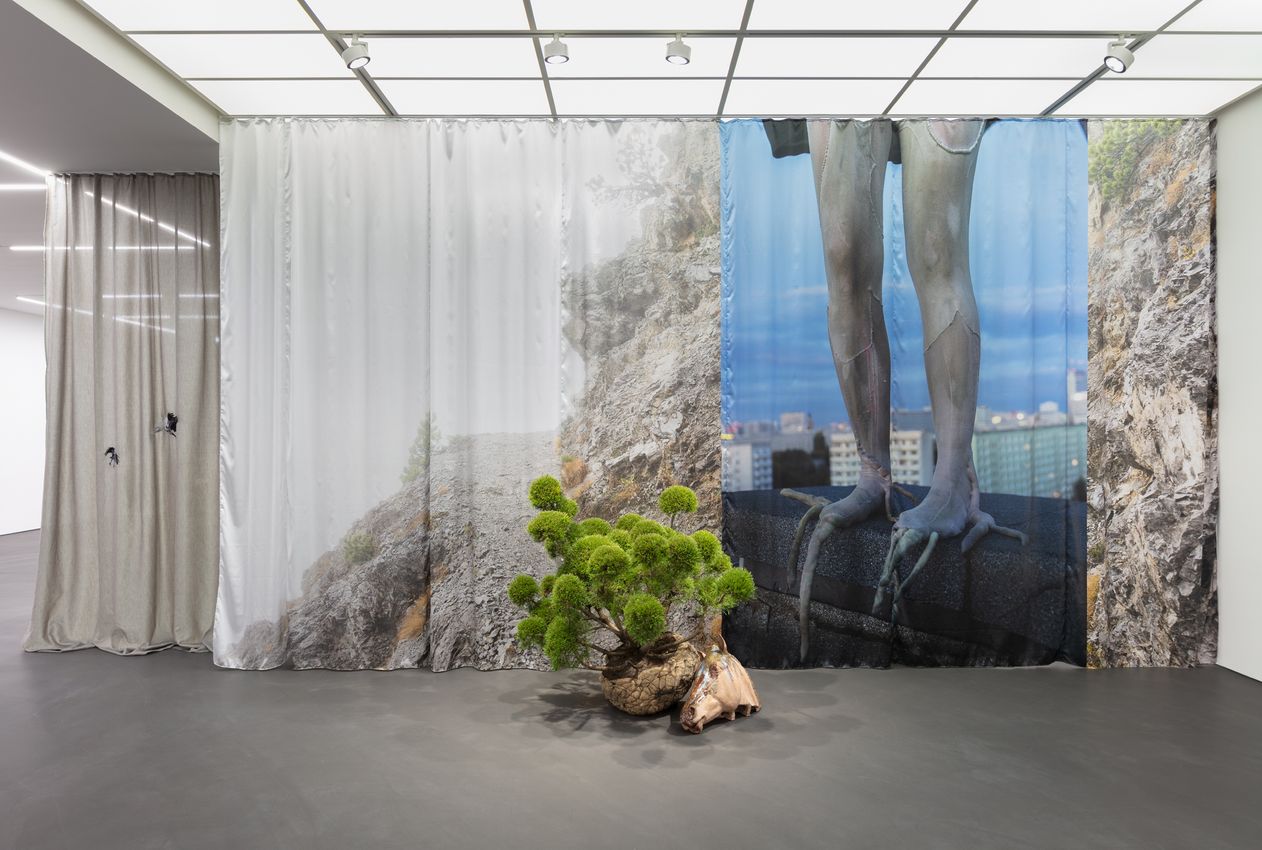
The new textile work, suspended near the entrance inside the exhibition space, combines embroidery with photographs of human forms, animals, and plants. A ceramic horse’s head and an unrooted topiary tree in front of the textile, which visually functions as a dividing screen, set the stage for the exhibition.
The exhibition’s title, false ruins and lost innocence, is taken from an influential lecture by architectural historian Charles Jencks, who famously criticised the classicising elements of James Sterling’s 1977–1984 addition to the Staatsgalerie Stuttgart by laconically noting: ‘one can sit on these false ruins and ponder the truth of our lost innocence.’
Known for her engagement with the history of architectural styles—especially the legacy of Modernism and 1950s–70s examples of concrete architecture—Isa Melsheimer’s works are expressions of her intense research as well as formal investigations. The artist acts as archeologist of often forgotten or neglected buildings, recreating their distinctive shapes both from her study and from her vivid re-imagining of the forms and the spirit of the structures.


Esther Schipper founded the gallery in 1989 in Cologne. In 1997 the gallery relocated to Berlin. Through more than three decades of continuous exhibition practice, the gallery has established itself as a major force not only in Germany but in an international context, with offices in Paris and Seoul and representatives in France, Spain, the United States, Latin America, South Korea, Taiwan and China. The gallery holds up to ten gallery exhibitions as well as multiple off-site projects each year and participates in leading art fairs across the globe.

A respected voice in contemporary art discourse.
Focusing on ambitious storytelling and insightful art-world commentary. Ocula Magazine publishes in-depth interviews, critical essays and timely analysis on the artists, exhibitions and ideas driving the global art world.
Learn more about Ocula Magazine
Showcasing the best of the art world.
Ocula partners with galleries from around the world to highlight their artists, artworks and exhibitions. Gallery membership is by application and invitation, with each member vetted by an independent panel.
Learn more about Ocula Membership

Specialises in the sale of major artworks.
Led by a team with deep ties to the world’s leading auction houses, galleries and collectors. Ocula’s advisory team offers bespoke services to high-net-worth clients from around the world who are looking to acquire the best of contemporary and modern art.
Learn more about our team and services