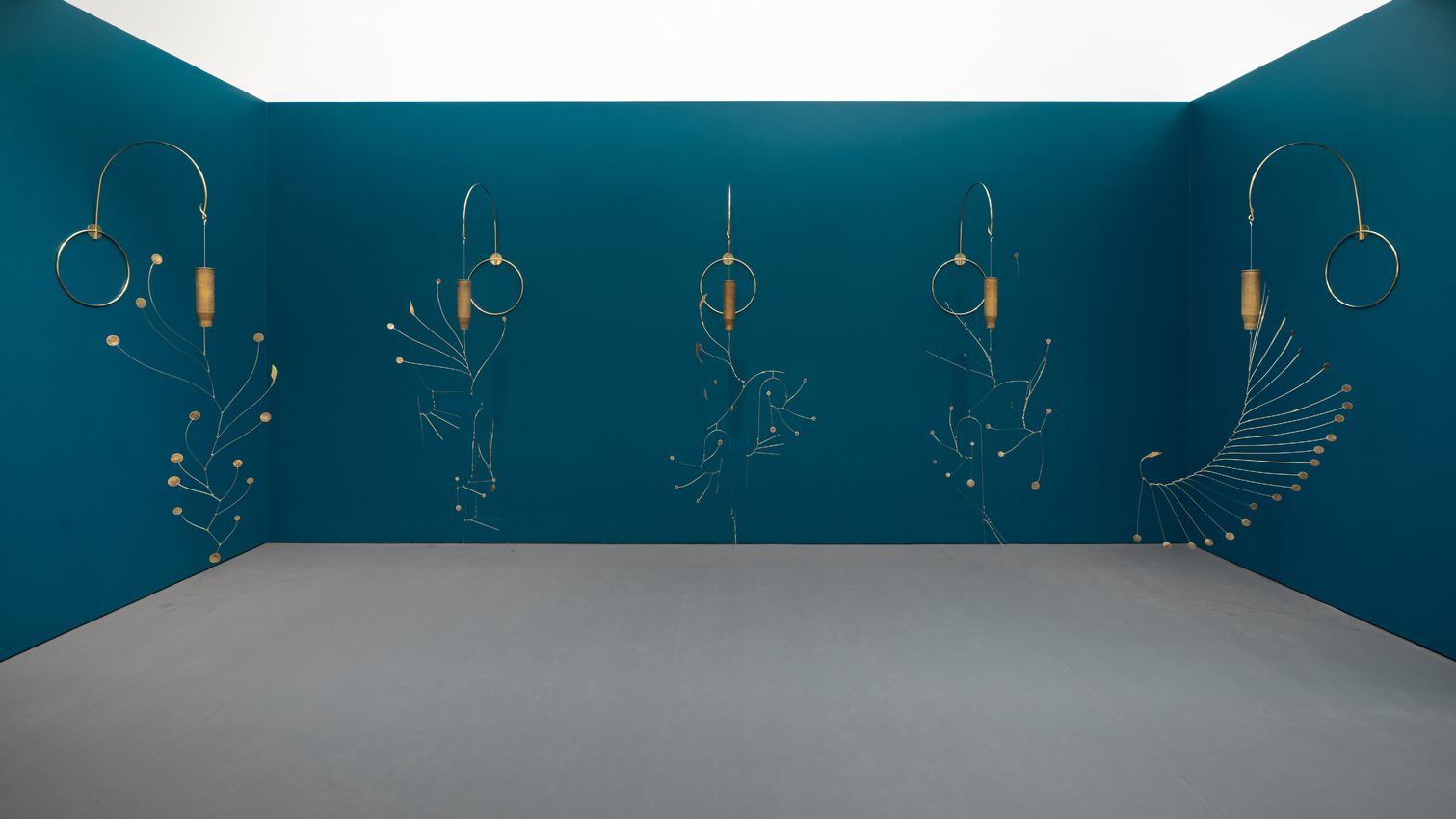
Esther Schipper is pleased to present Forking Paths, a group exhibition bringing together works by 邱建仁 Chiu Chien-Jen, Roberto de Pinto, 許家維 Hsu Chia-Wei, Beatrice Marchi, Valerio Nicolai, Federico Tosi, 蔡依庭 Tsai Yi-Ting and 曾建穎 Tseng Chien-Ying.
The exhibition takes its title from Jorge Luis Borges’ 1941 short story The Garden of Forking Paths. In Borges’ text, time does not unfold according to a single linear trajectory but branches into multiple, simultaneous possibilities. The story proposes a universe in which every choice generates new paths rather than replacing previous ones. Forking Paths adopts this image as a point of departure for an exhibition that explores the multiple ways in which images, histories, and identities are constructed and perceived.
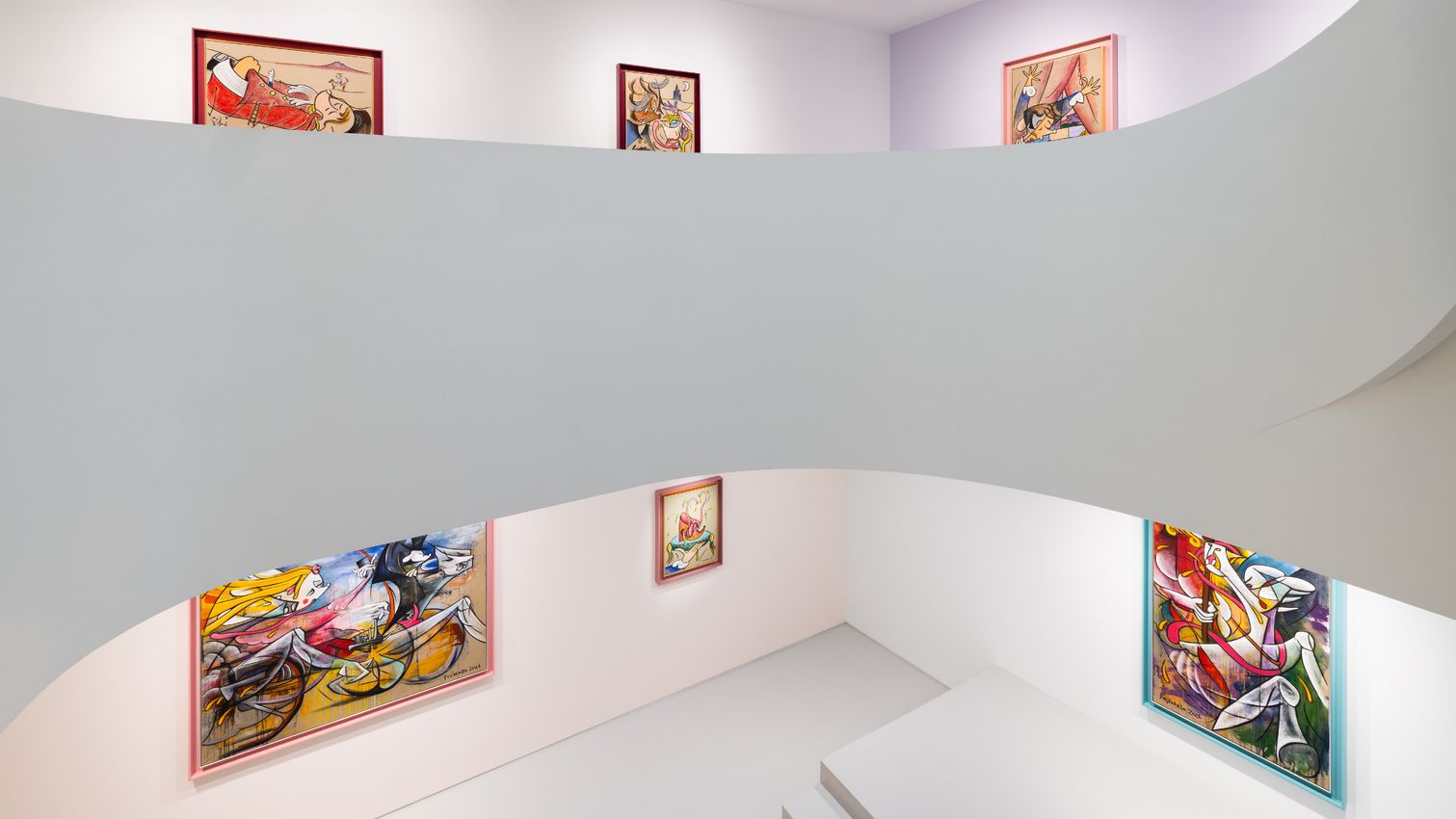
This literary premise finds a physical counterpart in the exhibition’s spatial structure. Rather than presenting artworks along a fixed sequence, Forking Paths unfolds as a field of relations shaped by shifting sight-lines.
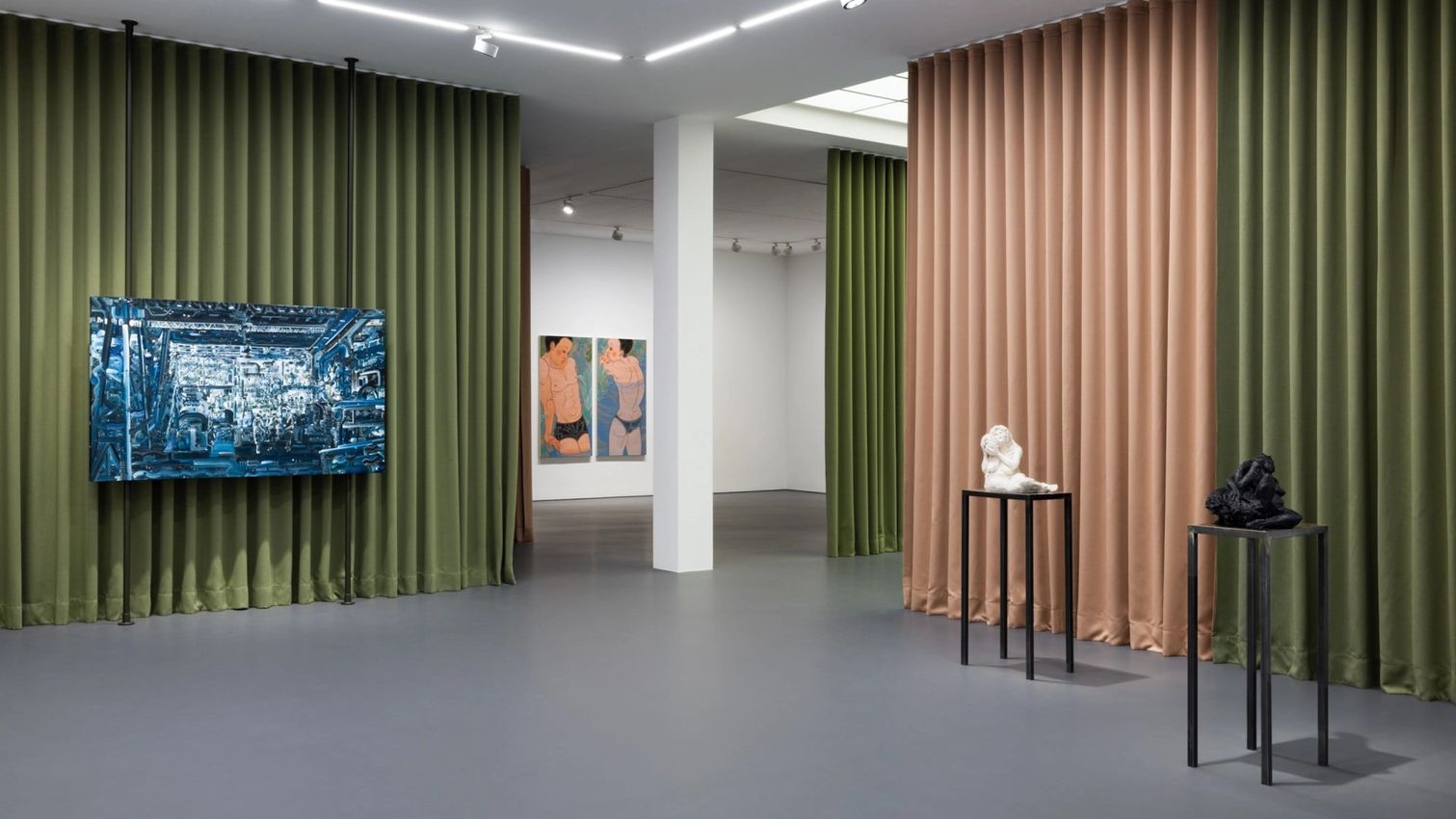
Earth-toned curtains divide and articulate the space, creating porous thresholds that reveal and conceal views while guiding visitors through the gallery space. Bringing together four artists from Taiwan and four artists from Italy, the exhibition design draws from both East Asian and Italian garden and spatial traditions, in which winding routes and framed views transform walking into a mode of perception.
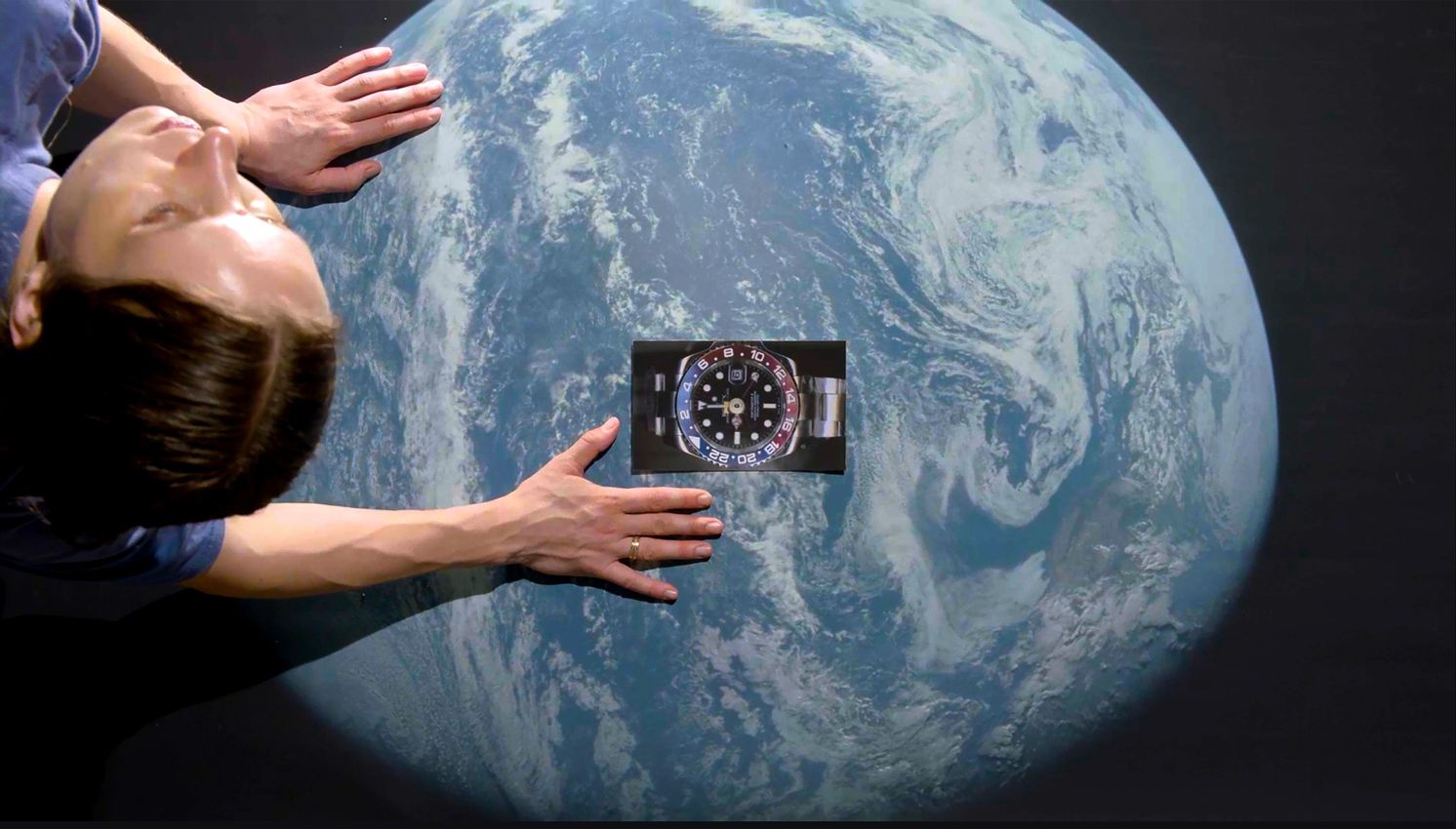
Positioned at the entrance to the exhibition space, Hsu Chia-Wei’s Rubber Balls (2025), acts as a threshold to the exhibition. The four-channel video installation, constructed with monitors, a metal frame, and natural Indonesian rubber sheets, revisits the history of rubber exploitation in Indonesia under Dutch colonial rule.
Developed with the support of the Eye Filmmuseum, Amsterdam, which provided archival documentary footage filmed in the Dutch East Indies between 1913 and 1945, the work brings together historical research with AI- generated imagery. Hsu draws in part on Hella S. Haasse’s 1948 novel Oeroeg, which follows the childhood friendship between a Dutch boy and an Indonesian boy on a rubber plantation. Rubber Balls challenges the colonial archive and examines how colonial systems transformed traditional farming into large-scale resource extraction. On the adjacent wall, the single-channel Bound Images gives a look behind the AI image-making process Hsu employed.
Entering the main exhibition space, the viewer may take different paths through the four sections of the space.
Each quarter connects works by two artists, but allows for glimpses of further works beyond the curtains.
In one section, works by Federico Tosi and Roberto de Pinto establish a dialogue between body, nature, and transformation. Tosi’s volcanic landscapes occupy a space between figuration and dissolution. Roberto de Pinto’s paintings turn toward the body as an equally charged terrain. Working with a distinctive encaustic technique, inspired in part by the Fayum mummy portraits, he creates surfaces that evoke skin and touch. His recurring male figure, conceived almost as a painterly alter ego, appears in moments of intimacy and idleness.
In another section, works by Valerio Nicolai enter into dialogue with Tseng Chien-Ying’s paintings through a shared concern with acts of looking. Nicolai uses painting to confront art history with elements of the prosaic and everyday. Humor, symbolism, and absurdity inhabit scenes in which reality and fiction continually shift places. In Doppio Capolino Double Peek, two faces — whose features evoke Italian Renaissance portraits — emerge from the edges of a dark space that could either be a doorway, window, or a stage. Tseng Chien-Ying’s work is also concerned with looking and being seen through various masks and perspectives.
He perceives of the human form as a carrier of symbolic meaning, rather than as an anatomical entity; a layered condition composed of physical, perceptual, and psychic dimensions. Tseng’s paintings are executed in the tradition of Taiwanese mineral pigment painting, or Jiaocai (glue-color painting), in which a surface is painted with glue and ground raw pigment is applied onto it. Jewelry, pearls, metallic surfaces, piercings and compression garments operate at once as decoration and constraint. Both Tseng’s use of ancient painting technique and interest in the body’s adornment form a connection to Roberto De Pinto’s paintings across vastly different backgrounds.
In another quarter, Beatrice Marchi and Tsai Yi-Ting explore identity through objects, gestures, and forms of staging. Marchi’s video and paintings explore identity as something performed, rehearsed, and negotiated within a group. Inspired by Jacques Lecoq’s (1921–1999) method of the clown, in which vulnerability becomes a means of connection, Marchi develops characters and personas through which personal experience opens onto broader questions of gender, morality, and generational conflict. Her video La Compagnia – To Be a B(ee) (2025) is shown here for the first time in an exhibition. Tsai Yi-Ting’s Star series (2026) shifts this concern with identity and staging toward the material surface of paper. Her works are created with pastel on paper through processes of rubbing, tearing, and staining. For Tsai, paper is never a neutral support but a repository of gesture and of her own personal experience. She builds up layers of colourful pastels, creating a textured, painterly surface, which invites for close-up inspection. Shoes recur as intimate protagonists, detached from the bodies that once wore them and leaving their memory in place.
Finally, Federico Tosi’s terracotta sculptures are placed in relation to Chiu Chien-Jen’s paintings. Tosi’s nudes are playful, stripped of historical markers; they could belong equally to humanity’s origins, mythology, or to a distant future. They commune with nature, laughing alongside birds, ducks, or pine cones. Chiu Chien-Jen uses photographic sources, including urban environments and industrial structures for the first stage of his paintings. In his working process, the images evolve into abstraction by layering and diffusion, and figures emerge through the brushwork. Chiu’s technique is present in his active compositions: he sprays, splatters and smears the paint, using mechanical tools in addition to paintbrushes. Tosi and Chiu’s work present a contrast of topic and style, but there is an affinity in their gestural building up of materials (paint or clay) and in the surface textures, which alternate between expressive drips and smoothness.
Giulia Gelmini is Associate Director at Esther Schipper. She is based in Berlin.
蕭牧齊 Muchi Shaw is Senior Director Asia at Esther Schipper. He is based in Taipei.


Esther Schipper founded the gallery in 1989 in Cologne. In 1997 the gallery relocated to Berlin. Through more than three decades of continuous exhibition practice, the gallery has established itself as a major force not only in Germany but in an international context, with offices in Paris and Seoul and representatives in France, Spain, the United States, Latin America, South Korea, Taiwan and China. The gallery holds up to ten gallery exhibitions as well as multiple off-site projects each year and participates in leading art fairs across the globe.

A respected voice in contemporary art discourse.
Focusing on ambitious storytelling and insightful art-world commentary. Ocula Magazine publishes in-depth interviews, critical essays and timely analysis on the artists, exhibitions and ideas driving the global art world.
Learn more about Ocula Magazine
Showcasing the best of the art world.
Ocula partners with galleries from around the world to highlight their artists, artworks and exhibitions. Gallery membership is by application and invitation, with each member vetted by an independent panel.
Learn more about Ocula Membership

Specialises in the sale of major artworks.
Led by a team with deep ties to the world’s leading auction houses, galleries and collectors. Ocula’s advisory team offers bespoke services to high-net-worth clients from around the world who are looking to acquire the best of contemporary and modern art.
Learn more about our team and services