



Esther Schipper is pleased to announce Wonderland, Julia Scher‘s fifth solo exhibition with the gallery since her first participation in a 1991 group exhibition at Esther Schipper, Cologne.
Twenty years after its first iteration, Scher reenacts her historical environment, Wonderland (1998). The work was originally conceived—in a smaller scale—for the group exhibition Performance Anxiety at the MCA, Chicago (1997), but was first presented in its final design in New York a year later, at Andrea Rosen Gallery. The installation subsequently travelled to various institutions such as the CAPC-Musée d’art contemporain in Bordeaux, where it was included in the infamously censored group exhibition Présumés innocents Presumed Innocents.
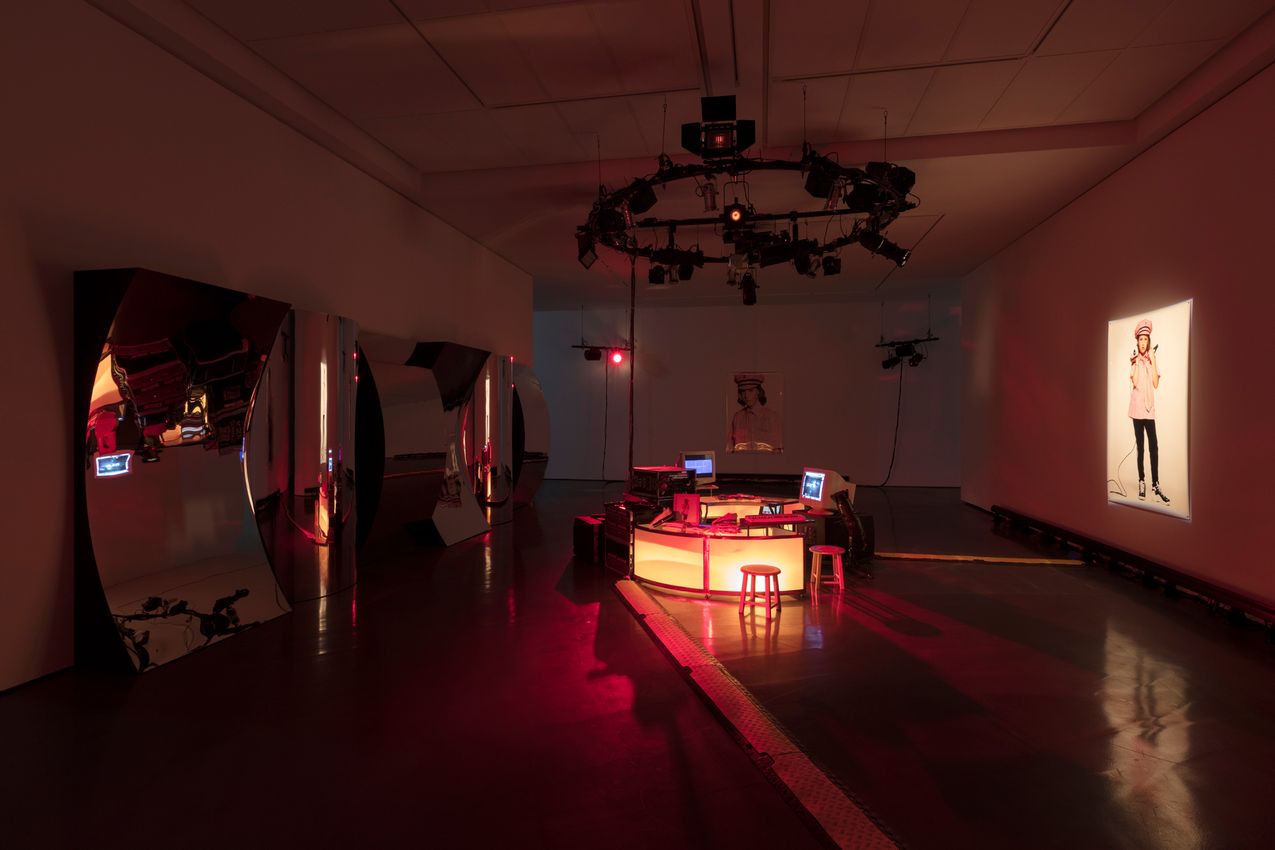
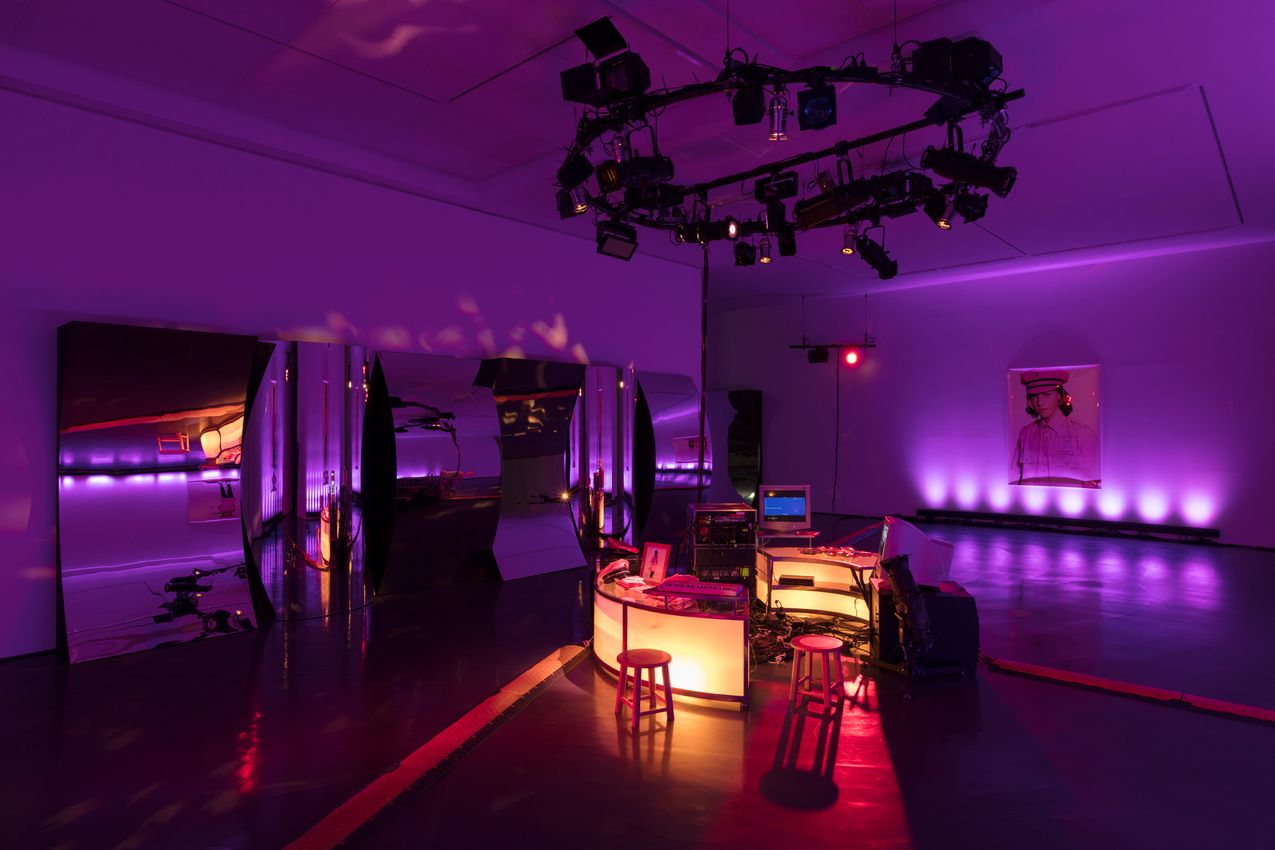
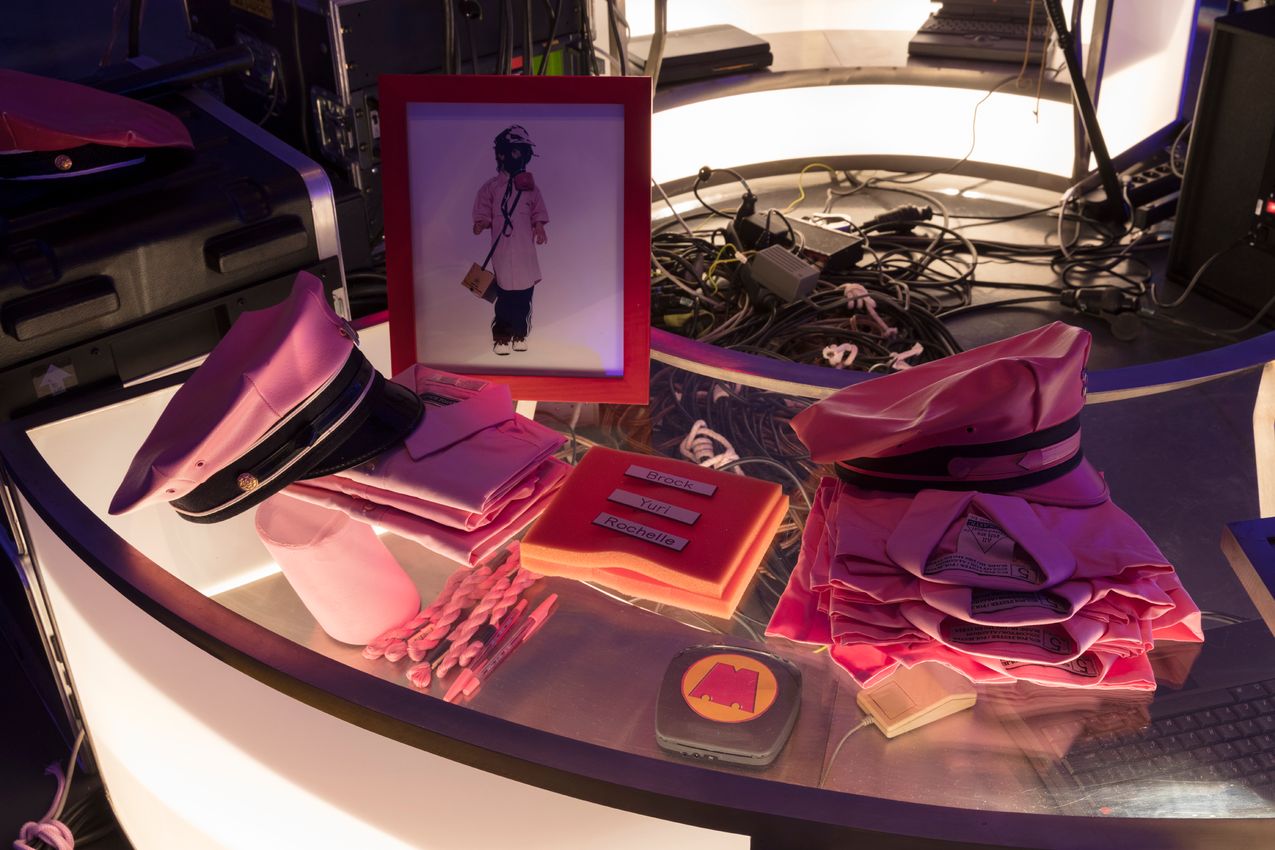
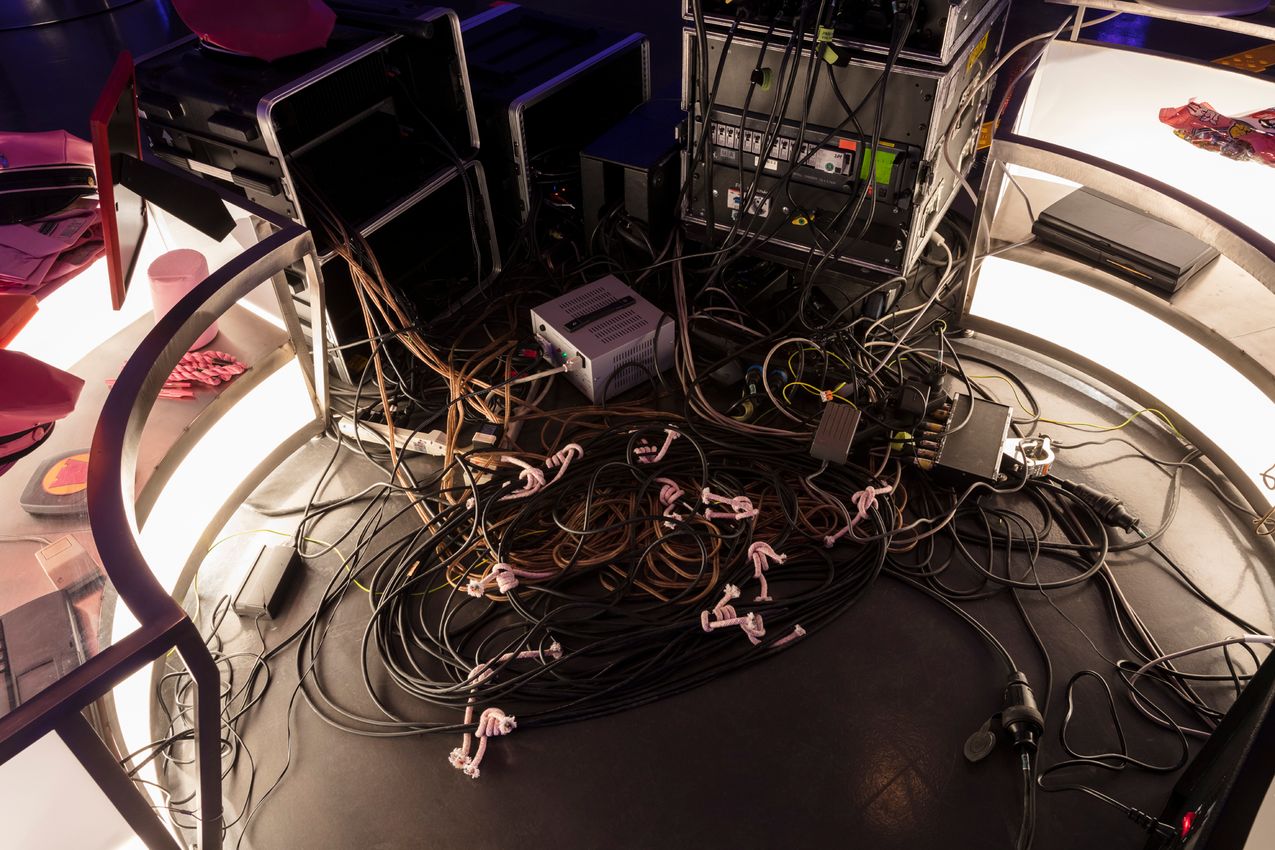
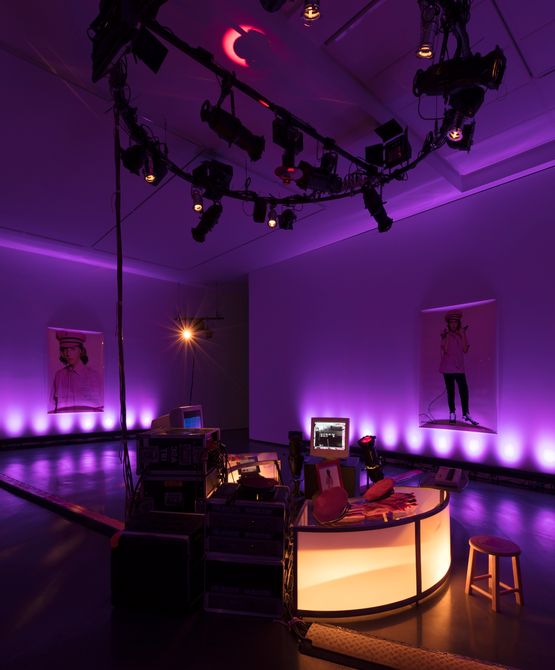
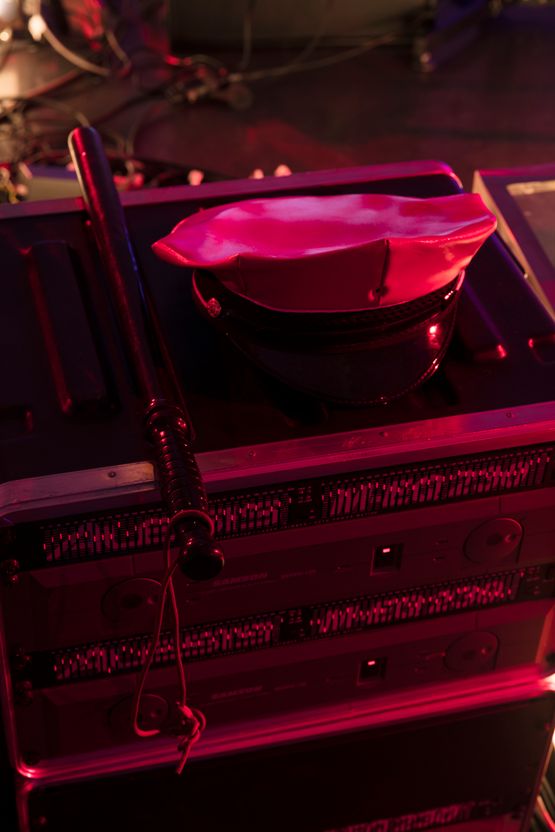
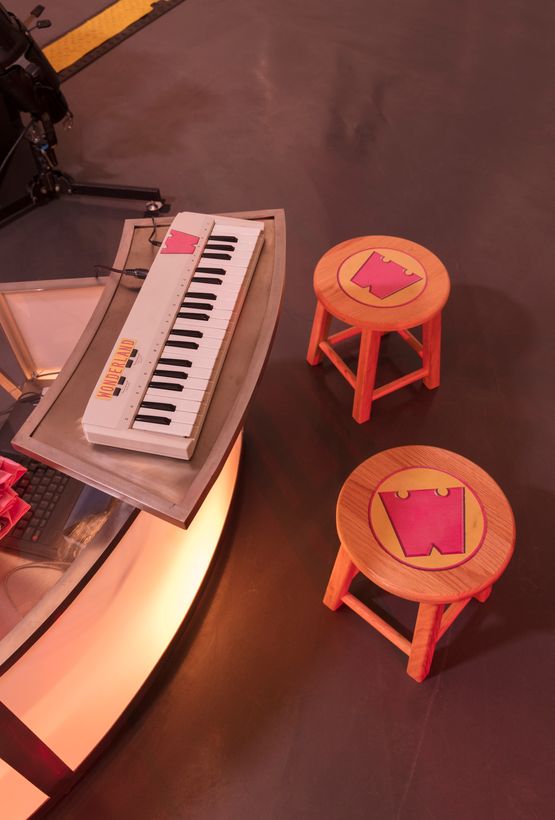
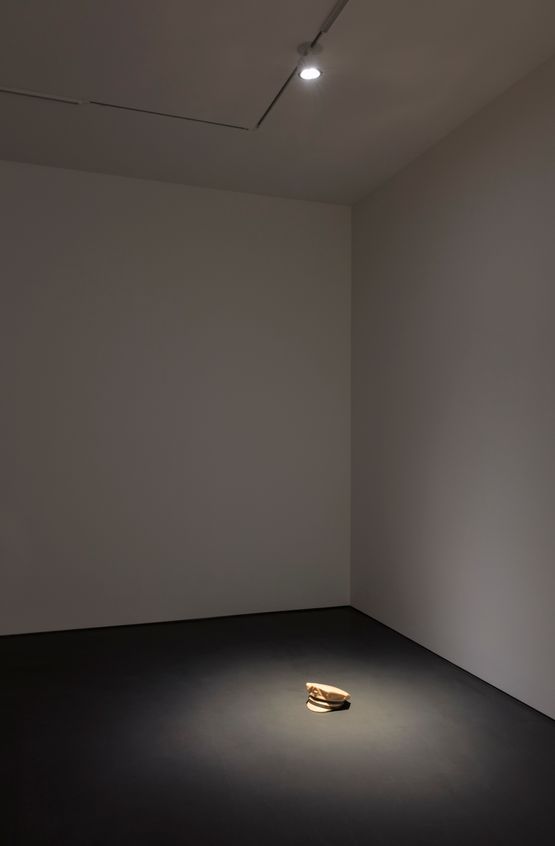
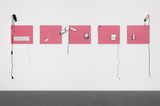
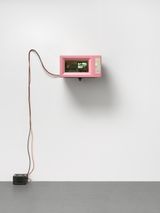
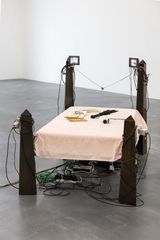
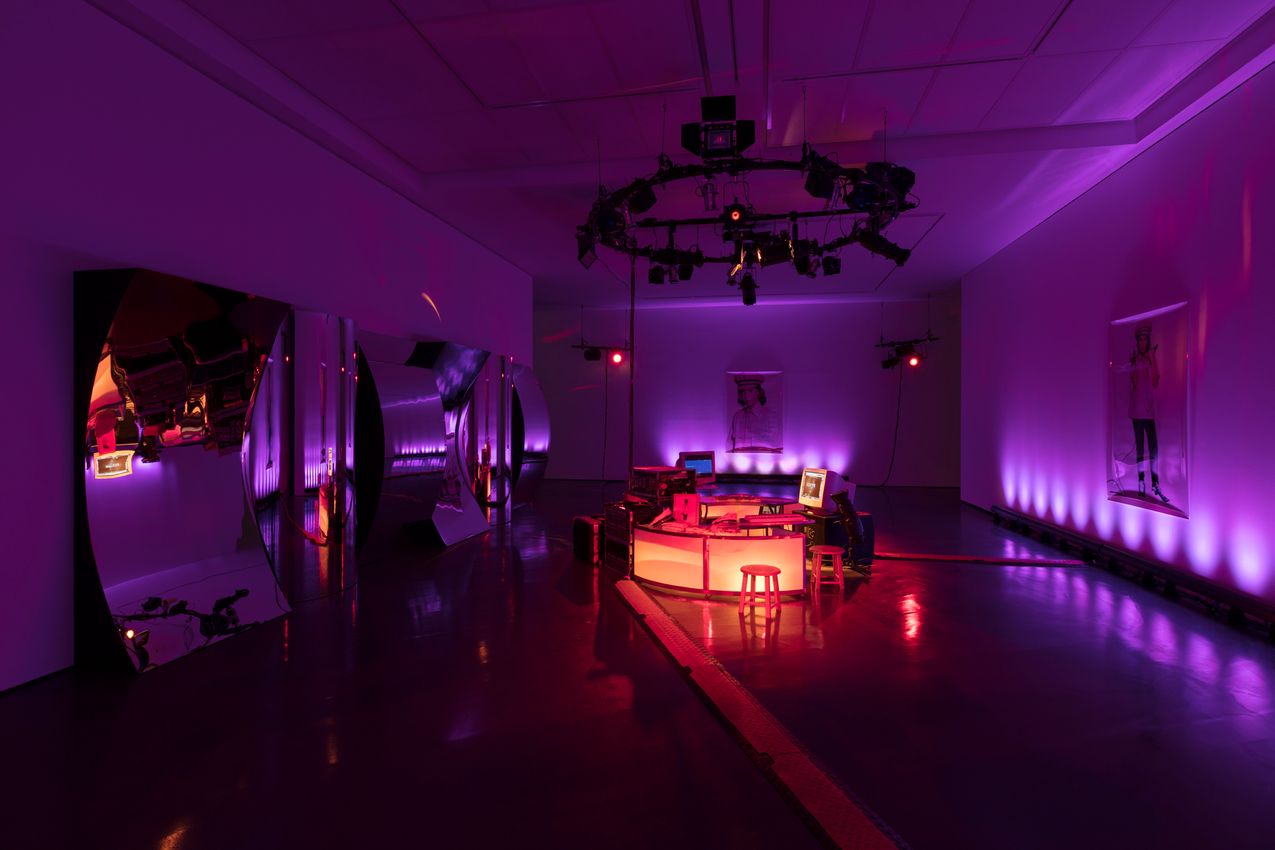
Immersed in the gallery’s theatrical pink and purple light atmosphere, Scher’s Wonderland is a multimedia environment where visitors are welcomed by the sound of the artist’s authoritative yet soothing voice: ‘Attention. There are live cameras here in Wonderland, recording you... Warning. Your size may change, here in Wonderland. Thank you for coming!’ At the centre of the space are two semi-circular child-sized desks arrayed with complex technical equipment and cabling, vintage computer monitors with live surveillance footage, various ephemera—such as bags of White Rabbit Creamy Candy—and Scher’s signature pink guard caps and customised uniforms with embroidered patches reading ‘Security by Julia’. These elements form both the nervous system and the metaphorical rabbit hole of a dystopian vision of Alice’s Adventures in Wonderland, a reference underlined by the intro notes of Jefferson Airplane’s 1967 song White Rabbit that Scher incorporates in the environment’s soundtrack.
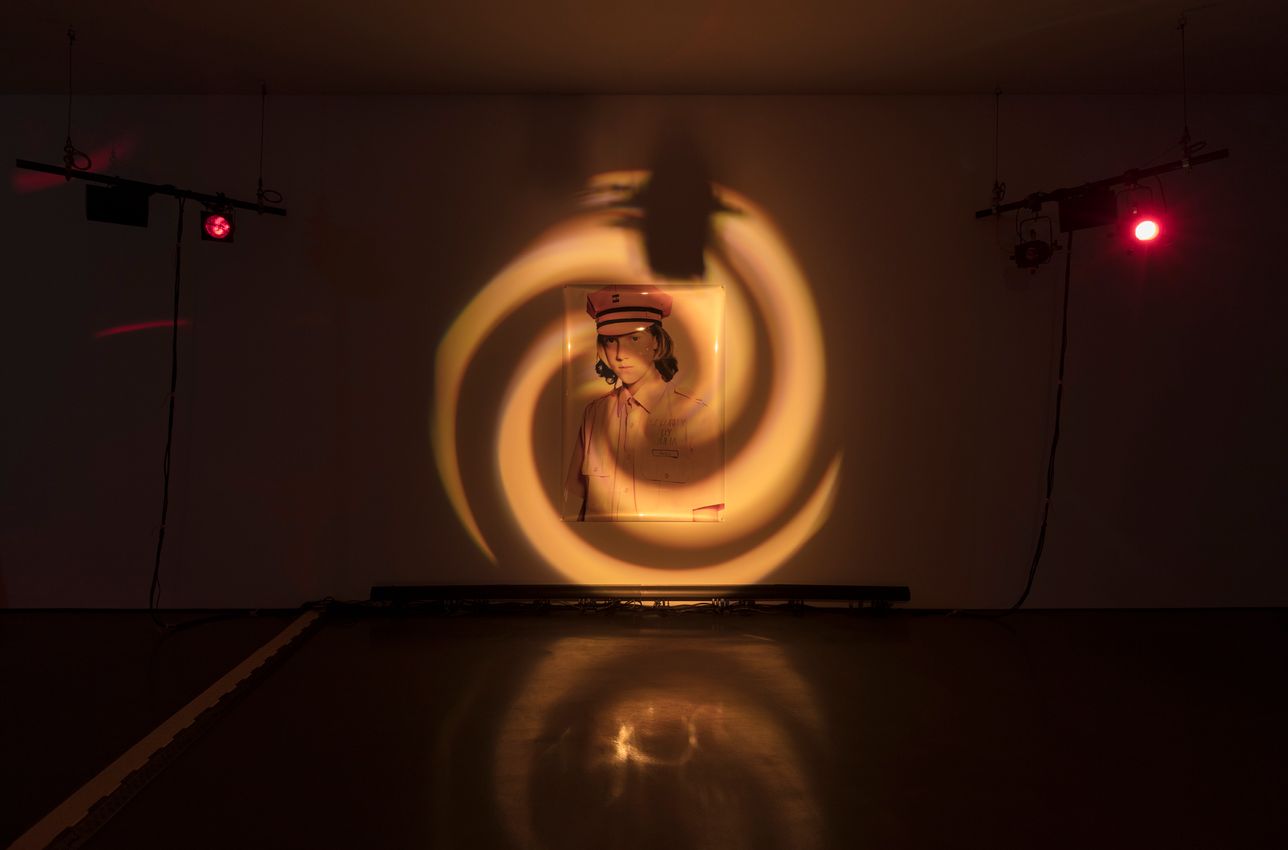
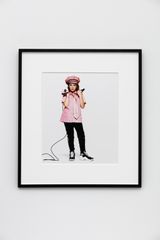
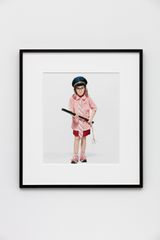
On the walls, complementing the central assemblage of technological apparatuses and associative materials, large-scale Duratrans prints depict children—among them American actress and director Lena Dunham aged 10—dressed in the same pink uniforms and caps that are neatly folded on the desks. The children, carrying police sticks and other technical equipment which relate to surveillance and supposed security, playfully embody the authority invested in security guards and police officers. On the facing wall, an alignment of convex, concave, and curved mirrors—reminiscent of a Fun House—reflects and distorts the enlarged photographs of the child-guards, contributing to the surreal atmosphere of the room. The interactive installation was conceived for children. By placing them in a position of control and authority, Scher reverses the traditional roles adults/children, protectors/protected, while blurring the line between the ideas of surveillance, security, and threat.
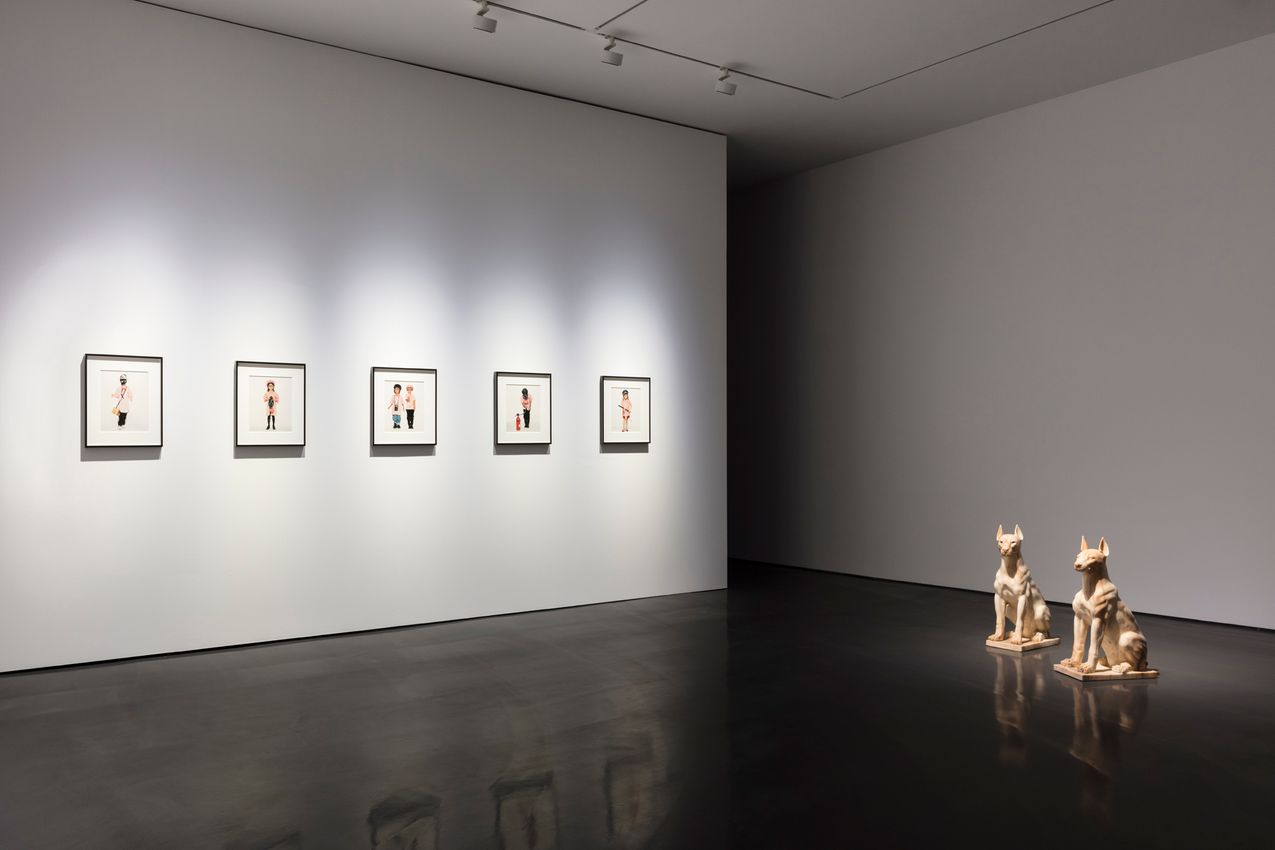
In an adjacent room, an ensemble of small framed photographs from the series of Wonderlandprints completes the presentation. Each photograph portrays one of the children, wearing the same pink guard outfit and carrying various surveillance and security gears.
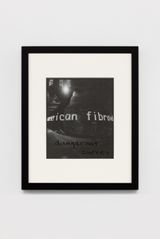
The final part of the exhibition space provides a counterpoint to Wonderland, as well as an intimate setting for Scher’s seminal video work Serious Discipline Masters, in which the artist attempts to preserve her understanding of her life history. In this 11-hour stream of consciousness narrative, Scher recounts her childhood memories, often with details changed or omitted, recalling how her mother became a voyeuristic presence, more sexualised and menacing rather than protective or maternal. The tape Serious Discipline Masters, recorded in the artist’s studio in August 1988, constituted a cathartic retelling of these childhood/adolescent experiences which were a subsequent source for Scher’s preoccupation with notions of surveillance, a sexualised and controlling gaze. Less than a year later, the artist created her first pink guard uniforms for the 1989 installation Security by Julia II at the Artists Space, New York. Drawing on the juxtaposition of the colour’s playful and a uniform’s menacing connotations, Scher combined the analysis of control mechanisms with feminist critique.
We are grateful to Prof. Dr. Hans Dieter Huber for sharing his expertise in the preparation of this exhibition.
For the last twenty years, Julia Scher’s research has explored social control dynamics in the public sphere, focusing especially on themes of surveillance. The art projects have taken the form of interactive installations, reformulated surveillance, site tours, interventions, performances, photography, writing, online projects, linear video, and sound.


Esther Schipper founded the gallery in 1989 in Cologne. In 1997 the gallery relocated to Berlin. Through more than three decades of continuous exhibition practice, the gallery has established itself as a major force not only in Germany but in an international context, with offices in Paris and Seoul and representatives in France, Spain, the United States, Latin America, South Korea, Taiwan and China. The gallery holds up to ten gallery exhibitions as well as multiple off-site projects each year and participates in leading art fairs across the globe.

A respected voice in contemporary art discourse.
Focusing on ambitious storytelling and insightful art-world commentary. Ocula Magazine publishes in-depth interviews, critical essays and timely analysis on the artists, exhibitions and ideas driving the global art world.
Learn more about Ocula Magazine
Showcasing the best of the art world.
Ocula partners with galleries from around the world to highlight their artists, artworks and exhibitions. Gallery membership is by application and invitation, with each member vetted by an independent panel.
Learn more about Ocula Membership

Specialises in the sale of major artworks.
Led by a team with deep ties to the world’s leading auction houses, galleries and collectors. Ocula’s advisory team offers bespoke services to high-net-worth clients from around the world who are looking to acquire the best of contemporary and modern art.
Learn more about our team and services