Press Release

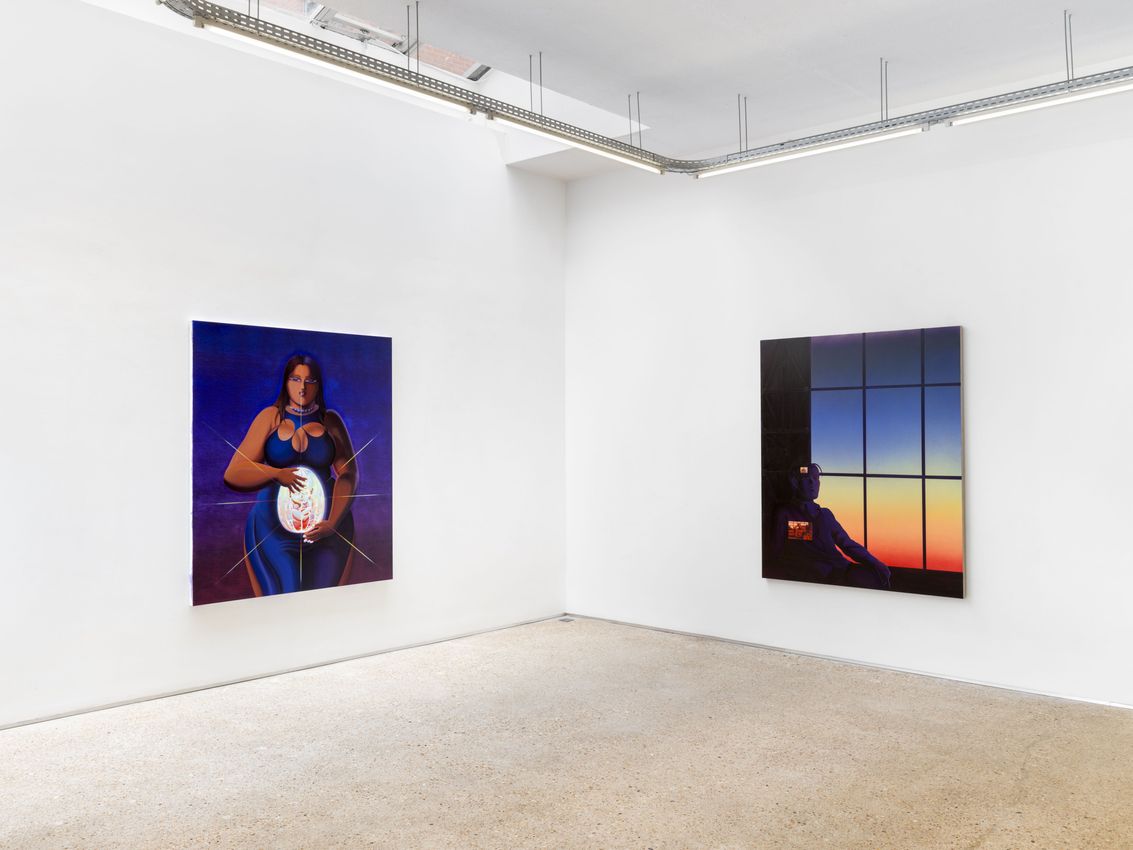
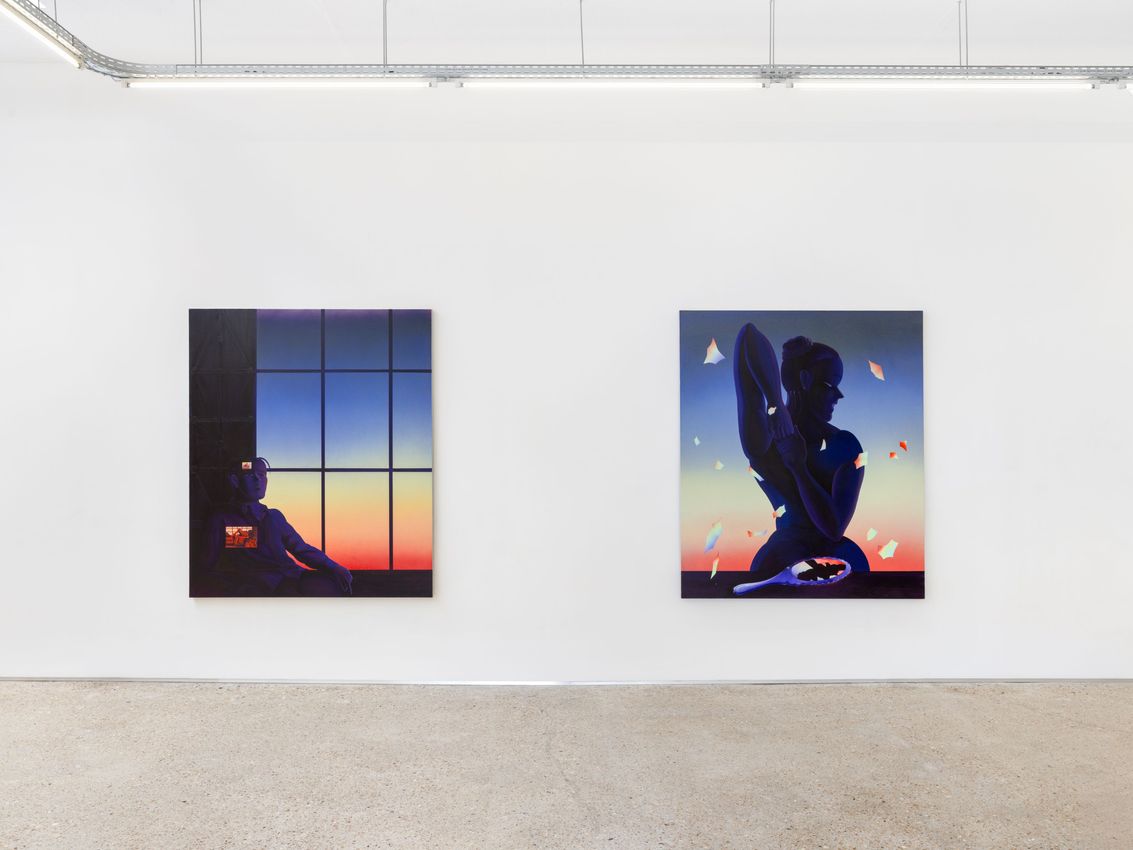
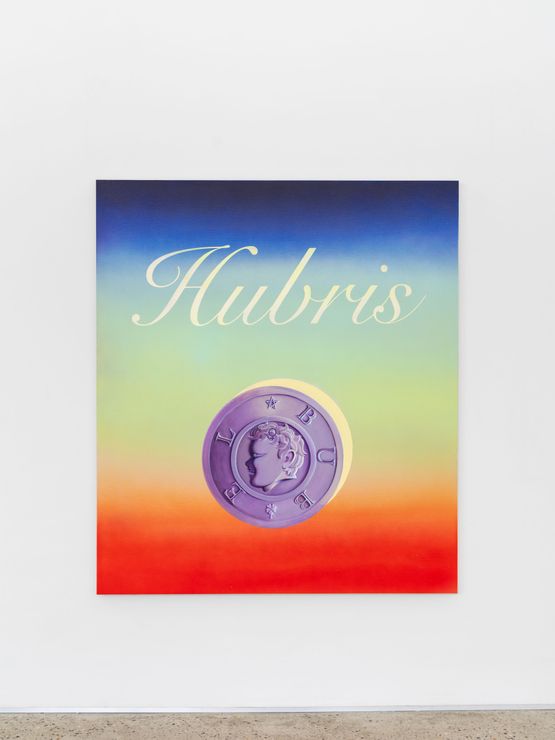
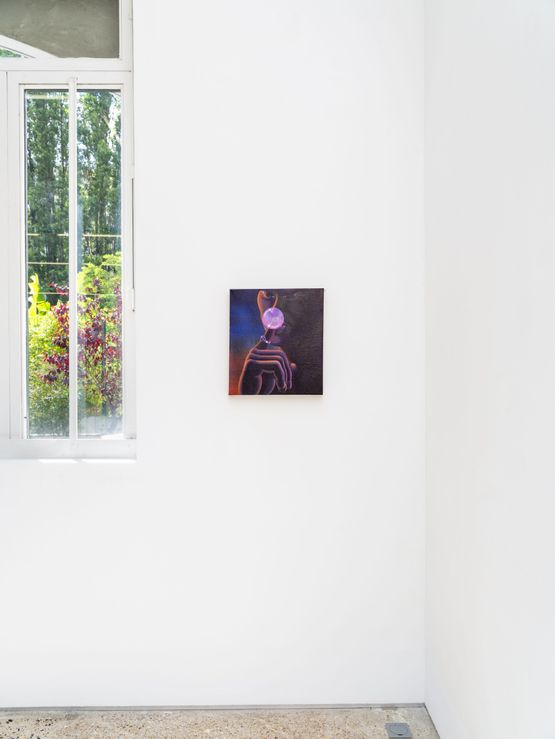
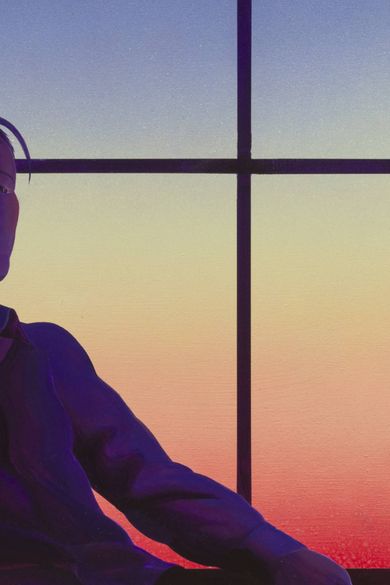
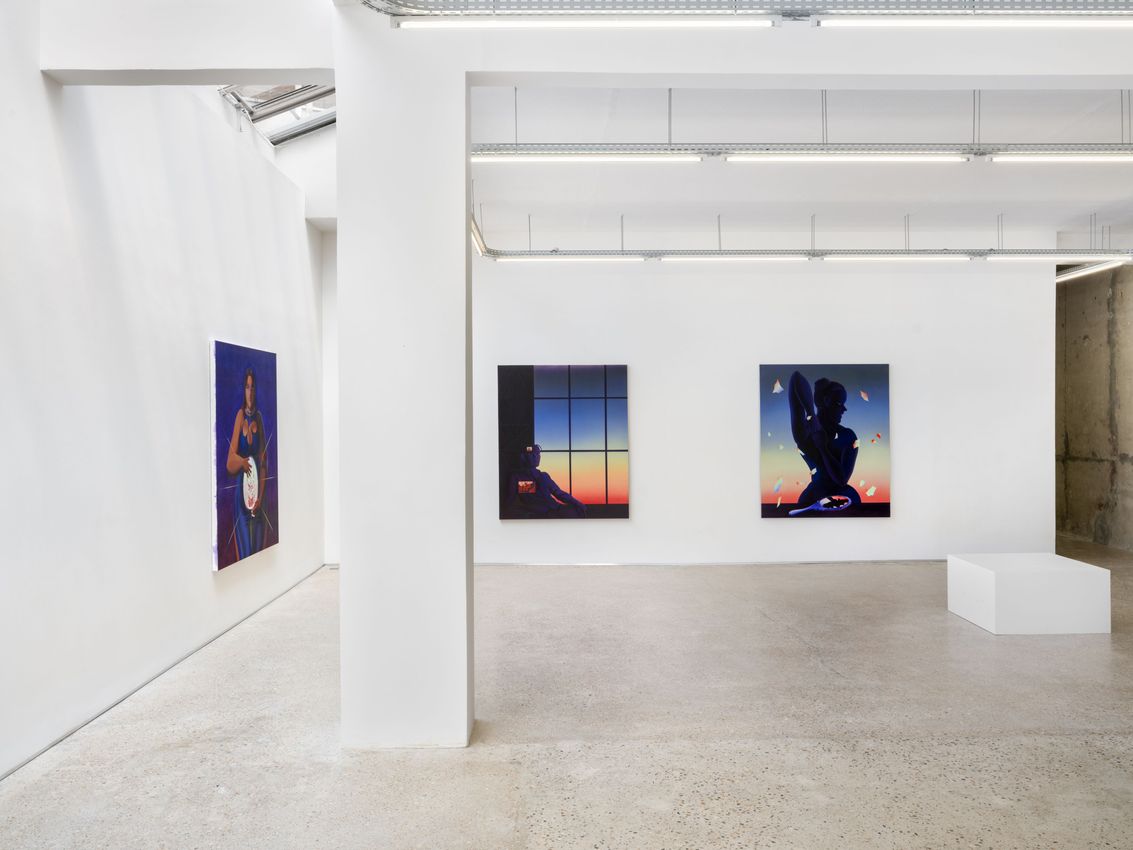
The depiction of time, as it passes, as it wounds, as it changes the course of an existence, as it marks an era or else as it stretches out unendingly, has never been easy in art. Generally, too fleeting, the many attempts to represent it by painters like Claude Monet remain approximate and, today, only time-based media seem suited to accompanying artists in this quest. Yet, in the early 2020s, it was by using figurative painting that Jonny Negron gave form to what he calls “temporal sequences”. And his way of painting figures could not be clearer, more accessible and thus generous. Principally, this artist sets human figures in contemporary atmospheres, handling or holding everyday objects, cultivating a certain obsession with materialism. They obey an archetypal vision of humanity, which is seemingly simple and close to standard. There are also young, tall athletic men who all lookalike, voluptuous women with large eyes and artfully, though rather excessively, painted nails. The generosity and precision of the lines, the simplicity of the contours and an ease of appreciation characterise his pictorial work. While not attempting to depict complex personalities or moods, he employs a figuration which is seemingly naive to convey cryptic messages, which transcend an initially simplistic impression.

They bring to mind the techniques used in manga, with an exaggeration of the size of the characters’ eyes so as to express extreme emotions. But, also, with some of the characteristics of naive painting, since, by not respecting the rules of dimensional perspective, by playing on a certain intensity in the colours – with highly attractive effects – and by exploiting extremely precise draughtmanship, Jonny Negron’s paintings adopt all of this genre’s orientations, whether we think of Douanier Rousseau or Archibald Motley. While his formal references may seem non-western, from Pre-Columbian to African art, via ancient depictions of Buddhas (the artist recognises that he has adopted the intense shape of their eyes for his characters), it is also through the relationship between formal and coded languages, pertaining to the painting of the European Renaissance, that this artist’s figuration needs to be apprehended and approached.

Though he was born and raised in a Christian Porto Rican family, then educated on the east coast of the USA, his art cannot be said to feed on unambiguous or strictly autobiographical references. Instead, it speaks a universal, multicultural language. By never reducing the world to a fragmentation of communities, this artist sees each human reality as being interconnected, with a play on sinuous coincidences and associations across time and between civilisations. Behind an acknowledged naivety, Jonny Negron’s painting unveils itself through a precise, complex-free erudition, animated by numerous signs related to cultures, religions and beliefs of varied origins, in a space-time seemingly free of an alpha or omega.

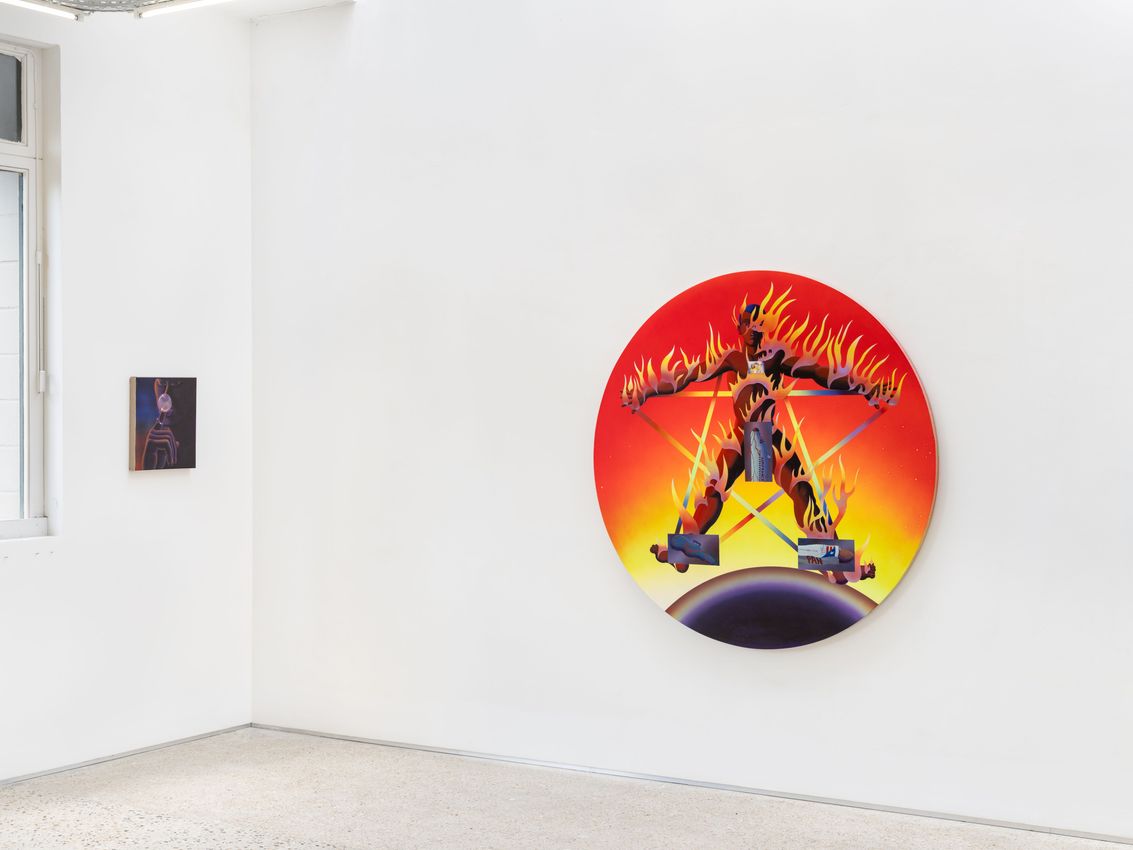
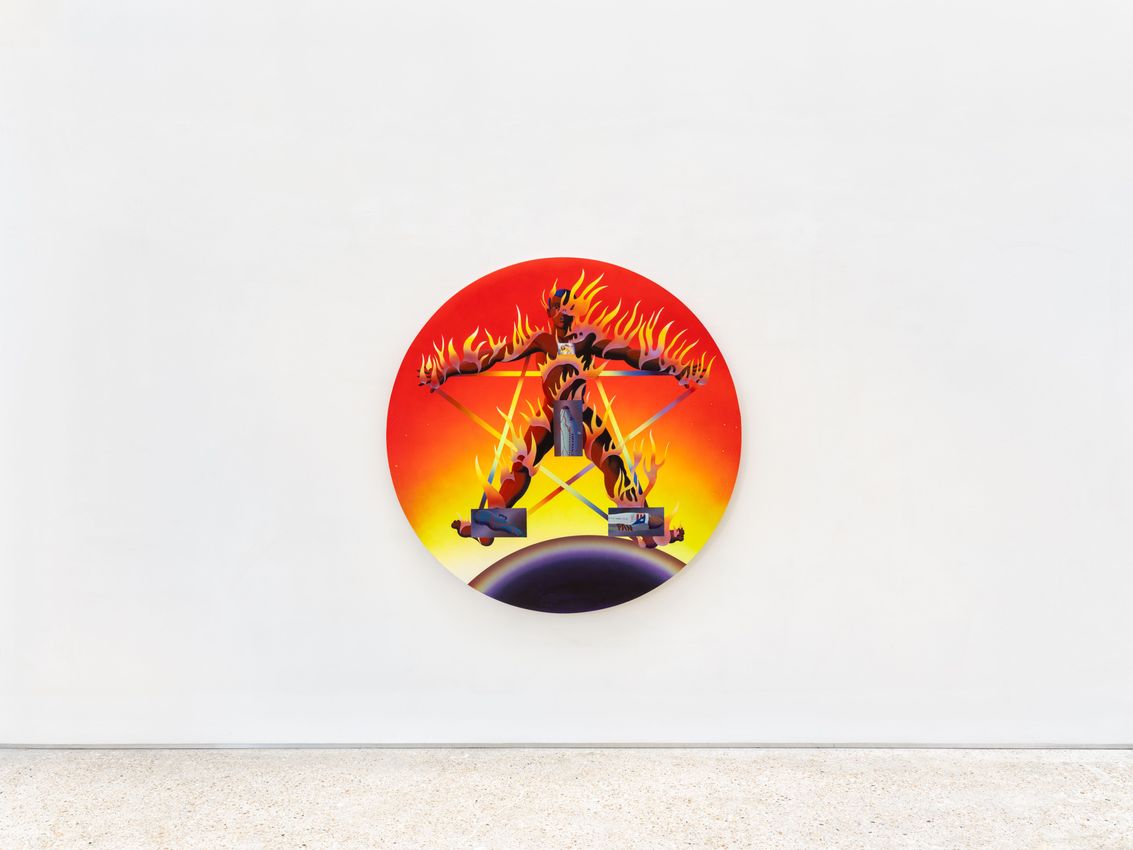
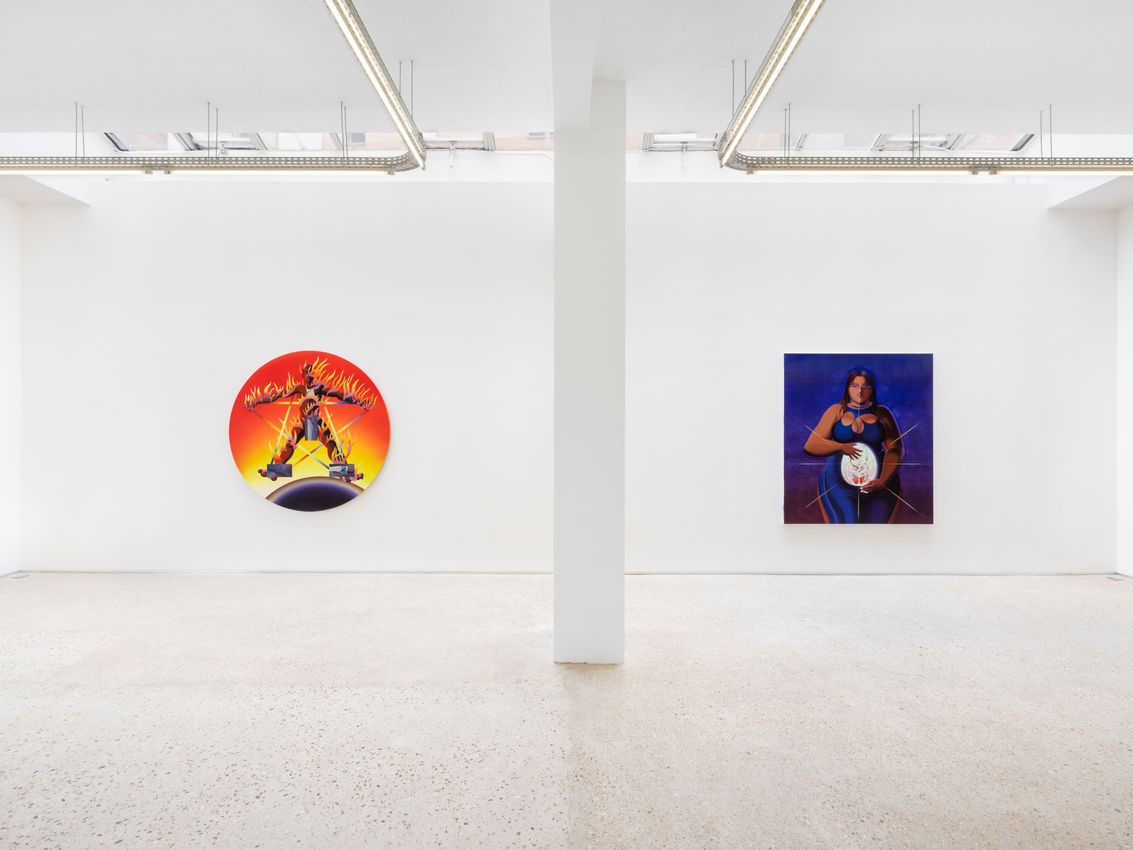
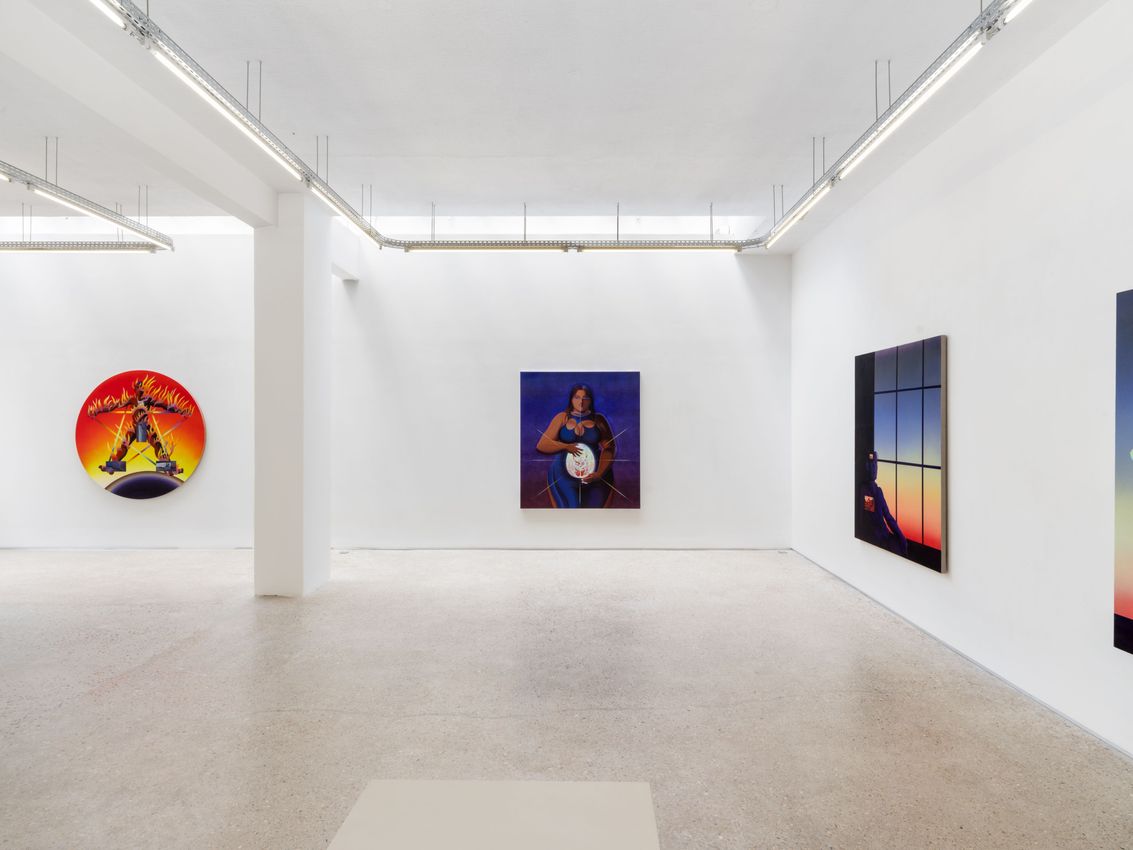
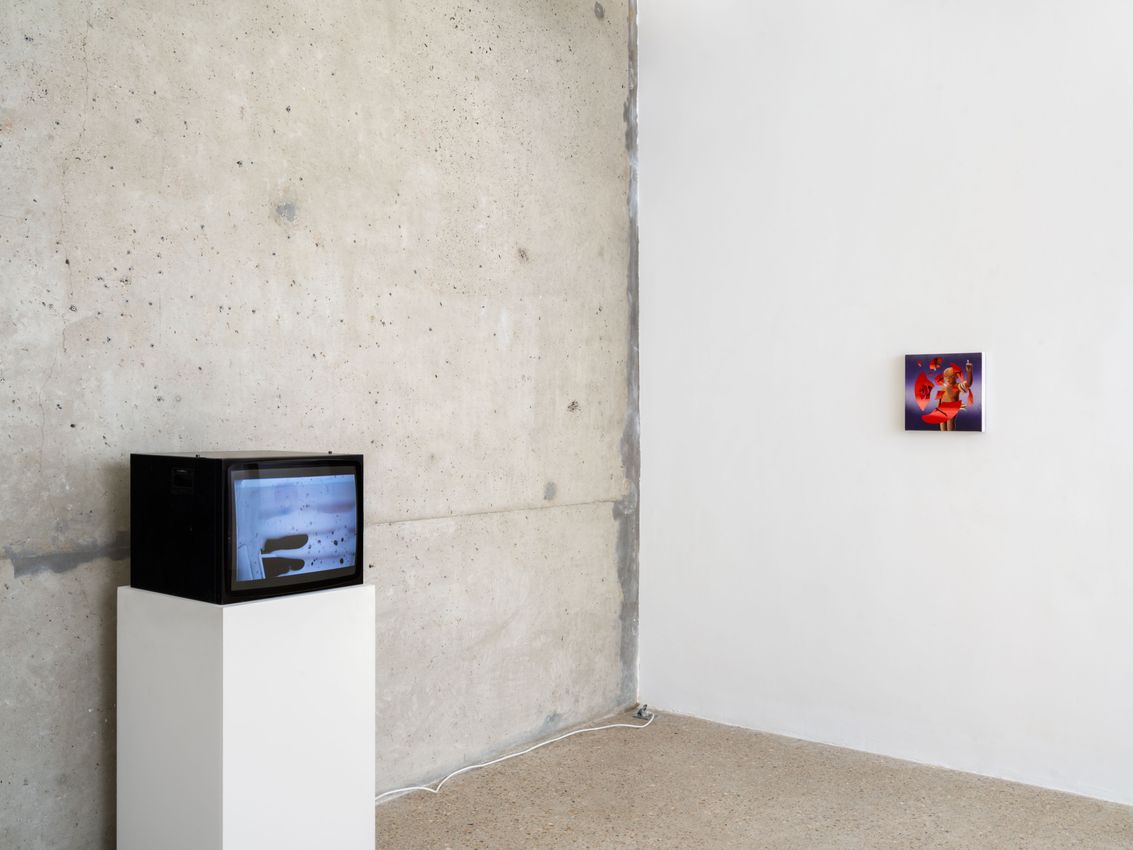
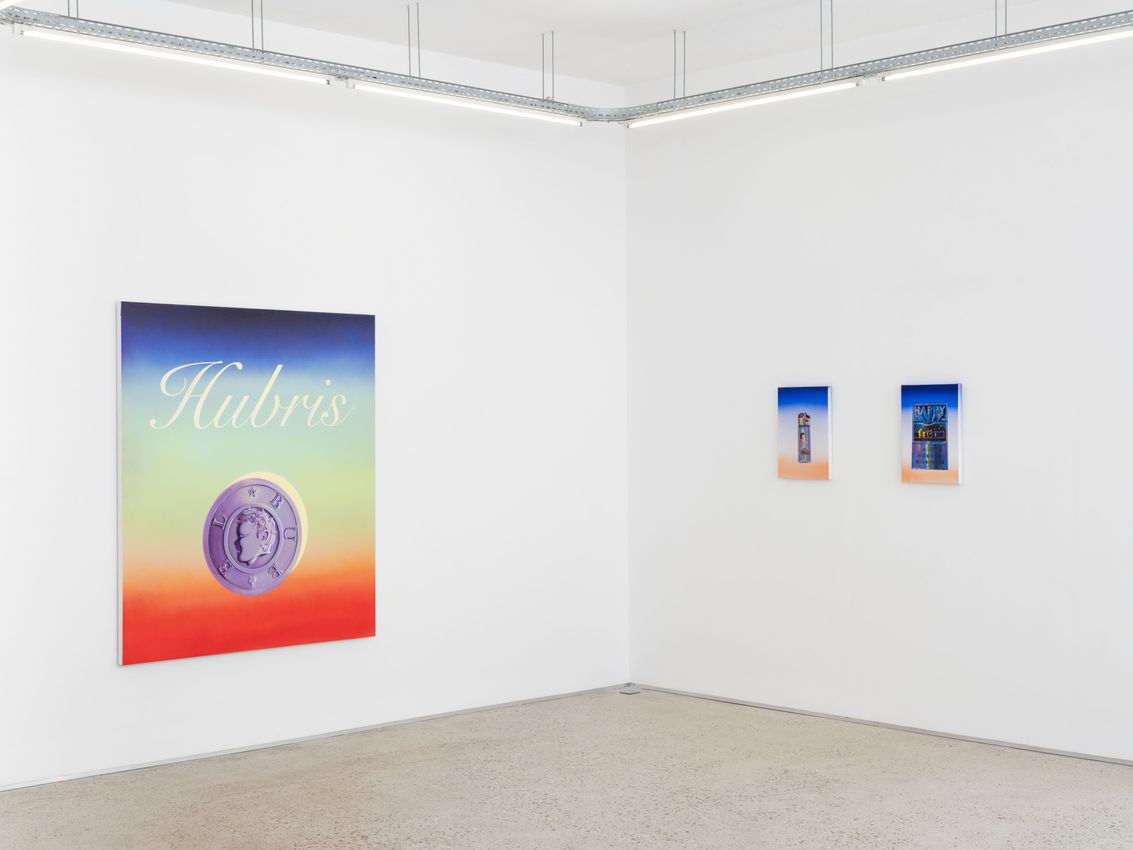
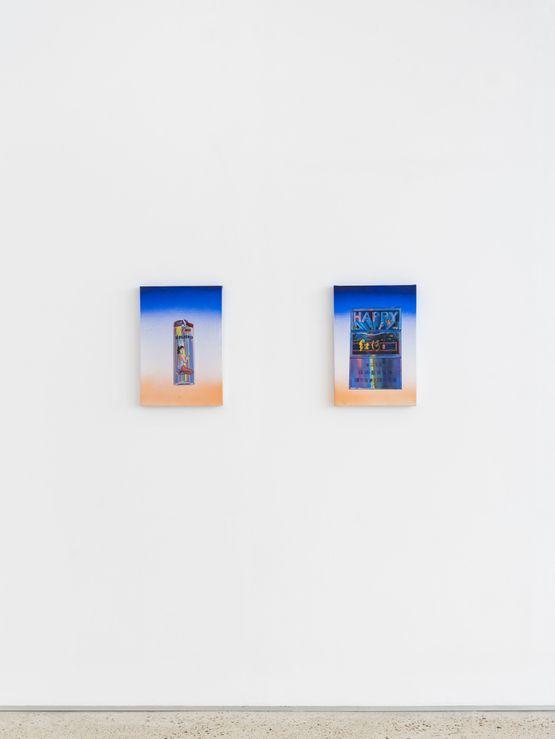
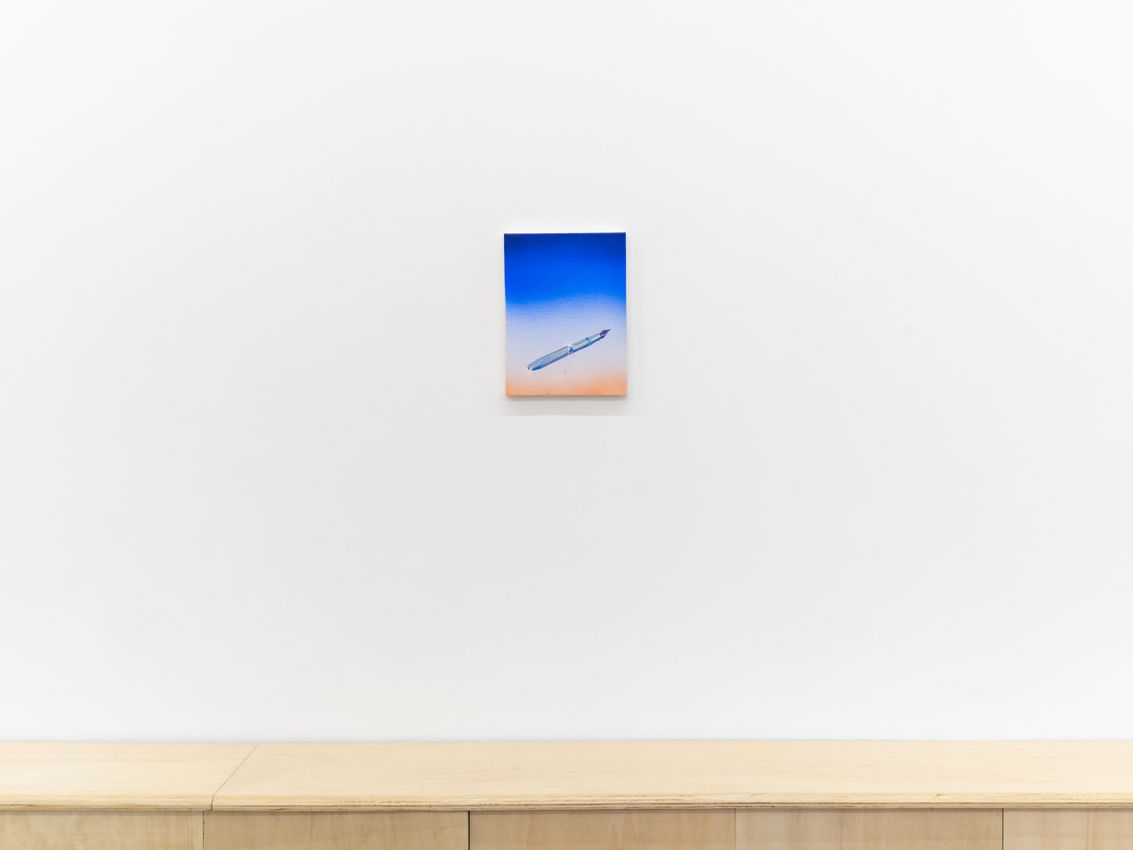
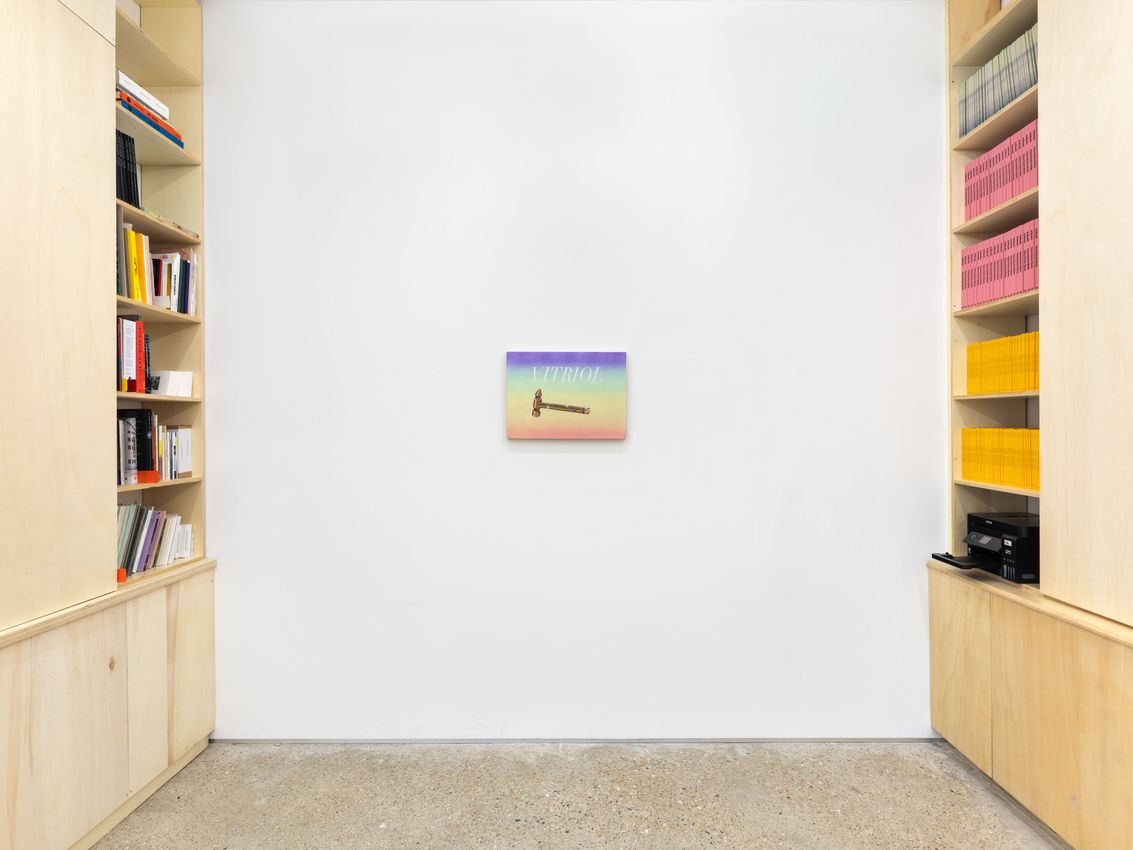
After devoting himself to the psychological visual effects of nightlife, in La Vision del Pan Jonny Negron offers an observation of the effects of dawn, when the subconscious remains extremely active, during the passage between sleeping and waking. While slipping into this temporal frame, the artist takes an interest in the various meanings of the word “Pan”, which becomes the guiding light of his show. As a prefix, pan- means “all”, all-embracing. It is also the name of the Greek demigod of nature and carnal pleasures. “Pan” means “bread” in Spanish, related to the French word “pain” and bringing to mind the English term “pain”. These meanings then allow him to construct conceptual connexions that guide the symbolism of his paintings, between the flesh (bread suggesting the body of Christ for Christians) and the endless sufferings of human beings in both their conflictual and social relations. The large formats can be decoded thanks to religious, cabalistic or zodiacal signs, while the smaller canvases provide clues to this decoding. As an illustration of the artist’s semio-pictorial approach, Draft Day depicts a man sacrificing himself on an upright pentagram, signifying the domination of the mind over matter, or positive Humanity. In a triangulation, vignettes evoke the hostage-taking drama in the airport of Lod (Israel) in 1972, when members of the Popular Front for the Liberation of Palestine (who came fromJapan) murdered some of the passengers, including the artist’s great-grandmother: with the blooded Air France plane, a Porto-Rican loaf of bread and the violin case that contained the terrorists’ weapons. There is also a vignette depicting the Lion of Juda, symbolising a sovereignty that no nation state should be able to impose on another.

As in hieroglyphs, Jonny Negron’s paintings illustrate how social life is moulded by beliefs and symbols that regularly create violence and intolerance. The leitmotivs at work in his pieces and the artificiality of his archetypal characters bear witness to the eternal rebeginning of such sufferings, despite the lessons of history. And yet, his paintings also come across as spiritual quests with the desire that each failure, each deviance or human error can be seen as a fresh lesson in life, with a lifetime existing only to learn, again and again.

Text by Benoît Lamy de la Chapelle

Translated by Ian Monk

Read More

Installation Views

Jonny Negron's Parisian Painting Debut at Crèvecœur Spotlight Jonny Negron's Parisian Painting Debut at Crèvecœur Negron discusses his debut show at Crèvecœur in Paris, the painterly influences of Ed Ruscha, and finding peace in organ music at his local L.A. church. Read the story
About the Artist

As in hieroglyphs, Jonny Negron’s paintings illustrate how social life is moulded by beliefs and symbols that regularly create violence and intolerance. The leitmotivs at work in his pieces and the artificiality of his archetypal characters bear witness to the eternal rebeginning of such sufferings, despite the lessons of history. And yet, his paintings also come across as spiritual quests with the desire that each failure, each deviance or human error can be seen as a fresh lesson in life, with a lifetime existing only to learn, again and again.

View Artist Profile

Also Exhibiting at Crèvecoeur

About the Gallery

Crèvecœur was founded in 2009 by Axel Dibie and Alix Dionot-Morani in Paris. Since its creation, the gallery has been supporting French and international artists whose different practices and visual language explore the most forefront topics and relate to the world’s social and political context.

View Gallery Profile
Address
9 rue des Cascades
Paris
France
Opening Hours
Tuesday – Friday
10am – 6pm
Saturday
11am – 7pm
And by appointment
(1)
Paris 9 rue des Cascades
Crèvecoeur
9 rue des Cascades, Paris, France
+33 (0)9 54 57 31 26
https://galeriecrevecoeur.com/

Opening hours
Tuesday – Friday
10am – 6pm
Saturday
11am – 7pm
And by appointment
The art world in focus