



Press Release

In Didier Vermeiren’s Cariatide à l’urne (1997), the plinth and the sculpture, the plaster and the mould, the body and its massindiscernibly come together as one to form a total object. Alarge plaster base exhibits its own mould, leading us to questionwhich one is really supporting the other?

Modelled after the plinth of Rodin’s Fallen Caryatid Carrying an Urn this plaster pedestal, along with the mould that wasused to cast it, rest on yet another lower and wider woodenplatform. This platform precisely borrows the material traitsand dimensions of a display originally devised by Rodin himself,and subsequently replicated in the plaster gallery of the RodinMuseum in Meudon. Thus one could say that Vermeiren’s is areplica of a replica, even though that word seems beside thepoint for a sculptor who considers recollection as his primarymaterial.

For Vermeiren, sculptures are tangible ideas; they are embodied recollections that allow for the past and the present to beimbricated like a positive in a negative. Throughout his work,sculptures always refer to other sculptures, both his own, andthose of his predecessors. Historically, Rodin was the firstsculptor to model his own bases for his figures–a developmentthat prefigured the work of Brancusi who considered the plinthas an inherent part of his sculptures. Perhaps their sharedenthusiasm for photography and its merging of space onto asingle plane is also characteristic of their concern for what itmeans to put something on display–a concern that Vermeirenunderstands as he works to transcend it.

Rodin’s approach to form in his figures was once described by Leo Steinberg as ‘a viscous flow that melts and reconstitutesitself before our eyes.’ Likewise, the three elements stackedand combined with a perplexing kind of simplicity inVermeiren’s monumental sculpture suggest movement. Thismovement evidently occurs through our physical presence aswe move around the work, but also through the interplay ofsupport structures conceived by the artist. Deprived of theirtraditional function, these amalgamated display systems haveus confound subject and object. In the midst of this confusion,the caryatid emerges as a freestanding figure–weightlessand almost unrecognisable, but undeniably present.

Didier Vermeiren (b. 1951, Brussels, Belgium) lives and works in Brussels. Recent exhibitions include Construction dedistance, FRAC Bretagne, France (2017); Rodin, l’Exposition ducentenaire, Grand Palais, Paris, France (2017) ; Etude pour leMonument à Philippe Pot (1996-2012), Saint Philibert Church,Dijon, France (2013) ; Sculptures, Museum Dhondt-Dhaenens,Deurle, Belgium (2012) ; S_olides géométrique – Photoreliefs– Vues d’atelier_, Bourdelle Museum, Paris, France (2005) ;Collection de Solides, Van Abbemuseum, Eindhoven, TheNetherlands (2003).

Read More

Installation Views

About the Artist

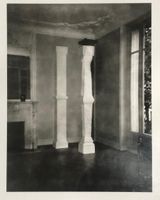
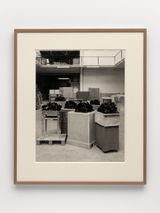
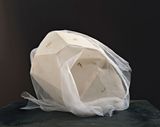
Didier Vermeiren’s practice is based on repetition, reversal, doubling and inversion. The plinth is incorporated and elevated to a sculptural level: plinth on plinth, the plinth becomes sculpture, the mold becomes sculpture, the replica becomes the Original, the negative becomes the positive. These strategies are subsequently expanded to various means of production, transport and presentation.

View Artist Profile

Also Exhibiting at Galerie Greta Meert

About the Gallery

Over the past 30 years, Galerie Greta Meert established itself as one of Brussels’ leading contemporary art galleries. Founded in 1988 as Galerie Meert Rihoux, it was subsequently renamed after its founding director Greta Meert in 2006. Located in the center of Brussels, the gallery occupies a five-story Art Nouveau building designed by Louis Bral and renovated for the gallery by renowned Belgian architects Hilde Daem and Paul Robbrecht. Since 2012 three floors of the building are dedicated to exhibitions, making it possible to maintain an expanded exhibition schedule.

View Gallery Profile
Address
13 Rue du Canal
Brussels
Belgium
Opening Hours
Tues - Sat, 2pm - 6pm
(1)
Brussels 13 Rue du Canal
Galerie Greta Meert
13 Rue du Canal, Brussels, Belgium

Opening hours
Tues - Sat, 2pm - 6pm
The art world in focus
