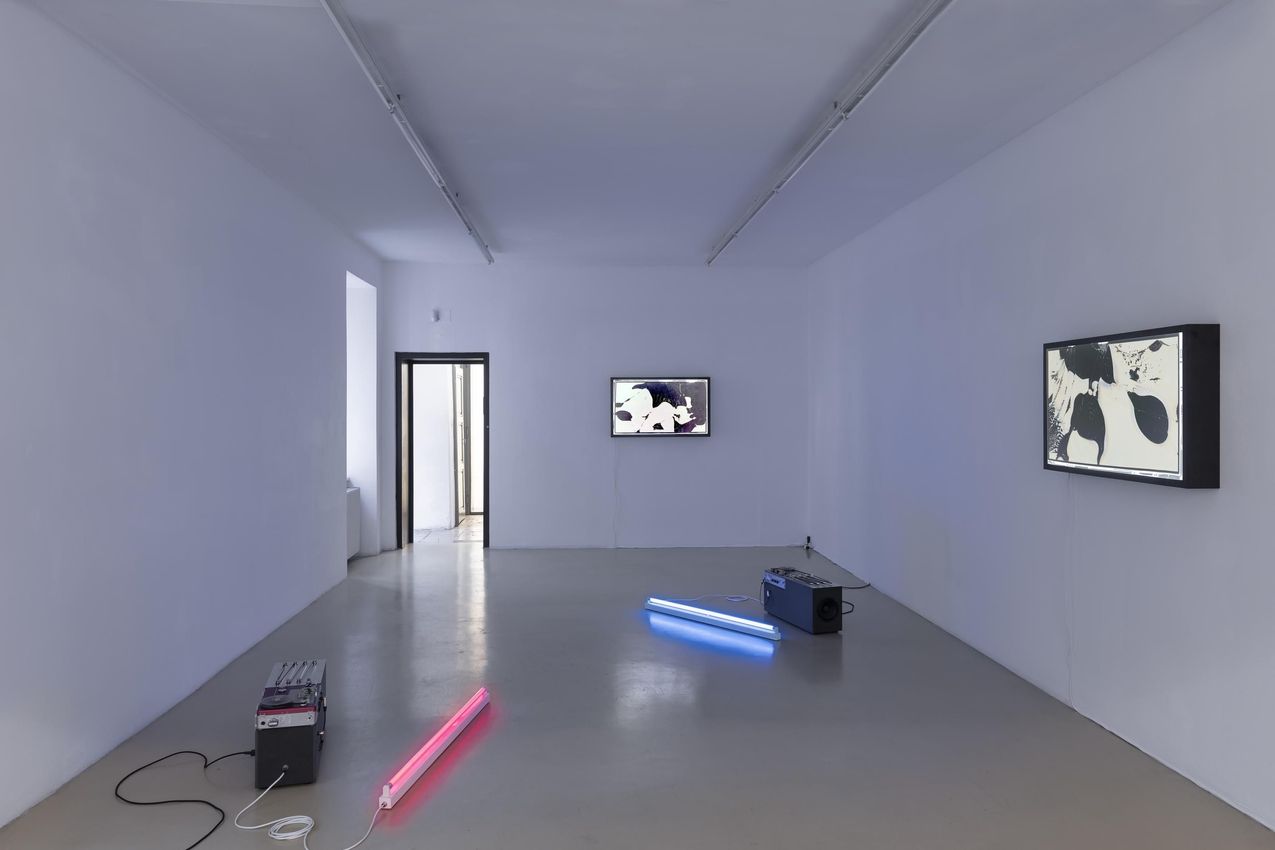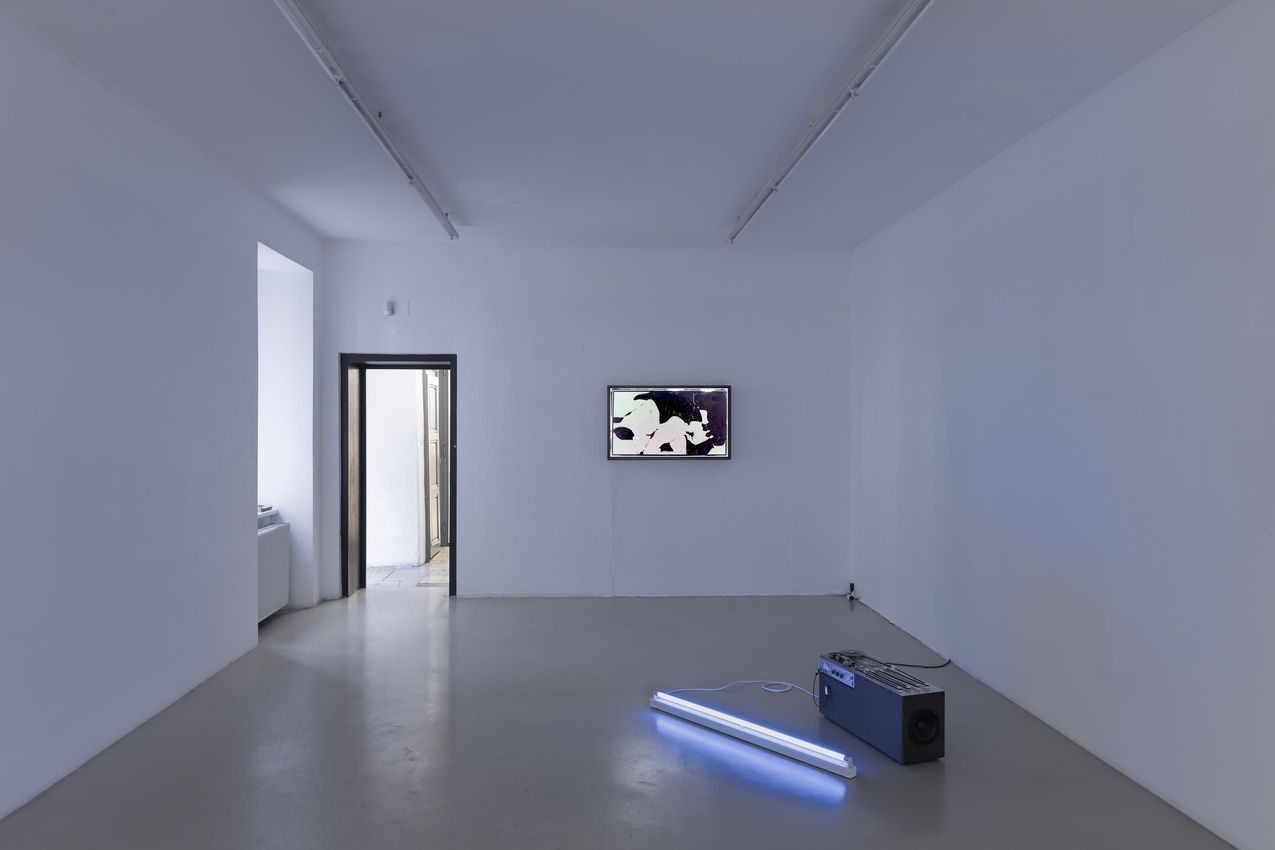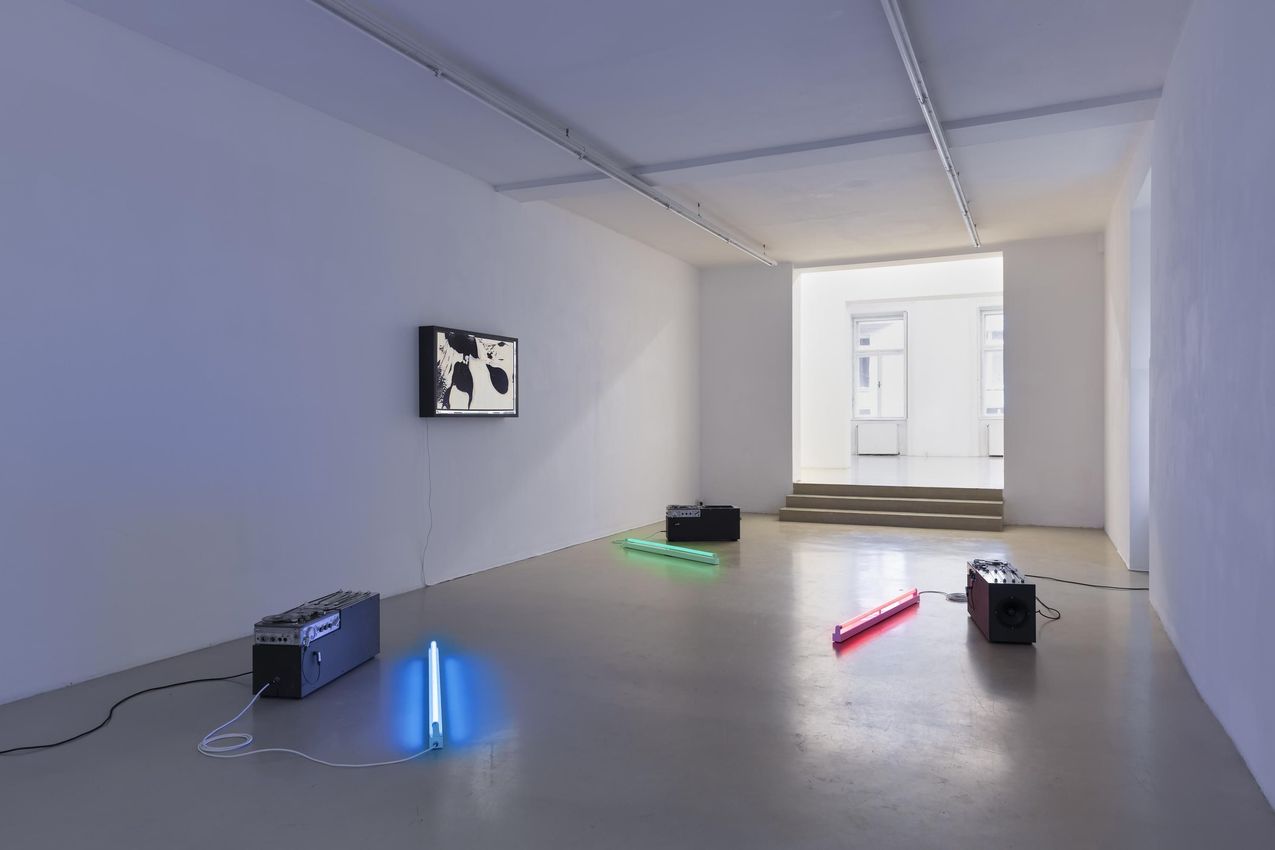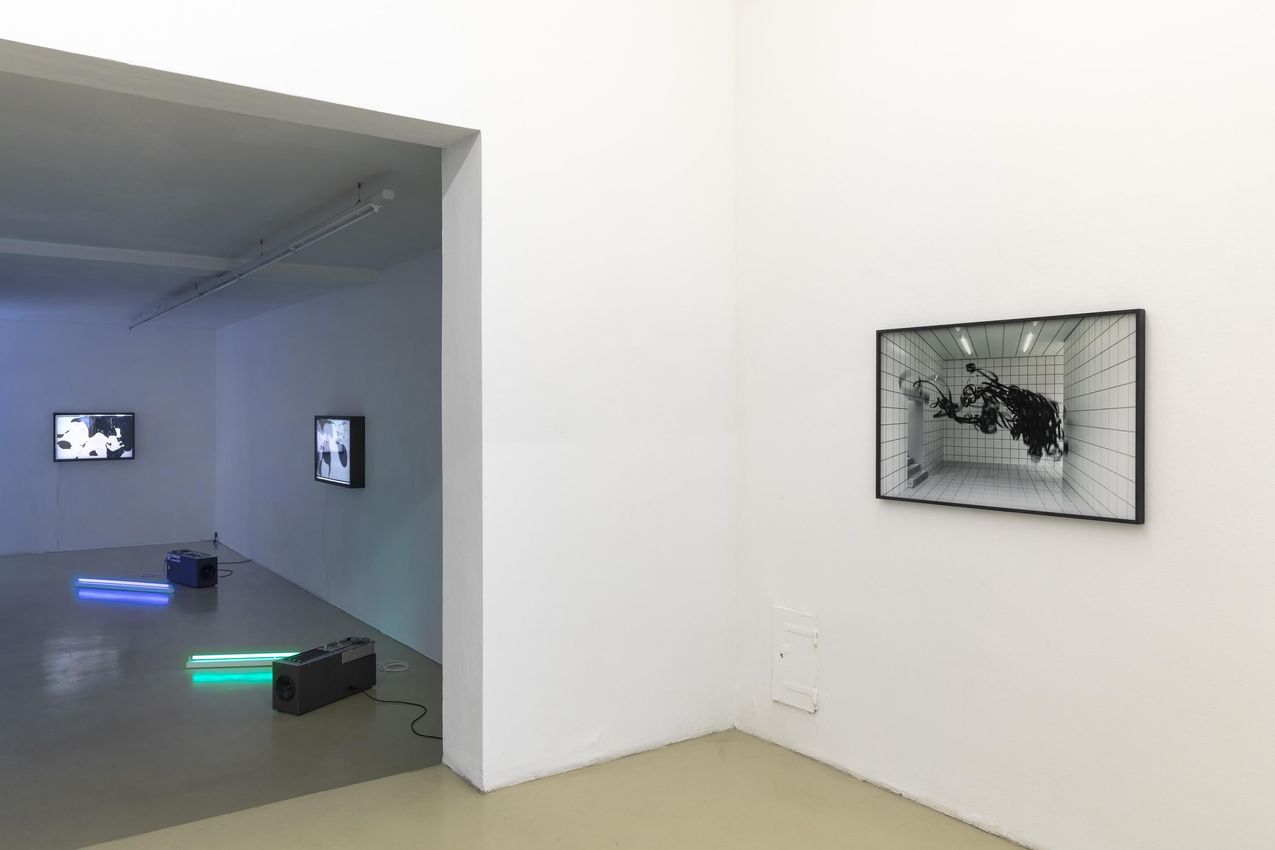
In Bernd Oppl’s works for the exhibition Phantom Power several thematic and aesthetic threads converge, which have been present in the artist’s work for some time. However, each convergence in this case is just another form of unravelling: Oppl’s works—whether in the form of models, photographs, sound installations, or moving image works as projections and on displays—fundamentally deal with the uncertainty of perception in a world where the visible and audible are always material (magnetic tape, concrete, glass, the White Cube, etc.) and virtual at the same time, thus situating the world mostly in an uncanny intermediate space: present and absent, tangible and ephemeral, external and internalised, both all-encompassing and radically confined.
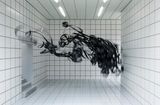
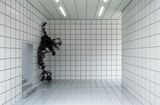
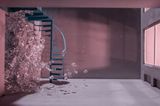
Is Liquid Crystal, a work on a display, the work of the display, or—quite trivially—a broken display? And if it’s the latter, can I be sure that the liquid cloud haunting the dry concrete of the room in Water is my eye is not actually a projection error of the projector? Or am I, as the title suggests, looking at the inside of my eye, which is a tidy chamber that, on the one hand, processes light in motion and, on the other hand, must be constantly protected from drying out by organic fluids? Encountering these works through seeing and hearing always means entering these moving loops with thought and feeling, which describe something without ever fully fixing it. Phantom Power consists of three magnetic soundtracks, on which the artist has composed sound structures from dozens of noises emitted by optical apparatuses. The machines of seeing become sound producers, the sounds they generate in turn trigger three neon lamps whose colours together form the RGB spectrum. The instrument of seeing becomes sound, which in turn brings forth the visible; sensory channels mutate, disappear, and reappear, emphasising the interminability of this realisation in this looped movement.
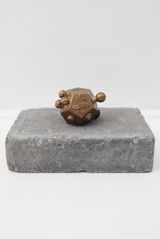
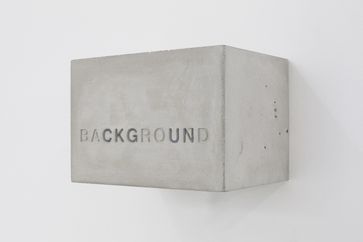
The precise forms, the exhibited materialities, the delicate accuracy of the works suggest control, inviting one to linger in a sense of security, only to, once you engage with it, evoke aesthetic formations where one’s own position and understanding of reality instantly become porous. g__et in deals with this moment of ambiguity that will never end: Again and again, I move through a square tunnel that traverses the concrete block in front of me, a tunnel that unsettles dimensions between viewer, object, and gallery space, actually present yet thoroughly virtual (recorded, mirrored, simulated).
Text by Alejandro Bachmann (author, Prof. at Academy of Media Arts Cologne, Germany). Courtesy Galerie Krinzinger.
Galerie Krinzinger was founded in 1971 by art-historian Dr. Ursula Krinzinger. Since then, she has organized at least 500 exhibitions of national and international artists, mounting solo, group and thematic shows.

A respected voice in contemporary art discourse.
Focusing on ambitious storytelling and insightful art-world commentary. Ocula Magazine publishes in-depth interviews, critical essays and timely analysis on the artists, exhibitions and ideas driving the global art world.
Learn more about Ocula Magazine
Showcasing the best of the art world.
Ocula partners with galleries from around the world to highlight their artists, artworks and exhibitions. Gallery membership is by application and invitation, with each member vetted by an independent panel.
Learn more about Ocula Membership

Specialises in the sale of major artworks.
Led by a team with deep ties to the world’s leading auction houses, galleries and collectors. Ocula’s advisory team offers bespoke services to high-net-worth clients from around the world who are looking to acquire the best of contemporary and modern art.
Learn more about our team and services