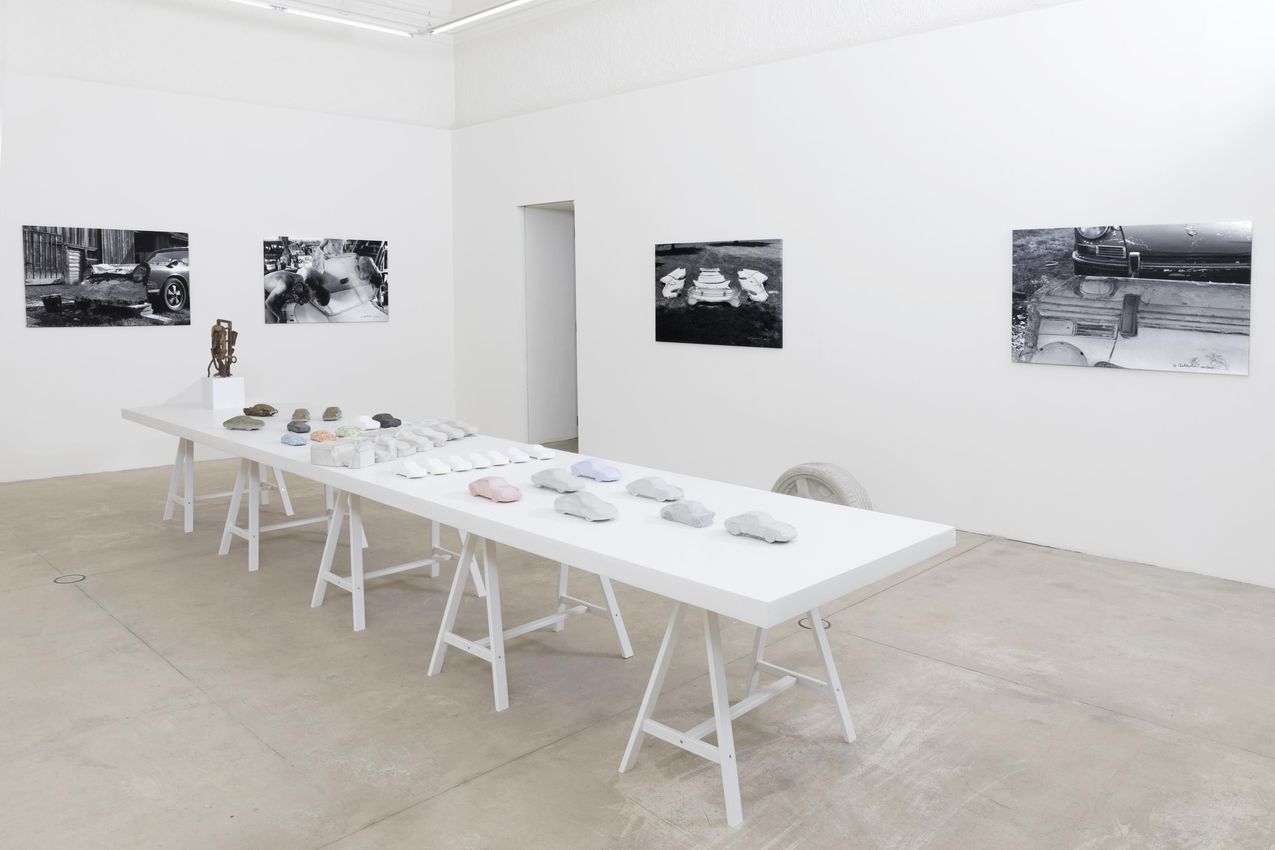
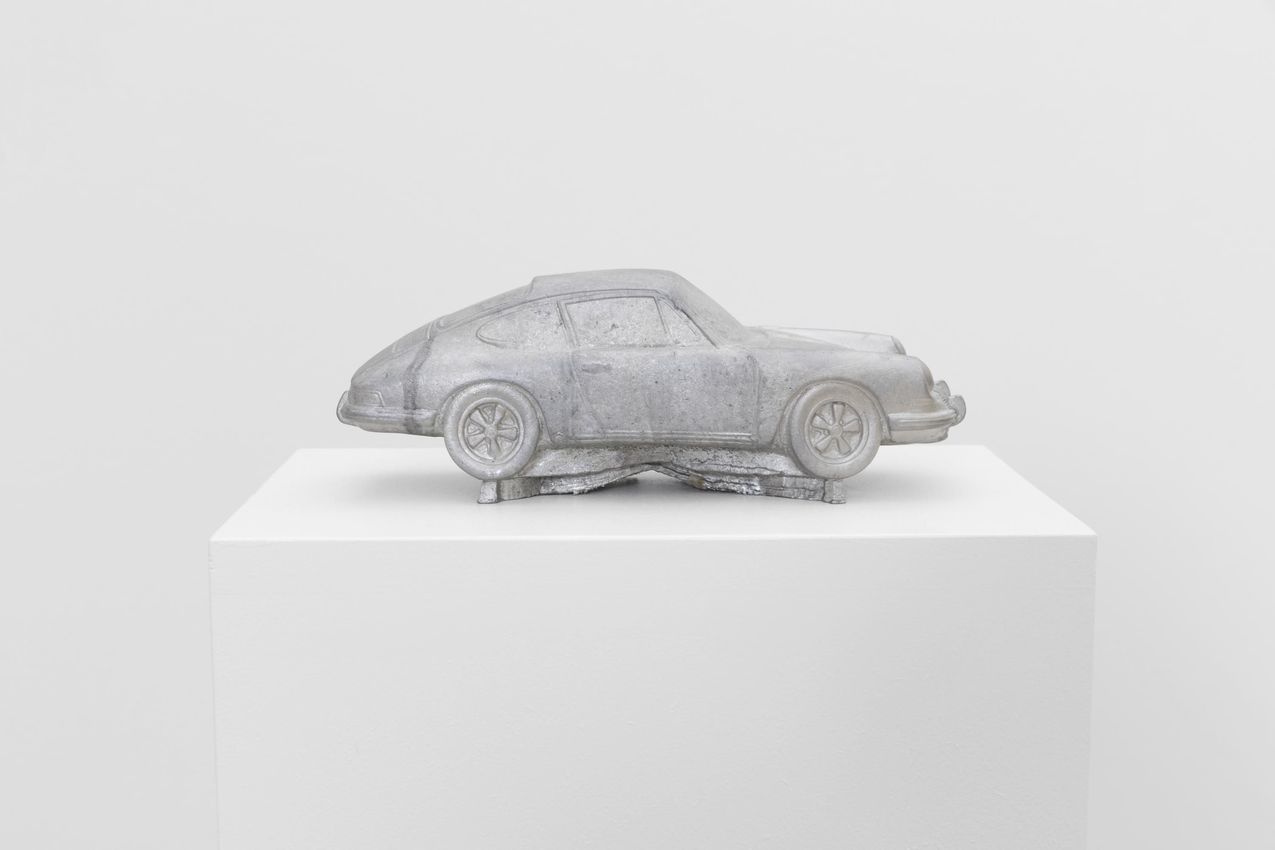
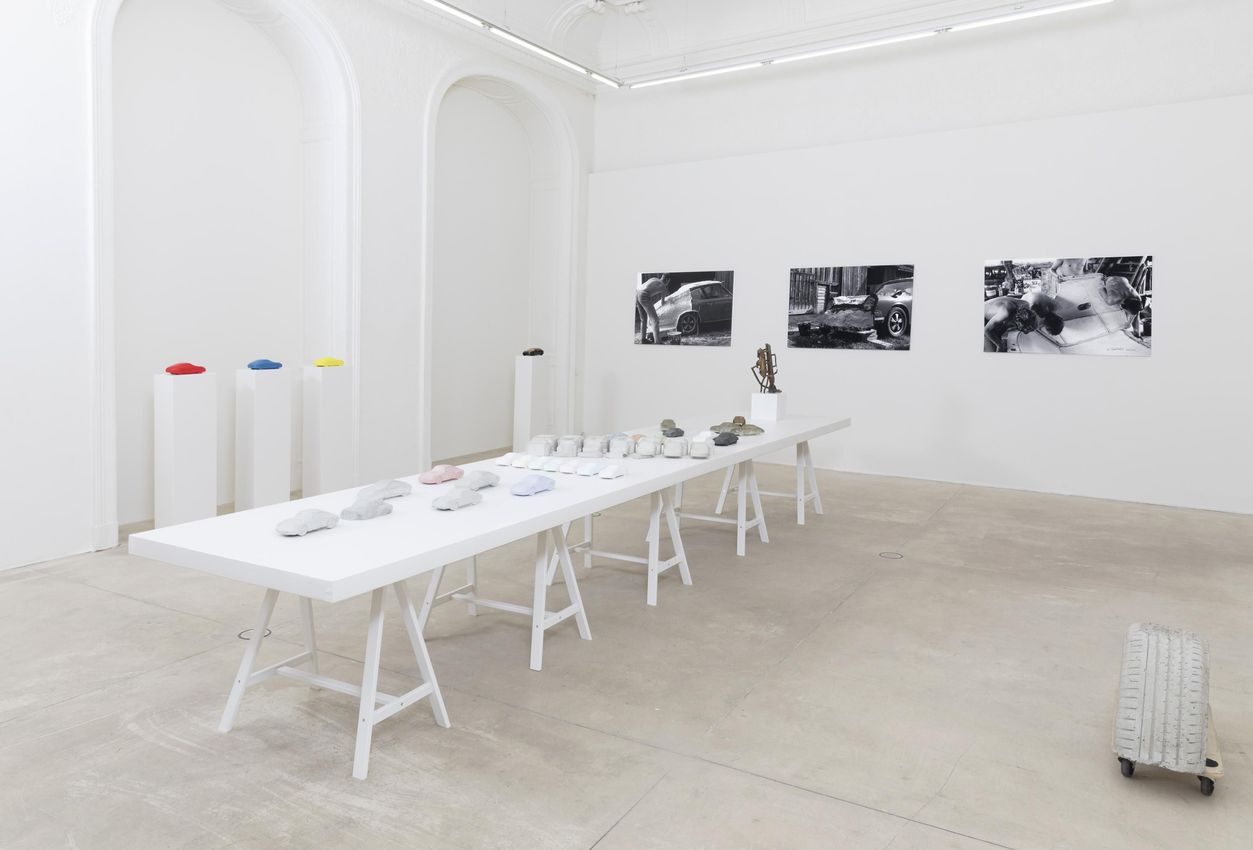
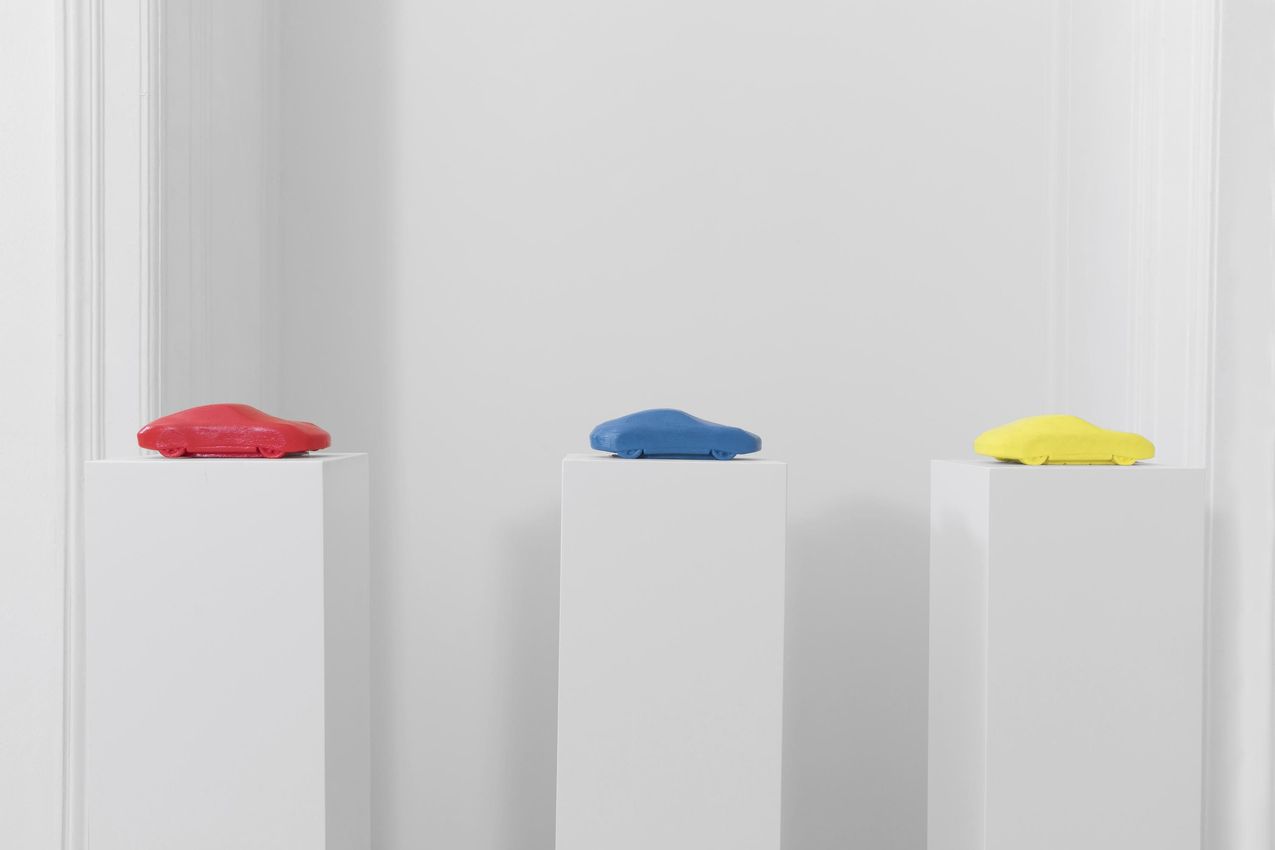
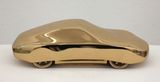
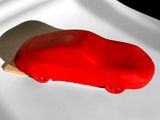
With his fourth solo exhibition at Galerie Krinzinger in Vienna, 3 bis 2 D (3 to 2 D), Gottfried Bechtold pays homage to the genealogy of his renowned Porsche works. The Porsche as a subject began making an appearance in his oeuvre over 50 years ago when Bechtold presented his first Betonporsche (concrete Porsche) at the Galerie Krinzinger in Bregenz in 1971. The sports car is an exact cast of his own 911 model. Since then, the Porsche has become a recurring motif in the artist’s work.
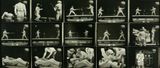
A series of photographs from 1971 documents the working process at the time, where casting molds were taken directly from the original to create an object — a Porsche made of concrete. A recurring phenomenon in Bechtold’s creation of art is the aestheticization of everyday objects — in this case the automobile.
The artist’s ongoing engagement with the automobile is closely linked to his fascination with its inherent paradox: Invented to enhance mobility and the efficiency of transportation, today the car represents the chaos that results in accidents, traffic jams, and ecological problems. Bechtold addresses this ambiguity in his sculptural works, such as crashporsche (2001) — a heavily demolished vehicle.
The Porsche brand especially is seen as the epitome of lightness, speed and dynamism—qualities that Bechtold subverts with his concrete sculptures, turning them into their opposites: heaviness, lethargy and immobility. This tension between speed brought to a halt and form preserved for eternity is further heightened in his Porsche works wrapped in protective covers.
Simultaneously, Bechtold explores the principles of sculpture. In the concrete group Rebirth (1996), the creative process itself is addressed, as the vehicles are still partially connected to their casting molds—a reference to the artistic process of creation. The choice of materials also reflects this interplay. In addition to concrete, Bechtold uses plaster, porcelain, or bronze, exploring the relationship between materiality, form, and their effect.


Galerie Krinzinger was founded in 1971 by art-historian Dr. Ursula Krinzinger. Since then, she has organized at least 500 exhibitions of national and international artists, mounting solo, group and thematic shows.

A respected voice in contemporary art discourse.
Focusing on ambitious storytelling and insightful art-world commentary. Ocula Magazine publishes in-depth interviews, critical essays and timely analysis on the artists, exhibitions and ideas driving the global art world.
Learn more about Ocula Magazine
Showcasing the best of the art world.
Ocula partners with galleries from around the world to highlight their artists, artworks and exhibitions. Gallery membership is by application and invitation, with each member vetted by an independent panel.
Learn more about Ocula Membership

Specialises in the sale of major artworks.
Led by a team with deep ties to the world’s leading auction houses, galleries and collectors. Ocula’s advisory team offers bespoke services to high-net-worth clients from around the world who are looking to acquire the best of contemporary and modern art.
Learn more about our team and services