




The art world in focus
Subscribe to our newsletter for news and insights on artists, galleries and exhibitions.

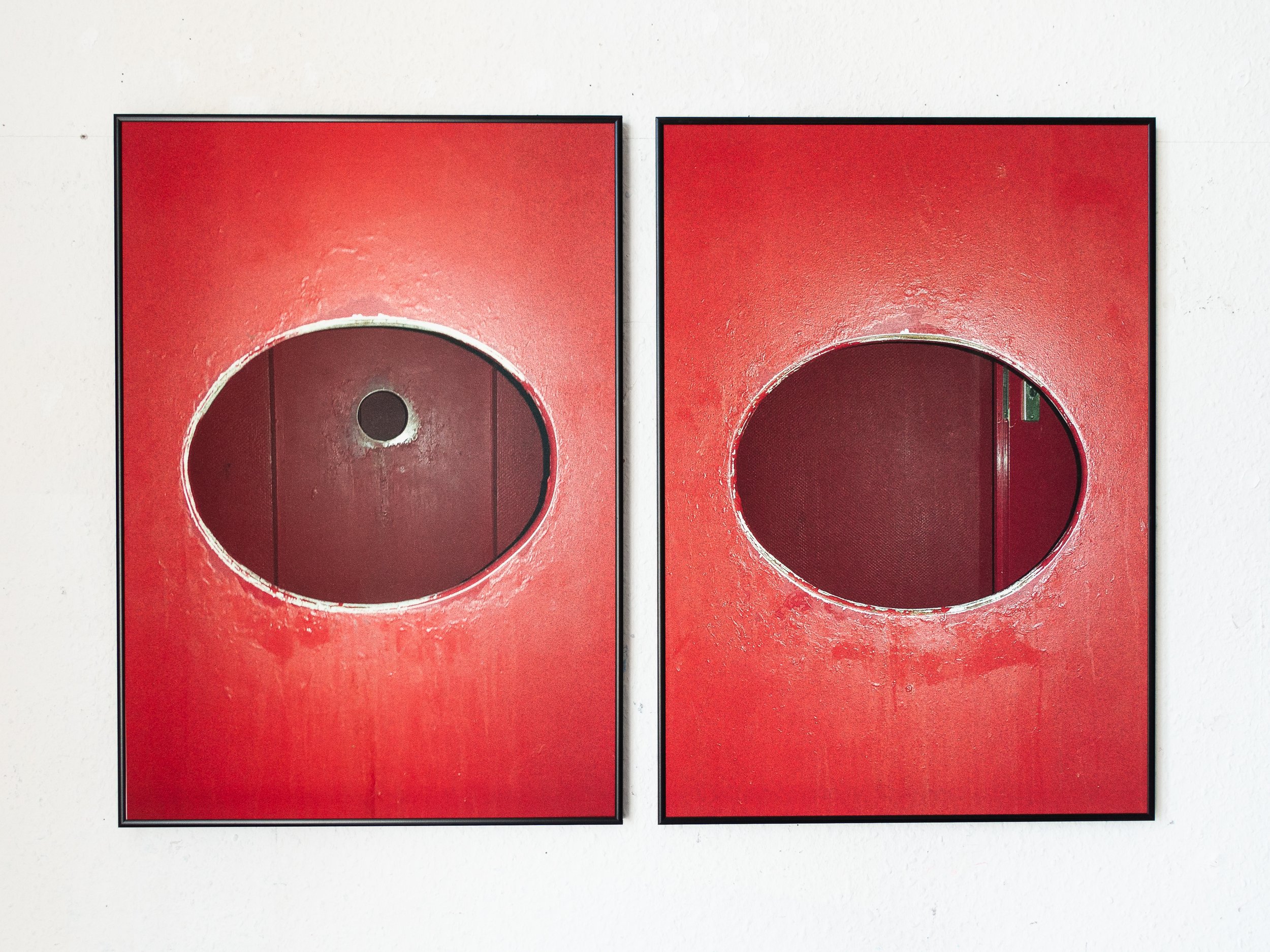
Dean Sameshima’s work is informed by “a fear of losing something I value”. Over the past three decades, the California-born, Berlin-based artist has documented sites of queer activity, from the unassuming façades of Silver Lake’s sex clubs to his own creased, recently vacated mattress to glory holes, the latter in a series titled Erdbeermund (2023)—German for “strawberry mouth”—after the now-shuttered porn theatre in which they were photographed.
Three other porn theatres, the final ones surviving in Berlin, were the subject of being alone (2022), in which Sameshima centred his camera on the backs of anonymous theatre-goers, silhouetted against overexposed screens, as the establishments they sat in were failing under the pressures of digitalisation and gentrification. Sameshima wanted to make sure he had “some kind of piece of it”, as he has put it, “Before it all goes away.”
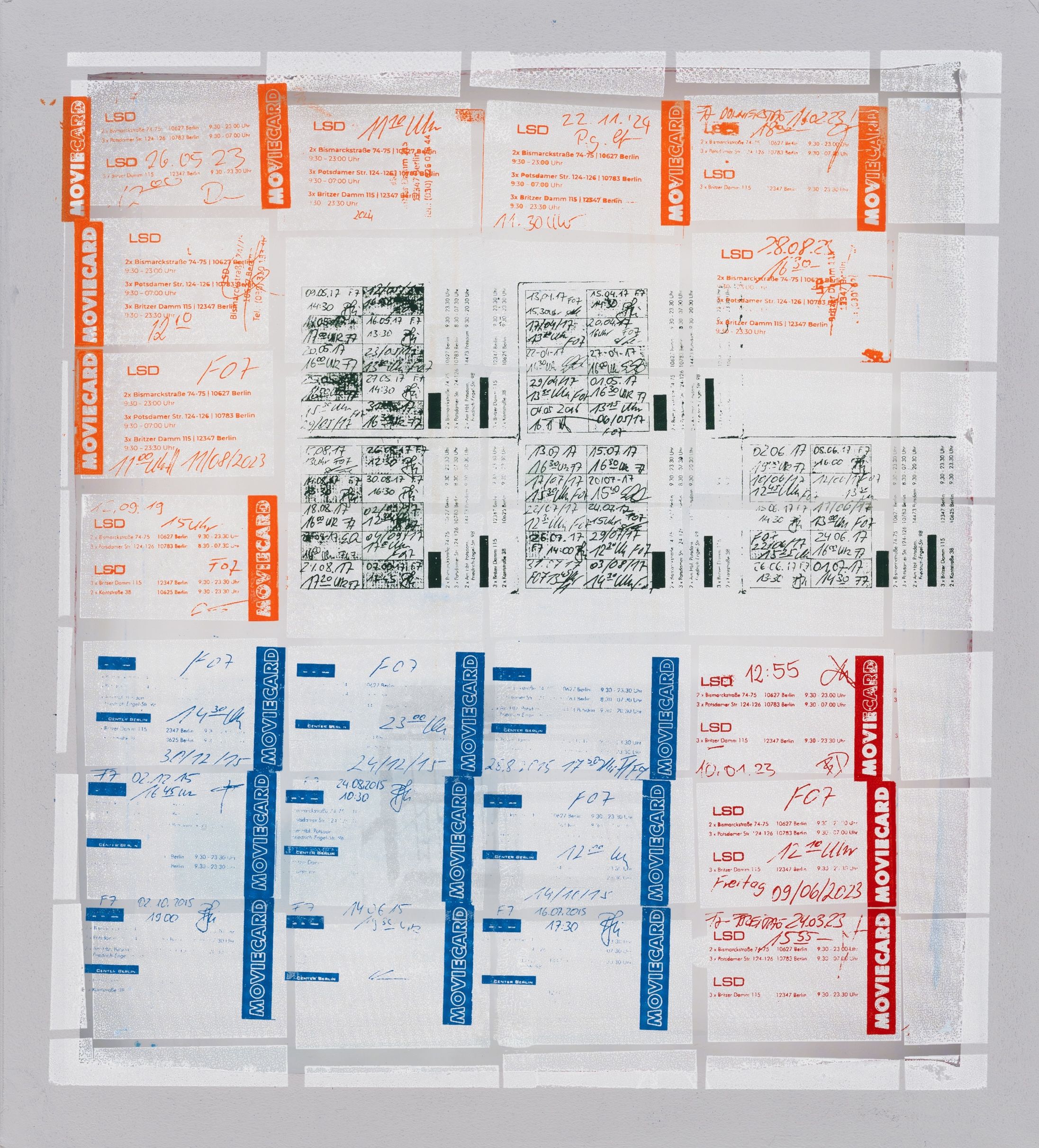
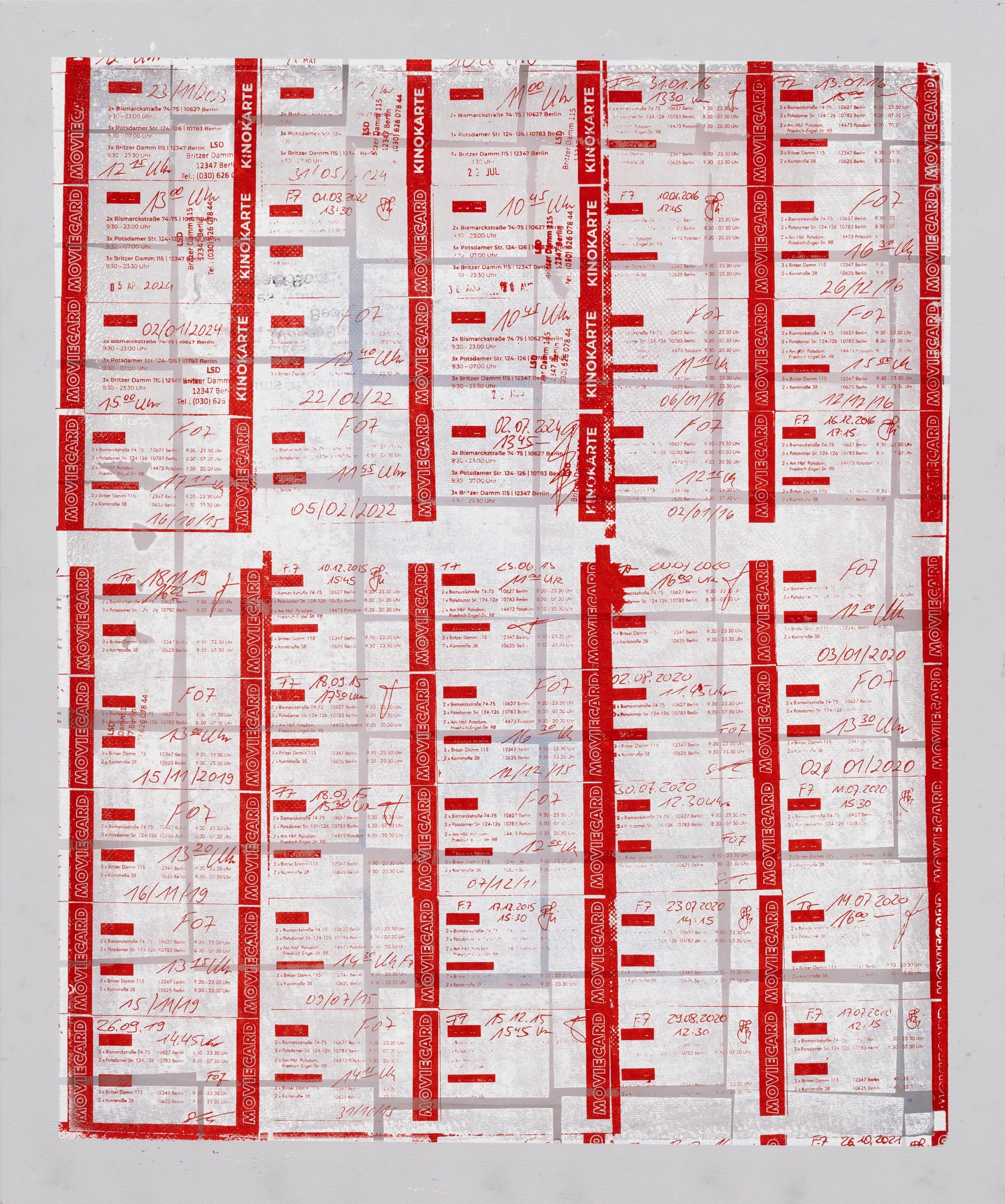
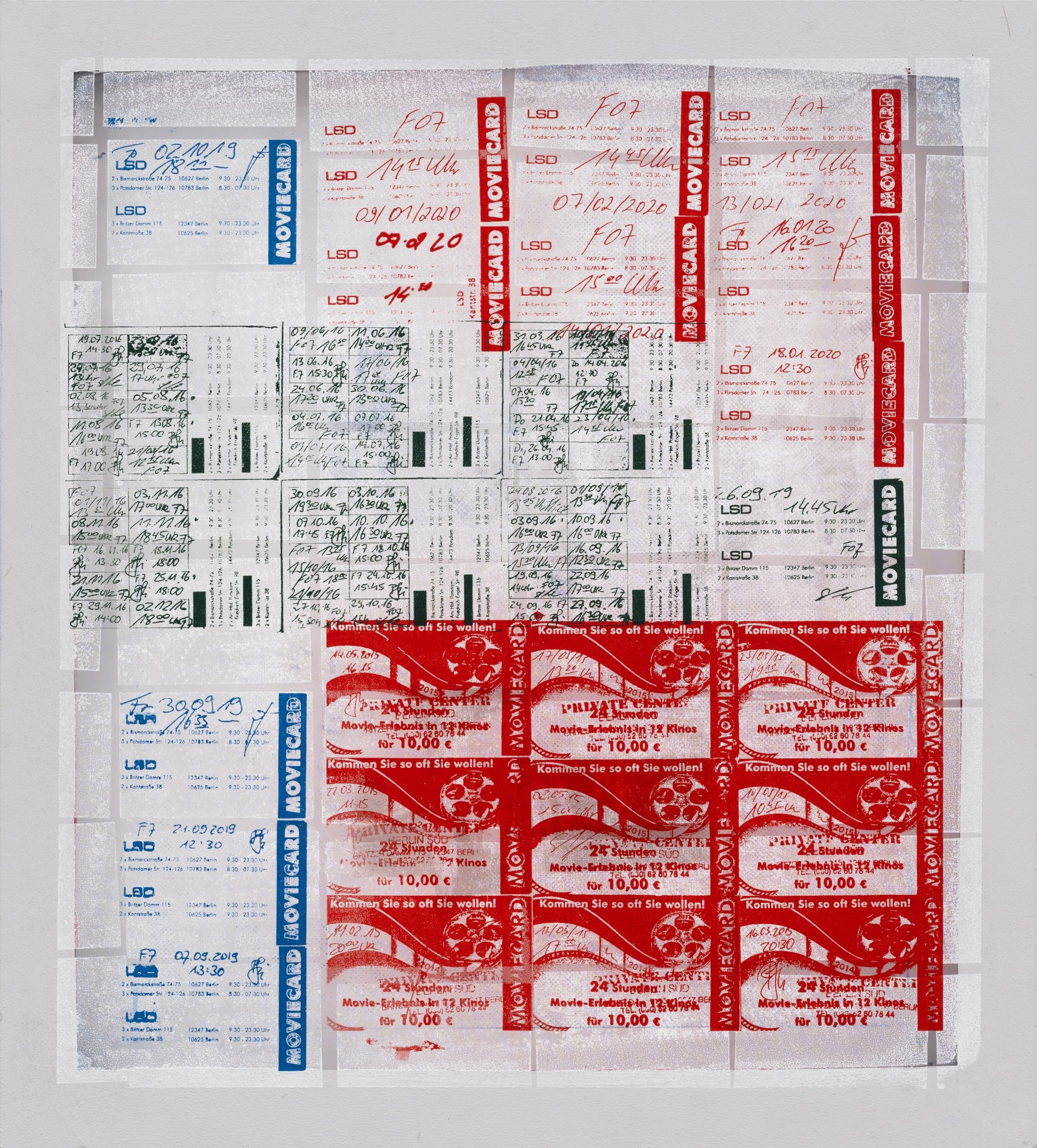
Indeed, Sameshima made sure to take several pieces with him, holding on to the tickets from his frequent visits to these theatres—ephemera reproduced in his solo show The Intervals at Page (NYC) and Dracula’s Revenge as a series of silkscreen prints, arranged and abstracted in a grid-like structure, overlaid with “ghost images” of previous prints. Sameshima’s work, more broadly, pursues ghosts—whether of people, places or practices.
Dean Sameshima: I’ve always held on to things that mean something to me. Over time, some of these collections have been thrown out, sold or given away, but a few have been with me for decades. Sometimes, I didn’t realise how important they were until much later.
These [ticket] cards have personal meaning, and form a record of a decade, showing how the business has changed over time. The number of locations presented on the cards have decreased between 2015 and 2025, while the prices have increased. Each card is individually signed by the employees selling the tickets and these signatures, too, have changed over time.
All of this shows shifts in the economy, and a loss of interest in spaces that once thrived. In the fall of 2017, PrEP (Pre-Exposure Prophylaxis) was made available in Berlin; then in March 2020, Berlin had its first Covid-19 lockdown, which affected these types of social spaces. These collections don’t only have value to me; I believe they present ideas that can be translated into something beautiful and useful beyond their intended use.

DS: My collection of vintage concert flyers, T-shirts and ticket stubs.
DS: I love what his VIP drinking ticket paintings reference and signify. It’s a portrait of sexual liberation and decadence—and a portrait of a time right before AIDS, just before the party ended. Now that we’re in a period some will call “post-AIDS”, because PrEP has been made available to the public, my tickets represent a newer kind of decadence and sexual liberation.
“These collections don’t only have value to me; I believe they present ideas that can be translated into something beautiful and useful beyond their intended use”
DS: In silk-screening there is the term “ghost image”, which happens when the screen is permanently stained by the previous images it’s printed. Most of the time these aren’t harmful for the continued use of the screen. Other times, the screens are underexposed and the emulsion won’t wash out, which ruins it. It has to be thrown out or re-stretched, which is oftentimes more expensive than buying a new screen.
I like the idea of repurposing the screens and having my past haunt the current works. It makes me think of the past haunting me—something that won’t go away, good or bad. That history has informed me and brought me to today.
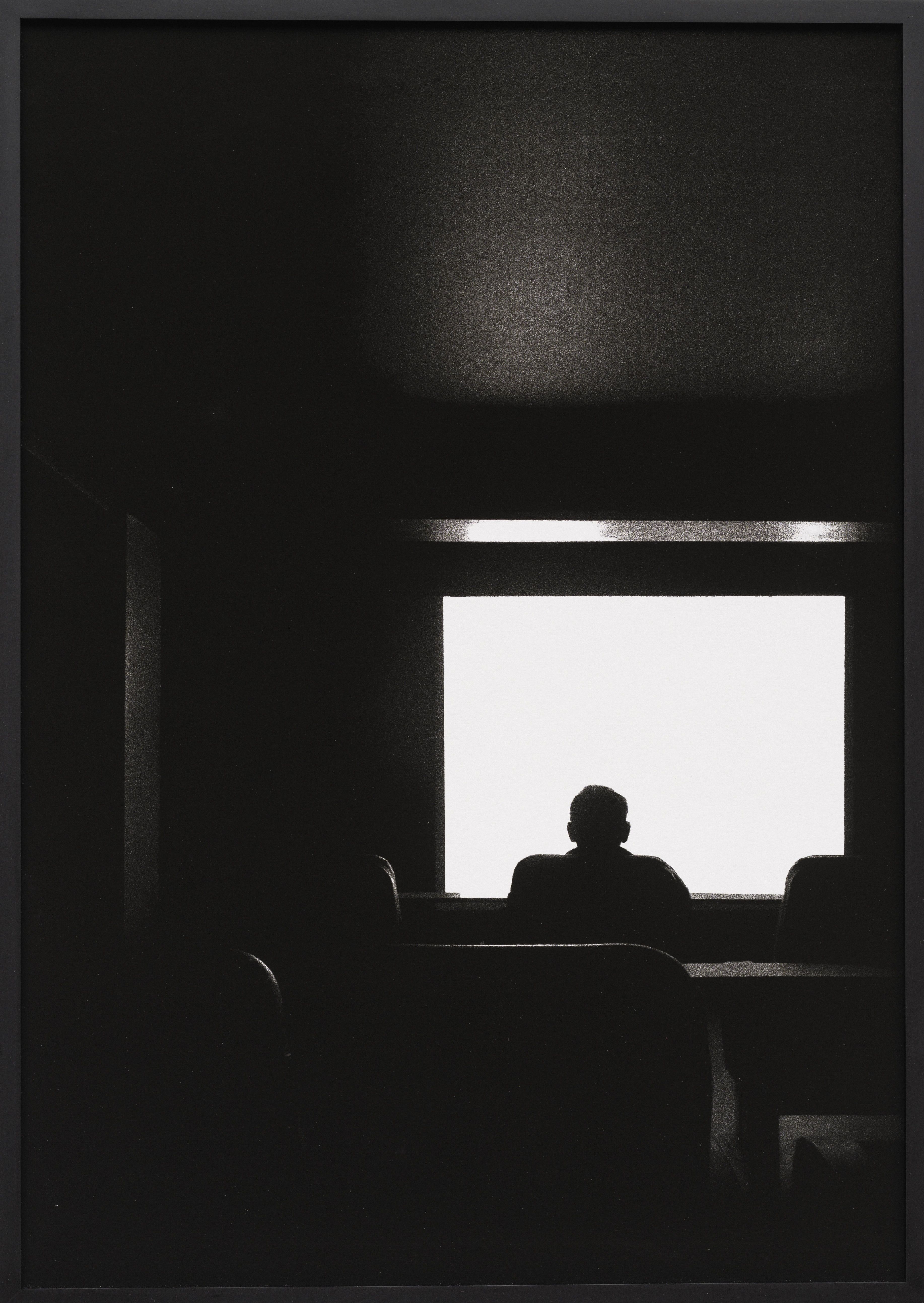
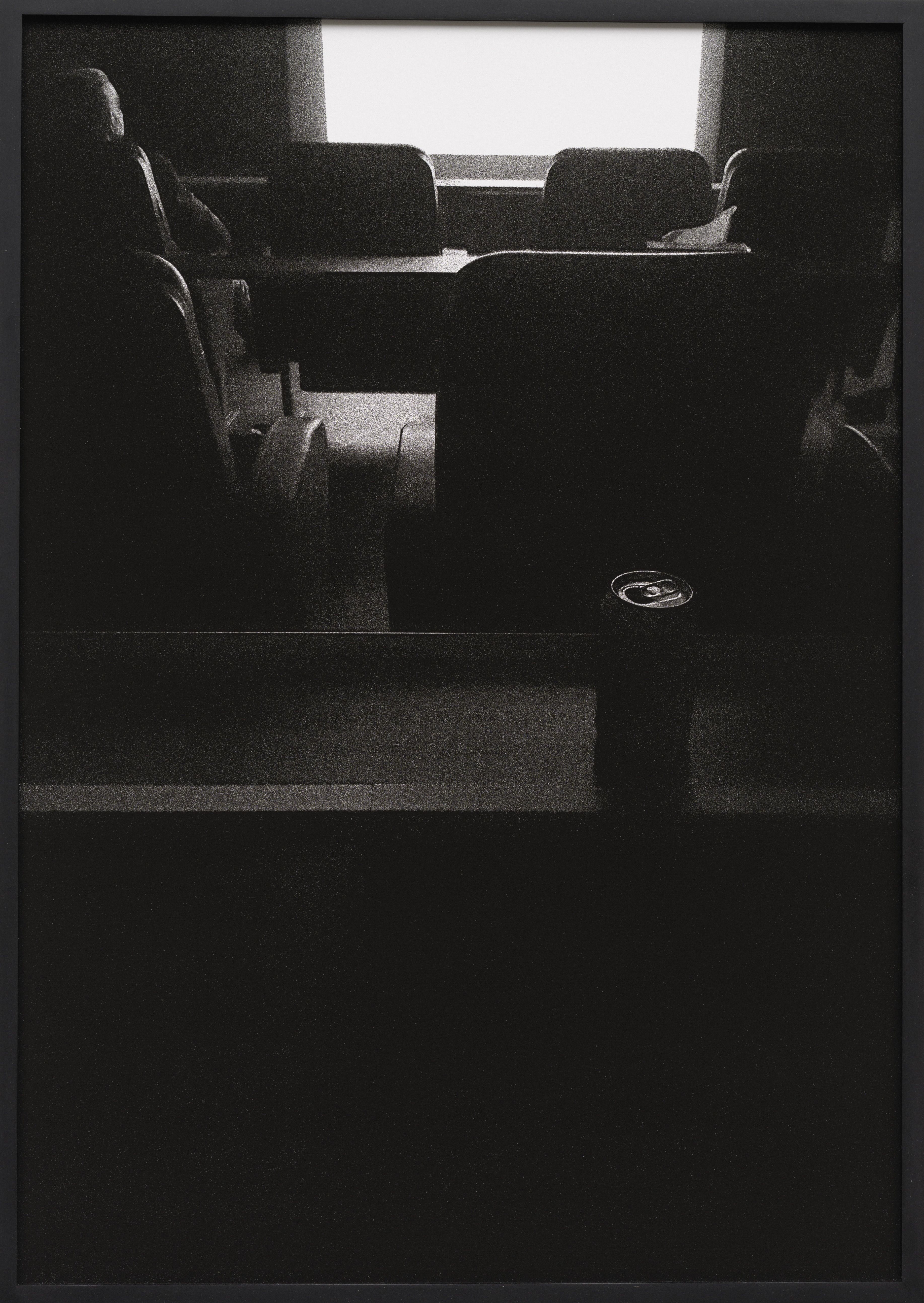
DS: You are not reading too much into this. That’s what I hope my work can deliver: readings that extend outside my initial intentions.
I wanted the works to look like prints made from 35mm black-and-white film with a high ISO, which gives night photography—or low-light photography—its contrast and grain. So there is deception with the process. I am not a fan of digital pixellation. My eyes are used to seeing grain in a photograph.



A respected voice in contemporary art discourse.
Focusing on ambitious storytelling and insightful art-world commentary. Ocula Magazine publishes in-depth interviews, critical essays and timely analysis on the artists, exhibitions and ideas driving the global art world.
Learn more about Ocula Magazine
Showcasing the best of the art world.
Ocula partners with galleries from around the world to highlight their artists, artworks and exhibitions. Gallery membership is by application and invitation, with each member vetted by an independent panel.
Learn more about Ocula Membership
Specialises in the sale of major artworks.
Led by a team with deep ties to the world’s leading auction houses, galleries and collectors. Ocula’s advisory team offers bespoke services to high-net-worth clients from around the world who are looking to acquire the best of contemporary and modern art.
Learn more about our team and services