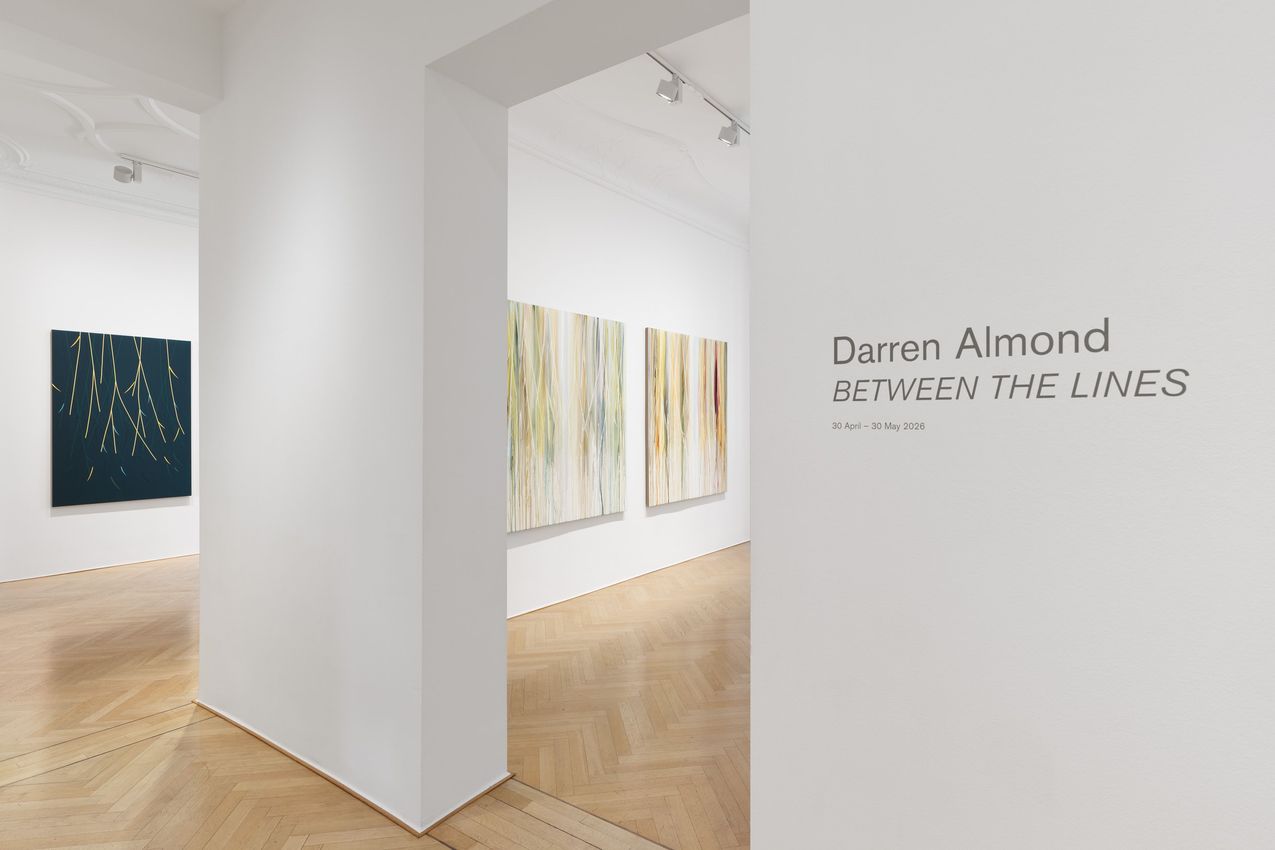
Galerie Max Hetzler, Berlin, is pleased to present Between the Lines, a solo exhibition of new works by Darren Almond.
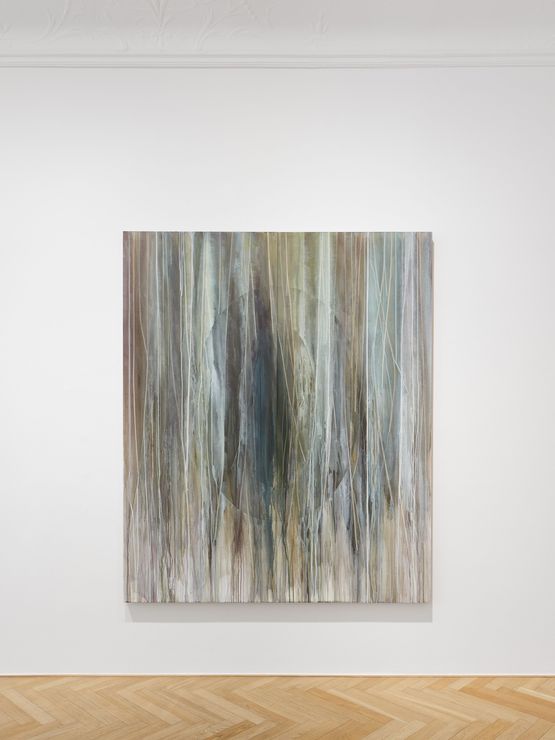
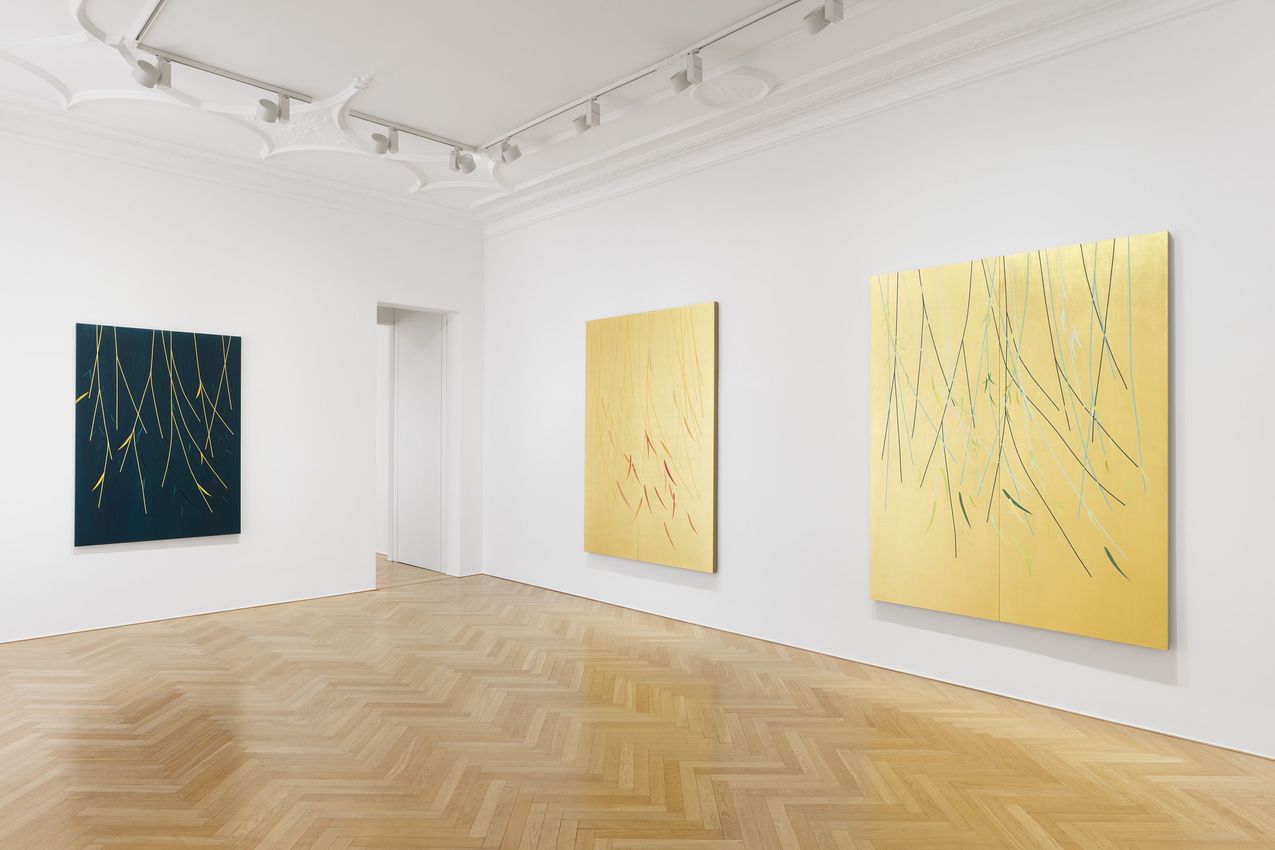
In the first gallery, Almond’s large-scale painting Monolith acts as an underlying manifesto for the rest of the exhibition. A clearly defined zero emerges from its arboreal background, a form with multiple readings as a conceptual symbol: from the signalling of infinity, to the vanishing point of perspective, to Buddhist philosophies of ‘nothingness’. The zero as a figure can act as both a beginning and an endpoint, where life and presentness sit within bracketing eternities – a brief, luminous interval between birth and death. Here, its form is intertwined with that of the suspended, naked branches of a willow tree in winter, as if seen while sheltering under its canopy, looking outwards to an undisclosed horizon. The use of highly diluted pigment across the canvas echoes the way water caresses a willow’s branches during a rainstorm: the act of painting mirrors the physical behaviour of rainwater cascading under Earth’s gravitational pull, completing the water cycle and circle of life.
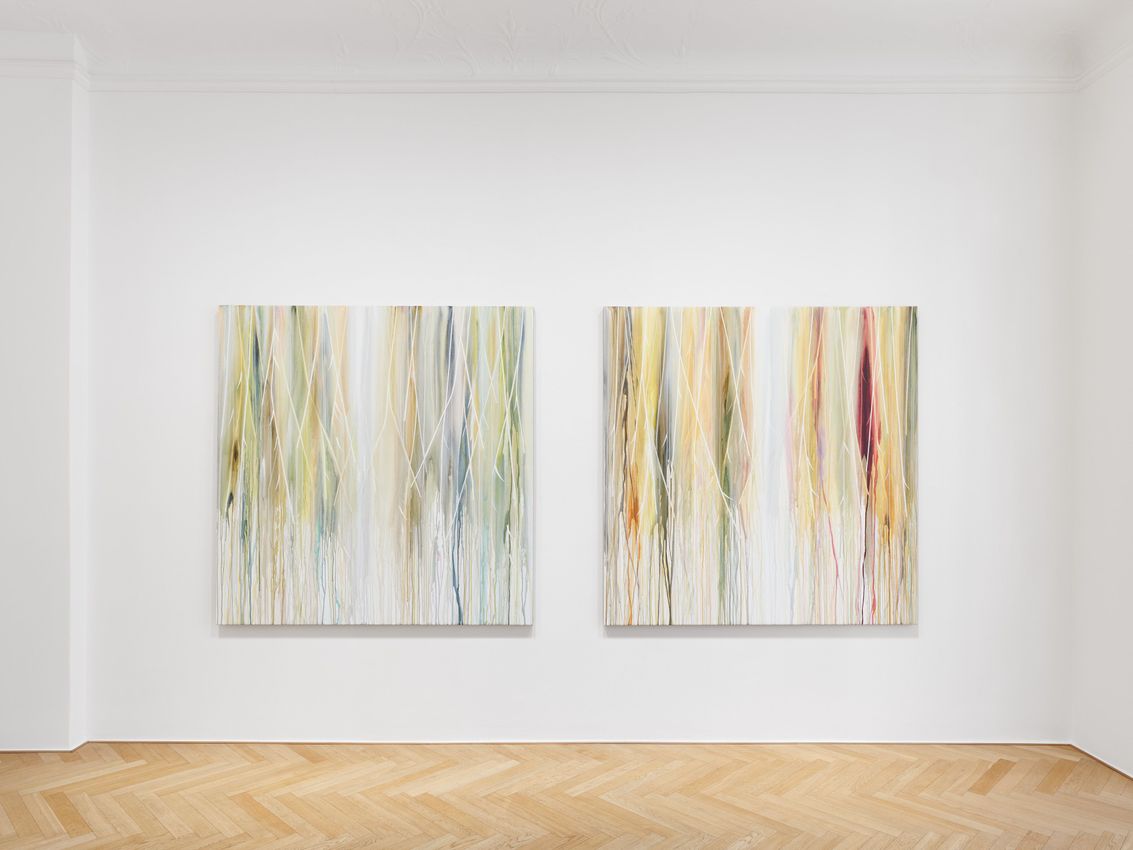
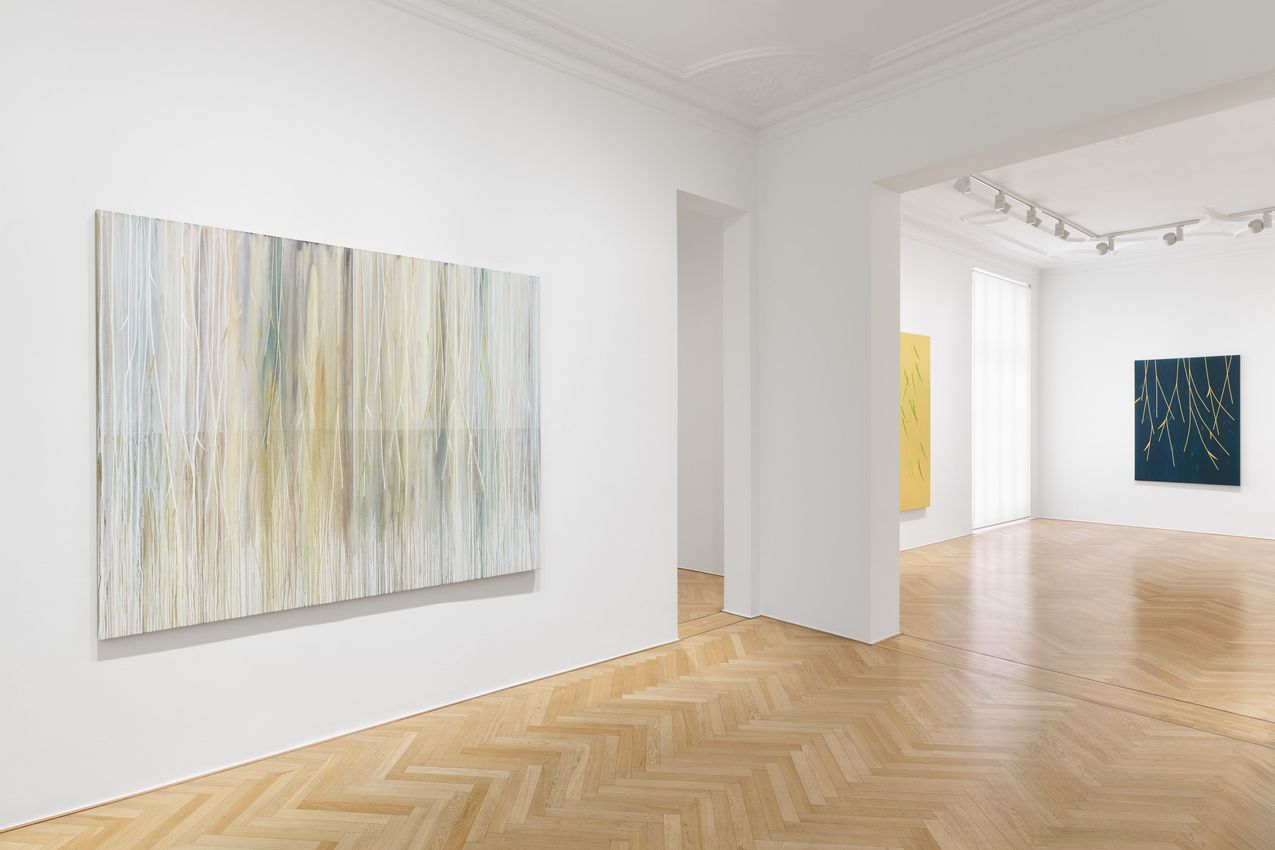
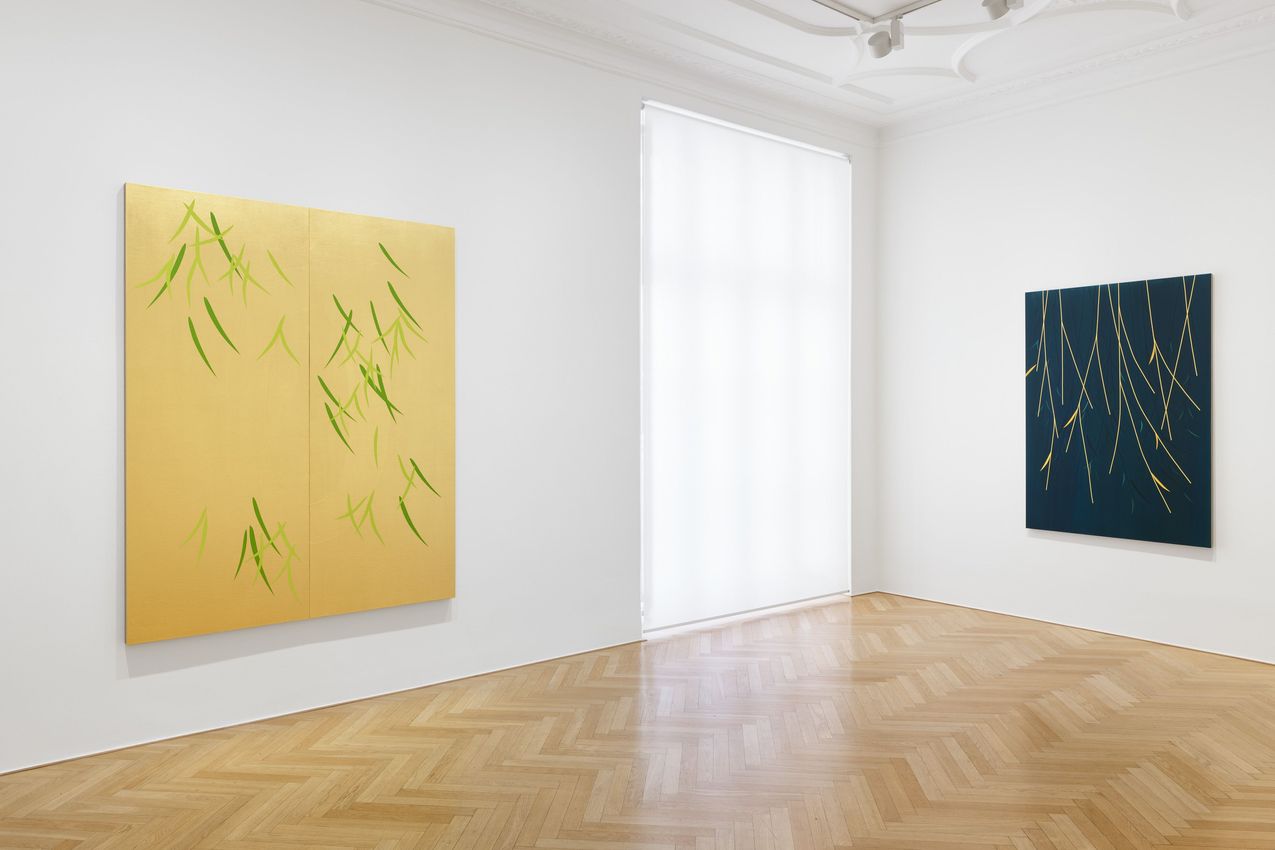
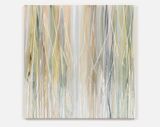
The willow, a tree intrinsically linked to water, becomes a symbol of cyclical processes throughout the exhibition. In Almond’s Downpour paintings, which vary in palette according to the seasons they evoke, drip-marks and washes of diluted pigment register both subtle and heightened emotional shifts in atmosphere and seasonal time. Across these canvases, the willow motif reappears as a negative imprint, ghostlike and defined by absence: a place where real time and memory collide. ‘I had this moment as a young boy,’ Almond recalls, ‘of being completely overwhelmed by the intensity of sunlight, of its reflection across the surface of the water, the silhouetted backlit branches of a willow hanging over the pond, the intense contrast of it all. It’s an incredibly sharp, crystalline memory, and it’s one I’ve carried for almost fifty years. When you hold onto memories for such an amount of time, they start to solidify, they inform and become you, become something more than themselves. That’s why I felt it necessary to investigate this “something” I’ve cherished for all these years – memories veiled by the prismatic light of experience.’
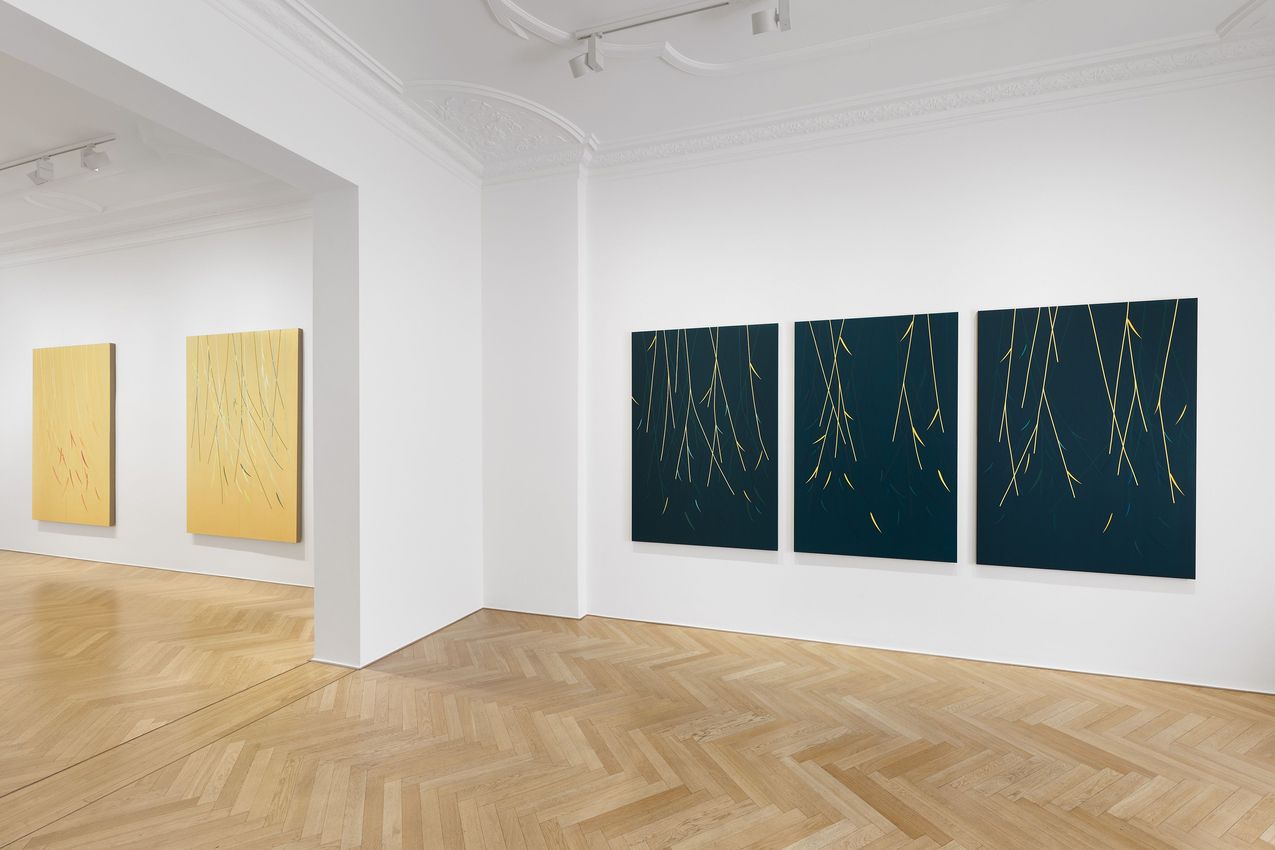
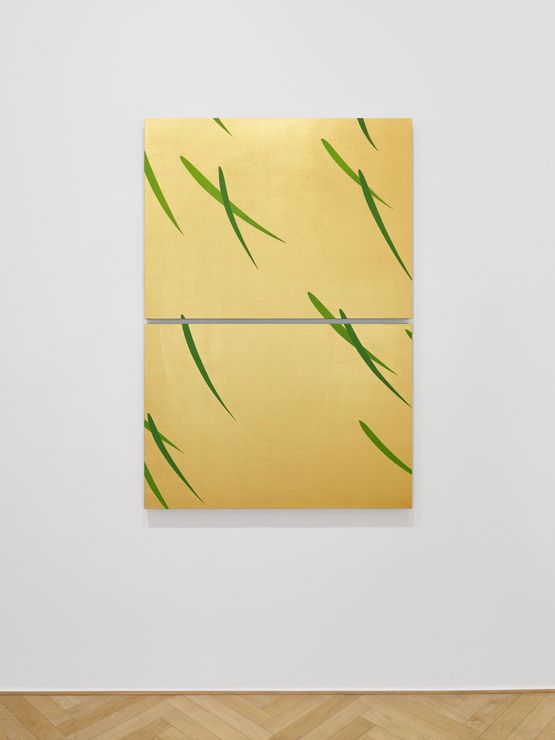
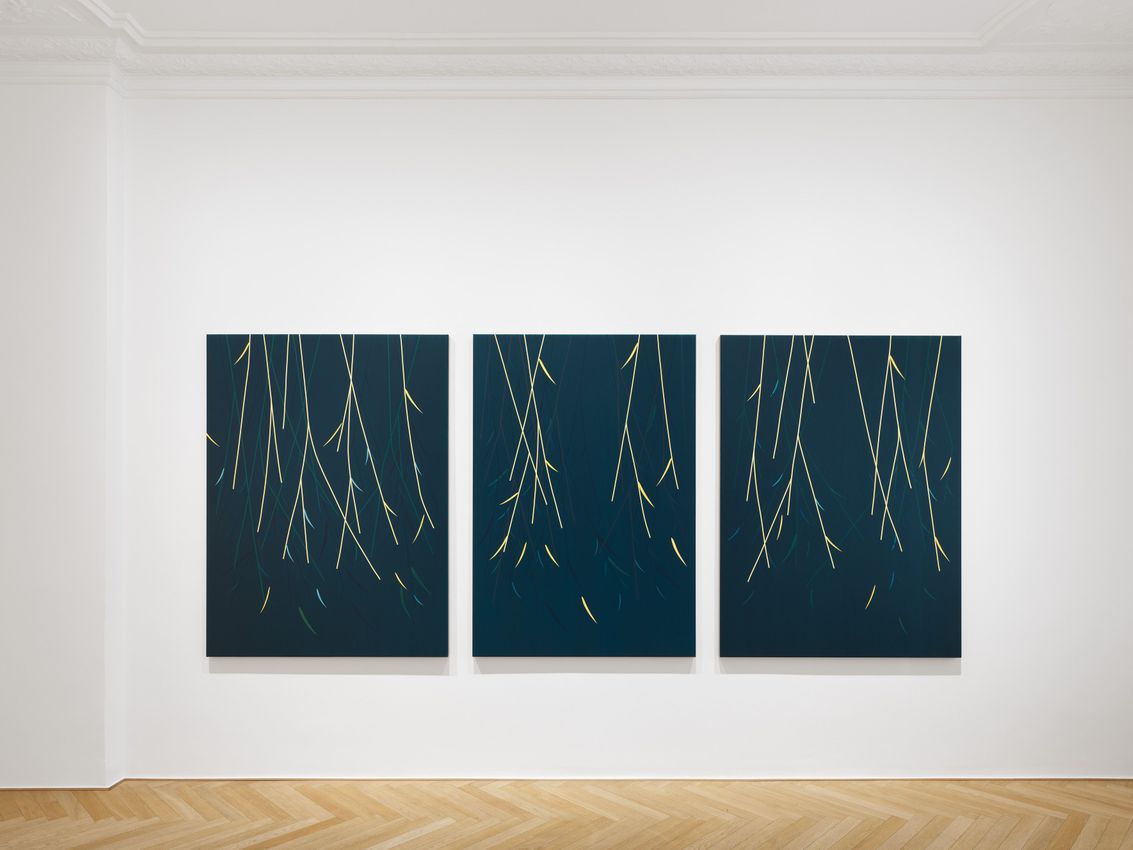
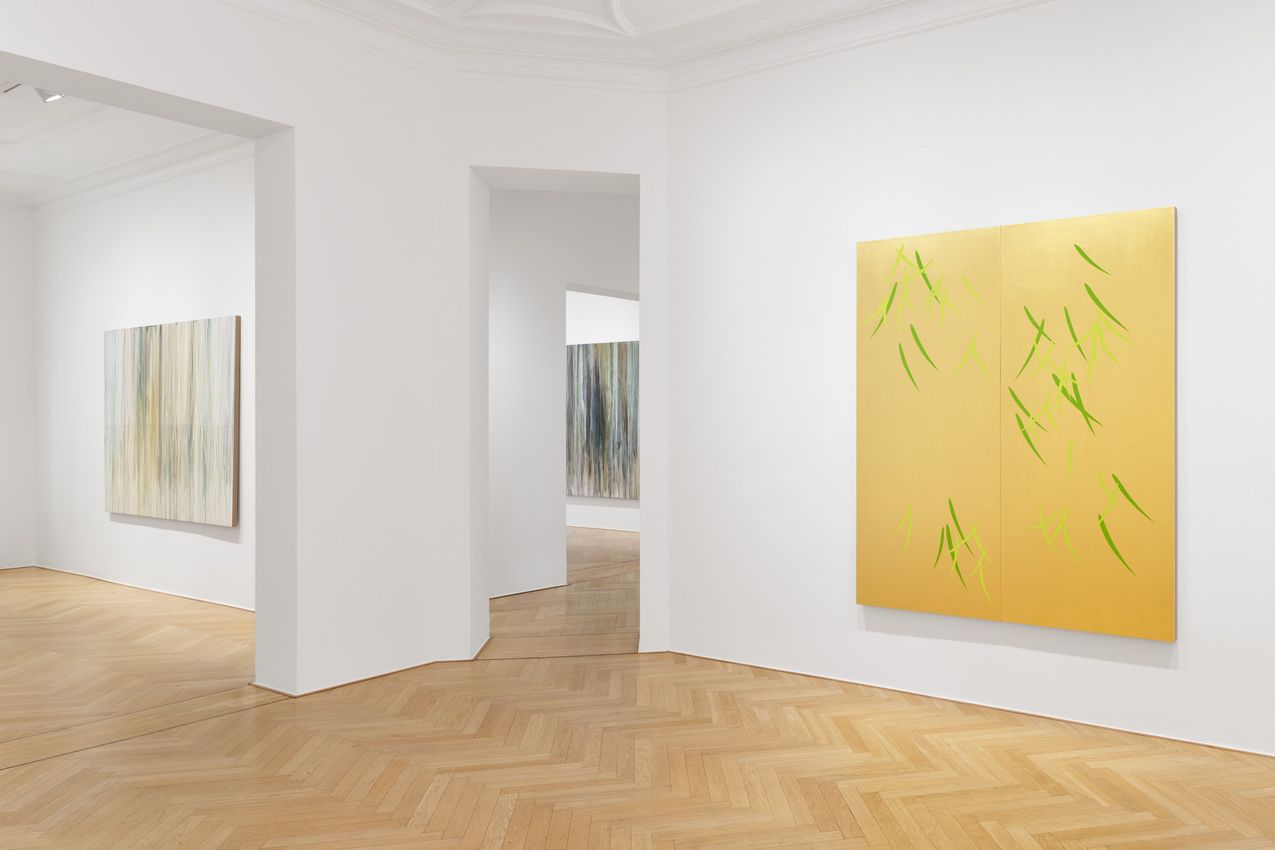
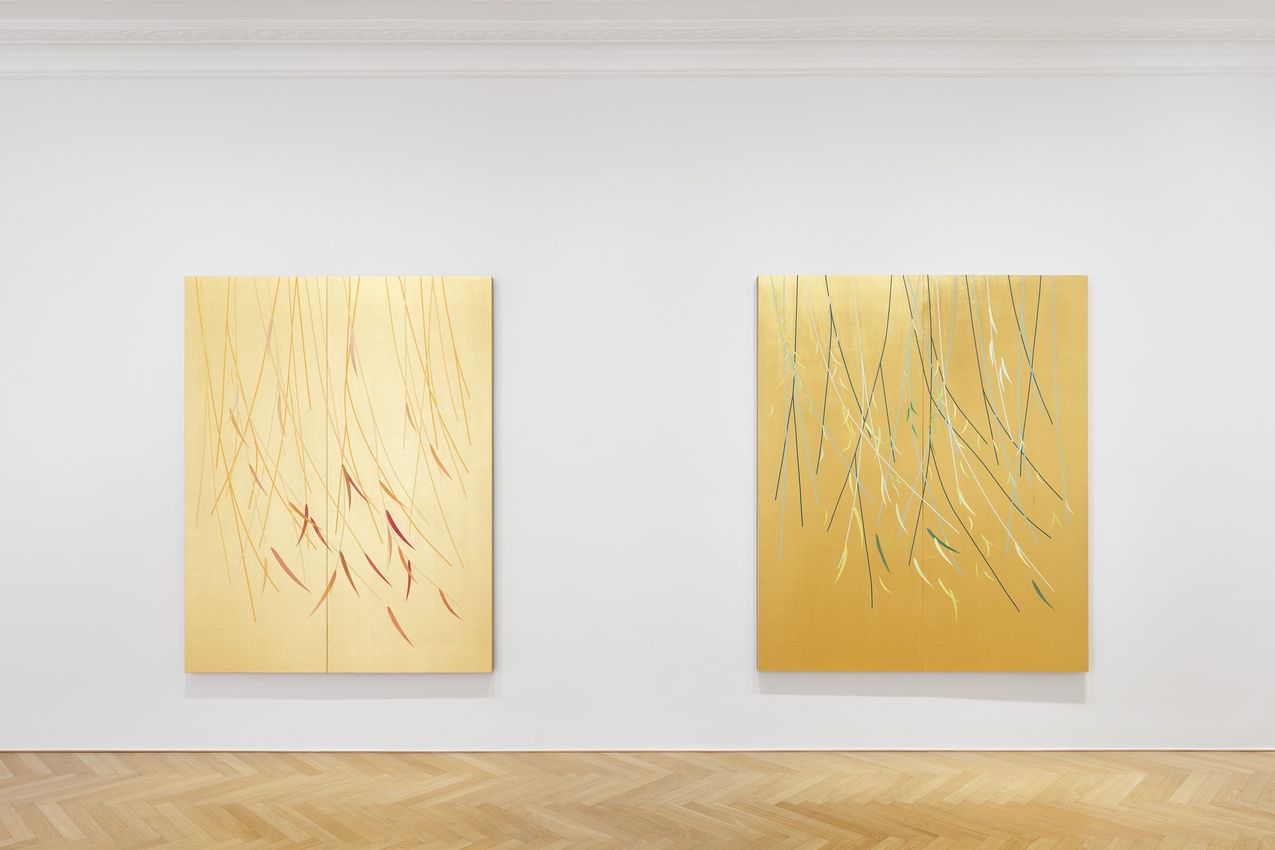
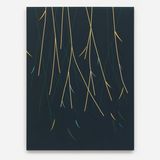
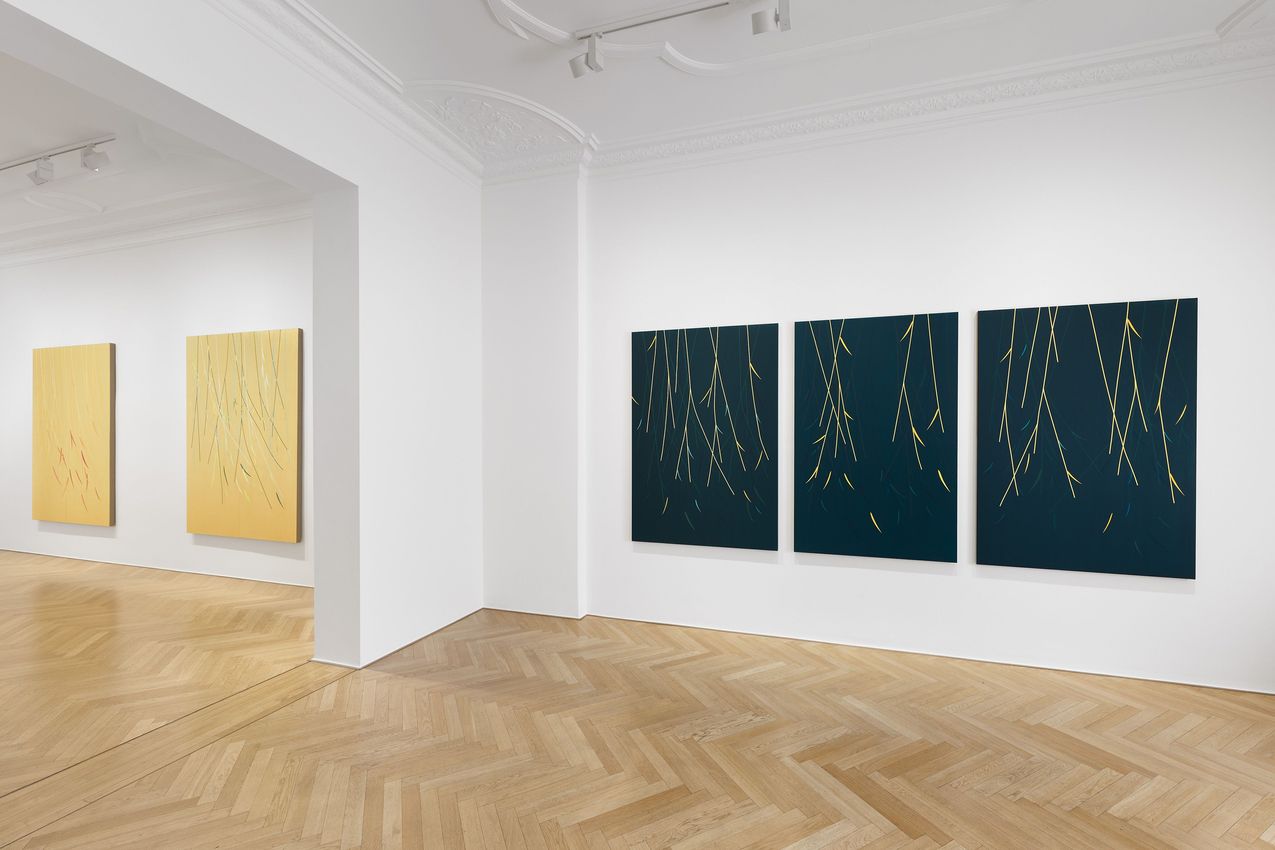
In the next gallery, which overlooks the street, the artist relocates us to a more urban placement, though still in conversation with the willow: he casts us into a nocturnal timeframe to view the same tree, now artificially lit by streetlamps or headlights. In Almond’s Night Willows, image and retinal after-burn play a role in defining the paintings’ depth, duration and exposure, revealing darker pathways within the compositions. The starkness of nighttime is heightened by the adjoining gallery, where scale is increased and contrast is maximised. Large panel works, gilded in gold, reflect and refract the ever-changing, ever-present daylight of the gallery space, positioning the viewer in the present tense. Through subtle variations of temperature and colour these paintings reaffirm the artist’s interest in transition and the mutability of nature throughout the seasons. The gently swaying foliage, depicted in bright hues of green in Early Spring, gradually shifts to deep reds and oranges in Late Summer. In Spring/Summer the branches are omitted, evoking leaves backlit by bright golden sunlight. The motif of the zero recurs as a grounding presence, barely discernible against the glistening grounds.
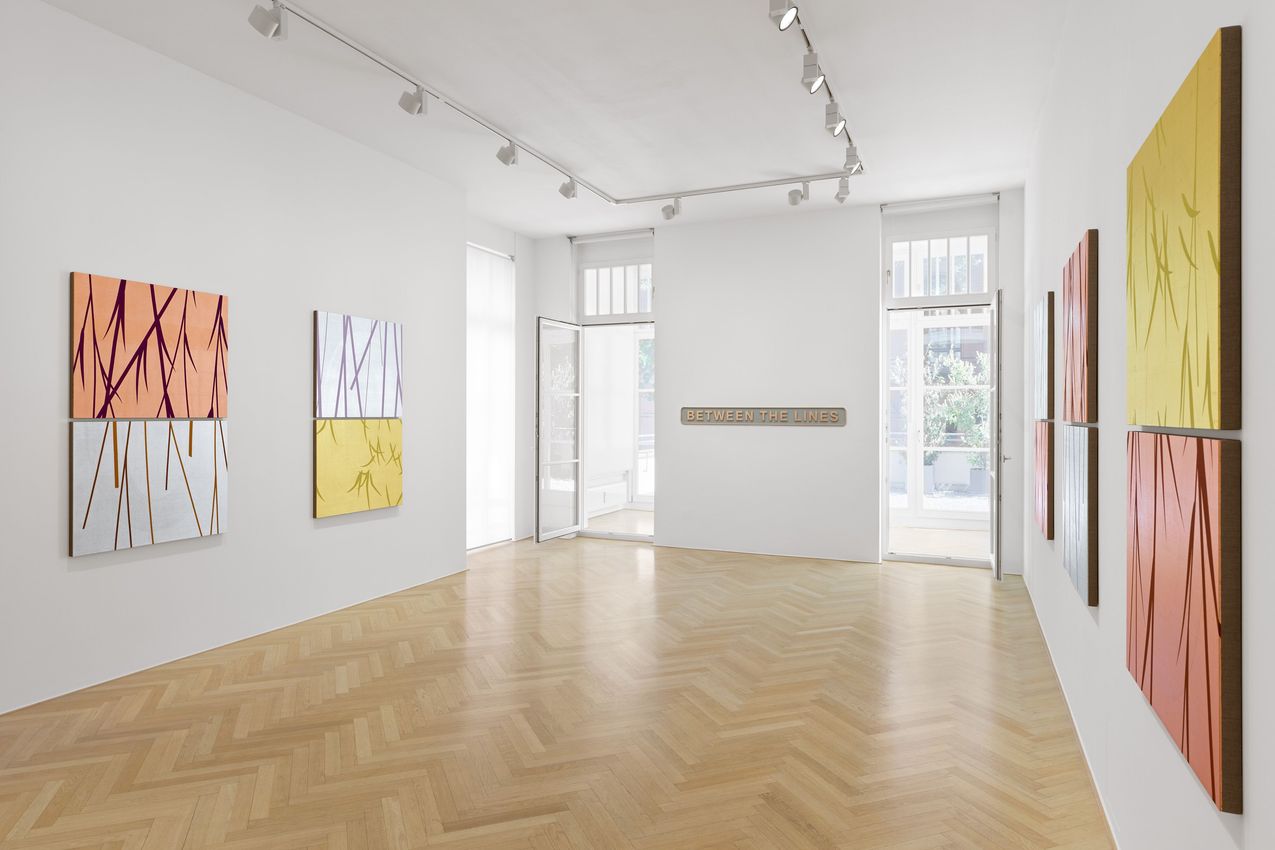
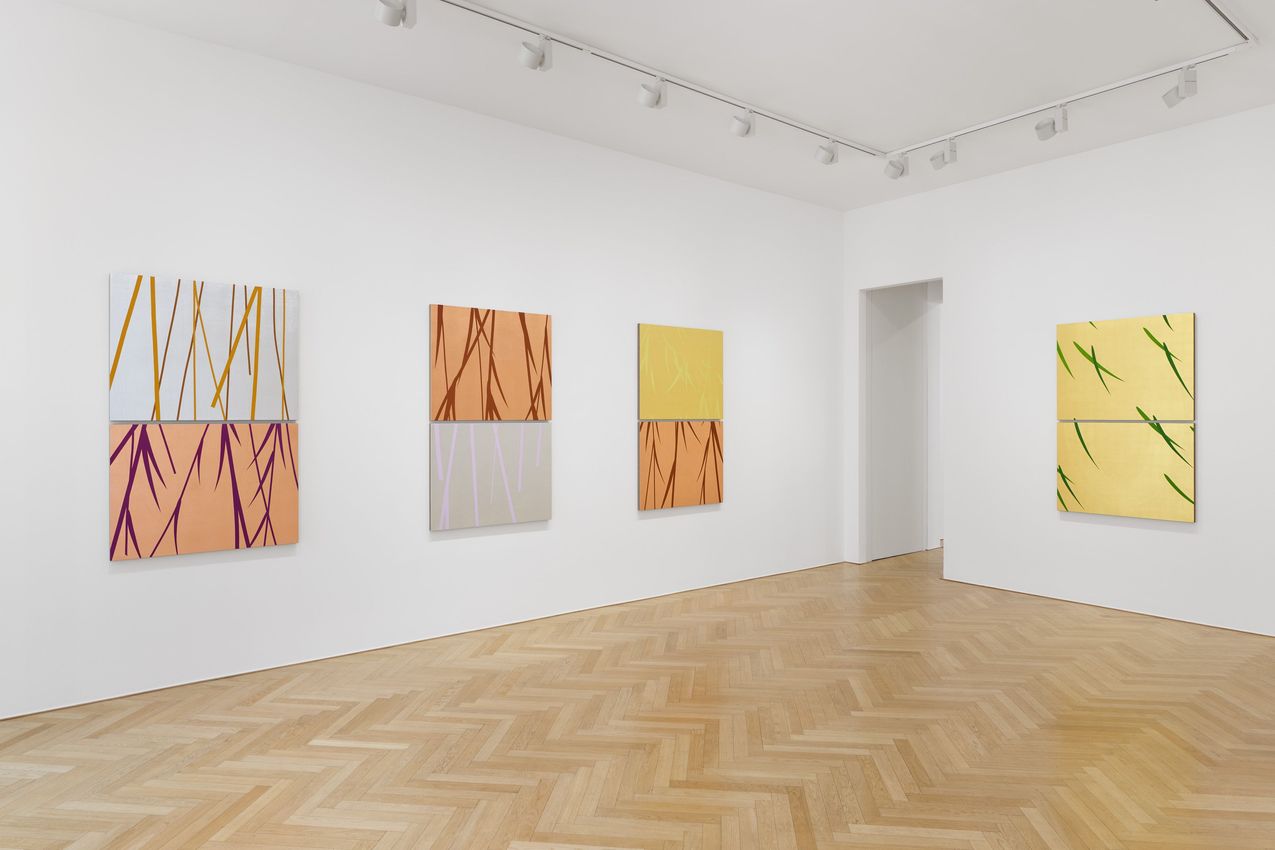
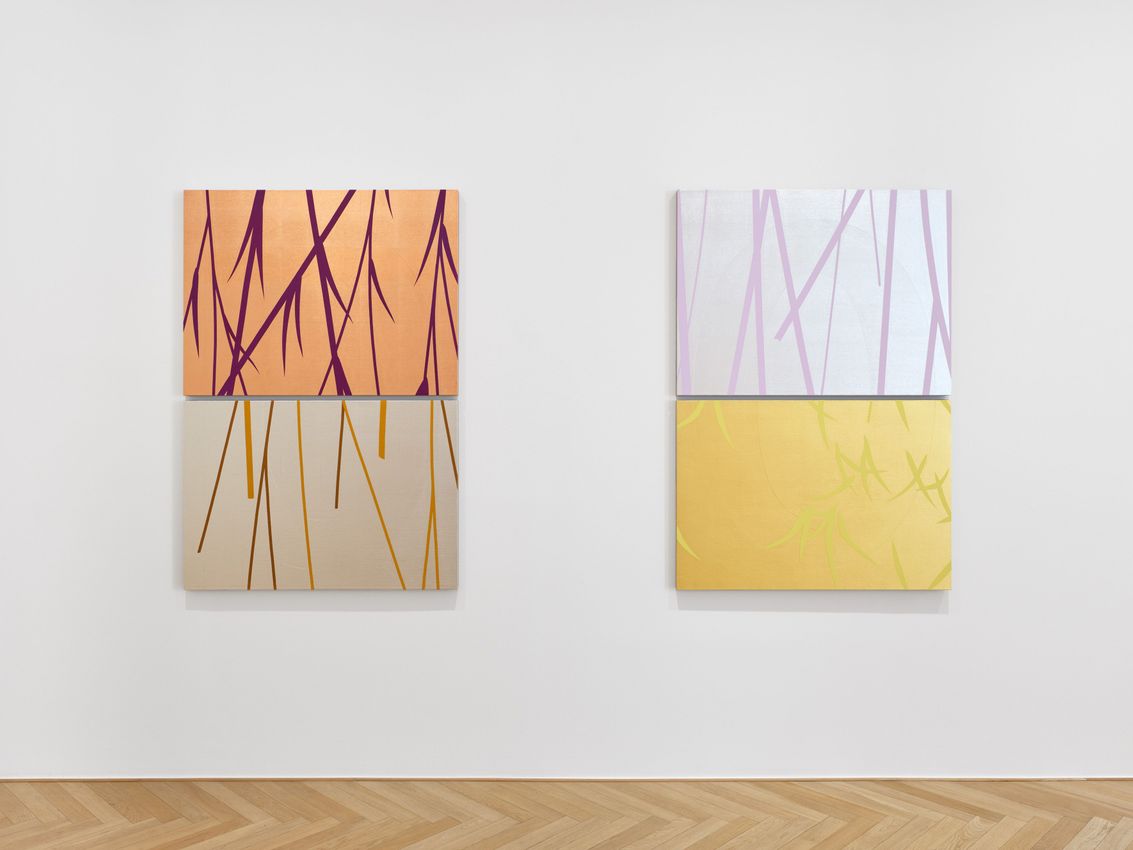
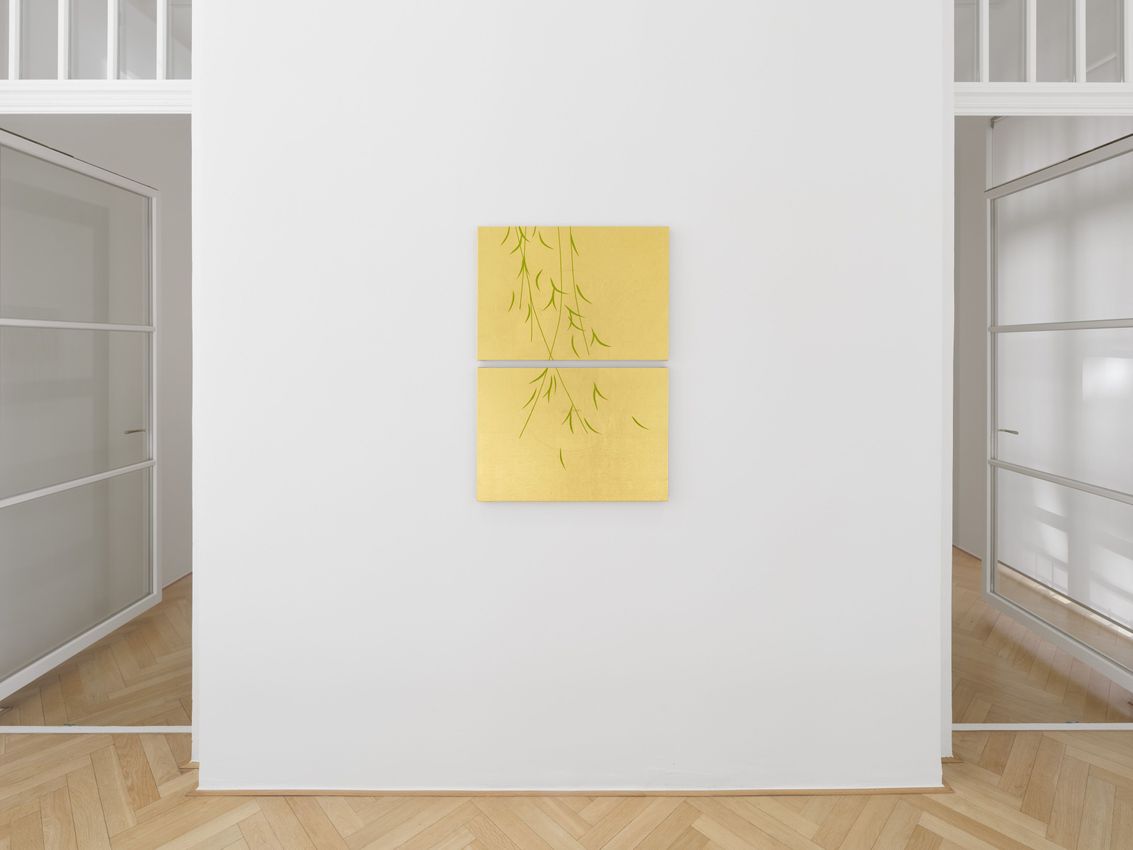
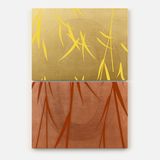
A shift in scale, perspective and format takes place in the final room, where Almond’s two-panel, horizontally divided Senryū Carousel paintings convey a close-up of the willow, immersive and abstract. Until now, the horizon has been undisclosed and distant – here it becomes a physical, all-surrounding presence. The extrapolated mechanics of time and the excerpts from differing seasons are juxtaposed with one another, marking a calendar that is at once past, present and future. Bringing together copper, aluminium and gold in two-tone formations, the works are imbued with a rich vibrancy and depth of colour. The zero once again unifies these paintings, debossed within the ground of the work: spanning both panels of each diptych, the viewer must complete the cycle in their mind’s eye. This inflection point, provided by the zero integer, acts as a quiet but central fulcrum throughout the exhibition, around which Almond’s mediations on change, impermanence and transition have evolved.
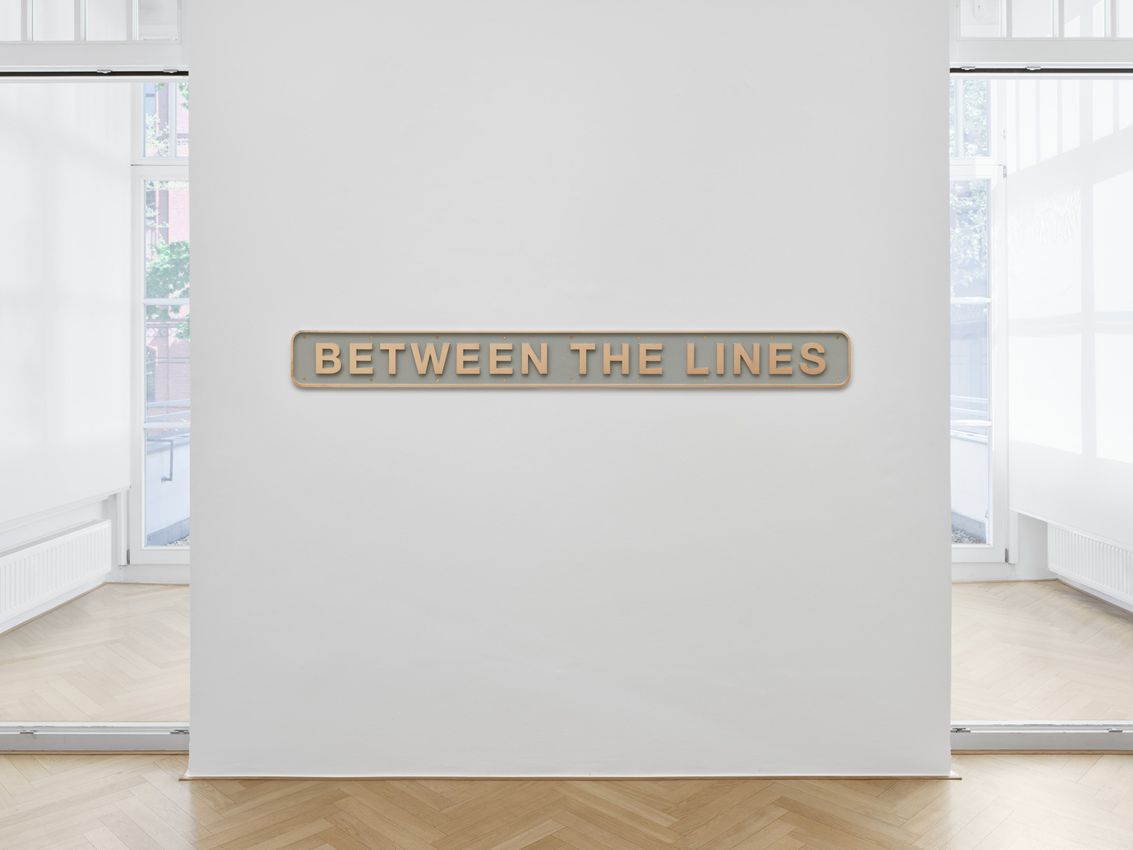
Activating negative space, the gaps between the panels form an intermediary zone of poetic meaning, allowing interpretation to unfold. This idea is made tangible in the exhibition’s final work, a cast bronze train-plate titled Train of Thought, installed in the gallery’s winter garden. Inscribed with the words ‘Between the Lines’, it invites a moment of stillness and pause, as we read between the lines and think not in words, but in the shadow of words.
Darren Almond (b. 1971, Wigan, United Kingdom) lives and works in Norfolk. In 2005, he was nominated for the Turner Prize, and in 1996 he was awarded the Art & Innovation Prize by the Institute of Contemporary Art, London. Almond’s work has been the subject of solo exhibitions at Museo Cappella Sansevero, Naples (2025); Jesus College, Cambridge (2019); Villa Pignatelli-Casa della Fotografia, Naples (2018); Mudam, Luxembourg (2017); Museum Sinclair Haus, Bad Homberg (2016); Kunsthaus Graz (2015); Villa Merkel, Esslingen (2011); and FRAC Haute Normandie, Sotteville-lès Rouen (2011), among others. Almond’s works are in the collections of the Art Institute of Chicago; Fondation Beyeler, Basel; Fonds National d’Art Contemporain, Paris; FRAC Auvergne, Clermont-Ferrand; Kramlich Collection, San Francisco; Musée d’Art Contemporain de Montréal; Museum Folkwang, Essen; Museum of Contemporary Art, Chicago; Palm Springs Art Museum; Tate, London; The Metropolitan Museum of Art, New York; The Museum of Modern Art, New York; Thyssen-Bornemisza Art Contemporary, Vienna; and Queensland Art Collection, Brisbane, among others.
For inquiries please contact Borbala Komjathy: borbala@maxhetzler.com


Darren Almond is a celebrated British contemporary artist whose works in photography, film, sculpture, and installation explore the boundaries of time, memory, and the act of journeying. Almond is known for his contemplative investigations into duration, movement, and the poetics of place—a practice that has earned him international acclaim, including a Turner Prize nomination and major solo exhibitions at leading museums worldwide.


Galerie Max Hetzler is a global contemporary art gallery representing nearly sixty artists across six spaces in Berlin, Paris and London, with an exhibition space and artist residency in Marfa. Established in Stuttgart in 1974, in its early years the gallery championed the generation of influential German artists emerging at the time including Albert Oehlen, Günther Förg and Martin Kippenberger and their international counterparts Christopher Wool, Jeff Koons, Robert Gober and Cady Noland amongst others.

A respected voice in contemporary art discourse.
Focusing on ambitious storytelling and insightful art-world commentary. Ocula Magazine publishes in-depth interviews, critical essays and timely analysis on the artists, exhibitions and ideas driving the global art world.
Learn more about Ocula Magazine
Showcasing the best of the art world.
Ocula partners with galleries from around the world to highlight their artists, artworks and exhibitions. Gallery membership is by application and invitation, with each member vetted by an independent panel.
Learn more about Ocula Membership

Specialises in the sale of major artworks.
Led by a team with deep ties to the world’s leading auction houses, galleries and collectors. Ocula’s advisory team offers bespoke services to high-net-worth clients from around the world who are looking to acquire the best of contemporary and modern art.
Learn more about our team and services