Press Release

Between 1977 and 1982, Nancy Graves created an extensive body of watercolours, including the Moonwater series, from which this exhibition takes its title. Among the most abstract works of her career, these watercolours grew out of natural history references, mapping, and scientific imagery that had informed her work since the 1960s. From October 28 through December 19, Perrotin New York will present the first focused overview of this important body of work, revealing its pivotal place within Graves’ oeuvre.

Nancy Graves (1939–1995) is best known for her paintings and sculptures, though her wide-ranging practice also encompassed drawing, printmaking, watercolour, and film. Her early work was informed by natural history, most famously in her 1969 Camel sculptures, recently exhibited at the Whitney Museum of American Art. Graves subsequently turned to systems of mapping and representation, drawing on satellite imagery, cartographic sources, and bathymetric studies of the ocean floor, for her paintings and works on paper. Her works transformed satellite recordings and maps of the Earth, Moon, and Mars into vivid, expansive landscapes, bringing the remote geographies and scientific discoveries of the Space Race into the realm of painting.

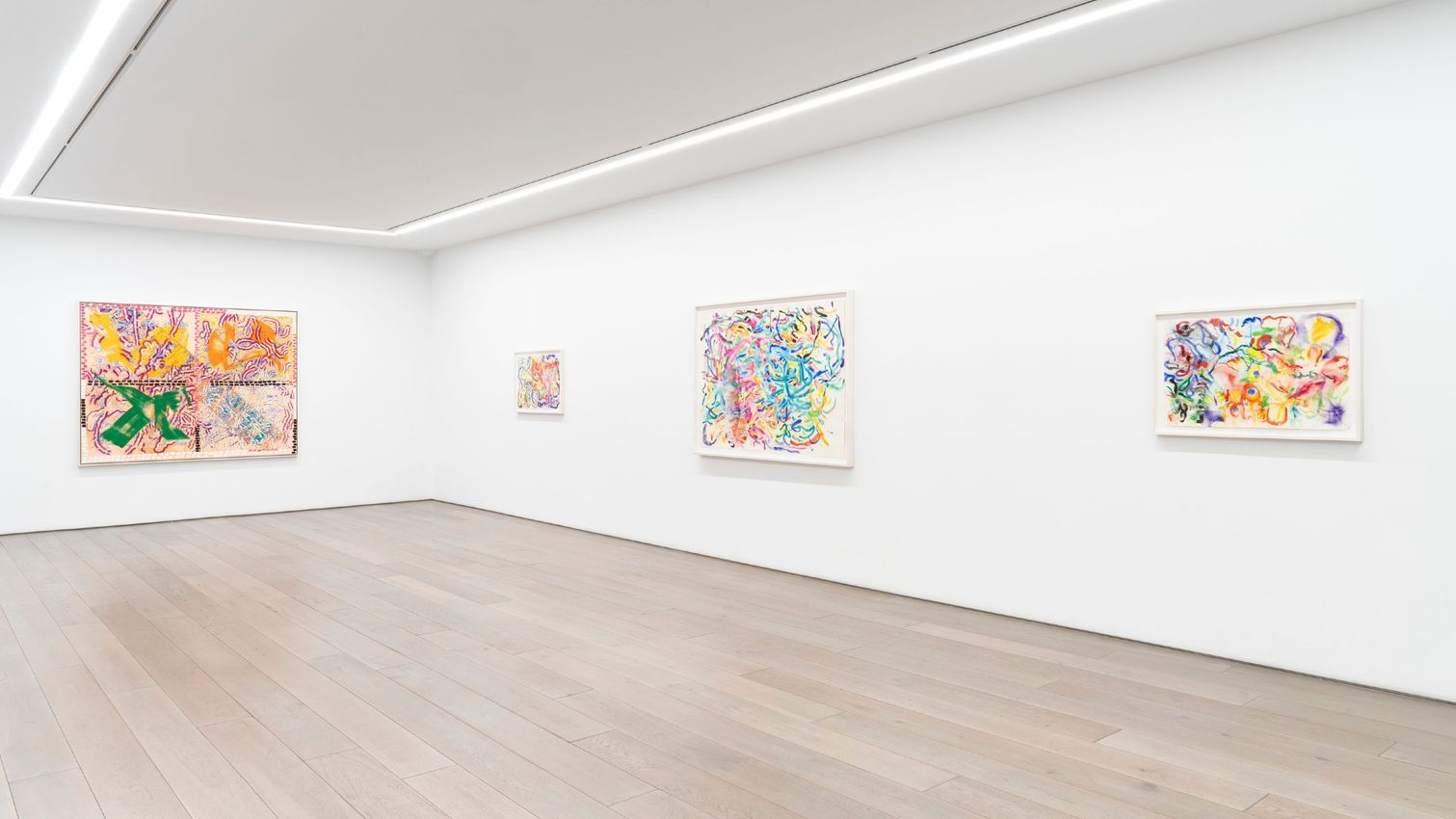
Moonwater brings together a range of works that reveal the breadth of Graves’ watercolour practice. Rather than abandoning her earlier sources, Graves allowed them to fragment and accumulate, opening scientific observation onto a more intuitive and associative mode of image-making. Works such as Vood (1978) combine translucent washes, dry brushwork, and spontaneous drips, while Owlo (1978), Strabo (1979), and Hide and Seek (1982) layer meteorological data, botanical forms, prehistoric cup-and-ring carvings, and abstracted snakes over shifting fields of colour.

The movement between systems and improvisation is central to Graves’ practice. Her titles similarly resist fixed meaning: alongside recognisable words such as Glint (1978) are enigmatic constructions such as Xycl (1978). Image and language operate according to their own internal logic, bringing disparate forms and sources together without resolving into a single narrative.

The atmospheric effects of the watercolours also resonate with Graves’ contemporaneous use of airbrush. In Where-There (1980), diagrams of insects and suggestions of archaeological excavation maps are overlaid with sweeping brushstrokes, collapsing precise systems of information into a dynamic field of gesture. The watercolour process itself encouraged this tension between control and chance. Working on paper that was wet on both sides, Graves had only a limited window in which to build the image. In a 1981 interview, she explained: “within about eight hours I have to make all the statements I’m going to be able to do. Because the water finally dries, and that’s the end of it.” Each work was therefore shaped by a sequence of decisions made in real time, as one gesture altered the conditions for the next.

The physicality of this process finds an important parallel in Graves’ engagement with the Trisha Brown Dance Company, with which she collaborated in the 1980s and ’90s, creating sets and costumes. Brown’s choreography made movement, duration, and gesture visible in space; Graves’ watercolours similarly register movement as a trace. Sweeping strokes, drips, abrupt shifts, and overlapping forms record the action of the hand while remaining suspended on the page. The watercolours thus function as a bridge between the systems of observation that defined Graves’ earlier work and the increasingly open, physical, and gestural language of her later practice.

Moonwater reveals a pivotal moment in Graves’ practice, as her longstanding engagement with scientific observation evolved into an increasingly fluid and open-ended visual language, in which data, imagery, gesture, and abstraction coexist and resist a single point of entry or interpretation.

Nancy Graves’ watercolours have never been the subject of a survey until now. Her works on paper are in renowned public and private collections, including The Metropolitan Museum of Art (New York, NY); The Frances Lehman Loeb Art Center (Poughkeepsie, NY); The Buffalo AKG Art Museum (Buffalo, NY); Le Frac Auvergne (Clermont-Ferrand, France); as well as the Ludwig Forum for International Art (Aachen, Germany).

—Juliette Theureau

Courtesy Perrotin.

Read More

Installation Views

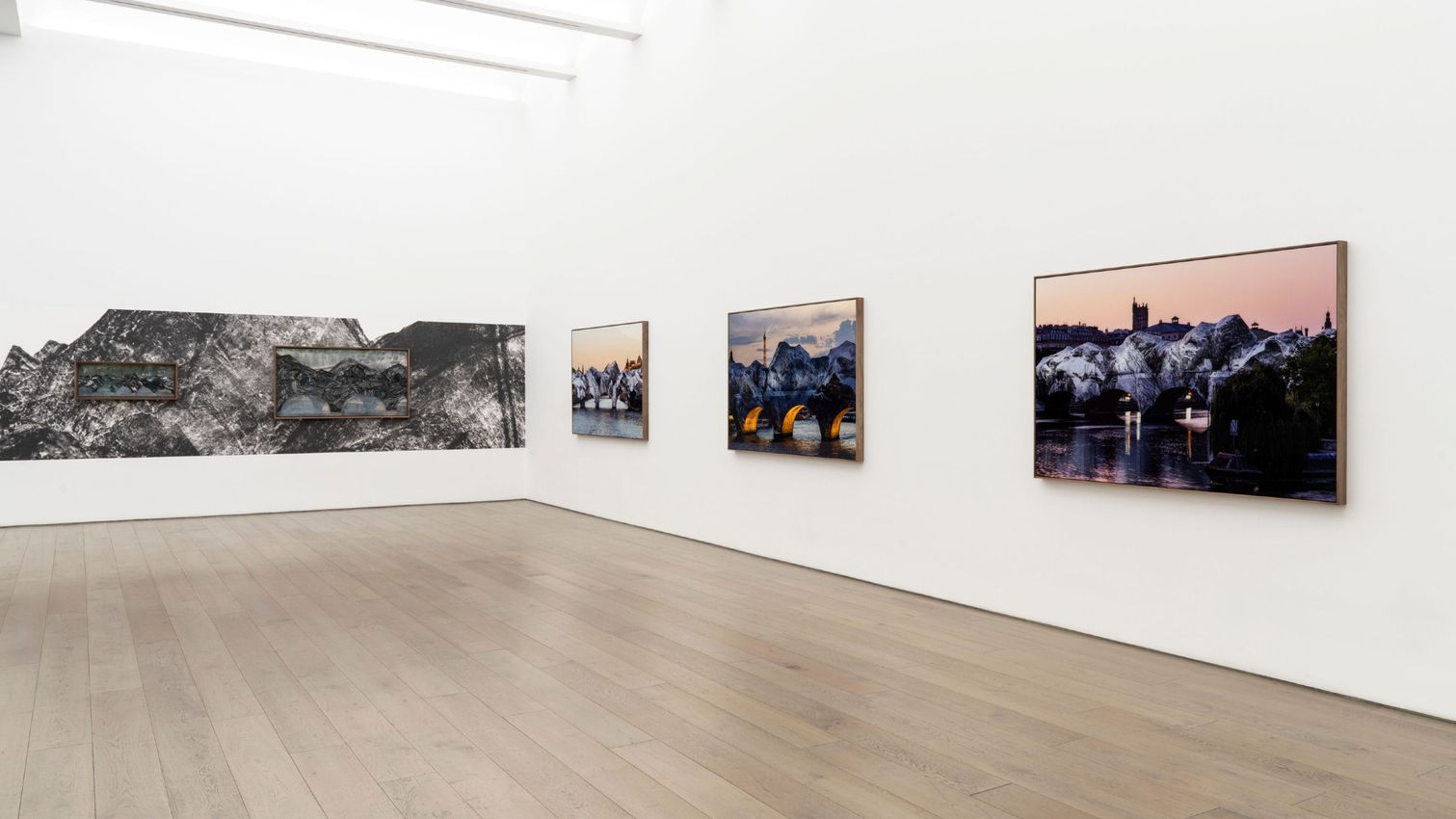
Exhibition view: Nancy GRAVES, Moonwater, Perrotin, New York (28 October–19 December 2026). Courtesy Perrotin.
About the Artist

Nancy Graves was a pioneering American artist celebrated for her diverse and experimental practice across sculpture, painting, printmaking, drawing, and film.

View Artist Profile

Also Exhibiting at Perrotin

About the Gallery
Emmanuel Perrotin founded his first gallery in 1989 at the age of 21. He has opened since then over 17 different spaces, with the aim of continuing to offer increasingly vibrant and creative environments to experience artists work. He has worked closely with his roster of artists, some since more than 25 years, to help fulfill their ambitious dreams and projects. The gallery is now based in New York, Paris, Hong Kong, Seoul, Tokyo, and participates in all the significant worldwide art fairs each year (Art Basel (Hong Kong, Miami, Basel), Frieze (London, New York), FIAC (Paris), Dallas Art Fair, Art Cologne, Art Stage Jakarta, Expo Chicago, Art021 & West Bund Art & Design, Shanghai, Zona Maco Mexico, amongst others).
View Gallery Profile
Address
130 Orchard Street
New York
United States
Opening Hours
Tuesday – Saturday
10am – 6pm
(1)
New York 130 Orchard Street
Perrotin
130 Orchard Street, New York, United States
+1 212 812 2902
http://www.perrotin.com

Opening hours
Tuesday – Saturday
10am – 6pm
The art world in focus