‘In my mind the “conventions” of the figure is what’s cool. Trying to makesomething different out of something that’s already been done to deathmakes me bend over backward, hold my breath and count to ten. I take apulse. It’s faint. But I feel it. It’s barely there. Flat line? Almost. But I holdon. Lay it on me. Give me some skin. Give me some bones. It’s just likethat The Mamas & the Papas song... “I’m in the mood for love.”’
– Richard Prince, 2015
Galerie Max Hetzler is pleased to present a solo exhibition by RichardPrince at Potsdamer Straße 77-87, in Berlin. This is the artist’s secondsolo presentation with the gallery.
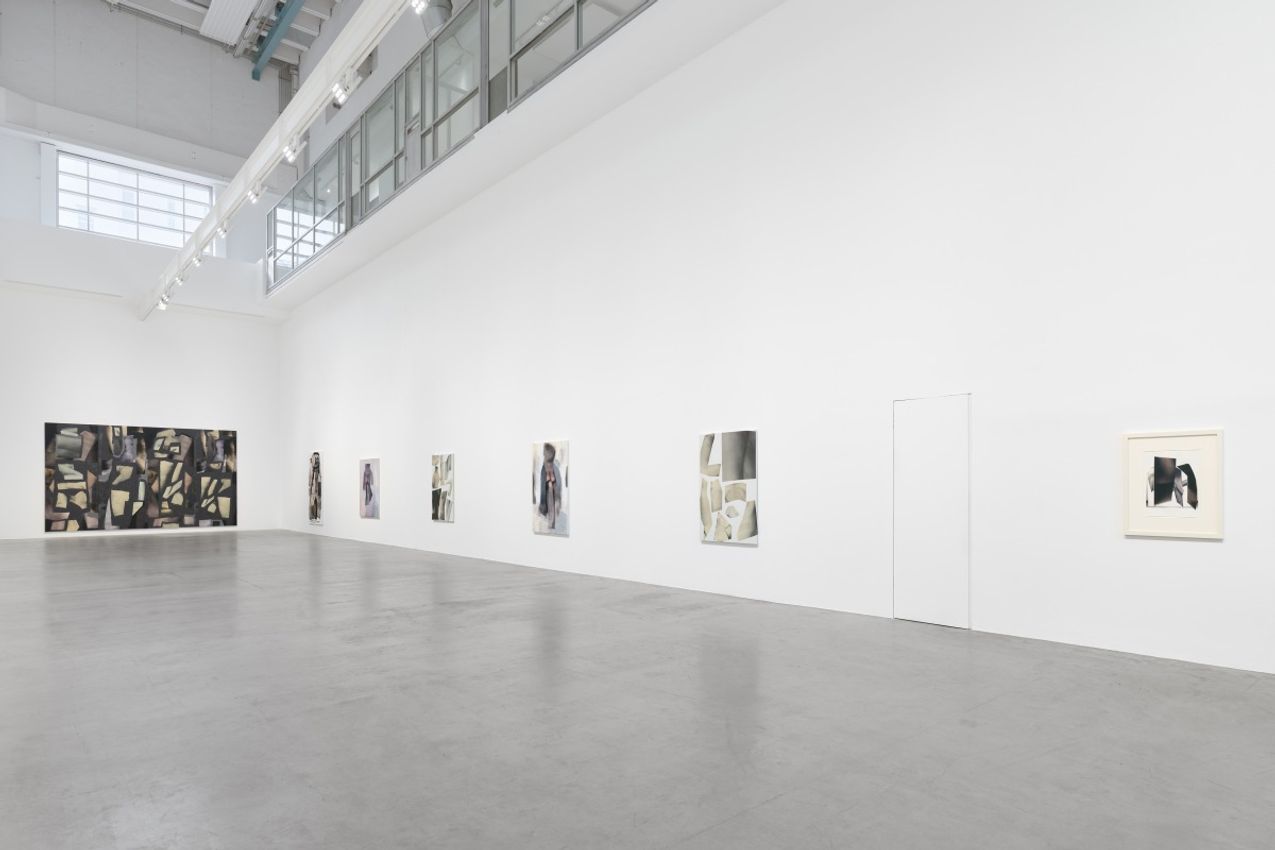
Cropped, pasted, painted and scanned, the exhibited works testify toPrince’s longstanding preoccupation with collecting and repurposingimages while placing a renewed emphasis on the importance of thecorporeal in his oeuvre. In these compositions, Prince splinters andreassembles photographic fragments of the female figure with varyingdegrees of legibility. The resulting collages assemble a new ‘body’,complicating notions of authorship and building on the tradition offigure painting.
Since the late 1970s, Prince has chronicled a wealth of images thathaunt the American psyche – from cowboys and biker chicks to cars,nurses, and gag cartoons. In 1977, while working in the tear sheetsdepartment of Time Life, Prince began rephotographing discardedadvertisements, removing all text before blurring, cropping, enlargingand, at times, grouping them for his own compositions. The humanfigure has also continued to be a crucial through-line, tracing back tothe artist’s studies in the late 1960s and the figure drawing classes heattended upon his move to New York in 1974. Thinking about humanflesh is ‘second nature’, Prince notes. ‘It grounds you and makes youthink about posture.’
Fragmented and removed from their original context, some body partsremain recognisable as breasts, buttocks, bellybuttons and torsos,while others appear entirely abstracted, their curvatures recallinglandscapes or dispersing into pure form. From up close, certain skinsare grainy and textured, while the glossy surfaces of others evoke thecool smoothness of classical busts.
Remnants of tape used by the artist testify to the physical constructionof these works, as do the visible brushstrokes that delineate thebackgrounds of the darker images. In some compositions, Princedraws over his collages, extending the reconstructed bodies to endowthem with grotesque feet, hands, and heads. Distinctions betweenprinting and painting, natural and artificial, as much as the artist’s bodyand the body of the anonymous subject, thus literally and conceptuallyconverge.
Since the late 1970s, American contemporary artist Richard Prince has interrogated symbols of American mainstream culture and desires, including masculinity, sexuality, celebrity, and consumer culture.


A respected voice in contemporary art discourse.
Focusing on ambitious storytelling and insightful art-world commentary. Ocula Magazine publishes in-depth interviews, critical essays and timely analysis on the artists, exhibitions and ideas driving the global art world.
Learn more about Ocula Magazine
Showcasing the best of the art world.
Ocula partners with galleries from around the world to highlight their artists, artworks and exhibitions. Gallery membership is by application and invitation, with each member vetted by an independent panel.
Learn more about Ocula Membership

Specialises in the sale of major artworks.
Led by a team with deep ties to the world’s leading auction houses, galleries and collectors. Ocula’s advisory team offers bespoke services to high-net-worth clients from around the world who are looking to acquire the best of contemporary and modern art.
Learn more about our team and services