




SEUNG-TAEK LEE
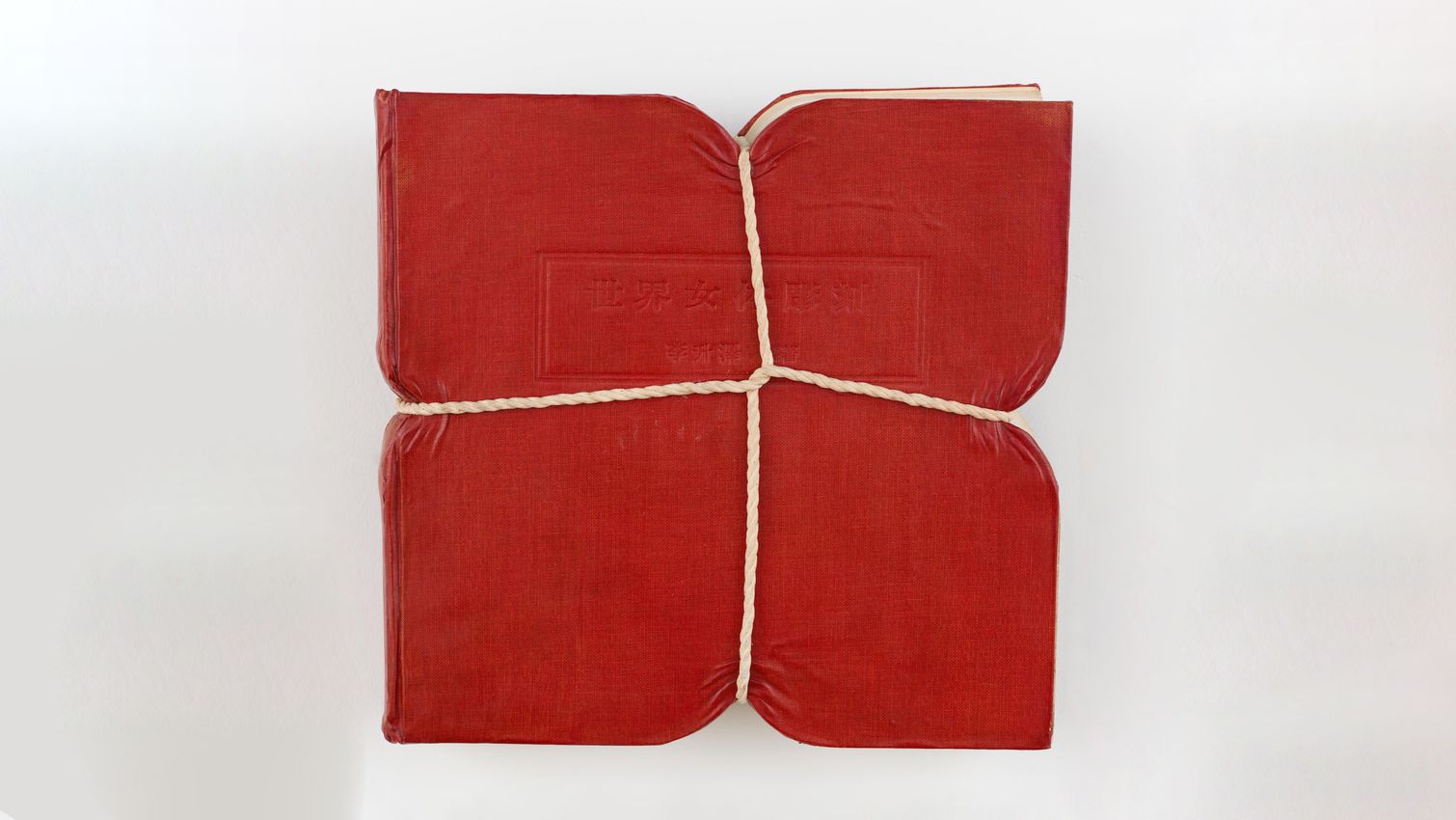
b. 1932, South KoreaSeung-taek Lee is highly regarded as a leader of Korea’s avant-garde via his practice of ‘non-sculpture’ that disrupts conventional artistic notions and questions established political and social values. His groundbreaking multidisciplinary practice utilises traditional material and folk objects and manifests itself in site-specific environmental land works, interventions, ephemeral performance, appropriated canvas works, sculpture, and photographs.
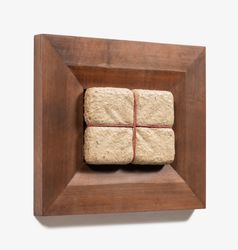
Much of Lee’s paintings, sculptures, and environmental intervention share a kinship with both American land art and Korean shamanic traditions and embraces chance and ephemerality in its attempts to form a collaborative partnership with natural phenomena such as fire, water, wind, and smoke. Much of his work is rooted in folklore and has thus utilised traditional objects or natural materials such as tree branches, hanji paper, stones, rope and wire transformed in almost metaphysical ways. In this notion of ‘non-sculpture’ or non-materialisation or anti-concept, Lee’s practice has proven prescient given the current phenomenon appearing in much of the contemporary art discourse.
Lee used these non-materialistic and non-sculptural concepts as a manifestation of his rejection of existing ideas and orders, meaning that his work had no relation with any sculptural concept whose initial goal was plasticity resulting in his acknowledged place in Korean experimental art. Lee is not interested in what can make a work of art but in what cannot make one. He enjoys abnormality more than normality, what exists beyond common sense, and the freedom of anti-art. For this reason, he has dealt with objects that are grotesque, unpleasant, ugly, and sexually provocative, regardless of their shapes or forms because they stimulate and invigorate the artist. This embracing of the alternative or the other through radically individual choices that Lee pursued with his practice is all the more remarkable given the complicated social and political context experienced in Korea during the 60s and 70s.
For Lee, the creation of the artwork is a reconstructive concept using various levels of cultural codes that are distinct from the creative concepts of modern art. The concept of ‘non-materialization’ is a key here, distinguishing his work and placing him firmly in the vanguard of contemporary art.
Lee’s works are in numerous collections including, among others, Tate Modern, National Museum of Modern and Contemporary Art, Seoul (MMCA), Seoul Museum of Art, Rachofsky Collection and the Museum of Contemporary Art Sydney.
Text courtesy Gallery Hyundai



Representative Artworks
View story


Explore and Follow Artists Shaping Contemporary Art
A respected voice in contemporary art discourse.
Focusing on ambitious storytelling and insightful art-world commentary. Ocula Magazine publishes in-depth interviews, critical essays and timely analysis on the artists, exhibitions and ideas driving the global art world.
Learn more about Ocula Magazine
Showcasing the best of the art world.
Ocula partners with galleries from around the world to highlight their artists, artworks and exhibitions. Gallery membership is by application and invitation, with each member vetted by an independent panel.
Learn more about Ocula Membership
Specialises in the sale of major artworks.
Led by a team with deep ties to the world’s leading auction houses, galleries and collectors. Ocula’s advisory team offers bespoke services to high-net-worth clients from around the world who are looking to acquire the best of contemporary and modern art.
Learn more about our team and services