




Press Release

‘Painting may find its subjects in everyday life, but it removes from them, precisely, their reality, like the moisture extracted from flowers in order to preserve them.’

—Barry Schwabsky

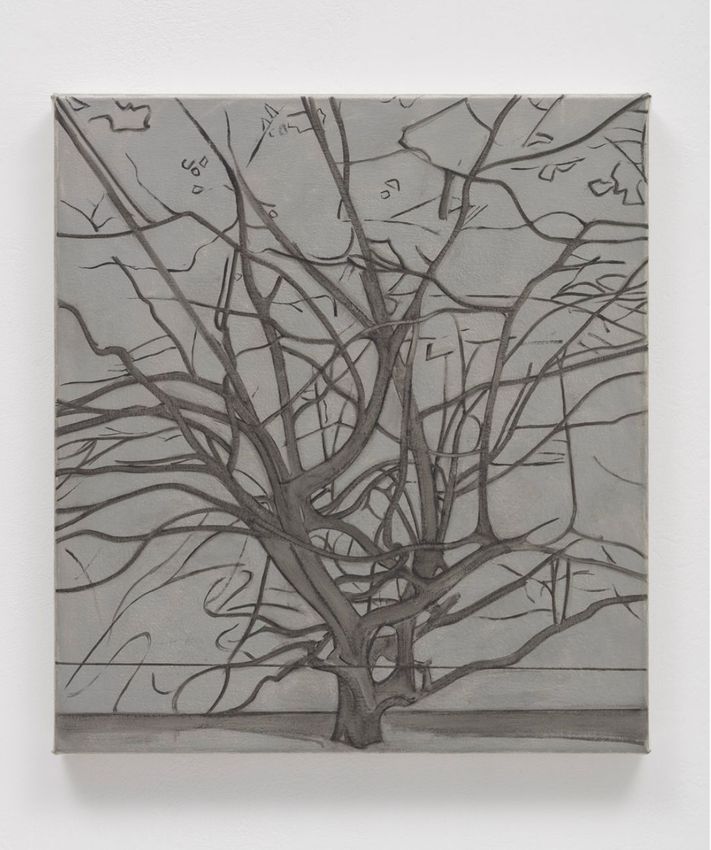
Though the art world in recent years has privileged explicit narrative over formal nuance, Gillian Carnegie has long insisted that her subject matter remains secondary to the act of painting itself. The artists recurring motifs—cats, staircases, dried flowers, portraits, and trees—serve merely as the foundations for her process. Liberated from narrative convention, Carnegie’s approach allows the viewer to focus solely on the paintings themselves, inviting us to experience her imagery as a series of ephemeral moments that document pure visual perception.

Carnegie’s work doesn’t demand excessive analysis yet paradoxically offers a wealth of analytical possibilities. The artist’s quiet demeanor and avoidance of the artworld’s spotlight manifests in works that are introspectively evocative of stillness. Carnegie once remarked, “I never felt the need to feel informed about the experience of seeing a painting in order to understand it... I’d like to think someone would still want to look at a painting rather than inform themselves about it beforehand.”

Carnegie makes just two to three paintings a year, and though she consistently revisits a handful of motifs, she is also known for presenting strikingly novel interpretations of her subjects within these confines. The artist utilises a similarly enigmatic approach to titling, often reusing names across different subject matters so that her works are distinguishable only by the year of their creation. Deeply emotional and unwavering in their focus on form, these paintings communicate powerfully through their silence.

Deftly navigating the semiotic structures that frustrate a perfect union between the signified and the signifier, Carnegie’s paintings knowingly invite varied interpretations. Her recurring inclusion of her black and white cats, Prince and Elgar, evoke parallels to both Édouard’s Olympia (1863) and Charles Baudelaire’s feline poetry. This literary and art-historical analogy enriches these paintings, which she has been creating since the early 2000s, exploring themes of perception, recognition and perspective. By complicating her seemingly simple subjects with layered symbols of cultural and philosophical meaning, Carnegie demonstrates her ability to imbue the ordinary with extraordinary meaning, inviting a rich dialogue between past and present, art and literature.

The solemn melancholy that permeates Carnegie’s paintings is particularly evident in her still lifes, which depict the desiccated bouquets she has kept in her studio for over 20 years. Bridging the gap between portraiture and memento mori, these works signify the passage of time, the idea of life itself, and the notion of the trace. This idiosyncratic practice is not mere repetition; it serves as a documentation of the essential mundanity and banality of life. Formally, these dried flower paintings differ not only in lighting and angle, but also in their stylistic approaches—sometimes more naturalistic, other times more geometric, they represent a conflation of observation and imagination.

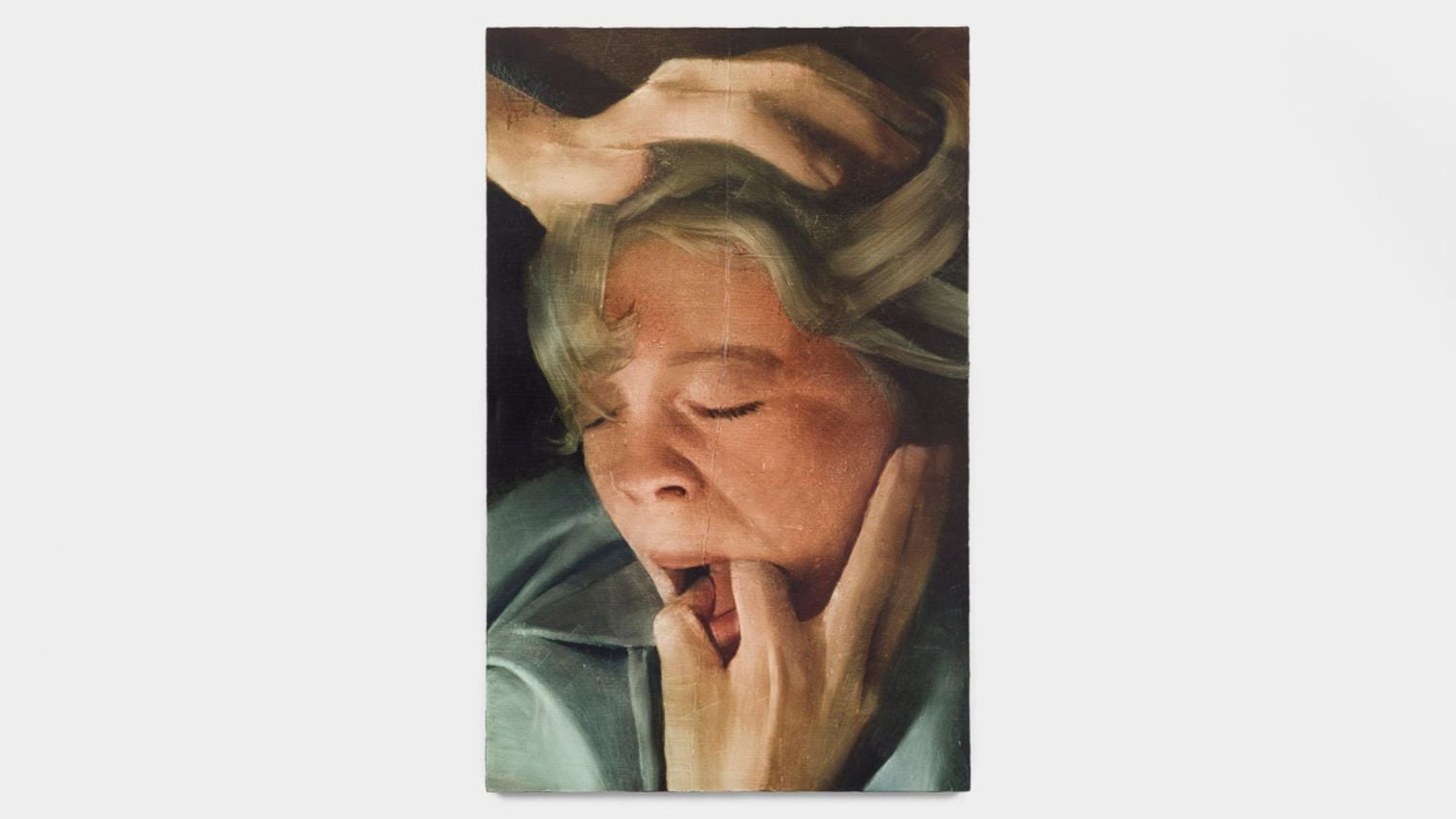
Carnegie’s portraits typically depict herself or those within her inner circle. These subjects are captured in contemplative poses and against minimalist backdrops, exuding an air of self-possessed elegance. Though painted in colour, the portraits are executed with a subdued palette, echoing the restrained beauty found in her other works. Intriguingly, these figurative pieces share a kinship with Carnegie’s enigmatic cat paintings, and the emotional states of the sitters remain as inscrutable as those of the cats. This deliberate—or perhaps instinctive—evasion of overt emotional display imbues the works with a hallmark restraint and invites us to return to the fundamental act of seeing, encouraging a direct and unmediated engagement with the visual world.

Read More

Also Exhibiting at Gladstone

About the Gallery
Gladstone is known for its commitment to artists whose prescient approaches and experimental practices have defined the contours of contemporary art. The gallery has long been an active partner in the cultivation of iconoclastic careers, fostering a roster of artists recognized for their ground-breaking contributions. Headquartered in New York and including outposts in both Brussels and Seoul, Gladstone’s impact extends globally, enabling both the presentation of new bodies of work, and an amplification of the international reach of its artists. Alongside its work with contemporary artists, the gallery is steward to the legacies of pivotal historical artists and serves as an advocate for the enduring power of art. Gladstone is led by a team of partners who spearhead its long-term vision and program, building on the values of its founder Barbara Gladstone.
View Gallery Profile
Address
130 East 64th Street
New York
United States
Opening Hours
Tuesday - Saturday
10am - 6pm
(1)
New York 130 East 64th Street
Gladstone
130 East 64th Street, New York, United States
+1 212 753 2200
http://gladstonegallery.com

Opening hours
Tuesday - Saturday
10am - 6pm
The art world in focus
